













Non-Manual Features (NMFs) in sign language include facial expressions, head movements, and body language that convey essential grammatical and emotional information beyond hand movements; these features can indicate questions, negatives, sentence boundaries, and modify signs to show intensity, emphasis, or meaning, making them crucial for complete communication in sign language.
Non-Manual Features in British Sign Language | Part 1 | BSL Linguistics
Added:Basic knowledge of British Sign Language (BSL) vocabulary, including how manual parameters like handshape, location, and movement construct signs.
Understanding sign languages as natural, fully-realized linguistic systems with distinct grammatical structures rather than mere visual representations of spoken languages.
Familiarity with foundational linguistic concepts, such as phonology, syntax, and semantics.
The distinction between natural, universal human gestures and rule-governed linguistic signs.
Advanced grammatical functions of Non-Manual Features (NMFs), specifically how facial expressions and head movements dictate sentence types like negation, questions, and conditionals.
The study of 'role-shifting' (constructed action and constructed dialogue) where NMFs are used to depict multiple characters and perspectives within a narrative.
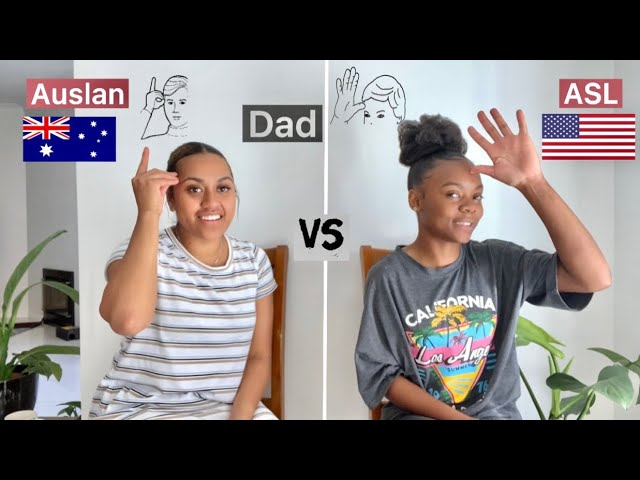
Comparative analysis of NMFs across different sign languages, such as comparing BSL with American Sign Language (ASL) or Auslan.
Practical application of NMF mastery in BSL translation and professional interpreting, focusing on maintaining cultural and register equivalence.
965 views9likes40:40Original Release: 2022-11-06
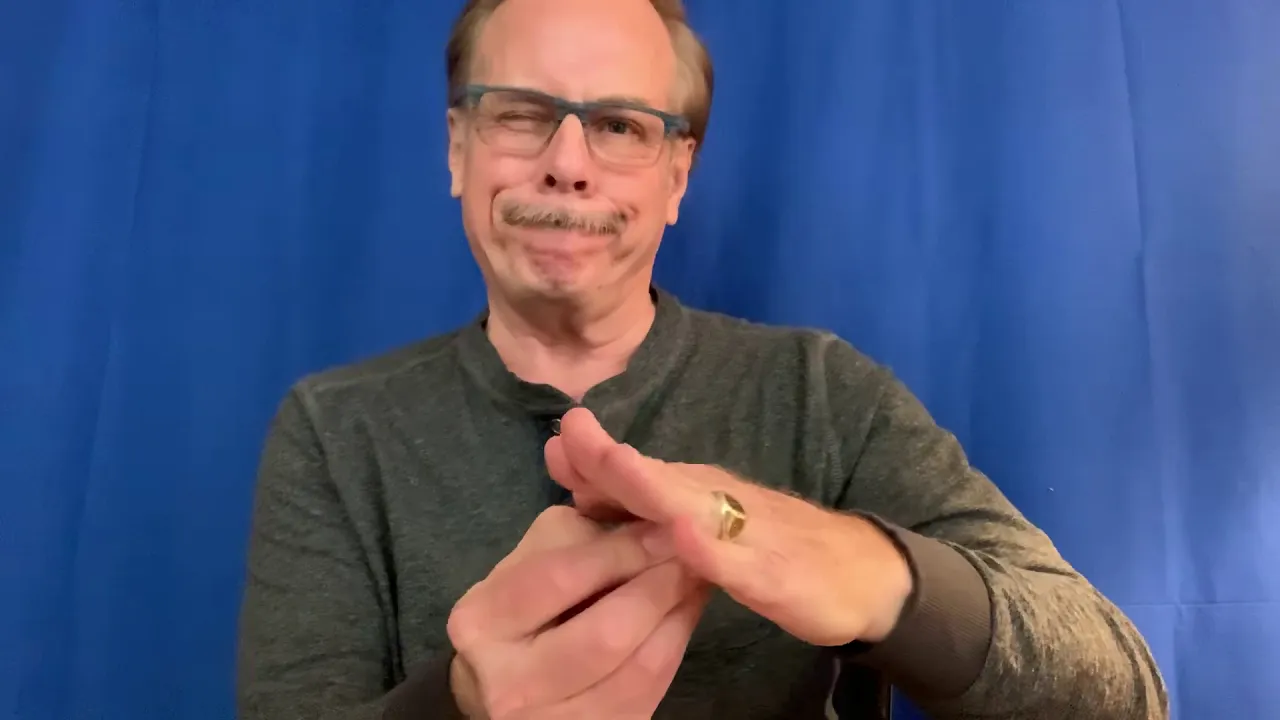
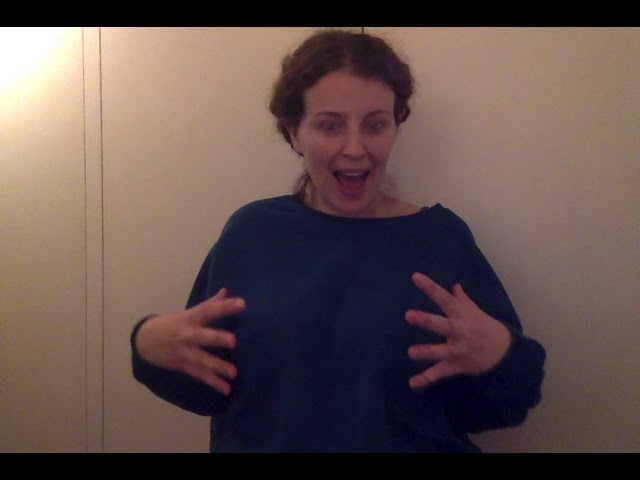
hello again today we're going to try out a little experiment we're going to show you a piece of tape but we've altered it a little bit and we want to see how much information you lose in the middle section you'll see a piece and the middle piece and an end piece and you'll see that Jerry's handsome face has been covered up okay just watch it and see what you get well you've probably already guessed why we did that a lot of people think that sign language is just waving our hands about and it's all concentrated in the hands and as we've said many times before that's not true so what we want to begin to look at is what information are we getting from the face and the rest of the body in fact in particular we're going to concentrate today on the face if we look at the first part of that piece for the face is blotted out we can see that the face was giving us different kinds of information you might have noticed that when he's talking about the boat cutting through the water he used a stretch mouth pattern and that shows the intensity of the movement the strength of the movement the difficulty of the boat going through the water and then we saw him Jerry turn away as a big wave came towards him and he looked up at the wave and so the movement of the head the eye Direction gives us information which is crucial to understanding what's actually going on in the signing then we saw his head bouncing back and the puffed cheeks add that emphasis to tell us how terrible the wave and the strength of the wave was you may notice as well another example of puff cheeks when he shows the boat going down and up again through the waves and when the waves were coming over the boat so you've got some idea of what from what I've said about the kind of information that we lose if we lose the face we can't see the face so now we want you to watch this piece again but this time we want you to look carefully at the face that you now can see we've taken away the black spot so watch it carefully and see what information you're getting we came round the side of the French Coast and we sailed on it was getting dark and it was around eight o'clock and we were going deeper into the trough and up and the boat would sit on the wave and then go in deeper more and more and then out again and I looked through binoculars and the waves were getting higher and higher and we went down and I looked up and I was holding onto the steering wheel I had lost control and the boat was just going up through the wave and water came all over us and knocked my head back push me back I tried to control but I was thinking of the people inside the cabin it was worse for them than for the Helmsman it wasn't bad for him might break their neck that's all but what about them they were rolling all over the place in the cabin we'd lost control and the boat was just cutting through the water I saw rocks on my left I couldn't navigate we had to carry on the waves were just pushing us through and it was getting darker and the clouds were rushing across there was rain and wind it was really strong we went on and on the boat just kept going up we hit on the top of the wave we were just going too fast there was no control and we jutted down into the trough that felt great I wanted some more but the boat was actually cutting into the wave and water would pour all over the deck and the next wave would be bigger and I thought that'd be the last one but no it just carried on from 9 10 11 o'clock just carried on holding on at the helm and the boat would go on through the waves were getting bigger and I'd look up we were right in the middle it was beautiful in the middle there was no wind it was above the waves so we would just try and cut through the troughs and water would pour all over the deck and it was like floating anyway I banged on the deck for a deaf person to come out and help me but it was too late the water just poured into the into the cabin and they rolled all over the place and they looked out and I asked and the deaf people were panicking and they were holding on desperately that we couldn't sign and communicate I wanted the boat to go one way and the boat was being pushed the other and I told the deaf man to last the sail no he refused and others refused so I told the deaf man to come and take over from me come on and he had to crawl out just a short distance and he was pulling himself out and I was trying to pull him towards me I couldn't pull him just easily and the boat was going up and I I had no harness on I'd opened it for him to take over from me so I was pulling myself and the boat was just cutting at different angles and the water was pouring all over the deck and the deaf man was shouting anyway I said you take over yourself and learn yourself and I went down into the camera and what in the hell what could I do there was water pouring all over the floor I said why why is it why has it happened and a hearing Man Came towards me his hair was standing on end literally standing on end I pushed him back don't come this way because when the boat's going up you'll knock me out through the cabin no you knocked me out so I held on and he was coming towards me and I was pushing him back and then the boat would go down and he stumbled back and hit his head but he hit his head on soft seats and just lay there face their eyes were staring I couldn't carry on anyway I was patient and determined and I wanted to navigate pencil and Compass were under the water somewhere I couldn't find them I wanted the compass for navigating to find out roughly where we were and I came out again and the wind was strong and we couldn't breathe when we're able to see the face we're able to get a lot more information let's take the sign look up we know that it's looking up from the way that the hands change but we don't really get the idea that the person was looking around we get that information from the head and the way it moves one of the most interesting examples in this piece is this example now you probably can see that my hand went right off the screen and perhaps you're wondering what my hand was doing now I knew and other people know what my hand is doing from the information they're getting from the face because that sign needs this mouth pattern and this gives us the information that something is there that something is present so that we know up there was the wind I've brought my hand down to show you the actual movement you'll have noticed as well there are several ways that we can show intensity so we can have the steering wheel being turned with stretched lips or with puffed cheeks there was another sign there this one and there are many signs like this which are difficult to translate you can't do that with that without facial expression sorry without facial expression you can't do it like that it has no meaning you have to give the facial expression and you can see that it's difficult to translate and we might translate it as uh what what are we going to something like that but listen to the voice translation when you see the full extract okay now we're going to some explanation of how we think non-manual features work in the language let's look first of all at the two main types two main groups non-manual features what do we mean by that big heading non-manual features well fairly obviously we mean all that body movement that's not the hands so it might be the shoulders might be the whole head it might be the mouse or the cheeks or the eyes as you can imagine there are a lot of different variations that one can make and a lot of different combinations so you can have your head down and eyes closed or my head up my eyes up and my mouth may be open so what we're going to try to do in the next couple of apes is to look at some of the different uses those non-manual features have in the language in fact there are many different uses of non-manual features they can be used to show questions in sign language to show negatives they can be used and show the beginning and the end of a sentence and they can also show the topic of a sentence but for the moment we're going to ignore all of that and we're going to concentrate on individual signs and we're going to look at two different groups the first group is what we call multi-channel signs what that means is that these signs normally must have both a hand both the hands and the face combined so in the graphic you saw the sign now if I did that without using the facial expression that means absolutely nothing and deaf people would say what are you talking about it's it's a load of rubbish but if I add the information the facial information it's clearly a recognizable sign so that's an example of what we call a multi-channel sign the other group is what we call non-manual modifications you see there that we've used the sign in the graphic for object now it's possible to do that sign in a different number of different ways I don't have to use puff cheeks but in the graphic you saw that we were using puff cheeks to emphasize I really object now that's a modification something added from the face to that manual sign to the sign itself it gives us extra information about that sign and what we're going to see in the examples in the rest of this tape the signs that we might know already like work or talk can be changed by adding information from the face actually most of those examples we're going to look at in the second tape on non-manual features but in the rest of this tape we're going to look mainly at what's called booty Channel signs and now I think I'll ask Jerry to explain and demonstrate some examples this means it's as if there's a deaf person there and he's very worried about his exams which he's just going to take come on it'll be easy it'll be okay there's plenty of time don't worry but another example another example with this facial expression it means they're going to play football against a very strong team it'll be okay just take your time this means there's no need to worry be calm you're going to meet somebody who's a very important person don't worry just take your time be calm with this facial expression it means maybe you're going to play darts in a darts petition and you're playing a really skilled player and I'll say look it'll be okay I'll I'll beat him this means that somebody was explaining to me that they've been walking in the mountains very high in the mountains wow I couldn't do that this is I'm looking around at the weather and it's really horrible it's cold and damp it's horrible oh the meal that I'm about to have is it's horrible I don't want it I've got lots of money bags of money you have yes I have lots of money why did you swallow that story I have five children and now they've all joined the Air Force the flying wall you believe me why did you believe me hey um I'm asking a deaf person that you've been looking for a job me looking for a job no I can't be bothered oh I saw you pit my trousers I haven't I haven't sometimes I'm in the kitchen cooking and I'm looking around where's the knife it's laying it's laying down somewhere and I'm searching for it and somebody says to me there it is oh it was staring me in the face it means if somebody is signing for a long time talking for a long time you're a blather it's as if there's a group of deaf people we're out having a great time and most of us are married and our wives are in another place and we're celebrating and then suddenly the wives come in we think oh that's terrible and we change the Coca-Cola it makes us so good it makes us look as though we're not really celebrating deaf people were talking and we were saying about the doctors they're working so hard and so busy they're dedicated and patient I was in a car driving on the motorway and there was a 70 80 miles per hour and I ignored the speed limit and then suddenly what happened a police car came in front of me I was talking with my wife and she was telling me that she'd been trying to meet and see her friend who she hadn't seen for a long time and then one day a few days later we went into the deaf club we were walking along and then she tapped me on the shoulder that's her that's her at last I've seen her that's my friend oh I said that's her and I shook her hand the Americans have been trying to have detaunt with Russia and the dataunt was succeeded no they'd been trying and had very hard discussions for a long period of time and you can use this sign with puff cheeks in our football match we'd have been attacking the other goal and after the match had finished oh we said we were really trying for such a long time to get a goal it's okay is the bus me yes it's just coming any moment yeah and I ran and caught it and another way of using this sign with a different facial expression for example I'd been waiting for a letter that I'd posted and you hadn't replied don't worry I'm going to send it in anytime I was walking around the shops and I looked and I couldn't believe my eyes there was 500 pounds lying there deaf person he said that he wanted to become a professional footballer I said no you can't you can't but one year later I saw on television and in the newspaper and I was absolutely flabbergasted he had become a professional footballer I was walking along and I met another deaf person I said I can't believe it I can't believe it I said what he said there's another deaf person he's got a voice I said what and then I looked and yes the Rolls-Royce Drew up and my mouth dropped open I went to an air display an Airfield and I was looking at the display and two planes went so close to each other and I thought oh how terrible they nearly crashed I've never been to America before in my life so I flew and arrived and landed in New York and I couldn't believe it the incredibly High tall buildings there's an artist and you've done his artwork and it was so precise it was exactly the same as a photograph my bedroom is terrible it's very untidy but in the morning I open my door and it was clean and and span it was perfect you remember before that I signed in this way but now here's another one where the facial expression is different that person was explaining to me that he'd been to Ben Nevis walking in Ben Nevis and he'd Fallen quite a distance and I looked at him and he said I felt and I got up and I said well I couldn't have done that you are lucky there are two ways of doing this sign if I start with that it's similar to the verb to be like for example someone says to me is he there is he there and I respond yes he is there okay another way is if you want to show emphasis yes he definitely is there he is definitely there maybe I've been looking for somebody desperately and I say to another deaf person where is he I haven't seen him and they say yes he's there he is definitely there somewhere you'll see mostly this sign created in different places is to show the direction and the place like for example I'm talking about the Americans at the moment are worried about what to do about Russia and that's happening there at the moment is to show how far away is happening at the present time there's a football match it's actually happening now at this moment if I say that I have a sore stomach I can show that it's there and it shows you the position of the sore stomach happening now I said that I'd heard that George bought tickets for the football match at Hampden Park Scotland vs England I heard you bought tickets oh I haven't got any oh you haven't got any no I haven't got any two deaf people were arguing and arguing and I said what's it about ah what really happened was that he thought he had stolen his money and he had thought he had stolen his money but he had been somebody else who'd stolen the money I'd been searching for a house and there was a beautiful house I was talking to a deaf friend I nearly bought that house but it fell through because somebody offered a higher price I was so disappointed he looked at me and said ah I nearly bought one very close to it we would be next door that would have been great one of the problems for hearing people about this whole area is they can be really difficult to see the examples and get hold of them especially if we don't know the meaning of the sign or the role of that particular non-manual feature so if we look at the last example that Jerry gave us the example of it can be easy for hearing people not to realize that that has a meaning in the language and just ignore it and don't bother with it understand part ignore the sign and then understand the rest if hearing people do it for it they're losing some information and can distort the language so let's have a look at a little story from Maureen when she actually uses that sign I think you'll enjoy the story she's talking about the first visit of her parents-in-law for tea dinner or tea now I I'm going to give you a little bit of help and tell you exactly what to look for the first example of is when she says the oven could have gone on fire but what she actually signs is so is giving us this sign is giving us the information that it could have happened but it didn't happen and the second time she uses it is when she tells us and she's telling her father-in-law and she says to him it could have spoiled dinner it would have been a lousy dinner and he's looking it could have been so the sign is giving us all that information Now look for yourselves and see if you can get it see if you can get those two signs now we were expecting his mother to come I went into his flat it was awful you know a man on his own cup of flat tidy he really needs a woman there so I tied it up made it and span for his mother coming he said my mother often comes I said no let's make it nice what are we going to make for them to eat um he said I don't know fish and chips Chinese something light I said that's not nice I must cook something they're driving a long way okay please yourself so I bought a steak pie he had an oven there were four rings and two grills now I made the vegetables prepared the potatoes and I went for the pie I said is the oven working he said yes but it must have completely slipped his mind so I went to open the oven door and I nearly collapsed at the site there were piles of books jammed into the oven I thought wait till Clark comes home vacuum arched into the house I said where'd you keep your books I said nice piles and cupboards or in the drawers I said you keep them in the oven you idiot if I lit the oven they could have been burned oh I forgotten he said so we cleared them out I was annoyed at the time but afterwards I chuckled to myself then his mother came the lights flashed I opened the door mother came in and father and they sat down I served the meal mother said that's the first time I've had a cooked meal I was on tender hooks I couldn't join into the conversation I really hope they're enjoying their meal I sat and watched making sure everything was all right then we chatted away everything seemed to go well and later father said that was a great meal I said yes but it could have been spoiled why because your son keeps books in the oven father nearly lost his head well don't give up you will find in the end that it becomes easier and easier to see and recognize these multi-channel signs we're going to finish again with another example of the same sign but this time we're not going to give you any clues well I'll tell you it doesn't come at the beginning of the piece it doesn't come in the middle so it must be at the end so watch and see if you can get it see if you can get hold and get hold of the exact idea of what the face is doing and how that's part of the sign and also what the meaning of is in that context we'll be looking at more examples of the face in the next tape so remember this time turn off the sound and watch it first without scent okay bye see you in the next tape yes do you mean oh yeah oh it was fantastic a beautiful story a deaf man was telling me and I I just couldn't believe it it was fantastic what had happened was he was telling me himself that he'd been at the deaf club and he'd been drinking having a great time here drinking heavily drinking many pints and then he was drunk and he waved farewell and walked down the road to George Square in Glasgow and you can get a late bus there it was he was really staggering all over the place he'd falling down and getting up and anyway he wanted the last bus and he was peering through fuddle dies and anyway the driver looked at him and said okay probably knew him and he went upstairs and sat down and he was feeling quite ill and he collapsed he blacked out oh he blacked out so I looked at him and said tell me more tell me more so anyway time moved on and he woke up and there were lights flashing up to the top of his head they said what are they anyway you flash again and I looked at him again and said what's it about so he woke up again and he was in bed lying in bed last time I was on the bus then the next thing I can remember these lights flashing across the top of my head and now I'm in bed then he recognized straight away he was immediately that he was in a hospital the smell of a hospital he said what is it a doctor came he said you're right he said Oh no you're deaf what is what's it about we thought you might have been unconscious or and then they found out what really had happened when he had collapsed in the bus he might have fallen and somebody had tried to resuscitate him and spoken to him and he'd just laying there and they'd panicked so
Up Next

19:33
ASL Common Sentence Structures: Conditional Sentences Explained
@SignWithCourtney
2K views•2012-04-25
36:52
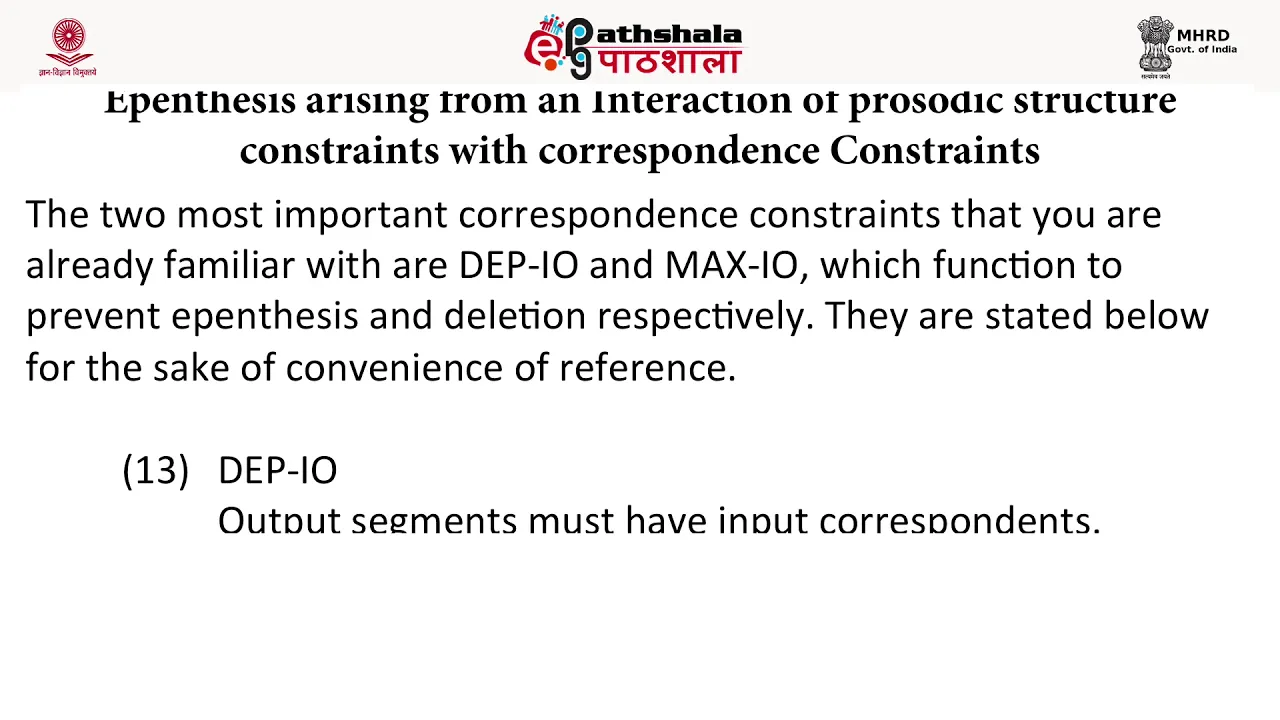
Constraint Interaction in Optimality Theory: Epenthesis & Deletion
@Vidyamitra
180 views•2018-08-20

8:59
Forensic Linguistics: How Language Solves Crimes | PBS
@pbsstoried
1M views•2024-01-25

21:32
Accent Expert Explains U.S. Regional Dialects | Part 1
@WIRED
9.3M views•2021-01-21
Related Study Plans & Knowledge Roadmaps
Structured learning paths in Linguistics
linguistics
Optimality Theory: Tableaux & Constraints
01Phonological Basics: Sounds, Syllables & Rules
02Foundations of Optimality Theory: GEN, CON, and EVAL
03The Constraint Inventory: Markedness vs. Faithfulness
+ 2 more learning modules
15h5 modules
Explore Roadmap
linguistics
Morphosyntactic Alignment: S, A & P Systems
01Foundations of Syntax: Transitivity and Arguments
02The Linguistic Variables: Mapping S, A, and P
03Nominative-Accusative Alignment
+ 3 more learning modules
12h6 modules
Explore Roadmap
linguistics
Analyzing Sign Language: Phonology & Syntax
01Foundations of Sign Language Linguistics
02Phonology: The Five Parameters of a Sign
03Morphology: Word Formation and Classifiers
+ 2 more learning modules
14h5 modules
Explore Roadmap
linguistics
Pragmatics: Speech Acts, Grice & Politeness
01Introduction to Pragmatics: Meaning in Context
02Grice’s Cooperative Principle & Implicature
03Speech Act Theory
+ 2 more learning modules
14h5 modules
Explore Roadmap