











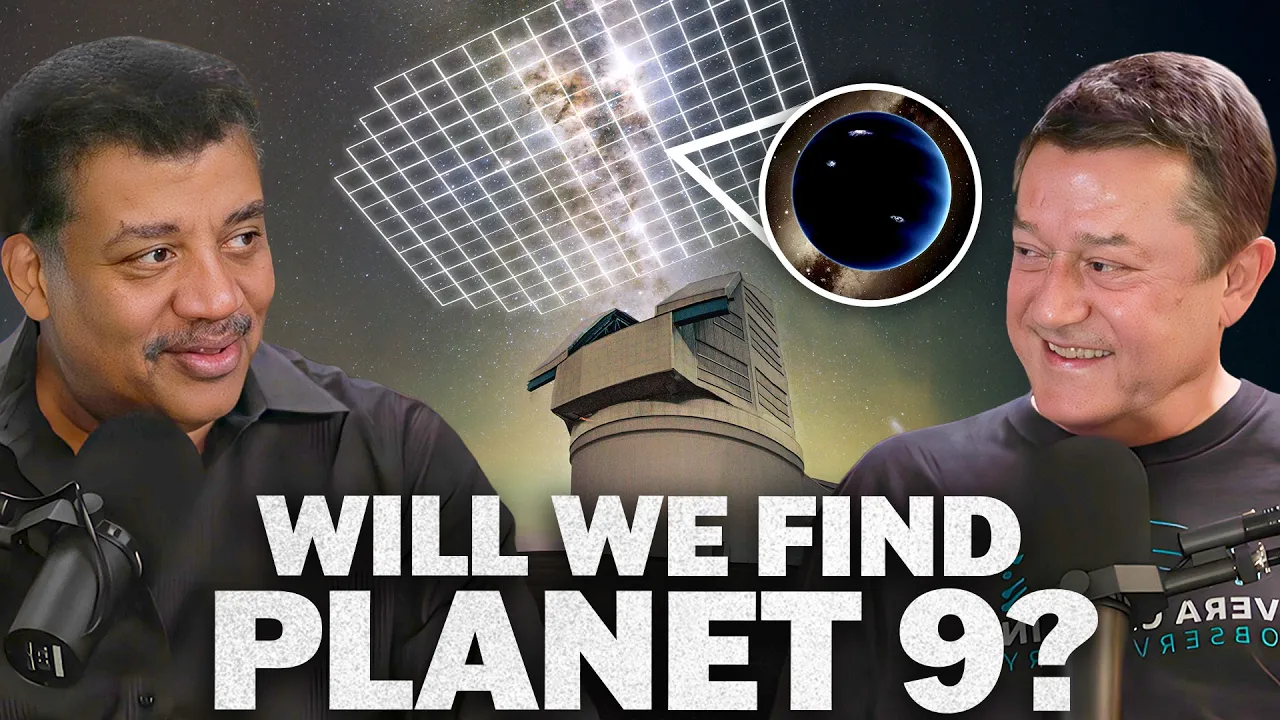






The Vera Rubin Observatory, formerly known as LSST, is a revolutionary ground-based telescope designed to survey the entire night sky every few days, generating approximately 30 terabytes of data daily over a decade. Unlike traditional telescopes that focus on deep-field observations of specific targets, this observatory uses a wide-field approach with a 3.2-gigapixel camera and advanced optics to create a comprehensive movie of the sky, enabling astronomers to study celestial variability, discover millions of new asteroids, and investigate fundamental cosmological mysteries like dark matter and dark energy through computational analysis of its massive open-access dataset.
How the Vera Rubin Telescope Will Revolutionize Astronomy
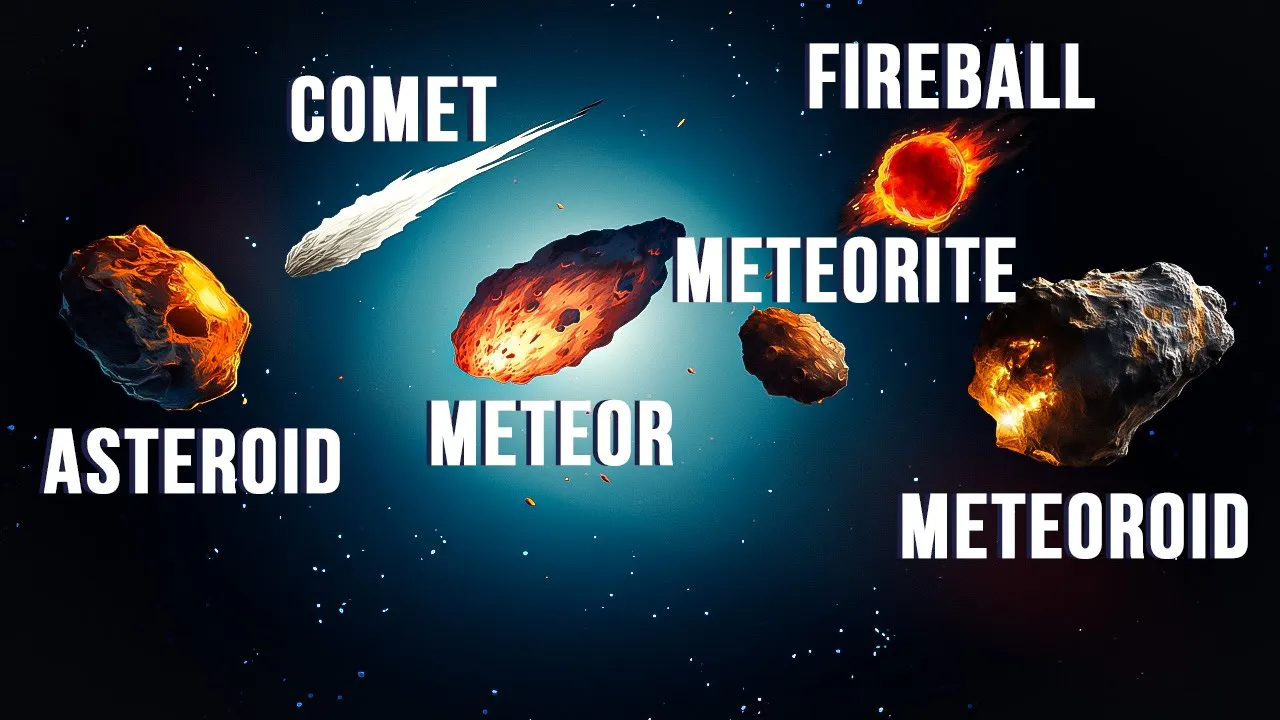
Added:Understanding the basic classification of solar system bodies, including asteroids, comets, and Near-Earth Objects (NEOs).
The fundamental difference between targeted astronomical observations (pointing at one object) and wide-field astronomical surveys.
Basic principles of optical telescopes, specifically how light is collected and digitized using large charge-coupled device (CCD) sensors.
The concepts of dark matter and dark energy, and why mapping the expansion of the universe is a primary goal of modern cosmology.
Astroinformatics and Big Data: How machine learning and automated pipelines process petabytes of observational data and trigger real-time alerts.
Time-Domain Astronomy: The study of rapid cosmic changes, such as supernova explosions, variable stars, and gamma-ray bursts detected via repeated imaging.
Planetary Defense and Orbital Mechanics: How scientists calculate asteroid trajectories and assess impact risks for newly discovered near-Earth hazards.
Weak Gravitational Lensing: How astronomers use subtle distortions in galaxy shapes to map the distribution of dark matter across cosmic time.
304.8K views17.2Klikes20:58Original Release: 2025-06-25
Hello, it's Scott Manley here.
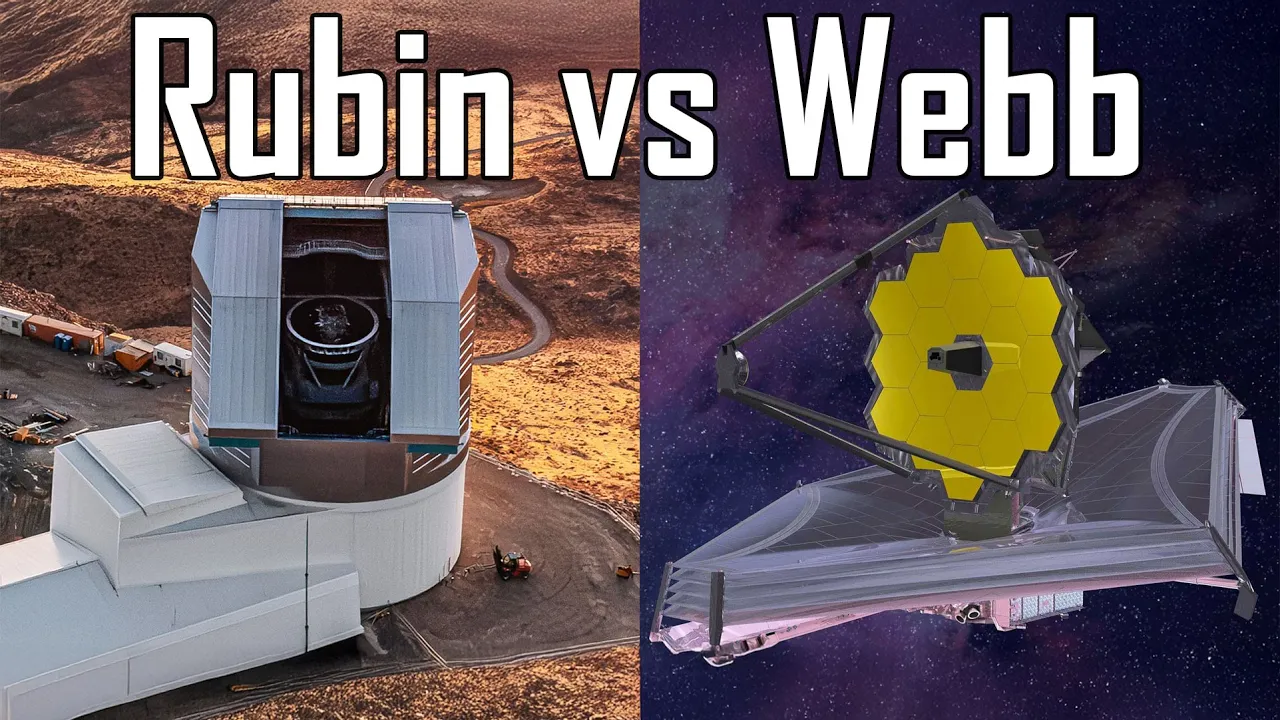
Yesterday, after years in development, the Vera Rubin telescope had its first images released. This is the Tripfid Nebula, and we are zooming out to show just how big an area this actually covers. Now, if you're not an astronomer, if you're interested in space flight, you might be wondering, why are we building another groundbased telescope when the James Web Space Telescope reigns supreme? It's awesome at everything. Well, the Vera Rubin telescope is designed for speed first and foremost. And obviously, I'm not talking about orbital speed or speed across the ground. I'm talking about the speed at which it can cover the sky.
This telescope is designed to survey the entire sky every 4 days or so so that it can revisit each point in the sky multiple times during the survey. Over the next 10 years, it's going to build up the world's biggest movie. 30 pabytes of data per day will translate into a movie of the entire sky over 10 years.
This is a very different way to run an astronomical instrument. Most instruments are designed to look deep.
So if you are an astronomer, you will be studying one particular thing and you might make a proposal that says I would like to point the Hubble Space Telescope at this particular thing and use this particular instrument to collect data for the particular thing I'm studying.
But Vera Rubin, it's got a different MO.
It's going to take the entire sky. It's going to make all the data available.
It's going to publish events that are being observed on the sky as things change. It will be able to observe and measure the variability of stars across the sky. It'll be able to capture nova and supernova as they happen. Asteroids, comets, it's going to be there. It's probably going to be first. And even the more mundane things such as stars slowly moving across the sky over 10 years, those will be observed. So, I remember hearing about this telescope before I even heard about Kerbal Space Program.
So, that really dates it. This uh telescope design was concept was in the early 2000s and uh eventually got official funding I believe in 2014. Back then it was called the LSST the large synoptic survey telescope. It would later be renamed Vera Rubin to honor the astronomer who well uh brought us whole this whole dark matter problem. You see Vera Rubin, she was really interested in studying radial velocities of stars in galaxies. And if you had a galaxy edge on, you could see the stars on one side were going away from you and the ones on the near side were going towards you. So you could look at how the galaxy was rotating. And these very simple measurements showed something unexpected. They showed that the outer edges of galaxies were moving way faster than they should have. This implied that there was a cloud of matter in there affecting the stars orbits. And because this matter couldn't be seen as stars, it was called dark matter. Now, back when I heard about dark matter, we were all sure it was going to be a solved problem. We'd eventually figure out that it was like clouds of gas or planets, something that didn't shine. But, uh, no. Decades later, we still have no idea what dark matter is. We can only see dark matter's effect on the universe through its interaction via gravity. We never seen particles of dark matter interacting with things. We've never seen a modified version of physics that explains all the observations. And then of course 20 years ago, we discovered dark energy that just made things even worse. Well, let's hope that this telescope that can perform these wide surveys of the night sky will be able to help with this problem or at least help eliminate the bad ideas. So, over the last few years, we've watched the observatory get built, the mirror finally get shipped out there and uh placed in the dome, and of course, the camera, which was built down the road from me at the Stanford linear accelerator laboratory. It can claim to be the largest camera in the world. It is the size of the car, but it also has 3.4 gapixels. It's made of something like 216 megapixel sensors. So these sensors are grouped into 3x3 rafts which uh the corners of each of these can be adjusted in distance so that they can keep each individual part in focus. In fact the focal field is curved because of you know the size of the field of view that they are working with. And right out at the very edges there's a bunch of sensors which are designed for guide star tracking and then there's a set of which are designed for uh wavefront sensors. are basically defocused sensors which can detect the shape of the defocused image and figure out if the uh image is getting distorted in some way that they don't want and then correct for it. Now you've probably heard about other big groundbased observatories which have uh sensors and cameras and optical systems that can accommodate the turbulence in the atmosphere in real time. Well, unfortunately, this is using a wide field of view rather than so so they're able to capture a larger area of the sky and that is actually beyond the capabilities for them to do real time compensation for the atmospheric turbulence. However, as the telescope moves around, the weight of the mirror transfers differently, the structure bends, and they have to make very small corrections. So, these are all premputed and as the telescope moves across the sky, they're able to adjust the focus to keep that working. Another critical part of the camera is the filter system. And these are not small like 2-in filters that you might put on a camera. These are several feet across. They're six different filters, and they have to get swapped in and out very quickly so that they're able to take images rapidly. The filters range from the near ultraviolet to the far infrared. Now, the larger optical system uses three different mirrored surfaces, but there's actually only two mirrors because the primary mirror has two different sections at different curvature models. This uh mirror was designed with this structure in mind and then it was cut and ground into this particular shape. The reason it's designed like this is to fold the light path to make it much shorter than it would otherwise be so that the telescope can be more compact for such a wide field of view. So the light comes and it hits the outer section and then is reflected up to the secondary mirror which is a convex mirror. I believe this is the largest convex mirror in the world. It then gets focused down onto the secondary section, the inner section of the or the tertiary section of that primary mirror which then goes into the camera and the camera has a whole bunch of lenses on it to make further corrections. And even then when it gets to the focal plane, the focal plane is curved and that's why we have all these individual sensor rafts so that they can adjust to the the curve of the plane. So anyway, this monster mirror was obviously ground and cut to the right shape and shipped in and on site there is a facility which will perform the like metal deposition on the surface to create the reflective coating because they have to be able to recote this periodically. though they didn't ship it with the reflective coating on it. So anyway, yeah, I was talking about it had a wide field of view and in photography you would say that it has a short focal length or in other terms it's a fast optical system. When you've got a telescope which focuses on one particular thing, it is taking the light and then smearing it out over its sensor to get as much detail as possible. This isn't doing that so much. So the light isn't being smeared out as much and therefore it's brighter and it's able to take an image more quickly albeit at lower angular resolution. Another critical component that makes the telescope fast is the tele uh telescope mirror assembly. The basically the whole rig that is able to move the telescope around and point it at objects. This is designed to be move very quickly from one place to another. Moreover, it's also designed to accelerate and stop and have any vibrations and oscillations in the frame cancel out and damp quickly enough that they're able to start imaging again because the time spent moving, the time spent, you know, waiting for the vibrations to damp down.
That is time that is being wasted when your optics could be doing something useful. This is a magnificent piece of engineering on its own. And apparently like it rides on this very thin film of oil that's being fed in with high pressure. It's so smooth that apparently if you uh if you push you can turn it on your own using human power even though it's you know 100 tons. Now, it does help that because it's such wide field of view and they're not having to put specific objects in exactly the right place to get spectroscopy that they're they're able to like p uh point with slightly less precision than other telescopes might need. That means they can get from one target or one point in the sky to another much more rapidly because they have, you know, less less pointing requirements. But anyway, yeah, the real reason you should be excited about this is because it's a telescope for everyone. You're not having to put in submissions for it to point at your particular thing. You just wait until it points at your particular thing and you get the data. Moreover, because it's getting data from all over the sky, you can write software to perform whatever analysis you want. It is a massive library of data that you can apply computational astronomy to to get the information to do the studies that you want. People often ask me like what telescope should I buy and some of them say I'd like to do some research on the side. And if you want to do research, you don't need your own telescope anymore. There's more astronomical data out there than there are researchers to study it. There's all sorts of secrets in the data that is published already that is waiting to be found. And when Ver Rubin comes online, we're going to amplify that by a massive factor. Of course, if you just want to own a telescope so you can point it in the sky and look through it, there's lots of options out there. Anyway, as I said, I first heard about this telescope a long time ago and back then I was interested in asteroids because I knew this would be really good at discovering asteroids.
And in the few hours that they operated this telescope, looking at a chunk of the sky through the main belt, they were able to find a whole lot of asteroids.
They found thousands of asteroids, 2,000 of which were new discoveries. When I was studying astronomy in the '90s, we had maybe 50,000 asteroids. Now we have a million asteroids. And now we've just found 2,000 asteroids in a matter of hours. In 10 years time, I fully expect to see 5 million more asteroids and a whole lot more near-Earth asteroids that uh potentially could hit the Earth. I think of the 2,000 found, most were in the main belt, but they found seven near-Earth asteroids. And of course, this data can feed into other tools that can be used to analyze the results.
And so, here we have the output of their few nights of observing. This is primarily uh for visual examination of cool stuff. If you're going to be doing the science, you're going to be getting the raw data and actually doing the photometry and everything yourself. But this is uh basically a nice RGB image which is made from the multiple filters that are used to construct these uh this data. So if you look at this here um you can actually see this is 6° this is 8°.
So moon is like a small fraction of this if we zoom in. So that's at 1°ree squares. That's half degree squares.
That is the size of the moon on this scale. We keep zooming in, we see more and more detail and we start to see the sort of shot noise in the pixels and eventually we zoom in and we actually see the pixels themselves. So this is uh like a 0.2 arcsec pixel here. So you'll see that it says here this is 1 200,000th of Reubin's field of view. You zoom all the way back out and it's 5.6 Reuben views. I'm not sure what that uh that is, but what you're seeing here is primarily galaxies. I think this is a Messier 49, a pretty well-known galaxy.
There's some other Messier objects in here. And if you zoom in a little, as I said, uh you're going to see like some of these galaxies here, they start to look orange. You see that? And as you go even further still, this one here is definitely very orange. Here's like a red smudge. These are, of course, galaxies that are much further away.
They are getting red shifted. And we're just seeing the difference because the image is being taken using the different filters and they're getting stacked and converted into a color image that we can view. Now, if we look over here at uh yeah, NGC, not NGC, yeah, Messier 49.
It's probably an NGC number as well. But uh it just looks like a cloud of luminous gas. It's kind of white. But if we move over here, yeah, here we go. We see a welldefined spiral galaxy with spiral arms, right? Little bit of a bar in the middle here. This is kind of face on. But more importantly, you're seeing these blue regions here. Now, these blue regions are blue because they are hot, right? The hottest stars are blue. Now, the hottest stars also burn the quickest because they're running through their fuel. Uh, if you increase a stars mass by 10, you increase its luminosity by a thousand, which means it lives 1% as long. That means that if you're looking at a galaxy with lots of blue regions, these are young galaxies or these are young stars forming in these regions, these are still very active galaxies forming stars. And again, look, you can see these distant galaxies here that are looking red. They may well have star forming going in on in them, but we can't tell. Now, these nearby stars, by the way, the you can tell these are stars because they're point sources and they have defraction spikes. the defraction spikes are kind of all over the place depending upon the angle of the star in the sky. Now, as the star moves across the sky, the viewing position changes and because the timing is different on the different filters, you get these really colorful diffraction spikes that come up in different formats. Now, remember the thing about Vera Rubin is it's supposed to be able to image the entire sky very, very quickly. So, it's jumping around from one place to another. That means it's not necessarily viewing the same region of the sky at the same time. So, uh, now here here's an interesting one here. These two galaxies, they look relatively close together, but actually I believe this one is 50 million lighty years away and this is 70 million lighty years away. So, there's 20 million light years between these. Uh, that's 10 times the distance between our galaxy and Andromeda. But if you then scroll up a little, you're going to see these three galaxies and they are all very much interacting. There's trails of stars that are being dragged between these objects as they've bumped through each other. And you can see this one, there's actually some blue regions where there's stars, new stars being formed. There might be a little hint of star forming going on here. These galactic interactions, they cause the in, you know, the stellar material to sort of smash up against each other. And as that happens, it increases the density and they collapse and you start to get star forming regions. So, it can kind of revitalize some stars, some galaxies.
Look at this galaxy cluster here. This is all awesome. Look at Oh, there's this little one here. It's blue. Is that near far? Who knows? It's really hard to tell. But when you have all this data, you can start doing the photometry. So this is an RGB image. They do it in three colors, but Vera Rubin is actually using six colors. Uh we talk about RGB.
Well, this uses U G R I Z Y. U grizzy. U is ultraviolet. G is green. R I for the near infrared. R for the far infrared.
And the Y for the why is this really infrared? I don't know. Like this is a sort of standard phototric scale where they have different band passes. And these are designed so that you can actually take these pixel values and start to do real science on things. You can get estimates of the recession velocities. Uh, and you hear, look, here's a nice little edge on galaxy here with a little dust lane running through it. So, you can see that this dust in this galactic disc is actually causing an extinction. It's reducing the amount of light coming through from that galactic core. That's like a standard feature you're going to see. It's not a galaxy star forming region. But one of the things that the different uh colors show up is if we turn on the asteroid viewing and we zoom back in, you can start to see these little star trails in here. These are because those are asteroids that are moving through the frame. And because they are moving and the imaging for the different colors is being taken at different time, you know, they the imaging system is monochromatic, but they have these filters which are huge, right? They flip in and they can block one color at a time. So, as the asteroid is moving, they'll shoot this in red, then the green, then the blue, and that means all these things get different colors. Now, some of these ones, by the way, there's chunks missing. And I wondered about that. And then I realized, oh yes, there's one other thing that this thing picks up that was of major concern to the Department of Defense. Uh they realized that this would pick up all sorts of classified spy satellites in secret orbit. And because the way the system works, it was going to be alerting astronomers, hey, here's interesting stuff going on here. And that's exactly what the department of defense did not want to happen. So they worked with the telescope people saying we would like to insert our own processing stage. So there's a stage where the data 30 terabytes of data per day goes through a line into a secret classified room and it comes out with the spy satellites all scrubbed out.
Now, apparently that's only really for a few days. After a few days, the data does come out, but by then, the satellites orbit has presumably changed enough that they're not really going to be used to be able to track down secret assets. All the same, it is fascinating to think that something of this size is, of course, a potential huge security threat. There's other things, by the way, that that result in stuff being cut out. Uh if you have like a Starlink satellite go through the frame, it'll leave a black trail because they'll cut out the the satellite is so bright they will cut out like a path either side and that could mean that an asteroid gets cropped out as well. So that's another possible reason why something might be missing from this particular display.
Anyway, uh this is awesome. There's one other really cool thing that I want to look at want to show you is Sky Synth because of course I love music.
If we take this, it just makes noises.
It's just like, you know, playing around with hearts and stuff.
But where is it? We can take it over a galaxy.
Okay, so this isn't going to set the world on fire, but I'm going to say it is a whole lot more satisfying than any AI generated music site right now. So yeah, it really does give a different uh meaning to the term scientific instrument. And well, the Ver Rubin telescope is one heck of an instrument.
I'm Scott Manley. Fly safe.
[Music]
Up Next
48:11
Asteroid Impact Risks: The Torino Scale Explained with Rick Binzel
@StarTalk
538.5K views•2025-04-01
61:17
First Billion Years of the Universe with the Square Kilometre Array
@iaaudc
121 views•2022-05-26

6:25
Kepler's Laws of Planetary Motion Explained (Educational Astronomy Video)
@Peekaboo_Kidz
404.9K views•2023-02-17
6:10
Gamma-Ray Bursts: Cosmic Snipers Explained | Astronomy
@kurzgesagt
15M views•2016-07-31
Related Study Plans & Knowledge Roadmaps
Structured learning paths in Astronomy
astronomy
Reionization: Pop III Stars, IGM & 21cm Line
01Foundations of Cosmology & the Early Universe
02Population III Stars & Cosmic Dawn
03Physical Mechanisms of Reionization
+ 2 more learning modules
17h5 modules
Explore Roadmap
astronomy
Planetary Rings: Dynamics, Roche & Resonances
01Foundations of Gravity and Orbital Mechanics
02Tidal Forces and the Roche Limit
03Structure, Composition, and Collisions
+ 2 more learning modules
10h5 modules
Explore Roadmap
astronomy
Asteroseismology: Stellar Waves, Ages & Cores
01Foundations of Stellar Astrophysics & Wave Mechanics
02Stellar Oscillation Modes: P-modes and G-modes
03Mathematical Framework of Asteroseismology
+ 2 more learning modules
35h5 modules
Explore Roadmap
astronomy
Adaptive Optics: Physics, Engineering & Control
01Foundations of Wave Optics and Wavefronts
02Atmospheric Turbulence & Optical Distortion
03Wavefront Sensing Technologies
+ 3 more learning modules
35h6 modules
Explore Roadmap