






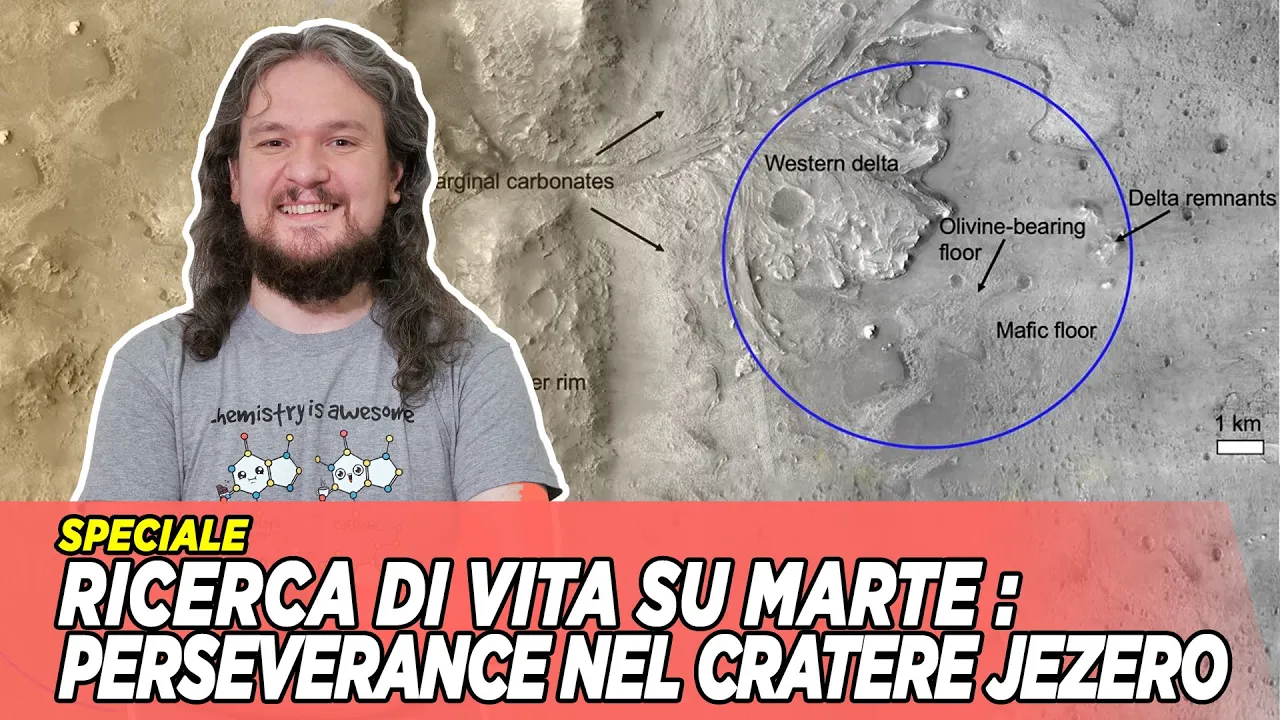








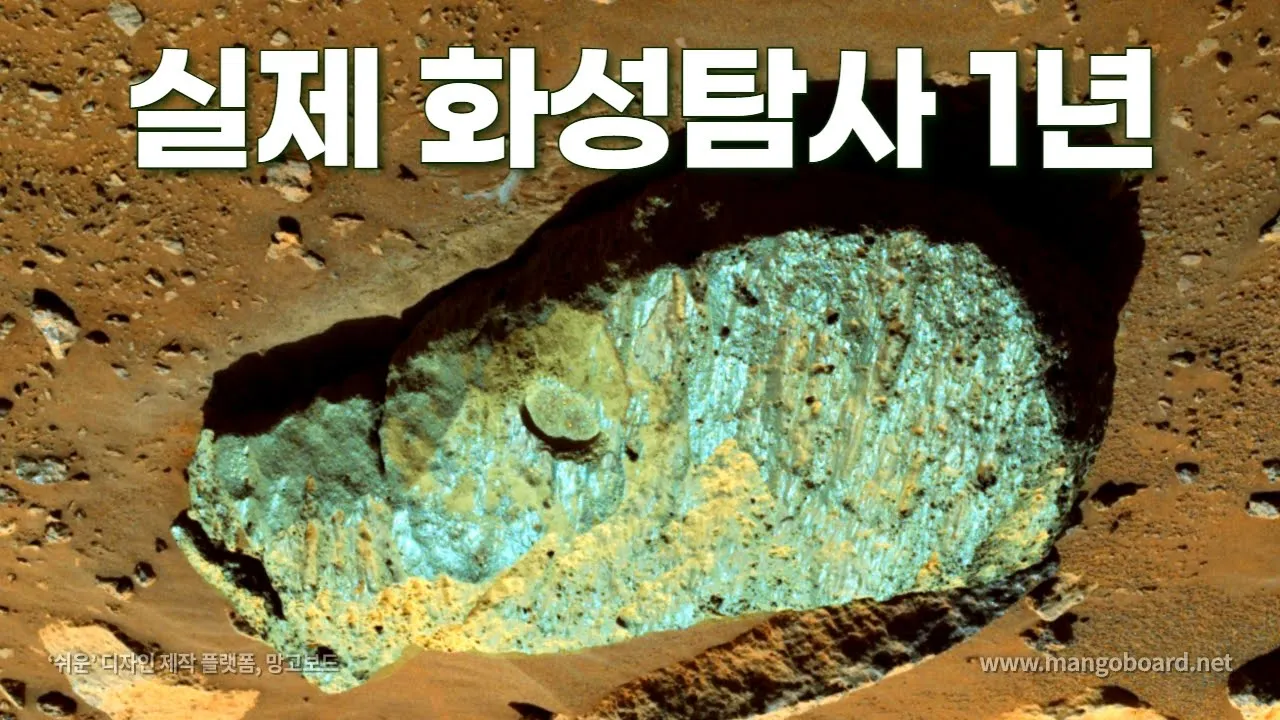


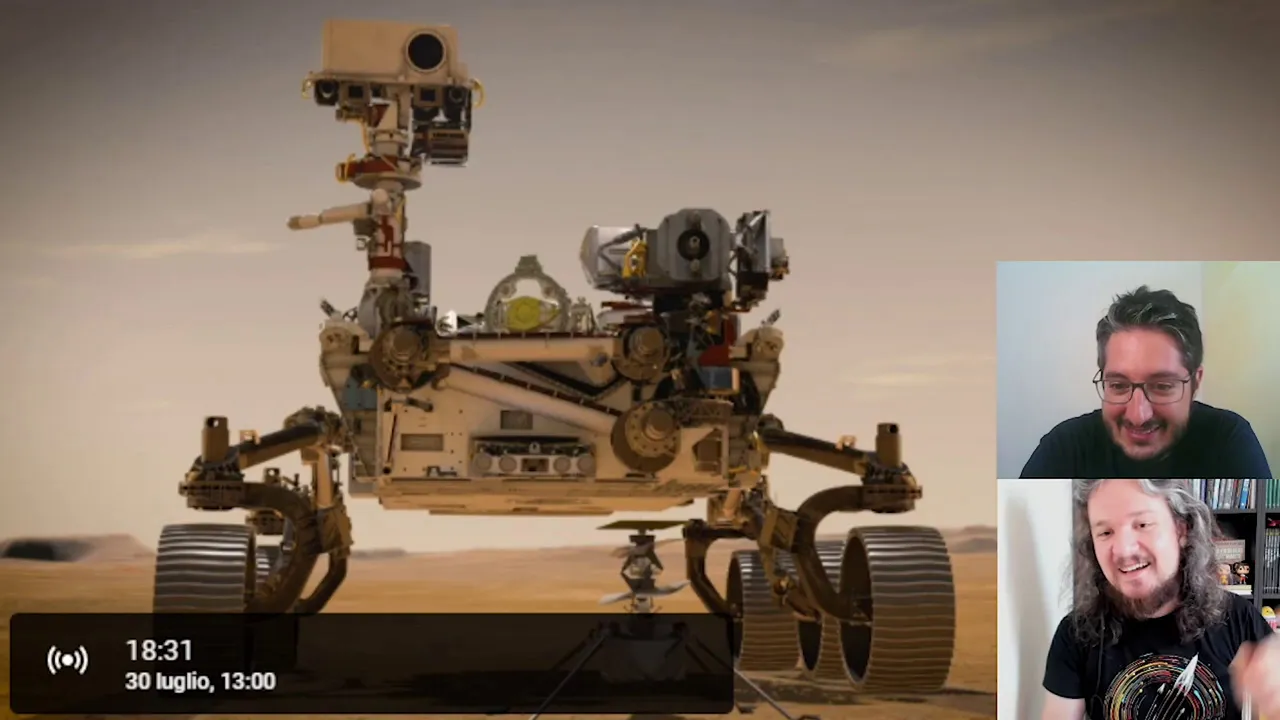



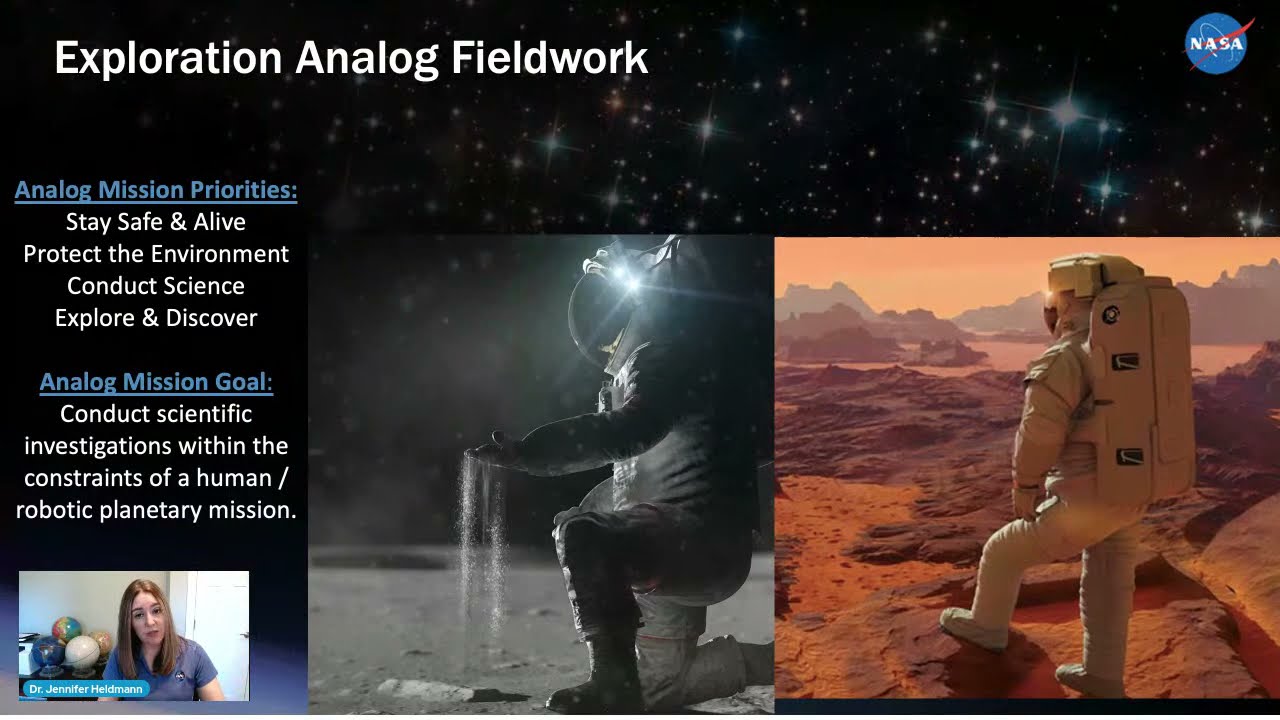

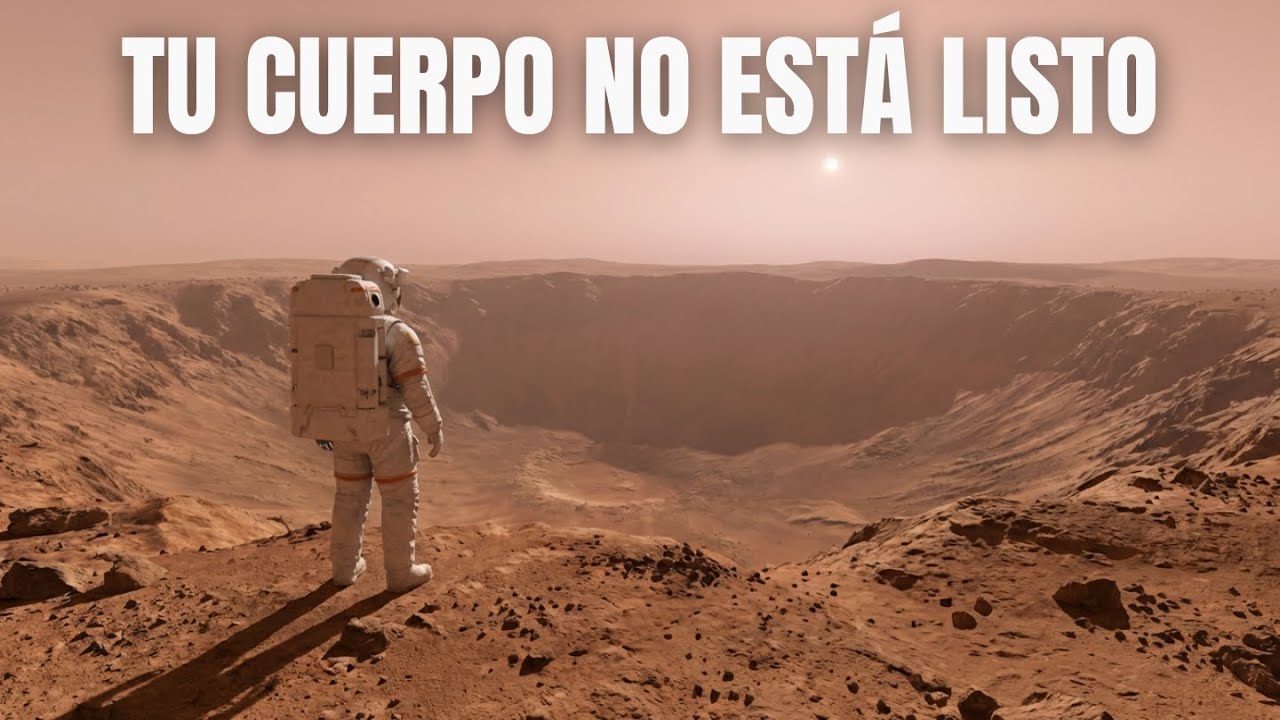




Planetary habitability depends on key factors including plate tectonics, magnetic field protection, and the presence of water, carbon, and energy sources; Mars lost its plate tectonics and magnetic field early in its history due to its smaller size, which exposed its surface to solar wind and radiation, potentially driving any ancient life to extinction, and scientists search for evidence of ancient life by studying delta formations like Jezero Crater where rivers once flowed into lakes, creating environments with water, nutrients, and organic carbon that could have supported life.
Life on Mars: NASA Astrobiology & Geology Explained
Added:Fundamental principles of geology, including rock formation, sedimentation, and how liquid water shapes planetary landscapes.
The basic definition of habitability in astrobiology, specifically the vital roles of liquid water, carbon-based chemistry, and energy sources.
The concept of biosignatures and how microscopic or chemical evidence of ancient life can be preserved in geological strata.
General knowledge of Mars's environmental history and its current physical conditions, such as its thin atmosphere and lack of a global magnetic field.
In-depth analysis of specific scientific instruments used on modern rovers (such as SHERLOC, PIXL, and Mastcam-Z) to detect organic compounds.
The engineering, logistics, and planetary protection protocols involved in the upcoming Mars Sample Return (MSR) campaign.
The study of terrestrial analogs—extreme environments on Earth, like the Atacama Desert or Antarctic dry valleys, that simulate Martian conditions.
The technological challenges and biological considerations of future human exploration and potential long-term colonization of Mars.
124 views6likes57:32Original Release: 2022-05-28
if life got started on mars but then went extinct what was the fundamental shift in the planet's evolution that drove that to happen um or if it's still alive of course that that is a paradigm shifting discovery right confirmation that we are not alone in the universe uh so yeah i'm here with dr amy williams in of the geological department geological sciences yep for professors i know assistant assistant professor tenure track yeah so thank you a lot for this conversation so we're just talking and that i think it's very important for these conversations because you get to know that up the other person at least more deeply than a normal quick interview so on that note uh i wanna i wanna ask you about your early career like how did you started thinking about these problems when did you start thinking what interested you in them and yeah like it was there like moments that sparked that curiosity into this crazy field because it's not as you said it's not really a mainstream field maybe or not mainstream in the term it's not like a normal thing that people go he's like oh i want to go to geology right it's like a cool niche thing that is like difficult to find right i would say what i do now as an astrobiologist um and a geobiologist i feel like that's almost more niche at this at this point and even those are becoming mainstream so i mean geology is is you know one of the four big sciences right physics chemistry biology and geology and i feel like so often geology is left out of that story um and it it's just so fundamental at least in the way that i explore all of the sciences together in a multi-disciplinary way as a scientist i find that that geologic knowledge it really enriches the way that i can think about physical systems working and evolving so it's it's important to me that people know that geology is a science that it is an option you know in in school to learn about not that you need to major in it necessarily unless that's your passion like it has become for me but that it's one of the pillars of the hard sciences that i feel like it's uh looked over sometimes and it's just so it really does i feel enrich the conversation when you talk about physical processes on earth and on other worlds which is where my whole line of research has ended up going so what exactly is it you started talking about it the study of physical processes but what are those processes why are they important and yeah what do you think makes it makes your experience of sciences more rich yeah so i mean when people hear that you're studying geology for example when i was in college they said what do you what are you going to do learn about rocks and it was it's you know often said almost in a joking way like well that's not real science but you know geology is so much more than just the rocks right it is the chemistry of the entire earth and it's not just that but it's the the physical processes and tectonic or planet-wide processes that enable earth to be this habitable world where life has been able to evolve and thrive so on earth you know one of the one of the major studies of geology is tectonics or or the way that the the thin kind of plates on the surface of the earth move around in response to basically these um big changes in in heat and energy from our mantle and from our core of the earth and so because we can have things like mid-ocean ridges that are spewing out new rock effectively and they're kind of pushing plates apart and then we have these regions where plates are actually subducting underneath other plates and going back down in into the mantle these processes i don't think people get the opportunity in primary and secondary school very often to learn about this but they are fundamental to how the earth functions as this dynamic planet and you know many people argue it's one of the reasons that earth is habitable because you have this cycling of elements cycling of of chemistry from this really large-scale process um that that allows potentially allows life to thrive on earth the way that it does so and um yeah and that can spark a conversation of is that a needed thing for other planets and because you're studying mars and i imagine mars have at least some kind of similar uh dynamics of plate tectonics or something like that not really i'm just talking about yeah no so i mean this is that you're you're hitting right at the point that people are trying to understand what what different factors are required to make um a planet habitable to make it to make it really reasonable for life to survive there and so while we think that mars had plate tectonics very early on in its history those tectonics have effectively shut down and in part that is because um so mars is is much smaller than earth and um the geodynamo is is kind of the term that we use to describe the circulation of the um a planet's core which is going to generate a magnetic field and um it is the dynamics within that core and the mantle and kind of circulation of energy within the mantle that allows plate tectonics to to function okay and so so if you have hot material upwelling that is going to eventually break through the crust and when that happens at that material it's rock right so when it when it reaches basically a surface that's much colder and lower pressure than it was when it was inside the planet in the mantle it's going to cool off and form rock and so in order to maintain the same size of the planet basically if you're making new rock in one place you need to recycle or remove rock in another place so that is the sort of the fundamental basic level of plate tectonics but on mars we don't see active plate tectonics there is no magnetic field so we believe that the geodynamo so that circulation of the core inside of mars has slowed down or stopped in a way that it's not driving plate tectonics anymore there's no magnetic field anymore and then that actually really speaks to the big problem of habitability modern habitability on mars because there's no magnetic field to protect the planet from solar wind which means that your atmosphere gets blown away um you have much higher um radiation fluxes to the surface [Music] well yeah galactic cosmic rays yeah solar winds the whole nine yards and so that ends up being it makes as far as we understand life you know life as we know it it makes for a very challenging environment at least on the surface of the planet right yeah yeah right so and to answer all these questions with figure out a way to send send vehicles and into the surface and of course into the orbit so that maybe is a way to introduce curiosity and perseverance that you've talked to that you've worked with and for a couple of years so i'm interested in why do you think those are important and why spend all these resources studying you know like the question that it's on a lot of people's minds like why spend all these resources so in another planet where you can spend them here and and also when you cover that like why mars specifically oh man so many so many things to speak to there so you know first off yeah i've had the opportunity to work on nasa's curiosity and perseverance rovers you know really extraordinary opportunities and i definitely recognize that i joined the curiosity mission in 2009 as a phd student myself and now as a researcher on on both of those missions i have the opportunity to help the phd students working in my lab join the missions as well and so that is very fulfilling to me on a personal level to to enable that and hopefully open up opportunities and avenues for those students to build their planetary science careers you know in in in some of the ways in which i've had the opportunity to do so as well um yeah so for for the missions you know it's i've been on both missions since the beginning um for both of them which is a unique opportunity and i've been trying to um basically like give as much of myself my my professional resources to it as possible because it is so extraordinary and we do have the opportunity to make incredible fundamental discoveries not just about you know one of our nearest neighbors planetary neighbors mars but the information that we get from that actually feeds into a better understanding of earth and of the inner rocky planets how they formed why they're different you know one of the things about mars that's really striking to me is that you know the inner rocky planets they all formed at the same time from similar processes but they are so extraordinarily different from each other and earth and mars you know start out so very similarly and then their planetary evolution just diverges so greatly right in earth it you know becomes this not only habitable but inhabited planets and we have those questions about mars we know it was habitable in the past we know that there was water the question is was it ever inhabited and is it still inhabited and that really speaks to sort of the core of at least martian astrobiology and the questions that we want to learn about that if life got started on mars but then went extinct what was the fundamental shift in the planet's evolution that drove that to happen or if it's still alive of course that that is a paradigm shifting discovery right confirmation that we are not alone in the universe um and you know as as a kid i always kind of pictured you know looking up at the stars that someone was out there on a world somewhere looking up at the stars in their sky and thinking i wonder if someone is out there and so the two of us thinking this at the same time light years apart and so you know to that that little girl who's thinking those things you know me as a child this this is really fulfilling to be able to try to answer these questions with these missions and right now you know the technology that needs to be developed to send humans to mars we're working on that but it's it's significant it's substantial development to send people and to bring them back and so you know as we develop our technologies to enable that we are also developing like that that feeds into the technologies that build these extraordinary rovers that we're able to send um not only to mars i mean we're we send missions to other worlds as well um but mars is relatively close in the grand scheme of things and because we've had the opportunity to explore it a decent amount we are more advanced i would say in our technologies to to land instrumentation rovers and missions there and to learn more about that world we've we started in the in the 70s even before the 70s but viking um the viking landers were the two that landed in the 70s and kind of started our in situ exploration of these worlds and it's very funny about the girl looking at the stars because it really is a paradigm shift to find another life even if it was if it existed millions of years ago and because i don't think people realize the the how long has earth and mars has been here or at least since the creation of the universe the the big bang so there has been a lot of time for life to develop right yeah and we we really think i mean you said millions of years but truly we're looking on billions of years yeah yeah and i think i think that that really is an interesting question and is that is that the motivating factor is like is that when you've met people that are working in curiosity and perseverance is that one of the main motivations of just like that philosophical curiosity to figure out whether we're alone or not and the implications of that and yeah because i would imagine like you could say oh this is cool or maybe i'm making good money or something like that but uh yeah like i want to push more on why this is important for you and yeah why is it important for the people that are doing this yeah yeah so um yeah i do get that that question you know like are you investing resources in something that's sort of pie in the sky you know exploration for the sake of exploration and and i would push back on that and say that it's it's it's not that those resources are going to go to something else in the you know some some other purpose right on earth and and we do get that kind of pushback sometimes but the the point is that it's not an either or yeah um that exploration and scientific inquiry and understanding of the natural world is vital to the survival of not just humanity but basically humans are able to impact the world in a way that other species have not been able to do so since effectively uh the evolution of photosynthesizing bacteria which did fundamentally change the atmosphere on earth billions of years ago so it's not just the survival of humanity but it is our responsibility to be to be responsible stewards of the earth and so in my mind that goes to understanding not just earth science environmental science and and you know core sciences right physics chemistry biology geology but to understanding that on other worlds as well and so again you can learn so much about the evolution of a planet by by studying it in the way that we are able to with mars and with these missions uh with curiosity perseverance the missions have come before and especially the missions that are that are upcoming um so you know these these resources that are invested in these missions you know it sounds like a lot to say 2.5 billion dollars on a mission but if you look at where two and a half billion dollars is spent by any uh global economy um yeah basically around the world it's plenty of money around for this thing and even if it's even if it's just exploration for the sake of explanation i think that even is a noble uh a noble thing to do like just exploration just to push the boundaries of what what's actually possible for civilization like what what else what how cool can you get more than that right there's a cool factor absolutely i mean i think that we are i think that the scientists who you know and engineers the whole team who participates in this kind of work you know we do owe it to everyone you know it's not just about exploration right it is science it is about pushing the boundaries of science because science is the way for us to move forward the way for us to survive and it's important for us to understand um our natural world and that extends beyond just the atmosphere of the earth right the our natural environment is the solar system is the galaxy is the universe right and if you care about life you would you would probably care about what happens to human life over the course of millions of years and understanding how life originated might be a good way to figure out how to keep life alive right over millions of years because i think when you look at the big picture maybe earth is fragile and we should for sure preserve it but it i i would say it's smart to have a plan b just in case right and understanding what happens in other planets how life originated it's a way to maybe make sure that we can continue our our journey and we can continue being humans in even if it's in just other planets or in earth and in other planets at the same time i think yeah i i think looking at it's it's still important to look at the big picture definitely it's important to look at what's happening right now but as you said it's not a it's not that it or like we need people looking at problems right now and we need people looking at problems solutions for the future right no problems in the future solutions for the future they'll always be problems in the future right yeah yeah and i think that people yeah i get a lot of questions about you know when are we gonna colonize mars and i'm like that is so far ahead if it is possible right like like exploration is one thing right people explore antarctica for example right we would deem for humans to be an extreme environment and yes there are a handful of people who live there year round in order to keep facilities going but it is a handful of people because it is a very challenging place and without resources being brought in from the outside effectively for humans is not a habitable environment and i think that that and martha's worse and mars is far more challenging you can't breathe the air there so yeah it is it so i appreciate taking the science that we're doing the exploration technology development and the concept that maybe maybe we can become an interplanetary species but we are so far away from that and one of my concerns truly as a scientist is that as if people don't place value in the science we're doing today how do they think we're going to get to uh fundamental right yeah yeah yeah and even when we get to mars we'll we would still need people studying other planets and maybe oh now we're here in mars maybe we want to go to jupiter's moon or we want to go outside of the solar system and so yeah science will never be not important right yeah it'll never be done right there's no there's no end point like all right the science is done now the science is never done and yeah and it's cool so we can maybe we can stick on mars we've already been with a couple of rovers we've sent no more than 10 but somewhere around that number right of of robbers with curiosity it's a journey and oh yeah not even not even 10 um at least u.s yeah so sojourner um the mars exploration rovers spirit and opportunity curiosity and now perseverance and we have several landers right that don't have mobility capabilities but landers are a much more cost effective way to send something if you know if i land here i can do the science i need to do but rovers they give you so much more flexibility to to accomplish the science that's part of your your primary mission right and that's basically what you need right because at least for your research you i would imagine you would definitely need that ability to move around to explore different points of interest and based on what you want to discover right uh so i found it really interesting that yours was was and i want to ask you like for perseverance was it that they landed specifically in that in the place that has the delta or they drove to the delta and maybe you can explain why the delta is for people that have no idea yeah yeah yeah so um perseverance is um it serves two purposes one is to explore this location you were talking about jezreel delta and jazz inside of jezreel crater and i'll define a delta in just a moment but you know the it's not just to explore just to see what's there um so you know each of these missions we you know especially for the cost but also to accomplish the best science that we can in the lifetimes of these missions we have certain uh mission goals right the the prime mission for care for perseverance is to look for geologic units that might be able to preserve evidence for ancient life on mars okay so not not modern life but extinct or ancient life yes so that's one of the big goals of this mission and we sent it to jezero crater because it has this delta in it and so a delta is a name for a geologic formation that forms when a river is flowing into a lake so you can imagine picture the the muddiest river you've ever seen if if people have seen the mississippi river right it's basically mud colored because it has rocks and silt and mud within the water column and so when all of that material flowing in a river flows into a standing body of water like a lake or or the ocean in the case of the mississippi you can imagine the velocity of that river slows down suddenly and that water you know starts to fill into the basin and the sediment that was in the water column settles out and so it's going to deposit on the ground and when so grounds being what's underneath the lake surface so these structures um they're called delta deltas because they actually in some cases actually look like the the greek you know delta shape yeah yeah yeah so like the triangular shape and these deltas um at least on earth are habitable environments right you have an influx of nutrients you have water you know you have um at least on earth a source of organic carbon and so those are kind of the the big things needed for life to survive on earth and so we use our our knowledge of life on earth and life as we know it and leverage that to say what's a really good environment to search for evidence of ancient life on another world and so because the geology of mars is actually quite similar except for the lack of plate tectonics geology of mars is quite similar to earth we can use these principles of uniformitarianism basically what happens today are the it's the same processes that were happening even in the ancient past and so we use those principles to say okay this delta on mars we know it was formed by a river flowing into a lake and we know where to look for evidence of life in deltas on earth so let's leverage that information to search for that evidence of ancient life on mars in jezreel and i think that's wonderful right like how how can you study something that happens here on earth apply the same principles on another planet and figure out the past of that planet that's just wonderful right yeah i think and maybe like the whole science process as a whole of how do you describe it like compare one one environment with the other and just assume that the rules are the same and just by knowing the rules you can get this whole log of how things have not only what happened in one specific moment but how things progress that's right and you can see like the history like play out it's like a a video that's almost like you know that just like a like a time lapse yeah yeah so i mean you have just like perfectly encapsulated why geology attracted me as a student as a college student because i i discovered for the first time that you can look at uh a wall of rocks an outcrop um of of rocks made of for example sediments and i can basically read each layer of that rock like pages in a book i can reconstruct in my mind what happened in that environment millions billions of years ago because those principles are are the same for why those rocks deposited the way they did and what environments they they represented from the past so that's been that was like what drove me to join geology take it on as a major and pursue it as a career because you can learn about the ancient past in excruciating detail just from looking at rocks i mean that's pretty incredible yeah it's pretty incredible and leveraging that with the knowledge of how life evolves because you would only not only know how rocks have uh transformed like and evolve through time but only you know you need to understand how life evolves right and what are the conditions so maybe you can touch on how do we know that those three components that you mentioned why are they important and why do you think yeah like what why are they important for for life so assuming that there was life in mars uh what we find in this component uh might be an evidence of yeah yeah so you know the the generalization for what at least microbial life so like our bacteria and archaea on earth that's that's sort of what we're looking for on mars at this point i imagine if there was dynamic macro fauna it would have introduced itself to us at this point on mars right so so i'm not looking for microphones do you mean like maybe animals okay yeah plants animals large large can be the size of an elephant or it can actually just be the size of a multi-cellular microbial organism right so it can still be extraordinarily small from a human perspective and i don't think we found elephants in mars yet exactly right so so the fact that it's been challenging to find evidence for life on mars thus far you know indicates that it it it's not prevalent if it is there or it's somewhere we haven't been able to explore yet okay so the two different things you have to address with that um but certainly our we only have the one data point for life and it's life on earth right and so just like with geology we need to take what we know and try to apply it to how do you search for life beyond earth so we say okay let's take what we recognize as a bias towards terrestrial life the things that it needs and let's apply that to that that search beyond earth and and on earth what life needs is water is a universal solvent it needs an energy source so that can be sunlight or that can be um chemical energy so basically reduction in oxidation processes or what we call redox so chemical energy and then it needs carbon so all life on redux processes could come from the energy inside the core of the planet oh no not even not even like that no just changes in redox state of minerals so there there's entire suites of organisms on earth that basically eat rocks and that's where they get their their energy from oh cool yeah yeah yeah yeah so so all of that and then and then yeah carbon as sort of the third pillar on you know the the um stool of things that you need for life right you can sit on your little like bench stool or lab stool you know and it's got the three legs and that's what i really picture it as carbon water and a source of energy for metabolism and so using those you know the search for those three in environments on mars is is a really good starting point for how do you look for an environment where life would want to have lived in the past even if that life isn't there today right and real quick for the carbon and the water is it carbon is it's just because life as we know it here on earth is mostly made of carbon correct and water because if you take water away from most at least most of the organisms i imagine that there's some exceptions but if you take that it dies right water water is required to maintain um basically the the chemistry within a cell okay that's because water is present on earth that is how life on earth has evolved to regulate its homeostasis right by balancing the concentrations of solutes and water within a cell relative to what's outside of it what's outside of the cell so that's where you know our expectations for terran life really color our search for life on other worlds now if you go to a world like titan where you have lakes of methane and ethane so you know organic carbon is now the solvent though one of the big questions is how what would life look like if that was its solvent instead um and so these you know these are huge questions and we're sending nasa sending a mission um to titan in in um one of jupiter's moons yeah okay um so i'm so terrible at remembering this now when it comes to outer worlds i'm i i'm so bad about it i'm being like out i say the outer worlds i don't specify because i lose track of which and i mean they are they're they're basically planets orbiting these gas giants right we call them we call them moons but they're effectively their own worlds unto themselves they're almost earth sites right um i think at least titan either is titan almost maybe almost as big as earth or a little bit bigger maybe maybe and i don't remember the details yeah but like but like you know europa and enceladus come up is very intriguing outer worlds because they have these liquid water oceans um so again playing into our um not only desire but but also i mean it makes sense like look for life that looks like what you know right [Music] and then you can expand out from that and say what would life look like that doesn't look like tear in life um you know could there be life on titan what happens with these these organic solvents instead of having water as a solvent you know those kinds of questions that are further out there but are still questions that we're asking about astrobiology and the search for life beyond earth how diverse is it how what's its ability to use different kind of building blocks are building blocks that are different from life on earth as we know it yeah because it's very weird right because we haven't found any other signs of lies from other planets but it might be because we're looking at things wrong in the wrong way right we're making the wrong assumptions maybe we are maybe we are not so at least that adds to the to the complexity and the interesting part of the problem right how how do you approach finding something that you have no idea you have only one sample size yeah right so it can you have no idea if it if it could have evolved from way way different conditions with way way different elements maybe it doesn't even have to be carbon-based right um and it can be like silicone-based or something weird like that people love to go to silicon based lights yeah yeah yeah i mean and there are all these all these ways to study you know the fundamentals of like basically chemical bonding like why does it make sense that life would have to be carbon based why is it actually a challenge to have silicon based life and so there are fundamentals of of chemistry um and physics that that do provide hard boundaries as far as we understand to to the ability for for um life to evolve and for these chemicals to come together to form life either as we know it or as we don't know it but this is a major um realm of study in astrobiology is the the study of life as we don't know it and trying to to force ourselves to face our terran biases of what we expect life to look like and be like and how we search for it right so when you send a mission to another world you got to think carefully ahead of time what instruments are going to help you look for that life um and what assumptions are you making that that life if it is there might surprise you with right like what if it uses different nucleobases uh in its in its dna um you know what if things are are just slightly different from on earth in a way that your instrument that you sent to that world to look for life can't quite detect and that's those those are the kinds of things that i think about for my research and my interest in astrobiology like how do you actually search for that life and then how can you be confident if you think you've found it how can you be confident in that right and i imagine the whole area of instrumentation can be its own a rabbit hole yeah like complete of okay we have like you were saying we have this sort of assumptions but we might be we might like account for a little bit outside of what we know just in case and it's it you have to like bring everything together right you have to bring the conditions of the other planet what you can physically bring to the other planet the money that it takes and the time that it that it takes to develop all this technology you know the time to even fly to these worlds right like when we when we go to mars they're very far far apart no i mean it's on the order of months right like you know six to six to ten months um depending on how how much fuel you can use to fly but i mean it is an entire it's basically a lifetime or a careers lifetime to send a mission to the outer worlds right so if i'm on a mission that's going to send something to the outer world and like we're coming up with concepts and proposing it now i'll be retired or almost retired by the time those missions make it to those worlds so these are multi-generational missions [Music] meant you know meant to expand our knowledge of science but it's not just like one person is the principal investigator seeing this through it is it truly is the scientific community coming together to feed forward in making these missions happen yeah and i think that's wonderful right also just having this large-scale collaboration of people trying to achieve the same goal people [Music] trying to work out their differences just to make something happen and plan their time so that all the resources can align and just be able to do this amazing like endeavor it and it's very complex right i imagine like this this collaboration maybe you can speed up speak about how like how big are the collaborations like i imagine you have to work with not only us universities and you have researchers but also like international researchers and yeah like how how how is this dynamics between how do you assign maybe just briefly like how do you assign work and who works on what uh yeah like how many sort of the architecture of how the emotions are set up yeah so it it does depend on the um the scale of the mission so curiosity and perseverance are both what we call flagship missions these are the the biggest yeah largest caliber largest architecture um and so these are teams of hundreds of people scientists and engineers you know there's the people who built the rover and built the landing system there are those people who um are are operating effectively like the the the software that helps us drive the rovers and manipulate the the arm to do science and to do all of this right and then there's the scientists who are applying their knowledge of how things work on earth to interpret all right what is this environment we're in on mars what does it represent about the past what can we learn by looking at the elemental composition of this rock you know like those kinds of questions um but these missions are are not just us um they're they're not us only i should say so at least curiosity and perseverance are operated out of the jet propulsion lab in california but they have instruments that are basically contributions from other space agencies around the world and so we have colleagues working truly all over the world all calling in at the same time um working on science together and so you know i do i do daily rover operations on the missions and i call in from my computer and we have a shared you know platform to to look at the data to talk about it to decide what analyses we want to do and on a daily basis effectively you you look at the data you say all right this is what we want to study today and then you send the scripts back to the rover for it to execute the next day and so um you know we have people calling in from all over the world during this and so we try to time it so that on early days uh for example our european colleagues try to call in so that it's they're not working basically overnight uh when we get into like later slide slide saws or slide days that start kind of late um even on the east coast you know we try to take those shifts so that our our colleagues don't have to stay up all night for for their rover operations uh commitments but it's really humbling also to see like i'm talking with people across the world some of these folks i've known for you know over a decade now and we work on a daily basis together to to do science on another world and we're like discussing you know these these minute details about how do we think these things formed what does it have to do with the preservation of you know potential life beyond earth and having these really profound conversations you know over the phone with your with your colleague in france and it's it's really mind-blowing to me that we're able to accomplish this we do it on a daily basis on these missions um it's it's it's something that helps me kind of put into perspective how readily we can all work together if we try yeah yeah and i and you bring in your students so that they can get a little bit of that pie it's it's also amazing just because as you were saying that not only builds you as a scientist but it builds you as a person right it builds you like how to how to make something how do if you if you're trying to accomplish something ambitious how to make it happen how to bring all these people together into one same mission and just go for it like and all the process that it needs to happen yeah it's i imagine it can be very tricky right and but yeah just just having your students like pushing them to get to know a little bit of this world i think it's it's it's it's super important for them and i imagine they're very grateful for that so on that maybe how do you how important is teaching for you and how what is your philosophy on what yeah how do you approach being a professor because you could only you could only like there's there's definitely some people that just like to do research right and they could live their whole life and just doing research without having any students at all but you've taken the time to build the lab you've taken the time to teach courses and teach special courses like specialize in what you want to do why are you doing this and why yeah what is the motivation for all this oh my goodness yeah such a such a broad question um so i i would just start by saying that um uf is actually my second tenure track faculty position my first one was at towson university um in in maryland and um the program i worked with there which was a physics astronomy geosciences and science education department basically all we're all combined together we had an undergraduate only geoscience program you know we we worked with environmental science we could have master's students there but it was you know three times as much teaching as i'm doing at uf but i wanted that job and went into that job because i care about instruction because i care about undergraduate education and research experiences and enabling students to pursue their career paths especially when they never thought it was an opportunity or a possibility so revealing to people like not only are geosciences an opportunity a career path that a lot of people just don't know about but helping them to accomplish their goals especially those who are interested in space science and a lot of people want to work with nasa but they don't know what that path looks like and so i i tried at towson and also at uf i try to serve as a bridge for those students who are interested in those career paths it can feel overwhelming and um you know to to try to find a way into nasa and or space science in general and so i try to be that available kind of mentor to to help people navigate that so i mean i've always cared about undergraduate education in part because my undergraduate education and research experiences made me who i am today without those i wouldn't have gone down this career path i wouldn't have this opportunity and i wouldn't be able to feed it forward you know pay it forward to the students i get to work with now so you know i care about it and that i'll tell you caring about something is one of the greatest motivators to actually trying to do it well so i care about teaching well i care about helping my students develop these transferable skills that are useful whether or not they they go into geosciences as their career path or not i love teaching intro courses because you get this opportunity to show people for the first time geosciences isn't just studying rocks you know it's the environment it's the ecosystem it's hydrology it's geology it's deep earth it's like into the atmosphere it's everything and i really get so much joy of seeing that like realization for people the first time they're like i didn't realize this was all connected because i experienced that as well as a as a college student so yeah i want my classes to be relevant to my students i want them to develop skills that are useful moving forward in their careers and that's you know presentations and writing skills and scientific synthesis right you need to be able to synthesize the data you see and come to interpretations and conclusions about it and those are the things that i try to encourage in all of my classes graduate and undergraduate level yeah and you talked about the transferable skills and i and i'm asking all these questions because i have seen the the parallel in engineering at least that a lot of people just go to schools and take classes and that's it and i don't think that's enough i think you're missing out on the university experience if you're just if you're just doing that and having the opportunity to be involved in these kinds of opportunities not only like doing really cool research but really cool research with important institutions that are really doing like the cutting edge work uh yeah it's just it's just critical for the development of of what you want to become and yeah and and i can say also that i've had that experience with i've been involved in labs in here in the uf that has made me acquire those skills and not only excuse but like knowing what is there to know right because one one when we enter as freshmen we don't really know what is there to know right and you know like this curve that we started to get to know all these areas and then we might get a little bit overwhelmed it's just i i think the advice of just picking one and picking something that you feel it's exciting and going for it and try to get as much out of it as possible i think that's that's that that's super valuable for people that just think in university that's just sitting classes and listening to lectures and that's it i think you really need to get those skills and because that that's at the end what you're gonna do in the yeah whatever you end up doing after probably you're you're not gonna work full-time or as a lecturer listener right yeah right if you if you find out how to get that job let me know i i yeah i see i definitely see what you mean with like uh sort of having having students engage with their education right so it's not just sitting in lectures and listening and i think that a lot of classrooms have moved away from that model um and and you know there's so many ways to find out which faculty in the programs that you're you're taking classes in which faculty are doing more than just lecturing who have uh flipped classrooms who have um authentic research experiences in their classes right so that you can get an engaged education instead of necessarily just sitting and listening and i would say that even if you for example don't don't think okay so say so say you take one of my geology courses but you're not going to be a geoscientist um you know that's not your career path that's fine you can still get all of these skills from one of these classes right we do these re these authentic research experiences where you go out and you learn to use like the field equipment that's common to a geologist you learn to collect data to synthesize it um you're at the time you're you know presenting this work you're honing your presentation skills and your writing skills which are universally important um to career paths beyond beyond whatever your education uh goals are and so it's not just like take these classes because you got to take them it's about getting experiences that enrich your experience not not not just your education but your life right you have more context more empathy and appreciation for all of these fields you know the sciences um humanities liberal arts like the whole thing when you when you experience all of these different um projects that that allow you to have i think a deeper respect for kind of the human experience you get to you get to learn what it's like to be in someone else's shoes for a bit and it doesn't necessarily have to be in a hardship way but i think it makes one more empathetic to to to people in general because you're seeing the breadth of experience um i know it seems very you know elevated to say that taking a geoscience course will make you more empathetic to the human condition but but i'm using that of course as a geoscientist as an example to like take things that are outside of your comfort zone take classes or participate in experiences that are outside of what you would normally just say okay i'm going to do a b and c go see what x y and z look like just see what they look like you don't have to it's not it's not necessarily your career your path but take it from me as an astrobiologist who works on mars missions that when i went to college i didn't know geosciences was a career path i had taken ap biology so i knew i liked biology and i said alright i'll be a biologist and when i got to college i said you know maybe i want to be a medical doctor so i'll start down the pre-med path and while all of these are excellent careers finding your passion is is hopefully one of the things that you're doing while you're at university while you're in college find the thing that makes you want to get up and keep doing that work every day and i love this job and it was a very long path to get to it and certainly not without challenges but it is i love getting up and doing this job every day and i certainly had people who helped me on my career path to realize i liked geosciences and that i wanted it to be my path and just by taking these different experiences and seeing what was down those those roads i think that that really helped me to get to this point where i am extremely happy with what i'm doing and it motivates me not just to get up and and do research on mars every day which doesn't take a lot of motivation on its own but to but to want to come in and instruct others teach others show them that these are opportunities all of that has become just like there's not really a divide between my personal and professional life um in in those capacities because it's all it's all just amy it's all just what i do and what i care about and being able to do what you're passionate about every single day is um an absolute blessing yeah and i think people need to be you're talking about this elevated view of studying uh geology and i think you should have that view in everything that's that's at least part of the reason why i'm doing this i think almost everything can be well everything can be interesting right and you can find the beauty in everything you just gotta look deep enough to find it right and you gotta stop and appreciate the meaning of all this stuff and i i do find that beauty in engineering too and yeah i think what one needs to do is as you were saying just be courageous and go for it right i think yeah just having the opportunity to be in university and have an opportunity of choosing i think it's a blessing and just being able to explore all the opportunities that this institution can bring you and yeah yeah one should try to take care of try to um take advantage of them as much as possible so on that note we've already talked about courage and just going going forward what you care about is there like a final advice you would like to give to students maybe undergraduates maybe freshmen maybe high school students yeah that are starting their careers and maybe they don't really know what's out there and what their career will be it doesn't have to be a career advice it can be anything yeah yeah i mean i think yeah number one your career can change over the the course of your life right so don't feel like when you if you select something like this is what i'm gonna do forever um it doesn't have to be and and it shouldn't have to be if you don't want to but i think the biggest thing i would say is reach out to anyone and everyone who you think can help you achieve whatever your goal is at that time so oftentimes at least for in my experience it's been reaching out to professors um research advisors um people who have more experience than me who can help me not only navigate that path of where do i want to go and what do i want to do but to open your eyes to opportunities and possibilities that you you didn't know were options i didn't know i could be a geoscientist leaving high school and now it's my entire career and my passion so reach out ask for opportunities to work in uh labs to get internships to experience different pathways so that when your career does start to settle and it may never completely settle you've at least seen what your options are and you can you can hopefully find your passion and live it every day and do good work worth doing thank you absolutely as a kid i always kind of pictured you know looking up at the stars that someone was out there on a world somewhere looking up at the stars in their sky and thinking i wonder if someone is out there and so the two of us thinking this at the same time light years apart
Up Next

35:10
Introduction to Astrobiology: Origin, Evolution & Search for Life
@EuropeanSpaceAgency
5.3K views•2012-10-18

12:54
Triumph of Orthodoxy Icon: Byzantine Art & History Explained
@BenCallan
2.1K views•2024-08-06

9:49
FastAPI vs Flask vs Django: Choosing the Right Python Web Framework
@TechWithTim
302.5K views•2024-05-26

1:42
Game of Thrones Opening Credits: A Cinematic Analysis
@gameofthrones
46.3M views•2011-04-18
Related Study Plans & Knowledge Roadmaps
Structured learning paths in General & Interdisciplinary Studies
general-studies
Elevator Engineering: History, Physics & Cities
01From Hoists to Safety Brakes: The Dawn of Vertical Lift
02Hydraulic vs. Traction: The Engineering Physics of Elevators
03Modern Speed, Safety, and Algorithms
+ 2 more learning modules
12h5 modules
Explore Roadmap
general-studies
Rubber: Material Science, History & Geopolitics
01Origins of Natural Rubber & Mesoamerican History
02The Chemistry of Natural Rubber & Vulcanization
03The Geopolitics of the Rubber Boom & Colonization
+ 2 more learning modules
12h5 modules
Explore Roadmap
general-studies
Containerization: Evolution, Logistics & Trade
01Ancient Trade & Bulk Cargo: Amphorae to Barrels
02The Industrial Revolution & Cardboard Packaging
03The Containerization Revolution: Malcom McLean
+ 2 more learning modules
12h5 modules
Explore Roadmap
general-studies
Textile Tech: Evolution, Labor & Global Impact
01Pre-Industrial Textiles: Handloom & Cottage Industry
02Mechanization: The Spinning Jenny to the Power Loom
03The Factory System & Global Labor Transformation
+ 2 more learning modules
10h5 modules
Explore Roadmap