


















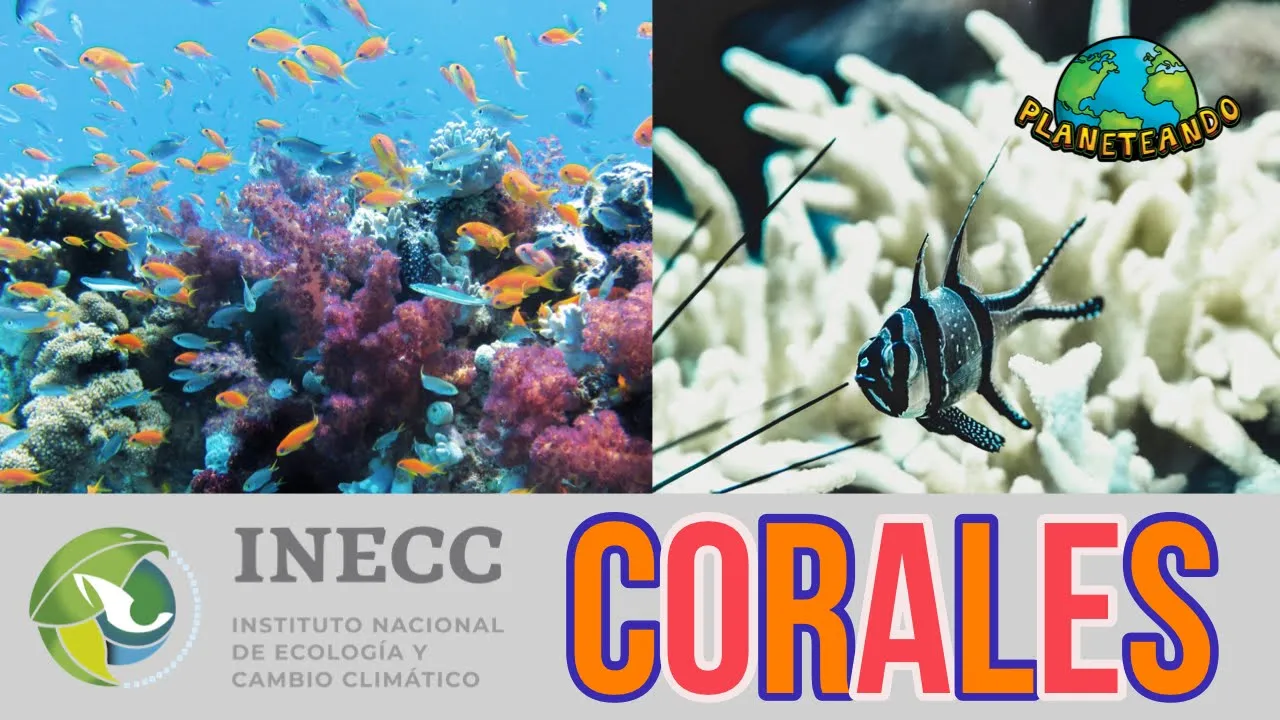







Ocean acidification is a critical environmental issue where increased atmospheric carbon dioxide dissolves in seawater, forming carbonic acid and lowering ocean pH levels; since the Industrial Revolution, ocean acidity has risen by approximately 30%, and projections indicate it could double by the end of this century if current emission trends continue, threatening marine life that builds calcium carbonate shells (such as corals, shellfish, and plankton) and disrupting entire ocean food webs that millions of people depend on for food and income.
Ocean Acidification: The Other Carbon Problem Explained
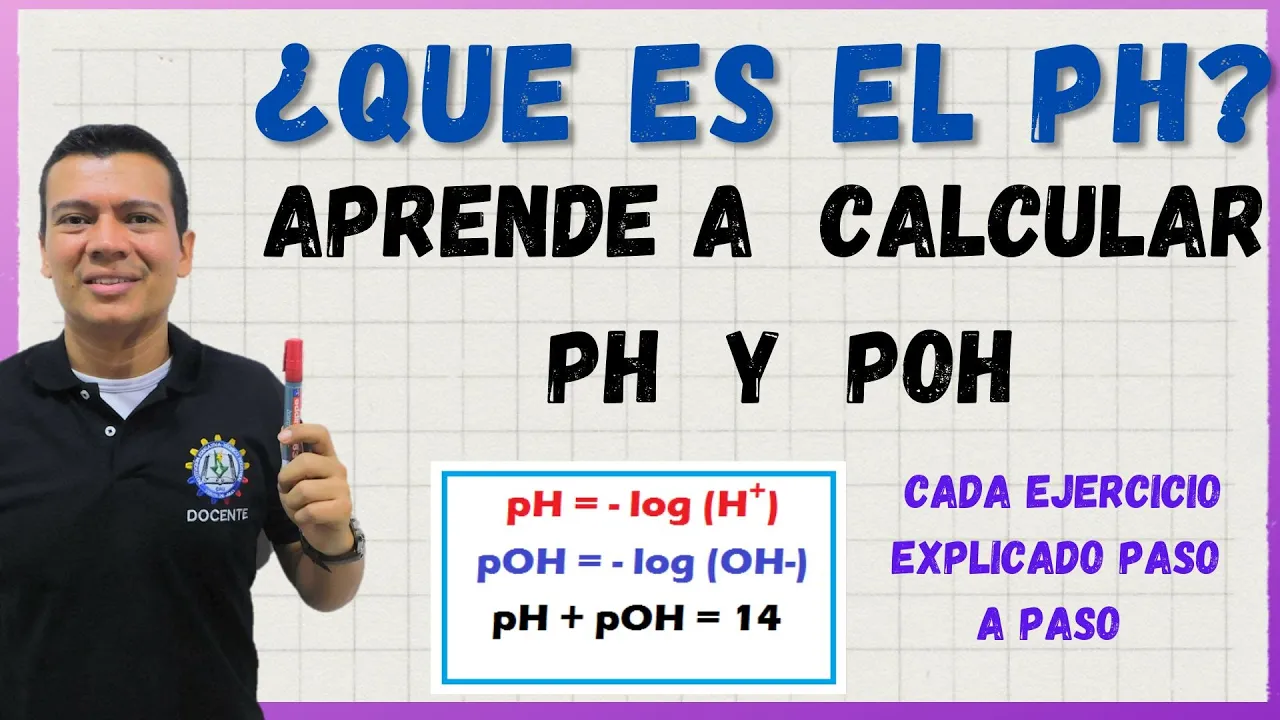
Added:Understanding the pH scale and basic acid-base chemistry, including how hydrogen ion concentration determines acidity.
The fundamentals of the global carbon cycle, specifically how the oceans act as a major carbon sink absorbing atmospheric carbon dioxide (CO2).
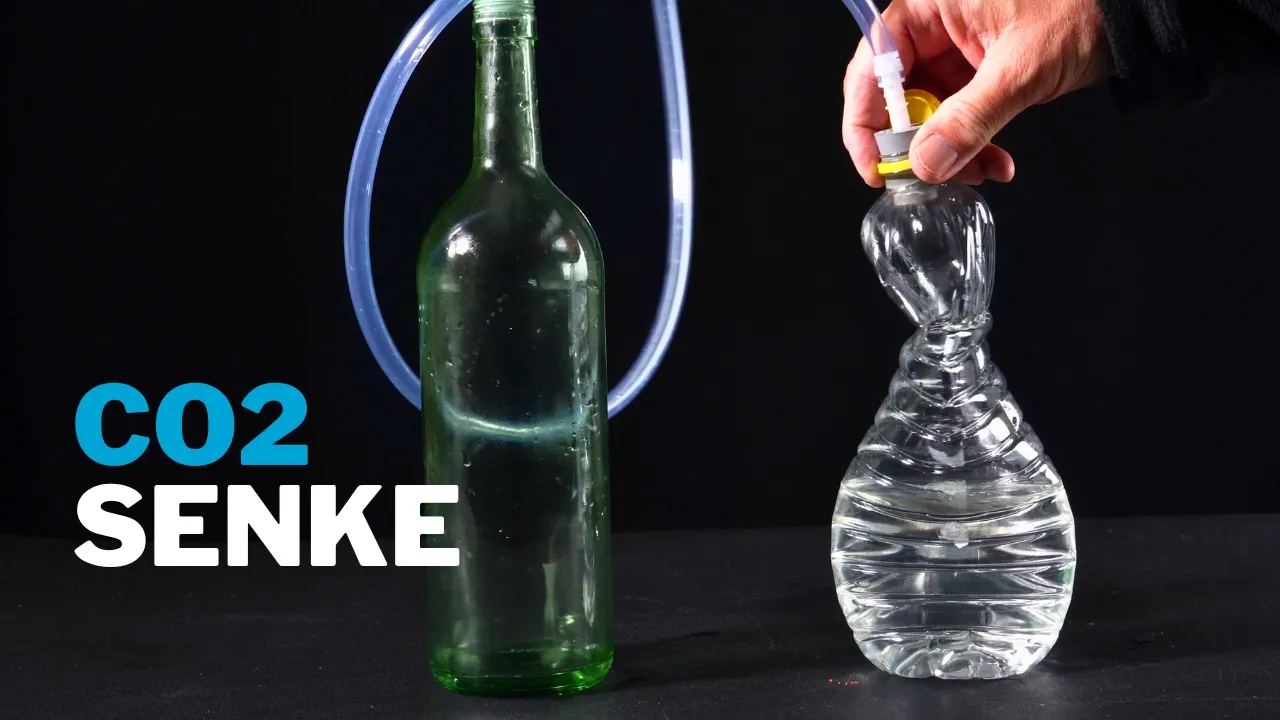
Basic chemical equilibrium, particularly how dissolved CO2 reacts with water to form carbonic acid.
The basic biology of calcifying marine organisms (such as corals, mollusks, and certain plankton) and their reliance on calcium carbonate to build shells and skeletons.
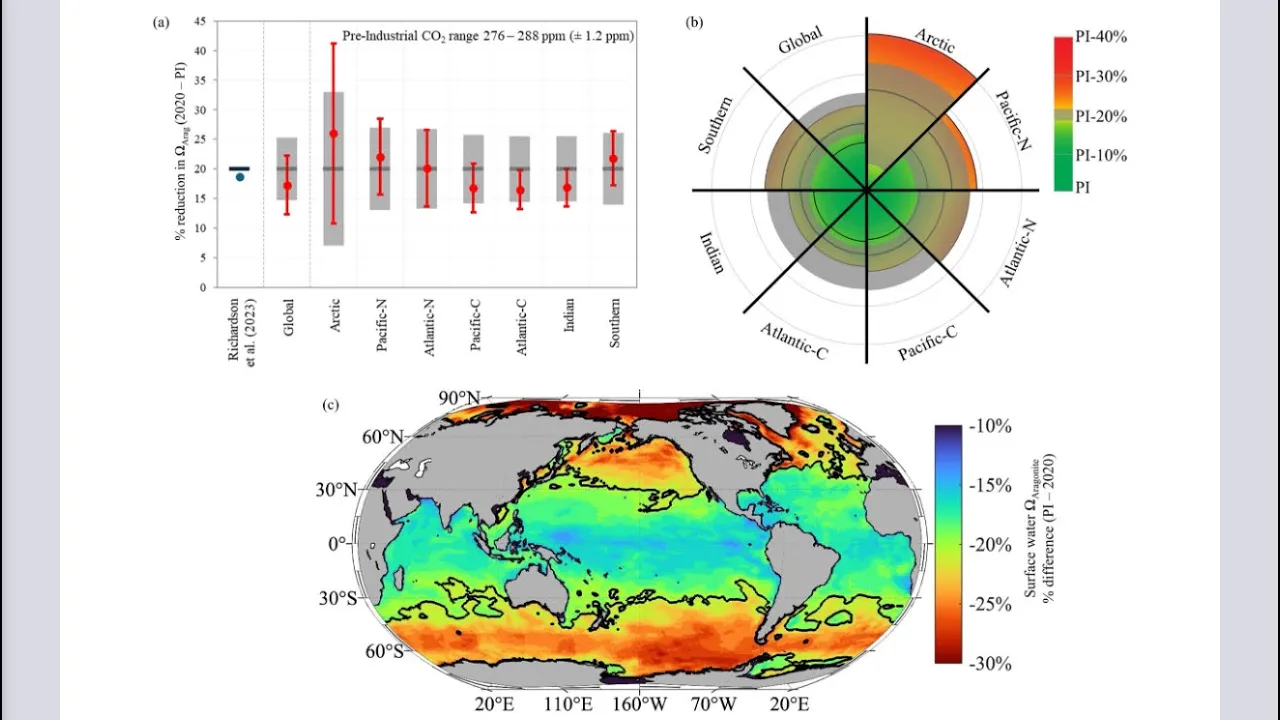
The concept of calcium carbonate saturation states (aragonite and calcite) and how undersaturation leads to shell dissolution.
Socio-economic impacts of ocean acidification on global fisheries, aquaculture industries, and coastal protection provided by coral reefs.
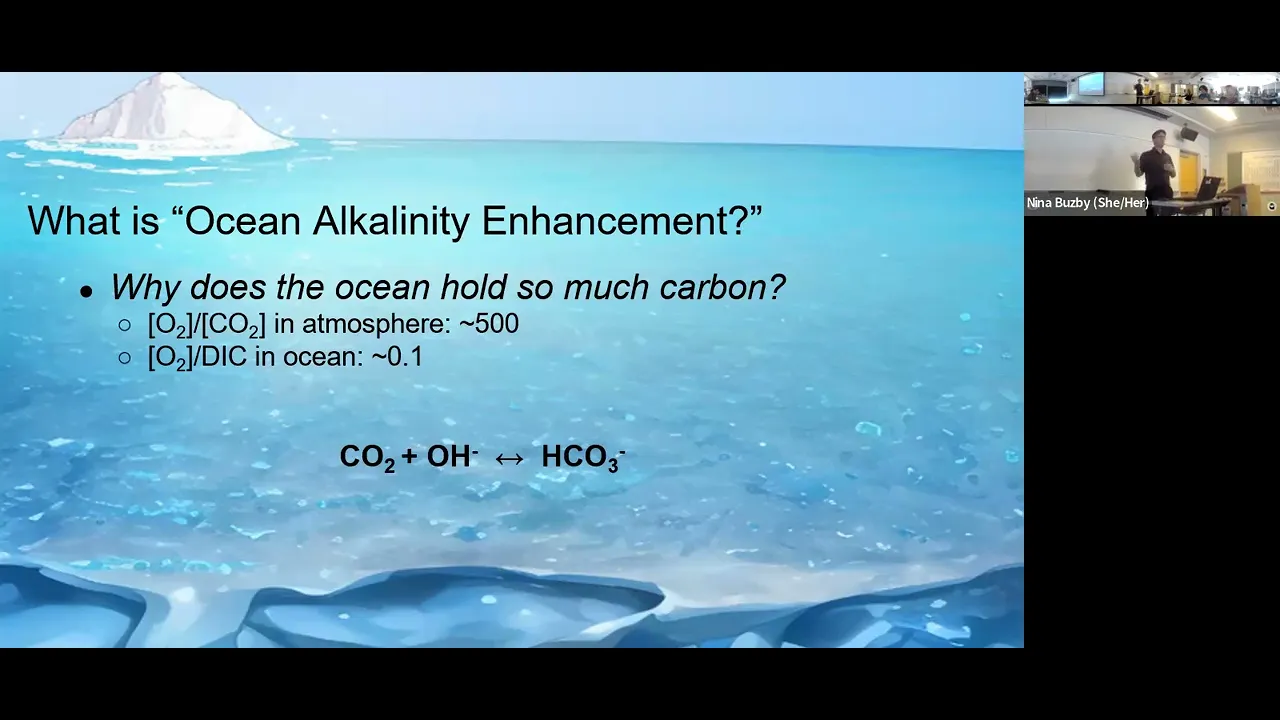
Advanced mitigation and adaptation strategies, such as Ocean Alkalinity Enhancement (OAE) and marine geoengineering solutions.
The synergistic effects of 'the deadly trio'—ocean acidification, warming temperatures, and deoxygenation (hypoxia)—on marine biodiversity.
640.1K views3.1Klikes21:34Original Release: 2009-09-17
[Music] [Music] the ocean keeps Secrets hidden beneath its waves are worlds within worlds over billions of years the ocean has created endless varieties of life life that enchants us that sustains us and despite our science life that mystifies us [Music] still the oceans are an incredible Place full of the most amazing kinds of life life that you could never imagine really working things that if if somebody just thought of them and showed them to you you think that's ridiculous nothing like that could ever live but it does in 35 years of diving it's it's quite a picture I've spent my life on the bottom of the ocean with black seab bath I've seen white sharks underwater I've been in schools of bait that would be so big that they will dark out the sun I can only hope that the ocean maintains that Vitality it's it's it's incredible place of mystery and and it's something that's beautiful beyond description people rely on the oceans in so many ways some ways are obvious like food Recreation Transportation they clean our Shores they protect our coastlines from storms the oceans regulate climate and provide the world with most of its oxygen but we are now certain of one awesome fact the ocean's power to create life is rivaled by our own power to destroy [Music] it scientists refer to ocean acidification as the other carbon problem the first of course is global warming people have heard about global warming for years but it's only over the past 5 years that experts really understood that the carbon dioxide is causing a problem for the oceans as well and what's worrisome is it hasn't even been on our radar carbon dioxide pollution is transforming the chemistry of the ocean rapidly making the water more acidic in decades rising ocean acidity May challenge life on a scale that has not occurred for tens of millions of years so we confront an urgent choice to move Beyond fossil fuels or to risk turning the ocean into a sea of weeds when we burn coal oil or gas we introduce carbon dioxide into the atmosphere but the atmosphere touches the ocean over 70% of Earth's surface so this carbon dioxide we're putting into the atmosphere we are also putting into the ocean carbon dioxide or CO2 exists naturally in our atmosphere plants need it to grow animals exhale it in every breath but carbon dioxide is also a byproduct of burning fossil fuels and in large amounts it is a dangerous pollutant since the Industrial Revolution the ocean has absorbed roughly one qu of the carbon dioxide produced by burning fuels scientists once thought this beneficial after all that carbon dioxide would otherwise accelerate global warming but what happens when so much carbon dioxide 22 million tons of it each day mixes with ocean water in terms of chemistry the answer is simple it becomes an acid since the Industrial Revolution the ocean acidity is increased by 30% with mathematical models scientists have demonstrated that if we continue to pollute as we are now the ocean acidity will double by the end of the century compared to pre-industrial times that is a big problem scientists only recently stopped to think about what this would mean for life in the [Music] ocean thousands of ocean species build protective shells to survive some are so prolific they can be seen from space these organisms create their shells which can be paper thin by drawing certain molecules from the water around them but Rising acidity depletes those molecules so by removing the essential building block for Shell formation it it's making the organisms work a lot harder to build their shells and that means they have less energy to get food they have less energy to reproduce and eventually the organism can no longer compete e logically the surprise is how sensitive some marine organisms are to this increased acidity from carbon dioxide and when acidity gets too high shells dissolve we're changing the basic rules of everything and because of that a lot of organisms may not be able to survive [Music] already we've seen water showing up off the coast of Northern California that's acidic enough to start actually dissolving sea shells it's thought that this kind of corrosive water showing up will become more and more common most of the west coast of North America's shellfish that's dungeon as crabs lobsters muscles oysters sea urants shrimp all those life forms are at risk by midcentury if we continue emitting carbon dioxide the way we have been entire vast areas of both the Southern Ocean and the Arctic Ocean will be so corrosive that it will cause seash shells to disol [Music] scientific models show that in just a few decades we will profoundly alter the ocean's chemistry such conditions haven't existed since the extinction of the dinosaurs recreating those conditions so quickly could leave many ocean animals unable to adapt what if shellfish could no longer build shells would they cease to exist perhaps shelled creatures such as corals and Plankton play a key role in the ocean food web terap pods are a kind of Plankton that live all around the world and in great abundance in polar waters terapod are especially vulnerable [Music] okay should I focus in that yeah right in there we're looking at terapod shells which are plantonic snails with a calcium carbonate shell that we collected from Antarctica this past winter and you can see it looks like there's this lip where it may have already started to dissolve and kind of curled over cuz that's what it looks like when it dissolves it kind of melt melts almost like a candle and wax melting the shell thickness along the Leading Edge right here is less than 1 micrometer thick these are the thinnest terapod shells I've ever seen there's growing alarm that higher acidity will extinguish creatures like terapod that are a basic food source for fish [Music] in many parts of the world fish are a basic food source for people so you can't just worry about the big things in the ocean you have to worry about what they eat and where their food comes from if the smallest things in the ocean are affected by ocean acidification then it ripples all the way up the food web making the largest things in the ocean even more in danger as individual strands disappear the entire food web becomes weaker more vulnerable less beneficial to humankind and many of us are concerned about what that means for the Earth's Marine ecosystem but also for the many millions of people that depend on these systems for their food and income ocean acidity will rise most quickly in cold water regions and areas where deep water wells up to the surface that is disconcerning because it coincides with the regions of the most productive Fisheries in the world I'm a fisherman every single day I have to make a prediction where I'm going to go fishing whether I'm going to find fish where I go and every single day the decisions I make make the difference between whether I stay a fisherman and make a profit I can make predictions I think these things are dire problems either we change what we're doing on land or it will have profound effects on on on Fisheries as we know them marine life that might withstand warming temperatures or Rising acidity May succumb when confronted by both coral reefs already struggle to survive in warming Waters rising ocean acidity puts them in Double Jeopardy we know that coral reefs are particularly sensitive to ocean acidification and the reason for that is that corals are unable to form their skeletons as quickly as they used to and reefs are starting to crumble and disappear we may lose those ecosystems within 20 or 30 years and in those structures live an estimated million species one in every four species in the ocean lives on a coral reef we've got the last decade in which we can do something about this problem but it's very very clear that if we don't start to deal with it right now with very very Stern cuts to emissions we are going to condemn oceans to an extremely uncertain future we're really in the last Decades of coral reefs on this planet for at least the next say million plus years unless we do something very soon to reduce CO2 emissions we're moving from a world of Rich biological diversity into essentially a world of weeds today we're in a really remarkable history of the ocean 100 years ago is inexhaustible you couldn't touch it you couldn't harm it in 100 years it might be dead when people say it was high CO2 100 million years ago so we have nothing to worry about that high CO2 was achieved over a slow process of millions of years and if we achieve high CO2 over millions of years the earth will be able to handle it if we achieve high CO2 over decades the ocean is in big [Music] trouble Earth is the only planet we know of where life exists to understand our own actions we sometimes need to view them in a larger context planet earth was formed 4 and A2 billion years ago 3 and a half billion years ago life began 250 million years ago dinosaurs appeared and 200,000 years ago Homo sapiens within that framework human civilization is brand new our industrial society but an instant yet in that instant we have altered the course of nature we have heated the Earth's surface acidified its oceans and consumed much of its natural habitat now something extraordinary looms a mass extinction of animals and plants caused not by volcanic eruption or the Collision of a meteor but by the actions of one species [Music] ours if we destroy these ecosystems it will take millions of years for them to recover it's as if somebody just because they had the ability to do it decided to run through the Metropolitan Museum with a knife slashing the great paintings of the [Music] world we have created this problem we should be able to solve it the ocean after all is resilient given the chance and enough time it can heal itself so how can we give the ocean that chance Marine protected areas like national parks in the sea shelter ocean life from industry and development sustainable fishing practices allow fish stocks to regenerate the ocean can better defend itself against Rising acidity and temperature if its systems are healthy to make the oceans more resilient to these changes we need to do a better job in keeping the oceans healthy that means restoring depleted fish populations establishing Marine protected areas all around the globe and reducing pollution particularly nutrient pollution in the coastal zones solving those local problems gives those ecosystems a chance to survive a chance to make it through while we solve the global problem we know how to solve the local problems of marine ecosystem Health we know how to solve the global problems the question is will we the only way to stop acidification is to emit less carbon dioxide our Industrial Revolution began more than two centuries ago technology has advanced rapidly since then but we still make energy as we have for hundreds of thousands of years by setting things on fire often we squander the energy we make using more than necessary to accomplish our goals but now we know how to use energy more efficiently how to do more with less there was a time when people thought about Energy Efficiency and conservation is sacrifice doing without dark homes shuttered economies that is emphatically not what what we're talking about we're talking about getting dramatically more work out of less energy with better technology those Energy Efficiency Solutions are particularly promising because the whole world will want to adopt them if we take that initial step we will also in addition to reducing carbon pollution have the very welcome dividend uh in the form of economic stimulus because we'll we'll be reducing energy bills we know how to capture energy cleanly from sunlight wind tides and the Heat of the Earth's core imagine that you're living in a house that gets some of its electricity from its own solar panels feed some of that back into your own vehicle when it's plugged in at night provides you with Energy Services and maybe this is the most important single piece of it uh at costs below those you're paying now that double dividend was never more needed by the US and World economy than it is right now we are on the verge of a green Industrial Revolution a revolution that will expand our economy protect our resources and give us real energy inde dependence there is much we don't know about how carbon pollution will affect our world still we have to choose we can go on as we have forcing future generations to survive somehow without the vast ocean resources that have sustained us or we can move Beyond fossil fuels securing a future that works for all of us for all living things things what will we [Music] choose you're not going to use this I'm going to just say it though what what makes a Greek tragedy a tragedy is that you you can see it coming edus you know goes and marries his mother and eventually tears his eyes out and you want to sell him look no you know don't marry your mother you can stop this process now and you think if I could only go back and change that one little tiny instant then things would have been different I think we're in that instant right now we sit by feeling almost helpless because we see this unraveling leading to its tragic end researchers are predicting significant and substantial changes in the next two decades to our oceans so it is not necessarily a problem we're passing off to future generation it's a problem that we're generating for ourselves I think what gets me up in the morning is that I don't want to see coris disappear on my watch and I know that my fellow scientists feel this way as well so we feel compelled to communicate the message that this is a serious issue and that changes that haven't happened for millions of years are starting to happen right before our eyes I think it's important to point out that it's not all over yet I don't expect people to understand what terapod ODS are or what various forms of Plankton are are likely to survive or not survive but I do expect our policy makers to take Serious an issue that is so closely tied to to life on this planet and the future of Life on this planet I have hope you can't fish and not have hope
Up Next

101:17
APES Exam Review: Units 5-9 Key Concepts Explained
@Mr.Smedes
57.4K views•2025-05-13

15:54
Life in Biosphere 2: Sustainable Ecosystems & Human Survival
@TED
334.9K views•2009-06-16
14:30
Microplastics Everywhere: How Plastic Impacts Our Lives
@TEDx
100.9K views•2018-05-08
10:28
Ice Stupa Artificial Glaciers: Solving Ladakh's Water Crisis
@SonamWangchuk66
3.2M views•2015-05-03
Related Study Plans & Knowledge Roadmaps
Structured learning paths in Environmental Science
environmental-science
Ocean Noise: Cetacean Impacts & Mitigation
01Fundamentals of Underwater Acoustics
02Marine Mammal Bioacoustics
03Anthropogenic Noise: Shipping & Seismic Surveying
+ 2 more learning modules
16h5 modules
Explore Roadmap
environmental-science
Road Ecology: Corridors, Overpasses & Fencing
01Foundations of Habitat Fragmentation and Carnivore Ecology
02The Road Barrier: Ecological Impacts of Transport Infrastructure
03Principles of Ecological Corridors and Connectivity Mapping
+ 3 more learning modules
14h6 modules
Explore Roadmap
environmental-science
Ocean Acidification: Kelp Buffering & Shellfish
01Fundamentals of Ocean Chemistry & pH
02Chemical Pathways of Coastal Acidification
03Bivalve Physiology & Calcification Under Stress
+ 2 more learning modules
18h5 modules
Explore Roadmap
environmental-science
Ice Stupas: Glacial Retreat & Water Security
01Foundations of Glaciology & Mountain Hydrology
02Climate Change and Glacial Retreat Dynamics
03The Science of Ice Stupas & Artificial Glaciers
+ 2 more learning modules
14h5 modules
Explore Roadmap