












![침묵의 공포: 미세플라스틱 [풀영상]ㅣ시사기획 창 251회 (2019.09.21)](https://i.ytimg.com/vi/QiI0rXGQgvE/hqdefault.jpg)












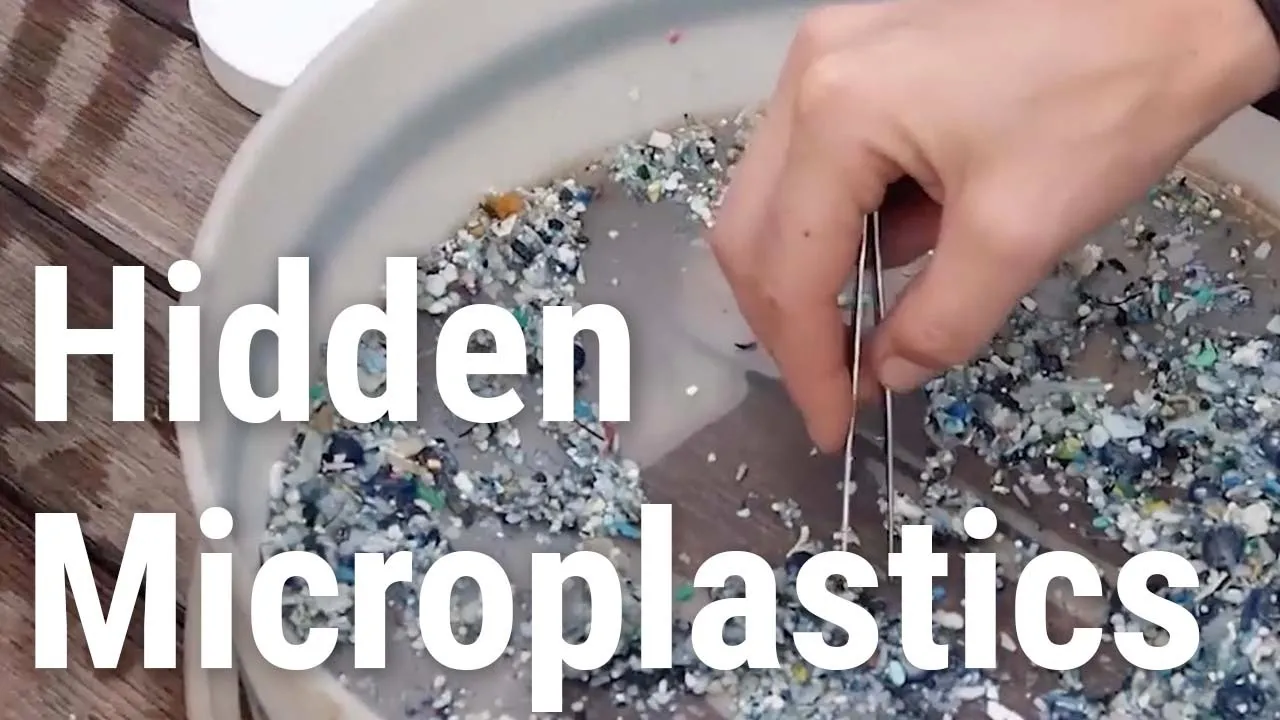
Microplastics, defined as plastic particles smaller than five millimeters, are ubiquitous in our environment, found in air, water, food, and even within our bodies; they originate from both primary sources (engineered small plastics like microbeads and synthetic fibers) and secondary sources (degradation of larger plastics), with synthetic clothing being a major contributor as washing releases hundreds of thousands of fibers per load, making individual actions like refusing single-use plastics, reducing consumption, reusing items, and supporting circular economy principles essential for mitigation.
Microplastics Everywhere: How Plastic Impacts Our Lives
Added:Understanding the chemical structure of synthetic polymers and why they resist natural biodegradation.
The concept of marine food webs, including trophic levels and bioaccumulation.
Basic knowledge of oceanic currents and gyres, which transport and concentrate marine debris.
The distinction between macroplastics and microplastics, and how physical weathering fragments larger debris.
Exploring environmental toxicology, specifically the effects of endocrine-disrupting chemicals (EDCs) leaching from plastics.
Analyzing global environmental policies and international agreements, such as the proposed UN Plastics Treaty.
Investigating circular economy principles and sustainable material design, including bioplastics and green chemistry.
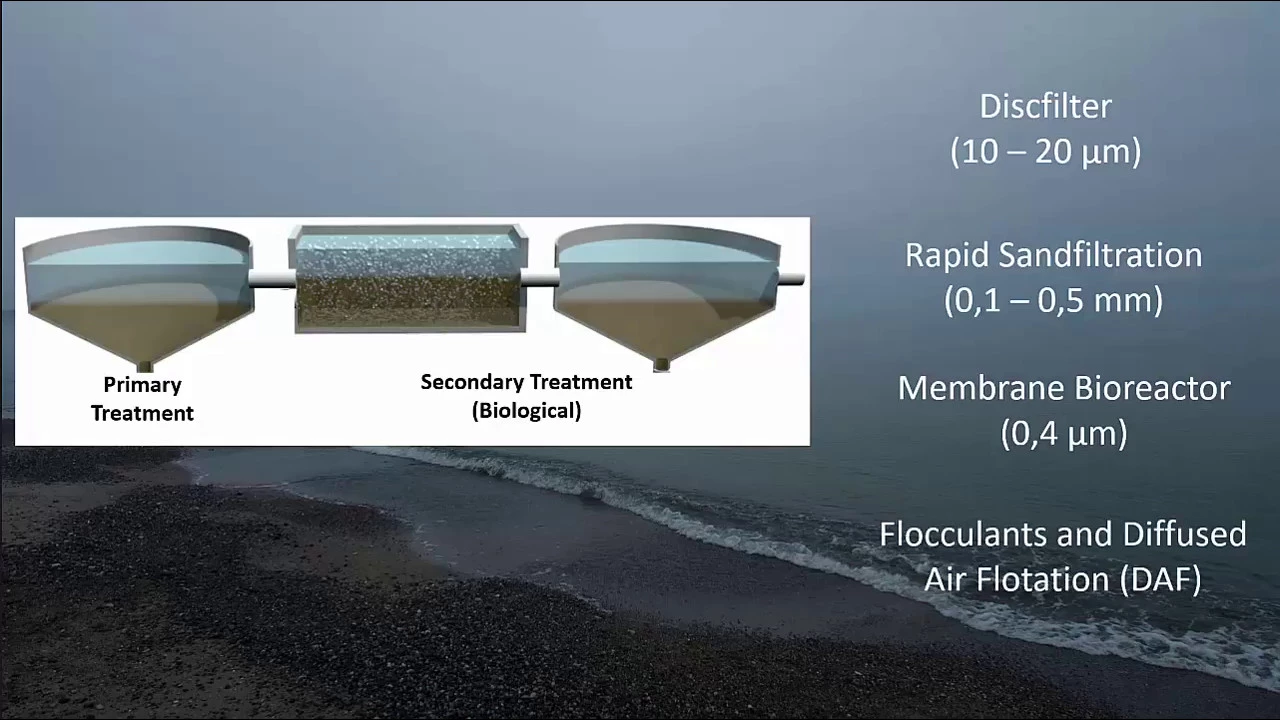
Studying advanced municipal wastewater treatment technologies designed to filter out microfibers and microplastics.
100.9K views2.2Klikes14:30Original Release: 2018-05-08
Translator: Ilze Garda Reviewer: Peter van de Ven I'm going to tell you a story, and it's my story, but it's all of yours story too, and you'll soon see how.
I asked my students to join me in the challenge of documenting how plastic touches our lives, by taking a photo every time we touch plastic.
And at the end of that day, to put all of those photos together in one spot.
Here, I share with you my day of plastic.
From the moment I woke up to the moment I went to bed, as a working mother - I have two young daughters - you can see that plastic is in every single element of my day.
And I've had to make the photos quite small because it was challenging to fit them all on to this slide.
If you're looking closely, you might notice that I've put multiple plastic items into many of the photos.
It was quite overwhelming in the course of the day to take that many pictures, but you can see that plastic is in every single element of my day.
Right from the start, when I woke up to the sounds of my plastic alarm clock, the plastic packaging in the food that I ate, the clothing that I put on as I got ready to go outside, the phones that I talked on at work a lot, right through the end of the day, when I tucked in my youngest daughter with her favorite stuffed animal, Pinky, synthetic, right down to the very last step of the day - a plastic book cover on the book that I was reading.
Plastic is in every single element.
When I put all of these photos together, I found the result really shocking, but perhaps what's even more shocking is that we've only been using plastic since the 1950s.
That's about 65 years, and in that relatively short span of time, we have generated the estimated [8,300 million] metric tons of plastic on the planet.
That's equivalent to 25,000 empire state buildings.
Now, out of all of that plastic, only 9% has been recycled, and in my day of plastic, 9% looks like this.
60% has been thrown away.
In my day of plastic, 60% looks like this, leaving us with the 31% that's still being used.
All of that plastic - over time, with the heat of the sun, light, oxygen, microbes - will brake down into smaller and smaller pieces.
That may take 10 to 20 years for a plastic bag, upwards of 400 years for a plastic bottle, but over time, it will brake up in the smaller and smaller pieces to what scientists now call microplastics.
Microplastics are defined as any plastic less than five millimeters, so about the size of a grain of rice, and we divide these into two types.
The first, primary microplastics: plastic engineered to be small.
And there are many reasons why we do this: medical, personal, industrial.
Microbeads are one that many of you will be familiar with, now banned in many countries.
Watch out for other microplastics in cosmetics, for example, synthetic fibers in mascara.
Polystyrene beads are used in many applications as stuffing and flotation; nurdles, a funny name for plastic resin pellets that can be used to make just about anything, and even things like glitter are considered primary microplastics.
Then we have our secondary microplastics, and these are plastics that are created from the breakdown of those large materials: fragments from a plastic bottle, films from a plastic bag, fibers from netting, from rope, and even from our synthetic clothing.
Now, microplastics are in my day of plastic too, but they are harder to see because of their small size.
But rest assured, they were there from start to finish.
In my morning cup of tea, plastic fibers in the deceptively paper-looking-like tea bags - this is my last box - to the tire dust generated from my synthetic polymer tires as I drove to preschool and to work, to the nurdles in my daughter's stuffed animal and even the plastic gem on the ring that she found in the parking lot.
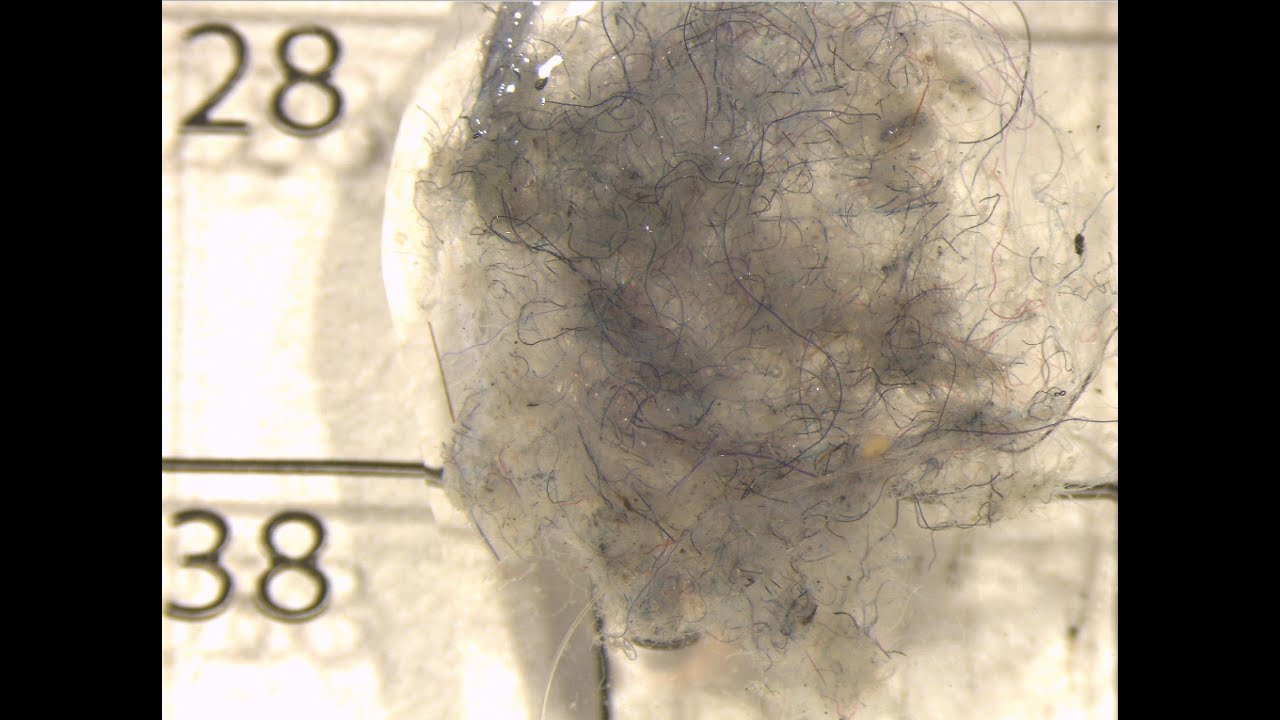
Right through to the end of the day, the load of laundry I did, the lint from the dryer, containing synthetic fibers from our clothing, to my daughter's artwork that I hung up complete with sequins and glare, microplastics are everywhere.
As scientists have looked across habitats and environments, we found that microplastics are everywhere: in different habitats - from freshwater to the ocean, from deep sea to the Arctic - and in animals - from the bottom of the food chain and zooplankton and fish, all the way to the top, to marine mammals and even in ourselves.
Microplastics are everywhere, and as animals eat those plastics, it can have negative effects on them.
It can have physical impacts, blockages, abrasions, or chemical impacts, either from the chemicals in the plastics leaching out or chemicals in the environment and contaminants sticking to the plastic themselves.
And all of this can create negative health effects: decreases in growth, reproduction.
The study of microplastics is a new one, and our knowledge of the impacts of microplastics is limited, especially at the smaller sizes.
And as we zoom down to those smaller sizes, right down to the level that's invisible to the naked eye, about 100 microns or the thickness of the sheet of paper, we find microplastics there too.
They are in my day of plastic, in the water that I drink, in the air that I breath, and we're only just learning about microplastics in food.
My research team has found microplastics in shellfish, in clams and in oysters.
Other studies have found microplastics in chicken, honey, salt, beer, and we've yet to learn about microplastics in other foods.
Almost all of the microplastics that we've found, and in many other studies, have been fibers.
We're still figuring out where these fibers come from, but synthetic clothing represents a significant potential source.
Every year, 70 million tons of fibers are used in the clothing industry.
Out of that 70 million, 60% are synthetic.
And that's evident when you go shopping if you look at your labels.
My daughter and I went shopping to get ready for this talk on a hunt for a natural fiber dressy shirt.
We went to four major Canadian retailers, and we struck out.
So I stand here today looking a little less formal that I might like, but feeling a whole lot more comfortable than I would if I were standing here talking to you about plastic while wearing it.
Now, as we wash our clothes, fibers are released, and a recent study took six-kilogram loads of laundry - polyester cotton, polyester, and acrylic - and washed them.
And they generated anywhere from 140,000 fibers for the poly-cotton mix to a whopping 700,000 fibers for acrylic, per load.
Now, I took those numbers and imagined that my family of four would generate a three-kilogram load of synthetic laundry a week.
Multiply that up by 52 weeks a year, and my family alone generates 11 hundred million fibers a year - fibers that go into our sewage system, into our waterways, into the ocean, into our ecosystems, and into our food.
Our microplastics are everywhere, but there is something that we can do about it almost everywhere we go, and it starts with the good old three R's from the 70s that we're familiar with: reduce, reuse, recycle.
But we need to update these to add three new R's, starting with the first one: refuse.
Refuse single use plastic, refuse any plastic you don't need, refuse straws, refuse coffee cups, think critically about what you need, think about where away is.
If you can't refuse it, reduce it.
Think carefully about the plastic that you need, find natural alternatives where you can.
There are many things that we can do to reduce fiber pollution, for example, you can use a fiber catcher like the Cora Ball, or use a bag to put your synthetics in, like the Guppyfriend from Patagonia, use a front-loading washing machine that generates fewer fibers than a top-loader.
Use a filter on your washing machine to catch the fibers before they go into the water.
All of these things will help reduce your fiber pollution.
If you can't reduce it, reuse it.
Choose products that are built to last rather than those with planned obsolescence.
Try to get most life out of your plastic items that you can, and if you can't reuse it, of course, recycle it, but even the hard things, even the things that don't fit into your curbside recycling.
In my case, that's plastic bags, styrofoam, electronics.
If your community doesn't have a facility to deal with these types of items, then create the demand and the need for it, it's worth your time.
The second new R: rethink.
We live in a society that doesn't place a high value on second-hand goods, we need to change that.
We need to focus on services rather than replacement, and that is going to require the final new R, and perhaps the most challenging, which is to redesign.
On a broader scale, we need to change our thinking from the linear model of make, take and dispose to one that's more circular in nature, to one in which we think about the end life of a product right at its beginning.
Now, I went through my day of plastic and chose a number of items that follow that linear economy, that linear model of make, take and dispose, and I multiplied the images by the number of each one that I've used in my lifetime.
Now, I'm proud and somewhat embarrassed to say that this is the alarm clock from my childhood, which doesn't say much for me keeping up with the times, but I've gone through a number of different appliances, computers, phones; I chose my daughter's backpack because in her seven years on this planet, she's already gone through three, and I've gone through more synthetic clothing than I care to admit.
This consumption model generates much more waste than it would in a circular economy, one which focuses on services, on repurposing, on refurbishing, rather than replacing, one in which I might have one phone, one computer that gets updated with latest technology as it becomes available.
Imagine a system in which you don't own your clothes, but burrow them or you rent them from the companies that you like, you wear them until you want something new, you send them back, they get repurposed into newer styles you want to wear.
Let's slow down fast fashion and focus on quality rather than quantity.
All of these things, with a change in our linear way of thinking, are within the realm of possibility, and many are already happening.
Let's think outside the bottle and create room for innovation.
Plastic is a valuable product, we are reliant on it, and a future without it is completely unrealistic.
But we can't and we shouldn't continue to use it and produce it on the increasing trajectory that we are currently on.
Plastic is resilient, it lasts a long time, and while that is a problem in one respect, it represents an opportunity in so many others.
Microplastics are everywhere, and while that scares me, what gives me hope is knowing that the solutions are too.
Thank you.
(Applause) Winter Clark: I'm just so intrigued by these ideas of rethinking and redesigning, you know, focusing on repair and services rather than just throwing something out after one use.
Do you think that those aspects of rethinking and redesigning are more important than continuing to reduce the amount of plastic that we use?
Sarah Dudas: I think they're both important.
On an individual level, it's very easy to reduce the amount of plastics that we use.
Now, I challenge everybody here to try and do that every time you're offered plastic you don't really need.
So we can make some smart individual choices, but we do need to rethink things at a broader level.
There are some things that we're doing that we can improve upon.
For example, in the food packaging industry, we package foods that have a shelf life of a few days to maybe a few years and packaging that lasts upwards of a few decades.
This doesn't make sense, we need to rethink those models, and with that will come a further reduction in the way that we're using plastic.
WC: Alright, thanks.
SD: Thanks.
(Applause)
Up Next

70:47
Ocean Plastics Pollution: From Sources to Solutions | Kara Lavender Law
@mblwoodshole
288 views•2019-08-13

15:54
Life in Biosphere 2: Sustainable Ecosystems & Human Survival
@TED
334.9K views•2009-06-16
21:35
Ocean Acidification in Washington: Dr. Shallin Busch
@TEDx
25.7K views•2013-05-02
10:28
Ice Stupa Artificial Glaciers: Solving Ladakh's Water Crisis
@SonamWangchuk66
3.2M views•2015-05-03
Related Study Plans & Knowledge Roadmaps
Structured learning paths in Environmental Science
environmental-science
Ocean Noise: Cetacean Impacts & Mitigation
01Fundamentals of Underwater Acoustics
02Marine Mammal Bioacoustics
03Anthropogenic Noise: Shipping & Seismic Surveying
+ 2 more learning modules
16h5 modules
Explore Roadmap
environmental-science
Road Ecology: Corridors, Overpasses & Fencing
01Foundations of Habitat Fragmentation and Carnivore Ecology
02The Road Barrier: Ecological Impacts of Transport Infrastructure
03Principles of Ecological Corridors and Connectivity Mapping
+ 3 more learning modules
14h6 modules
Explore Roadmap
environmental-science
Ocean Acidification: Kelp Buffering & Shellfish
01Fundamentals of Ocean Chemistry & pH
02Chemical Pathways of Coastal Acidification
03Bivalve Physiology & Calcification Under Stress
+ 2 more learning modules
18h5 modules
Explore Roadmap
environmental-science
Ice Stupas: Glacial Retreat & Water Security
01Foundations of Glaciology & Mountain Hydrology
02Climate Change and Glacial Retreat Dynamics
03The Science of Ice Stupas & Artificial Glaciers
+ 2 more learning modules
14h5 modules
Explore Roadmap