Ice Stupas: Glacial Retreat & Water Security
Learning Goal: Evaluate the impacts of climate-driven glacial retreat on freshwater security in high-altitude arid regions and design an artificial glacier (ice stupa) network to secure seasonal agricultural water supplies.
- Prerequisites: Basic knowledge of thermodynamics, algebra, and high-school-level physical geography.
- Estimated Total Study Time: 14 Hours
Module 1: Foundations of Glaciology & Mountain Hydrology
Learn how glaciers accumulate, store, and discharge water within high-altitude mountain ecosystems, and understand why mountain ranges are considered the "water towers" of the world.
Recommended Videos

Why this video
This video provides a rigorous academic introduction to the concept of glacier mass balance. It systematically breaks down the inputs (accumulation through snowfall) and outputs (ablation through melting and calving) that govern glacier health. Understanding the Equilibrium Line Altitude (ELA) is vital for modeling how climate shifts push a glacier into a deficit.
Knowledge Checkpoint
- Define the difference between the accumulation zone and the ablation zone of a glacier.
- Explain how a glacier's Equilibrium Line Altitude (ELA) shifts in response to changing annual temperatures.
- Calculate the mass balance equation of a glacier given seasonal precipitation and run-off data.
Why this video
Dr. Mackay provides an in-depth scientific lecture on the "mountain water tower" concept. He details how mountain glaciers act as natural, seasonal regulators—storing precipitation in solid form during the winter and releasing it as liquid meltwater during critical dry spring and summer months when downstream agricultural demand peaks.
Knowledge Checkpoint
- Explain why mountains are referred to as the world's "water towers" and describe their spatial footprint.
- Articulate how seasonal buffers of snow/ice compare to groundwater reservoirs in alpine catchments.
- Identify the main hydrological pathways of meltwater from a glacier terminus to downstream valley aquifers.
Why this video
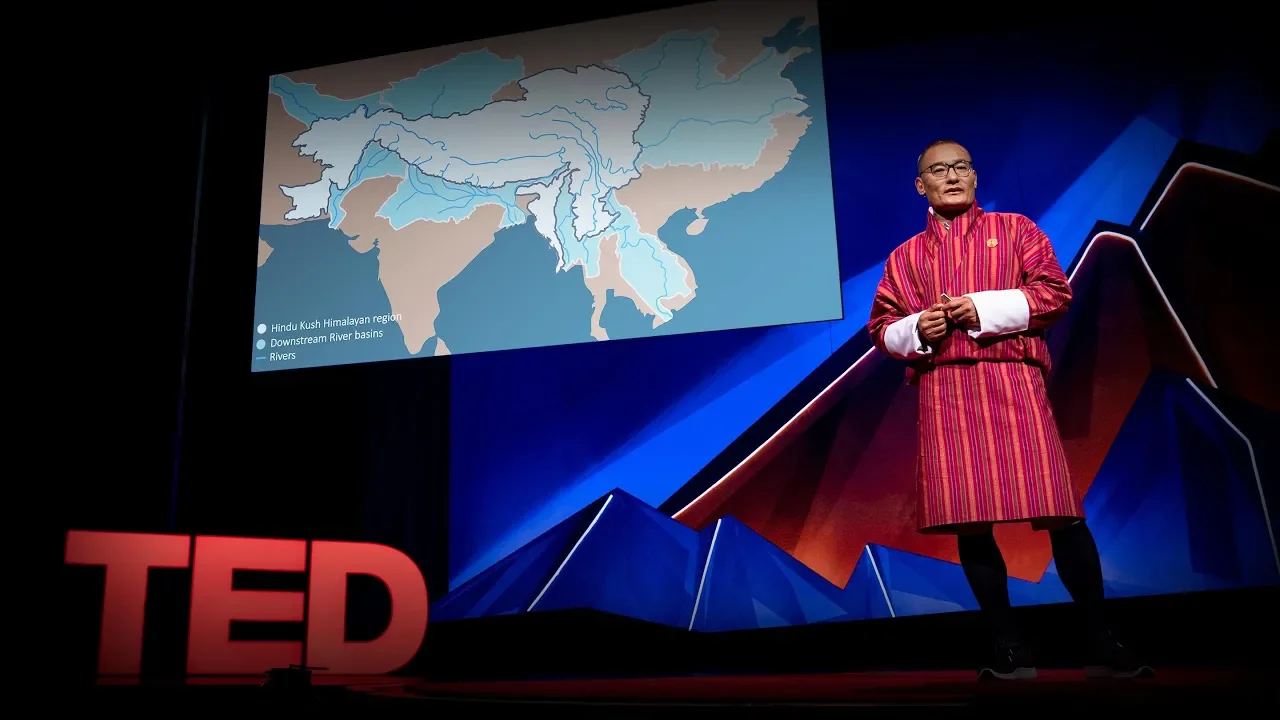
This short but impactful talk introduces the geography of the Hindu Kush Himalaya, commonly known as the "Third Pole." It frames the vast regional scale of water reliance, establishing that over a billion people downstream depend directly on these glacial headwaters.
Knowledge Checkpoint
- Locate the "Third Pole" geographic region and name at least three major river basins originating from it.
- Explain the scale of human reliance on these specific high-altitude water resources.
Quantitative Hydrological Modeling Supplement (Self-Study)
Because of the inherent lack of video tutorials on high-altitude hydrological modeling, review the following core formula for estimating seasonal glacier run-off using the classic Temperature Index (Degree-Day) Model:
Where:
- is the daily melt rate ().
- is the Degree-Day Factor (), typically ranging from to for ice.
- is the mean daily air temperature.
- is the threshold melting temperature (typically ).
Exercise: If a high-altitude catchment contains of exposed glacier ice with a DDF of , calculate the volume of run-off generated over a 10-day heatwave where the mean daily temperature is stable at .
Module 2: Climate Change and Glacial Retreat Dynamics
Analyze how rising global temperatures accelerate ice mass loss, disrupt historical river discharge regimes, and create severe localized water insecurity in downstream arid regions.
Recommended Videos
Why this video
This BBC investigative report provides a visceral look at the hazards of accelerated melting in Pakistan's Gilgit-Baltistan region. It documents how warming temperatures cause Glacial Lake Outburst Floods (GLOFs), which destroy infrastructure, wipe out agricultural soils, and create highly unpredictable, volatile downstream water flows.
Knowledge Checkpoint
- Describe the formation mechanism of a Glacial Lake Outburst Flood (GLOF).
- Detail the short-term vs. long-term downstream hydrological consequences of rapid glacial retreat.
- Explain how communities can monitor and adapt to the immediate physical hazards of GLOFs.

Why this video
This extensive documentary/discussion presents a comparative global perspective by focusing on the Cordillera Blanca in Peru. It highlights how Latin America's high-altitude communities face similar water stress profiles to the Himalayas, showing that glacial retreat is a global, systemic systemic threat to mountain-fed agricultural zones.
Knowledge Checkpoint
- Contrast the impact of glacial retreat in the tropical Andes with that of central Asia.
- Explain how the loss of over 30% of a glaciated area impacts dry-season stream flow.
- Describe the socio-economic vulnerabilities of agrarian communities when mountain water security breaks down.
Why this video
This DW documentary addresses the geopolitics of melting glaciers in the Kashmir region. It bridges physical glaciology with socio-political realities, illustrating how shrinking glaciers directly threaten the water supply of competing nations sharing critical river systems.
Knowledge Checkpoint
- Analyze how transboundary water agreements are strained by declining glacial runoff.
- Explain why the lack of seasonal glacial storage leads to increased agricultural crop failures during the spring sowing season.
Module 3: The Science of Ice Stupas & Artificial Glaciers
Study the physical and thermodynamic principles behind the "Ice Stupa"—a conical artificial glacier designed by Sonam Wangchuk to store cold winter runoff as ice for use in dry spring farming.
Recommended Videos
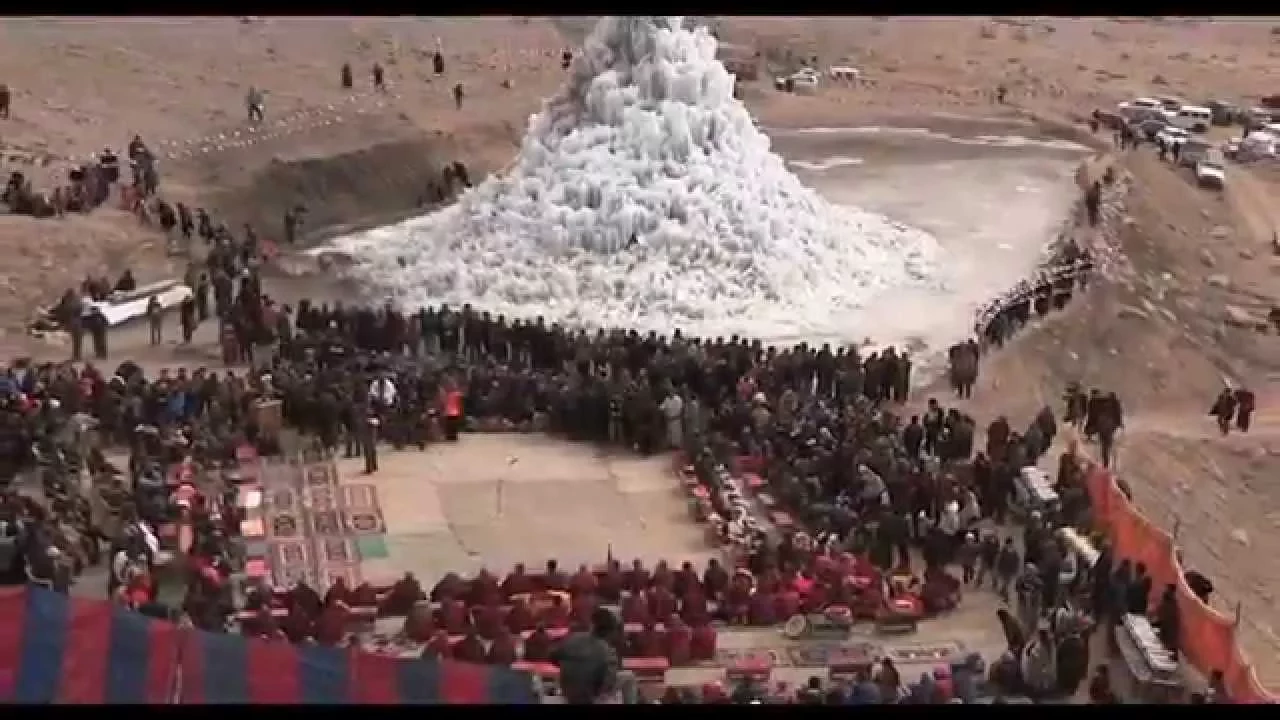
Why this video
This is the foundational narrative behind the Ice Stupa development in Ladakh, presented directly by its creator Sonam Wangchuk. It explains the crucial shift from flat, horizontal artificial glaciers (which melt too quickly at lower, warmer elevations) to vertical, conical ice structures.
Knowledge Checkpoint
- Explain why horizontal ice sheets melt faster than vertical, conical structures (focus on surface-area-to-volume ratio).
- Describe the basic layout of the gravity-fed pipe system that powers the stupa's fountain.
- Identify the specific months of the year when water is captured vs. when it is released for irrigation.
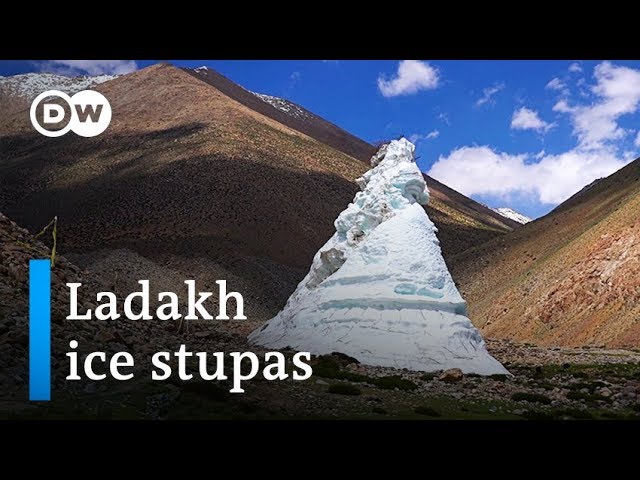
Why this video
This news segment provides visual context of the operating environment of Ladakh, a cold high-altitude desert. It highlights the local community involvement, showing how the stupas provide vital water during the planting season of April and May, long before the natural mountain glaciers begin to melt in late June.
Knowledge Checkpoint
- Describe the climate classification of Ladakh and explain why spring is the most water-critical period.
- Explain how ice stupas bridge the "water gap" between seed planting and natural glacial melt run-off.
Why this video
This profile video highlights the global recognition of the Ice Stupa design. It explains the engineering beauty of the system: utilizing basic physics (gravity-driven water pressure) to eliminate the need for expensive, fossil-fuel-powered pumps.
Knowledge Checkpoint
- State the physical principle that allows water to spray out of the nozzle without any electricity.
- Estimate the typical volume of water stored in a standard-sized 30-meter-tall Ice Stupa.
Module 4: Engineering and Designing an Ice Stupa
Delve into the technical components of ice stupas, including gravity-fed pipe hydraulics, water droplet thermodynamics, and the physics of atomization and freezing in sub-zero environments.
Recommended Videos
Why this video
This video details the practical construction of high-capacity gravity-fed water pipelines. It explains the core hydraulic equation of pressure generation: (or ), which is critical for designing the piping layout from a high-altitude stream down to the valley floor stupa nozzle.
Knowledge Checkpoint
- Calculate the static pressure at a discharge nozzle if the water intake is located 60 vertical meters higher than the nozzle, assuming zero friction loss.
- Explain why choosing a larger diameter pipeline (e.g., 2-inch vs. 0.5-inch) decreases friction head loss over long runs.
- Detail how to safely transition and anchor heavy water pipes on steep slopes.
Why this video
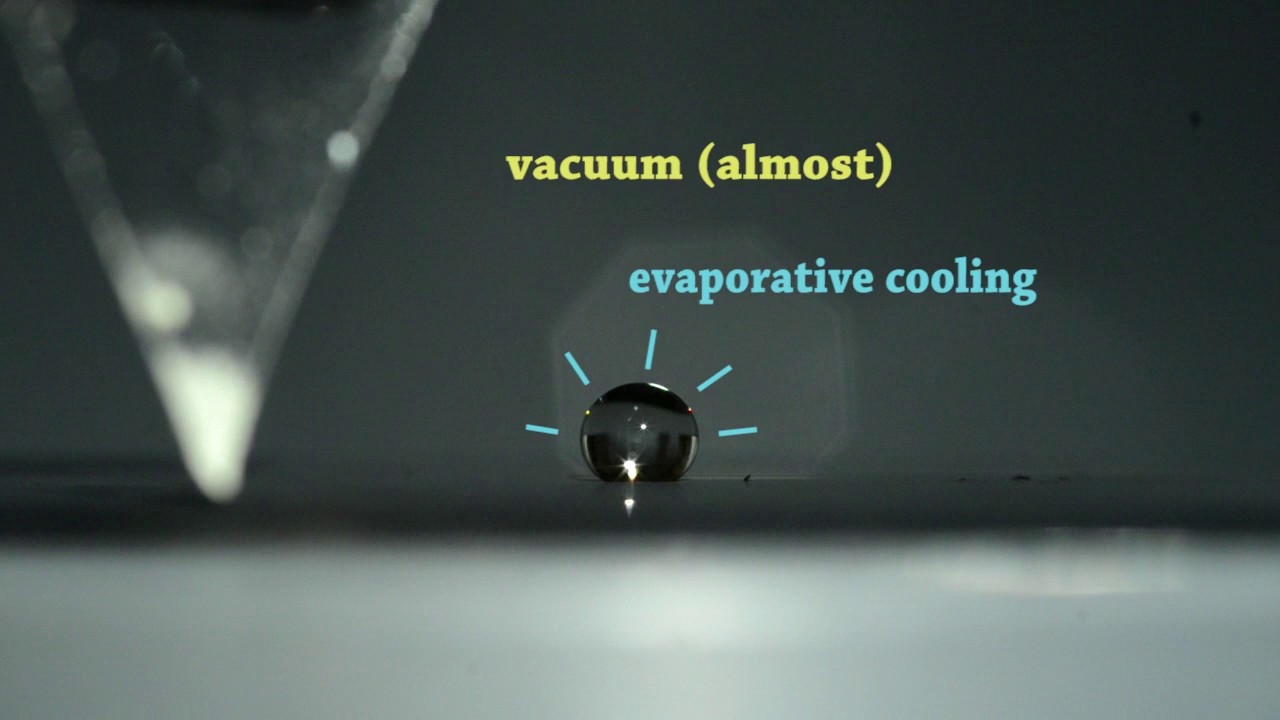
This video explains the micro-scale physics of how individual water droplets freeze. For an ice stupa to work, water sprayed into freezing mountain air must cool and partially freeze before hitting the ground or the stupa's core structure. Understanding ice shell formation and heat transfer on the droplet scale is essential.
Knowledge Checkpoint
- Explain the thermodynamic process of latent heat dissipation as a water droplet transitions from liquid to solid.
- Describe why water drops freeze from the outside inward, and how this relates to droplet size.
- Explain how air temperature and humidity affect the rate of heat exchange from a falling droplet.
Why this video
The Action Lab investigates the physics of supercooling and the mechanics of freezing moving water. This explains why the stupa spray must be finely atomized; if water velocities are too high or droplet sizes too large, the heat transfer to the cold atmosphere is insufficient, resulting in liquid runoff rather than ice accumulation.
Knowledge Checkpoint
- Explain "supercooling" and describe the role of nucleation sites in the freezing of moving water.
- Explain why high-velocity running water resists freezing compared to static water bodies.
- How does the choice of nozzle spray pattern (e.g., fine mist vs. coarse stream) affect the ice deposition efficiency of an ice stupa?

Why this video
While focused on combustion, this video contains an excellent segment on the fluid dynamics of water atomization and nozzle geometry. It explains how pressure forces liquid through restricted orifices to generate optimal droplet distributions (targeting a range below 10-50 microns), which translates directly to ice stupa spray optimization.
Knowledge Checkpoint
- Explain the relationship between fluid pressure and droplet size distribution in spray nozzles.
- Discuss the trade-offs of micro-fine droplet atomization (e.g., high freezing rate vs. susceptibility to wind drift and evaporation).
Practical Engineering Homework: Thermal Calculations
To bridge the gap in technical nozzle physics under sub-zero atmospheric conditions, complete the following analysis:
The total heat loss () required to turn a liquid water droplet at to solid ice at is:
Where:
- is the mass of the droplet.
- is the specific heat capacity of liquid water ().
- is the latent heat of fusion of water ().
Problem Statement: Notice that the latent heat of fusion () is much larger than the sensible heat cooling step (). Write a short explanation of how a high-pressure nozzle system maximizes heat transfer through convective cooling () by manipulating the droplet surface area () relative to its volume.
Module 5: Agricultural Integration & Water Network Design
Learn to transition stupa meltwater from storage to the field by calculating hydraulic pressure, managing water distribution networks, and implementing drip irrigation systems in arid terrains.
Recommended Videos

Why this video
This video provides a complete walkthrough of designing and laying out long-run plastic drip tape irrigation systems. This scale is highly representative of mountain terrace farms. It details spacing, line pressure management, and emitter mechanics, which are crucial when routing seasonal ice stupa meltwater directly to crop rows.
Knowledge Checkpoint
- Detail the physical components of a drip tape system (header lines, sub-mains, and emitters).
- Explain how to maintain uniform water pressure across long irrigation runs to prevent uneven crop watering.
- Describe the process of winterizing agricultural drip lines to prevent freeze expansion damage.

Why this video
This technical overview explains how to measure and calculate static vs. dynamic water pressure and flow rates. It provides the essential mathematics to design irrigation pipes that safely deliver water from high altitude stupa holding ponds down to agricultural plots.
Knowledge Checkpoint
- Define the difference between static pressure (no flow) and dynamic working pressure (system running).
- Describe how to perform a bucket flow test to determine the exact flow capacity (GPM or LPM) of a local water line.
- Explain how excessive working pressure can damage low-pressure agricultural drip emitters and how to regulate it.

Why this video
This video explains how to build a high-efficiency gravity-fed drip irrigation system using elevated holding barrels. This mirrors the process of feeding mountain farms from stupa melt pools: utilizing small gravity drops (head pressure) instead of mechanical pumps to distribute water evenly.
Knowledge Checkpoint
- Calculate the minimum height a reservoir must be placed above a farm field to generate the 10-15 PSI required to open standard low-pressure drip emitters.
- Describe how to design clean filtration loops to prevent fine sediment and algae from blocking emitters.
Mountain Agriculture Layout Assignment
Note: Due to a lack of highly technical field-engineering videos for steep mountain terraced terrains, students must complete this design project.
Task: Design a multi-tiered gravity drip network for a 3-tier terraced farm on a slope.
- Available Head: An ice stupa reservoir sits at elevation .
- Terraces: Located at elevations , , and .
- Emitter Operating Range: to ().
Requirements:
- Determine if a Pressure Reducing Valve (PRV) is needed for each terrace layer.
- Draft a layout diagram detailing pipe diameters (Mainline vs. Lateral lines) to prevent pressure drops along the terraces.
- Incorporate a sediment settlement tank to trap fine glacial silts before they enter the drip emitters.
Course Map
Key People Index
- Sonam Wangchuk
- Context: A visionary Ladakhi engineer, innovator, and educational reformer. He created the concept of the "Ice Stupa" in 2013 to address critical seasonal spring water deficits in high-altitude Himalayan desert environments.
- Dr. Jonathan Mackay
- Context: A lead hydrologist and researcher studying "warming water towers" globally. His work focuses on integrating climate models with downstream catchment run-off projections.
- Tshering Tobgay
- Context: Environmentalist and former Prime Minister of Bhutan, who champions the conservation of the "Third Pole" and highlights regional climate vulnerabilities on international platforms.
Final Self-Assessment
Complete this comprehensive final review to test your mastery of high-altitude water engineering and glaciological science:
- Glacier Mass Balance Calculation: Explain how to measure accumulation vs. ablation on a physical glacier and state the units of measurement (meters of water equivalent - m w.e.).
- Water Tower Concept: Contrast the hydrologic routing timeline of a glaciated basin against a non-glaciated rain-fed basin.
- Conical Geometry Advantage: Mathematically prove why a cone has a lower solar thermal absorption rate than an equivalent volume of flat ice.
- Hydrostatic Head Calculations: Convert a vertical elevation difference of 45 meters into hydrostatic pressure in both PSI and bar.
- Nozzle Physics Analysis: Explain why a high-pressure nozzle that produces droplets is more likely to freeze in air than a low-pressure open hose, detailing the surface-area-to-volume heat transfer pathway.
- Cavitation Prevention: Identify the causes of pipeline cavitation in steep gravity-fed systems and how to resolve them using air relief valves.
- Sedimentation Management: Sketch a multi-chambered sand and silt settlement filter designed to protect high-altitude agricultural drip systems from glacial silt abrasion.
- Pressure Regulation Design: Design a piping system utilizing break pressure tanks to step down water pressure safely across a 100-meter drop.
- Water Security Advocacy: Summarize the socio-political implications of shifting seasonal runoff in transboundary Himalayan water catchments.