














Glacial retreat in the Peruvian Andes, particularly in the Cordillera Blanca region, is causing significant water security challenges as glaciers lose about 30% of their area due to warming rates higher than the global average. As glaciers recede, they expose metal-rich rocks that release heavy metals (iron, lead, arsenic) and acidity into rivers, reducing pH levels to around 2-3 and contaminating water supplies. Local communities dependent on glacial meltwater for drinking and agriculture are already experiencing toxic water conditions, with some rivers turning bright orange from iron leaching. The Cascada project is developing solutions including artificial wetlands using native metal-tolerant plants to filter contaminated water and restore clean water supplies to affected communities.
Glacial Retreat in Peru: Impacts on Water Security | Trans.MISSION
Added:closer a girl Doogie doll a ghastly welcome to a festival digital and thank you so much for joining us here today my name is Andy fryers and I am the sustainability director here at a festival and the one who's responsible for the transmission to project which we've been running in partnership with the Natural Environment Research Council they are UK's largest funder of independent environmental research science research sorry training and innovation delivered to universities and research centers the transmission to concepts was to bring together scientists and artists to find new ways of communicating science to wider audiences and it follows on from our successful projects we is also with transmission which we run to two years ago and you can see videos which were produced from that on our YouTube channel and that would keep transmission focus purely on on the UK but with transmission - we wanted to look at where we were based around the world and also where Newark funded research as well and we chose three locations for transmission to Peru Colombia and here in the UK and today's event is looking at the Peru part of that project and there were three three key people who took part in in transmission - in Peru we had Erica Stockholm who is the artist the author of the story who will be joining us on video in in a bit and are all Malo who is the Peru based scientist and also general worden general worden will be joining us live very shortly she is the professor of glaciology at the Chabad Institute at the University of Bristol here in the UK she researches hydrological and biogeochemical processes that occur within glacier and ice sheet systems and therefore fields she's published over a hundred scientific articles and book contributions and is currently leading field work on place glaciers in Peru today Greenland and the Himalayas welcome Gemma welcome to a festival digital hi Andy thanks very much thanks thanks so much and it's on the can you just start by telling us a bit about the research what what is a research which you're undertaking in Peru at the moment sure so the research is put a part of a big program which is linking the UK with Peruvian scientists our project is called cascada but the project itself is to study the impacts of blastia change in the Peruvian Andes in the Cordillera Blanca which contains most of the glasses in Peru so you may you may be surprised to realize that actually there's a lot of glasses in the tropics and as you can probably imagine it's not a brilliant place for glasses and the tropics because it's warm so they are kind of quite high up in the mountains but in the Cordillera Blanca in Peru warming at rates which are higher than the global average means that these glasses are retreating quite quickly actually they've lost about 30 percent of their area in the last few decades and that's really important because these glasses they're nourished by snow during the wet season and in the dry season that they melt and they provide water to local communities what the problem is is as those glasses retreat there's less and less water so a project studying how that water is declining but there's a second problem in Peru which is as these glasses retreat they're retreating over very metal-rich rocks those rocks get washed by the rain they get open to the atmosphere and they're releasing metals and a lot of acidity into the rivers so some of these rivers are now about pH 2 or 3 that's about the same facilities your stomach and with very high concentrations of heavy metals and so we're trying to understand you know as these glasses retreats are you going to have much more toxic waters and rivers and lakes and is it going to cause major major issues for quite a lot of thousands of people in that particular region so our project aims to understand you know which rivers are going to become toxic in the future and also what are we going to do about it so what's the solution so our partners in Peru mudal he's actually looking at how can you solve the problem can you start to construct artificial wetlands on rivers which take the metals out of the water and neutralize the acidity and can return clean waters to local communities in that region so it's quite an applied project so these are naturally occurring heavy metals that this isn't it's not something which we've put there and it's being revealed this they are just naturally occurring yeah that's correct so that the glass he is in the Cordillera Blanca they sitting on top of these old rocks which are rich in things like iron lead arsenic but they those minerals are present there naturally but as the glasses are retreating they're being released from the rocks actually because the glossiest crush up the rocks they're very fine powder they leave them strewn in therefore fields as they retreat and then they're washed by the rain and the metals and the acidity come out of the rocks but it's essentially a natural process that triggered by essentially climate warming and dusty retreat in this case so if it already having a direct impact I mean are there I mean as you said you looking at you expecting you to get worse but is it already having a direct impact on those on the on the lakes and also on on people who live around that area yeah now absolutely if you talk to some of the local people 20 30 years ago they were able to fish in some of these lakes and rivers and if you know now go to those lakes and rivers I mean the rivers a bright orange from rust basically ironed falling out of the water because there's so much of it and the lakes are kind of green murky green nothing really living in there so you know they don't they can't fish anymore and actually some of the rivers which are quite important in supplying water to those communities you certainly wouldn't want to drink them because they're so acidic and they contain heavy metal concentrations above World Health Organization standards what sort of numbers of people are we talking about being affected around that the types of the Glacial region at the moment it's probably quite small communities of people but people in that region are living in quite vulnerable places so up on the mountainside quite up close to the glaciers in some places there they're kind of scattered everywhere and they're very very dependent on glacial meltwater particularly in the dry season to survive so that's important to them but actually if the problem becomes worse and more of the rivers become toxic I mean the population of what US which is the main town in that region it's sort of quarter of a million people so you know we're talking significant numbers of people if all the water went toxic at the moment is a few isolated spaces but the predictions the glassy retreat in the region are that you know by the end of the 21st century most of them might be gone so then all of those metal rich rocks are exposed so it's potentially quite a you know disastrous situation and you and you talked about Raoul and the work he's doing so what are some of the potential solutions for trying to at least mitigate some of those issues clearly it's it's gonna be difficult to stop them but how do you mitigate against them yeah well what what role works on is he's working actually with local communities directly in that region and what they've discovered is that if there are a lot of plants that are kind of native to that region which are very tolerant of metals and in fact they'll take the metals out of the water which is a good thing and so what he's looking to do with these local communities is to build artificial wetlands where you channel the water through these kind of tortuous channels and you put these Andy and native plants in the channels which will take the metals out of the water I said that by the time the waters gone through this artificial wetland it's essentially been remediated to some degree and I think what we're interested in is to what degree can that kind of solution be implemented at a larger scale so we're working with the local communities to sort of test how these wetlands could work to what degree can there F be affected and how could you roll them out perhaps over a wider region to solve this potential problem okay so I mean that that's just great a great background to what the scientist science isn't and what you were doing out there so you were I phoned you in last June on the basis of being giving your name through Newark as someone who would be interested in potentially in becoming involved in this transmission to project and why why were you interested I mean you're clearly very busy or investigating places all over the world you've got you students to teach why would you want to get involved in another piece of work and essentially outside of what you would normally doing yeah oh sure that's a good question so that the the true answer to that question is in the last year for me I've come to feel quite passionately about communicating stories of research in a more accessible way and part of that for me was about 18 months ago I went through emergency brain surgery to remove a tumor from my brain that nearly cost me my life and I came out of that and I was actually on sick leave I think Andy when we first discussed this and I'd seen the advert for the transmission program and I think over the months of having time of work I started to feel really strongly actually about the natural environment but also trying to find new ways to communicate what we're talking about and get the messages across because it's quite a disastrous situation to take the in terms of glassy change and climate warming so when this transmission opportunity came up I thought yeah that's that's let's do that and I really felt quite passionately that I needed to get out there and and and start talking with this sort of second life that I suddenly found myself with so yeah it's kind of a bit of a strange story it's also I'd say you didn't tell me did you when I phoned you in June that you were on sick leave so that's a I only came out later on but but yes the I think you know what you said later it was that that that sort of that brush with near brush with death gave you you said you said I just want to do new things I want to get out there and actually experiment war and get involved more with things yeah absolutely I mean I think you know we worry a lot about risk don't we personal risk whatever kind of risk you might call it but I think when you've been through a big situation where you know your life was threatened that the the word risk takes on an entirely new meaning so risk to me I mean I'm acting through this this program which will probably talk about that risk to me is a new meaning now and I kind of felt well hey that's got a new meaning of and B actually I think we do as scientists need to talk about our science in a way that is understandable by everyone because that's how we will actually manage to change things because that was one of the entities come out of this this process is the that and you can talk you can explain this but the fact that sight as a scientist you trying to remove all emotion from your work you don't put emotion in and when it comes to communicating of course we need emotion that's how that's how we sell sell sell stories of how we sell our what we're working on yeah I know I think I think that's right and that's why this whole process of transmissions been an interesting process for me because what we've done is we've tried to create a story which has an emotional dimension to it that connects with people's hearts not just their minds and for me that's a new thing actually as a scientist so I think all my career you know I've been taught you know you stick to the facts do not go beyond the facts and you know avoid emotion or any kind of emotional portrayal of the facts and yet we're in a situation now and I think people tend not to make changes in their lives or do things in their eyes and unless they've connected somewhere here rather than just in their minds and so for me that was that was an interesting thing to be exposed to and I think I've probably changed through the process as well because I mean you know actually when you're teaching your students you are telling stories so that you're already learning how to do that so and it is something which you are using these these some of these skills which you picked up through that through the Poncho's yeah I mean I wouldn't Erica and I see this chatting I remember our first conversations we realized that we were both actually storytellers you know I I tell the stories of science through facts and figures and she tells her stories you know conveying human emotion and stories that are actual personal in nature and that was an interesting learning to me and I think what I'm now doing is I'm really interested in finding ways to tell those stories so I'm actually well since the brain surgery and sick leave and all that I've now written my first book for a popular audience which is about glasses telling the story of glass news why they matter how they work what's going to happen to them and essentially what's going to happen to us it's my own personal story as well which felt a risky thing to do that's gonna be published next year so I think this whole process of transmission and acting and being part of a different type of story has led me to want to create my own stories it on a much bigger scale so um before we sort of bring Erika in and there is a your partner is Raul and so you're you're a scientist who you're working with and both Raul and Erika are in Peru and so it's I think helped us 4:00 in the morning at the moment there so it was it was unreasonable to expect them to get up for this but they have sensors both sensors and contributions via video Raul is a specialist in ecotoxicology and he's based in Peru at the University at Perona Cayetano town Oh Evvie there and I think my Spanish is not not up to what it should be and I asked him to speak about his involvement in the project I joined transmission too because this is a very exciting project that brings together the talent and the experience and knowledge of filmmakers of illustrators of storytellers and also scientists from many different fields to build together a powerful and strong message that can be delivered to all audiences with the objective of raising awareness and and also knowledge in a very simple language around concerning problems like a global warming air and water pollution with glacier melting and this makes me think and realize that Arts and Sciences have a lot of commonalities but perhaps they use different languages arts of course are meant to touch the heart of people through colors through shapes through sounds and on the other hand science it's written in a very cold and precise and strict language which is not always meant to to move people on their hearts but just to move people to take action so this is a very very good opportunity to see that they both can work together in a very strong way like a team and this was what happened to me when working with Erica Stockholm and of course Gemma watt ham in the story about the the dying glacier of Shia in the Cordillera Blanca in Peru this taught me that I was able to step out of my comfort zone which is something that scientists are not always used to do and to express my emotions with the common objective of transmitting this strong message to people and to motivate people to take action around this very very concerning and urgent problem which is glacial retreat because of global warming scientists we are I think storytellers in some way we perform every time we give a conference we give lectures but of course we do it in a very strict language but in this case I think I will introduce in my speech all this emotion and how to touch my students and on all other audiences to know and to recognize there are many problems that they are taking part of and they are involved in and that they can take action at present our project which is called cascada is working well in the Andes of Peru we were able to finish our last sampling in February we are before the epidemic so perhaps there will be a short delay before our friends from the University of Bristol returned to Peru which they love and of course we love to have them here and work together in the field in the Andes but I'm sure that in the meantime we will be doing some progress with discussions analyzing data and others so this has been a very very nice experience for me and I hope we can continue performing this play thank you I will Gemma and perhaps you could just talk a little about the process that you went through we taught about Erika Stockholm we've now Metro as well and we'll be meeting Erika soon but can you just talk a bit about the process you went through how you and Erika and Raul work together to develop this this new way of communicating the work your scientific research yeah sure I mean the process is interesting because I'm sort of stuck in the UK and there in Lima and lots of bombardment of messages and stuff between countries but it all started actually last summer nice in Peru the last August and I met up with Erika for a coffee and a very gloomy Lehmann skies and we started to discuss I tried it started explain the scientific story to her and she kind of listens oh that's really interesting and and then we kind of talked about how can we get this meaning how can we give it human meaning give it more emotional slant to it and her idea was we make we make the glassier talk about itself in the first person so you know that whatever is happening to the class series like it's happening to a person and so we kind of started to exchange emails and she wrote stories and then I think I wrote stuff at a trowel tips in as well and eventually we came to this story and that Eric was going to narrate and in the end we decided to go beyond just narrating it actually when we stood up and did this at the hay festival Arequipa we decided to kind of act it like it was a short play and I remember at one point saying I could become the glassier and then that actually I ended up becoming the class you in this play and everything that happened to the glass see essentially happened to me but the process is very interesting because we were just in such different time zones and there was a time pressure as well but it was it was a really enlightening process that I really loved so I mean had you done much in a way of acting before I mean was this you've obviously gone into science you've done science research I mean were you in andram or anything was it what was your your back row when it came to these kinds of storytelling no I've never acted in my entire life in fact I I remember at school when it's deep drama classes I absolutely hated it and in fact the only thing I was good at was falling over and being dead because then I didn't actually have to say anything so now I've always shrunk away from it interesting my mother was a professional actress she gave it up to my father in her early 20s and I've kind of always been interested is there is there any of that in me at all and I was curious to try it and I think for the last year I've been less worried about risk and personal risk I thought well it's just let's just give it a go and see see whether any of the acting stuff is in me somewhere those interesting process no I'm nothing beyond the fact that that's the what the the personal connections and what you all brought to that play and really really see with people who spoil that and I'm going to begin era Canal and Stockholm is is the breathing writer and fascia producer and an actress and she's president of the Association on cultural Alton totally murder there she's published ten children's books and and I asked her to talk a little about why she got involved in the project and how she felt and what she learned working with Gemma and Raul I've been to Antarctica before so I've simply issues in the past but I didn't know anything about glaciers in Cordillera Blanca and I totally ignored their actual situation and the tragic result of them being melt I learnt a lot with German scientists I normally write stories especially for children and then turn them into theater plays for general public at the beginning I wasn't so sure what I was expected to do until I met Gemma she had a stayed over in him and because she was going to the Cova da de Blanca so we had lunch together and we talked about the project and she was as lost as I was that made me feel so confident I asked her to explain the situation of Blasio Shia and as she talked I understood that Jemma I say to these colleges was deep in her heart in Glacier herself and that gave me a starting point so I asked Jemma to write some lines about the glacier but as if she were a Glaser she of deism and I all were to be in first person and to deliver the message as if the glacier wanted to talk to the world so she made some sketches some beautiful drawings and she wrote the first lines and on top of that I created the story as you know it now and afterwards the play art can be inserted in any discipline the clue is discovering the way in which it converges and synergizes with science I really needed the scientists for the story to be realistic and to send a true message to the public if you pay attention you discovered that science and art merge and they work in harmony with nature you can see it everywhere the beauty of a leaf in the Fibonacci's proportions of a simple flower I knew that the best way to get into the soleus people is performing in a scenario a written story would work too of course but it takes one more step you have to see it I have to read and idea of incorporating light music inspired in the region felt great at the end your work reflects what you are your experiences are part of it under hopes and years this project North to me and I understood that nature when it's mistreated can be very fragile but the problem here is that we are part of nature so we are really destroying is ourselves it was a great experience working with general volume and I would love to work with them again sometimes our cool after the story lunch in arequipa by the way I have to tell you that the Germans great arteries we were asked to perform in the British Embassy in Lima so we did and it was quite an experience specially for the public the majority very pleased but it was interesting to hear the opinion of one lady that said that we should be more positive in our final message that she wasn't going to stop using her car or stopped traveling in airplanes that that was just impossible and I asked her what her profession was she told me that she was a business woman so I understood why she wanted us to change the real message now because money business or they don't want to hear that realistic well after that in after the lockdown because of the coronavirus awards came back to me without traveling and without use of her car incredible well Andy thank you very much for this opportunity thank you for being here and listening and sharing good bye have a nice day that was a Erica Stockholm and the author and writer who was the pastor of the transmission to project him for Peru and and as you can tell this is a character and brought a huge amount of energy and life to the project it was I was thinking when when she was talking Gemma she was saying that you know she she didn't really know what to expect - what what but what to do with the project and once you met you you were the same and I think one of the things that I'm really pleased about is that I deliberately when we first set you off tried to make sure that it was as open as possible so that you could explore and find what works rather than trying to and have boundaries around you you must do this almost to do that and be clear there was some criteria but in general it was open to allow you and Erica and my rule to to play to explore to find the things which actually worked and I personally really pleased that that that that came across right at the beginning you really didn't know what you were doing but by working together you produced this this amazing piece of work yeah I think that's absolutely right I think at the start we were we were both lost we just didn't really know what we were supposed to do and I don't think we really realized that that was part of the point but because of that lostness you know in that blank space we were able to create something in the middle of it that was kind of authentic and came from us and where we've come from what we were interested in and then of course it I never never in a million years expected it to end up as a as a play and me being on the stage with a blue wig and dancing around this the glass here and then dying as the glass here and I think I remember a conversation with you at point one point none of us you know gee you know how much freedom do we actually have with this and do you mind if we kind of go a bit out there a meaning kind of a play the performance really but I think it's yes it's really I think seeing the value of having absolutely no agenda and a blank space it's very different to science that she was just quite structures and actually that becomes a creative space where things just get organically created between between collaboration with all three of us um unfortunately we don't have time to shows a whole story which has been recorded by Erica it is on our YouTube channel so after today's events then please do go and have a look but we do have a short clip just to give you an impression and idea about about what it was and then after that we'll go to questions which we have a few from the audience and so this clearly shows the clip being the TV those hidden body normal babies he became a melancholy cope and Navi Verona cuadrado mewling in a flower Clemmy modem you were blown away in the Sun with your Nokia color Cornell wife it kept father sippin game in work no Lycos average a very brief clip there and the the story is only only ten minutes long but please do go and watch the full story after the event and we've had some questions coming from from people watching online and so Gemma this let's kick off with what has been a moment during your work that has given you hope for the future in my in my own research I mean I suppose this on the small this this Peruvian project really has because it's starting to move beyond just diagnosing that there's a problem with classier change in water quality and trying to think about the solutions to the problem I don't find an enormous amount of hope at the moment in terms of how we're dealing with oxides emissions and the projections for that I mean I find it I find it fascinating that at the moment we're in the middle of a international pandemic and we've cut flying a lot and we kind of reduce the fuel consumption considerably and actually I find it interesting that if there's a human value or recognizable human value we managed to make change and I think that's what's interesting about this transmission program is that you know there is human valuing in terms of attach the glassier change because through their waters fire and many many other things as well actually but we need to somehow find stories and ways of communicating that brownie that then means we actually make the changes so sometimes I see hope that I also see a lot of frustrations in terms of what we're doing at the moment on a global scale it's it does seem to be part of the problem is that sort of that in general climate change is one of those and the fair sort of it's it's very difficult to put your finger on exactly what is happening and it doesn't seem to be as as immediate as perhaps they spend pandemic and as a result and it's much easier to just sort of put into the background let's let's take a second question and German we all need to find innovative and imaginative and engaging ways to get our environmental and ecological message across to our audiences how do we move these ideas into general mainstream of engagement and education if we're not scientists or artists and that scares Rogers MySpace I mean I was lucky enough to be part of a program and had an opportunity to work with a storyteller on the other side of the world I mean there are other programs that you can kind of get involved with I suppose had I not that program for me was kind of a catalyst for doing something I mean I could without hay transmission I mean I could now go out there and say actually I'd like to do more science communication in a more radical way in a more personal way in a more kind of a motive way and that's the decision up to me and I think I think I really believe actually there's a communicator in all of us where we're human beings we are communicators and some work for different people that's a different type of communication and if you know what that communication is that your what your what your what your sort of communication is that maybe there's a way to to try new things but I think I think it is a bit bit challenging and as I said I was privileged enough to be part of part of something bigger but maybe we need more of those things I think you said you've built and since you've been back you've started to get your students more engaged with storytelling and actually thinking about how to communicate science and I mean do you think this is something which the science degrees in general and science training in general is lacking is this ability to not only do the research but also find a way of telling people about or at least at least communicating it in a way which is understandable yeah I mean I think science engagement public engagement is has really moved forward so in the last 10 or 20 years it is seen as a really important part of what we do now tests but I think this is second various I think for me doing my acting on the stage at a festival I actually didn't tell anyone about it because I thought I would be judged I thought people think I was completely mad I thought all sorts of things and what was really interesting chatting to my my wonderful students is that every single one of them was incredibly positive about it and perhaps the perceptions of what we think is kind of risky and mad or not true really but I think there is I mean the fact that I felt nervous about it means that the to some degree there are there are some things out there of people who would think no you know you should be focusing on doing the actual science you haven't got time to do all this other stuff as well but I think I think the landscapes changing and I think science communication is becoming much more central to what we do now and I sort of see that increasing going into the future I think you said you felt that that people might not think you were serious as a scientist if you also showed a different side yeah I was really worried about that actually and particular is a sort of female scientist as well I think I worried that sort of getting up on a stage wearing a blue hair and white face and things sort of crazy things people might I don't know I thought it might some way discredit some of the scientific things I've done and I was very very nervous about that and it was a big risk and some the world view people said to me Jim that's a big risk you're taking and maybe it was but I think there are barriers you know there are barriers that we perceive as barriers and their barriers that are actually barriers and I think it's finding a way to get past those barriers and for people to feel it's okay to try and find new ways to communicate what we do and I think those stories are really important and really powerful has it actually had an impact I mean a negative one I mean has have you mean it's not been that long means been six months as opposed have have you experienced any negative feedback no actually no I mean maybe I've got a self-selecting audience of people incest of my colleagues and friendship group but I know I've actually been really surprised every single person has been very positive about it I know they've sort of got a lot of them I said my god I would never in a million years managed to do that myself and then I also thought never in a million years I've managed to do that and I think what's interesting is you think you can't do something and then you somehow manage to get up there and do it and didn't realize that perhaps your perceptions are different the reality but no people have been really positive so now I kind of firm yeah I think I'm on a roll now I might do some more is that's really positive it's one the messages certainly you're going out to those students who you're teaching but also any ones who are watching out there now is that you know you do have to take some risks and and you know not not be scared of potentially sort of looking inverted commas silly even if because actually it's about communicating and engaging if you can you know we know was from from notes from the from the performance you didn't and a keeper that the proven ambassador was there and then invited you all to go to the embassy in January to perform it again in front of the prime minister and the various ministers from the Peruvian government and as a way of actually getting those members of the government to actually see for themselves the potential impact of these racial and social melt on those areas and I think we're hoping that the next stage is that actually when you go out there again after coab it is hopefully at some point removed and that we that you can actually take some of those ministers out and actually show them on the ground yeah no absolutely I mean that's that's what we'd like to have a nexus it's kind of kind of build awareness therefore we might be able to change something in that in that region again I was really really surprised when I said early in February actually we gave the performance at the the UK ambassador's house in Lima with VIP a bunch of VIPs and ministers etc and what was really amazing is when I in conversations with them afterwards that they you know they got it they absolutely got the message and I would say that the the performance we did in our keeper and also later in Lima and all the things I've done and stood up there and done on a stage including scientific conferences and like public lectures I would say that performance that play has been by far the most powerful in terms of the feedback I've got and people just suddenly understanding what the problem is and what the human dimension to that problem is and the urgency to doing something about it and so yeah we're hoping that some things maybe start to move in Peru in trying to set in place some solutions to these water quality issues in in the mountain regions of the Cordillera Blanca I'll be amazing if we can get some movement on on the off the back of this and we've got a very specific question here and it's very much the science of science we'll hit it one and are any flora or fauna found in the glacial ice core samples either dead or alive or any foreign foreign found in glacial ice core samples either dead or alive when you do your samples well so this particular project we're mostly working on the rivers not ice so I guess I probably can't answer that question in relation to Peru but you know I have worked on a lot of ice samples bits of ice cores ice from the bottom of glaciers and that's a really interesting question because within that ice you might think ice is just a lump of ice and it's got bit mud in it but you know it's clear ice but within that ice there are literally millions of microorganisms and they're living in their little watery veins between the ice crystals and they can live quite happily in there so a license like ice is actually this this living substance it's alive and also within that icicles glassy is retreat and they expand and when they do that they often bulldoze over vegetation and plants and so within that ice and as you get a little bits of plant remains as well so glassy or ice it's kind of an archive really of what's happened in our environment but it's also a living ecosystem and its own right it's full of millions of million of microbes living surviving against the odds and in tiny little liquid water veins between individual ice crystals I'm really interested actually a view is what you're working the hill Mme as an ingredient as well is that where you're doing more of the drilling for samples or supposed to runoff type work yeah more on the ice sheets actually we were a lot on the ice particularly so we're really interested in knowing what's at the bottom of the Antarctic Ice Sheet so one project that we're involved with potato Antarctic Survey at the moment is they drilled all the way from the top of the ice sheet to the bottom of the ice sheet and we've got bits of ice and sediments from there and we're really interested in what could be possibly surviving in that very extreme environment and is it doing doing anything useful or not useful actually potentially harmful but yeah so we've done quite a lot of work on on ice in mostly Greenland are not in Antarctica actually have you found anything down the bottom well if it hadn't been for them we also answer that question we were literally about to get the samples and bring them to lab and look for what's in there we found that we felt we found some microbes in there yeah from a very quick sample that I can't give my analyst for so I'm yeah I'm absolutely certain will be life what I'd like to know is how on earth is it surviving and what's it doing so you know watch this face that's great um the just I mean you mentioned Cove it again and clearly it's it's impacting on on lots of research you know it's also you stopped research taking place which was going on and it's you know it's made made massive changes to the way which we operate as a society and do you see any opportunities and coming off the back of this it's been clearly had a massive impact on negatively on lots of people and but those you know we are we're facing huge problems with climate change and we know we have to make big change lots of governments have signed up to two to hitting a reduction in co2 emissions by 2030 or 2050 depending on which ones they are and but there's been little or very slow action taken often it's been said that you know we can't make action is too much - you can't go too quickly and this is demonstrated actually we can just naturally stop so do you see any real opportunities and coming off the back of this and also how it was the best viewer for the audience watching here and what were the best way for them to try to capitalize on that and make sure that we just don't go back to living as we used to yeah no I think that's going back to what I was saying earlier it's just really interesting to see how suddenly cut air travel and we're not driving around in our cars and our fuel consumption has gone through the floor really and we can do it we can actually do it if if the human need to do is sort of great enough really and I think I think there will be changes I mean we will suddenly realize that we can manage a lot of our work stuff through video calls as painful as that is sometimes in in certainly in science they've been entire conferences that have been rolled out virtually now whereas before people would have been flying all around the world there's also a lot of stress associated with that so you know I don't think the world is going to be the same place after this so I think we will definitely learn things and it is interesting to think about what could we do that would be for the good of the climate as a result of that and in terms of suppose in terms of individual action this is the growing amount of evidence that these sort of collective individual action is important and it's the same things that everyone will always say at the moment that you know it's you know drive your car less don't get on some so many international long-haul flights or even just flights and you can see at the moment how people just getting on less flights and jumping in less cars has to really drop the energy demands in fossil fuel demands and problems happening with oil prices and everything but you know individual action which is what we're seeing at aloneness is collective individual action people are close while driving their cars it does make a difference so yeah I think it will hopefully it will have some positive impact for climate you know it's negative impacts in many many other ways right at the moment well there we go thank you it's nice to end on a hopefully positive note and Gemma and thank you so much for joining us and thank you Raul and Erika for journeys on video thank you all who are watching at home or wherever you're watching for for joining and please do go and watch the YouTube video of Erika's story and we will be having another transmission to event tomorrow morning and also on Monday morning with the Colombian and and UK elements of the project and launching the new story in UK and also the animation which we've been doing with Chris Horton and I'd like to thank Merck Natural Environment Research Council once again for partnering with us on this and I hope you all have a nice day thank you very much for joining us
Up Next
Climate Change, Glacier Retreat & Water Security Explained
@unibirmingham
414 views•2020-03-20

Life in Biosphere 2: Sustainable Ecosystems & Human Survival
@TED
334.9K views•2009-06-16
Microplastics Everywhere: How Plastic Impacts Our Lives
@TEDx
100.9K views•2018-05-08
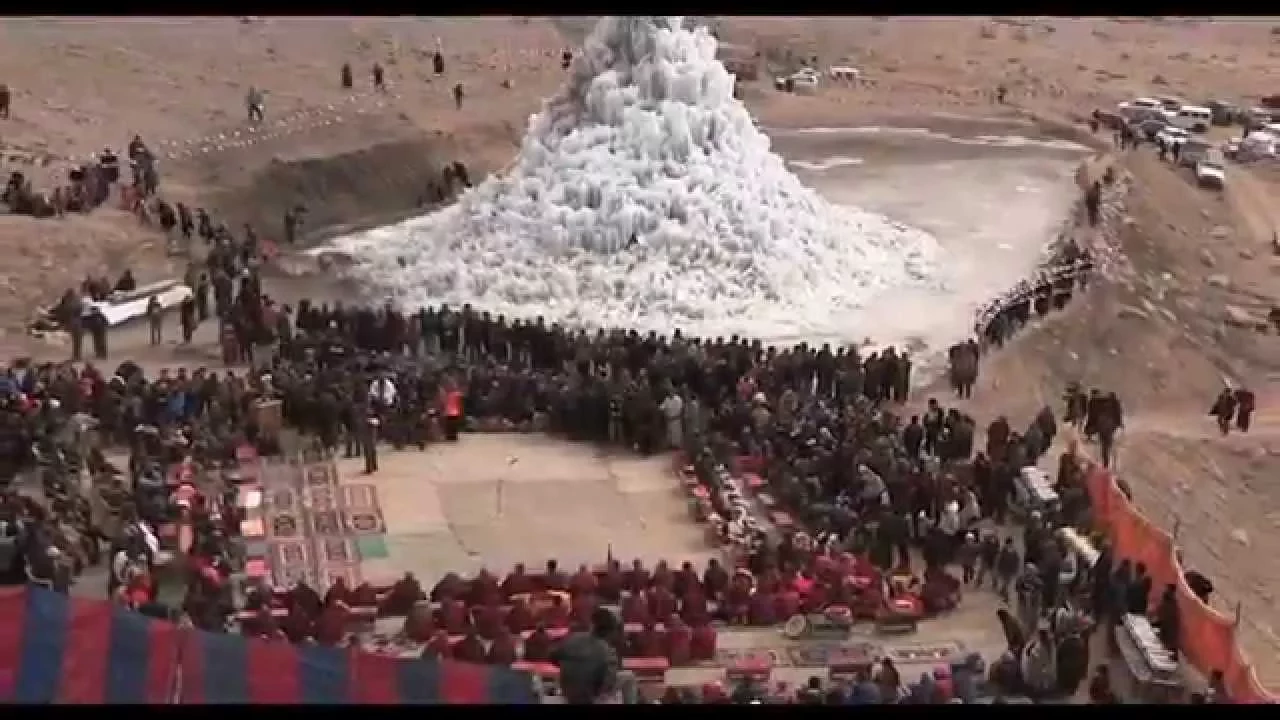
Ice Stupa Artificial Glaciers: Solving Ladakh's Water Crisis
@SonamWangchuk66
3.2M views•2015-05-03
Related Study Plans & Knowledge Roadmaps
Structured learning paths in Environmental Science