









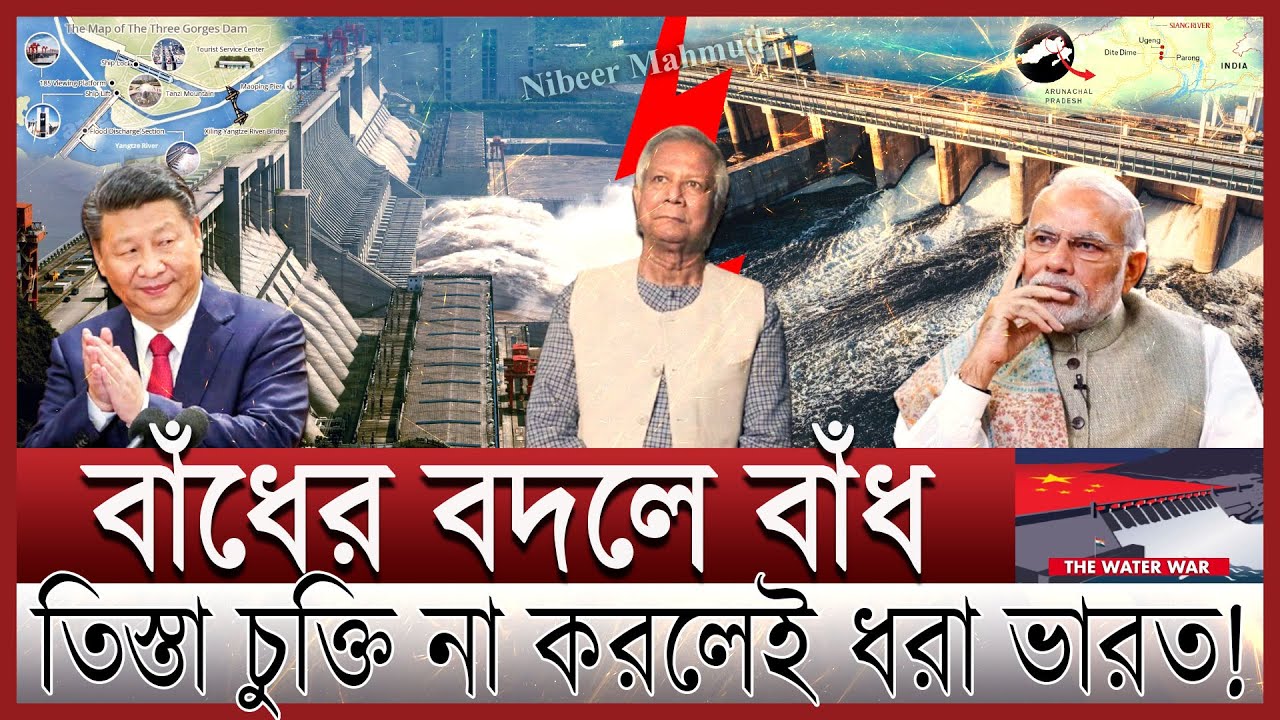
![रहस्यमयी ब्रह्मपुत्र को लेकर भिड़ते भारत, चीन, बांग्लादेश [The silent battle of Brahmaputra]](https://i.ytimg.com/vi/RftvEpZY2BM/maxresdefault.jpg)


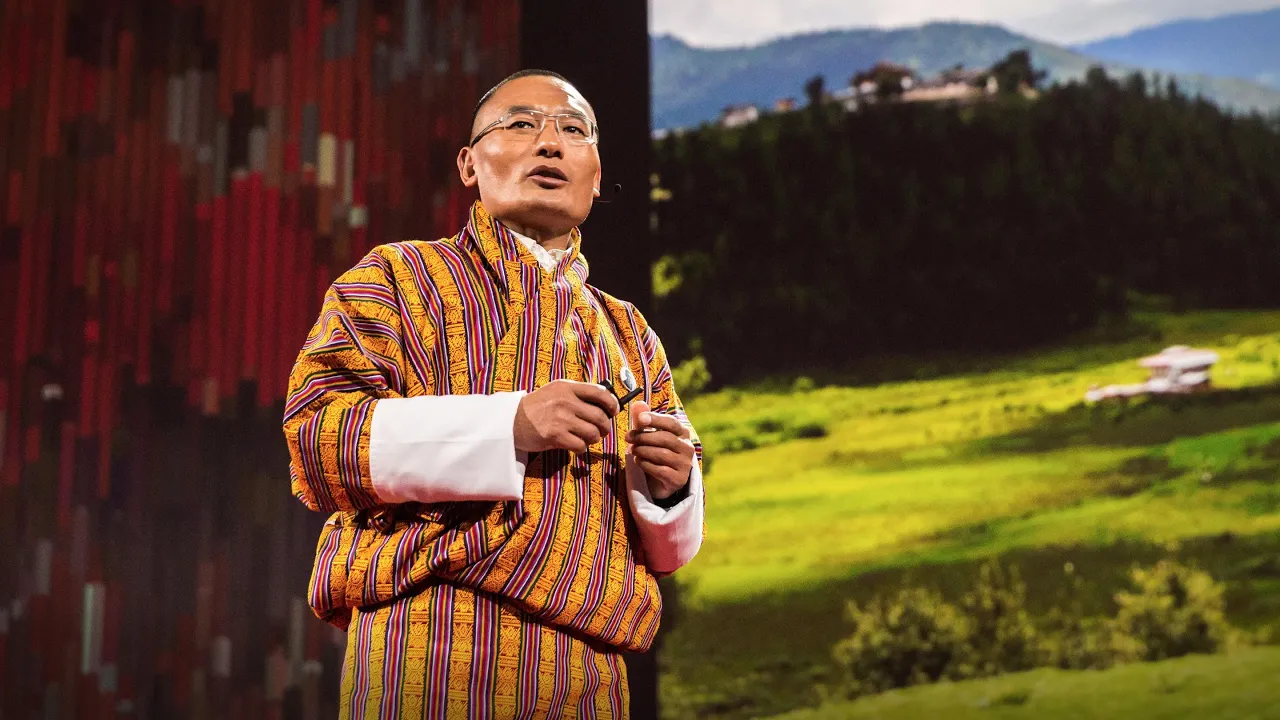






The Hindu Kush Himalaya region, known as the 'Third Pole' and containing the world's third-largest ice repository after the North and South Poles, is experiencing rapid glacier melting that threatens 240 million people in the region and 1.6 billion downstream in Asia; scientific reports indicate that at 1.5°C global warming, one-third of glaciers could melt, at 2°C half would disappear, and with current trends, two-thirds could vanish by century's end, creating catastrophic flooding, droughts, and potential climate refugee crises that necessitate the creation of an intergovernmental agency like the proposed Third Pole Council to coordinate protection efforts among the eight regional countries.
Protecting the Himalayas: The Third Pole's Urgent Climate Crisis
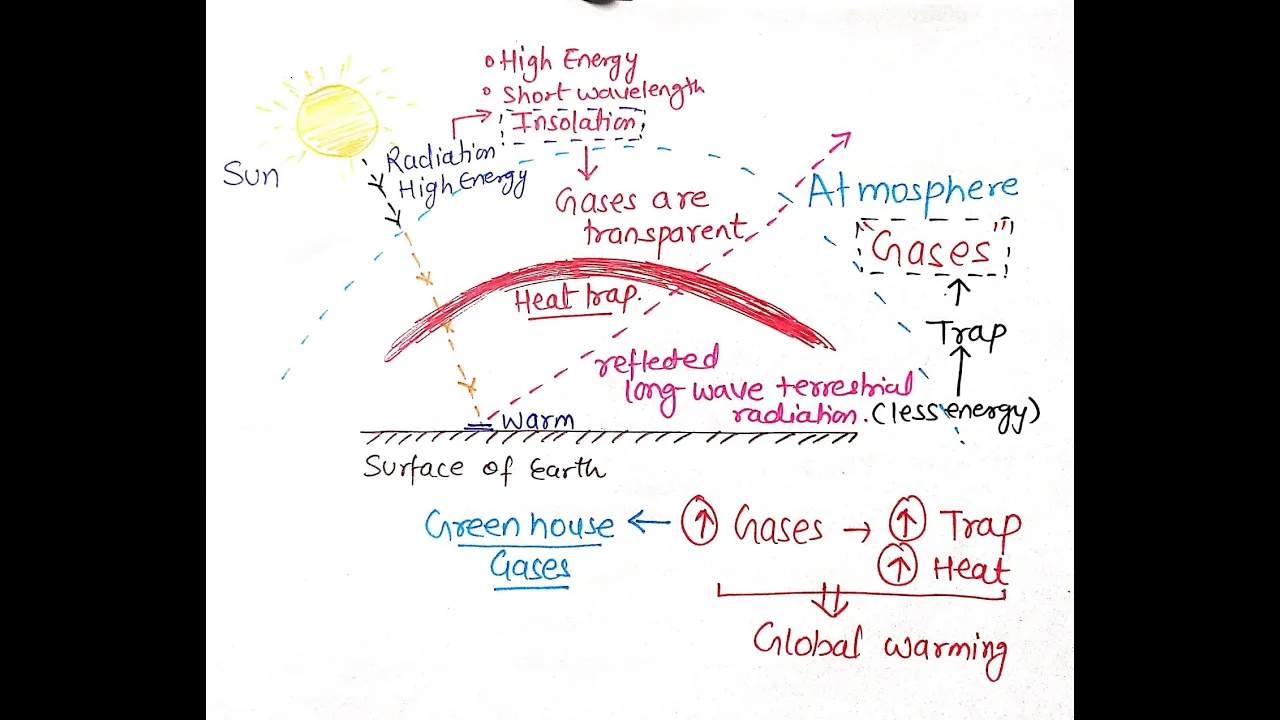
Added:The basic science of the greenhouse effect, global warming, and how rising global temperatures accelerate glacial melt.
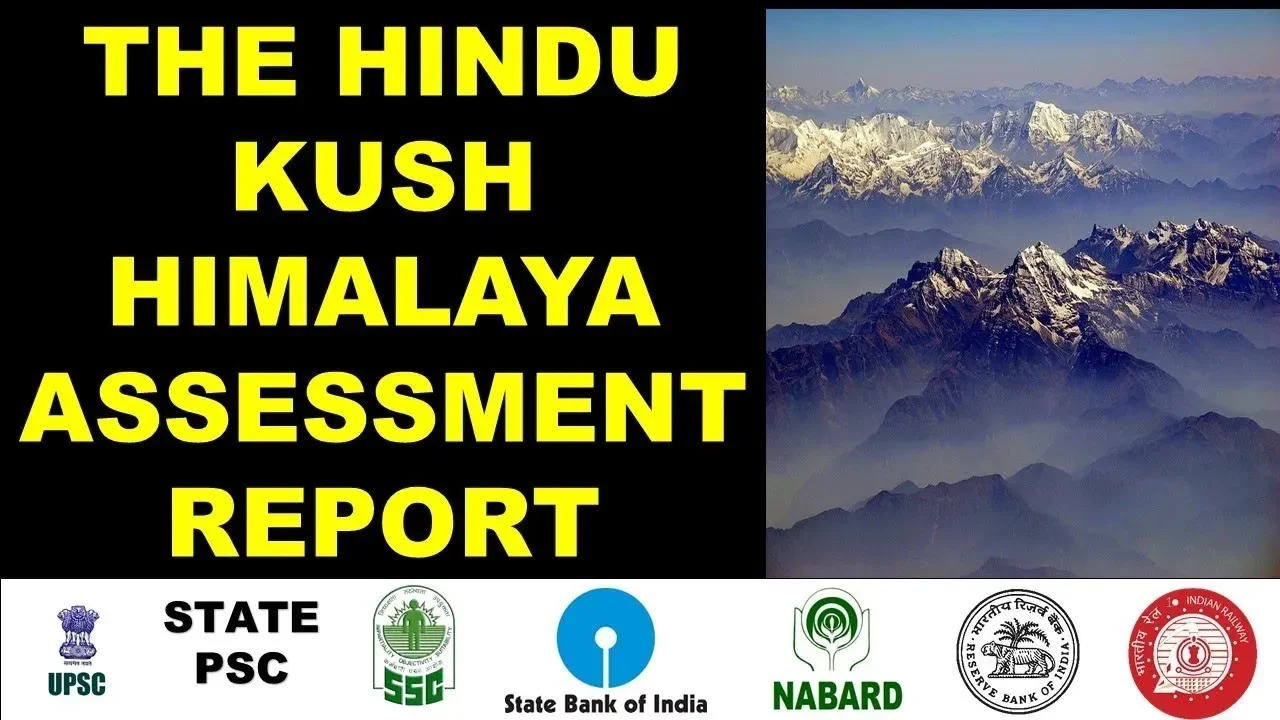
The geography of the Hindu Kush Himalaya (HKH) region and why it is geographically and ecologically referred to as the 'Third Pole'.
The concept of 'water towers' and how mountain glaciers regulate freshwater supply to major Asian river basins like the Indus, Ganges, and Yangtze.
The fundamental role of the albedo effect, where ice loss reduces reflectivity and accelerates localized warming in alpine regions.
Transboundary water diplomacy and the geopolitical challenges of river-sharing agreements among nations downstream of the Himalayas.
Advanced climate adaptation strategies and disaster risk reduction (DRR) framework for mitigating Glacial Lake Outburst Floods (GLOFs).
The role of small, carbon-neutral or carbon-negative nations (such as Bhutan) in international climate negotiations and global policy advocacy.
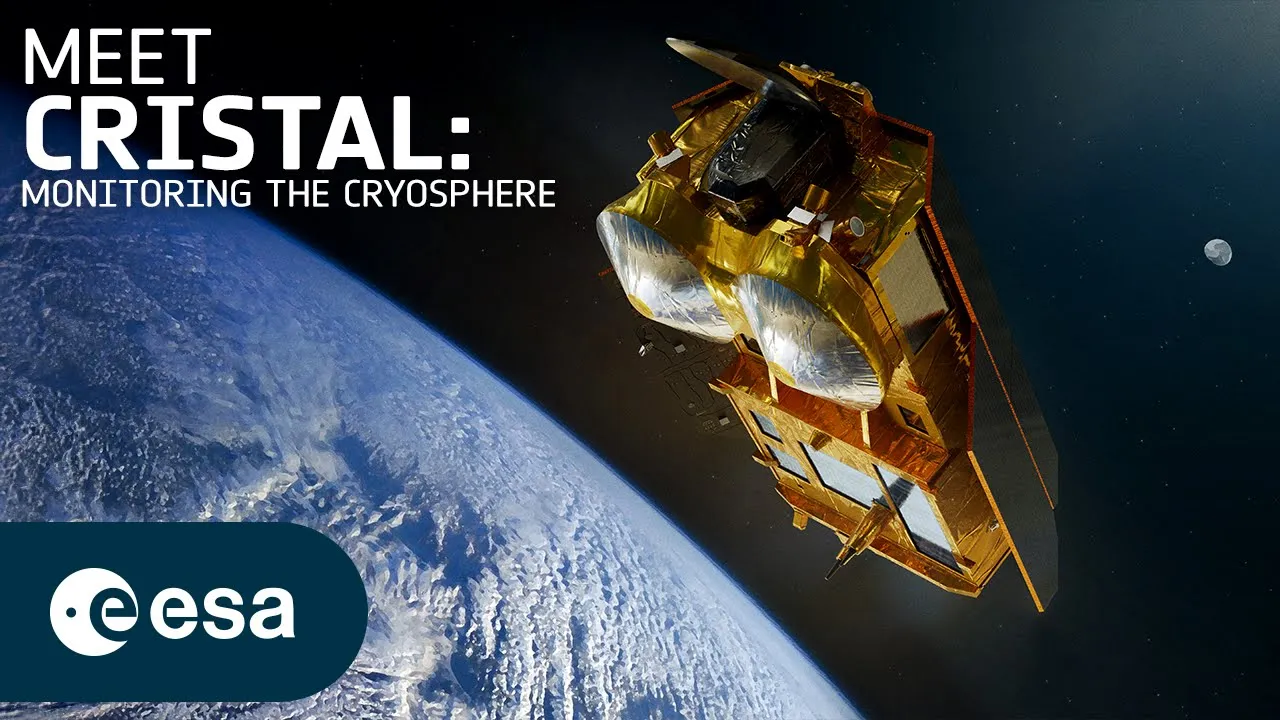
Methods in glaciology and satellite remote sensing technology used to monitor cryosphere changes and project future ice mass loss.
206.1K views8.2Klikes14:30Original Release: 2019-09-05
On the 17th of October, 2009, President Mohamed Nasheed of the Maldives did something unusual.
He held his cabinet meeting underwater.
He literally took his ministers scuba diving, as it were, to warn the world that his country could drown unless we control global warming.
Now I don't know whether he got his message across to the world or not, but he certainly caught mine.
I saw a political stunt.
You see, I'm a politician, and I notice these things.
And let's be honest, the Maldives are distant from where I come from -- my country is Bhutan -- so I didn't lose any sleep over their impending fate.
Barely two months later, I saw another political stunt.
This time, the prime minister of Nepal, he held his cabinet meeting on Mount Everest.
He took all his ministers all the way up to the base camp of Everest to warn the world that the Himalayan glaciers were melting.
Now did that worry me?
You bet it did.
I live in the Himalayas.
But did I lose any sleep over his message?
No.
I wasn't ready to let a political stunt interfere with my beauty sleep.
(Laughter) Now fast-forward 10 years.
In February this year, I saw this report.
This here report basically concludes that one-third of the ice on the Hindu Kush Himalaya mountains could melt by the end of the century.
But that's only if, if we are able to contain global warming to 1.5 degrees centigrade over preindustrial levels.
Otherwise, if we can't, the glaciers would melt much faster.
1.5 degrees Celsius. "No way," I thought.
Even the Paris Agreement's ambitious targets aimed to limit global warming to two degrees centigrade.
1.5 degrees centigrade is what they call the best-case scenario.
"Now this can't be true," I thought.
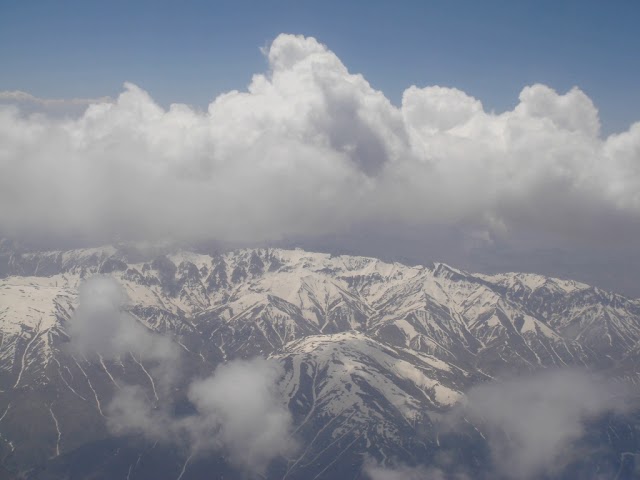
The Hindu Kush Himalaya region is the world's third-largest repository of ice, after the North and South Poles.
That's why we are also called the "Third Pole."
There's a lot of ice in the region.
And yes, the glaciers, they are melting.
We know that.
I have been to those in my country.
I've seen them, and yes, they are melting.
They are vulnerable.
"But they can't be that vulnerable," I remember thinking.
But what if they are?
What if our glaciers melt much more quickly than I anticipate?
What if our glaciers are much more vulnerable than previously thought?
And what if, as a result, the glacial lakes -- now these are lakes that form when glaciers melt -- what if those lakes burst under the weight of additional water?
And what if those floods cascade into other glacial lakes, creating even bigger outbursts?
That would create unprecedented flash floods in my country.
That would wreck my country.
That would wreak havoc in my country.
That would have the potential to literally destroy our land, our livelihood, our way of life.
So that report caught my attention in ways that political stunts couldn't.
It was put together by the International Centre for Integrated Mountain Development, or ICIMOD, which is based in Nepal.
Scientists and experts have studied our glaciers for decades, and their report kept me awake at night, agonizing about the bad news and what it meant for my country and my people.
So after several sleepless nights, I went to Nepal to visit ICIMOD.
I found a team of highly competent and dedicated scientists there, and here's what they told me.
Number one: the Hindu Kush Himalaya glaciers have been melting for some time now.
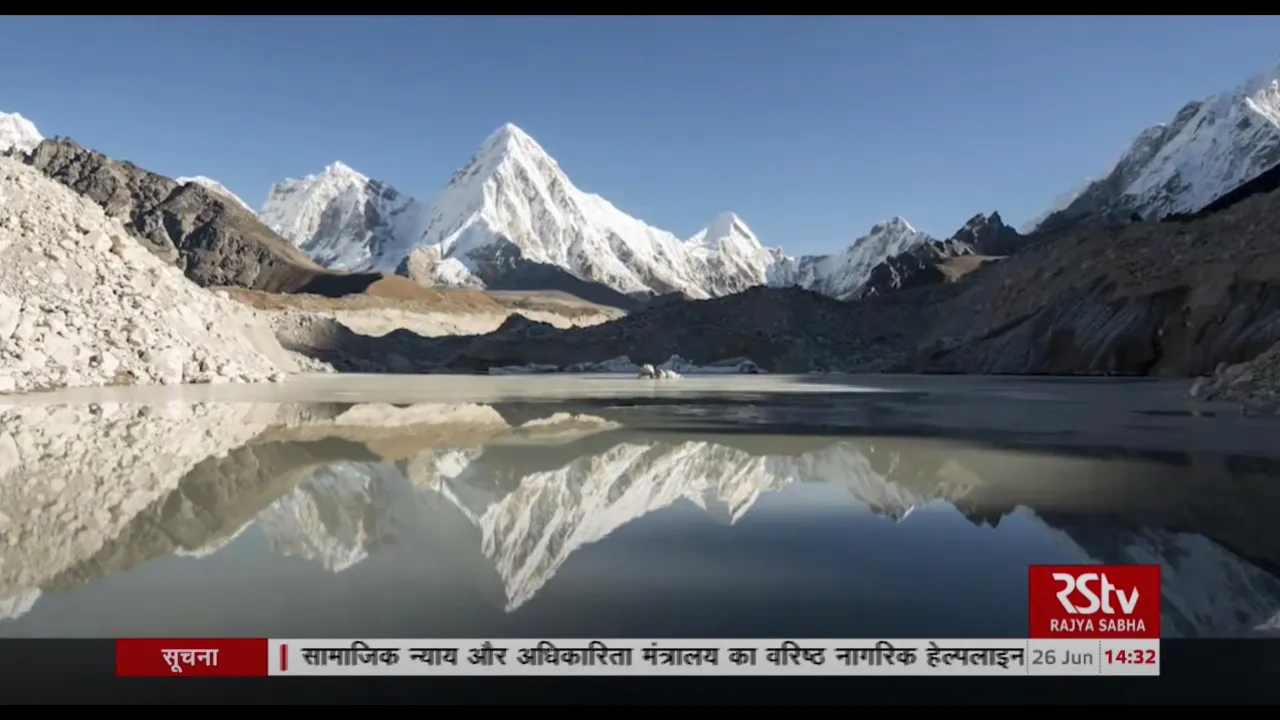
Take that glacier, for instance.
It's on Mount Everest.
As you can see, this once massive glacier has already lost much of its ice.
Number two: the glaciers are now melting much more quickly -- so quickly, in fact, that at just 1.5 degrees centigrade of global warming, one-third of the glaciers would melt.
At two degrees centigrade of global warming, half the glaciers would disappear.
And if current trends were to continue, a full two-thirds of our glaciers would vanish.
Number three: global warming means that our mountains receive more rain and less snow... and, unlike snowfall, rain melts ice, which just hurts the health of our glaciers.
Number four: pollution in the region has increased the amount of black carbon that's deposited on our glaciers.
Black carbon is like soot.
Black carbon absorbs heat and just accelerates the melting of glaciers.
To summarize, our glaciers are melting rapidly, and global warming is making them melt much more quickly.
But what does this mean?
It means that the 240 million people who live in the Hindu Kush Himalaya region -- in Afghanistan, Pakistan, India, China, Nepal, Bangladesh, Myanmar and my own beloved country, Bhutan -- these people will be directly affected.
When glaciers melt, when there's more rain and less snow, there will be huge changes in the way water behaves.
There will be more extremes: more intense rain, more flash floods, more landslides, more glacial lake outburst floods.
All this will cause unimaginable destruction in a region that already has some of the poorest people on earth.
But it's not just the people in the immediate region who'll be affected.
People living downstream will also be hit hard.
That's because 10 of their major rivers originate in the Hindu Kush Himalaya mountains.
These rivers provide critical water for agriculture and drinking water to more than 1.6 billion people living downstream.
That's one in five humans.
That's why the Hindu Kush Himalaya mountains are also called the "water towers of Asia."
But when glaciers melt, when monsoons turn severe, those rivers will obviously flood, so there will be deluges when water is not required and droughts will be very common, when water is desperately required.
In short, Asia's water tower will be broken, and that will be disastrous for one-fifth of humanity.
Should the rest of the world care?
Should you, for instance, care?
Remember, I didn't care when I heard that the Maldives could disappear underwater.
And that is the crux of the problem, isn't it?
We don't care.
We don't care until we are personally affected.
I mean, we know. We know climate change is real.
We know that we face drastic and dramatic change.
We know that it is coming fast.
Yet most of us act as if everything were normal.
So we must care, all of us, and if you can't care for those who are affected by the melting of glaciers, you should at least care for yourself.
That's because the Hindu Kush Himalaya mountains -- the entire region is like the pulse of the planet.
If the region falls sick, the entire planet will eventually suffer.
And right now, with our glaciers melting rapidly, the region is not just sick -- it is crying out for help.
And how will it affect the rest of the world?
One obvious scenario is the potential destabilization caused by tens of millions of climate refugees, who'll be forced to move because they have no or little water, or because their livelihoods have been destroyed by the melting of glaciers.
Another scenario we can't take lightly is the potential of conflict over water and the political destabilization in a region that has three nuclear powers: China, India, Pakistan.
I believe that the situation in our region is grave enough to warrant the creation of a new intergovernmental agency.
So as a native from that part of the world, I want to propose here, today, the establishment of the Third Pole Council, a high-level, intergovernmental organization tasked with the singular responsibility of protecting the world's third-largest repository of ice.
A Third Pole Council would consist of all eight countries located in the region as member countries, as equal member countries, and could also include representative organizations and other countries who have vested interests in the region as non-voting members.
But the big idea is to get all stakeholders together to work together.
To work together to monitor the health of the glaciers; to work together to shape and implement policies to protect our glaciers, and, by extension, to protect the billions of people who depend on our glaciers.
We have to work together, because thinking globally, acting locally... does not work.
We've tried that in Bhutan.
We've made immense sacrifices to act locally... and while individual localized efforts will continue to be important, they cannot stand up to the onslaught of climate change.
To stand up to climate change, we must work together.
We must think globally and act regionally.
Our entire region must come together, to work together, to fight climate change together, to make our voices heard together.
And that includes India and China.
They must step up their game.
They must take the ownership of the fight to protect our glaciers.
And for that, these two countries, these two powerful giants, must reduce their own greenhouse gases, control their pollution, and lead the fight.
Lead the global fight against climate change.
And all that with a renewed sense of urgency.
Only then -- and that, too, only maybe -- will our region and other regions that depend on our glaciers have any chance to avoid major catastrophes.
Time is running out.
We must act together, now.
Otherwise, the next time Nepal's cabinet meets on Mount Everest, that spectacular backdrop... may look quite different.
And if that happens, if our glaciers melt, rising sea levels could well drown the Maldives.
And while they can hold their cabinet meetings underwater to send an SOS to the world, their country can keep existing only if their islands keep existing.
The Maldives are still distant, away.
Their islands are distant from where I live.
But now, I pay close attention to what happens out there.
Thank you very much.
(Applause)
Up Next
48:40
Glacial Retreat in Peru: Impacts on Water Security | Trans.MISSION
@HayFestivalOfficial
674 views•2020-05-26

15:54
Life in Biosphere 2: Sustainable Ecosystems & Human Survival
@TED
334.9K views•2009-06-16
13:03
Marine Noise Pollution Effects on Ocean Life
@TED
70.1K views•2020-04-16
10:28
Ice Stupa Artificial Glaciers: Solving Ladakh's Water Crisis
@SonamWangchuk66
3.2M views•2015-05-03
Related Study Plans & Knowledge Roadmaps
Structured learning paths in Environmental Science
environmental-science
Ocean Noise: Cetacean Impacts & Mitigation
01Fundamentals of Underwater Acoustics
02Marine Mammal Bioacoustics
03Anthropogenic Noise: Shipping & Seismic Surveying
+ 2 more learning modules
16h5 modules
Explore Roadmap
environmental-science
Road Ecology: Corridors, Overpasses & Fencing
01Foundations of Habitat Fragmentation and Carnivore Ecology
02The Road Barrier: Ecological Impacts of Transport Infrastructure
03Principles of Ecological Corridors and Connectivity Mapping
+ 3 more learning modules
14h6 modules
Explore Roadmap
environmental-science
Ocean Acidification: Kelp Buffering & Shellfish
01Fundamentals of Ocean Chemistry & pH
02Chemical Pathways of Coastal Acidification
03Bivalve Physiology & Calcification Under Stress
+ 2 more learning modules
18h5 modules
Explore Roadmap
environmental-science
Ice Stupas: Glacial Retreat & Water Security
01Foundations of Glaciology & Mountain Hydrology
02Climate Change and Glacial Retreat Dynamics
03The Science of Ice Stupas & Artificial Glaciers
+ 2 more learning modules
14h5 modules
Explore Roadmap