Mitigating Light Pollution: ALAN & Dark Skies
Learning Goal: Investigate the ecological consequences of artificial light at night (ALAN) on nocturnal wildlife and design a city-wide dark-sky transition plan.
- Prerequisites: None (Introductory to Advanced)
- Estimated Total Study Time: 14 Hours
Module 1: Introduction to ALAN and Light Pollution
This module introduces the physics of Artificial Light at Night (ALAN) and the foundational vocabulary of light pollution. Learners will explore the classification systems used to quantify night-sky brightness and identify the core components of urban light pollution: skyglow, glare, and light trespass.
Core Learning Videos
- Why this video: This video introduces the Bortle Scale, established by John E. Bortle in 2001, which ranks night-sky brightness from 1 (pristine dark wilderness) to 9 (highly light-polluted inner-city skies). It explains why natural dark skies are a vanishing ecological and astronomical resource.
- Knowledge Checkpoint:
- Explain the difference between a Bortle Class 1 and a Bortle Class 9 sky in terms of astronomical observability.
- Identify the primary human-made contributions to global skyglow.

- Why this video: This lecture breaks down light pollution into its five distinct forms. It focuses on light trespass (unwanted light crossing property lines), glare (visual impairment caused by high contrast), and skyglow (the scattering of artificial light back to earth).
- Knowledge Checkpoint:
- Define light trespass and contrast it with glare.
- Explain how uncontrolled urban light sources create skyglow through atmospheric scattering.
- Why this video: This deep dive analyzes the 1-to-9 classification of the Bortle Scale. It teaches learners how to assess sky conditions using naked-eye indicators like constellation visibility and Milky Way structure.
- Knowledge Checkpoint:
- At what Bortle Class rating does the Milky Way cease to be visible to the naked eye?
- How do cloud covers behave differently in a pristine dark-sky environment compared to a heavily light-polluted urban center?
Module 2: Circadian Rhythms and Sensory Ecology
Understanding the biological mechanisms of light sensitivity is crucial before examining broad ecological consequences. This module details how the suprachiasmatic nucleus (SCN), pineal gland, and melatonin pathways interact, and how blue-rich ALAN disrupts evolutionary biology.
Core Learning Videos

- Why this video: Dr. Kat Kennedy explains the biological mechanisms connecting light exposure to hormone pathways. This lecture covers how artificial light at night suppresses natural melatonin production and disrupts cellular repair cycles.
- Knowledge Checkpoint:
- Describe how melatonin acts as a biomarker for darkness in the endocrine system.
- Explain the role of short-wavelength (blue) light in triggering the suppression of sleep-regulating hormones.
- Why this video: Neurobiologist Dr. Andrew Huberman illustrates "the diabolical twist"—how human physiology reacts differently to light depending on the time of day. This explains why evening exposure to even low-intensity light drastically alters mammalian biology.
- Knowledge Checkpoint:
- Why does the human brain require high-intensity light in the morning but show extreme sensitivity to low-intensity light at night?
- Detail the neurological pathway from the retina to the suprachiasmatic nucleus (SCN) that regulates sleep-wake timing.

- Why this video: Dr. Roger Seheult unpacks how the suprachiasmatic nucleus acts as the master clock for peripheral organs, explaining how disruption to this clock through light can cascade into metabolic dysfunction.
- Knowledge Checkpoint:
- Explain how light received by the eyes at night acts as a false temporal cue (zeitgeber).
- What is the structural relationship between the SCN and the pineal gland during periods of darkness?

- Why this video: This session offers a broad review of how human and animal biology coordinates daily cycles using Earth's 24-hour rotation. It links circadian biology to physical and metabolic health.
- Knowledge Checkpoint:
- Define the term zeitgeber and list the primary zeitgeber for terrestrial organisms.
- Describe the physiological consequences of persistent mismatch between internal biological rhythms and external environmental signals.
Module 3: Ecological Consequences on Wildlife
With physiological foundations established, this module scales up to examine ecosystems. Students will analyze how ALAN disrupts migration, insect populations, predator-prey dynamics, and trophic cascades.
Core Learning Videos
- Why this video: Astrophotographer Alyn Wallace covers the ecological effects of the global LED transition. The video explores how high-CCT blue-rich lighting interferes with wildlife migrations (such as nocturnal birds), predator-prey relationships, and turtle hatchling navigation.
- Knowledge Checkpoint:
- Why do coastal municipal lights disrupt sea turtle hatchlings moving toward the sea?
- How does artificial light at night compromise the hunting patterns of nocturnal predators and the survival of their prey?

- Why this video: Renowned entomologist Doug Tallamy discusses how light pollution affects food webs by depleting insect populations. Moths, which produce the caterpillars that feed local food webs, are highly vulnerable to nighttime illumination.
- Knowledge Checkpoint:
- Explain why the exhaustion and mortality of insects around light fixtures impacts the broader avian food web.
- What simple, consumer-level lighting adjustment can prevent insect attraction to outdoor fixtures?
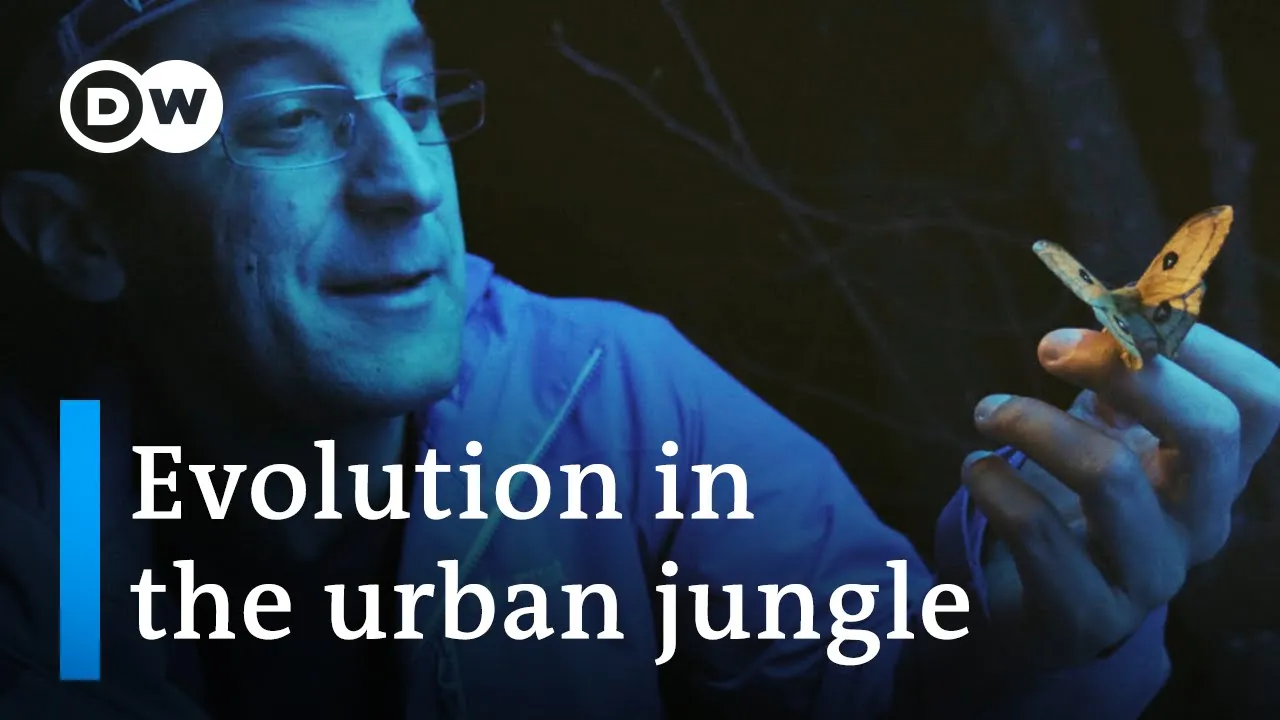
- Why this video: This clip provides a direct look at the impact of city lights on insect life. It explains the evolutionary mismatch for species like moths that are drawn away from their nocturnal mating and feeding activities toward artificial lights.
- Knowledge Checkpoint:
- What is the "vacuum effect" of artificial light on insect populations?
- How does light pollution alter the natural diurnal cycles of nocturnal insects?

- Why this video: This simulation highlights localized ecological damage, such as migratory bird collisions and sea turtle disorientation, helping students visualize how urban footprints alter regional ecosystems.
- Knowledge Checkpoint:
- How do lit-up human structures disorient migratory birds flyways?
- What are the consequences when coastal developments do not restrict light output during sea turtle nesting seasons?
Module 4: Dark-Sky Engineering and Lighting Technology
This module addresses the engineering solutions available to combat light pollution. Learners will explore the physics of lighting design, fixture shielding, and Correlated Color Temperature (CCT) metrics.
Gap Note: Video resources for advanced engineering concepts like precise polar-coordinate candlepower distributions or commercial lighting software remain limited. Students should supplement these materials by studying the written photometric publications from the Illuminating Engineering Society (IES).
Core Learning Videos

- Why this video: Bob Bohannon demonstrates the practical geometry of dark-sky compliant lighting. He details fixture design, emphasizing why luminaires must not project light above the horizontal plane.
- Knowledge Checkpoint:
- What physical design features prevent a lighting fixture from projecting light above the horizontal plane?
- Explain how shielding can reduce glare for observers on the ground while maintaining safety.

- Why this video: This video introduces the five core principles of responsible outdoor lighting (utility, targeting/shielding, low illumination level, control, and color spectrum) developed by DarkSky International.
- Knowledge Checkpoint:
- List the five core principles for responsible outdoor lighting.
- Why is "useful purpose" considered the baseline requirement for any lighting design?

- Why this video: This video explains Correlated Color Temperature (CCT), showing how Kelvin (K) ratings describe the color spectrum of white light. This helps students understand why blue-rich, high-Kelvin lights are more disruptive to night environments than warm lights.
- Knowledge Checkpoint:
- Define Correlated Color Temperature (CCT) and its unit of measurement.
- Why does light with a low CCT (e.g., 2000K-3000K) scatter less in the atmosphere than light with a high CCT (e.g., 5000K+)?

- Why this video: This video provides a quick overview of how color temperature impacts wildlife and how municipal ordinances specify CCT limits (typically targeting warm temperatures around 3000K or lower) to minimize environmental disruption.
- Knowledge Checkpoint:
- Why does the DarkSky International template recommend warmer CCT values for outdoor municipal lighting?
- How does blue light scattering affect local wildlife compared to amber and warm yellow light?
Module 5: Designing a City-Wide Dark-Sky Plan
The final module integrates biological, ecological, and engineering concepts to design a comprehensive dark-sky transition plan. Students will learn about the policy mechanisms of lighting ordinances, retrofitting strategies, and dark-sky reserve designations.
Gap Note: Municipal policy-drafting and retrofitting workflows are highly site-specific. To support this module, students should study the official DarkSky/IES Model Lighting Ordinance (MLO) alongside these case studies.
Core Learning Videos

- Why this video: This policy workshop breaks down the structure of a dark-sky ordinance template. It details the essential legal mechanisms, including light level limits, curfews, light zoning, and enforcement provisions.
- Knowledge Checkpoint:
- Identify the core sections of a standard municipal dark-sky ordinance.
- What is the function of a "lighting curfew," and how is it implemented?

- Why this video: This comprehensive meeting presents a practical case study of a street light retrofit in Pepperell, MA. It demonstrates how a municipality can transition its streetlighting to dark-sky standards while reducing energy costs and maintaining public safety.
- Knowledge Checkpoint:
- Explain how a municipality can audit its existing streetlights to identify high-priority retrofit targets.
- How can dark-sky compliant streetlighting meet local safety standards while reducing energy consumption?

- Why this video: This video focuses on lighting management plans within protected areas. It shows how balancing safety around high-traffic zones with strict shielding rules is a key step toward earning dark-sky park designations.
- Knowledge Checkpoint:
- Why is a formal lighting management plan a requirement for dark-sky designations?
- How can visitor centers and campgrounds balance safety and light minimization?
- Why this video: Using Fountain Hills, Arizona as an example, this video shows how dark-sky designations can serve as an asset for a community, helping to preserve the night sky through planning and municipal policy.
- Knowledge Checkpoint:
- How does dark-sky compliance contribute to a community's environmental sustainability efforts?
- What is the role of public outreach in passing a municipal lighting ordinance?
Course Map
This map outlines the recommended progression through the curriculum. Module 1 provides the foundational physics, which supports both the physiological studies in Module 2 and the technological studies in Module 4. Together, these form the basis for designing a municipal policy in Module 5.
Key People Index
- John E. Bortle — Amateur astronomer who created the Bortle Scale in 2001 to classify sky darkness.
- Dr. Kat Kennedy — Circadian rhythms expert whose work with DarkSky International connects nighttime light exposure to endocrine disruption.
- Dr. Andrew Huberman — Neurobiologist and Professor at Stanford University School of Medicine, specializing in light's impact on neural systems and hormone regulation.
- Dr. Roger Seheult — Quadruple board-certified medical specialist and educator who analyzes the circadian clock and melatonin's health benefits.
- Alyn Wallace — The late astrophotographer and conservation advocate whose presentations helped document the impact of urban illumination on wildlife.
- Doug Tallamy — Entomologist and Professor at the University of Delaware, focus on insect population health and native ecosystems.
- Bob Bohannon — Lighting designer and past president of the Society of Light and Lighting (SLL), specializing in dark-sky friendly outdoor lighting.
Final Self-Assessment
Use this self-assessment to test your understanding of the concepts covered across all five modules:
- Bortle Scale Proficiency: Can you estimate local sky brightness on the Bortle Scale using astronomical indicators?
- Differentiating Light Pollution types: Can you distinguish between light trespass, glare, and skyglow?
- Melatonin Pathway: Can you trace the neural pathway from retinal phototransduction to melatonin release in the pineal gland?
- The "Diabolical Twist" Concept: Do you understand how human sensitivity to blue light shifts between day and night?
- Wildlife Disruption Mechanisms: Can you explain how ALAN interferes with sea turtle hatchlings and migratory birds?
- Trophic Cascade Analysis: Can you trace how insect mortality around white light fixtures affects avian and food-web dynamics?
- Fixture Design Principles: Can you identify shielding configurations that prevent light output above the horizontal plane?
- Kelvin Ratings & Scattering: Can you explain why CCT levels below 3000K reduce atmospheric scattering?
- Core Lighting Principles: Can you apply DarkSky International's five outdoor lighting principles to a lighting plan?
- Ordinance Policy Drafting: Can you outline a municipal dark-sky ordinance, including curfews and zoning?
- Retrofit Project Planning: Can you design a street light retrofit project that meets both public safety and light pollution goals?