










![[BODW 2012 | Space & Design] Eric Schuldenfrei & Marisa Yiu](https://i.ytimg.com/vi/vvonZiW0LV4/maxresdefault.jpg)










Light pollution, defined as the adverse effects of excessive artificial light, manifests in four forms—sky glow, light trespass, glare, and clutter—and significantly impacts both the environment and human health. Sky glow brightens urban night skies, obscuring celestial observations and interfering with astronomical spectroscopy by introducing artificial spectral lines. Ecologically, artificial light disrupts wildlife behaviors: insects are attracted to lights leading to ecosystem imbalances, migratory birds become disoriented and collide with structures, sea turtle hatchlings are misled from oceans toward bright beaches, and nocturnal animals face disrupted circadian rhythms affecting breeding, foraging, and predator avoidance. For humans, disrupted circadian rhythms linked to melatonin suppression have been associated with increased cancer risk, particularly breast cancer, sleep disorders, depression, and obesity. Fortunately, light pollution is among the most remediable environmental issues, with solutions including proper light shielding, limiting lumens, and implementing dark sky guidelines that can restore ecological balance and human health while preserving our connection to the cosmos.
How Light Pollution Disrupts Ecosystems and Human Health
Added:In January 1994, a 6.7-magnitude earthquake knocked out power in Los Angeles.
In the following hours, emergency services fielded an alarming number of phone calls from people asking if the big silvery cloud hovering in the night sky somehow caused the quake.
They were referring to the Milky Way.
Which is maybe a little sad on several levels, but not all that surprising.
About two-thirds of Americans, and half of all Europeans, can no longer see our own galaxy in the night sky.
Why?
Light pollution.
It started innocently enough, eons ago, with fire, and then oil lamps and candles, and then, not too long ago, electricity.
Since the first electric street lights appeared in the late 1870s, our world, indoors and out, has been awash in the glow of artificial light.
At this point it’s so ubiquitous that most of us don’t even notice it until it suddenly goes out.
Today we’ve got lights rigged everywhere -- buildings, billboards, streetlights, stadiums, yards, and parking lots.
If you live in a city or even a suburb, it can be hard to find any real darkness these days, let alone look up and see many stars.
Of course artificial light isn’t evil.
It’s awesome.
We all use it; it’s done a lot for us.
That’s why we invented it and pay lots of money for it.
But much of our outdoor artificial lighting has made life more difficult -- and not just for frustrated astronomers and light sleepers.
We’re starting to see just how dangerous light pollution can be to our environment, our wildlife, and even our own health.
[INTRO] Light pollution!
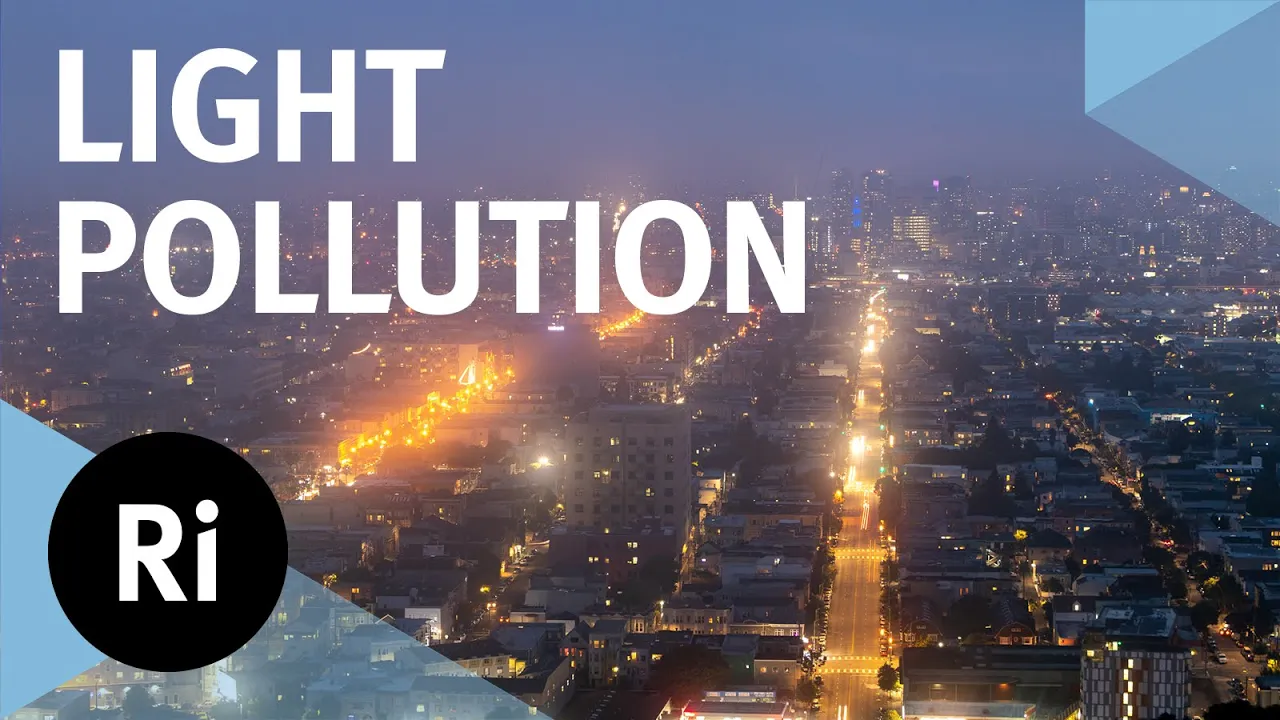
Let’s define it as the adverse effects of excessive artificial light, and it comes in lots of different forms.
Urban sky glow, for example, is the overall brightening of the night sky, caused by light being scattered by water or particles in the air.
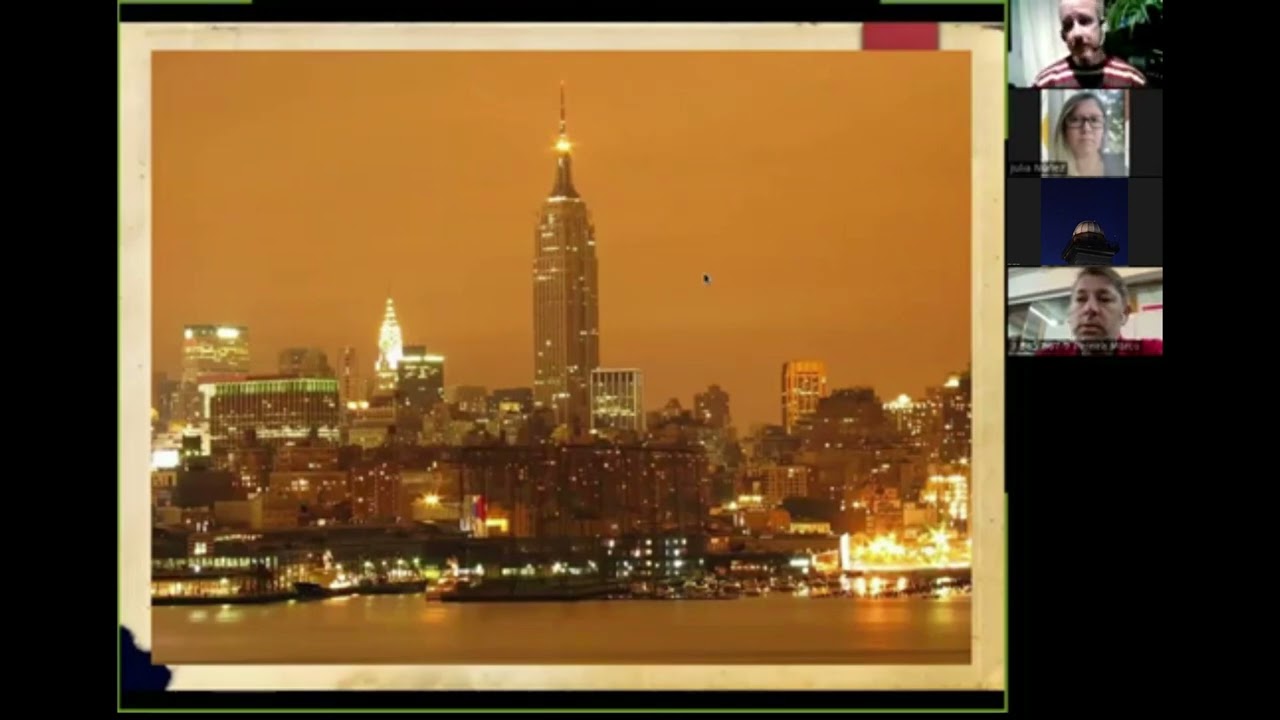
It’s that bright halo that appears over cities at night and keeps urbanites from seeing stars.
According to the International Dark-Sky Association, LA’s skyglow can be seen from an airplane 200 miles away.
Light trespass, meanwhile, happens when artificial light falls where it is unwanted, like how your neighbor’s floodlight shines directly onto your otherwise nice and dark pillow.
Glare occurs when super-bright lights aren’t properly shielded and shine horizontally.
It decreases visibility and even be dangerously blinding at times.
And finally there’s clutter, the general bright, bombastic, and over-the-top combination of various light sources in over-lit urban areas.
Think like the Las Vegas Strip, or Manhattan.
Clutter contributes to urban sky glow, light trespass, and glare, and just demolishes any nighttime ambiance.
You can measure a landscape’s night-sky brightness, astronomical observability, and light pollution using an assessment scale called the Bortle Scale.
John E. Bortle created the scale in 2001 to help amateur astronomers compare stargazing spots.
The scale ranges from one to nine, one being the darkest of wilderness skies, and nine being the dense inner-city skies that so frustrate star-gazers.
It’s easy to imagine how light pollution interferes with our ability to study the sky.
All that sky glow projects up as much as it does down, and it makes it hard to see the more subtle lights and objects in space without special filters.
But all this extra light ruins astronomers’ nights in another way--it messes with their spectrographs.
Spectrographs are instruments that record how an object’s light disperses into different signature color components.
If you know how to read a spectrum of a celestial object, you can determine certain things about it, like its mass, chemical composition, temperature, luminosity, and just what the heck it is.
This makes spectroscopy a vital part of astronomy, and light pollution mucks it all up, in part because artificial light shows up as bright, obscuring lines in those spectra.
So the light that comes from mercury vapor lamps, for instance, creates a specific “fingerprint” line associated with mercury, while metal halide lamps leave markers for halogen gases that they use.
These lines break up and obscure the otherwise smooth spectra we see from celestial objects, and they can be hard to filter out.
And as you can imagine, astronomers find this interference really annoying.
But excessive artificial lighting is more than an irritating variable for scientists -- it’s also a huge energy suck.
As much as a quarter of all electricity worldwide goes to generating light.
A 2008 survey in Austria found that public lighting was the largest source of their government’s greenhouse emissions, accounting for between 30 and 50 percent.
Powering the country’s nearly two million public lights consumed 1,035 Gigawatt hours of electricity and released over a million tons of CO2 in the process.
And we all know how destructive these emissions are to our environment.
But the light itself can also be a very powerful biological force.
If you think back to your last summer night on the porch, you’ll recall lots of creatures are inherently drawn to light.
Many of those animals get burned.
Meaning, they die.
Many flying insects swarm around streetlights, which is great for industrious spiders who know where to build a web, but it can throw off the balance of an entire ecosystem.
Bats, for example, have different reactions to introduced lights-- some won’t cross into the light, while others use it to their advantage.
When some Swiss towns installed new streetlamps, the European lesser horseshoe bat suddenly vanished, because, scientists think, they were outcompeted by all the more light-tolerant pipistrelle bats that moved in to hunt insects drawn to the light.
An innate attraction to light can be so strong that it can sort of mesmerize certain song- and seabirds, who are drawn to searchlights on land, and the bright gas flares of marine oil rigs.
The poor birds circle the lights over and over until they just drop out of the sky from exhaustion.
This seemingly uncontrollable attraction is known as positive phototaxis, and while there are lots of competing theories about what causes it, we still don’t understand its origins.
Meanwhile, hundreds of species of night-migrating birds rely on constellations to navigate in the dark, and researchers speculate that bright lights may short-circuit their internal guidance mechanisms, causing them to smash into lit-up buildings, radio towers, and even each other and the ground.
And, of courses, all that artificial light can also disrupt organisms’ otherwise precisely timed biological clocks.
For a few billion years now, life on earth has evolved under a steady, dependable day-to-night schedule.
Pretty much all plants and animals and even a lot of microbes have adjusted their activities to the regularity of sunrises and sunsets.
But with widespread artificial light, some birds think spring has come early and start breeding ahead of schedule, or migrate prematurely.
Nesting sea turtles, too, seek out the darkest beaches, which are becoming harder and harder to find.
Hatchlings naturally gravitate toward the bright, reflective ocean, but get easily turned around by the big, bright cabana lights behind them.
I could go on, you guys!
Light pollution disrupts the nighttime breeding choruses of frogs and toads, confuses lovestruck fireflies, makes zooplankton more vulnerable to fish, and exposes a host of nocturnal animals to predators, limiting their foraging and mate-finding time.
And somewhere on the list is us!
Humans need darkness, too.
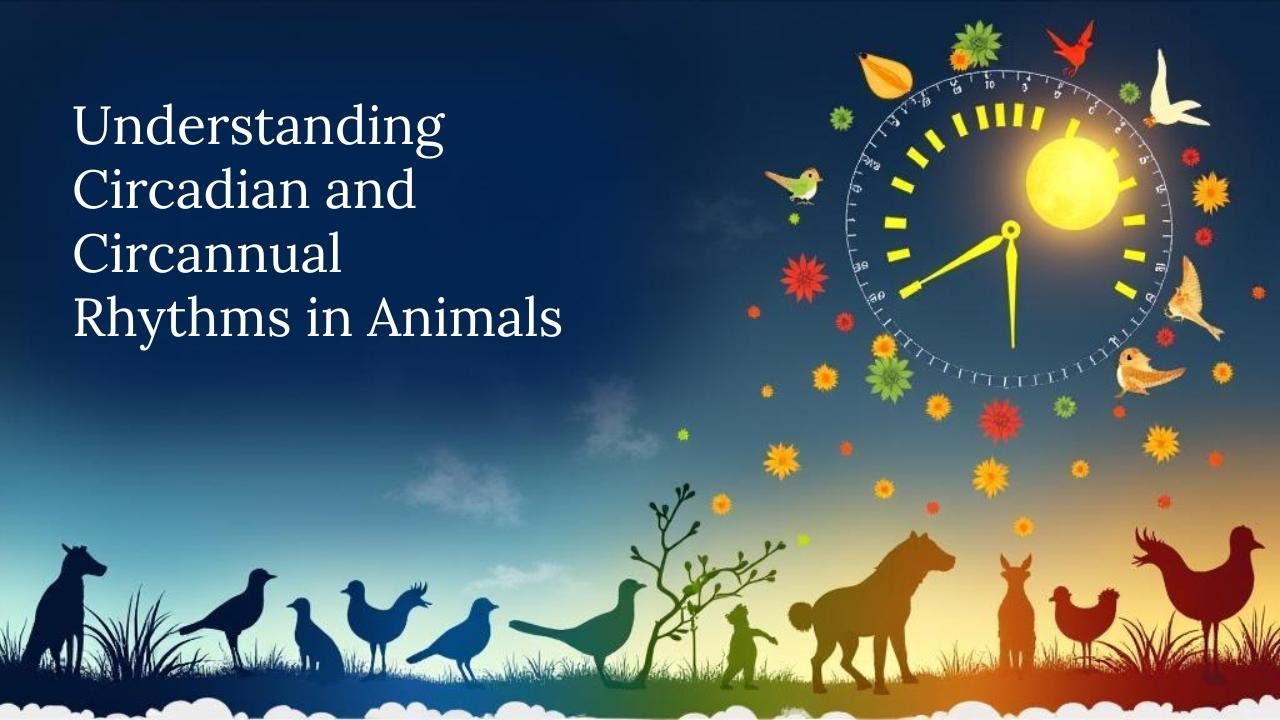
We need that balance of light and dark in our environment to maintain our circadian rhythm -- the physical, mental, and behavioral changes within a 24-hour cycle.
These rhythms greatly influence our sleep-wake patterns, body temperature, and the release of hormones!
The production of the sleep hormone melatonin is regulated by a group of nerve cells called the suprachiasmatic nucleus, or SCN, which sits in the brain just above the optic nerves, so it’s constantly receiving information about incoming light.
When it registers less light, like it usually would at night, these cells ramp up the melatonin, which leaves you drowsy and ready for bed.
But without that signal coming at regular, somewhat predictable intervals, it can throw the circadian rhythm out of whack.
These cycle disruptions have been linked to sleep disorders, depression, obesity, and seasonal affective disorder.
But I think that we can all agree that a lack of sleep is not that huge a deal, compared to cancer.
Several recent studies have suggested that prolonged exposure to artificial light at night increases the risk of certain types of cancer, especially breast cancer and other types that require hormones to spread.
Some of these studies have shown that women who work night shifts have higher rates of breast cancer, and in 2007, the International Agency for Cancer Research classified night work as a “probable human carcinogen.” The good news, if you can see it, is that of the many, many, MANY forms of pollution we face today, light pollution is one of the most easily remedied.
Simple changes in lighting design, materials, and zoning could go a long way in limiting the light pointing up into the atmosphere.
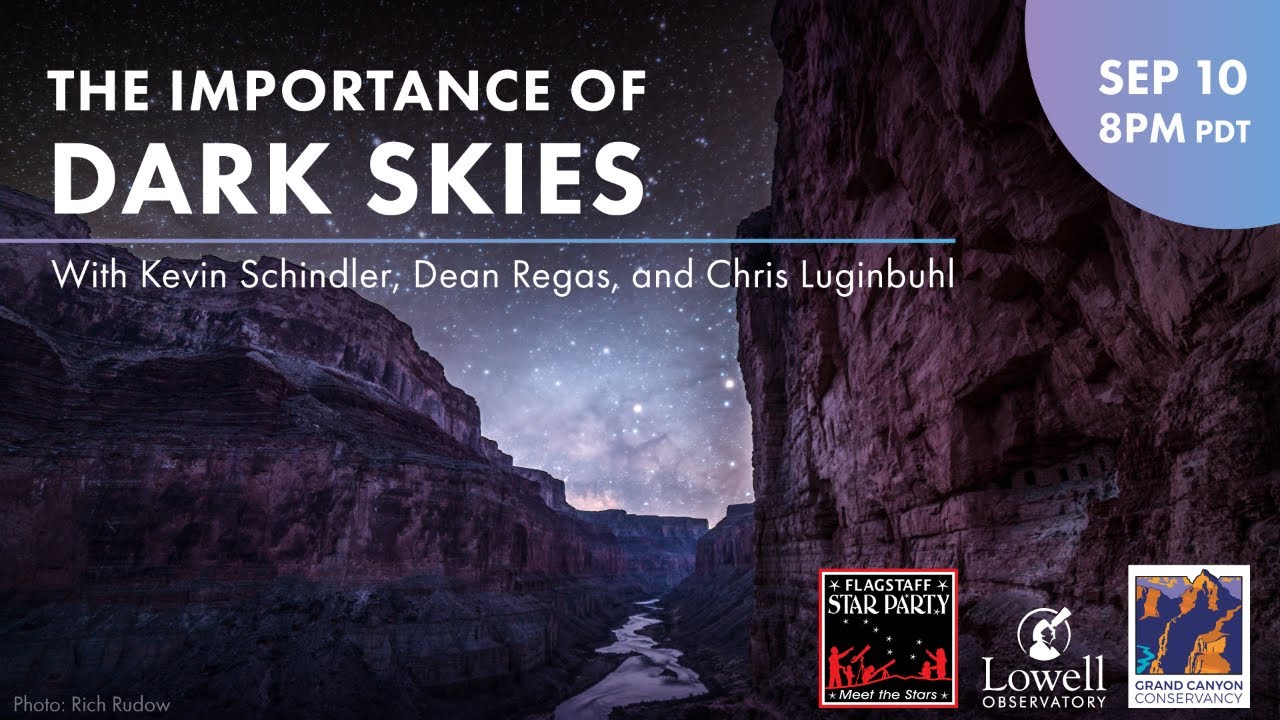
The International Dark-Sky Association has developed guidelines to help cities like Flagstaff, Arizona -- the world’s “first international dark sky city” -- to reduce light pollution.
Their tricks include things like shielding light sources so they point downward, limiting the lumens -- that’s the unit we use to measure perceived brightness -- that individual lights can emit, and putting caps on the number of lumens emitted per acre.
Even Paris, the City of Lights, now requires storefronts and office buildings to turn off their lights between 1 and 7 am.
Not the Eiffel Tower though, that can stay on.
Standards like these can save communities a lot of energy, money, and work toward restoring some ecological integrity.
Not only that, getting a handle on this pollution may give us back something vital to humanity-- our ability to look beyond the smallness of ourselves, out into the infinite beyond.
It’s like what Neil de Grasse Tyson once said, “When you look at the night sky, you realize how small we are within the cosmos.
It's kind of resetting of your ego.
To deny yourself of that state of mind, either willingly or unwittingly, is to not live to the full extent of what it is to be human.” Thanks for watching this SciShow Infusion -- especially our Subbable subscribers.
To learn how you can support us, just go to subbable.com/scishow.
And if you have questions, you can find us on Facebook and Twitter and as always in the comments below, and if you want to keep getting smarter with us, just go to YouTube.com/scishow and subscribe!
Up Next

Understanding Light Pollution: Causes, Effects, and Solutions
@dr.ongmengchuan3956
138 views•2022-03-23

Life in Biosphere 2: Sustainable Ecosystems & Human Survival
@TED
334.9K views•2009-06-16

How Riparian Buffer Plants Restore River Ecosystems
@SciShow
214.5K views•2022-09-25

Ice Stupa Artificial Glaciers: Solving Ladakh's Water Crisis
@SonamWangchuk66
3.2M views•2015-05-03
Related Study Plans & Knowledge Roadmaps
Structured learning paths in Environmental Science