Correlated Color Temperature (CCT) measures the color appearance of light, with warmer temperatures around 3000 Kelvin being less disruptive to wildlife and ecosystems because blue light scatters more in the atmosphere, causing sky glow that reduces star visibility and disrupts biological rhythms; therefore, outdoor lighting ordinances typically set a maximum CCT of 3000K to minimize ecological impact.
Understanding Correlated Color Temperature (CCT) and Its Impact on Lighting
Added:Deep Dive
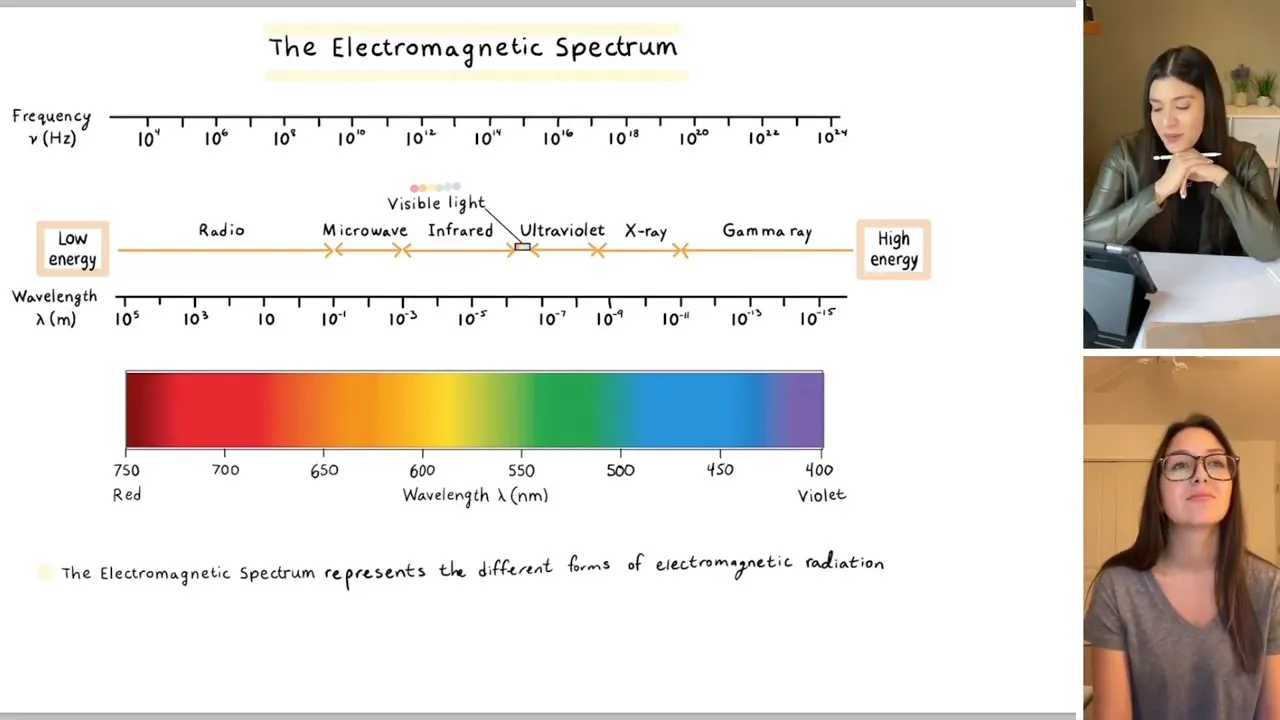
Basic understanding of the electromagnetic spectrum, specifically how visible light wavelengths correspond to different colors.

STRUCTURE OF ATOM - 03 | Electromagnetic Spectrum | Chemistry | PUC 1 / KCET / NEET / JEE
13.4K
The electromagnetic spectrum arranges all known electromagnetic radiations in order of increasing wavelength (decreasing frequency): cosmic rays, gamma rays, X-rays, ultraviolet rays, visible light, infrared rays, microwaves, radio waves. In the visible region, different colors correspond to different wavelengths: violet (400 nm, highest frequency) to red (700 nm, lowest frequency). The seven colors of white light in order of increasing wavelength are violet, indigo, blue, green, yellow, orange, red.
Click to watch →
The Electromagnetic Spectrum Introduction | Study Chemistry With Us
71.7K
Visible light ranges from approximately 400 nanometers (violet/purple end) to 750 nanometers (red end). Key colors correspond to specific wavelength ranges: violet is around 400 nm, blue around 450 nm, green around 550 nm, yellow around 600 nm, orange around 650 nm, and red around 750 nm. After calculating a wavelength, you should be able to identify the corresponding color within this range. Higher wavelengths correspond to lower frequencies, and vice versa.
Click to watch →

Introduction to light & E M W-7.01-IGCSE Physics
10.8K
The visible light spectrum ranges from approximately 400 nanometers (violet) to 700 nanometers (red). Different colors correspond to different wavelengths: violet has the shortest wavelength (~400nm) while red has the longest (~700nm). All colors are made of the same electromagnetic wave structure with electric and magnetic fields, but they differ only in their wavelength. Human eyes detect these different wavelengths and the brain interprets them as different colors.
Click to watch →

درس الحركة الموجية | فيزياء تانية ثانوي ترم أول 2025
1.5K
The electromagnetic spectrum consists of all types of electromagnetic waves arranged by wavelength or frequency. From longest wavelength to shortest: radio waves, microwaves, infrared, visible light, ultraviolet, X-rays, and gamma rays. Visible light is a small portion of this spectrum, with wavelengths from approximately 400 nm (violet) to 700 nm (red). The visible light spectrum consists of seven colors in order of decreasing wavelength: red, orange, yellow, green, blue, indigo, and violet. These colors can be remembered using the mnemonic 'ROYGBIV'. Red has the longest wavelength and violet has the shortest wavelength in the visible spectrum.
Click to watch →

Electromagnetic waves
104
Visible light is the only part of the electromagnetic spectrum detectable by human eyes. The visible spectrum consists of seven colors arranged by wavelength: Red (longest wavelength, ~700 nm), Orange, Yellow, Green, Blue, Indigo, and Violet (shortest wavelength, ~400 nm). Red light has the longest wavelength and lowest energy among visible colors, while violet has the shortest wavelength and highest energy. The visible region spans approximately 400-700 nanometers. This spectrum demonstrates how different wavelengths correspond to different colors that our eyes can perceive.
Click to watch →
Deep Dive
The concept of the Kelvin scale and how it is used as a thermodynamic temperature scale.

JEE Main Heat, Thermodynamics, Ktg, Fluid | One-Shot | Physics Mega Revision #2
147.6K
The Kelvin temperature scale is the absolute temperature scale used in thermodynamics. The Kelvin scale starts at absolute zero (0K), where molecular motion ceases. The relationship between Kelvin and Celsius is T(K) = T(°C) + 273.15. All thermodynamic equations involving temperature require the use of absolute temperature in Kelvin. The Kelvin scale is essential for calculating thermodynamic quantities like entropy and internal energy.
Click to watch →

L-4, SI मात्रकों की परिभाषान, अध्याय-1, रसायन विज्ञान की कुछ मूल अवधारनाएँ | Class-11th Chemistry
103.4K
This section covers the Kelvin temperature scale and absolute zero. The Kelvin is the SI unit for thermodynamic temperature, defined as 1/273.16 of the triple point of water. Absolute zero (-273.15°C) is the temperature where molecular motion theoretically stops. The Kelvin scale eliminates negative temperatures, making it essential for scientific calculations. The triple point of water (273.16 K, 0.01°C, 611.657 Pa) provides a reproducible reference point. The section explains why the Celsius scale (0°C to 100°C based on water's freezing and boiling points) is inadequate for scientific work due to pressure dependence and negative temperatures. The Kelvin scale is named after Lord Kelvin and is used in physics, chemistry, and engineering for thermodynamic calculations.
Click to watch →

XI-11-01 Thermal properties of matter (2015) Pradeep Kshetrapal Physics
143K
Through gas experiments following Charles's Law and Gay-Lussac's Law, scientists discovered pressure decreases proportionally with temperature. Extrapolating this linear relationship revealed pressure reaches zero at absolute zero—the lowest possible temperature where molecular motion theoretically ceases. Lord Kelvin formalized this concept, creating the thermodynamic scale starting at 0 K. The Kelvin scale uses the same degree size as Celsius but starts at absolute zero. Water freezes at 273.16 K and boils at 373.16 K. Converting between scales requires adding/subtracting 273.16. As a fundamental quantity, temperature cannot be derived from mass, length, or time.
Click to watch →
JEE 2022: Heat & Temperature L1 | Unacademy JEE | JEE Physics | Jayant Nagda
81.2K
The Kelvin scale is absolute, starting from absolute zero (0 K) where gas molecules have zero kinetic energy and are at absolute rest. The relationship between Kelvin (K) and Celsius (C) is: K = C + 273.15. This means 0°C = 273.15 K and 100°C = 373.15 K. The Kelvin scale is preferred in scientific calculations.
Click to watch →
Every Weird Temperature Scale Explained
119K
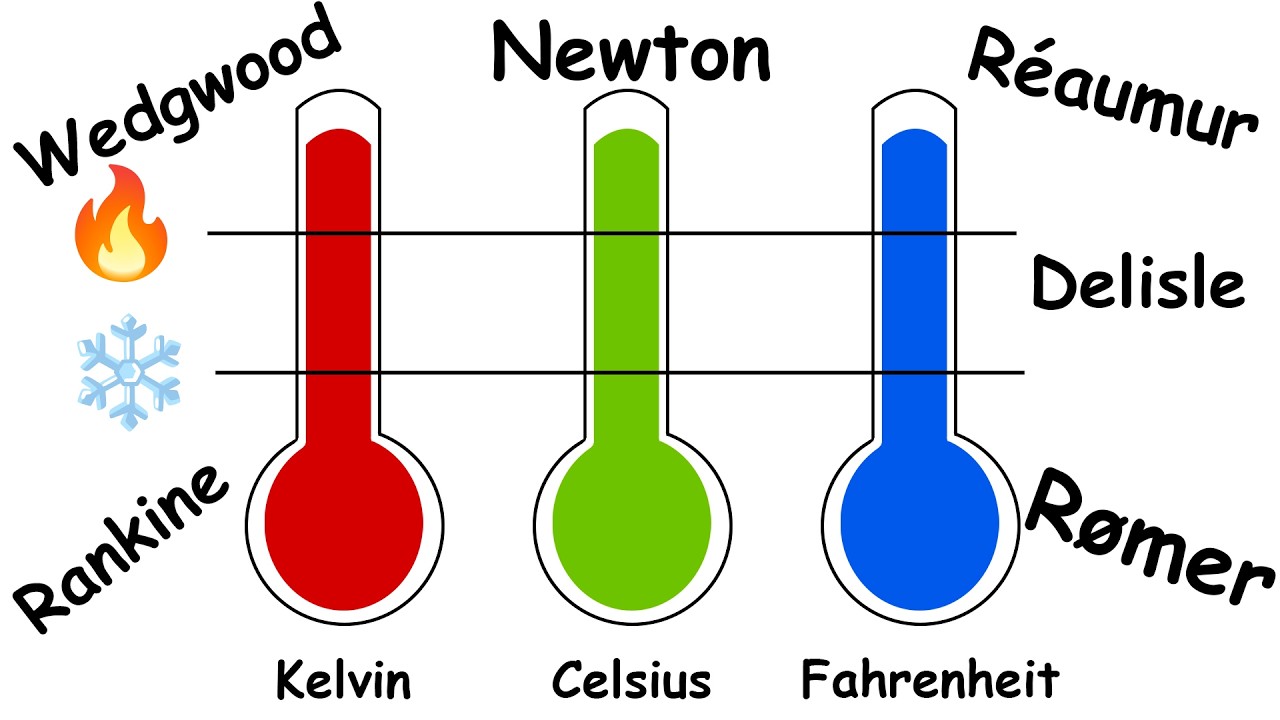
The Kelvin scale is the temperature scale used in the International System of Units (SI), serving as the standard for scientific measurements. To understand Kelvin, we must consider what temperature fundamentally represents: it measures the average kinetic energy of particles in a material. Kinetic energy is the energy an object possesses due to its motion, determined by the work required to accelerate it—more mass means more kinetic energy, and more speed also means more kinetic energy. When particles have no jiggling motion at all, the material reaches the lowest possible temperature, known as absolute zero, which equals -273.15°C. This is where zero is located on the Kelvin scale, making it an absolute temperature scale with the least arbitrary choice for zero. One Kelvin has the same magnitude as one degree Celsius; a change of one Kelvin equals a change of one degree Celsius. The Kelvin scale does not use degrees—the units are simply Kelvin (uppercase K for the scale, lowercase k for the unit). William Thomson, later Lord Kelvin, proposed this scale in 1848 after calculating absolute zero at approximately -200°C (close to today's accurate value). The scale underwent refinements in 1854 and was officially redefined in 1954. In 2019, the SI revision redefined the Kelvin in terms of the Boltzmann constant, establishing it as a fundamental constant-based unit. All other temperature scales are now defined in relation to the Kelvin scale.
Click to watch →
Deep Dive
An introductory awareness of light pollution and its primary forms, such as sky glow and light trespass.
Saving our Night Skies - Reducing Light Pollution
314
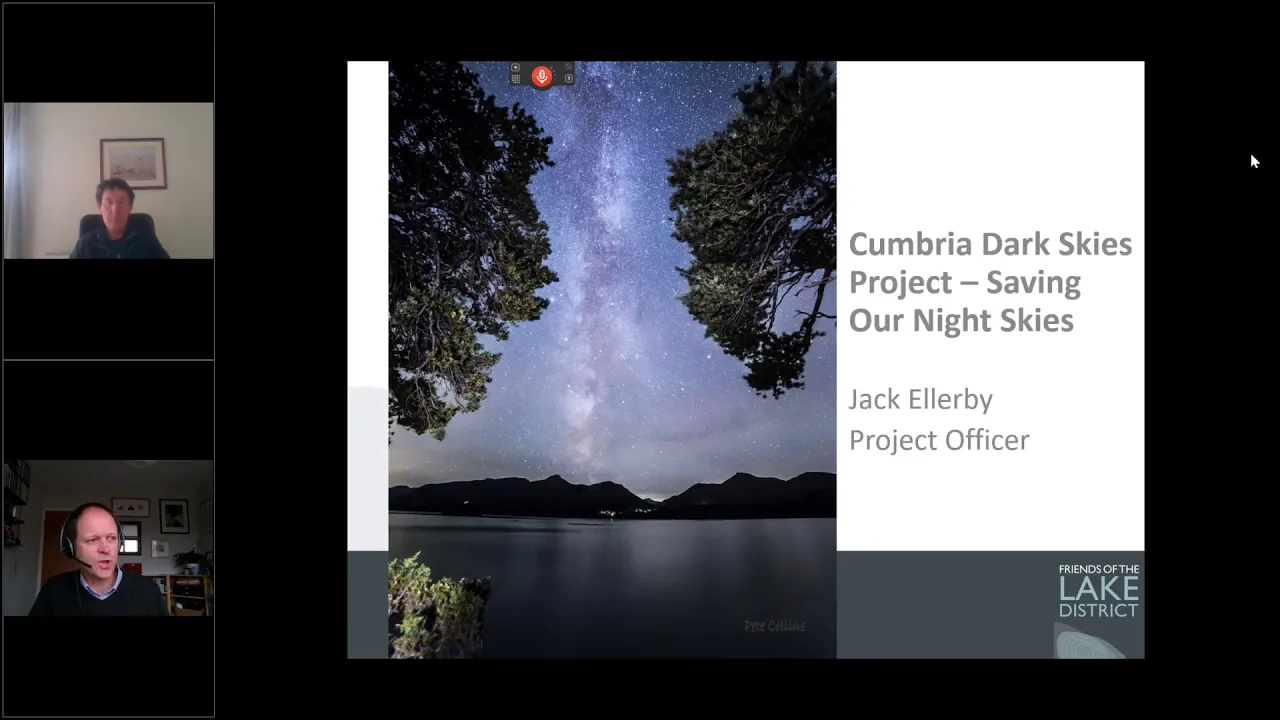
The three main forms of light pollution are: (1) Sky glow - light shining upward or reflecting off shiny surfaces back into the atmosphere, creating a diffuse glow across major towns and cities; (2) Glare - bright light shining horizontally across people's faces and vehicle drivers' faces, which can be mitigated with shields; (3) Light trespass - light from one property shining into another property's windows or garden. The Clean Neighborhoods and Environment Act 2005 provides limited control over light trespass but excludes street lighting and transport facilities.
Click to watch →
How Light Pollution Disrupts Ecosystems and Human Health
1M
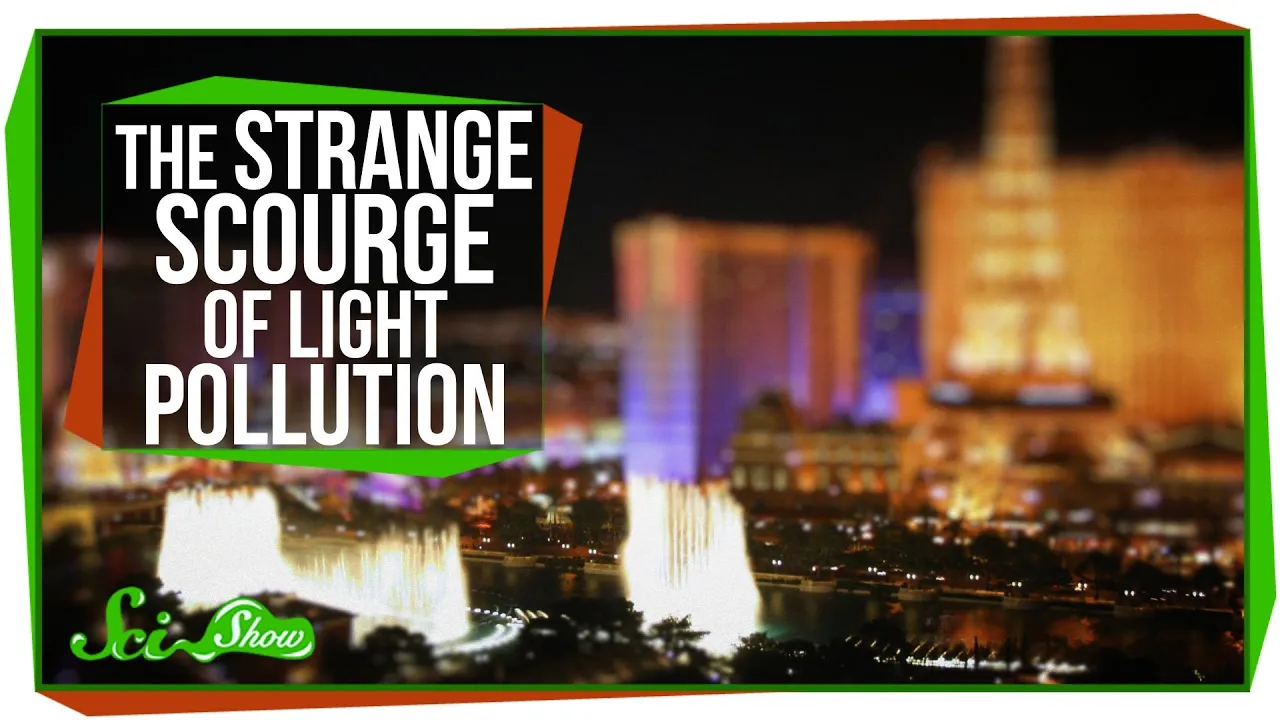
Light pollution manifests in four main forms: (1) Urban sky glow - the overall brightening of the night sky caused by light scattered by air particles, creating a visible halo over cities; (2) Light trespass - unwanted light falling where it is not desired, such as neighbor's floodlights shining onto your pillow; (3) Glare - super-bright unshielded lights that shine horizontally, decreasing visibility and potentially causing blindness; (4) Clutter - excessive combinations of light sources in urban areas like Las Vegas or Manhattan, which contributes to all other types of light pollution and destroys nighttime ambiance.
Click to watch →
Light Pollution 101 | National Geographic
548.3K
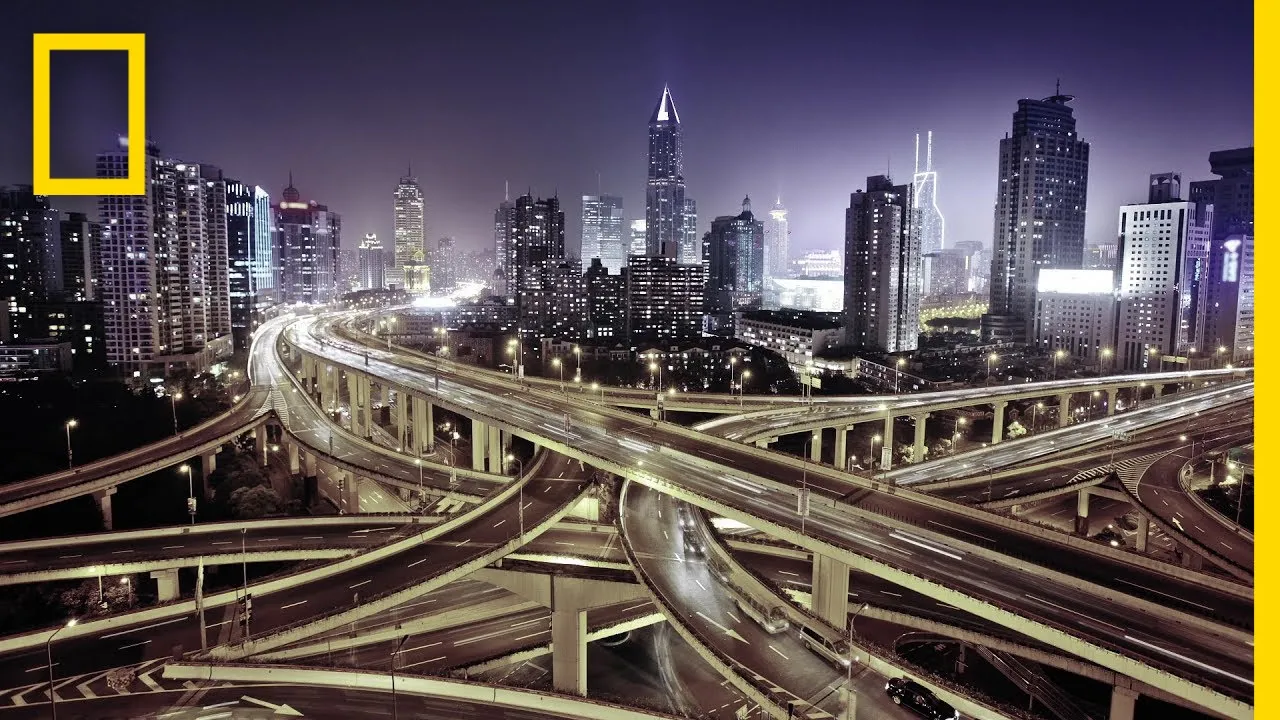
There are three primary types of light pollution: (1) Glare - disruptive light that shines horizontally, causing visual discomfort; (2) Light trespass - unwanted shining of light onto nearby areas where it is not needed or desired; (3) Sky glow - a halo effect over inhabited areas caused by the scattering of light particles through the atmosphere.
Click to watch →

Understanding Light Pollution: Causes, Effects, and Solutions
138
Light pollution occurs in five main forms. Light trespass (spill light) occurs when illumination crosses property lines, with no guidelines for what constitutes unwanted light. Glare is visual impairment when stray light exceeds eye adaptation, including discomfort glare (annoyance without performance loss), disability glare (veiling effect reducing contrast and safety, especially for older drivers), and blinding glare (complete vision impairment). Sky glow originates from artificial lights scattered by atmospheric particles, creating orange domes visible up to 200 miles away, reducing star visibility and affecting nocturnal animal navigation. Over illumination uses excessive light on landmarks and skyscrapers. Light clutter is excessive grouping of bright lights causing confusion for drivers and pilots.
Click to watch →

Dark Sky
6.3K
Light pollution manifests in three main forms: (1) Glare - bright light in the field of view that impairs vision; (2) Sky glow - the brightening of the night sky from light scattering off atmospheric particles; (3) Light trespass - unwanted light entering properties where it is not needed or wanted. These problems result from fixtures that send light much further than necessary.
Click to watch →
Deep Dive
The general ecological concept of how artificial light at night (ALAN) affects nocturnal animal behavior and ecosystems.
Jane Jacobs Lecture | Disappearing Darkness with Bettymaya Foott
106
Artificial light at night exposure impacts almost every species studied by scientists, interfering with their biology and changing how they interact with the environment. This harms ecosystems and makes plants and animals less resilient to environmental change. Organisms experience natural light levels that vary by factors of over one billion times, with the rising and setting of the sun and moon establishing cues for behaviors like finding food and mates. Many species, including dung beetles, rely on very dim natural light sources like starlight for orientation and navigation.
Click to watch →

Alejandro Sánchez de Miguel - Universidad Complutense de Madrid (UCM)
123
Artificial light at night affects numerous species and ecosystems. Migratory species, nocturnal animals, and entire ecological communities face disruption from artificial lighting. These impacts extend beyond human-visible effects to fundamental ecological processes occurring during nighttime hours.
Click to watch →
BioClock Academy - Session 2 - Dr. Kamiel Spoelstra
206
Artificial light at night directly impacts nocturnal species in multiple ways: attracting birds that exhaust themselves and may die, reducing habitat suitability for slow-flying bats that emerge later, and altering foraging patterns. Experimental illumination of forest patches caused bats to forage at different times and in different spectral ranges, demonstrating that artificial light fundamentally changes nocturnal ecological dynamics.
Click to watch →

Artificial Light At Night - How A.L.A.N Affects Insect Populations
786
A 2021 study published in Science Advances found that artificial light at night (ALAN) significantly reduces caterpillar abundance, with street-lit habitats showing up to 50% fewer caterpillars compared to unlit areas, and LED streetlights causing greater harm than traditional sodium lighting, potentially threatening insect populations and the ecosystems that depend on them.
Click to watch →

Biodivers im Schmutz – die Vielfalt im Boden
165
Artificial light at night (ALAN) is an environmental factor affecting ecosystems. While soil itself remains dark, ALAN affects plants and indirectly impacts soil processes. Research has demonstrated measurable effects of artificial lighting on soil systems through its influence on plant communities.
Click to watch →
Prerequisite Knowledge
- Concept 01Basic understanding of the electromagnetic spectrum, specifically how visible light wavelengths correspond to different colors.
- Concept 02The concept of the Kelvin scale and how it is used as a thermodynamic temperature scale.
- Concept 03An introductory awareness of light pollution and its primary forms, such as sky glow and light trespass.
- Concept 04The general ecological concept of how artificial light at night (ALAN) affects nocturnal animal behavior and ecosystems.
Subsequent Learning
- Step 01Advanced lighting metrics beyond CCT, including Spectral Power Distribution (SPD) and Color Rendering Index (CRI).
- Step 02The policy and legal frameworks of municipal lighting ordinances, specifically how to implement and enforce DarkSky compliance.
- Step 03The physiological impact of blue-rich, high-CCT light on human circadian rhythms and melatonin production.
- Step 04Sustainable lighting design principles, focusing on luminaire shielding, targeting, and adaptive controls like motion sensors and timers.
CCT Impact
CCT Impact
0:01Playing Section
- 1
CCT levels influence wildlife and night sky visibility.
- 2
Warmer tones near 3000K minimize ecological disruption.
- 3
Blue light scattering contributes to sky glow.
Limitations of CCT as a Metric and the Safety Arguments for Higher CCTs
While low Correlated Color Temperature (CCT) standards like 3000K or lower aim to mitigate light pollution, critics argue that CCT is an inadequate metric for lighting regulation. First, CCT only describes the perceived color of a light source, not its actual spectral power distribution (SPD). Two lights with the same CCT can emit vastly different levels of harmful blue light, meaning CCT caps can fail to protect the night sky effectively. Second, traffic safety engineers often advocate for higher CCTs (such as 4000K) because the human eye is more sensitive to blue-green wavelengths under nighttime (mesopic) conditions. Higher CCT lighting improves color rendering, peripheral vision, and driver reaction times, which can enhance public safety and reduce traffic accidents. Additionally, higher CCT LEDs are often more energy-efficient. Critics suggest that lighting ordinances should focus on precise spectral distribution, shielding, and dimming controls rather than relying solely on CCT thresholds.
Deep Dive
Advanced lighting metrics beyond CCT, including Spectral Power Distribution (SPD) and Color Rendering Index (CRI).

HCL Basics - SPD (Spectral Power Distribution) inIntegrative Lighting / HCL
1.1K
In human-centric lighting (HCL), spectral power distribution (SPD) is more important than correlated color temperature (CCT) or color rendering index (CRI) for evaluating non-visual light effects, because SPD determines the melanopic equivalent daylight illuminance (MEDI) that affects circadian rhythms through intrinsically photosensitive retinal ganglion cells (ipRGCs); higher CCT and higher CRI light sources provide greater melanopic stimulus for the same photopic illuminance, meaning less photopic light is needed to achieve desired non-visual effects, though practitioners must account for limitations including directionality of light incidence on the retina and age-related changes in lens transmission.
Click to watch →

Petr Baxant Ph.D., Spectral properties of Light I. - Blue content, J. Linda Days Plzeň, May 2024
724
Spectral power distribution (SPD) is the fundamental measurement from which all photometric quantities can be calculated. While CCT meters and CRI meters provide useful parameters, they cannot fully characterize a light source. A spectroradiometer measures SPD directly, allowing calculation of all derived metrics. However, it is not possible to reverse-engineer the original spectrum from CCT, CRI, or other derived numbers alone, making SPD the essential starting point for accurate light characterization.
Click to watch →

『Commercial Space Lighting』オンラインイベント/分光色彩照度計で「光の質」について考える
375
The Color Rendering Index (CRI/RA) measures how accurately a light source renders colors compared to a reference source, ranging from 0 to 100. RA is calculated as the average of R1-R8 values representing 8 color samples. However, RA alone does not indicate how well specific colors, particularly red, are rendered. TM30 is a newer metric developed by the Illuminating Engineering Society (IES) that evaluates 99 color samples instead of 8. TM30 provides RF (Fidelity Index) measuring color accuracy and RG (Gamut Index) measuring color saturation. Spectral power distribution (SPD) is a graph showing the intensity of light at each wavelength, with the horizontal axis representing wavelength (nm) from 380nm (violet) to 780nm (red). General white LED lights typically show a sharp blue peak with a deep green valley, causing poor color rendering. Full spectrum lights have smooth, continuous distributions similar to natural sunlight, providing superior color rendering.
Click to watch →

What is Color Temperature | Learn with AVIXA
1.7K
CCT (Correlated Color Temperature) and CRI (Color Rendering Index) are essential metrics for lighting design. CCT quantifies white light color on a Kelvin scale, indicating warmth or coolness. The chromaticity diagram shows all possible colors with coordinates, and the black body curve represents ideal radiation as temperature increases. LED lights span from warm white (2700K) to daylight (5600K), with higher CCT producing bluer light and lower CCT producing redder light. CRI measures how accurately a light source reproduces colors compared to an incandescent source of the same CCT, with values ranging from negative to 100 (100 being most accurate). CRI values are often expressed as CIE Ra values representing average test color accuracy. However, some lamps may have high average CRI but poor performance on specific colors (R3, R9). Together, CCT and CRI help designers select lighting that meets both atmospheric and color accuracy requirements for specific tasks like classrooms versus libraries.
Click to watch →

Why you should be using a bias light
6.8K
Color temperature alone is insufficient for bias lighting evaluation. ANSI 6500K chromaticity coordinates are greener than D65 (delta UV ~0.007 vs. ~0.003). Many inexpensive LEDs have rainbow-like variations despite similar color temperatures due to poor spectral power distribution. The Color Rendering Index (CRI) is fundamentally flawed—it calculates using only R1-R8 pastel tones, excluding R9-R15 which include critical colors like vivid red and blue. A light with CRI 98.8 can have negative R9 values causing unnatural skin tones. True evaluation requires examining full spectral distribution curves, not single metrics.
Click to watch →
Deep Dive
The policy and legal frameworks of municipal lighting ordinances, specifically how to implement and enforce DarkSky compliance.

June 15, 2021 City Council Meeting
118
Dark sky ordinance implementation involves: (1) reviewing with affected entities like school districts, hospital districts, and the county, (2) understanding that the city has never been in compliance and has never denied the ordinance, (3) recognizing that funding sources and grants are available for implementation, (4) knowing that the implementation process takes approximately five years from start to finish, (5) understanding that grants can provide funding for light fixtures and covers, (6) knowing that code enforcement will enforce the ordinance and building inspections will ensure new construction complies, and (7) recognizing that the ordinance supports tourism and can bring grant funding annually.
Click to watch →

DarkSky Policy Engagement: Strategies for Light Pollution Control
195
Dark Sky International has created templates for local municipal codes and regional laws to help create effective light pollution regulations. The templates address regional governments (states, territories, provinces) with broad high-level principles and municipal governments (cities, towns, counties) with specific community-level governance. The Five Principles of Responsible Outdoor Lighting are: light must be useful and targeted; light should be kept at low levels and not overlighted; light should be controlled—turned off when not needed; light should be warm-colored (lower CCT) because blue light scatters more; and light should be shielded to prevent uplight. These principles are ranked by effectiveness, with controlling distribution and keeping levels low being the most impactful measures. Effective policies include specific standards: fully shielded light distribution with no light above the horizontal plane; high-angle light (80-90 degrees) limited to no more than 5% of total output; light trespass defined as vertical illuminance at 1.5 meters above ground with limitations of 0.1 Lux in wilderness areas and 1 Lux at residential boundaries; nighttime hours when non-essential lighting must be turned off; and maximum CCT of 3,000 Kelvin. The Dark Sky Recognized Program allows communities to have enacted laws reviewed to ensure they meet template requirements.
Click to watch →

Brisbane City Council Meeting 11-16-2023
106
Dark sky ordinances establish comprehensive frameworks balancing environmental protection with practical implementation. Key elements include: (1) Exemptions for indoor lighting, temporary uses, safety requirements, and downward-facing landscape lighting; (2) Mandatory full shielding with light trespass prohibitions; (3) Curfews (10 PM for commercial, with automated controls required); (4) Color temperature limits (3,000 Kelvin max); (5) Intensity standards varying by zoning district. Implementation timelines provide flexibility: easy fixes (redirecting, dimming, sensors) within one year; fixture replacements within five years for non-residential and ten years for residential; city infrastructure over fifteen years. Compliance is complaint-based, with deviation processes for unique circumstances. The framework acknowledges that meaningful environmental change requires gradual adoption rather than immediate compliance.
Click to watch →

Have you heard about Dark Sky compliant lighting?
176
Dark Sky Compliance is a set of laws regulating light pollution that applies to both businesses and homeowners, requiring that outdoor lighting not exceed 10 foot candles crossing property lines, with violations potentially resulting in fines or mandatory light modifications; businesses also face restrictions on signage that could distract drivers, while special use lighting like baseball field lights is exempt when not in use. To comply, property owners should use full cutoff lights that direct illumination downward and avoid shining above a certain height, protecting both wildlife and the public's ability to enjoy the night sky.
Click to watch →

Blinded by the Light: Light Pollution
105
Municipalities have significant power to reduce light pollution through local ordinances. New Jersey municipalities like Saddlebrook and Hopewell Township have passed lighting ordinances requiring new commercial developments to meet dark sky standards. A model ordinance template was created by the Dark Sky New Jersey chapter to help other municipalities adopt similar regulations. Additionally, a bill is pending in the New Jersey legislature that would require state-funded lighting projects to use environmentally friendly, dark sky compliant lighting. These policy approaches enable systemic change at the community level.
Click to watch →
Deep Dive
The physiological impact of blue-rich, high-CCT light on human circadian rhythms and melatonin production.

Light Pollution Impacts on Human Health and Wildlife | Alyn Wallace | TEDxTalks
38.7K
Humans have evolved circadian rhythms based on natural day-night cycles, controlled by hormones including melatonin which promotes sleep. Blue light from LEDs strongly affects circadian rhythms because human sensitivity peaks in the blue spectrum. Exposure to blue-rich light suppresses melatonin production, making it difficult to sleep and disrupting the body's natural clock. This disruption is linked to serious health issues including heart disease, depression, and increased risk of breast cancer.
Click to watch →
Dr Martin Moore-Ede | Why Your Health Hinges on the Light You See
436.4K
Research comparing identical brightness levels (measured in lux) shows dramatic differences in melatonin production based on light spectrum. Standard blue-rich LED lights produce six to seven times less melatonin at night compared to specially engineered zero-blue lights. Additionally, blue light is approximately 20 times more effective than white light at shifting circadian clocks, meaning very dim blue light can produce the same circadian effects as bright white light.
Click to watch →
Bret and Heather 89th DarkHorse Podcast Livestream: Transcendental Medication
107.6K
Research shows that at night, both high luminance (brightness) and high CCT (cooler, bluer light) are positively correlated with melatonin suppression. Exposure to blue light and cool light at night induces a delayed phase shift in circadian rhythms, which disrupts sleep. This is consistent with the known effects of blue light on the body's internal clock, which evolved to use daylight as a timing signal.
Click to watch →
LED lights are DEVASTATING our bodies, here's why | Redacted w Clayton Morris
413.2K
LED lights emit blue-rich light at 450 nanometers that disrupts human circadian rhythms by suppressing melatonin production, interfering with the body's natural cellular repair processes during sleep. The 2005 Energy Policy Act mandated LED adoption by setting a 45 lumens per watt standard without requiring FDA safety collaboration, resulting in widespread exposure to potentially harmful blue-rich light that may contribute to health issues including sleep disorders, migraines, and increased disease risk.
Click to watch →

The importance of sleep | A Hunter‑Gatherer's Guide to the 21st Century (from Livestream #89)
26K
Societal blue light restriction is important—outdoor blue spectrum light should be limited, particularly lights shining upward and outward at night. Nighttime darkness is healthy, while 24-hour light is implicated in higher disease rates. Illuminance measures brightness (foot candles or Lux), while CCT measures light temperature (higher CCT = bluer/cooler, lower CCT = warmer/yellow). At night, high luminance and high CCT light suppress melatonin and induce delayed phase shifts, disrupting sleep. During daytime, blue light stimulates positive mood and alertness. A 2013 study found the lunar cycle affects human sleep: during full moon, deep sleep decreases by 30%, time to fall asleep increases by 5 minutes, and total sleep duration reduces by 20 minutes, even in sleep lab conditions.
Click to watch →
Deep Dive
Sustainable lighting design principles, focusing on luminaire shielding, targeting, and adaptive controls like motion sensors and timers.

Poorly designed lighting in Lawrence Hall at the University of Oregon
273
Sustainable lighting design requires balancing energy efficiency with human health and comfort, including appropriate light levels, task-oriented illumination that hides light sources, and operation only when needed; poorly designed lighting—such as unshielded high-color-temperature LEDs, excessive brightness, and lights left on in unoccupied spaces—wastes electricity and can cause health hazards like retina damage while failing to provide comfortable illumination.
Click to watch →

CAROLINA PEDRAZA
392
Sustainable lighting (iluminación sustentable) proposes understanding each space and developing projects to avoid light pollution. It involves understanding who the inhabitant is and what the space will be used for, then developing a unique project accordingly. This approach does not necessarily involve mass installation of luminaires but rather considers each space, place, and function individually. For sustainable lighting, one must evaluate where the place is located and its relationship with the environment. The evolution of lighting specification has shifted from specifying by consumption (watts) to specifying by light requirements (luminance levels) and desired visual experience, because LED technology advances rapidly and luminaires specified by consumption may become obsolete within one to two years.
Click to watch →

5-27-21 San Bernardino County Light Trespass Workshop | Speakers: Steve Bardwell and Luke Sabala
108
Shielding alone doesn't reduce energy consumption—it must be combined with lower wattage bulbs or LED technology. Shielded fixtures direct usable light downward, allowing achievement of desired illumination with fewer lumens. At 11 PM curfews in mountain regions, decorative lighting should be extinguished when areas are unoccupied. Light sources above eye level shining onto palm trees don't create hard shadow effects. Motion sensors help manage security lighting efficiently.
Click to watch →

SATCO Training With Bob: Lighting Basics Lesson 5
548
A luminaire is a complete lighting unit containing a light source, reflectors or lenses for light distribution, and control devices such as drivers, photocells, motion sensors, or Wi-Fi units for IoT integration. Lighting controls include motion sensors that activate lights when presence is detected, photocells that respond to ambient light levels, and smart controls via Wi-Fi, Bluetooth, or Zigbee that enable customization based on time of day, occupancy, or circadian rhythms. Common commercial fixture types include recessed fixtures (downlights, wall washers, troffers), surface-mounted fixtures (flush mounts, track lights), and suspended fixtures (pendants, chandeliers, high/low bays). Exterior lighting fixtures must comply with municipal codes requiring full cut-off designs that prevent light trespass and sky glow, with options ranging from standard wall packs to flood lights with various mounting configurations.
Click to watch →

Promoting Energy Efficient Lighting Systems
233
Network lighting control systems leverage four primary strategies to reduce energy consumption: high-end trim (task tuning) reduces maximum lumen output to match actual space requirements; occupancy sensors automatically turn lights on/off based on presence detection; daylight harvesting uses natural sunlight to reduce electric lighting needs; and scheduling ensures lights operate only during appropriate hours. Luminaire level lighting controls (LLC) represent a transformative approach where each fixture contains integrated sensors and controls. To qualify as LLC, fixtures must be individually addressable, contain both daylight and occupancy sensors, support continuous dimming, and be networkable for easy reconfiguration. Comparative studies show LLC systems costing approximately $6,000 versus $8,000 for traditional zone-based systems in equivalent applications, with implementation times reduced from 7 to 5 hours.
Click to watch →
CCT Impact
CCT Impact
0:01- 1
CCT levels influence wildlife and night sky visibility.
- 2
Warmer tones near 3000K minimize ecological disruption.
- 3
Blue light scattering contributes to sky glow.
Limitations of CCT as a Metric and the Safety Arguments for Higher CCTs
While low Correlated Color Temperature (CCT) standards like 3000K or lower aim to mitigate light pollution, critics argue that CCT is an inadequate metric for lighting regulation. First, CCT only describes the perceived color of a light source, not its actual spectral power distribution (SPD). Two lights with the same CCT can emit vastly different levels of harmful blue light, meaning CCT caps can fail to protect the night sky effectively. Second, traffic safety engineers often advocate for higher CCTs (such as 4000K) because the human eye is more sensitive to blue-green wavelengths under nighttime (mesopic) conditions. Higher CCT lighting improves color rendering, peripheral vision, and driver reaction times, which can enhance public safety and reduce traffic accidents. Additionally, higher CCT LEDs are often more energy-efficient. Critics suggest that lighting ordinances should focus on precise spectral distribution, shielding, and dimming controls rather than relying solely on CCT thresholds.
Basic understanding of the electromagnetic spectrum, specifically how visible light wavelengths correspond to different colors.
The concept of the Kelvin scale and how it is used as a thermodynamic temperature scale.
An introductory awareness of light pollution and its primary forms, such as sky glow and light trespass.
The general ecological concept of how artificial light at night (ALAN) affects nocturnal animal behavior and ecosystems.
Advanced lighting metrics beyond CCT, including Spectral Power Distribution (SPD) and Color Rendering Index (CRI).
The policy and legal frameworks of municipal lighting ordinances, specifically how to implement and enforce DarkSky compliance.
The physiological impact of blue-rich, high-CCT light on human circadian rhythms and melatonin production.
Sustainable lighting design principles, focusing on luminaire shielding, targeting, and adaptive controls like motion sensors and timers.
600 views22likes1:45@DarkSkyInternationalOriginal Release: 2024-11-08
[Music] in this video we will explain why correlated color temperature CCT is significant and the importance of establishing a baseline for it responsible outdoor lighting principle 5 highlights the importance of using warmer colored lights whenever possible certain light colors can negatively impact wildlife and ecosystems in general warmer tones around the 3,000k Spectrum are less disruptive and are a better option for outdoor lighting because blue light is more apt to scatter locally in the atmosphere it is prone to being redirected back toward Earth as a physical manifestation of Sky glow this veil of Sky glow reduces the visibility of stars within the natur nighttime sky and the increased illumination May disrupt biological and ecological health for these reasons dark sky Advocates the use of warmer colored temperatures as stated in our ordinances the maximum allowable correlated color temperature CCT for outdoor lumines is 3,000k there are some exceptions for limited applications that are listed in our ordinance templates our ordinance templates are free to download from our website please click the link down below thanks for tuning in be sure to subscribe for more insights on responsible and effective outdoor lighting
Up Next

50:32
International Dark Sky Week 2024: Preserving Nighttime Natural Beauty
@DarkSkyInternational
314 views•2024-04-04

12:54
Triumph of Orthodoxy Icon: Byzantine Art & History Explained
@BenCallan
2.1K views•2024-08-06
73:38
DarkSky Policy Engagement: Strategies for Light Pollution Control
@DarkSkyInternational
195 views•2024-11-18

1:42
Game of Thrones Opening Credits: A Cinematic Analysis
@gameofthrones
46.3M views•2011-04-18
Related Study Plans & Knowledge Roadmaps
Structured learning paths in General & Interdisciplinary Studies
general-studies
Elevator Engineering: History, Physics & Cities
01From Hoists to Safety Brakes: The Dawn of Vertical Lift
02Hydraulic vs. Traction: The Engineering Physics of Elevators
03Modern Speed, Safety, and Algorithms
+ 2 more learning modules
12h5 modules
Explore Roadmap
general-studies
Rubber: Material Science, History & Geopolitics
01Origins of Natural Rubber & Mesoamerican History
02The Chemistry of Natural Rubber & Vulcanization
03The Geopolitics of the Rubber Boom & Colonization
+ 2 more learning modules
12h5 modules
Explore Roadmap
general-studies
Containerization: Evolution, Logistics & Trade
01Ancient Trade & Bulk Cargo: Amphorae to Barrels
02The Industrial Revolution & Cardboard Packaging
03The Containerization Revolution: Malcom McLean
+ 2 more learning modules
12h5 modules
Explore Roadmap
general-studies
Textile Tech: Evolution, Labor & Global Impact
01Pre-Industrial Textiles: Handloom & Cottage Industry
02Mechanization: The Spinning Jenny to the Power Loom
03The Factory System & Global Labor Transformation
+ 2 more learning modules
10h5 modules
Explore Roadmap