











![[배관설비] 마찰손실-1 Hazen-Williams 공식](https://i.ytimg.com/vi_webp/XODuAcPboQU/maxresdefault.webp)



![「給水装置工事主任技術者」受験対策 [第3回_給水装置工事法(1)] (全12回)](https://i.ytimg.com/vi/S2X_0k0xXZM/maxresdefault.jpg)



To design an effective irrigation system, measure static pressure (pressure at zero flow, typically 40-120 PSI) and flow rate (using a five-gallon bucket timed fill test), then apply a conservative 70% utilization factor; for drip systems, convert flow from gallons per minute to gallons per hour and divide by emitter output to determine maximum emitters per zone, while pressure regulators are essential for maintaining optimal 20-30 PSI operation.
How to Calculate Water Flow and Pressure for Irrigation Design
Added:Understanding basic fluid dynamics terms, specifically the units of measure for pressure (PSI) and flow rate (GPM).
The conceptual difference between static pressure (potential energy in closed systems) and dynamic/working pressure (energy in moving water).
Basic mathematical proficiency in algebra and unit conversion, necessary for calculating area, application rates, and time variables.
Familiarity with standard irrigation system components, such as mainlines, lateral lines, valves, and different types of emitters (sprinklers vs. drip).
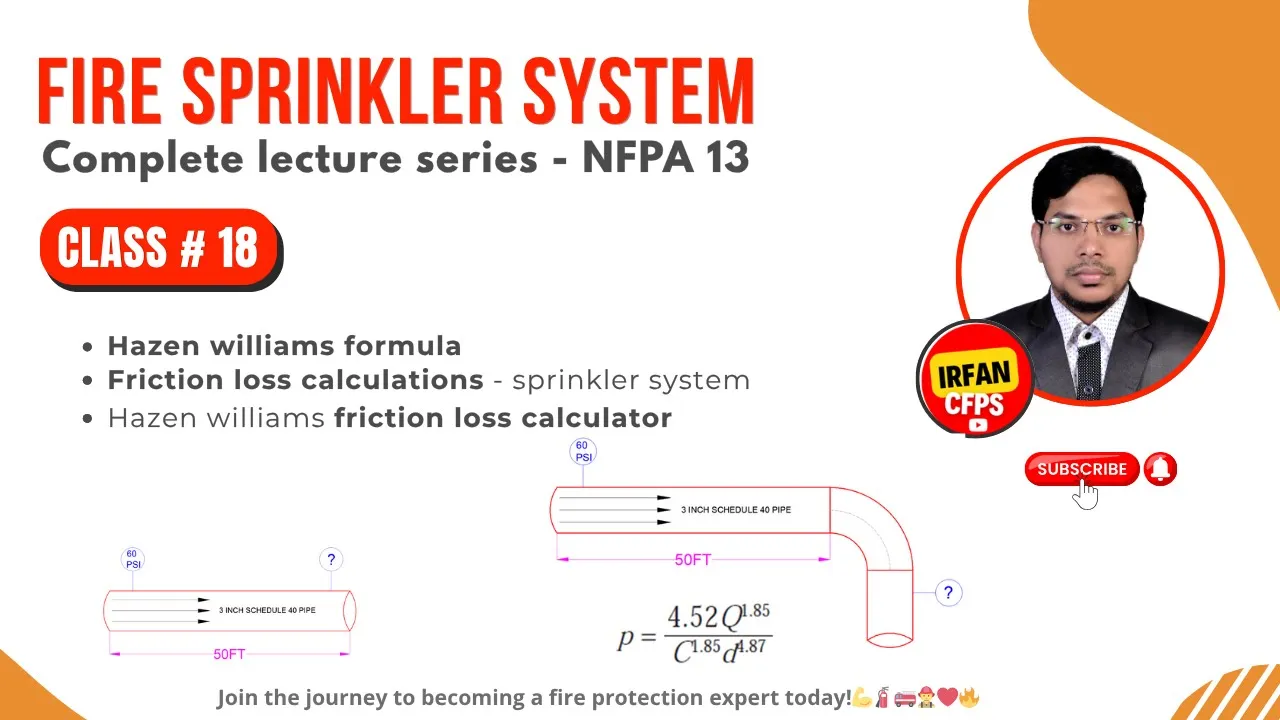
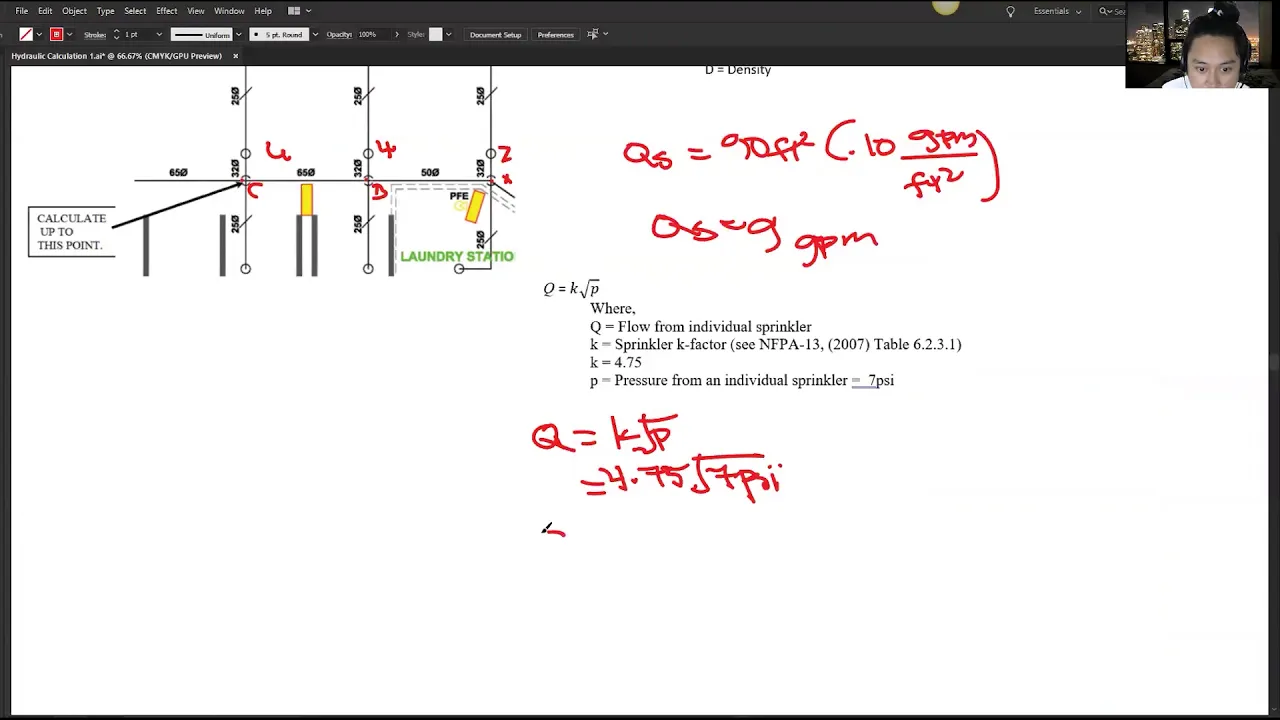
Calculating friction loss in pipes and fittings using the Hazen-Williams equation or standard friction loss charts.
Designing hydrozones by grouping plants with similar water requirements and dividing the system into manageable zones based on total design capacity.
Selecting and sizing backflow prevention devices to comply with local plumbing codes and protect potable water supplies.
Analyzing pump curves to select and integrate booster pumps or well pumps when municipal water pressure is insufficient for the design.
120.2K views756likes4:35Original Release: 2014-01-15
Hi, my name is Tom Brson. I'm with the Urban Farmer store in the Bay Area. And when we go to put in an irrigation system, one of the most crucial bits of information we need is to know flow and pressure. This will determine our design capacity, which means how many drip emitters I can have on at one time or how many sprinklers on at one time. And so the first thing we want to do is find out what our static pressure is. Our static pressure is pressure at zero flow. So we put on a pressure gauge onto the hose bib and turn it on. And the pressure that we get here, and it can vary between 40 and 120 PSI. So that's why we ask you to take it uh will be our static pressure. So if we were to chart that, we would have pressure up here and we'd have flow up here. So as our flow increases, our pressure decreases. So if we were to design a system, we would want to find out how much flow we can use before the pressure gets too small.
When we measure flow and pressure, often with sprinklers, it's too low. With drip system, we often have way more flow than we need and too much pressure. So, if we were to look at a drip system and we very use very little percentage of the water we have, our pressure is too high.
So, that's why we often put in a pressure regulator to bring it down to the 20 to 30 PSI that the equipment likes to use. And with sprinklers sometimes where flow is way out there and it goes below the pressure needed for that. So first of all if we have static pressure we know the starting point that we can lose pressure from.
Then we want to find out what our flow is.
And flow is affected by pressure but it can be different. I had a situation where I I had a 100 plus PSI but only got one gallon a minute. It turned out this hose bib was connected to a long run of galvanized pipe that the flow passage was bad. So pre flow's another bit of information that's pretty easy to find. This is a five gallon bucket and flow we want to know our gallons per minute. So when before I turn this on, I'd get a a stopwatch or my hands of uh the second hands of a clock and find out how many seconds it takes to fill. So, I turn this on full blast and let's say at full blast it takes 30 seconds to fill five gallons. I have five gallons in 30 seconds or 10 gallons a minute. 10 gallons a minute. If I was to use it all, I would be out here.
So after years we've determined that in most cases we can use about 75% of our available water but this play safe and use 70%.
So if I have 10 gallons a minute and I can use seven uh.7 or 7% I can use seven gallons per minute.
Okay, since we're this is going with a a drip training module, we don't really care about gallons per minute. We have to figure out gallons per hour because every drip emitter uses a certain output that's rated in gallons per hour. So, I take my 7 gallons a minute times 60 minutes in an hour and that's 420 gallons per hour. So, so if I have 420 gallons per hour and let's say I'm using half gallon an hour emitters, I can double that figure to 840.
So on any one drip zone, I can have 840 half gallon an hour emitters. So it's quite a lot. But let's say I have a huge area to water and it's greater than that. I know I can't design any one valve that has more than that many drip emitters on. If you forget any of this information, we have a PDF on our website called Getting Started.
[Music]
Up Next
10:33
Multimeter Fundamentals: Voltage, Current, Resistance
@sparkfun
571.9K views•2017-01-09
30:32
Ultrasonic Transducers: Resonant Frequency Measurement and Horn Design
@imajeenyus42
229.9K views•2017-02-22
54:16
Polymer Environmental Degradation: Mechanisms & Stabilization
@iit
1.8K views•2012-07-10
33:39
How a Student's Question Saved a NYC Skyscraper from Collapse
@veritasium
22.8M views•2025-04-26
Related Study Plans & Knowledge Roadmaps
Structured learning paths in Engineering
engineering
Building Acoustic Levitators: Physics & Arduino
01The Physics of Sound and Standing Waves
02Piezoelectric Transducers and H-Bridge Drivers
03Arduino Programming: Generating 40 kHz Signals
+ 2 more learning modules
14h5 modules
Explore Roadmap
engineering
Building Peltier Cloud Chambers: Particle Tracks
01Cosmic Rays & Cloud Chamber Physics
02Thermoelectric Cooling (TEC) Fundamentals
03Custom Liquid-Cooling Loop Design
+ 2 more learning modules
18h5 modules
Explore Roadmap
engineering
Yagi-Uda Antennas: Modeling, Build & VNA Test
01Introduction to RF and Antenna Fundamentals
02Yagi-Uda Antenna Design Principles
03Antenna Modeling and Simulation in 4NEC2
+ 2 more learning modules
18h5 modules
Explore Roadmap
engineering
ECG Monitor Design: Op-Amps, Filters & Noise
01Electronics & Breadboard Basics
02Op-Amps and Instrumentation Amplifiers
03Bioelectricity and ECG Fundamentals
+ 2 more learning modules
18h5 modules
Explore Roadmap