When water droplets freeze from the outside inward, they experience an intermittent fracturing of the brittle ice shell combined with cavitation in the enclosed liquid, ultimately causing the partially frozen droplet to explode violently; this phenomenon occurs because the expansion of water upon freezing creates internal pressure that cannot be contained by the rigid ice shell, leading to explosive fragmentation.
Water Drops Freezing Outside-In: Explosive Physics Explained
Added:Deep Dive
The anomalous expansion of water: understanding how water, unlike most substances, increases in volume as it transitions from liquid to solid.

STATES OF MATTER | SSC CHEMISTRY LEC-1 | PARMAR GK 4.0 | SSC GK BY PARMAR SIR
53.3K
Water exhibits anomalous expansion, which is an exception to the normal behavior of matter. When water is cooled from 15°C to 4°C, it contracts normally (volume decreases, density increases). However, when cooled below 4°C, it expands instead of contracting. At 4°C, water has maximum density. This anomaly causes ice to float on water, which is crucial for aquatic life survival in winter as it creates an insulating layer of ice on top of frozen lakes.
Click to watch →
Properties Of Water - Anomalous Expansion Of Water
148.1K
Water exhibits anomalous expansion, meaning it expands when frozen (unlike most substances that contract when cooling), reaching maximum density at 4°C before expanding as it turns to ice; this property explains why ice floats on water and why leaving a full water bottle in the freezer can cause it to burst.
Click to watch →

CTET SEP 2026 SCIENCE 100% Pass Series Class 3 by Sachin Academy live 8pm | 30/30 CTET SCIENCE
49K
Water exhibits anomalous expansion between 0°C and 4°C. As water warms from 0°C to 4°C, its volume decreases and density increases. At 4°C, water reaches maximum density. This is unusual because most substances expand when heated. This property explains why ice floats on water.
Click to watch →

شرح الدرس الثالث علوم متكاملة | الخواص الفزيائية للماء _ الكثافة | أولى ثانوي ترم أول💦
71.1K
Water's anomalous expansion (expanding when cooled below 4°C) is unique among common substances. Below 4°C, water's density decreases as temperature decreases, causing ice to float on liquid water. This property is crucial for aquatic life because it allows ice to form on the surface while leaving warmer, denser water below, preventing lakes and oceans from freezing solid.
Click to watch →

Basic Science And Engineering For Technician Grade 1 I Heat And Temperature I Complete Theory Class
100.6K
Water exhibits anomalous expansion: Unlike most liquids, water contracts when heated from 0°C to 4°C, then expands when heated above 4°C. At 4°C, water has maximum density and minimum volume. When water temperature changes from 0°C to 10°C, volume first decreases then increases. This property is crucial for understanding water's behavior in nature.
Click to watch →
Deep Dive
Basic heat transfer principles, specifically thermal conduction and how cooling propagates from the outer surface of a droplet to its core.

Calorimetry & Heat Transfer | 45 Days Crash Course | Unacademy Atoms | Abhilash Sharma
66.3K
Thermal conduction is the transfer of heat through a material without bulk movement of the material. The rate of heat transfer is given by dQ/dt = (kAΔT)/L, where k is thermal conductivity, A is cross-sectional area, ΔT is temperature difference, and L is length. Heat flows from higher to lower temperature. Metals are good conductors due to free electron movement. The formula shows heat transfer is proportional to conductivity, area, and temperature difference, and inversely proportional to length.
Click to watch →

Transmission Heat - Explanation in Malayalam
14.7K
Thermal conduction is the transfer of heat energy from high-temperature regions to low-temperature regions through molecular vibration without bodily movement of molecules; the rate of heat transfer is proportional to the cross-sectional area, temperature gradient, and thermal conductivity (k), following Fourier's Law Q = -kA(Δθ/Δx), where thermal conductivity is a material property measured in watts per meter-kelvin (W/m·K), and thermal diffusivity (α = k/ρc) describes how quickly heat propagates through a material, with experimental determination involving methods like the circular disk technique and cylindrical wall analysis.
Click to watch →

Formas de Propagação do Calor #EF07CI03- 7º ano
34.8K
Heat is energy in transit that transfers from hotter to colder objects, while temperature measures molecular agitation. Heat propagation occurs from hotter to colder regions until thermal equilibrium is reached. Thermal conduction transfers energy between adjacent atoms through collisions and vibrations, with hotter atoms oscillating more vigorously. Materials are classified as conductors (metals transfer heat easily) or insulators (styrofoam, rubber, wood resist heat transfer). This explains why metal spoons heat up in hot liquids while plastic ones remain cool.
Click to watch →

Thermal Properties of Matter, One Shot Video NCERT Class 11 Physics for CBSE Board Term II 2022
82.2K
Thermal conduction is the process by which heat is transferred through a material without the actual movement of the material itself. Heat is transferred from molecule to molecule through collisions. In steady state conduction, the temperature at any cross-section remains constant with time, though different cross-sections may have different temperatures. Isothermal surfaces are surfaces where all points have the same temperature. The temperature gradient (ΔT/Δx) drives heat conduction, with heat flowing from higher to lower temperature regions.
Click to watch →
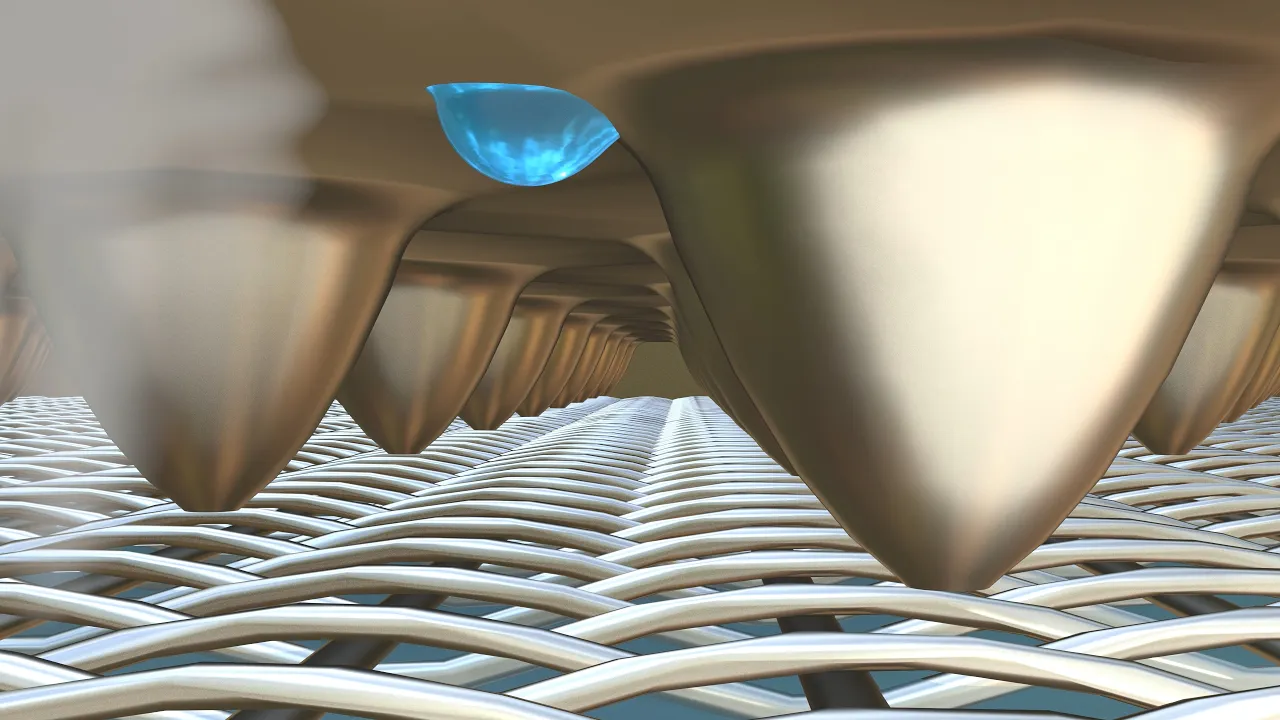
How One Drop of Water Cools Your Phone
916.9K
Heat transfer occurs through three primary mechanisms: convection (moving the medium itself), conduction (transferring kinetic energy between particles), and electromagnetic radiation. Temperature represents the average kinetic energy of particles—faster-moving particles mean higher temperature. Metals conduct heat efficiently due to tightly connected atoms, while gases are poor conductors with sparse molecules. A vacuum prevents heat conduction entirely, as demonstrated by thermos flasks. Pure conduction alone fails for cooling because heat only flows from hot to cold, requiring significant temperature differences and large surface areas for dissipation. This fundamental limitation necessitates advanced cooling solutions like vapor chambers.
Click to watch →
Deep Dive
Mechanical concepts of stress, strain, and fracture limits in brittle solids like ice.
Griffith's Criterion
108.7K
Griffith's Criterion states that brittle fracture occurs when the reduction in mechanical energy due to crack propagation equals the increase in surface energy; the critical crack size is given by ac = (2Eγ)/(πσ²), where E is Young's modulus, γ is surface energy per unit area, and σ is applied stress, while the critical fracture stress is σf = √(2Eγ/(πa)), demonstrating that smaller cracks require higher stresses to propagate and that surface energy acts as a barrier to crack growth.
Click to watch →

Stress, Strain and Hooke's Law | Mechanical Properties of Solids | Physics | Class 11 | AASOKA
183.6K
Stress is the restoring force per unit area (F/A) that causes deformation in elastic materials, while strain is the ratio of dimensional change to original dimension; stress can be classified into longitudinal stress (changing length, ΔL/L), tangential or shearing stress (causing relative displacement, ΔX/L), and hydraulic stress (changing volume, ΔV/V); according to Hooke's Law, within the elastic limit, stress is proportional to strain (stress = K × strain), where K is the modulus of elasticity.
Click to watch →

MECHANICAL PROPERTIES OF SOLIDS 01 | Stress and Strain | Physics| Class11th/MHTCET/JEE/NEET
15.4K
This lecture covers the fundamental concepts of mechanical properties of solids, including stress (restoring force per unit area), strain (ratio of change in dimension to original dimension), and Hooke's Law (stress is directly proportional to strain within the elastic limit). The three moduli of elasticity are explained: Young's Modulus (resistance to length change), Bulk Modulus (resistance to volume change), and Shear Modulus (resistance to shape change). Poisson's Ratio describes the ratio of lateral strain to longitudinal strain. The stress-strain curve illustrates key points: proportional limit, elastic limit, yield point, and fracture point. The lecture also covers strain energy derivation and material classifications including brittle, ductile, malleable, and elastomeric materials.
Click to watch →

Mechanical Properties Of Solids Chapter Mcq For BSc Nursing | Physics Mcq For BSc Nursing By Gs Sir
26.1K
This comprehensive lesson covers the mechanical properties of solids. Stress is defined as force per unit area (σ = F/A), with SI unit Pascal (Pa). Strain is dimensionless change in dimension divided by original dimension. Hooke's Law is valid only up to the proportional limit. The stress-strain curve shows elastic behavior (reversible) up to the elastic limit, followed by plastic behavior (permanent deformation) beyond the yield point. Ductile materials like steel show large plastic deformation before fracture, while brittle materials like glass break with minimal deformation. Three recognized types of mechanical stress are longitudinal, shear, and volumetric stress. Young's Modulus (Y) represents the slope of the stress-strain graph: Y = σ/ε. Poisson's Ratio (ν) is the ratio of lateral to longitudinal strain, dimensionless. Bulk Modulus (B) measures resistance to volume change: B = P/ε_v. Shear Modulus (G) relates shear stress to shear strain: G = τ/γ. The area under the stress-strain curve up to the elastic limit represents elastic potential energy density. Steel has the highest Young's Modulus among common materials, approximately 10¹¹ Pa.
Click to watch →

Best MCQ Class 11 Mechanical Properties of Solids || NCERT Class 11 Solids | MCQ Class 11 Physics
67.5K
This section covers the foundational concepts of stress and strain in materials. Stress is defined as restoring force per unit area (Force/Area), with units of N/m² or Pascal. Longitudinal strain is the ratio of change in length to original length (ΔL/L). Shear strain is the angle turned by a line originally perpendicular to a fixed face. Hooke's Law states that within the elastic limit, stress is directly proportional to strain. The ratio between breaking stress and working stress is called the Factor of Safety, which ensures materials are used safely within their limits.
Click to watch →
Deep Dive
The thermodynamic basics of phase transitions, including supercooling and the latent heat of fusion.

MUDANÇA DE ESTADO e DIAGRAMA DE FASE - TERMOLOGIA - Aula 9 - Prof. Boaro
242.2K
Matter exists in three states: solid, liquid, and vapor. Phase transitions include fusion (solid to liquid), vaporization (liquid to vapor), condensation (vapor to liquid), solidification (liquid to solid), and sublimation (direct solid-vapor transition). Supercooling occurs when a liquid is cooled below its freezing point without solidifying. For water at 1 ATM, water can remain liquid at temperatures as low as -20°C. When disturbed by shock or introduction of a crystal nucleus, rapid solidification occurs with temperature increase to the freezing point. Crystal nucleation provides the template for molecular rearrangement during phase transitions.
Click to watch →
Chapter 11 Liquids and Intermolecular Forces
30.7K
A heating curve shows temperature versus heat added during phase transitions. Segments with temperature change use q = mcΔT; segments at constant temperature use enthalpy of fusion or vaporization. Supercooling occurs when liquids remain liquid below freezing point because rapid cooling prevents molecules from arranging into crystalline structure; supercooled liquids freeze rapidly upon disturbance. The critical temperature is the point above which a substance cannot be liquefied regardless of pressure—kinetic energies exceed attractive forces. Beyond the critical point, only supercritical fluid exists with properties intermediate between liquid and gas.
Click to watch →

UPSC-DI Batch | L1 - States of Matter | Physical Pharmacy by Dr. Tanya | Dr. PK Classes
357
Latent heat is heat absorbed or released during phase changes without temperature change. Latent heat of fusion is absorbed during melting; latent heat of vaporization is absorbed during vaporization. Endothermic processes absorb heat (solid to liquid, liquid to gas); exothermic processes release heat (liquid to solid, gas to liquid). Evaporation rate increases with higher temperature, larger surface area, weaker attractive forces, and lower pressure. These thermodynamic principles govern phase behavior and are essential for understanding material properties.
Click to watch →

HEAT 08 / MELTING & FREEZING / LATENT HEAT OF FUSION
15.5K
Latent heat of fusion is the amount of heat energy absorbed or released during the phase change between solid and liquid states without any change in temperature. For water, this occurs at 0°C (32°F), where ice melts to liquid water or liquid water freezes to ice. The melting process involves solid converting to liquid by absorbing heat, while freezing involves liquid converting to solid by releasing heat. This concept is fundamental to understanding thermodynamics and phase transitions in materials science.
Click to watch →

තාපමිතිය විශේෂ කරුණු 2026 REVISION | PHYSICS | ANURADHA PERERA
50.8K
During phase changes (melting and boiling), temperature remains constant despite continuous heat supply because the absorbed heat is used to change the molecular structure rather than increase kinetic energy; this hidden heat is called latent heat, with water's latent heat of fusion being 336,000 J/kg and latent heat of vaporization being 2,250,000 J/kg, making phase changes require significantly more energy than temperature changes.
Click to watch →
Prerequisite Knowledge
- Concept 01The anomalous expansion of water: understanding how water, unlike most substances, increases in volume as it transitions from liquid to solid.
- Concept 02Basic heat transfer principles, specifically thermal conduction and how cooling propagates from the outer surface of a droplet to its core.
- Concept 03Mechanical concepts of stress, strain, and fracture limits in brittle solids like ice.
- Concept 04The thermodynamic basics of phase transitions, including supercooling and the latent heat of fusion.
Subsequent Learning
- Step 01The physics of cavitation: exploring how rapid pressure drops generate vapor bubbles in liquids and the explosive energy released upon their collapse.
- Step 02Atmospheric ice accretion: studying how supercooled water droplets freeze on impact, causing aircraft icing and hail formation.
- Step 03Cryopreservation science: examining how cellular structures are damaged by ice crystal growth and thermal stress during freezing processes.
- Step 04Materials science of casting and solidification: analyzing how thermal gradients and phase-change volume changes cause defects or cracking in manufactured metals and polymers.
Deception Ease
Mislead Doubt
Persistent Misled
Emerging Shift
Residual Echo
Deception Ease
1:29Playing Section
- 1
Reflects on how easily one can be misled.
- 2
Questions the personal state of being deceived.
- 3
Sets a tone of introspective realization.
Non-Explosive Deformation and the Role of Dissolved Gases
While the "explosive" outside-in freezing model assumes a sealed ice shell leading to high-pressure fracturing and cavitation, alternative research highlights that this phenomenon is highly conditional rather than universal. Under many real-world and atmospheric conditions, droplets relieve internal pressure non-explosively. Instead of shattering, they often deform into characteristic pointed shapes (spicules) where liquid water is gently extruded through a weak point in the ice shell. Additionally, some physicists argue that dissolved air (outgassing) plays a more significant role in initiating shell rupture than pure water-vapor cavitation. Factors such as cooling rates, droplet size, substrate contact, and chemical impurities often dictate whether a droplet deforms harmlessly or explodes, challenging the generality of the violent explosion model.
Deep Dive
The physics of cavitation: exploring how rapid pressure drops generate vapor bubbles in liquids and the explosive energy released upon their collapse.

فقاعة ماء تأكل المعادن… وتذيب دهون الجسم! سر التكهف بين الهندسة والطب
33.6K
Cavitation is a phenomenon where water transforms from a gentle liquid into a destructive force. The sound heard when water heats before boiling is caused by vapor bubbles forming, rising, and collapsing in colder water layers. Water boils at 100°C under normal pressure, but this temperature changes with pressure—increasing pressure raises the boiling point while decreasing pressure lowers it, allowing water to boil at room temperature under vacuum. When propellers rotate underwater, Bernoulli's principle creates low-pressure zones behind blades, causing cold seawater to boil and form vapor bubbles. These bubbles are not air but water vapor formed by pressure drop, which is the definition of cavitation.
Click to watch →
![Bulles de Vide ! - La Cavitation [Science 2.0]](https://i.ytimg.com/vi_webp/RR6J-yOyT48/maxresdefault.webp)
Bulles de Vide ! - La Cavitation [Science 2.0]
1.6M
Cavitation involves complex physical processes where rapid pressure changes create vapor bubbles in liquids. When a container moves quickly, liquid inertia prevents immediate response, forming voids that become bubbles. Spheres form because they require minimal energy. Under extreme negative pressure, water boils, trapping vapor inside bubbles. As bubbles implode, trapped vapor compresses and heats up. Due to inertia, bubbles oscillate—expanding too much, collapsing too rapidly—until all energy dissipates. This cycle repeats until bubbles disappear. High-speed imaging reveals these processes invisible to naked eye, showing how bubbles form, grow, oscillate, and vanish within milliseconds.
Click to watch →
Cavitation - Easily explained!
1.2M
In narrow pipe sections, increased velocity causes decreased static pressure, potentially dropping below vapor pressure (2,300 Pascal at 20°C). Water vaporizes dramatically expanding to 50,000 times greater volume than liquid. Bubbles collapse violently when reaching higher-pressure regions, releasing enormous energy in milliseconds. The collapse process involves bubble growth, vapor condensation starting at walls, microjet formation piercing opposite surfaces, and eventual implosion creating ring-shaped collapse patterns with shock waves.
Click to watch →
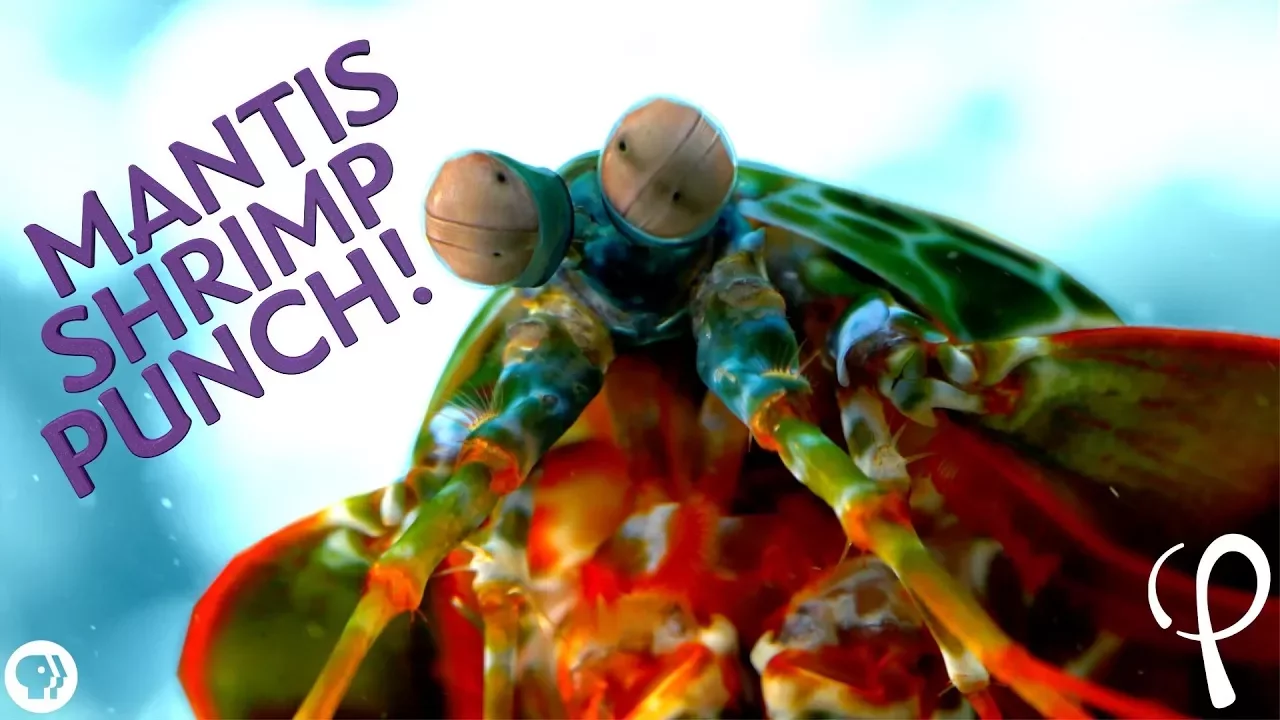
Mantis Shrimp Punch at 40,000 fps! - Cavitation Physics
727.1K
Mantis shrimp punches generate approximately 200 pounds of force at speeds comparable to a .22 caliber bullet (45 mph), creating cavitation bubbles that collapse violently and release energy equivalent to temperatures near the Sun's surface; this cavitation phenomenon explains the second force spike observed in high-speed footage captured at 20,000-40,000 frames per second.
Click to watch →

Louis Vuitton Cup Final | Day 1 - LIVE
384.6K
Foiling yachts like the AC75s have maximum speed limits determined by cavitation physics. When boats reach approximately 47-48 knots of boat speed, the foils begin to cavitate, creating white puffs on the foil surfaces. This cavitation creates significant drag, effectively limiting the boat's speed to around 50 knots unless the boat can achieve super cavitation, which forces one side of the flow to separate. Cavitation and ventilation are distinct phenomena: cavitation occurs when water turns to gas over the foil, while ventilation happens when air is sucked down through the water surface. Understanding these physical limitations is crucial for teams to manage their boats effectively.
Click to watch →
Deep Dive
Atmospheric ice accretion: studying how supercooled water droplets freeze on impact, causing aircraft icing and hail formation.

INSANE crippling #icestorm a threat to life and property with trees crashing, power out
37.3K
Ice accretion forms when supercooled water droplets fall through a subfreezing atmospheric layer and freeze upon impact with surfaces. A warm layer near the ground prevents melting, allowing ice to accumulate progressively. This process creates heavy ice coatings on trees, power lines, and road surfaces.
Click to watch →

Hilke Schlichting – Atmospheric accretion, evolution and loss
102
Planetary atmospheres form through hydrodynamic accretion governed by the Bondi radius—the critical distance where gravitational escape velocity equals molecular thermal energy. Objects must exceed their physical radius to retain atmospheres. As cores accrete mass, they heat to 10^4-10^5 Kelvin; without atmospheres, heat escapes through flowing gas. Once atmospheres form and become optically thick, they act as thermal blankets trapping heat. The accretion process involves inner convective regions with adiabatic profiles transitioning to outer radiative regions with isothermal profiles. The amount of atmosphere accreted depends logarithmically on disk lifetime and opacity at the convective-radiative boundary, not directly on disk density.
Click to watch →

The Most Terrifying Things in Space - The Universe is Stranger than We Imagine
2.3M
We think that we were able to make ice snowflakes and that these were able to stick together to form the cores of the giant planets. We think that's why the big planets might have grown so big because there was so much ice and gas. Their cores grew to be about 10 times the size of Earth. A lot of gravity came from these big cores, they had so much pull that they sucked in all the gas around them and made thick, soupy atmospheres that went down tens of thousands of miles. The more gravity they made, the bigger they got, more and more dust and debris kept getting pulled towards the planets and this is what made up their moons. Each of Jupiter and Saturn has more than 60 moons. The gas planets have something else that makes them unique, rings. Saturn is different from the other planets because it has these beautiful rings. It turns out that Jupiter, Uranus, and Neptune also have rings, but they are very weak and hard to find, but they are there.
Click to watch →

FORECAST: Quarter inch of ice accretion possible in parts of the state
1.2K
Meteorologist Scot Haney forecasts that a quarter inch of ice accretion is possible in parts of Connecticut during a storm Monday night into Tuesday morning, with the worst conditions expected between midnight and 6 AM, particularly in northern Connecticut, Hartford, Middletown, and parts of New Haven County, where ice accumulation could coat power lines and trees, potentially causing damage even with as little as a tenth of an inch.
Click to watch →

CoCoRaHS WxTalk Webinar #79: Ice Accretion
496
Ice accretion from winter precipitation occurs through three primary mechanisms: rime icing (supercooled water droplets freezing on contact in clouds), wet snow icing (partially melted snowflakes refreezing on surfaces), and freezing rain icing (liquid droplets freezing upon contact after passing through a sub-freezing layer); the amount of ice that accumulates depends on temperature (near-freezing temperatures produce more icicles while colder temperatures favor upward growth), wind speed (enhancing heat removal and growth efficiency), precipitation rate, and surface characteristics, with radial ice thickness being the critical engineering measurement for infrastructure design, and climate projections indicating increased wet snowfall risks in the Northeast due to warmer, wetter conditions.
Click to watch →
Deep Dive
Cryopreservation science: examining how cellular structures are damaged by ice crystal growth and thermal stress during freezing processes.

This Laboratory Creates New Plants
105K
Cryopreservation preserves plant genetic material indefinitely by halting all metabolic activity through ultra-low temperature storage at -196°C in liquid nitrogen. Unlike standard refrigeration which allows gradual viability loss, cryopreservation prevents cellular deterioration entirely. The critical challenge is preventing ice crystal formation during freezing, which damages cell walls. Vitrification solves this by using highly concentrated cryoprotectant solutions that enter cells and create a glass-like supercooled state that never freezes. The recovery process involves rapid thawing in warm water, followed by washing to remove cryoprotectants. Success is measured by achieving at least 50% viability recovery. Chemical modifications like fluoroglucinol can dramatically improve recovery rates from typical 48% to nearly 92%, making cryopreservation essential for conserving endangered plant species.
Click to watch →
![머지않은 미래 현실화를 앞두고 있는 냉동인간 부활 서비스 [미래]](https://i.ytimg.com/vi_webp/gD-Z9Z4PcDI/maxresdefault.webp)
머지않은 미래 현실화를 앞두고 있는 냉동인간 부활 서비스 [미래]
130.4K
Cryopreservation emerged from the hope that future science could cure fatal diseases. James Bedford became the first cryopreserved human in 1967, motivated by untreatable cancer. Robert Ettinger first proposed the concept in 'Prospects for Immortality,' though it was initially dismissed as pseudoscience. By 2021, over 180 humans were cryopreserved worldwide, with 1,300 waiting. The process involves rapid transport, artificial respiration, temperature reduction, blood removal, cryoprotectant injection, and storage at -196°C. Despite challenges like cellular damage and toxicity, the field has grown from fantasy to plausible science.
Click to watch →
Kryonik Update: Ältestes Baby der Welt geboren
488.7K
The fundamental challenge in cryopreservation is ice crystal formation, which damages cells and blood vessels. Solutions include replacing blood with cryoprotectants (which can be toxic) or using slow cooling to prevent crystal formation. Nanoparticle technology under development aims to achieve uniform distribution through magnetic heating. Embryos are preserved at the blastocyst stage (56 days, ~200 cells), where all cells freeze uniformly. Two methods exist: slow freezing (1°C per minute) and vitrification (near-instant freezing to -196°C). At this temperature, all cellular activity ceases, and cells resume normal function upon thawing. However, cryonics cannot achieve immortality because complex organisms with millions of cells cannot be uniformly frozen and thawed—different body parts would decompose before others revive. This explains why embryo revival works but human body revival remains impossible.
Click to watch →

LA RICERCA DELL'IMMORTALITÀ: DERIVA TRANSUMANISTA con DAVIDE BARONI
8.2K
Cryopreservation is a real practice since 1967, with 350-400 people currently preserved and 2,000-3,000 having signed contracts. The process involves: (1) signing a contract and paying €200,000 for whole-body or €70,000-80,000 for head-only preservation; (2) rapid response within one hour of death; (3) artificial respiration and blood circulation restoration; (4) blood replacement with organoprotective solutions; (5) slow vitrification to -196°C over 24-48 hours; (6) storage in liquid nitrogen dewers. The fundamental question remains: if the body is revived, who inhabits it? This raises profound questions about consciousness, identity, and whether cryopreservation truly preserves the person or merely their biological vessel.
Click to watch →

Descongelan Cerebros en Criogenia, Calor Extremo y Endometriosis - JefiNews Marzo 3
55.2K
Scientists have achieved a breakthrough in cryosleep by successfully restoring brain function in frozen mouse brains. The key challenge is ice crystal formation, which damages cells during freezing. The German team developed vitrification, a method that cools tissue so rapidly that molecules become disordered like glass without forming ice crystals. This preserved neuronal membranes and synaptic structures, with electrical recordings showing near-normal responses. While this represents progress, complete memory preservation remains unproven, and human application is still distant.
Click to watch →
Deep Dive
Materials science of casting and solidification: analyzing how thermal gradients and phase-change volume changes cause defects or cracking in manufactured metals and polymers.
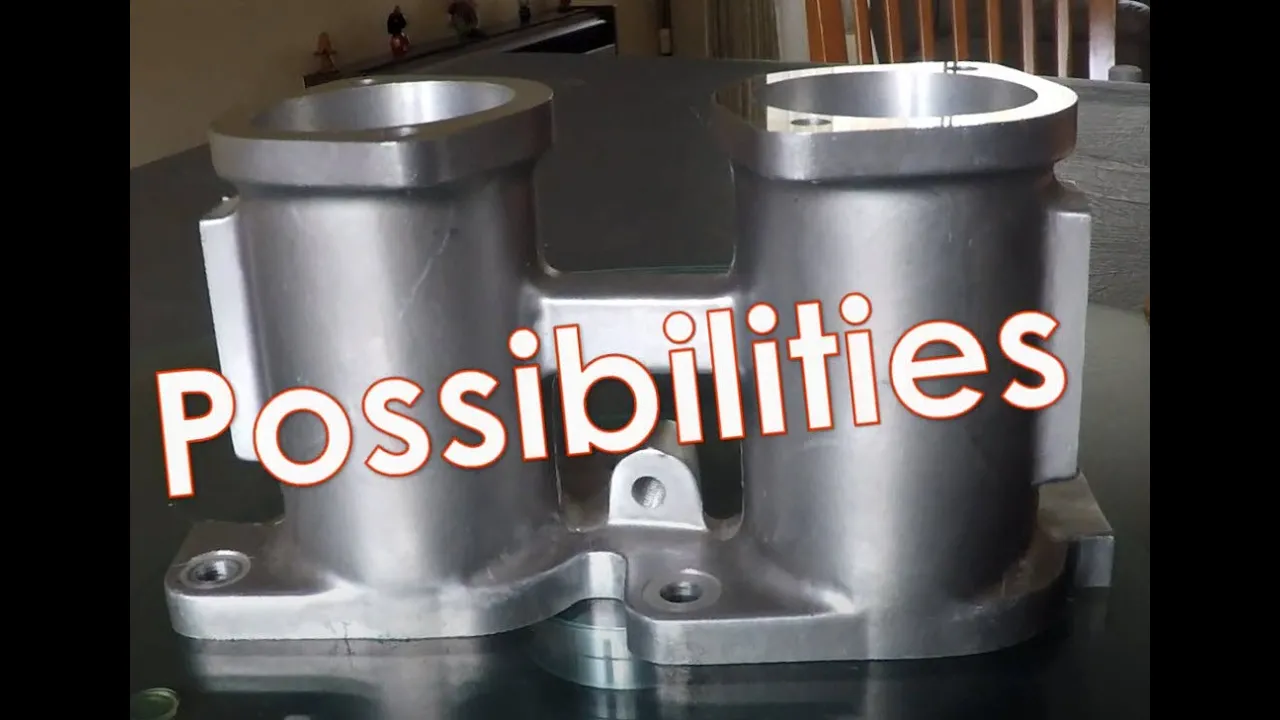
Possibilities
29.9K
Successful casting begins with understanding material properties. Different alloys behave uniquely during solidification—12% silicon eutectic aluminum excels in thin sections but creates coarse structures in thick sections, causing machining difficulties. Zinc alloys like S212 have low surface tension and high fluidity requiring careful handling. Critical materials to avoid include swarf (excessive oxides), wrought alloys (designed for deformation, not casting), and aluminum cans (high surface area, oxidation). Recommended resources include 'Metals in the Service of Man' and John Campbell's casting handbooks, particularly his 10 Rules of Casting.
Click to watch →

Biggest Marathon on Production Engineering | ME & PI | Complete Revision By Deepraj Sir
62.2K
Casting is a manufacturing process where molten metal is poured into a cavity and allowed to solidify. The molten metal is poured at a temperature higher than its melting point (pouring temperature > melting temperature) to ensure proper flow. The cavity is created using a mold formed by packing molding sand around a pattern. A pattern is a replica of the object to be cast, with modifications provided in the form of allowances. A core is used to create internal features like holes, supported by chaps. The mold box consists of drag (bottom) and cope (top) parts. Uniform ramming improves dimensional stability. The pattern is removed using a draw spike, leaving a cavity. During solidification, heat transfer occurs from hot metal to cooler mold. Near the mold wall, high heat transfer rate results in fine, randomly oriented grains. Toward the center, slower cooling produces coarser grains. At the center, slow cooling produces equiaxed (strain-free) grains. This variation affects mechanical properties. Shrinkage allowances compensate for contraction: liquid shrinkage (while liquid), solidification shrinkage (phase change), and solid shrinkage (cooling to room temperature). The sequence of shrinkage allowances is: Bismuth, White Metal, Cast Iron, Aluminum, Brass, Copper, Steel, Zinc.
Click to watch →
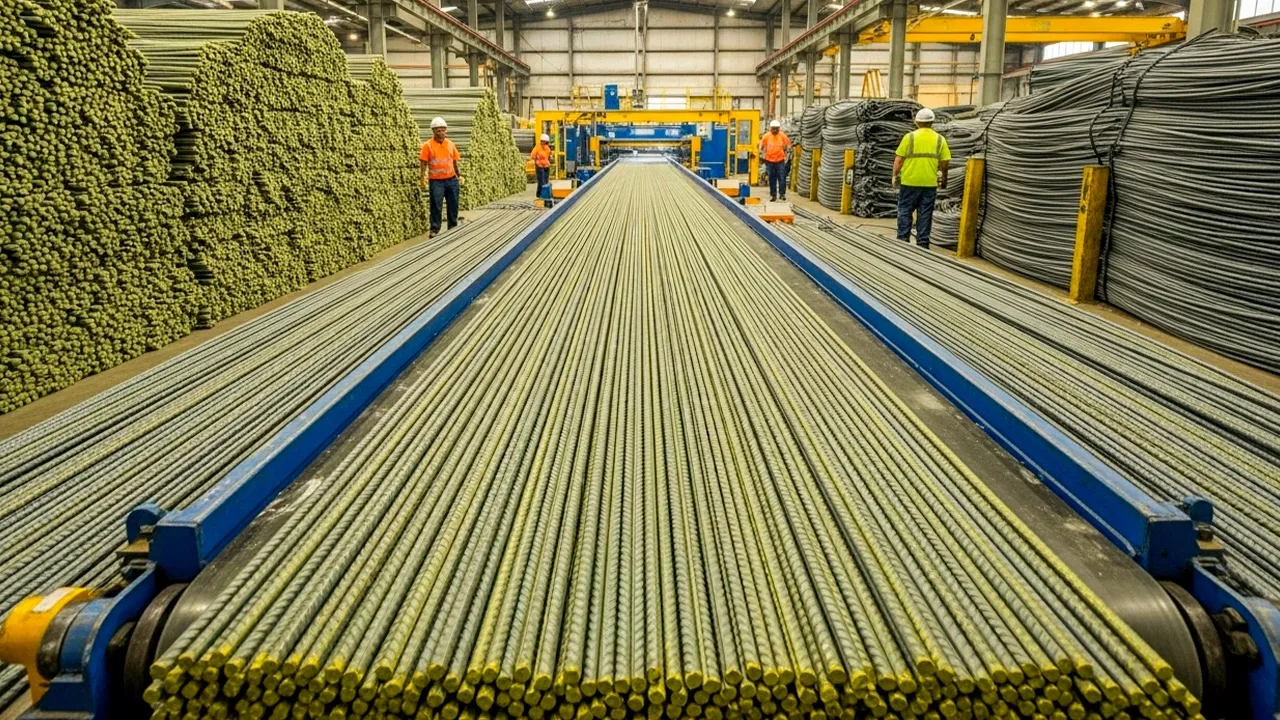
How It's Made: Fiberglass Rebar 4 Times Lighter Than Steel! | Top 10 Videos
222.2K
Liquid metal is poured from a huge ladle into preheated molds coated with special release agents. Pouring requires steady hand and skill. After pouring, the liquid metal cools and solidifies from the walls toward the center. When sufficiently solidified but still very hot, workers knock the finished ingots out of the molds with a loud metallic clang.
Click to watch →

Metals and Alloys, lecture 5, Solidification
8.9K
Solidification of metals involves two key stages: first, the liquid cools to the melting temperature with heat transfer governed by the Biot number (Bi = hL/k), and second, latent heat extraction controls the solidification rate at constant temperature; casting technologies range from permanent molds (die casting, centrifugal casting, continuous casting) which produce high-volume precision components, to temporary molds (sand casting, investment casting) for complex shapes, with continuous casting being the dominant method producing approximately 1.3 billion tons of steel annually by eliminating shrinkage defects through continuous metal supply and controlled solidification.
Click to watch →
Material and Manufacturing Processes
61.7K
Casting requires materials with appropriate melting temperatures (lower is easier), controlled solidification temperature ranges (narrower reduces segregation/cracking), moderate thermal expansion coefficients (controls shrinkage and residual stresses), limited gas reactivity (reduces inclusions/porosity), and controlled alloy segregation tendencies. Pure metals solidify at single temperatures while alloys typically solidify over temperature ranges, affecting soundness and cracking tendency in castings.
Click to watch →
Deception Ease
Mislead Doubt
Persistent Misled
Emerging Shift
Residual Echo
Deception Ease
1:29- 1
Reflects on how easily one can be misled.
- 2
Questions the personal state of being deceived.
- 3
Sets a tone of introspective realization.
Non-Explosive Deformation and the Role of Dissolved Gases
While the "explosive" outside-in freezing model assumes a sealed ice shell leading to high-pressure fracturing and cavitation, alternative research highlights that this phenomenon is highly conditional rather than universal. Under many real-world and atmospheric conditions, droplets relieve internal pressure non-explosively. Instead of shattering, they often deform into characteristic pointed shapes (spicules) where liquid water is gently extruded through a weak point in the ice shell. Additionally, some physicists argue that dissolved air (outgassing) plays a more significant role in initiating shell rupture than pure water-vapor cavitation. Factors such as cooling rates, droplet size, substrate contact, and chemical impurities often dictate whether a droplet deforms harmlessly or explodes, challenging the generality of the violent explosion model.
The anomalous expansion of water: understanding how water, unlike most substances, increases in volume as it transitions from liquid to solid.
Basic heat transfer principles, specifically thermal conduction and how cooling propagates from the outer surface of a droplet to its core.
Mechanical concepts of stress, strain, and fracture limits in brittle solids like ice.
The thermodynamic basics of phase transitions, including supercooling and the latent heat of fusion.
The physics of cavitation: exploring how rapid pressure drops generate vapor bubbles in liquids and the explosive energy released upon their collapse.
Atmospheric ice accretion: studying how supercooled water droplets freeze on impact, causing aircraft icing and hail formation.
Cryopreservation science: examining how cellular structures are damaged by ice crystal growth and thermal stress during freezing processes.
Materials science of casting and solidification: analyzing how thermal gradients and phase-change volume changes cause defects or cracking in manufactured metals and polymers.
28.1K views86likes4:52@nothingisforsureOriginal Release: 2017-02-23
[Music] it's curious that I was so easily misled curious that I'm so easily misled [Music] It's Curious that I'm so to [Music] miss was curious that I'm was so easily [Music] dis [Music] come [Music] n [Music] sh [Music] m
Up Next

42:33
Water Injection: The Ultimate Cheapest Octane Booster Guide
@DavidVizard
164.2K views•2023-07-08

12:54
Triumph of Orthodoxy Icon: Byzantine Art & History Explained
@BenCallan
2.1K views•2024-08-06

9:49
FastAPI vs Flask vs Django: Choosing the Right Python Web Framework
@TechWithTim
302.5K views•2024-05-26

1:42
Game of Thrones Opening Credits: A Cinematic Analysis
@gameofthrones
46.3M views•2011-04-18
Related Study Plans & Knowledge Roadmaps
Structured learning paths in General & Interdisciplinary Studies
general-studies
Elevator Engineering: History, Physics & Cities
01From Hoists to Safety Brakes: The Dawn of Vertical Lift
02Hydraulic vs. Traction: The Engineering Physics of Elevators
03Modern Speed, Safety, and Algorithms
+ 2 more learning modules
12h5 modules
Explore Roadmap
general-studies
Rubber: Material Science, History & Geopolitics
01Origins of Natural Rubber & Mesoamerican History
02The Chemistry of Natural Rubber & Vulcanization
03The Geopolitics of the Rubber Boom & Colonization
+ 2 more learning modules
12h5 modules
Explore Roadmap
general-studies
Containerization: Evolution, Logistics & Trade
01Ancient Trade & Bulk Cargo: Amphorae to Barrels
02The Industrial Revolution & Cardboard Packaging
03The Containerization Revolution: Malcom McLean
+ 2 more learning modules
12h5 modules
Explore Roadmap
general-studies
Textile Tech: Evolution, Labor & Global Impact
01Pre-Industrial Textiles: Handloom & Cottage Industry
02Mechanization: The Spinning Jenny to the Power Loom
03The Factory System & Global Labor Transformation
+ 2 more learning modules
10h5 modules
Explore Roadmap