






















Climate change is causing Himalayan glaciers to melt at unprecedented rates, threatening water supplies for nearly 2 billion people across South Asia, while political conflicts between India and Pakistan over water resources and corruption in water management systems further complicate the crisis, requiring urgent international cooperation and sustainable water management solutions.
Climate Change in the Himalayas: Water Conflicts & Melting Glaciers | Documentary Analysis
Added:Basic glaciology and the hydrological cycle, specifically how glaciers act as 'water towers' that regulate seasonal freshwater flow to major river basins.
The fundamentals of climate change, including global warming mechanisms and why high-altitude regions experience accelerated warming (elevation-dependent warming).
The geopolitical history of the Indian subcontinent, particularly the division of the Indus River basin and the historical context of the 1960 Indus Waters Treaty between India and Pakistan.
The concept of transboundary water management and how shared natural resources can lead to political tension or cooperation.
Advanced hydropolitics and the challenges of renegotiating international water treaties to account for climate-induced flow variability.
The socio-economic consequences of water scarcity in South Asia, including agricultural disruptions, food insecurity, and the rise of climate-induced migration.
The broader geopolitical implications of the 'Third Pole' (the Hindu Kush-Himalayas and Tibetan Plateau), incorporating the roles of China, Nepal, Bhutan, and Bangladesh in regional water security.
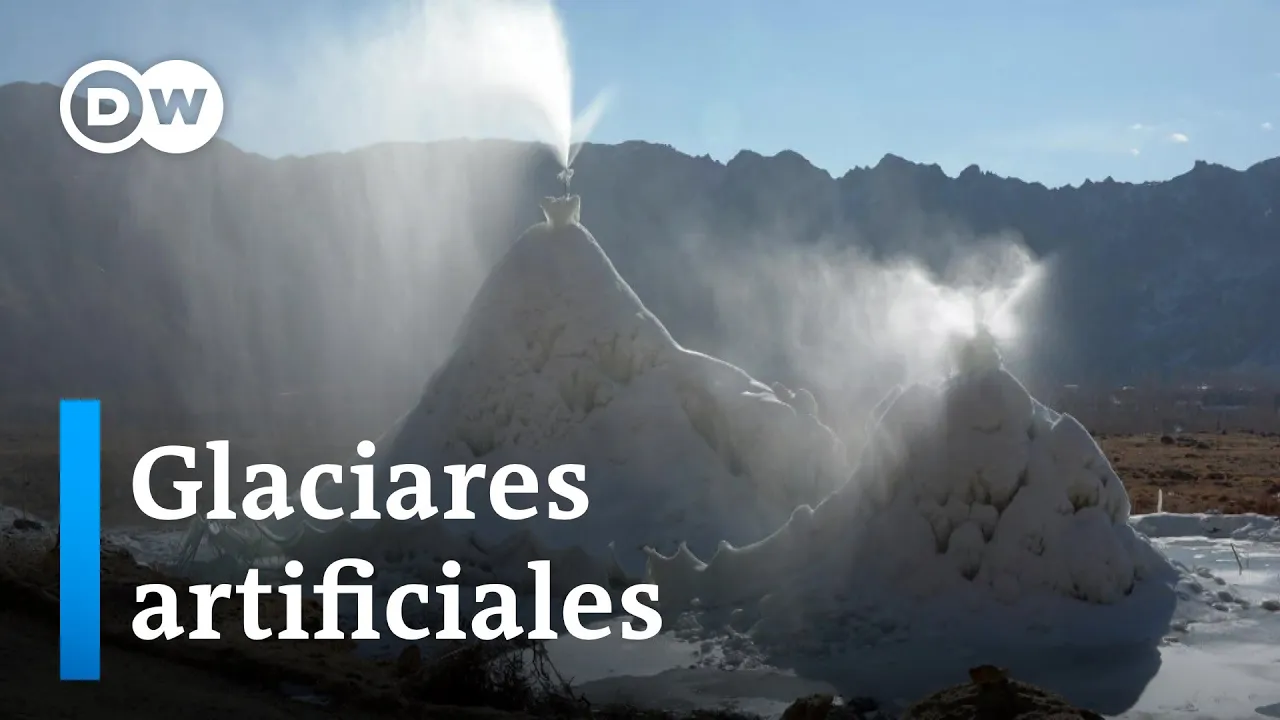
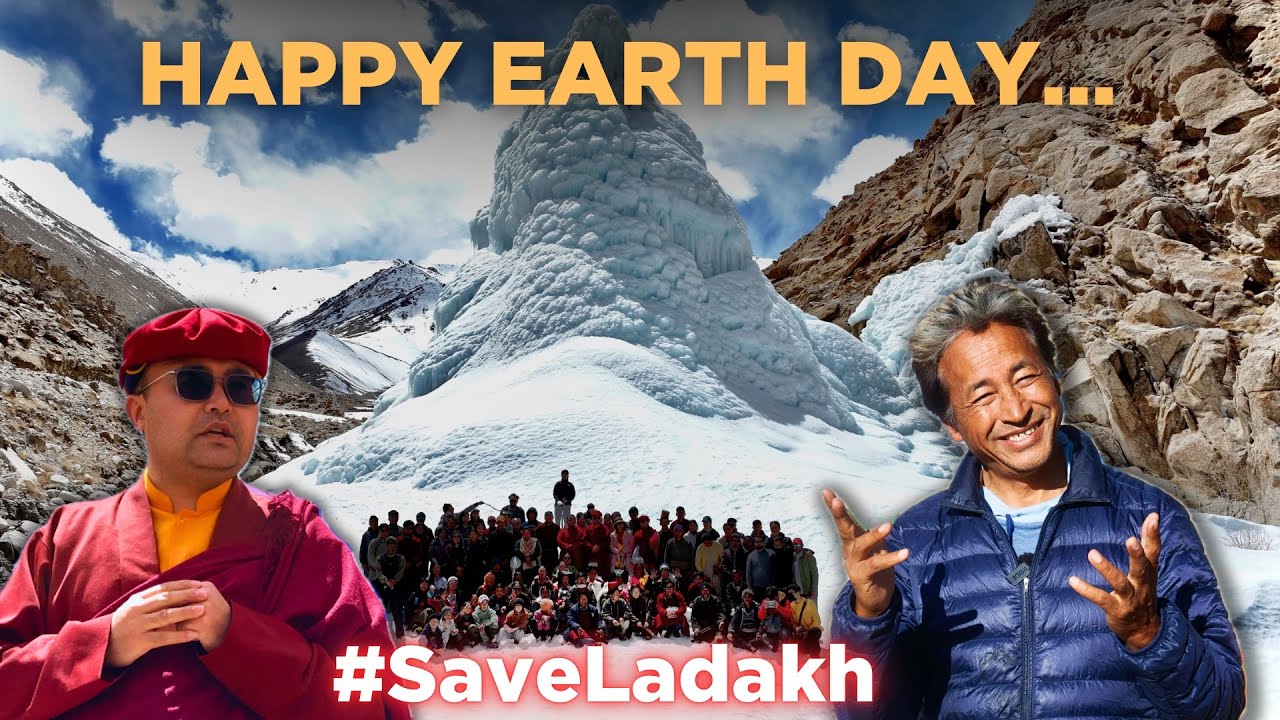
Climate adaptation and engineering solutions, such as artificial glaciers (ice stupas), drip irrigation, and transboundary watershed conservation initiatives.
103.3K views1.8Klikes25:55Original Release: 2022-07-17
the himalayan glaciers in pakistan are melting away faster than ever by the turn of the century one third of their ice sheet could have disappeared the accumulated water will burst through like a tsunami the ongoing battle for water in kashmir potentially a major flashpoint between india and pakistan is affecting the water needs of more than 2 billion people in south asia meanwhile an increasing number of heat waves in mega cities are driving up water consumption and coping with dwindling supplies has become a real struggle in here inside illegal theft area and the government is a part of this of course i don't think many pakistanis know how bad it is can a giant tree planting action help to save the melting glaciers so we want to restore a million hectares in pakistan [Music] with nearly 20 million inhabitants in its metropolitan area karachi is pakistan's largest city and the country's economic center but in july 2015 the busy port city in the south was almost brought to a standstill as an extreme heat wave wreaked havoc in its neighborhoods with temperatures reaching 45 degrees celsius more than a thousand people died of dehydration and heat stroke in karachi alone hospitals were poorly equipped to handle the surge of heat stroke victims the morgue at abbasi shahid hospital quickly overfilled leading to bodies being buried in mass graves the nightmare from 2015 still haunts karachi's locals [Music] in 2019 the subcontinent again experienced an extreme heat wave this time with average daily temperatures reaching 50 degrees celsius the provincial government was forced to declare a state of emergency [Music] but this time around the heat stroke ward at abbasi shahid hospital saw no deaths among its patients the previous heat wave came suddenly people were not mentally that was the most important element and the reason why the number of patients was so high and why too many people lost their lives since we have had several heat waves in karachi but because there was greater awareness about how to combat heat stroke there weren't as many deaths as reported in 2015.
[Music] today the karachi administration is better equipped to deal with the problem on particularly hot days mobile units with water sprinklers provide much needed cooling and play a vital role in averting fatalities despite heats reaching 50 degrees this seems to be the new normal an international climate report places pakistan among the 10 countries most affected by the climate crisis in big cities like karachi a lack of trees paved roads and tall buildings increase the heat further [Music] in addition the population is growing immensely in unplanned and densely populated neighborhoods karachi is a spectacular example of population explosion to the small coastal city which became the capital city and it is now the largest city so population you have more people you need more water you have more shops and factories you need more also mismanagement karachi did not manage to protect its water courses with rising temperatures the population of karachi is consuming more and more water the city would need several billion litres every day to cover the needs of its residents but the local authorities can only provide about half of what is needed [Music] so what does the karachi water board think about this problem basically it's a is problem karachi's daily water need is nearly 5 billion liters the distribution process is affected by evaporation but also by leakage and theft this reduces our output to only 1.8 billion liters a day so we're left with only one third of the available amount but the karachi water and sewage board is doing all it can to maintain the supply because water is scarce and difficult to access the black market flourishes according to the city's authorities 35 of water is lost before reaching the consumers where does it go maybe karachi's water thieves can provide some answers to that question one of them has been persuaded to lead us to the scene of an ongoing criminal operation the water thief takes us to a crowded slum and we film the encounter with a hidden camera while filming the kingpin arrives and agrees to explain how the scheme behind the water theft works he diverts the stolen water into an industrial area where does it come from we drilled a well here you're distributing well water yes the water is channeled through underground tunnels to a canal there we have water storage tanks from there the water wholesalers distribute the water to the industrial sector that's normal normally yes we are also stealing the water from this neighborhood the water supplied by the government to this neighborhood is being stolen and sold to the industry exactly the water from the well is mixed with stolen government water and sold to the industries does this neighborhood have water not as much as it should because you're stealing it yes when the water is sold to the industry they make money simple as that the water mafia makes a lot of money do you collect rent for this connection yes how much between 100 and 150 dollars per month per month and the local government's part of this of course how else would we be able to do this we pay off the police and officials involved so who gets a cut waterboard police and who else every department including the chairman of the waterboard he takes us to the place where he steals the water which he then resells at exorbitant prices while paying kickbacks to government officials [Music] wherever there's a gap between supply and demand these things occur whether it's wheat sugar rice or other commodities it will only stop when we have enough water in karachi but i won't deny that there are corrupt people in every department theft corruption and decay limit access to water for millions of people the losses to public funds run into the millions the stolen water is diverted from the poor to the rich who can pay more for the scarce resource a 2018 u.n report predicts that by 2050 some 5 billion people will live in regions at risk of water scarcity the un projects that water shortages will displace hundreds of millions of people as early as 2030 temperatures in south asia are rising because of an increase in global greenhouse gas emissions the heat is melting the himalayas ice cap because this area supplies water to large parts of the subcontinent it's also known as south asia's water tower the glaciers in northern pakistan's disputed kashmir region are part of the largest ice sheet existing anywhere in the world outside the two poles but these glaciers are retreating at previously unknown speeds in gulmet a village in northern pakistan the effects are already showing and according to a 2019 study 36 percent of the region's glaciers could have melted away by the end of this century glaciologist sitara pavin researches the sheets of ice surrounding the himalayas this was once the area which had plenty of water from this glacier because the glacier was much higher and even up to the level of this moraines you can see here this moraine it shows that the the level was much higher so the water was recharging these irrigation channels the glaciers are very sensitive to climate they act according to the temperature and the precipitation when it's hot it melts a lot [Music] since 1988 the snow line in northern pakistan has receded by 1.1 kilometers a decline that scientists had expected to play out over a thousand year period has taken less than 30 years and if global emissions remain at current levels all of south asia's ice could disappear [Music] these glaciers are also important for these farmers who are living here who depend on these agricultural for their livelihoods because you can see this that this is very moistured deficit area less rainfall in these plain areas where this glacier the people practice agriculture so it's not possible without the water from these glaciers villages like this one nestled far up on the hillside of the karakoram mountains are at high risk lakes that form in the glaciers often breach the ice causing flash floods that sweep away everything in their path [Music] is a community leader and local guide at gulkin glacier he tells us that pollution causes soot to gather on the white glaciers which then leads to the speeding up of the melting process [Music] there are only a few black glaciers most are white and there are just six or seven black glaciers one of them is the gulken the snow is completely covered with mud when the glacier moves it we see here that all the ice around it melts and flows into this hole which is connected to the river further down when boulders block its way the collected water comes rushing down like a tidal wave in june 2019 a glacial lake formed in the neighboring shispere glacier the government hastily constructed a concrete wall to prevent the water from overflowing the banks but there was no stopping the surge of water that eventually came rushing towards the village however in 50 years time this region is expected to face mass water shortages when its glaciers become too small to provide the water needed five major rivers flow through pakistan the indus jhelum chenab ravi and satluch all run across the plains of punjab [Music] the rivers are formed by snow melt and runoff water from the glaciers in the himalayas and the karakoram one of these glaciers lies between india and pakistan in the south eastern karakoram mountains the siachen the territory of the glacier is claimed by both countries this gigantic icy mass has been disputed territory since the partition of the two countries in 1947.
since the conflict cannot be settled diplomatically both countries have troops on the glacier pakistan and india have already spent billions of euros on this the highest militarized zone in the world at some six thousand seven hundred meters the conflict continues downstream where the waters that flow from india to pakistan are a source of discord following the partition india and pakistan were not able to agree on the use of water but in 1960 nehru then indian prime minister and pakistani president khan signed the indus water treaty in karachi the treaty brokered by the world bank allows both countries to use the water of the indus river system the two countries because of historic problems and animosity and hostility could not agree on joint management so it was considered that a second partition should take place pakistan retains the exclusive usage rights for the three western rivers indus jalam and chenab while india holds the rights to the three eastern rivers ravi beas and satluc [Music] the ongoing conflict between the two nuclear powers over kashmir is yet another challenge to upholding the water treaty since coming to power indian prime minister modi's hindu nationalist party bjp has further escalated the situation modi wants to build dams that would block the flow of water into pakistan once more the indus river has become a flashpoint with the threat of nuclear war as a worst case scenario because of pakistan's dry climate about 90 per cent of its agriculture relies on irrigation you're going to have pakistanis receiving less water so when you receive less water you blame the supplier so there is a potential uh source of conflict and the secretary general in his report the u.n secretary general made a specific reference to india and pakistan and said that climate change is likely to put pressure on the indus water treaty which has served the two countries well for almost 60 years so far india and pakistan have refrained from settling their dispute over water allocation through military means but now the situation in the disputed region is once again on the verge of boiling over most of pakistan's rivers flow through the indian-administered part of kashmir in august of 2019 india took advantage of that fact by releasing enormous amounts of water from its dams into pakistani territory this resulted in flooding in pakistan's punjab province submerging hundreds of acres of agricultural land the pakistani government reacted with anger seeing the discharge of water into the satluch river which flows from india into pakistan as a clear violation of the indus water treaty a few years earlier former cricket star and former prime minister imran khan made headlines across the world with a novel idea in 2014 his party launched the billion tree tsunami initiative as a counter-measure to the consequences of the climate crisis in south asia pakistan is one of the countries with the lowest tree cover in the region the aim was to plant one billion trees in the first four year period and the government has promised to plant as many as 10 billion by 2023 [Music] the hope is to increase the country's forested areas which in turn will help in retaining rain water and reduce the rise in temperature so far pakistan has recovered some 350 000 hectares of forests and greenery another of pakistan's short-term goals is improving its water management with traditional farming methods a high proportion of irrigation water is lost due to poor distribution [Music] that has farmers like ashik bangash taking the initiative in islamabad he's been introducing drip irrigation to pakistan's traditional agriculture to save the time and water to save time and water and to give water to the plants up to the standard requirements not less not excessive that's the basic philosophy if you use open field irrigation you are bound to use excessive water funny or fertilizers water and fertilizer are two vital components and those who are able to understand their use will be successful pakistan is among the countries that will be hardest hit by global warming making protection of resources a big priority especially government in the past 10 years the government has supported farmers if they have expenses of 65 000 the government covers 80 of it that includes drip irrigation solar panels and greenhouses the farmer has to pay the remaining 20 this way farmers can save a lot of money and the country can save a lot of water by 2025 pakistan could become a country that can no longer meet its water needs the storage capacity of the reservoirs is not sufficient for the growing population and the flow of the rivers has decreased better water use is therefore key in bringing economic social and environmental benefits to the country reforms are intended to make water use more efficient improve delivery and raise awareness among the population [Music] in lahore people are also rising to the challenge they want to pressure politicians and policy makers across the country to do more people don't understand how bad it is there are just this year there were floods uh unexpected rains in punjab that wiped out a substantial portion of the wheat crop that affected people's livelihoods and for a country where a quarter of the population is at or near the poverty line a single event like that one rain is the difference between getting a square meal a day or not ahmad rafaela brings the whole family along to the climate demonstrations he wants to raise awareness about the problem among the younger generation [Music] pakistan's youth are worried about their future and the effects of climate change [Music] we're beginning to march in this country now and that's great more than 45 cities in pakistan are participating we want to show the world that the climate crisis concerns [Music] [Music] around the world thousands of actions are taking place the climate strike of september 2019 was the largest global call to action and pakistanis responded loudly [Music] although pakistan accounts for less than 1 per cent of global co2 emissions it's one of the country's most affected by the climate crisis one step in the right direction will be to strengthen its foreign policy and effectively negotiate climate issues with its neighbors [Music] pakistan's march to solve its climate problems has begun [Music]
Up Next
3:57
Artificial Glaciers: Solving Climate Change in Ladakh | Sonam Wangchuk
@RolexAwards
280.1K views•2016-11-16

12:54
Triumph of Orthodoxy Icon: Byzantine Art & History Explained
@BenCallan
2.1K views•2024-08-06

41:31
Iran, Israel, and the United States: A 40-Year Secret War | DW Documentary
@DWDocumentary
1.1M views•2025-06-26

1:42
Game of Thrones Opening Credits: A Cinematic Analysis
@gameofthrones
46.3M views•2011-04-18
Related Study Plans & Knowledge Roadmaps
Structured learning paths in General & Interdisciplinary Studies
general-studies
Elevator Engineering: History, Physics & Cities
01From Hoists to Safety Brakes: The Dawn of Vertical Lift
02Hydraulic vs. Traction: The Engineering Physics of Elevators
03Modern Speed, Safety, and Algorithms
+ 2 more learning modules
12h5 modules
Explore Roadmap
general-studies
Rubber: Material Science, History & Geopolitics
01Origins of Natural Rubber & Mesoamerican History
02The Chemistry of Natural Rubber & Vulcanization
03The Geopolitics of the Rubber Boom & Colonization
+ 2 more learning modules
12h5 modules
Explore Roadmap
general-studies
Containerization: Evolution, Logistics & Trade
01Ancient Trade & Bulk Cargo: Amphorae to Barrels
02The Industrial Revolution & Cardboard Packaging
03The Containerization Revolution: Malcom McLean
+ 2 more learning modules
12h5 modules
Explore Roadmap
general-studies
Textile Tech: Evolution, Labor & Global Impact
01Pre-Industrial Textiles: Handloom & Cottage Industry
02Mechanization: The Spinning Jenny to the Power Loom
03The Factory System & Global Labor Transformation
+ 2 more learning modules
10h5 modules
Explore Roadmap