



![빙하를 품은 베이스캠프 트레킹하기 [파키스탄 EP.11]🇵🇰](https://i.ytimg.com/vi_webp/qe3mkJSzv5g/maxresdefault.webp)

![파키스탄 산골마을에서 어머니가 생긴 일 [파키스탄 EP.4]🇵🇰](https://i.ytimg.com/vi_webp/L-RbK5doIQc/maxresdefault.webp)











![लद्दाख में पानी को जमा करने का अनोखा तरीका [Ice in the desert?]](https://i.ytimg.com/vi/pj4_INTsLU8/hq2.jpg?sqp=-oaymwFBCNACELwBSFryq4qpAzMIARUAAIhCGADYAQHiAQoIGBACGAY4AUAB8AEB-AG2CIACgA-KAgwIABABGEQgXChyMA8=&rs=AOn4CLBlazIbdObzvI-dn44lG4uszObj7A)






Artificial glaciers, called Ice Stupas, are cone-shaped ice structures created by channeling unused winter water uphill and allowing it to freeze in extremely cold mountain air; these structures store water that melts gradually until late spring (May-June), providing critical irrigation for agriculture and tree planting in arid high-altitude regions like Ladakh, India, where climate change has caused natural glaciers to recede and made water availability increasingly erratic.
Artificial Glaciers: Solving Climate Change in Ladakh | Sonam Wangchuk
Added:Understanding the geography and rain-shadow effect of the Ladakh region, which creates an arid, high-altitude desert environment.
The fundamental hydrological cycle of glaciers, including how natural seasonal meltwater historically sustains downstream agriculture.
The concept of climate change adaptation versus mitigation, and why mountain communities are uniquely vulnerable to warming temperatures.
Basic physical principles of thermodynamics, specifically how the surface-area-to-volume ratio of a geometric shape affects heat transfer and melting rates.
Analyzing the precise hydraulic engineering of Ice Stupas, including gravity-fed pipe systems, pressure differentials, and fountain design.
Evaluating the ecological and socio-economic impacts of artificial glaciers on local agricultural crop cycles and water security.
Investigating comparative global climate adaptation strategies, such as sand dams in Africa or ancient 'amunas' water harvesting systems in the Andes.
Assessing the scalability and limitations of artificial glaciation in the face of accelerating global temperature increases.
280.1K views0likes3:57Original Release: 2016-11-16
Rolex Awards for Enterprise Ladakh has always been a cold, high altitude desert.
Farming and livelihoods there, which depend on glacial meltwaters, have never been easy.
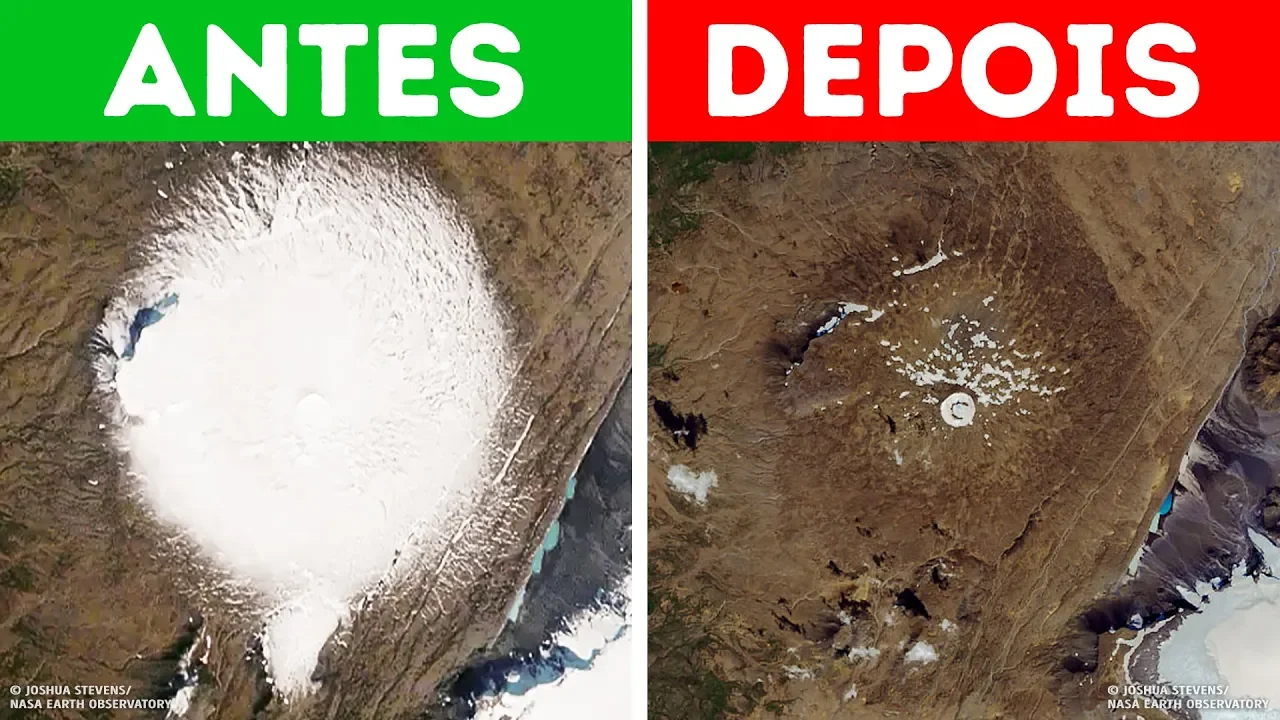
Add to that climate change - glaciers that were very close to the villages have now receded far up.
They are smaller and smaller massifs. It is shrinking.
The water situation has become even more erratic.
Sometimes it’s floods, sometimes it’s droughts - more extremes.
Our lifeline is disappearing and therefore the need for the people to adapt, to innovate and to find new ways of dealing with these hardships.
This solution that we are working on, the Ice Stupa Artificial Glaciers, is about freezing the water that goes unused in winter into cones of ice.
Because of this dramatic shape it doesn’t melt until late spring - May, June.
Now that’s the time when people are dying for every drop of water.
Imagine that the bucket there is the source of water.
We take a pipe upslope, put it in the stream or the lake, bury it six feet under the ground and the pipe takes water downslope to the village or the desert where we want to cultivate or plant trees.
Because of the gravity, pressure builds up in the pipe, then water comes out gushing - like this.
Now this sprinkling water when it mixes with minus twenty air, it falls down and freezes.
Over weeks it becomes a huge mountain of ice.
We started piloting the Ice Stupa in real life application.
People of the village came and volunteered to plant five thousand trees, which were supported in the lean months by the moisture from the Ice Stupa and that is a proof of concept. We should not stop at that.
We will have fifty or so large Ice Stupas which will then feed trees that we plant.
We should go beyond just solving it into turning it into an opportunity to cultivate the deserts that were never cultivated by our ancestors.
The two lakes are here and here and the Ice Stupas will be also along the mountains, up there.
So using the land that’s cultivated by one such solution to establish an institute that researches systematically, scientifically, finds solutions to problems that mountain people face now.
We Ladakhis are the frontier to face climate change.
We have to be resilient, clever enough, innovative enough to adapt to these changes so that our younger generation is ready to survive and flourish in these mountains.
Rolex Awards for Enterprise
Up Next
4:52
Water Drops Freezing Outside-In: Explosive Physics Explained
@nothingisforsure
28.1K views•2017-02-23

12:54
Triumph of Orthodoxy Icon: Byzantine Art & History Explained
@BenCallan
2.1K views•2024-08-06

9:49
FastAPI vs Flask vs Django: Choosing the Right Python Web Framework
@TechWithTim
302.5K views•2024-05-26

1:42
Game of Thrones Opening Credits: A Cinematic Analysis
@gameofthrones
46.3M views•2011-04-18
Related Study Plans & Knowledge Roadmaps
Structured learning paths in General & Interdisciplinary Studies
general-studies
Elevator Engineering: History, Physics & Cities
01From Hoists to Safety Brakes: The Dawn of Vertical Lift
02Hydraulic vs. Traction: The Engineering Physics of Elevators
03Modern Speed, Safety, and Algorithms
+ 2 more learning modules
12h5 modules
Explore Roadmap
general-studies
Rubber: Material Science, History & Geopolitics
01Origins of Natural Rubber & Mesoamerican History
02The Chemistry of Natural Rubber & Vulcanization
03The Geopolitics of the Rubber Boom & Colonization
+ 2 more learning modules
12h5 modules
Explore Roadmap
general-studies
Containerization: Evolution, Logistics & Trade
01Ancient Trade & Bulk Cargo: Amphorae to Barrels
02The Industrial Revolution & Cardboard Packaging
03The Containerization Revolution: Malcom McLean
+ 2 more learning modules
12h5 modules
Explore Roadmap
general-studies
Textile Tech: Evolution, Labor & Global Impact
01Pre-Industrial Textiles: Handloom & Cottage Industry
02Mechanization: The Spinning Jenny to the Power Loom
03The Factory System & Global Labor Transformation
+ 2 more learning modules
10h5 modules
Explore Roadmap