


![IB Economics Revision Session: Microeconomics [HL/SL]](https://i.ytimg.com/vi/j6Rxiss1qiE/maxresdefault.jpg)



















![[Bac SES] Corrigé du sujet du Mercredi 18 juin](https://i.ytimg.com/vi/uuLfGSumLFI/maxresdefault.jpg)
Climate change represents a classic 'tragedy of the commons' where wealthy corporations and nations emit disproportionate amounts of greenhouse gases while the world's poorest populations suffer the most severe consequences; however, economic analysis reveals that transitioning to renewable energy sources like wind and solar becomes increasingly viable over time due to their near-zero variable costs, and government interventions such as carbon taxes can effectively internalize environmental costs and incentivize sustainable practices.
Climate Change Economics: Costly Impacts and Solutions
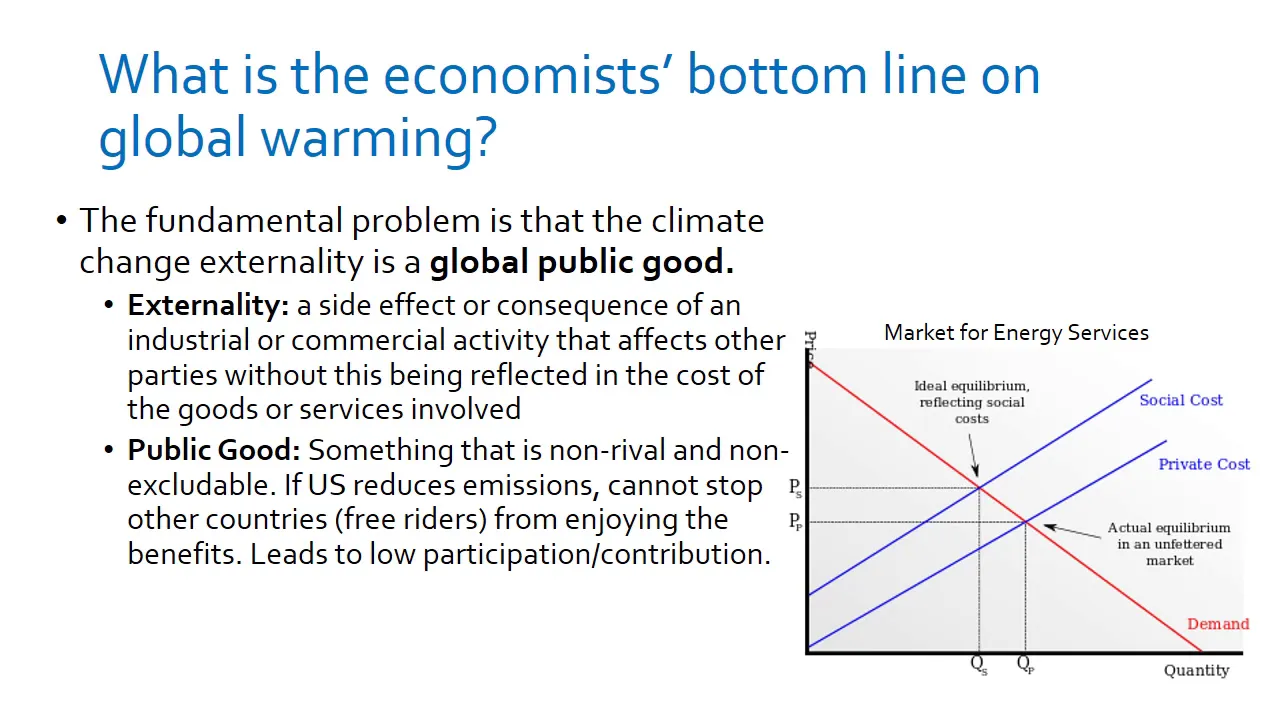
Added:Basic microeconomic principles, specifically market failures, negative externalities, and how public goods are managed.
An understanding of fundamental macroeconomic indicators, such as Gross Domestic Product (GDP) and economic productivity.
The scientific basics of climate change, including the greenhouse effect and the primary sectors responsible for greenhouse gas emissions.
The concept of cost-benefit analysis as a decision-making framework in public policy and environmental economics.
In-depth mechanics and comparative analysis of carbon pricing policies, specifically Carbon Taxes versus Cap-and-Trade systems.
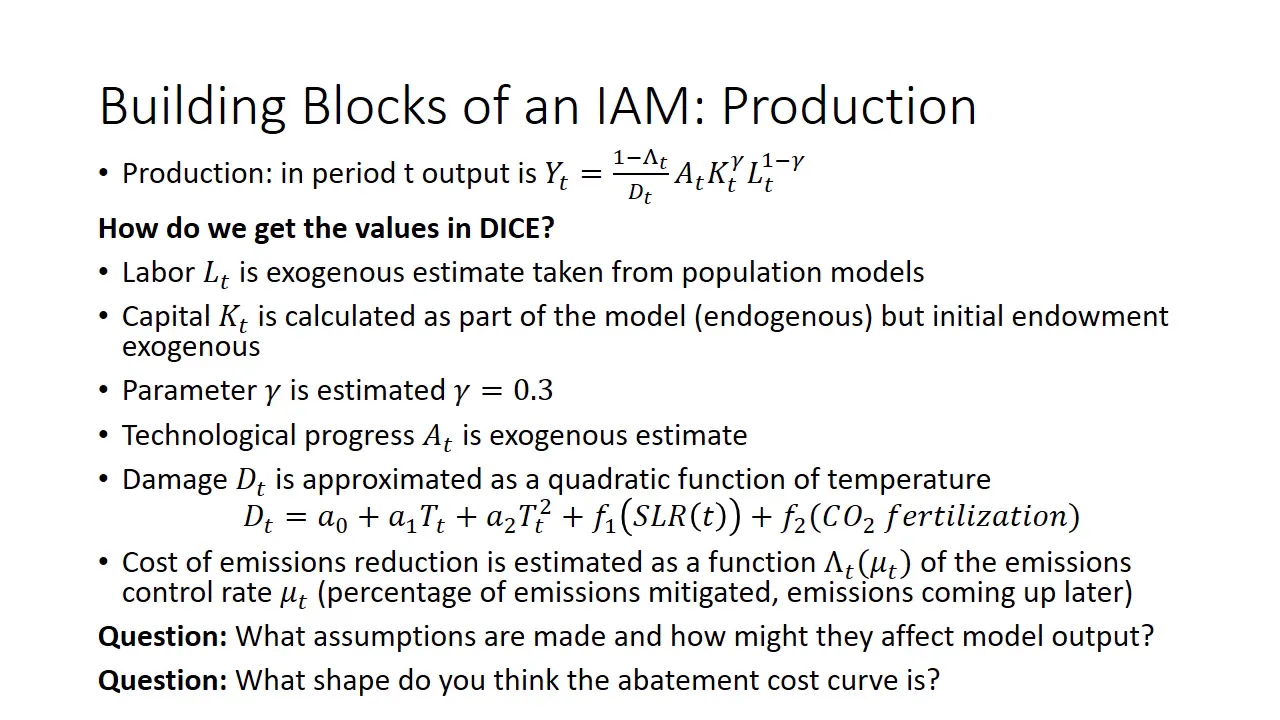
The structure and application of Integrated Assessment Models (IAMs), such as the DICE model, used to estimate the Social Cost of Carbon.
The role of green finance, ESG (Environmental, Social, and Governance) investing, and climate-related financial risk disclosures.
The economics of international environmental agreements, focusing on game theory, free-rider problems, and Carbon Border Adjustment Mechanisms (CBAM).
121.8K views6.4Klikes12:02Original Release: 2019-11-21
this is a windmill this is a solar panel and this is a coal-fired power plant all of these very different looking contraptions have a very similar function to produce energy for an increasingly power-hungry world for decades this one a fossil fuel-fired power plant was the go-to source of energy for a rapidly industrializing planet and this mixed with a massively increasing demand for food and transportation for a rapidly growing population of humans has released billions upon billions of tons of greenhouse gases into our atmosphere contributing to a meteoric rise in global temperatures now for the sake of this video we are not going to be discussing if climate change is real or not I am sorry it is real if you don't believe me that's fine go and argue your point with literally any climate scientist in the world what we will be looking at though is the economic impacts of climate change both in terms of its potential consequences and the feasibility of solutions climate change is something that threatens to impact all of us both in terms of social issues with the loss of natural Marvel's like the Great Barrier Reef but also economically which isn't really fair for the most part most humans aren't actually contributing that heavily to climate change Udyr view are sitting behind a computer or a phone screen maybe one of the larger contributors though just by virtue of being a wealthier more consumptive human but a vast majority of the world's population live very simple lives and almost ironically these less wealthy world citizens are likely to be the ones most heavily impacted by the potential side effects of climate change this unfair trade-off of non guilty parties wearing the consequences of the true culprits is not in economics as the tragedy of the Commons say you are a coal mine owner your materials get dug out of the ground and shipped all over the world to be used in power stations or metal refineries and this entire process of ground to train to ship to train to furnace is incredibly producing even ignoring the extraction and transportation of this coal the average power plant can emit 10 million tons of co2 into the atmosphere every year this is causing rising temperatures more erratic weather patterns the loss of natural habitats not to mention the degradation of breathable air quality but for you the mine owner who cares there is a good chance a wealthy mine owner such as yourself doesn't live anywhere near a coal power plant and you can just surround yourself with enough luxury to make all those other problems go away but the average citizen cannot breathable air in an environment that doesn't want to roast you alive are all what we call common goods in a sense that it is something that everyone gets value out of but no one really has to pay for wealthy producers like this mine owner are effectively taking more than their fair share of these resources not really paying anything for them profiting off it and then leaving the average citizen to deal with the consequences the tragedy of the Commons isn't necessarily a dig on the rich peace and quiet is a common good at 6 a.m. on a Saturday morning but some people use this resource up unfairly to produce mowed lawns they get the benefit of having freshly cut grass and everyone who just wanted a damn sleepin is left with the negative consequences you get what I'm saying Darren while it's not nice to point fingers the real culprits of this tragedy of the commons scenario when it comes to climate change are wealthy corporations the constant pressure to produce goods is cheaply and efficiently as possible has pushed multinationals to produce items in countries specifically with looser regulations around environmental laws to avoid the additional expense involved in adhering to emission standards this means that they can pass more competitive prices along to their consumers which is great for the end user who gets a cheap laptop and great for the company that gets market share but terrible for everyone else who just wants to breathe air and live on land the climate Accountability Institute published an article in late 2017 noting that just 100 companies were responsible for over 71% of the planets total emissions more than everyone's cars and cows and small enterprises combined okay cool so big companies bad sounds like a pretty done and dusted argument what are the actual consequences of climate change if someone was to look pure Liat the economics of the issue and disregard any concern for majestic coral reefs or natural ecosystems or breathable air and just ask what is climate change doing to the bottom line what is the likely answer climate change is the process of greenhouse gases been emitted into the atmosphere causing the sun's warmth to be retained more readily leading to rising global temperatures melting IceCaps rising sea levels and shifts in weather patterns I don't purport to understand the issue much further than that and when it comes to the actual impacts I do the smart thing and listen to peer-reviewed scientists with PhDs on the subject what I can talk about with confidence though is the economic impacts of climate change the world is getting hotter and with that certain industries are feeling the heat the building and agriculture businesses are the most susceptible to these early changes droughts and higher than average temperatures are making it increasingly more difficult to grow certain crops or raise certain livestock increasing the reliance on industrialized farming techniques potentially furthering the issues of climate change these side effects have also started impacting the building industry hot weather is not conducive to efficient construction workers the prevalence of extremely hot days in many economies around the world has been shown to cause many job sites to massively slowdown or outright stop work for fears of the health impacts of working in extreme heat these may all sound like marginal effects the International Labour Organization has recently published a report titled working on a warmer planet that sought to add up all of these seemingly minor impacts and found that just in the construction sector alone the projected loss in output was estimated to reach two point four trillion u.s. dollars per year which is basically the GDP of France the seven largest economy in the world been wiped off the world's economy this model was drawn on most conservative estimates of projected global temperatures and these productivity losses were also estimated while disregarding the billions spent on relief from hurricanes and bush fires these natural disasters are becoming more and more common all over the world my home of Australia is literally on fire because of the drought brought about by the impacts of global warming and of course these are tragic instances in their own right but even looking at it from the perspective of a cold-hearted economist this is taking government money to rebuild and repair that could have otherwise been used to build productive infrastructure or saved or even passed along as tax cuts okay so climate change is terrible and it threatens the future of humanity but even worse it is costing you money so what are we going to do about it this is a windmill and this is a solar panel both tools that are very good at producing electrical energy without the need for direct carbon emissions these are great and once they are built they are incredibly cheap to operate because wind and Sun doesn't really cost anything but they have their drawbacks for starters if the wind don't blow in the Sun don't shine you don't get any power which means you need to store energy which suddenly makes this whole renewable energy's thing an expensive proposal this is a great excuse to talk about fixed versus variable costs of production now let's say we want to produce cakes if we were making just one cake we would get a basic oven and in some cooking utensils these are our fixed costs because once we have these we can really make as many cakes as we want we will also need eggs and flour and sugar and gas for our oven and on top of this a wage to pay a chef to cook these cakes these are variable costs because the more cakes we make the more of these things we will need now our fixed costs and our variable costs give us our total costs simple enough energy is much the same but instead of producing cakes let's produce kilowatt hours and then let's look at fixed and variable costs now a coal-fired power plant is a big upfront investment but it can pay off big-time a large power plant like this one can produce as much as four million megawatt hours per year but it needs a constant supply of coal and to do so costs money solar farm that could produce that amount of power consistently would also need a very sizable energy storage solution and at this point with current technology it would represent a greater upfront investment than a fossil fuel plant with a similar capacity this means it has a higher fixed cost but solar farms don't need to pay to have coal fed into them to produce power their energy source rains down on earth for free which is great this means it's variable costs for every extra kilowatt hour are effectively zero what this means is that the longer that these power plants operate and the more coal that is consumed by the old-fashion power plant the more the costings favor the power plant that relies on renewables sure both of these power plants will have to pay staff to maintain them but that is a relatively minor consideration next to the upfront and ongoing investments into the plants themselves due to technology developments and economics of scale the upfront costs of building renewable power stations is making them more and more attractive investment especially when considering the government incentives available to investors for these power plants in many countries around the world which brings us on to the final point governments around the world have lots of influence over how you live your life sure there are laws that are a more heavy-handed way of saying you can't do this you must do that but governments can also influence our decision-making process through taxation and government grants remember that coal mine owner earlier well he did not feel the economic cost that he was imparting on others by polluting the air because air is free when something like a carbon tax is introduced though suddenly it is not just innocent bystanders that have to suffer the economic consequences of the pollution it is the polluter themselves emissions taxes have been heavily debated issues in the many countries in which they have been introduced and they aim to incentivize businesses to emit less by effectively putting a price on the clean air that they are denying to other participants in an economy these for the most part have been pretty effective at reducing emissions by getting businesses to invest in cleaner technologies a big counter-argument is that this just makes industry more expensive in the countries with these taxes and this will force companies to move manufacturing facilities to countries without these types of taxes in order to avoid the expense and remain profitable this effect has not yet been seen in any economies that have introduced such schemes yet though climate change may be the largest obstacle mankind has faced throughout its development here on earth or it may be a massive government conspiracy who knows what we can say though is that the economics will be a major deciding factor in what kind of impacts this challenge will present it's a sad state of affairs that most people don't notice something until it impacts their wallet but it's the reality that most economists are well aware of people may not invest into planet saving technology until the fixed and variable cost analysis makes it viable and businesses may not value the air we breathe until we manually put a price tag on it but understanding this fundamentally flawed nature of man may be our best chance of ensuring that productive measures are taken to work on a future that will make our planet healthier even if we are only doing it to make ourselves rich up hi guys thanks for watching I hope you enjoyed the latest video if you did please consider liking and subscribing otherwise as always I will be hanging out on the discord server for the channel for an hour after this video goes live beyond that I will be trying my very best to reply to every serious comment in the comment section below thanks guys bye
Up Next

30:37
Air Conditioning and Economic Growth: A Data-Driven Analysis
@carlosvines0
599 views•2026-07-25

5:07
Impact of Yuan in Indo-Russian Trade Amid Sanctions
@WION
261.9K views•2022-07-01

16:50
Gold Standard Abandonment: Economic Mistake or Necessity?
@EconomicsExplained
1.8M views•2022-05-25

113:18
The Age of Easy Money: Fed & Inflation | Full Documentary
@frontline
21.2M views•2023-03-15
Related Study Plans & Knowledge Roadmaps
Structured learning paths in Economics
economics
Sovereign Debt: Defaults, IMF & Restructuring
01Introduction to Sovereign Debt & Government Bonds
02Debt Sustainability & Credit Ratings
03Anatomy and History of Debt Crises
+ 2 more learning modules
12h5 modules
Explore Roadmap
economics
Market Design: Matching Theory & Gale-Shapley
01Introduction to Market Design and Price-Free Markets
02Two-Sided Matching & The Gale-Shapley Algorithm
03School Choice Systems and Mechanism Design
+ 2 more learning modules
10h5 modules
Explore Roadmap
economics
Impossible Trinity: Forex, Capital & Policy
01Introduction to Monetary Policy and Central Banking
02Exchange Rates and International Capital Flows
03The Mundell-Fleming Model
+ 2 more learning modules
8h5 modules
Explore Roadmap
economics
Healthcare Economics: Market Failures & Systems
01Introduction to Healthcare Markets and Market Failure
02Asymmetric Information and Adverse Selection
03Moral Hazard and Insurance Design
+ 2 more learning modules
12h5 modules
Explore Roadmap