

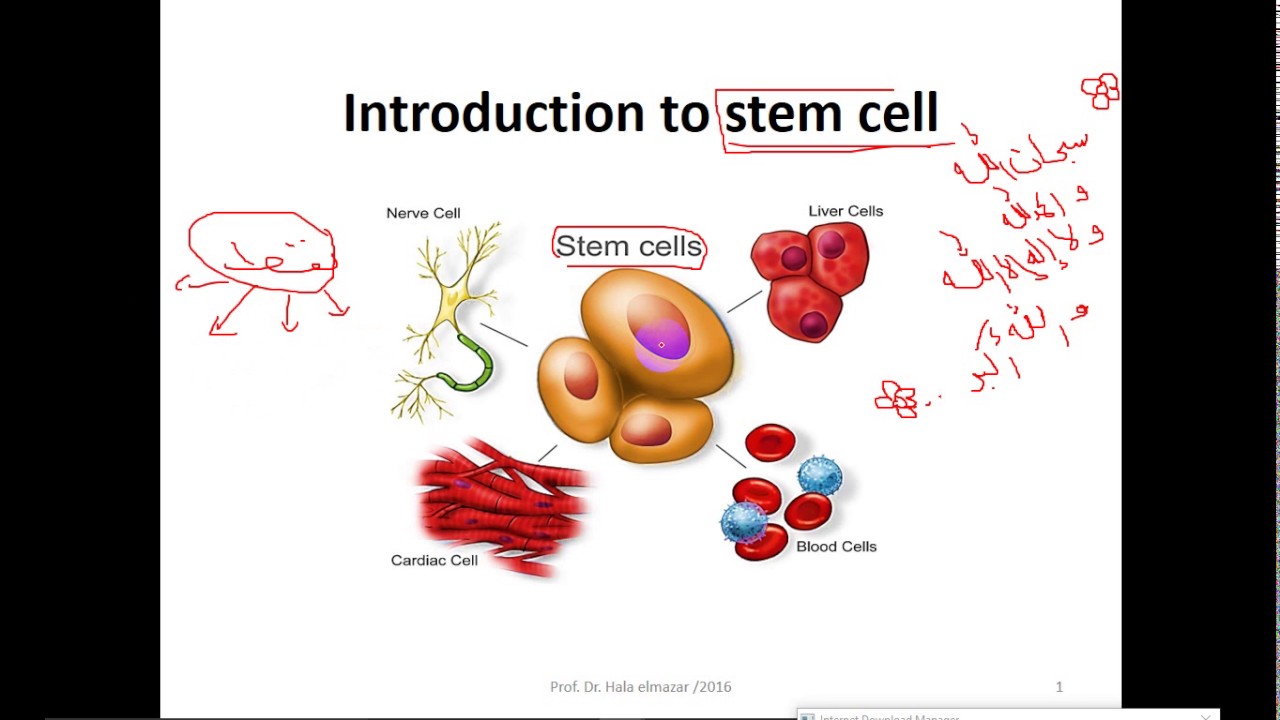

![Totipotent, Pluripotent & Multipotent Stem Cells - What is the Difference? [Cell Potency]](https://i.ytimg.com/vi_webp/6vkFU5dWjTU/maxresdefault.webp)


















This lecture explores how engineering approaches, particularly biomaterials science, can overcome current limitations in stem cell differentiation by creating customized microenvironments that guide cell maturation and function, with applications ranging from cardiac repair to liver regeneration and personalized medicine.
Biomaterials & Stem Cells for Personalized Medicine | UCI
Added:Basic cell biology, specifically the characteristics of stem cells (pluripotent vs. multipotent) and the process of cellular differentiation.
An introduction to biomaterials science, including concepts of biocompatibility, biodegradability, and material-cell interactions.
Fundamentals of tissue engineering, specifically the concept of using scaffolds to support cell growth and tissue formation.
The core philosophy of personalized medicine, contrasting patient-specific treatments with traditional broad-spectrum medical approaches.
Advanced fabrication methods in tissue engineering, such as 3D bioprinting of vascularized organs.
The study of organ-on-a-chip technologies for personalized drug screening and disease modeling.
Immunomodulatory biomaterials and how they can be designed to control the host immune response to implants.
The translational, regulatory (FDA), and clinical trial pathways required to bring personalized regenerative therapies to patients.
235 views4likes1:08:23Original Release: 2021-03-12
so good evening everyone um and thanks very much for joining us for the restart of our community lecture series hopefully some of you at least we're here for our lecture in february focusing on vaccines that was kind of our kickoff um event but we actually are restarting with our science panelists we're going to have two great speakers tonight that are joining us i'm going to kick it off as usual i'm eileen anderson professor and director of the uci uh sue and bill gross stem cell research center i'm really pleased to see so many participants logging on i know it's challenging right now so many things going on in all of our lives so thanks for joining us as most of you know you've been with us over the last couple of years we are a center at uci that focuses on stem cell research we have over 50 faculty across six schools 21 departments and our mission really is spanning the spectrum of what you do in science from discovery research through teaching and on into healing because of our focus on translational research and the alpha stem cell clinic initiative i want to start out with just a couple of quick thank yous of course as usual brian cummings our stem cell research center uh community outreach chair judy beck who runs our communications and will alvarez and kyle good who's joining us tonight from uci media without whom none of these things would be possible and just as importantly a thank you to everyone else who's joining us tonight certainly you've heard me share over the last two seasons of this that's a really critical thing we were concerned about was funding for prop 14 and the re-launch of the california institute for regenerative medicine whether you just attended one of these and got some information whether you actually voted whether you talked to a neighbor about the sorts of things that happen with stem cell research and the kinds of things that we do to this within the center i just want to take a moment and really um appreciate your participation and thank you for whatever it is that you might have done because this is an incredibly exciting time for us 2021 is going to relaunch serm and just a few of those initiatives that are going to be critical include training internships for undergraduate students fellowships for graduates post-docs and post-md students in fact residents funding for shared resource laboratories including techniques training and cores these are restarts of initiatives that we have been scrabbling to get by without funding refunding for our alpha stem cell clinics which we'll be hearing more about in a couple of weeks along with this translational grant funding pipeline from discovery through translation grants on up into clinical grants which is really the goal of everything that we do to engage in basic research and move it through the translational pipeline you may ask how can i help well there's not a lot that many people can do in person right now but you can participate still sign up for our newsletter follow us on facebook visit our websites which is up here on the screen make a gift you can contact amber harness who works with us at uci and again philanthropic support is so important for what we do it is an engine that drives discovery at the level of seed funding which is something that is very important to us i'll be reaching out over the next couple of weeks as we go on and do these lectures couple of months i should say and talking about some vignettes along that serm funding pipeline and how it's impacted us and how our philanthropic donors have helped us to achieve those goals where we're going from here as a center that said i wanted to just take a couple of minutes and kind of introduce my thoughts coming into restarting this community lecture series i was really passionate about doing this when i became director and with the refunding of serm i actually started to think is is that mission i don't know is it is it gone was it was it not going to be something that made sense for the center to continue i'm gratified to see so many people here tonight because that tells me um that this kind of outreach is important and as i've been reflecting on the last year as i'm sure many of you have been with coronavirus and where kovat19 has has left us how it's affected all of us i really have been reflecting about science and communication and the role of communicating science in how we got to where we are and how we're going to get out of it and how important it's going to be going forward for all of us so by that i mean uh of course i think we could have had better communication in some domains that may have helped us to emerge more quickly from the pandemic at least to be able to deal with it but i also think um in addition to that there's just some stories that have been missed in terms of whether they've been conveyed um out into the public and on the media or in other forums many of you have heard me talk about the importance of scientific research basic research at universities and how critical this is for the pipeline of generating patents and startup companies and in fact leading through to clinical trials that actually make changes for people's lives and it occurred to me at the end of our vaccine series with our panelists last time that there really was a set of stories that have not come out in all of this and so i thought i would take a moment and use the role of basic science investment and how important that was in covit 19 vaccine development to just illustrate to use that as an analogy for why refunding serm and what having a new serm start in 2021 is going to mean for us in terms of stem cell research and regenerative medicine because i think these are some things that probably people don't entirely realize so the u.s national institutes of health many of you have heard me talk about that provides 4 billion a year in funding to immunology and vaccine research groups this is at the very most basic science level and this is critically supplemented by philanthropic funds largely in the case of vaccines for developing countries in part by the bill and melinda gates foundation but by other individual donors at universities that really have an impact and make a difference university laboratories it is university laboratories working on hiv and influenza vaccines that actually developed the mrna technology that is used in the pfizer bioentec and moderna nih vaccines and this emerged only over the last 10 years because of those basic science investments this has led to investigations for zika for ebola for coronavirus and those vaccine programs develop that programs that have been developed at the nih and in the pharmaceutical industry that allowed us to make the progress that we have over the last year in fact the moderna vaccine was made as a collaboration with the nih vaccine research center this is funded by u.s taxpayers u.s tax dollars since 1997 and the goal of that is simply to create vaccines against viruses and other human diseases in fact nih also funds an extensive network of clinical trial sites for clinical vaccine research this played a very important role in covid19 vaccine testing just like the alpha stem cell clinics that are funded by cern play a really critical role in testing of stem cell therapeutics for and other regenerative medicine strategies as as well as novel approaches to target cancer for example car t cells and to modulate individual cells with viral mediated technologies u.s taxpayers taxpayers right now are spending about 18 billion on the production and distribution of cobit 19 vaccine this is my punch line and this would not have been possible without consistent earlier funding of basic immunology and vaccinology research and so i thought i would make this point that basic science looks like this it starts here it is a maze when we go into it not only do we not know what's inside it we have no idea how we're going to navigate around it we get lost a lot as basic scientists but mapping it out that discovery biology is what lets us lead to technological advances that can have a real impact on human health like the rna technology that led to the development of the vaccines for covid19 basic science starts in the maze translational science science starts here we already know what's in it we know what we're trying to get to and it's the nitpicky details that we're trying to work out in order to actually take those final steps and that is what we do here at the stem cell center that full spectrum of research from basic science onto translational and into clinical trials and so i hope you learned something new about covid and vaccines and i hope this gives you some renewed appreciation for how important prop 14 and restarting sperm funding this year has been for us so let me introduce um without trying to get back to my slides let me um actually do two things let me highlight for you our upcoming lecture which is uh on tuesday april 6th this will be diane o'dowd who's actually the vice provost for academic affairs here at uci former chair of developmental and cell biology along with jack lynn talking about stem cell insights into epilepsy that's our next upcoming community lecture tonight however we have a terrific opportunity to hear from two young investigators new to uci they are part of the faculty hires for leveraged research excellence recruitment that we did with the school of engineering um in particular with chemical and biomolecular engineering and vassan vinoga palin there there are two new hires that are just coming on we're so excited to have here hertelline ardonia who received her phd from johns hopkins and was a postdoctoral fellow at harvard university and dr clinton smith he received his ph.d also from johns hopkins and it was and still is a howard hughes medical institute investigator hannah gray post-doctoral fellow at mit just in the process of moving out to uc irvine right now they're going to tell us tonight about their research that bridges engineering and biomaterials with stem cell research and we're super excited to welcome them to the center and welcome them to our faculty so please hairline and clinton take it away uh well thank you so much dr anderson for the kind introduction and i'm really excited to be a part of this community lecture series to really highlight um some of the research aims that we've been doing for the past couple of years uh so today um dr adornia and i would like to talk about how we can actually use stem cells and materials as regenerative medicine and this research is really based upon a grim statistic in the united states over a hundred thousand people are in need of a life-saving surgery and annually 8 000 people die waiting for a transplant because there's a lack of available organs for donation so different engineering tools for example have allowed us to bridge the gap to transplantation so you've been able to create for example the dialysis machine for the kidney and also pumps for the heart but when it comes to more complex tissues i would say such as the liver which is the largest internal organ within your body it does over 500 different functions we can actually create a device to do all these different things so tissue engineering has emerged as an interdisciplinary field where we can take engineering chemistry mathematics to really create scaffolds cells tissues to actually replace or augment that functionality so like why stem cells pose as a really great potential to really meet this high demand is that if you look at the liver for example there are over 200 billion hepatocytes the main functioning cell type within the liver but stem cells can actually be derived from adult cells such as the skin or hair and we can program them into an embryonic state and then we can coax them to mature into a healthy cell and then we can use that as a cellular therapy so one of the although stem cells are very exciting in a new aspect that we've been really excited for treating diseases there are a couple of limitations these limitations include a really a poor insight into the basic developmental events that drive the formation of the various tissues within our body and we have techniques within the lab to actually grow stem cells to different tissues but they really lack high efficiency and they lack reproducibility and we actually lack tools to really properly evaluate the function of these cells and how mature these cells are as a chemical engineer by training i'm excited to say that we can actually use engineering technologies to recreate the micro environment in which cells reside to actually coax these pluripotent stem cells to mature cells by using different aspects of engineering tools to mimic things that we see within our body so as dr smith mentioned we can certainly interface non-living materials with cells and tissues and depending on how we engineer them and how or how we design them these materials will allow us to deliver the necessary cues for the growth of these stem cells or the repair or regeneration of damaged tissues and in terms of delivering these materials to the body they can either be implantable which is a more invasive which involves an invasive technique or they can be injectable and upon delivering them to the body these materials serve as the local environment of the cells so meaning that they do not only deliver the cues that are necessary for the growth but they act as a physical support so one of the examples for that is for example if you have a scaffold that has a specific surface topography that can provide the alignment to the cells then the cells will grow as aligned and this is sometimes and oftentimes important for the function of the tissues that will be grown from those cells now when we're talking about local in microenvironment for the cells it's important to note that this can vary from patient to patient and that is why there has been a lot of emergent efforts um towards personalization of regenerative medicine not only from the standpoint of using patient-derived stem cells but also and more importantly delivering the important microenvironment that these cells need and one of the ways that we can do that is to appropriately design the biomaterials where these stem cells are interfaced with so some of the example approaches would be using bioscaffolds that can deliver drugs and using patient-specific enzymes to modulate the release of these drugs or developing adaptable materials that can grow as the patient grows over time or thinking about using bioactive components that are customizable and delivering this together with the cells and tissues that we use for transplantation and of course this involves also developing technologies that will allow us in real time to track the performance of these biomaterials and see if further customization is needed so for tonight's lecture we will be discussing about approaches how we can design biomaterials and i'll provide a specific example of a biomaterial and then the second half of the talk will be exploring the different properties of certain materials or building certain environments and how that can affect stem cell differentiation so i'll start by sharing my previous research on peptide based biomaterials now the main motivation for using macromolecules that are derived from biological systems is thinking about biocompatibility so when we want to engineer systems or materials for biological applications it's it's very attractive to think about components that are naturally found in our body and using that as building blocks so for example thinking about peptides and proteins which can form ordered structures depending on the environment that they're in and these are just some example structures that i'm showing in the figure in the left and what's interesting is when you look at the molecular level the bonds that are actually holding these structures and that are driving these structures are weak non-covalent bonds such as hydrogen bonding which means that these bonds are dynamic so your structures can assemble and reassemble depending on the trigger that we have in the environment the other interesting factor about peptides is that their assembly can be based on the amino acid sequence that comprise them so then you can think about a specific peptide sequence that can self-assemble form fibrils with a specific pitch with a specific twist and they form networks upon aggregation that could that then lead to the formation of matrix that can support cellular adhesion or cellular growth now specifically for tonight i'll talk about pi conjugated peptides this class of materials are do have peptides on the periphery for each of the individual units which we can call as monomers and at the core it has an electroactive unit so pi systems and upon assembly or aggregation because of the presence of these pi electroactive units of pi conjugated electroactive units we can form one-dimensional structures that do have a conduit at the center for the transport of charged species making these materials electronically active or electronically active so it's important to also note that the the assembly of these materials can respond to specific triggers or simple triggers such as ph or the presence of ions in the environment so shown in the right are actual images of these peptides that form one-dimensional structures and because they have electronic uh properties you can consider them as analogous as biological analogues of wires and at higher concentrations they do form hydrogels um and depending on how you form those hydrogels you can make them aligned which i mentioned earlier can be important for certain uh tissues now why do we need to form or create materials that have electronic properties or materials that can be used for bioelectronic applications one way to think about it is that in the laboratory when we grow cells that are electrically active so for example neurons or cardiomyocytes they needed to be electrically stimulated and the way that this is conventionally done is using physical electrodes so what's shown here is a carbon rod electrode and in fact the electrical stimulation of stem cell derived cardiomyocytes have been shown to be helpful to drive the maturation of these cells and show more adult-like phenotype so although this way of electrically stimulating cells work you can think of the electrodes as stiff foreign material that is integrating with your biological systems with your cells and tissues and thinking about long-term cultures of course you wanted electrodes that can more seamlessly integrate with the biological systems or decreasing the need for for the wire connections within within your models and there are certainly emerging approaches that allow for seamless integration but more so on the side of inorganic materials and remember that our body is comprised of organic materials and among these approaches the electrodes are integrated within the tissues but also there are other approaches out there that can utilize light to trigger the action potentials or the signals in your electrically active cells such as neurons and cardiomyocytes as i mentioned now what's the advantage of using organic materials so organic materials that are electrically active meaning those components that are found in flexible displays or those that are found in wearable sensors and also coupling them with peptides or proteins as i mentioned earlier so these types of materials offer more flexibility and and they are soft so that matches the mechanical property of what's found in the native physiological environment and also it's much more easier to functionalize meaning modify the surfaces of these structures and make them more compatible with with what's required by the cells and in certain cases we can find systems that can generate currents just based on triggering it or exciting your systems with light and without requiring wired connections now um as i mentioned i'll be specifically talking about pi conjugated systems for today and this part of this lecture will be focusing on preparing a certain class of biomaterial and showing you how we can systematically tune their design so for this model molecule that i have right here we have peptides on both the periphery and then the electroactive unit i'll refer to it throughout the talk as ot4 this is a known p-type organic semiconductor and the idea as to how we can investigate how to tune the properties based on amino acid sequence is just by simply changing the amino acids that's next to the pi conjugated core and systematically increasing the size and hydrophobicity of those side chains with the hypothesis in mind that this changes the stacking distance or the way that these monomers arrange and form those one-dimensional structures so in the bulk level we were able to see that even with just these minute changes in the amino acid we can see significant changes in the stiffness or the mechanical properties of the hydrogels that are formed by these peptides biconjugated peptides and also we can see significant changes in the resistance or the electrical properties of the films the dry films that are formed from the assembly of these peptides now these just to show you that all of those peptides that we assessed do form one-dimensional structures and so they do aggregate and and adhere to the model that i've shown earlier a couple of slides ago now with that in mind we also sought to see how the systematic changes in amino acid sequence can be used to modify the optical properties of our material so by optical properties we mean the absorbance the photoluminescence or fluorescence and also the circular dichroism or essentially just the absorbance in response to a polarized light now i will show you a couple of graphs right now just to see that the dashed plots that you have is equivalent to the monomer or representing the optical property of the monomer and then the different amino acids are shown the profile for the different amino acids modifications for these pi conjugated peptides are shown here are represented here what's interesting is that the smaller amino acids are significantly different than the peptides with the larger amino acids and we can actually see a trend starting from the absorbance profile and when we look at the photoluminescence we can see that the quenching which represents more aggregation or more close stacking is more evident with the smaller amino acid and in the circular algorithm we see this bisignate signal that is more intense only for the smaller amino acid the glycine and alanine and this shows that even in the molecular level packing which we can probe using the optical properties we can see these changes and we can tune these properties even though it's the same family of molecules monomers but just doing the simple amino acid sequence differentiation so then the other question that we ask is can we see a trend in the electrical properties of these pi conjugated peptides when they are assembled so then we saw it with our collaborators and and they helped us build a device called field effect transistors and using this device it allowed us to measure a parameter called the whole mobility which is a metric of the carrier conduction or the conduction along the long axis of the assembled peptides that we have so a schematic of the device is shown on the left we're in essentially in this device we have three electrodes you have a source and drain electrodes that's spanning the semiconductor and then a gate electrode where it whereby the gate layer helps shape the current flow that's occurring within the device now for this specific device we used our peptide ot4 nanostructures in the semiconductor layer and the measurements that we saw is that the as the adjacent amino acid size increases we also see a trend in the measured hole mobility and see that those with larger amino acids next to the pi conjugated core have lower mobilities which is consistent with the hypothesis that uh these minor changes in the amino acid next to the pi conjugated chord definitely changes the stacking distance or at least the stacking order and can affect the properties that i've shown you which are bulk mechanical properties and also the optical and electrical properties so now that we've learned a little bit about how these these properties can be tuned for the materials we there's another uh bio-inspired approach that i then took with these materials and that is looking at the um energy transfer that's happening in photosynthetic systems so in photosynthetic systems we have protein pigment complexes so there are multiple pigments that are involved in that process and what's interesting is that the proteins that are complex with these pigments they actually assist in the position of those pigments so that the energy transfer can happen in the most efficient manner and and is consistent with the idea of funneling the energy from the highest energy pigment all the way to the reaction center so now then going back to our bio material the pi conjugated system we then asked whether we can incorporate more than one chromophore more than one electroactive unit in this case we have an energy donor which upon a light excitation the the energy migrates from the donor to the acceptor and this in fact what we saw when we merged them together and in the photoluminescent spectra as shown on the right so even with just one percent of the acceptor uh we can see a decrease in the um in the intensity of the photoluminescence that we see in the donor and as we increase the percentage of the acceptor unit the um uh the spectral profile that we see crunches more and mimics more and more the profile of the acceptor so what i wanted to take away from this graph is that we were able to see these quenching of peaks that represents a successful energy transfer even under completely aqueous environments which usually does not happen easily when these electroactive systems are not conjugated with peptides now as a control we looked at just assembling individually the donor staffs and acceptor staffs and we can see that the quenching is not as efficient so absolutely this this tells us that we've been successful in combining the donor and acceptor units in one biological wire um and we were able to see and control the energy transport processes that are happening within our bio-inspired peptide based nanostructures so then the last thing that i want to show about these interesting structures is that we further extended and and have a and developed a system with two components but this time three chrome force in the assembly so now here other than incorporating the three chromophores we also looked at whether we can modulate the rate of the ph drop so that we can control the type of assembly that we see in the nanostructures or the distribution of the the types of distribution that we see of the acceptor within the donor moiety whether it is self-sorted or co-assembled and again when we look at the spectroscopic profile what i want you to take away from these graphs is that the different types of assembly whether it's self-sorted or co-assembled absolutely shows different types of energy transport as represented by these photoluminescence spectral profile so we control the rate of the assembly by by varying the trigger that we used so we can achieve self-sorted structures by slowly assembling them over 20 hours and then we have one that is more fast and leads to the co-assembly of the different chromophores that we have and what's interesting is that even we age these co-assembled systems they still do not reorganize into the self-sorted systems meaning that through variations in the trigger method we can control the structure and by controlling the structure we could then control the energy transferred processes that are happening in these nanomaterials so moving forward my group is currently developing the next generation of these bio-inspired peptide materials with optical and electronic functionalities and we do want to drive the applications of these materials towards either controlling cells applying them for stem cell derived cardiomyocytes for example or using them for probing or sensing applications and before i end this part i just want to highlight that as we think about the design and and modulate the properties of these systems and bring it closer to the bio interfacing we always go back to the design aspect and keep the lessons learned so that we can incorporate and modulate the properties of our materials depending on the local environment micro environment where we will be applying these systems which as i mentioned in the beginning is important for customization of the types of materials that we use for different biological applications and so with that uh we'll move forward to the next part of this lecture where we will hear more from professor smith about his work on uh different using different engineering strategies for um directing stem cell differentiation so thank you so much dr adonia really fascinating research so i'm going to talk about and shift gears a little bit about how we can use engineering tools to control the stem cell micro environment so here are pictures if you go back one slide here are pictures of stem cells grown on different shaped micro patterns and i want to tell you a story about how we got to this using different engineering tools as a primer i want to demonstrate that our cells can self-organize during development so a very early structure during human development is something called it goes through a process called gastrulation so all of our tissues actually come from three different germ layers the ectoderm mesoderm and endoderm and today i want to talk to you about the mesoderm which gives rise to all the cardiovascular lineages so we talked about the beating cells such as the cardiomyocytes that make up the heart and i want to talk about the vasculature which is really important for the tissue engineering purposes because they're really important in transporting oxygen nutrients and waste for your tissues but before these cells can actually become these cardiovascular lineages they first have to go through a milestone so they're actually kind of in like the puberty stage where they express a marker called bractory so before they become before they can become these mature cells they have to express something called brachii so these brackery precursors actually form something called the vascular plexus so it's really fascinating so during development one of the first things to actually develop is your blood vessels so this actually happens before the heart begins to pump so once you have the blood vessels formed in a process called vasculogenesis they begin to mature in a process called angiogenesis so you have sprouts blood vessel sprouts from this pre-existing template so the blood vessels are arranged by size so you have large arteries and veins and in smaller sections these vessels are called capillaries and these cells are supported by stromal cells called small muscle cells or parasites and cells that line your blood vessels are called endothelial cells so as an engineer we can look at different ways that we can actually study the vasculature so you can think about it so in your arteries you have oxygenated blood in your veins you have deoxygenated blood so as engineers we can control these parameters to study the vasculature system you can imagine if you have a diseased blood vessel in a case such as atherosclerosis your vessels actually get harder so we can use some of these material approaches to grow these cells in hard environments to really study that disease so how do we create blood vessels from scratch i love saying it that way because we can actually take stem cells and direct them to virtually any cell type in the body and there are many different approaches very early on people use the technique called embryo body formation we can actually take colonies of stem cells and allow them to just randomly differentiate and mature but i use the directed differentiation method so basically what we're able to do is we're able to introduce a chemical cocktail to encourage these stem cells to undergo this vascular specification and in this case it took 12 days where we could get endothelial cells those cells that line the blood vessels and the stromal cells that support the vessels so we can start from these large circular colonies of pluripotent stem cells and we can push them to this early vascular phase and we can see through these immunofluorescent images where we can stain particular proteins that represent the different vascular tissues we can see we get these beautiful red endothelial cells and we get these green stromal supporting cells so this evening i want to talk to you about how we can use engineering technologies to demystify the process in which these stem cells mature and how we can use these engineering technologies to also control the architecture of tissues to mimic those in the body and how we can introduce physiologically relevant forces to study cells in their native environment so you can wonder like how do you actually do that so as an engineer we can actually pull motivation from different disciplines so we can actually look at the computer manufacturing industry so this is a picture of one of the early integrated circuits in 1964.
so here you can actually put about five transistors in that small device and from that technology we actually had this ibm 360 which is this large computer that that actually was used to help send neil armstrong to the moon today we can actually use a process called photolithography to literally um write or etch features that basically run your computers so we have this manufacturing technology that's described by something called the moore's law where we can create more and more integrated circuits at a smaller scale so if you can compare the computer in 1964 it had about 664 transistors in a typical iphone today it has over 11.8 billion transistors so you can actually think the device in your pocket has more computing power than the instruments that were used to sell male armstrong to the moon so we can actually use those miniaturization technologies towards medical applications so we can actually pattern different features to study how stem cells lose their pluripotency over time so we can create micro patterns for example in this case that range from 80 to 500 microns in diameter so to put that in context your human hair is about 100 microns in width so you can create features on that length scale so you can take stem cells that have a uniform marker expression and then we can place them on these different micro pattern domains so initially these stem cells will be fluorescent for this marker trial 181 which is shown in green and we can put these stem cell populations on varying and micro environments in a high throughput manner and we could look at the loss of pluripotency or the loss of green on these miniature environments that mimic development so with that ability we can create hundreds of different micro environments we can actually use image processing as a way to quickly interrogate how these miniature communities impact stem cell faith so for example we can take an original image and use a computer algorithm to identify individual pattern features and we can begin to do quantitation on those parameters so we can count the number of stem cells that are present on these micro patterns and we can calculate the number of cells that express this pluripotent marker and we can begin to acquire a lot of different statistics about this process so in addition to losing pluripotency we can look at how they mature so here's a movie that i think is really fascinating we can actually plate stem cells on these pattern surfaces using this miniaturization technology from the computer industry to look at how stem cells surveyed their micro environment and within this study we looked at early vascular precursors so i remember i talked about that t or brachiary and we actually see that it's enriched at the periphery of these micro pattern domains and what's really interesting if we look at our control case where we have cells that are grown on circular micropatterns we see this annulus of early mesoderm cells that will give rise to vascular tissue however if you use a drug that inhibits the ability for cells to sense their micro-environment they no longer have this ability to form this self-organ organized tissue and we can do this for many different shapes in many different sizes so this is our control case where we can see this really reproducible organization of early progenitor cells from stem cells and we can do the same thing within our drug treated samples in which the stem cells lose this mechanosensing ability so coupled with image processing we can use all that information to actually predict how the cells will react based on these micro pattern domains and importantly remember that green annulus of brachially positive cells that give rise to vascular cells we can see if we continue to differentiate the stem cells on these micro patterns we can see an enrichment of red endothelial cells at the edges of those micropattern domains however if we use a drug to inhibit the tension that the cells have they are not able to undergo this vascular program meaning that very important cues during development dictate how stem cells mature next i want to talk about how we can use this photo patterning technology to create microfluidic devices so here's an example of a microfluidic device that's 250 microns wide so this is a little bit larger than a width of a human hair and we can actually seed stem cell-derived endothelial cells within these microfluidic devices and we can actually see this video going inside the channel and we can actually flow blood-like substances throughout these channels to create an environment that your cells would normally experience during development so as a graduate student you know i started my undergrad in chemical engineering i didn't have a lot of um biology so when i went to graduate school i took an advanced cell bio course and i became fascinated by something called primary cilia and these are little hair-like antenna protrusions that stick out on virtually every single cell and they've been implicated in the ability for cells to sense their micro environment so in this movie here a lot of groups have actually used zebrafish to look at early vascular development so here we can actually see in real time the development of the blood vasculature and we see that the vasculature within the zebrafish actually have these little hair-like cilia projections that we presume to actually be the sensor where they can feel the heartbeat and blood flowing through those vessels fascinating we can actually see that these ciliar protrusions actually bend and deflect in response to the viscous forces from the blood one of the main reactions of this deflection of the cilia shown in green is an uptake of an electrolyte called calcium so you can actually find it in gatorade but this is actually a fuel that helps a lot of different sibling mechanisms within your body and what was found in this work is if you actually lose the ability for the cilia to actually sense the blood flow you actually have a reduction in vascular maturation but this is in zebrafish so we wanted to see can we use our stem cells to mimic human development so here's an image of endothelial cells from a diseased stem cell where we actually can't see any of these hair like ciliary projections but if we look at other stem cell sources that are healthy which is a great power of the stem cell technology we actually see in red these hair-like protrusions so when we use these cells in our microfluidic devices we actually see that the non-ciliated bc1 cells shown on the top row actually can't elongate in a line to the direction of flow which is a hallmark marker of endothelial cell functionality however endothelial cells that are equipped with these ciliar projections are able to elongate and respond to these forces and we were only able to study this phenomenon using these engineering tools we can also use these technologies to look at that calcium influx in response to these the fluid forces and we see in our disease stem cell that they have average uptake of calcium however our healthy stem cell derived endothelial cells can appropriately respond to the physical forces that we administer to them so in addition to adding physiologically relevant fluid forces we can actually control the architecture of tissues so during my post-doc work i was really interested and focused on the liver so i mentioned there are over 200 billion hepatocytes which are the main workhorse within the liver but there's also a vessel like architecture like the blood vessels called the bile duct that's responsible for carrying out toxic bile acid that your hepatocytes secrete to the small intestines where it aids in digestion if you actually don't have this proper architecture of the biliary ducts you can actually have the bile outflow and this could be manifested as something called jaundice where you actually have yellowing in the eyes so using a different approach or a different engineering technology we can fabricate structures that mimic the native architecture within the liver so we actually use something similar to our photolithography technique but now we can introduce acupuncture needles yes acupuncture needles and we can actually use natural biomaterials as a scaffold so we can use these needles as a sacrificial mold and we can cast collagen over these needles and once we remove the needles we can have on-demand profusable structures that look like the native bile duct and here's an image that we can have of these 300 micron diameter tubes that mimic the native biliary tissue within our bodies so i hope i was able to convince that we can use pluripotent stem cells as a as a model of human development and my lab is really focused on combining stem cell derivatives that make up the vasculature the liver cells and we can combine them for regenerative medicine applications yeah and just before we end this talk for today i just want to highlight that we continue to use these engineering concepts either to mimic microenvironment or directly directly engineer materials to be interfaced with mater with with the cells or tissues um so that we can continue to customize the needs of these cells and and go beyond the one-size-fits-all idea for for developing materials to be used for stem cells and in that way we can advance further advanced stem cell technologies and with that we thank everyone for joining us tonight and and we'd be happy to answer any questions so quentin if you could go ahead and start your video also um i think the uh the way i don't think the way it works is that we'll have questions coming on through the audience uh from either facebook live or through the q a i'll be monitoring those um we do have a couple that are that are appearing um hairline if you could stop your screen share at least since yours is working that's great perfect and um quintin there you are that's awesome so i'll feed questions to you out of the q a and you guys reply as you see fit so we have one for quentin um could you specify how the chemical cocktail actually works on the stem cell colonies oh that is a very good question so there are many different growth factors inflammatory signals what we actually get that actually flow in the blood so these are all factors that are motivated by studies in mouse development for example so we can actually use something called recombinant growth factors so human growth factors and we actually just add it as like a soup so in the media to where the cells are and cells are equipped with receptors on their surface and basically this the cocktail contains ligands to these receptors and basically they engage and the cells internalize these factors and it basically drives their downstream events but one important thing towards the differentiation is that the timing of when you add those factors are critical to how they mature so during development if you add the factors too late the cells are not competent or can't respond to those cues that's perfect um can i do just a follow-up there because i think one thing you make such a compelling argument in terms of the need for organ transplantation particularly for liver right it's such a complex organ so spin this out for us all the way to the end right so at the end of the day if your wildest dreams come true you're super successful in terms of patterning and vascularization and all of these complex problems for cell specification that need to be solved what do you envision are you going to regrow an organ that gets transplanted are you going to make an organ that's on a chip that resides outside the body and performs these multiple functions is that going to be a stage thing if you if you will look into the future 10 years from now where will this technology be so that's actually a really good question so as you may or may not know the liver actually has a native ability to regenerate but after after repeated injury it actually loses that regenerative capacity so really the focus of my work is to be able to take a patient's healthy cells reprogram them into an embryonic state and push them towards those liver lineages and then we actually can use different engineering technologies such as 3d printing to begin to assemble the tissue so we can assemble the vasculature we can use ways to pattern them in particular conduits we can incorporate the hepatocytes that do the over 500 different functions such as detoxifying drugs and then we can then we can create grafts we can actually implant them ectopically so not directly where the liver is and basically these these livers can actually process different drugs for example within the body and they act as like a secondary site that maintains the function of a normal liver so the idea is that we can actually create off-the-shelf cellular therapies for people that have these diseases great answer that's that's perfect so then i'm going to ask a parallel question we do have a couple of more that have come in but um for hair to line if you think the same thing right how will you um how do you see in your wildest dreams the kinds of biomaterial development that you're doing now combining with cellular regenerative therapies to move forward into a next stage from a practical application point of view that's going to alter you know and impact people's lives yeah so i think there are different directions that we are looking at for these types of materials so one thing that i have mentioned is utilizing uh the sensing capabilities so thinking about devices where these materials can deliver the cues but at the same time can be used to record the signals from electro electrically active cells and then another application to think about this just from the standpoint of developing bioscaffolds since we are using peptides which are as i mentioned in my presentation natural building blocks that you can find in your body and we can create scaffolds that can degrade uh over time and that we can that we can engineer the degradation uh based on the regrowth that we are seeing in the tissues and then lastly i want to emphasize that these materials can also be used to create model tissues so closer to the chip-based technology that i think uh quentin have mentioned in in his uh presentation in his part of his presentation so i want to emphasize that developing model tissues or model organs that can be enabled by these types of materials are important in terms of thinking about high throughput screening for developing models that can be done in the laboratory for understanding mechanisms of diseases so those are the different directions that we can look at in terms of applying the materials that i have developed and but as i have shown in my presentation i am both interested in the application but also doing the basic science for these types of materials is important for enabling the types of applications that we can see uh in the future i certainly couldn't agree anymore with that it's the full pipeline that's that's really critical we do have a follow-up question um for you heard a line which is do you see application so understanding the importance of basic biology do you see applications of your peptide conductive polymers for temporary or even permanent nerve repair right as one thing that could be possible down the line either presumably in the case of peripheral nerve injury or potentially in the case of a central injury like a spinal cord injury yeah in fact we have tried using an analog of these peptide assemblies for human neural stem cells and and we've shown that they are biocompatible and by incorporating certain peptide epitopes that are relevant for i think more relevant for the peripheral nerve injuries rather as compared to spinal cord injury um that axonal regrowth can can be facilitated in in these hydrogels so in terms of answering whether temporary or uh permanent i think we need to do further studies uh with regards to stability of the hydrogels in physiological environments the the the study that i have described is in vitro and we haven't really tried in vivo studies for these types of materials so my my um my short answer is yes we are looking into these types of applications whether it's temporary or permanent we need to do further studies that's great um and thanks for your answer quentin if i could pester you with another question that we have a little bit off topic for you from the context of organ regeneration but the question is whether you have any any information or research from your line of work that is related to muscle tissues and muscle stem cells oh that is a really good question so i particularly haven't studied muscle stem cells in my research but i do know of a lot of groups that do both pluripotent stem cell derived and mesochiminal stem cells as for muscle regeneration for example so i know there are a lot of different applications in cellular populations that can be used particularly for those different diseases and applications for sure yeah and so i will just highlight there another of our new faculty recruits is dr michael hicks who is located in the stem cell research center and he studies muscle regeneration is really central part of what his work is and i don't have it in front of me since my slides have crashed for the evening and i can't get them back but um he will be speaking within the next couple of weeks coming up and so i think everyone should have access to our upcoming schedule and that would be something to keep an eye on in terms of future presentations and let me just see for a second here i'm going to i guess this is a hair to line sort of question how do you foresee the use of injectable thermosensitive hydrogels being compatible with live cellular components and i think there are a number of ways that that that works but um if you could feel that one that would be great yeah i think there are a couple of um thermosensitive polymers that have been used at least in vivo so for example polynipam is one example of that hydrogel and it's used not only in solitary but there are composite systems that have for example hydrogels that have used polynipam plus another component that takes care of the other cues since we are talking about uh delivering cues to the cells at the beginning of the talk um yeah so thinking about biocompatibility of these systems there are both in vitro and in vivo studies that have already shown but i think i would also add to my answer that it depends also on the type of cells that you are using these for um yeah so there what i can say is there's certainly certainly literature that have used thermosensitive polymers and primarily you'll mainly see polynipam for for those types of um studies yep and just for a like a practical indication side of things for example this has been tested with neural stem cells and spinal cord injury where you um make compatible biopolymers you seed those ahead of time um you know obviously uh so that the cells aren't damaged and then they um solidify after injection and that can be really important if you're trying to go into something like a confusion space which is basically a cavity within the central nervous system to fill it up and provide some opportunity for repair um how about this is uh is there a path towards sort of i'll toss this out to the two of you personalized bio materials or or person personalized lab on a chip you know combinations down down the path um that is practical right from a cost effectiveness point of view how do you think that will work out is it viable to think about bringing some of these forward in a personalized medicine sense because that's a huge impact both for stem cell biology and the potential of induced pluripotent cells um and um because of the you know the need to be able to pre prevent rejection um in terms of cellular therapeutics so does that become you know a viable opportunity to think about in the in that five year or ten year time frame i'm mixing a couple of questions together for you guys well i definitely think that you know in my research i think i highlighted natural biomaterial scaffolds typically we use for example isolates from rat we use rat tail but one way we can actually achieve personalized biomaterials is with the advent of synthetic materials so you can actually use very cheap polymers such as peg this is actually used in like lotions for example and you can actually tune the properties of these polymers to have particular stiffnesses you can functionalize these materials to have specific binding motifs for which the cells that you want to incorporate so at that point of view you can actually manufacture these personalized materials in a high-throughput manner as opposed to using like a natural scaffold that requires this isolation so i think there's definitely a lot of room for um using these personalized brow materials and then when you think of it from an fda regulation standpoint you want something that is reproducible anything that's naturally derived has branched to match variability so definitely with the advent of material science we can actually build these personalized materials yeah i will just add into what quentin has mentioned since you mentioned manufacturing i think that both the natural derived and for synthetic polymers there are different studies out there that support the scaling up of both types of materials so from we know that there are lots of studies supporting how we can tune the properties and and this in a way supports how we can customize and personalize the biomaterials depending on the micro environment and then from the scaling standpoint there are a lot of different um platforms that can be used either for natural naturally derived or synthetic polymers so i do agree with what quentin has said that there is indeed a pathway to make this this effort towards personalized regenerative medicine viable thank you guys both for your answers i think there's there's one last question that's come in so i'll um toss this out as the ending one i know it's getting a little bit late in terms of time and participation and um and so i want to thank everyone again for their attendance this evening um the last question we have on the table is uh and i think it pertains to both of you is whether there are any avenues in in these fields where artificial intelligence where machine learning where sort of complex um design parameters parameters can be employed in order to help stimulate the research or drive it forward i'll speak about the peptide based materials that i've uh mentioned so in fact a lot of people that work on self-assembling peptides not just the electronically active ones have used machine learning in order to predict the right amino acid sequences that can lead to the perfect assembly thinking about how they form the the order um so definitely uh there are papers that have already supported this at least from the concrete example that i showed from the peptide biomaterials i personally have not used machine learning to predict the sequences but i think um with the right team and and finding uh the right collaborator i think we we should be able to do this uh for our electro-active peptides as well yeah i think that's a very good question and very futuristic in its outlook i would say from a stem cell perspective it's very important to incorporate these tools to actually combat one of the the problems in terms of differentiation efficiency and reproducibility so actually in some of my work when we were culturing stem cells on these controlled micro patterns we used image processing coupled with machine learning as a way to predict from the images if this particular stem cell colony in this arrangement would go down a particular lineage and this allows us to actually take a step back and have more defined experiments because if you actually think about when i talked earlier about the cocktail of factors that we use to induce the maturation of cells it typically takes a graduate student i did this myself where you it's a lot of trial and error so if you can begin to build predictive tools to allow you to have better differentiation efficiency that's really powerful and another standpoint that people have used for example in the liver space one of the the bigger downfalls of stem cell derived hepaticides is their lack of functionality so people have actually done large throughput small molecule screens to see what molecules actually get these cells to be mature and with machine learning you can actually begin to understand what properties of the small molecules induce the mature phenotype so definitely we can begin to design molecules based upon these predictive algorithms to basically let ourselves or let our lives be a little bit easier and more defined and to dissect those pathways right so um i think we'll close it there thanks again to everyone who joined us thank you dr smith and dr odonia for your lectures this evening and we look forward to seeing everyone in a couple of weeks so good night
Up Next

2:00
Bioprinting Tissue Constructs with Hydrogel Bioinks: A Protocol
@JoVEJournal
541 views•2022-08-23
14:12
Quantitative Real-Time PCR (qPCR): Principle, Method & Data Analysis
@animatedbiologywitharpan
129.2K views•2023-09-06
23:33
Microbial Degradation of Plastics: Biodegradation Pathways & Sustainability
@majeedhammad
2.9K views•2021-04-11
16:04
CRISPR and Genetic Engineering: How Gene Editing Works and Why It Matters
@kurzgesagt
30.5M views•2016-08-10
Related Study Plans & Knowledge Roadmaps
Structured learning paths in Biotechnology
biotechnology
AAV Production: Transfection, Prep & qPCR
01Introduction to Gene Therapy and AAV Biology
02Mammalian Cell Culture: Suspension HEK293 Cells
03Upstream Bioprocessing: Triple-Transfection Optimization
+ 2 more learning modules
18h5 modules
Explore Roadmap
biotechnology
Building Gut-on-a-Chip: PDMS, Cells & TEER
01Foundations of Microfluidics and Gut Anatomy
02Cleanroom Fabrication & PDMS Soft Lithography
03Epithelial Cell Culture and On-Chip Seeding
+ 2 more learning modules
26h5 modules
Explore Roadmap
biotechnology
Optimizing CFPS: E. coli Extract & Yield
01Fundamentals of Molecular Biology and Translation
02Introduction to Cell-Free Protein Synthesis (CFPS)
03Preparing E. coli Crude Lysate (The Extract)
+ 2 more learning modules
19h5 modules
Explore Roadmap
biotechnology
Haematococcus PBR: Design, Stress & Astaxanthin
01Biology and Life Cycle of Haematococcus pluvialis
02Bench-Scale Photobioreactor (PBR) Design and Engineering
03Culture Media Formulation and Inoculation
+ 2 more learning modules
15h5 modules
Explore Roadmap