Forensic DNA: STR Analysis, PCR & Validation
Learning Goal: Establishing a validation-ready workflow for human forensic identification using short tandem repeat (STR) analysis, from trace sample DNA extraction to multiplex PCR and capillary electrophoresis profiling.
Prerequisites
- Basic understanding of molecular biology (DNA structure, complementary base pairing, and enzyme kinetics).
- Familiarity with standard laboratory equipment (pipettes, centrifuges, and thermal cyclers).
- No prior forensic casework experience is required; this curriculum is designed to take you from fundamental concepts to court-admissible standard operating procedures.
Estimated Total Study Time
- Total Duration: ~16 Hours (including video lectures, supplementary study, protocol reviews, and self-assessments).
Module 1: Introduction to Forensic Genetics & DNA Basics
This module provides the biological foundation required to understand human identity testing. You will master the structural characteristics of genomic DNA, explore the genetic basis of polymorphic regions (specifically Short Tandem Repeats, or STRs), and trace the overarching workflow of modern forensic labs from scene collection to courtroom representation.
Recommended Videos
Why this video is valuable: Establishing a validation-ready workflow requires an absolute grasp of structural DNA chemistry. This video covers the double-helix model, antiparallel strand orientation, sugar-phosphate backbones, and hydrogen-bonded nucleotide bases (A-T, G-C). It serves as the baseline primer for the enzymatic amplification steps covered later in the curriculum.

Why this video is valuable: This lecture transitions the learner from general genetics to the specific core units of human identity testing: Short Tandem Repeats (STRs). You will learn how highly polymorphic, non-coding, repetitive loci vary among individuals, how alleles are classified by repeat number, and how inheritance patterns yield highly discriminatory genetic profiles.

Why this video is valuable: This video provides a comprehensive walk-through of the end-to-end wet-lab processing sequence. It introduces key forensic terminology including polymorphism, locus, and allele, and links the biological principles to physical lab operations, establishing a holistic perspective before diving into individual assay protocols.
Knowledge Checkpoint
- Draw and describe a single nucleotide, noting the 5' carbon, 3' carbon, and the directionality of DNA replication.
- Define what a Short Tandem Repeat (STR) is and explain why these loci are chosen over coding regions for forensic human identification.
- Explain how a maternal and paternal allele combine to form an individual's genotype at a single STR locus.
- Outline the sequential order of the four major wet-lab steps in forensic DNA profiling: Extraction, Quantification, Amplification, and Separation.
Module 2: Trace DNA Extraction & Quantification Techniques
Isolating DNA from trace or forensic casework samples (such as bloodstains, saliva, or touch DNA) requires robust, high-efficiency extraction. This module focuses on using solid-phase magnetic bead extraction to isolate pure, inhibitor-free DNA and employing quantitative real-time PCR (qPCR) to determine absolute sample concentration.
Recommended Videos
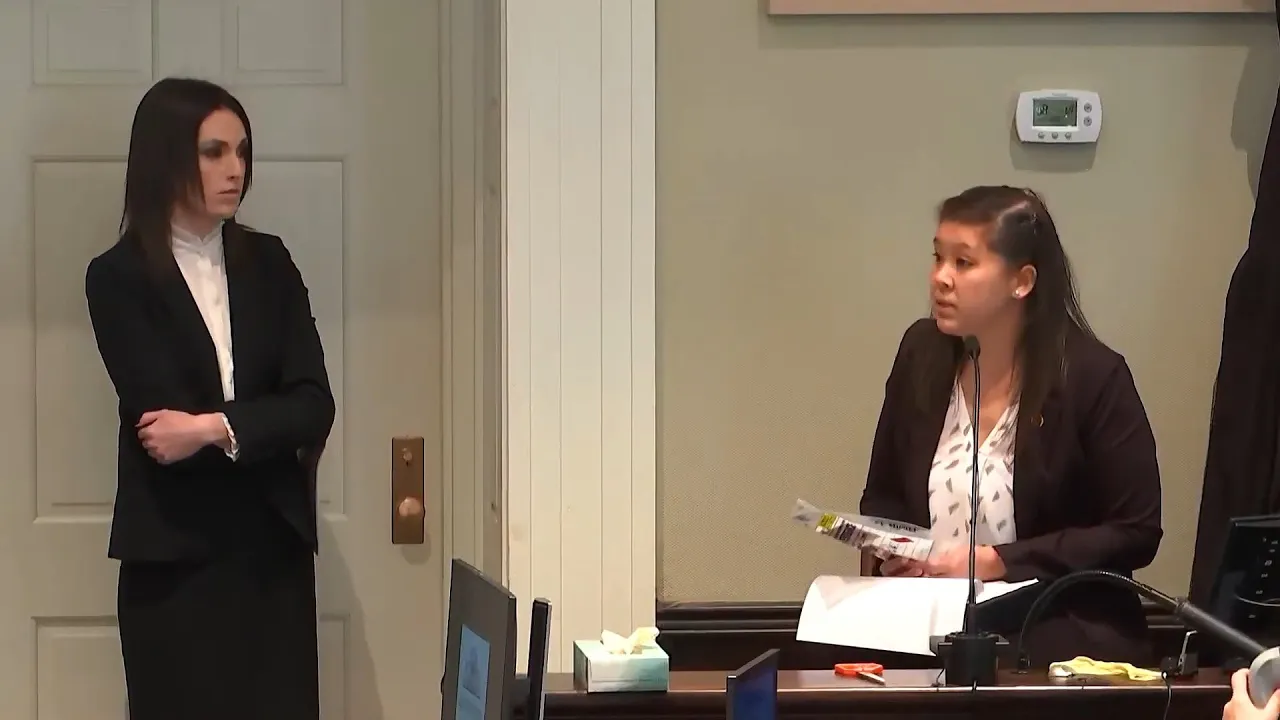
Why this video is valuable: This courtroom testimony offers a real-world look at trace/touch DNA collection on actual physical evidence (e.g., cartridge cases). It discusses specialized recovery techniques, such as liquid-based vacuum collection (M-VAC) and soaking protocols, illustrating how raw trace material is prepared for the chemical lysis phase.

Why this video is valuable: A quick, animated visualization of the magnetic bead-based extraction method. It demonstrates how paramagnetic particles reversibly bind DNA while cellular debris, proteins, and PCR inhibitors are washed away, demonstrating why this chemistry has largely replaced traditional organic extraction in validation-ready forensic pipelines.

Why this video is valuable: Produced by the National Forensic Science Technology Center, this video details why human-specific qPCR quantification is a non-negotiable step in the workflow. It explains the critical target window (0.5 to 2.0 nanograms) required for down-stream multiplex PCR, showing how excessive or insufficient template DNA causes severe interpretation artifacts.
Knowledge Checkpoint
- Explain the three chemical phases of solid-phase magnetic bead DNA extraction: Lysis, Binding, Washing, and Elution.
- Why is total spectrophotometric DNA quantification (e.g., NanoDrop) insufficient for forensic samples, and why must human-specific real-time qPCR be used instead?
- Define the "threshold cycle" () in qPCR and explain its mathematical relationship to the starting concentration of template DNA.
- Describe how trace touch DNA is collected from a non-porous substrate using a double-swab technique versus an active vacuum/filtration setup.
Gap Note: Video resources for specific, step-by-step touch DNA lysis chemistry are limited. Learners are encouraged to independently search peer-reviewed journals for: "Touch DNA extraction forensic protocols: PrepFiler vs. QIAamp DNA Investigator" to review specific digestion buffers and incubation temperatures.
Module 3: Multiplex PCR Amplification for STR Analysis
Once a target quantity of human DNA is isolated and measured, specific STR loci must be amplified. This module covers the core thermodynamic principles of the Polymerase Chain Reaction (PCR) and describes how multiplexing allows the simultaneous amplification of up to 24+ distinct genomic markers in a single reaction tube.
Recommended Videos

Why this video is valuable: An excellent, visually clean breakdown of the three key cyclic phases of PCR: Denaturation (~94-98°C), Annealing (~50-65°C), and Extension (~72°C). Understanding the biological kinetics of polymerase activity and primer binding in this video is vital for diagnosing amplification failures.

Why this video is valuable: This specialized video demonstrates the engineering behind multiplexing STR loci. It shows how primers are designed with distinct fluorescent dyes (such as blue, green, yellow, and red) and non-overlapping fragment size ranges, allowing dozens of independent markers to be read simultaneously in a single capillary run.
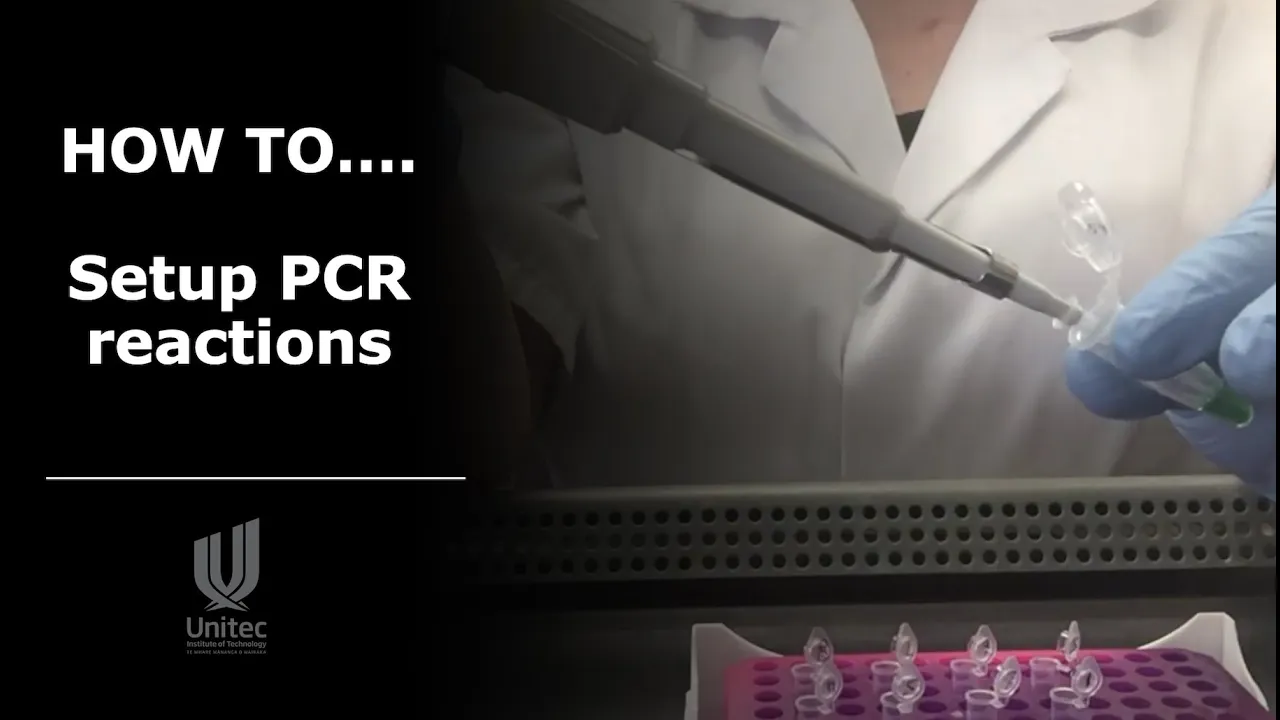
Why this video is valuable: This tutorial covers the practical benchtop rules for setting up a PCR master mix. It outlines volume calculations, the importance of keeping reagents on ice, precise pipette techniques, and standard controls. These basic practices are essential to prevent cross-contamination and ensure repeatable multiplex performance.
Knowledge Checkpoint
- List the standard reaction components of an STR multiplex PCR master mix and define the role of each (Taq polymerase, dNTPs, divalent ions, forward/reverse primers, and bovine serum albumin).
- Detail the exact temperatures and thermal dwell times of a standard forensic STR amplification cycle.
- Explain how two different STR loci of identical fragment size (e.g., both 150-180 base pairs) can be distinguished on a capillary electrophoresis instrument.
- Calculate the correct volumes of Master Mix, Primer Mix, and sterile water needed to prepare a 12-sample plate with a 10% overage buffer.
Module 4: Capillary Electrophoresis & Electropherogram Interpretation
Amplified STR fragments must be separated with single-base-pair resolution to generate an individual's genetic profile. This module covers the physics of Capillary Electrophoresis (CE) and the analytical methods used to read and evaluate the resulting electropherograms—including identifying true alleles and separating them from technical artifacts.
Recommended Videos
Why this video is valuable: This video explains the core physical parameters of capillary electrophoresis detection. It defines "migration time" (how fast DNA fragments move through the capillary under high voltage) and shows how peak area/height corresponds directly to the quantity of the injected DNA fragment.

Why this video is valuable: An excellent diagnostic video that walks you through an electropherogram interface. You will learn how to identify peaks within defined locus panels, compare alleles to an allelic ladder, and read the genotyping software outputs to distinguish major and minor contributors in single-source vs. mixed profiles.

Why this video is valuable: Using a highly publicized real-world case, this news segment highlights the extreme importance of verifying scientific raw data. It illustrates how physical electropherograms and peak-height data act as primary forensic proof, and how their misinterpretation or manipulation can compromise justice.
Knowledge Checkpoint
- Explain the roles of polymer matrix, high-voltage electrodes (15 kV), and laser-induced fluorescence (LIF) in separating and detecting STR fragments during Capillary Electrophoresis.
- Define the purpose of an "allelic ladder" and an "internal size standard" (ISS) in converting migration times to physical base-pair lengths.
- Differentiate between the two major thresholds used in validation-ready software: the analytical threshold (detection limit) and the stochastic threshold (reliable heterozygote balance limit).
- Identify a "stutter peak" and explain the biochemical mechanism (polymerase slippage) that causes it.
Gap Note: Detailed chemical animations of artifacts like pull-up (spectral bleed-through) and split peaks (incomplete adenylation or "-A") are not fully depicted in these videos. Learners should supplement this module by searching Google Scholar or training manuals for: "STR analysis artifacts: troubleshooting pull-up, dye blobs, off-ladder alleles, and split peaks (+A/-A)".
Module 5: Validation-Ready Workflows and SWGDAM Guidelines
To introduce any forensic method or instrument into casework, it must pass a rigorous validation process that stands up to courtroom challenges. This final module integrates international guidelines (SWGDAM), contamination control protocols, cleanroom designs, and internal quality controls (QC) into a standard, validation-ready operation.
Recommended Videos
Why this video is valuable: This update introduces the Scientific Working Group on DNA Analysis Methods (SWGDAM) validation guidelines. It explains how labs validate new instruments, kits, and methods, emphasizing the required balance of developmental and internal validation studies.

Why this video is valuable: This webinar provides deep-dive material for establishing quality assurance in high-throughput workflows. It introduces integrated multiplex quality sensors, showing you how to read electropherograms to distinguish between degraded DNA, chemical PCR inhibition, and total enzymatic failure.

Why this video is valuable: A real forensic scientist testifies about specific contamination control protocols in an accredited laboratory. This cross-examination shows why strict, day-to-day practices—such as using a 10% bleach wash, wearing double-gloving configurations, and maintaining physical separation between extraction and PCR areas—are legally required.

Why this video is valuable: Because touch DNA methods are extremely sensitive, forensic molecular biology relies heavily on cleanroom environments. This professional cleanroom protocol video demonstrates standard gowning orders, positive pressure airlocks, and behavioral rules to control particulate contamination.
Knowledge Checkpoint
- Differentiate between Developmental Validation (conducted by manufacturers/consortiums) and Internal Validation (conducted by the local laboratory prior to casework implementation).
- Define the five parameters required in a validation study for an STR amplification kit: Sensitivity, Species Specificity, Precision/Accuracy, Mixture Studies, and Case-type Samples.
- Draw a layout of a validation-ready forensic laboratory, demonstrating how one-way physical separation between "pre-PCR" (extraction/quant) and "post-PCR" (CE/analysis) areas prevents amplicon carryover.
- Explain how an internal Quality Sensor (QS) peak in an STR multiplex assay helps determine whether an empty profile is due to lack of DNA template vs. the presence of a PCR inhibitor.
Course Map
The diagram below maps out the linear pipeline and critical feedback loops required to operate a validation-ready forensic DNA typing system.
Key People Index
- Kary Mullis (mentioned in Video 11): Nobel Laureate (1993) who developed the Polymerase Chain Reaction (PCR) method, the scientific foundation for modern forensic STR cloning.
- Rachel Nguyen (featured in Video 13): Forensic Scientist at the South Carolina Law Enforcement Division (SLED), whose courtroom testimony provides real-world models for presenting evidence collection and touch DNA filtration protocols.
- Dan Krane (featured in Video 62): Professor of Biological Sciences at Wright State University and forensic DNA expert, who advocates for blind sequential analysis to prevent cognitive bias during profile interpretation.
- CeCe Moore (featured in Video 56/84): Pioneer in investigative genetic genealogy (IGG), who explains the shift from traditional 20-locus STR profiling to massive Single Nucleotide Polymorphism (SNP) array matching in cold cases.
Final Self-Assessment
Complete this comprehensive self-assessment to verify that your workflow is ready for forensic casework validation.
- 1. Sample Integrity Verification: I can draft a standard SOP that preserves chain of custody and prevents contamination during the collection of trace touch DNA from high-touch surfaces.
- 2. Reagent Control Execution: I can formulate and execute a solid-phase magnetic extraction run that includes a reagent blank to monitor background contamination.
- 3. Template Concentration Calculation: I can calculate standard curves from qPCR data (, Efficiency 90-110%) to determine the absolute quantity of human DNA in picograms.
- 4. Target Dilution Mastery: Given a highly concentrated sample, I can perform serial dilutions to deliver exactly 1.0 ng of template DNA into a multiplex PCR reaction.
- 5. Thermocycler Parameter Auditing: I can program and troubleshoot a thermal cycler program to resolve non-specific amplification or primer-dimer bands.
- 6. Internal Standard Verification: I can successfully check that the capillary electrophoresis internal size standard (ISS) matches its designated fragment pattern (e.g., GeneScan 600 LIZ) in every injection.
- 7. Artifact Separation: I can identify and separate true alleles from PCR artifacts (such as minor -4bp stutters, dye blobs, and inter-locus pull-up peaks).
- 8. Threshold Calibration: I can write a software calibration protocol that establishes both analytical thresholds (typically 50-150 RFU) and stochastic thresholds (typically 200-400 RFU) using validation data.
- 9. Contamination Controls: I can implement a lab layout that physically separates pre-PCR and post-PCR rooms, with separate ventilation lines and positive/negative pressure locks.
- 10. SWGDAM Protocol Alignment: I can write a comprehensive validation design study that meets SWGDAM criteria for evaluating a new capillary electrophoresis system.