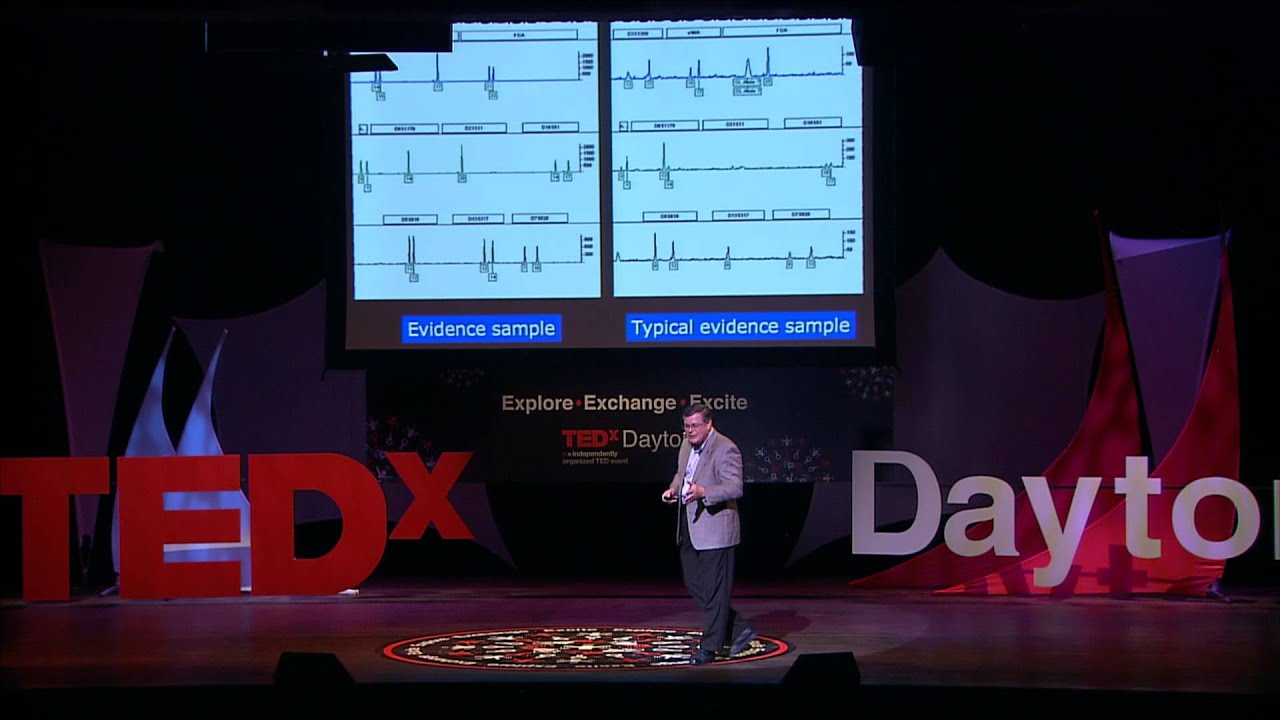

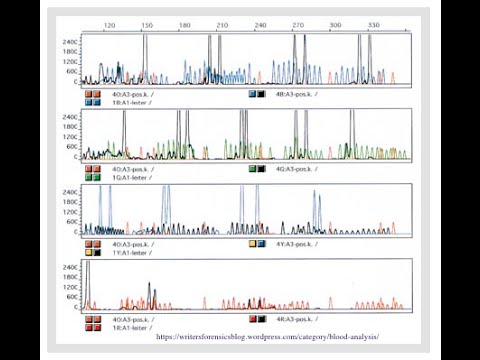
















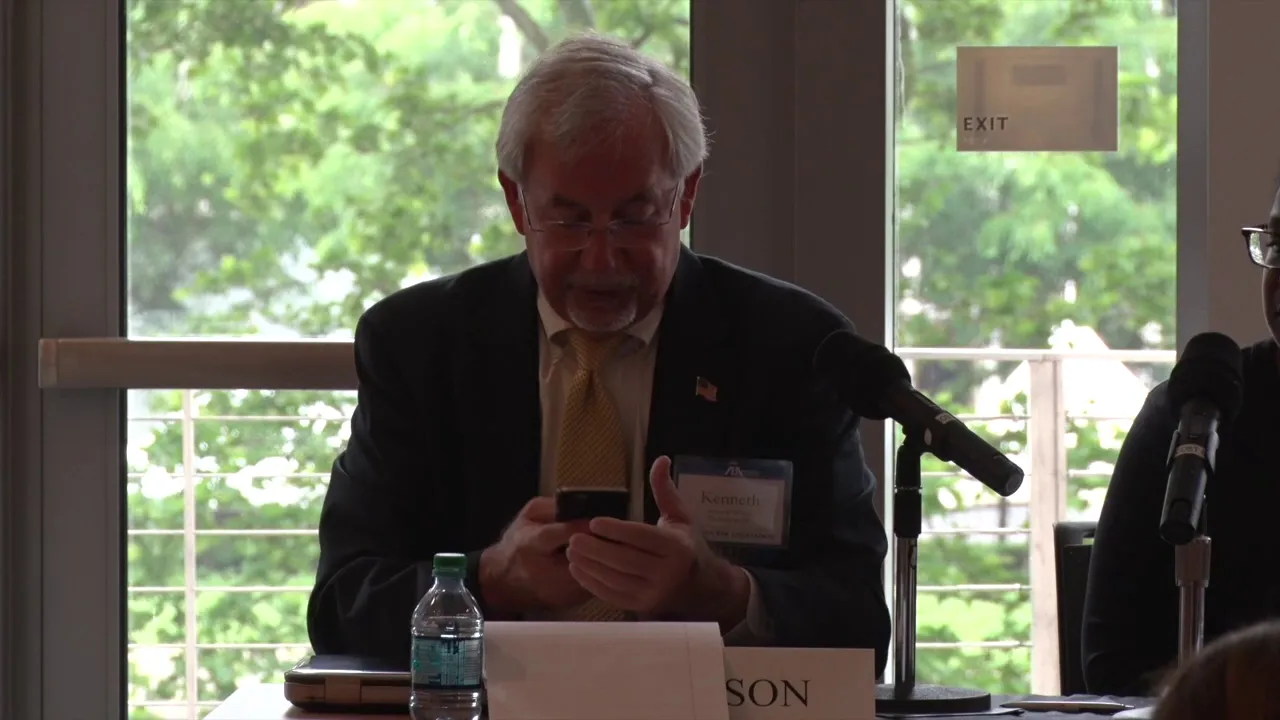
Forensic scientists use presumptive tests (like phenolphthalein, which changes color when reacting with hemoglobin) to initially screen for blood, followed by confirmatory tests (like Hematrace, similar to pregnancy tests) to definitively identify human blood. DNA analysis involves extracting genetic material from evidence samples, quantifying it, and preparing it for further genetic profiling. The process requires careful chain of custody documentation and specialized training to ensure reliable results in criminal investigations.
Murdaugh Trial Forensic Blood & DNA Analysis | SLED Scientist Testimony
Added:Fundamentals of DNA Profiling: Understanding Short Tandem Repeats (STRs), loci, and how unique genetic profiles are generated from biological samples.
Presumptive vs. Confirmatory Testing: The distinction between initial field tests used to detect the potential presence of blood and laboratory tests that confirm its identity.
DNA Mixtures and Contamination: The concepts of low-template DNA, mixture interpretation, and how secondary transfer can complicate forensic evidence.
Chain of Custody and Forensic Protocols: The legal and scientific standards required to collect, preserve, and document evidence to ensure its admissibility in court.
Probabilistic Genotyping: Exploring advanced computational algorithms (such as STRmix) used to resolve complex, multi-person DNA mixtures.
Bloodstain Pattern Analysis (BPA): Studying the physics and geometry of blood splatters, transfers, and voids to reconstruct crime scene events.
Expert Witness Testimony and Legal Intersection: Analyzing the ethical and communication challenges forensic scientists face when presenting complex data to a lay jury.
Forensic Quality Assurance and Error Rates: Investigating laboratory standards, validation studies, and the defense strategies used to challenge SLED or other state forensic lab findings.
420 views10likes1:02:40Original Release: 2025-10-23
that to get it in a position. I mean, we Mr. Barber who's our computer whiz kid um was able to do the Google stuff yesterday um and indicates the other materials the car function. Are the doors locked? Are they unlocked? Is it in gear? Is it not in gear? Um and um the uh information about um other functions of the vehicle. It's just amazing what they capture. I mean, it's scary because um they know everything about how you're operating your vehicle um and speed, where you are, all those sorts of things. We're getting that and our experts are downloading it. We think there's some relevance to those other databases, but we can't I can't represent to you here today that it is or it isn't, but we have seen a couple things. We think they're going to be very helpful to our case. So, all I'd say all I'm I'm attempting to do and and let me make this clear. There's nothing We are not implying in any way the state did anything unourred here. I I want that perfectly clear. Now GM after all the money we gave them to bail them out couldn't get this done. Um that may be another matter altogether and somebody must have been watching the trial cuz between the time the uh FBI agent testified and they got the data was less than two days as I understand it. Um so somebody hit a button and generated that data in in less than 48 hours or 48 hours. So it wasn't hard to access. Um again, not the state had nothing to do with this delay. I just want to raise with the court before they call their timeline expert. We may need some some period of time to get our experts to get it digested and then get back with us.
>> At its core, it's an unexpected witness coming in to the trial. I know there there have been some cross-examination on on that issue in general. Uh so the state has now disclosed the an additional witness and certainly [clears throat] in fairness to the defense you should have an opportunity to adequately prepare u to confront that witness if need be and um I'm sure that witness is down the line uh you know not uh the next witness the state is calling uh since the state indicated that um you expected to be through on Wednesday and that did not include this witness. So, you must have other witnesses and you should that you should be ready to proceed with and uh we'll deal with the other issue as it might come up.
>> And you're looking, >> you know, we're in court from 9:30 to get back to 6:00 or 6:30 to be able to talk to experts. So, we're going to have to talk to them tonight. But again, we're somewhat constrained as [clears throat] to how much discussions we can have and at what time.
>> Thank you. And and your honor, again, we're having to digest it as well, but it's going to be incorporated in our timeline witness who, yes, is not expected to be called, you know, late tomorrow or Wednesday.
>> Anything else before the jury comes?
>> Nothing from state here.
>> Spring the jury.
[clears throat] >> All right. Very good. Good morning.
>> Good morning.
>> Okay. Day number 16. Uh ladies and gentlemen, um you might notice that few of your jurors are missing. Uh those jurors have been excused. Uh I see many of you are masked up, but we um hopefully we do everything we can to uh keep everyone safe, including members of the court. I'm not going to order any wearing of masks by jurors, but encourage it. Um but we have excused two jurors and now have uh we'll have two other jurors who will move up to be among the first 12 jurors.
Um and that means we have two 4 6 8 10 12 still have three extra three alternates remaining. Uh, so juror number 441, who is 441?
All right. Number 40, 441, you're a member of the first 12. And draw number 326.
326, you're a member of the first 12. Of course, it doesn't matter where you sit.
You just need to know that. And uh, with that, we're ready to move forward.
States case. Next witness.
>> Thank you.
>> This tape calls Ryan Kelly.
>> Yes, ma'am. I do.
your name again for the record.
>> Ryan Kelly, K E L L Y.
>> Your honor, for the record, we're calling um Agent Kelly for um limited purposes this morning.
>> Yes, ma'am.
>> Um Agent Kelly, could you please tell the jurors where you work?
>> Uh I'm a special agent with the South Carolina Law Enforcement Division, SLED.
>> And what is your position at SLED?
>> I'm a senior special agent.
And in your position as a senior special agent, um were you involved in the investigation into the deaths of um Paul and Maggie Murdo?
>> Yes, ma'am. I was.
>> I'm going to ask you to take a look at some exhibits here.
This takes exhibit 464.
>> Yeah. Yes, ma'am. That is >> uh these are the buckle swabs of uh Philip Beach, Renee Beach, Robin Beach, and John Murdoch.
>> And tapes 465.
>> These are the buckle swabs of Ronald Freeman.
Let's see.
>> 466.
>> Uh the buckle swab of Michael List.
467 [clears throat] >> the buckle swab of Matthew Loose >> and 468.
>> It's a buckle swab. I'm trying to see.
>> It's a buckle swab of Curtis Smith.
>> And um Agent Kelly, um who collected those buckle swabs?
>> I did.
>> Okay. And how did you collect them?
>> Uh we have a process where we put on um rubber gloves and we uh have uh Q-tips that are sealed. We break the packaging, unseal the Q-tip. We insert one Q-tip into the side of their cheek and we obtain a buckle swab sample. We then remove the Q-tip, seal it in an envelope, seal the envelope. We then take the second Q-tip which is in the packet. We break the seal, insert it into the other cheek where we swab. That Q chip is then secured into a sealed envelope and then the uh the two separate sealed envelopes are then placed into a third envelope where it's sealed and signed an initial on the seal.
>> And you did that with each of these buckle swabs?
>> Yes, ma'am. I did.
>> Your honor, at this time the state would move to admit states exhibits um 464, 465, 466, 467, and 468.
They are admitted.
>> Thank you, honor. We have no further questions for um senior special agent Kelly at this time.
>> Cross examination.
>> No questions.
>> Thank you, sir. Take care.
>> Your next witness, >> Rachel Win.
You'll find yourself.
>> Thank you.
>> If you have to state your name again, please for the record. Spell your last name.
>> Rachel W. N G U Y N.
>> Good morning.
>> Good morning.
>> Um, Agent W, could you please tell the jurors who you work for? I work for the South Carolina Law Enforcement Division, most commonly known as SLED.
>> And how long have you worked at SLED?
>> I've worked at Sled for approximately eight and a half years.
Um, could you pull the microphone a little closer so we can make sure to hear you or speak up a little? Thank you.
Um, and what is your position at SLED?
>> I am a forensic scientist within the DNA casework department at the Sled forensics laboratory. So what does that mean? Tell us a little bit more about your job.
>> Like my job duties.
>> Yes.
>> Um so I am responsible for direct DNA analysis when requested by a DNA analyst. What that is is the beginning portion of the laboratory section component of DNA analysis. Um that involves DNA extraction as well as DNA quantitation. Extraction meaning to separate any possible DNA from a sample such as a swab or a cutting. and quantitation would be to see how much if any is present in a sample. I'm also responsible for P corology analysis as well as evidence processing. Perology analysis is body fluid identification.
At slide, we test for blood, semen, and saliva. Evidence processing would be to process items um for possible touch DNA or ownership DNA. Touch DNA would be to retrieve any possible DNA on an item from handling it. ownership DNA would be um potentially retrieving any DNA from wearing an article of clothing. In addition to those types of analysis, I also issue reports on my findings when appropriate. I am able to technically and administratively review reports by other P corologists and then I provide courtroom testimony when required. Now, you must have some kind of special training and education to be able to do these things. Um can you tell us about that? So I have two bachelors of science degrees from the University of New Haven. One in forensic science and one in biology. Upon being employed within the DNA casework department, I underwent approximately a year-long training program under a core qualified forensic corologist.
During this time, I was able to observe as well as practice the different types of cerological analysis as well as evidence processing. I was also taught how to issue reports based on any findings as well as technically and administratively re review any reports issued by other P corologists. Um I also was able to observe courtroom testimony at the end of my training program. I then underwent a competency testing phase. This phase is to test my knowledge and abilities to perform these types of analysis independently. The competency testing phase was comprised of four elements. a written exam, an oral exam, a mock case to perform analysis on, as well as mock courtroom testimony. Um, once those four components were successfully completed, I was then deemed able to perform independent analysis um on case work. In addition to my P corology and evidence processing training, I also, as I mentioned, am trained in direct DNA analysis that was also an approximately year-long training program under a court qualified DNA analyst. During that time, I was able to observe as well as practice the different types of protocols that are involved. Um, at the end of that training program, once again, I went through a competency testing phase. It was comprised of the same four components and I successfully completed all four components and therefore am also able to perform independent analysis in the area of directity and an analysis.
Ma'am, I'm going to need you to speak into the mic a little better for for my benefit if not for the juror's benefit.
>> Okay. So, um and agent win, have you testified in court before?
>> I have. And how many times have you testified in court?
>> Oh, sorry. This will be my 19th time.
>> And have you been qualified as an expert when you've testified in prior proceedings?
>> I have been qualified as an expert.
>> As an expert in forensic corology? Yes ma'am. Your honor, at this time the state would move to um qualify agent win as a expert in forensic corology.
>> No objection.
>> Uh she is admitted as an expert in the field of forensic corology.
>> Okay. Agent when um you were working in the corology department back in um June of 2021.
>> I was. And did you examine some items from evidence in the investigation of the murders of Paul and Maggie Murdo?
>> I did.
>> I'm going to show you states exhibit 63 to 66.
I'll have you take a look at these items for us.
Are those items that you examined? Yes, they are. I can identify these items because on the um small Manila envelopes contained within I have written the unique case number that was assigned to this case at SLED as well as each of their uh item numbers, my initials, and the date I opened the packaging. Okay.
And each of those items is a 300 blackout case.
Yes. Okay. Now, what did you do with those items? Um, so when cartridge casings are submitted for uh touch DNA, which is what these were submitted for, we uh process them with a soaking method. [clears throat] So each cartridge case is placed within a tube, submerged within a solution, lightly shaken, and then have it has to sit with for at least 30 minutes. Um once that 30 minutes is up, each individual cartridge case will then be removed from its tube. The solution will be placed with uh poured into a filtration unit. The cartridge case will be dried. It will be labeled with the individual item number and then placed on a rack to further dry thoroughly. Um the solution that is placed within this filtration unit, um the filtration unit looks like an hourglass. So there's a chamber on the top and a chamber on the bottom and it's separated by a filter.
So the liquid that is being poured in the top chamber will filter through the center which has a uh a filter which we call an MVAC collection. Um the goal is that if there's any DNA present within these cartridge casings it will be trapped within the filter and then the water goes to the bottom. Um I'm sorry the solution um and then the filter is set out for to dry for at least 24 hours. Once the filter is dried, it is then um cut uh prepared for analysis. So it is cut in half, placed in a tube, labeled with the case number, the item number, and then it is forwarded for further analysis. The and that collection from these items was identified as sled item 7.1.
I'm going to show you um 459. if you could tell us is that what you collected from those cases there?
Yes. So, with in here is, as I mentioned, sled item 7.1. Um, once again, I recognize this because it has the unique case number, the container number, um, my name and date on the outside, as well as my name and date and a seal at the top.
And um what did you say you did? Um when you collected the I guess this and so once the MVAC collection or the filter is dried, I will cut it in half and then half again. So each quarter will be placed within a tube for DNA analysis. It's labeled with a unique case number, the item number, and it is forwarded for further analysis.
>> So you forwarded that to the to DNA for more analysis.
>> That is correct.
at this time this tape would move 459 into evidence >> it.
>> All right, I'm going to show you tape um 33 and 34 which are fired shot shells.
Did you perform any kind of testing on those two items?
Yes. So, states 33 and states 34 are um consistent with sled item number 9 and 10 which were fired shot shells. Um these were also submitted to the laboratory for touch processing. Um these shot shells were swabbed for the touch collection. Um so basically I take two swabs, sterile swabs and moisten one with the ionized water and then I will rub it against the exterior of both of them and then leave them out to dry.
Once the swabs are dried, I will then prepare them for DNA analysis, which involves just cutting a small portion from each swab, placing it within a tube, labeling it with the case number, the item number, and forwarding it for further analysis. Um, for this, uh, these swabs from the entire exterior of these two items were identified as item 10.1.
And I believe item 10.1 is also in states exhibit 459 admitted.
You can open that if you need to.
Yes, this also contains item 10.1 >> which were the swabs from um these shop shells here.
>> That is correct.
>> And then what did you do with those swabs once they were collected?
>> So they were prepared for DNA DNA analysis and forwarded to the DNA section for further analysis.
I'm going to hand you um what's been marked as P exhibit 18, which I believe is your item 17.
Um yes. So I recognize this um from the same process. It um I have my the unique case number, the item number, my initials and the date I opened um item 17 which is dates exhibit 18. I also have my initials and date from when I sealed this pouch. And now what is the adot?
>> Item seven sled sleds item 17 are swabs collected from exterior doorork knob of storage room door. And what did you do with that item?
>> Um, so I prepared these swabs for DNA analysis. Um, once again, I just cut a small portion from the swabs and board it for further analysis.
>> Stage 259.
States 259 I do recognize for the same reason. Um I have the written the case number, the item numbers, my initials, and the date that I open these items. Um found within states 259 are items 15 and 60.
Item 15 are swabs from Camel Benelli 12 gauge shotgun receiver forward of the loading port and swabs um identified as item 16 are swabs collected from barrel of camo Benelli 12 gauge shotgun. Now did you do any testing of those swabs?
>> Yes. Um items 15 and 16 had blood requests on them. So these were tested with our presumptive blood test. A presumptive test only indicates the possible presence of a body fluid. Um, and how I did that is because since these are swabs, I took a serial swab, moistened it with deionized water, then rubbed it gently upon the swabs that are identified as these items. I then tested that test swab for the possible presence of blood.
>> Closer.
>> This is a personal conversation.
>> I'm sorry. um you know the the prosecutor is behind you and you're looking at her and Mike is in front of you and [snorts] um so listen I attorney general if perhaps if you would move in a different direction the witness will speak in a different direction and I can understand what she's saying uh or she can speak louder >> or speak into the mic rather than speaking to you >> if you could um please continue explaining what the item is, please.
>> Uh yes. So, I tested these presumptively for the presence of flood. Um so, item 15, which were the swabs from the receiver forward of the loading port of the Camo Benelli 12- gauge shotgun tested positive for the possible presence of blood. Item 16, swabs collected from barrel of camo Benelli 12 gauge shotgun tested negative for the possible presence of blood. Both sets of swabs were forwarded to the DNA section for further analysis. Okay, so at this point we don't know, we just know there's blood.
There's the possible presence of blood on item 15.
>> Objecting to lead.
>> Pardon?
>> Objecting to a leading question.
>> All right. Uh please do not leave the witness and restate the question.
And what did you say was present or presumptively present on those items?
>> So item 15 was positive for the possible presence of blood. Item 16 was negative for the possible presence of blood.
>> And what did you do after you made those determinations?
>> So both of these sets of swabs were prepared for DNA analysis and forwarded to the DNA section for further testing.
I'm going to hand juice exhibit 398.
If you will take a look at those two items and um tell the jury what those are.
states exhibit 398 are sled items 22.4 4 and 22.5, which corresponds to item 22.5 is described as reddish brown debris swabbed from the right side of item 22 receiver. And 22.5 is described as reddish brown debris swabbed from the left side of the item 22 receiver above manufacturer information.
>> And what did you do with those items?
These items also had a blood request. So the same process as the previous items I just mentioned, I took a sterile swab, moistened it with dei deionized water, swab these swabs, and then with that test swab is what I tested for the presumptive blood test.
Could you please explain any results?
>> So both items 22.4 4 and 22.5 tested positive for the possible presence of blood.
>> And then what did you do with those items once you did the blood test?
>> These two sets of swabs were then prepared for DNA analysis and forwarded to the DNA section for further testing.
Now, there was a number of um guns in this case that were processed.
Is that right?
>> Um I believe so.
>> Okay.
>> Um could you tell us about the um testing you did on states exhibit 89, your item 30, the Mossberg shotgun?
So when items of evidence are submitted to the sled laboratory, sometimes they have multiple requests of different departments. In this case, item 30, a Mossberg uh shotgun um had three requests for the Leight and Prince department, for the DNA department, as well as the firearms department. So we try to organize it so that no department's analysis conflicts with another department. In this case, this item was forwarded or was sent to the laten prints department for processing. The latent prints examiners are trained in collection for touch DNA as well as swabbing up any stains that they may notice. Um, so item 30 had a blood request on it. The late imprint examiner, which um took this item into their custody, requested that I come down as a second pair of eyes to visually examine this item for any possible staining. Uh we located one stain which I tested for the possible presence of blood and the result was negative.
>> And after that did you are you aware of any further processing on that Mosberg shotgun?
>> I am not. So I was there with the examiner and it remained within that examiner's custody the entire time.
>> All right, let's move on to the other shotguns. Um, we have a Browning shotgun, a Benelli Black Eagle 2 12 gauge shotgun, and um the rifle in addition to the guns we've already talked about. Can you kind of sum up um how you analyze those three different guns? So, those three different guns that you just mentioned were items 31, 32, and 33. They were done in the same manner as item 30 as I just mentioned.
So they were within the custody of the late and imprint examiner. I went down to visualize it for any possible staining. The result for these three guns, however, was no apparent blood stains present.
>> And did you do anything else to check for blood at that point?
>> I did nothing further with these items.
>> I'm going to show you states exhibit 83.
if you could take a look and tell us um what items are contained in exhibit 83.
>> May I open this?
>> Yes.
Seats. Exhibit 83 contains slide item 51.
>> Agent W. You don't have to go through the split item number >> through 60.
>> Yes.
>> And those items are what though?
>> They are all swabs that were taken from the Chevy Suburban.
>> And can you tell us um what kind of testing was done on those swabs?
So, it appears that these swabs were collected because they were blue star positive, which to my understanding is a presumptive test used by the crime scene unit to indicate areas of possible blood staining. Um, since they were already presumptively tested, I used a confirmatory test to test these swabs for the presence of blood. So sled items 51 through 55 [clears throat] and 57 through 60 were all negative with that testing which means um there is no human blood identified. Item 56 which was swabs collected from steering wheel had a positive result which means blood was identified on this item. And what kind of testing did you do to confirm that blood?
I use a confirmatory test called hematrace. And how does he trace work?
So hematrace is a card test. Um it's similar to a pregnancy test or or more relevant a COVID test. Um you take a sample from the item of evidence, place it in a solution and it should sit there um for a while and then once it has mixed in with the solution, the solution will then be placed on this card test and then a result will be revealed. Um results are read um after 10 minutes.
>> And what are the potential results from that test >> just in general from a human trace testing?
>> Uh there's a positive result or a negative result. Okay. And in this case, what was the result on the steering wheel swab?
>> On the steering wheel swab, it was positive, which is a result of um blood identified.
>> And um then what did you do with that swab once you completed your test?
>> So item 56 was then prepared for DNA analysis and forwarded to the DNA section for further analysis.
Okay. I'm going to next show you items takes exhibit, excuse me, 251 and 252.
Those remarks for identification only.
Okay. Can you tell us what are those items? Um, so states exhibit 251 corresponds to the left fingernail clippings and right fingernail clippings of Margaret Murdoch. states exhibit 252 corresponds to the left fingernail clippings and right fingernail clippings of Paul Murdo.
So on states 251 the fingernail clippings from Margaret Murdo. What if anything did you do to those items?
>> Um so states exhibit 251 um once received is clipping from her fingernails. So I will take a portion of the clippings that have been submitted, place it within a tube and forward it to the DNA section for further analysis.
>> Okay. And when you say a portion of the clippings, does that mean you clip some more and send to DNA or what does that mean?
>> So the literal fingernail clippings are what's being submitted within the envelope? So say there's five clippings.
I will forward approximately two to three of what's been submitted, place it within the tube, and that's what will be forwarded for analysis.
And did you do the same process with um states exhibit 252, the fingernail clippings from Paul Murdoch?
>> Yes. State exhibit 252 will receive the same preparation for DNA analysis. Your honor, at this time, this state would move exhibits 251 and 252 into evidence.
>> They're admitted.
>> All right, Agent W. Next, if you could tell us a little about states exhibit 418, which was um Alec Murdal's shirt.
Um could you describe how um you first processed the shirt when it was initially received by the lab?
So, the white shirt from Richard Murdo was submitted with a blood request um on June 9th of 2021.
I process this item for the possible presence of blood. So that entails I first visually examined the shirt for any areas that are consistent with the staining of blood. Then I tested these items that I have indicated um for the with our phenylthalene uh presumptive test for blood. Two stains were indicated are were tested.
Um both stains were positive for the possible presence of blood. One stain located at the exterior front bottom edge of white shirt was forwarded to the DNA section for further analysis.
Uh um afterward >> and I'm going to hand you um page 460.
Okay. Now, you just said that that stain was processed and sent to DNA. Um, how did you process that? Did you say the whole shirt or how did that work?
>> So, the stain that I had located, I cut that stain from the shirt. I then prepared it for DNA analysis, which means I cut a small portion of that stain, placed it within the tube, labeled that tube, and forwarded the cutting as well as the portion that I have prepared um to the DNA section for further analysis. And that cutting is contained in states um 460. Is that correct?
>> That cutting is contained in states 460.
>> And what date did you perform that initial analysis?
>> On June 9th of 2021.
>> And I think you mentioned there was another stain also located on the shirt at that time.
>> Yes. Two stains were presumptively tested.
>> Was that second stain cut on Junior?
>> Uh it was not. It remained in the shirt and was identified with the presumptive test result.
>> Now, due to ongoing investigation, um, did you come back and examine that shirt again?
>> Yes. So, afterwards, a request was relayed to me to go back to the shirt and retrieve that stain and hoard it for DNA analysis.
>> Did you do any other testing this second time around?
So when I went to remove that second stain, I met with members of the crime scene unit, Lieutenant Wallace as well as special agent Worley, and they process the shirt with their LCV testing, which to my understanding is their presumptive test for blood >> and um what was discovered during the LCV testing? So after removing the second stain from the June 9th date that I processed it, 10 additional stains were identified from the LCV processing which were cut from the shirt and prepared for DNA analysis and forwarded for further testing.
>> And I will show you states 461.
Yes. So all the cutings from the shirt are here.
Okay.
Now as far as you're concerned, did you process the shirt any further?
>> No. Besides preparing these additional stains that were identified, um nothing further was done. And what did you do with this cut?
>> Um, I cut a small portion from each of the stains that was indicated as being positive and forwarded it to the DNA section for further analysis.
All right. In case exhibit 418 is the defendant shorts um how were those um shorts processed in comparison to the shirts?
>> So the shorts also were uh submitted with a blood request. They were processed in a similar manner. Um, several stains were tested. However, two were positive for the possible presence of blood. Um, a stain located at the front left interior pocket of the pair of green shorts was forwarded for further analysis. Um, this was processed on the same June 9th day of 2021. The shorts were also additionally processed at the same time the shirt was additionally processed um to retrieve a second stain that was uh indicated as the possible presence of blood. And then the same members of the crime scene unit also process the shirt with their LCV testing.
>> And I believe you still have um item or excuse me, exhibit 460 up there. Um does that contain the first cutting from the pair of pants on June 8th?
>> Yes. These exhibit 460 contains the first cutting from the pair of shorts from June 8th or 9th, I'm sorry. And then um states exhibit 461 um what cutting that contains cutting from the pants um at on July 21st. Is that right?
Yes. So um seats exhibit 461 does contain the additional cutting. So, the second stain that had tested positive on the June 9th uh processing date, as well as six additional stains were indicated from the crime scene unit when they processed the pair of shorts with their LCV testing.
>> And then what did you do with those cutings um once you took them?
>> The cutings for the shorts were prepared for DNA DNA analysis. Um once again, cutting a small portion of the stain and it for further analysis.
>> And I'm going to say page 473.
You can take a look at that.
Do you recognize that as what do you recognize that as? So this appears to be a photo of item two or 20.2 which is the cutting from front marked interior pocket of pair of green shorts from Richard Murdoch.
>> Mor at this time I would move states 473 into evidence.
>> No submitted.
>> Mr. >> [clears throat] >> Okay. And um Agent W, if you could describe to the jurors what they're looking at in that picture.
>> So this is the stand that was tested.
Um, and as you can see, I have labeled it with the sled item number both on the physical item as well as it's contained within a manila envelope which has the unique case number, item number, um, that it the request was for blood, the location it was taken from, as well as that it's a cutting. Um, in addition, you can see my initials and date um, from when I prepared this for DNA analysis.
>> Okay. And again, um, sorry, what were the um, presumptive results of the testing for blood? So the presumptive results for the stain were that it was positive for the possible presence of blood.
And um we talked a little bit about the cutings of the shirt and the shorts just to kind of aid the jewelry in seeing what you actually did. I'm going to show you states 471 and 472.
Do you recognize those pictures?
>> I do recognize these pictures. Um they are from the additional processing that occurred on the shirt.
>> Your honor, at this time, this tape would move um 471 and 472 in evidence.
>> They're admitted.
on page 472.
Could you just kind of describe to the jurors um what they're looking at here and point their attention to the areas in the shirt that you cut? Um you can see so if you look in the square labeled E7 um there is a stain that's circled. It has the item number 19.3 as well as a plus theme. That was the second stain that I had tested on the original processing date that was to be retrieved during this time of processing. Um, then you can see there are additional stains circled in blue with letter identifiers.
Those were areas of staining that was identified from the crime scene unit when they processed with their LCV test.
Um, each stain has the sub item twice.
that is to um one is to stay with the stain once I've cut it and then one is to stay within the shirt. So in the event that you needed to know where that stain had originated, you could locate it.
And then states exhibit 471.
States exhibit 471 is the front of the shirt. Um it has several areas of staining that were circled as a result of the LCV processing by the crime scene unit.
And those are also areas that you put on the side.
>> Yes. So once again, I have written the sub item numbers that they were assigned and then removed each of these stainings along the line that I've outlined um and prepared these stains for further analysis for DNA.
>> And you said you followed the same process regarding the pants.
>> That is correct.
All right, let's move on to state exhibit 419, which was um the shoes of the defendant.
>> Can you tell us um what you did with the shoes? So, the shoes, which are um described as a pair of red, yellow, and white tennis shoes from Richard Murdoch, they had the same blood request. So, I visually examined the shoes for any areas of possible blood staining and then tested those stainings. Um, two were indicated as being possibly positive for the possible presence of blood. Um, one was one stain was reported for DNA analysis and it was located on the left shoelace of the pair of red, yellow, and white tennis shoes.
>> And are those cutings um in States exhibit 460 that you already have up there with you?
>> Yes, the cutting from the shoes is contained within states exhibit 460.
Your honor, at this time, this statement moves tates 460 and 461 into evidence.
No objection. Go a minute.
>> All right, Agent W, we're making some good progress here.
Um, state exhibit 226 was a blue raincoat.
Can you explain to the jurors what you did to process that eye?
>> So, the blue raincoat also had two types of processing. During the first time of processing, which occurred on October 7th of 2021, the raincoat was processed for the possible presence of blood. This was done by myself as well as members of the crime scene unit, Lieutenant Wallace, as well as Special Agent Moore.
I first performed um presumptive testing with our blood tests and then the crime scene unit went behind and then processed with the raincoat with their LCV testing. I tested 71 stains. All 71 stains were negative for the possible presence of blood. Uh after that the LCV processing took place. No areas of interest were indicated um as interpreted by the crime scene unit as being positive and therefore on October 7th of 2021 nothing was forwarded for DNA analysis.
and probably was nothing forwarded simply um there were no stains that indicated the possible presence of flood.
>> All right. Um then did you go back and re-examine the raincoat?
>> Yes. An additional request came in for the raincoat um for ownership once again. Ownership is a collection method for DNA um to identify the primary wearer of an item.
>> Okay. And how did you process that for ownership? Two sets of swabs were taken off the raincoat. The first set of swabs was identified as item 173.2, which were swabs from interior cuffs, collar, and hood, interior, and exterior zipper area, zipper, and zipper pull of the blue raincoat. The second set of swabs that were taken from the raincoat were identified as item 173.3.
swabs from side openings, zipper area, and both interior portions of exterior pocket of the blue raincoat. In addition, >> excuse me, I'll hand you states 462.
And what are those? Are those the swabs you were just talk telling us about? The >> states exhibit 462 are both sets of swabs that I just recently spoke about from collecting from the rain cove.
Okay. And what did you do with those swabs?
>> These swabs were prepared for DNA analysis and forwarded to the DNA section for further analysis.
>> This time the state would move to admit states exhibit 462.
>> No judgment.
>> Yeah, it's admitted. And um agent when when you were um examining the raincoat did for ownership, did you find anything on that raincoat to help with that analysis such as um hair or anything like that?
>> So part of the ownership processing is to look for hair. The raincoat there was no hair found.
>> Did you also notice anything about the condition of the raincoat?
>> Yes. So um on my evidence worksheet which is where we document the items that we perform processing on as well as the respective results I also document any describing factors. So on this worksheet in regards to the blue brain coat I do have that the plastic seam liner was coming off throughout the item >> that the what did you say?
>> I called it a plastic seam liner >> was coming off I can't hear you. coming off throughout the item.
>> Thank you.
>> All right. Also, in this case, did you receive a number of buckle swabs?
>> I did.
>> And that is um what did you do with those um buckle swabs when you received them?
>> Um so, buckle swabs don't require any testing on my part. I just prepare those buckle swabs for DNA analysis. Once again, cutting a small portion off of each swab, placing it within a tube, and forwarding it for further analysis.
>> All right, Agent W. Um, this Tate has no further questions at this time. If you'll please answer any questions from the defense.
>> Mr. Barbara, >> good morning. Uh, excuse [clears throat] me. Good morning, Agent W.
>> Good morning.
>> Is it Is it agent? Am I right?
>> Oh.
Um very briefly um at the outset you discussed um collecting for DN uh DNA testing for the blackout cartridges. Is that correct?
>> Um collecting for the possible presence of touch DNA. Yes.
>> Yes. And did you only test two of those cartridges?
>> All seven were processed using the soaking method.
>> Okay.
Um, with that processing method, any results that you would receive, would they be specific to any one cartridge or would it just be for the collection of all seven?
>> I'm I'm sorry. Can you repeat that?
>> Would you have results for DNA from the way that you collected the sample for a specific shell case or would it be for all seven as a set?
>> Okay. Um, I just want to clarify. I did say there were seven cartridges. There were only six. Um, so although they are being individually soaked, they are being combined within that filtration unit. So the results would be from all of the cartridges together.
>> Okay.
>> And um, you did you had positive presumptive tests for two shotguns, correct? Portions of two shotguns.
>> Do you have a item number that corresponds I can get those in a second. Do you remember there are two shotguns you just notified for something like that?
>> One was sled item number 15.
>> Yes. So, the swabs from the Benali shotgun, item 15, was positive for the possible presence of blood. However, I believe you mean the um second set of swabs, item 16, that was negative.
>> And then there was later a item sled item 22.
>> Oh, yes. The two sets of swabs from sled item 22 were both positive for the possible presence of blood.
So I guess what exactly is a presumptive test?
>> So a presumptive test is indicating the possible presence of a body fluid in this case blood. It's not confirming the presence. It's just um an indication so that we can further test that stain >> and how does it indicate the possible presence of blood? So the phenotheline test interacts with the hemoglobin found within blood. Um and that's what it's basically giving a positive result with.
>> Is it fair to say that it changes color?
It's like a dye and it changes color.
>> So it's a color change test based on the presence of the hemoglobin. A swab that's being tested will turn a bright pink color.
>> And are is that presumptive test specific to human blood?
>> It is not specifically human blood. It can be human blood or animal blood. uh could chemicals other than blood cause a positive test result.
>> So the phenylene test has what we call false false positives which can give a positive result but is not blood. Um those include copper salts, [ __ ] salts, nickel salts, rusts as well as some plant and um perox peroxidases which include broccoli, cauliflower, horseradish. It also can give a positive result for pus and sometimes in the presence of bacteria.
>> Okay. So, so there are a number of things that could give a positive result. Is that why you also have a confirmatory test?
>> Um, if we test something for the possible presence of blood, we don't typically do a confirmatory test unless it's requested. We just store that sample for DNA analysis.
>> Uh, who would request a confirmatory test?
>> Um, usually an investigator of an agency may request it. Sometimes, uh, solicitors or defense attorneys may request an additional test.
>> And the confirmatory test, I think you you testified, is just basically like a COVID test.
>> It works similar to a COVID test.
>> Two lines means human blood.
>> Um, it'll have a a line to indicate that the test is working properly, which is a control line. And then if it is positive, it will have an additional second line. If that second line does not show, that means that the test is negative.
>> Is it an accurate test? I would say that it's an accurate test as long as the control line is present.
>> Um, it's more accurate than the presumptive test. That's why you use it.
Correct.
>> So, the confirmatory test is saying that yes, blood is identified on the item that's being tested.
>> Human blood.
>> Um, human blood as well as higher primary blood and throat blood.
>> And you did not do any confirmatory tests on the shotguns? I did not do any confirmatory tests on the shotgun swabs >> and that was simply because no one asked you to. Correct.
>> Um the in effort to not consume any of the sample on the swabs as a swab is a a small area um we just forward it for DNA analysis.
But in the the uh the Chevy Suburban, you did perform a hematrace test.
>> Yes. Um because that these swabs for the Chevy Suburban were already previously processed with another presumptive test by the crime scene unit, we could not presumptive test behind because our two tests work in a similar manner.
>> Um whose decision was it to do the hematrace test on the Chevy Suburban?
>> That is typically how we process items of evidence that we receive from the crime scene unit in the form of swabs based on any of their presumptive testing. But that but like who made the decision to do the hematrace test on that steering wheel?
The a name of a person.
>> I perform the hematrace test >> on your own initiative.
>> No, that is a common way we do testing on swabs that have already been collected based on a presumptive test.
>> Did someone instruct you to perform a hematrace test on the steering wheel?
>> No, it is part of our general operating procedures.
>> But you did not perform hematrace tests on the weapons.
the the swabs that were collected off of the weapons. No, because they were not presumptively testing prior. So, I could use our presumptive test on those items.
>> Did you perform or prepare any samples um from the victim's clothing or bodies other than the fingernail clippings that you discussed?
>> Um I do not believe so.
>> Okay. So the only thing from the body of of Maggie Murdoch or Paul Murdoch that you tested were the fingernail clippings from Maggie Murdoch.
>> So I prepared the fingernail clippings for DNA analysis as well as the buckle swabs from those individuals.
>> Right. But but nothing else from from their bodies. Correct.
>> No, I did not test their clothing.
>> Their clothing or their clothing. Sorry.
>> I did not test their clothing.
When looking at the um the t-shirt that you just testified about uh and those cutings I think you have in a opened a bag and the cutings were there and you prepared them. Did you perform any corology tests on those cutings?
>> No, I just removed those cutings from the shirt as the result of the crime scene testing.
>> Um are you aware of any corology tests being performed on those cutings >> of of the shirt?
>> Yes, of those big shirt cutings. I believe there was further analysis performed on those cutings.
>> Um, did somebody other than you later perform corology tests on those cutings to your knowledge?
>> It is my understanding that there was additional testing on those cutings.
>> P corology testing.
>> P corology testing >> specifically hematrace.
>> I believe there was hematrace uh performed on the cutings from the shirt.
>> But that just to be clear that wasn't performed by you. I did not perform hematrace on any of the cutings on the shirt.
>> Did you perform any hematrace tests on the shorts or tennis shoes?
>> I did not perform any hematrace testing on the shorts or the shoes.
>> Um just I guess maybe a little bit of background to understand maybe who does what. Um when you're working on this case, um do you have like a direct supervisor?
>> I do have a direct supervisor. And who is that person?
>> Her name is Laura Hash.
>> And is she the person who directs your activities as regard to this case?
>> Objection. Your honor, relevance.
>> Objections overruled.
>> I'm sorry, what was the question?
>> Uh, is Lieutenant Laura Hash the person who would direct your activities with regards to this case?
>> So, based on our operating manual as well as my training experience, based on the requests of certain items that are submitted, I will decide how those are tested. However, if additional processing is requested, those usually are communicated to me through my direct supervisor.
>> And just just for clarity, we've talked a bit about DNA, but you're just preparing samples and they go to someone else who does the analysis and reports. That's not you, correct?
>> That's correct. I am just preparing the samples for further analysis.
Is the only hematrace test that you did for this case the steering wheel? Well, strike that. The the Chevy Suburban, I believe there may have been some negative tests from the Suburban, but were those the only hematrace test you did for this case?
>> No, I did hemat hematrace the swabs from the Chevy Suburban. I also hematrace tested swabs collected from a Ford F250.
And what were the results of from the uh Ford F250?
>> Um, there were four swabs submitted from the Ford F250 and the results for all four of those sets of swabs were negative for human blood.
>> So, the steering wheel was the only positive test that you did for hematrace. Yes, the steering wheel from the Chevy Suburban is the only positive human trace result I have.
>> Just make one final question or a little set of questions.
It seems like sometimes the crime scene people uh or department I shouldn't just say people, but I guess our department do presumptive blood tests. Um is that correct?
>> Yes, it's my understanding that the crime scene unit does perform presumptive blood tests. And I the words the initials LCD have been used. I think you may have mentioned. What does that mean?
>> It stands for uh lucal lucco crystalline violet.
>> And can you describe that test?
>> Um I don't know much about the test. I just know that it is a test that the crime scene unit uses um for as their presumptive blood test.
>> Do you know what color it turns when there's a positive result?
>> Um it'll turn a purple color.
Um, so with I think the Let me ask this. Why we we saw a picture of the shirt gritted out? You remember that exhibit?
>> I do.
>> Why was the presumptive test done?
Presum was at the slab laboratory. Is that the location that was >> Are you asking about the LCD processing?
>> Yes. Where was that test conducted?
>> That was done at the sled laboratory.
>> Why was that done by the the crime scene unit and not the corology unit?
>> We do not use LCV testing and I am unsure as to why that particular test was chosen to be used by the crime scene unit >> because in the earlier you did test on the hem, right? The the feno tests on the front and back hem of the shirt. Is that correct?
>> I did. But then the crime scene unit later came back and in the lab did a different kind of test.
>> That is correct.
>> And you don't know why?
>> I was not part of that decision. I was just notified that they would be performing that test while I was retrieving the additional stain that I had tested earlier.
>> And finally, it seems like if something is tested presumptive in the field and comes to you, you do a confirmatory test. Is that what happened with the Chevy Suburban?
>> Yes, that's correct.
>> But if something comes to you and there's not been a presumptive test like with the shotguns, then you don't perform a confirmatory test.
>> No, I do the presumptive test.
>> Um, do you know why that's the policy?
>> It's an effort to not consume as much sample on a swab. A swab is very, it's like a a sterile Q-tip. So, essentially the surface area is very small. So in efforts to not consume the sample and to give more for DNA analysis, that's what's done.
>> If something goes to DNA analysis and and there's some result, does it ever come back for a blood test to see if the source of the DNA was blood?
>> Um to be fine tested?
>> No, for hematrace test.
>> Um as I mentioned, hematrace testing can be requested on the back end as any of our um car tests can be.
>> In your experience, I think we had some testament about your experience. If DNA is found on something, is there ever then a time that you go back and say, "Hey, was the source of this DNA blood?"
And do a hematrace test?
>> Um, hematrace specifically, to my knowledge, no. But in my experience, there have been times that solicitors or defense attorneys will request a car test be done on a sample after the DNA analysis has been performed.
>> Any redirect? None from this tape, your honor.
>> Thank you. You may step down.
Up Next
11:00
Setting Up PCR Reactions | GoTaq PCR Protocol Tutorial
@unitecEAS-biodiversity
1.1K views•2020-09-26

12:54
Triumph of Orthodoxy Icon: Byzantine Art & History Explained
@BenCallan
2.1K views•2024-08-06

9:49
FastAPI vs Flask vs Django: Choosing the Right Python Web Framework
@TechWithTim
302.5K views•2024-05-26

1:42
Game of Thrones Opening Credits: A Cinematic Analysis
@gameofthrones
46.3M views•2011-04-18
Related Study Plans & Knowledge Roadmaps
Structured learning paths in General & Interdisciplinary Studies
general-studies
Elevator Engineering: History, Physics & Cities
01From Hoists to Safety Brakes: The Dawn of Vertical Lift
02Hydraulic vs. Traction: The Engineering Physics of Elevators
03Modern Speed, Safety, and Algorithms
+ 2 more learning modules
12h5 modules
Explore Roadmap
general-studies
Rubber: Material Science, History & Geopolitics
01Origins of Natural Rubber & Mesoamerican History
02The Chemistry of Natural Rubber & Vulcanization
03The Geopolitics of the Rubber Boom & Colonization
+ 2 more learning modules
12h5 modules
Explore Roadmap
general-studies
Containerization: Evolution, Logistics & Trade
01Ancient Trade & Bulk Cargo: Amphorae to Barrels
02The Industrial Revolution & Cardboard Packaging
03The Containerization Revolution: Malcom McLean
+ 2 more learning modules
12h5 modules
Explore Roadmap
general-studies
Textile Tech: Evolution, Labor & Global Impact
01Pre-Industrial Textiles: Handloom & Cottage Industry
02Mechanization: The Spinning Jenny to the Power Loom
03The Factory System & Global Labor Transformation
+ 2 more learning modules
10h5 modules
Explore Roadmap