Scientists have discovered that playing recordings of healthy coral reef sounds to degraded reefs can significantly increase coral larval settlement rates, with larvae being up to seven times more likely to settle at degraded reefs where they hear healthy ecosystem sounds, offering a potential conservation method to help restore damaged coral reefs.
Can Coral Reef Sounds Aid in Restoration? | Science Explained
Added:Deep Dive
The symbiotic biology of coral reefs, specifically the relationship between coral polyps and photosynthetic zooxanthellae, and their role as biodiversity hotspots.

MONSTRUOS del Arrecife:Así era el Ecosistema Más Letal Cuando Todo Vivía en el Mar y Nada era Seguro
165
The most extraordinary relationship in the reef is between coral and zooxanthellae, photosynthetic algae living inside coral polyp tissues. This relationship is over 200 million years old and so intimate that neither can survive without the other. Zooxanthellae receive protection and inorganic nutrients from the polyp, while producing up to 90% of the energy the coral needs for living, calcifying, and reproducing. This symbiosis is the biological foundation of the entire reef. Without zooxanthellae, there is no coral; without coral, there is no reef; without reef, there are no 4,000 species of fish, mollusks, crustaceans, echinoderms, and cetaceans that depend on it.
Click to watch →
🐬 Complete AQUATIC ECOSYSTEM in 40 mins |🔥You must watch this for UPSC-PRELIMS 2024
59.4K
Coral polyps and zooxanthellae (symbiotic algae) have a mutualistic relationship: (1) Coral polyps provide zooxanthellae with a protected environment and access to sunlight; (2) Zooxanthellae perform photosynthesis and provide coral with food (organic compounds) and oxygen; (3) Zooxanthellae also give corals their characteristic colors. This symbiosis is essential for coral reef health and growth.
Click to watch →
БОЛЬШОЙ БАРЬЕРНЫЙ РИФ: Жизнь в океане | Империя Кораллов | Документальный фильм | TERRA CORE | 4K
324.6K
Coral polyps form a mutualistic relationship with microscopic algae called zooxanthellae. The polyps provide the algae with a protected environment and access to waste products as nutrients. In return, the algae perform photosynthesis, converting sunlight into sugar, and provide up to 90% of the energy needed for coral growth. This partnership explains why corals grow only in shallow, clear waters where sunlight penetrates. Without this symbiosis, corals would be pale, starving organisms incapable of building reefs.
Click to watch →

Lec 12 - Coral Reefs - Bio-diversity Part 7 by Waheed Sir for JKSSB Exam & JKPSC
51.4K
Coral reefs have a symbiotic relationship with zooxanthellae, which are photosynthetic algae. The coral provides the algae with a protected environment and compounds needed for photosynthesis. In return, the algae produce oxygen and organic compounds that provide the coral with most of its energy needs. This mutualistic relationship is essential for coral survival and growth.
Click to watch →
![Planète Océan [FR] Yann Arthus-Bertrand & Michael Pitiot - le film Full HD](https://i.ytimg.com/vi_webp/QWn6ttf9NRg/maxresdefault.webp)
Planète Océan [FR] Yann Arthus-Bertrand & Michael Pitiot - le film Full HD
4.1M
Coral reefs represent extraordinary biodiversity hotspots, hosting over 1,400 fish species in some regions. Built by symbiotic coral-polyp-algae relationships, these structures provide shelter and food for countless species. Every organism occupies specific niches with specialized adaptations, creating the most densely populated ecosystems on Earth. Coral spawning synchronizes annually during full moons, with gametes released simultaneously for fertilization. This 500-million-year expansion represents one of Earth's most successful biological engineering projects.
Click to watch →
Deep Dive
The fundamentals of underwater physics, particularly how sound propagates faster and further in water than in air, and its importance for marine organism navigation.

100 Mysteries That Science HAS Explained — Fall Asleep to Science
74.2K
Sound travels by vibration—molecules knocking into one another. In air, those molecules are far apart. In water, they are tightly packed, passing vibration more efficiently. Sound in water travels about four times faster than in air. Marine animals have evolved to use this—whales communicate across entire oceans, dolphins navigate with sonar clicks, and submarines map the sea floor with echoing pulses. Water thickens and amplifies sound, transforming vibration into reach.
Click to watch →

Как люди переживали холод в Средневековье + другие факты о зиме
46.2K
Underwater, sound travels almost four times faster than in air. This is why divers often have problems determining the direction of sound. This difference in sound propagation between mediums is an important principle in physics and underwater navigation.
Click to watch →
The Weirdest Tool in Underwater Construction
951.7K
Sound is fundamentally pressure fluctuations within a medium, causing barotrauma (compression/decompression damage) to aquatic wildlife. The decibel scale logarithmically represents sound pressure, with 1 dB ≈ 26% pressure change. Air uses 20 micropascals reference pressure (human hearing threshold), while underwater uses 1 micropascal for standardization. Water's higher density and 4x faster sound speed create different acoustic behavior. Acoustic impedance (opposition to sound flow) determines transmission/reflection at boundaries; water-air mismatch causes ~30 dB transmission loss, explaining why underwater activities appear quiet above water.
Click to watch →

BioacousTalks: Distributed acoustic sensing of Baleen whales by Dr. Léa Bouffaut
496
Sound propagation differs fundamentally between air and water due to different governing physics. In air, sound travels at ~340 m/s and depends on temperature, humidity, and wind conditions. In water, sound travels much faster at ~1,500 m/s and depends on temperature, salinity, and hydrostatic pressure. Both media exhibit stratification where sound speed varies with position, causing acoustic rays to refract according to Snell's Law. Rays always bend toward regions of minimum sound speed—toward the ground in air and toward the surface or bottom in water. The ocean surface acts as an excellent acoustic mirror, containing sound energy within the water column, while terrestrial environments lack such bounded conditions.
Click to watch →
Physics of Underwater Sound
13.6K
Sound in water is created by molecular collisions forming denser and less dense regions that propagate signals. Unlike electromagnetic waves, sound in water is nearly lossless, enabling long-distance transmission. The speed of sound depends on material properties—approximately 330 m/s in air and five times faster in water. Sound absorption follows a frequency-dependent pattern, with 20 dB/km attenuation typical in water. Refraction occurs when sound encounters layers with different sound speeds, such as temperature inversions near the ocean surface that bend sound rays back toward listeners. The deep ocean exhibits a characteristic sound channel where warm surface water slows sound, while increasing pressure raises sound speed, creating a lens-shaped profile that traps low-frequency sounds for hundreds or thousands of kilometers.
Click to watch →
Deep Dive
The concept of pelagic larval dispersal and recruitment, explaining how larval fish and invertebrates find suitable benthic habitats to settle.

REEF ARMORY | Special Fish of the Coral Battlefield
21.4K
Mandarin fish larvae undertake remarkable dispersal journeys, drifting in the upper layers of the ocean for up to three weeks, riding thermocline currents that can traverse kilometers each day. During this pelagic phase, their bioluminescent bacteria provide both a lure and a guard: faint glows attract cooperative zooplankton that brush against the larvae, assisting them in feeding while simultaneously deterring voracious jellies and ctenophores that find the luminescence disorienting. As metamorphosis approaches, the larvae shift from vertical migrations rising at night to feed to a more horizontal search for suitable rubble fields. Chemical cues released by benthic invertebrates and newly settled corals guide them downward, where they settle and begin the transformation into the neon brilliant forms that await the reef floor.
Click to watch →

Laurent Chérubin 1/20/16 Physical and Ecological Constraints of Fish Spawning Habitat
340
Marine fish employ three main strategies for larval dispersal and recruitment. The first strategy is **local retention and self-recruitment**, where fish spawn near their home range and larvae return to recruit near the parental habitat, minimizing dispersal. The second strategy is **dispersal to distant settlement locations**, where larvae travel long distances (sometimes hundreds of kilometers) to settle in different areas—for example, lobster larvae released in Honduras connect to reefs throughout the Caribbean including the Bahamas and Florida Keys. The third strategy is a combination of both, where larvae wander away from the natal site for a period before returning, similar to teenage exploration before settling down.
Click to watch →
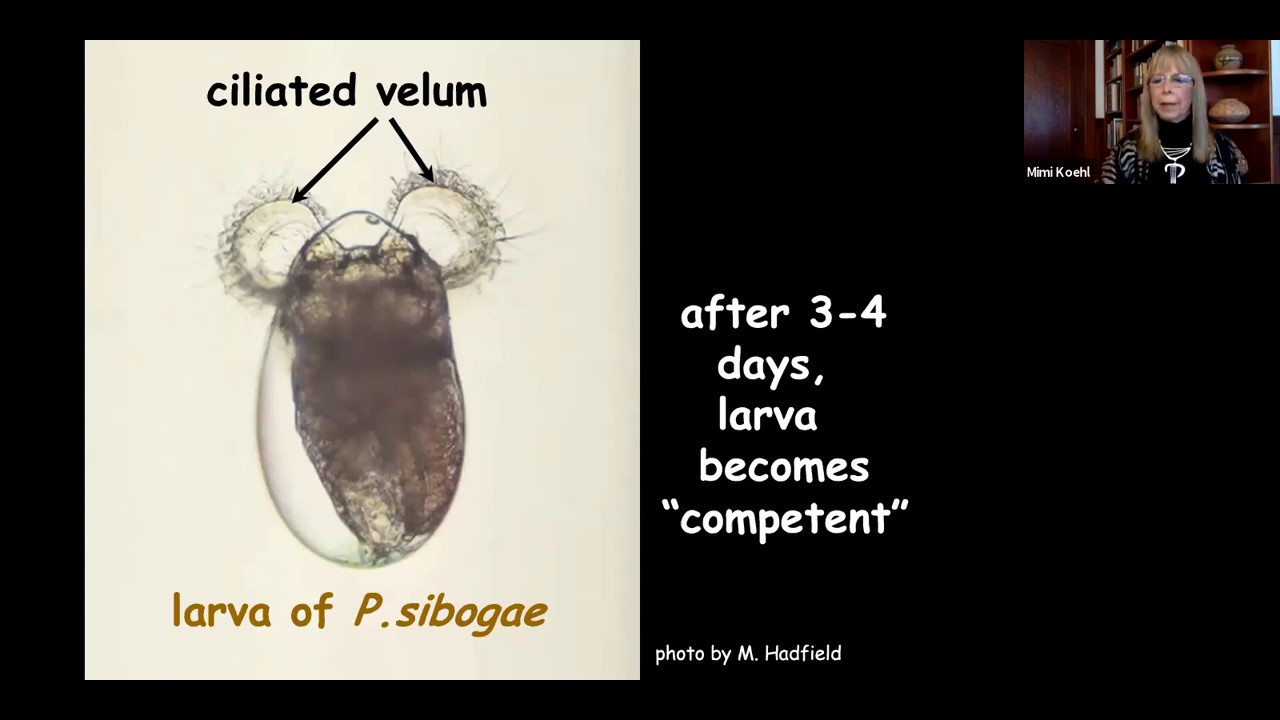
SIAM Conference on Life Sciences (LS20) Invited Plenary Talks: Mimi Koehl
179
This section explains how bottom-dwelling organisms like corals, snails, and barnacles disperse to new habitats by releasing microscopic larvae transported by ocean currents over large scales (kilometers to hundreds of kilometers). However, to recruit to new sites on the sea floor, larvae must settle out of the water column on a spatial scale of meters. This process is ecologically important as it determines the geographic distribution, dynamics, and genetics of ocean populations, and affects the composition of communities of different species living together on the bottom. The section introduces the debate between two schools of thought: one arguing larvae are passive tracers carried by water, and another arguing larvae are complex animals that respond to environmental cues like dissolved chemical signals from prey or conspecifics.
Click to watch →

The Face of the Deep (1984)
14.8K
Most marine invertebrates produce larvae that drift in the plankton until finding suitable settlement sites. These larvae bear little resemblance to adults and are specialized for pelagic life. Coral larvae swim slowly, propelled by tiny hairs, requiring astronomical numbers since few survive to settle. Land crab larvae hatch from egg masses deposited in the sea during brief annual rituals, immediately entering the plankton. This dispersal strategy allows species to colonize new areas and maintain genetic connectivity across populations. The transformation from pelagic larva to benthic adult represents a fundamental metamorphosis in lifestyle and morphology, demonstrating how marine organisms balance the benefits of wide dispersal against the costs of extended vulnerable life stages.
Click to watch →

Dr. Rob Toonen Larval Ecology and Coral Reef Connectivity
199
Marine organisms exhibit a biphasic life cycle where sedentary adults produce motile pelagic larvae that disperse through ocean currents before settling as benthic adults; this connectivity pattern varies significantly across species and geographic regions, with research in Hawaii showing that 66-99% of recruits come from the same island as their parents, indicating limited exchange between main Hawaiian Islands and northwestern Hawaiian Islands, which has important implications for marine protected area management and species conservation.
Click to watch →
Deep Dive
The primary stressors leading to coral reef degradation, including ocean acidification, marine heatwaves, and coral bleaching.
Lec 12 - Coral Reefs - Bio-diversity Part 7 by Waheed Sir for JKSSB Exam & JKPSC
51.4K
Coral bleaching occurs when stressed coral polyps expel their symbiotic zooxanthellae, causing the coral to turn white. Without algae, corals lose their primary food source and vibrant colors. Global warming is the primary cause of coral bleaching events worldwide, as rising ocean temperatures stress coral polyps. When temperatures exceed 27°C, corals become stressed and expel their zooxanthellae. Ocean acidification occurs when carbon dioxide from the atmosphere dissolves into seawater, forming carbonic acid. This process reduces carbonate ion availability that corals need to build calcium carbonate skeletons. Industrial activities contribute to reef degradation through thermal pollution (discharging heated water) and chemical pollution. Coral islands form when coral polyps die and their calcium carbonate skeletons accumulate over time, building upward from the ocean floor.
Click to watch →
Ocean Acidification in Florida Part 1 of 3 - June 17, 2016
106
Historical photographs from 1975-1976 show extensive Elkhorn and Staghorn coral in Upper Keys. Following a 1980s Caribbean-wide disease outbreak, physical structure remained but began degrading. By 2016, dramatic loss of three-dimensional reef structure occurred. Coral reefs face multiple simultaneous stressors: ocean acidification, warming-induced bleaching (30-40% mortality in 2014-2015), and local pollution. Addressing acidification requires reducing CO2 emissions, while local restoration and identifying tolerant strains provide short-term survival strategies.
Click to watch →
The Talbot Oration: Coral Reefs in Hot Water
208
Coral reefs face multiple stressors beyond bleaching. Crown of Thorns starfish outbreaks periodically kill large areas of coral, with populations building up over 10-12 years and then crashing. Cyclones strip corals from reefs, with Category 4 and 5 storms causing the most damage. Runoff from land carries sediment that smothers reef life and nutrients that promote seaweed growth over corals. Ocean acidification, caused by increased CO2 in the atmosphere, changes water chemistry and affects marine life, though its effects are not yet visible. These stressors interact and compound each other, reducing reefs' ability to bounce back from severe disturbances.
Click to watch →
![[붉은바다 미니 다큐]울릉도 오징어, 알래스카 대게 사라진 게 다 이것 때문이라고?](https://i.ytimg.com/vi/sJ30_cY_uL4/maxresdefault.jpg)
[붉은바다 미니 다큐]울릉도 오징어, 알래스카 대게 사라진 게 다 이것 때문이라고?
3.3K
Ocean acidification, caused by absorbing 30% of human CO2 emissions, threatens marine ecosystems alongside warming. Research shows high-acidification environments cause coral skeletons to become thinner, develop holes, and reduce density similar to human osteoporosis. This degradation threatens coral reef ecosystems supporting marine biodiversity. Combined with marine heat waves, acidification represents a 'twin threat' to ocean health. Scientists warn these changes signal either ecosystem collapse or a critical warning requiring immediate intervention to prevent catastrophic consequences.
Click to watch →

How Bleaching, Acidification, and Ocean Heating are Killing Coral Reefs with Ove Hoegh-Guldberg
6.1K
Coral reefs are experiencing unprecedented decline due to three interconnected threats: coral bleaching from rising ocean temperatures (where corals expel their symbiotic algae and die when stressed beyond their thermal tolerance), ocean acidification (which reduces carbonate availability needed for coral skeleton formation), and increased frequency of extreme weather events. Research indicates that without significant emission reductions, 70-99% of coral reefs could disappear by mid-century, threatening 500 million people who depend on reefs for food, livelihoods, and coastal protection. The solution requires urgent global action to limit warming to 1.5°C while protecting remaining reef refugia.
Click to watch →
Prerequisite Knowledge
- Concept 01The symbiotic biology of coral reefs, specifically the relationship between coral polyps and photosynthetic zooxanthellae, and their role as biodiversity hotspots.
- Concept 02The fundamentals of underwater physics, particularly how sound propagates faster and further in water than in air, and its importance for marine organism navigation.
- Concept 03The concept of pelagic larval dispersal and recruitment, explaining how larval fish and invertebrates find suitable benthic habitats to settle.
- Concept 04The primary stressors leading to coral reef degradation, including ocean acidification, marine heatwaves, and coral bleaching.
Subsequent Learning
- Step 01The methodology of passive acoustic monitoring (PAM) as a non-invasive tool to assess and measure biodiversity in marine habitats.
- Step 02The engineering and deployment challenges of underwater speaker systems, including sound-field calibration and biofouling mitigation.
- Step 03The potential ecological risks of acoustic enrichment, such as habituation, attracting unwanted predators, or disrupting natural behavioral patterns.
- Step 04An overview of other cutting-edge coral restoration strategies, including larval seeding, microfragmentation, and genetic breeding for thermal tolerance.
Reef Sounds
Coral Decline
Acoustic Test
Settlement Success
Future Work
Open Question
Reef Sounds
0:00Playing Section
- 1
Healthy coral reefs emit distinct acoustic signatures.
- 2
Scientists propose using these sounds to aid damaged reefs.
The Ecological Trap Hypothesis and Root Cause Limitations
While acoustic enrichment shows promise in attracting marine larvae to degraded reefs, critics and marine biologists raise significant concerns. A primary criticism is the 'ecological trap' hypothesis: attracting fish and invertebrates to a severely degraded habitat that lacks food, shelter, or live coral cover may increase their mortality rather than aid restoration. Furthermore, this method does not address the fundamental drivers of coral reef decline, such as ocean warming, acidification, pollution, and overfishing. Without resolving these systemic stressors, skeptics argue that playing healthy reef sounds is a temporary, localized intervention that cannot scale effectively or sustain long-term ecosystem recovery. There are also concerns regarding unintended consequences, such as attracting predators or disrupting natural marine acoustic cues.
Deep Dive
The methodology of passive acoustic monitoring (PAM) as a non-invasive tool to assess and measure biodiversity in marine habitats.

Palestra Um bê-a-bá do monitoramento da biodiversidade através da bioacústica
731
Passive acoustic monitoring is a non-invasive biodiversity assessment method that uses autonomous recorders to capture and analyze animal sounds, enabling species identification through species-specific acoustic signatures and providing insights into ecological patterns such as activity rhythms, territorial behavior, and community composition across different habitats and time periods.
Click to watch →

Estimating marine biodiversity with passive acoustic monitoring (IQOE)
144
Passive acoustic monitoring offers several advantages for biodiversity assessment: it enables persistent, continuous, replicable data collection over decadal scales—unmatched by visual surveys; it allows long-range detection of low-frequency sounds, enabling discovery of unknown aggregations of spawning fish and calling whales; and it provides different biases compared to other methods, which is valuable given the unwillingness of different research communities to critically examine their own methodological biases. However, significant limitations exist: few species can be confidently identified to species using acoustic data alone, and even fewer species vocalize consistently enough to be represented in bioacoustic estimates. Estimating density and abundance of vocalizing species requires precise knowledge of sound propagation and calling rates. Thus, acoustic monitoring works best as a carefully targeted complement to other methods like visual surveys and environmental DNA analysis.
Click to watch →

Webinar AIMM // Como saber o tamanho da população da vida selvagem num mundo em mudança
966
Passive acoustic monitoring (PAM) estimates marine mammal abundance by recording and analyzing animal sounds. The method requires knowing the species' sound production rate (sounds per unit time). The formula incorporates: number of detected sounds, sound production rate, detection probability, and the area covered by recording equipment. PAM is non-invasive, works day or night, and can detect animals over large areas. However, it requires expensive equipment, extensive data processing, and machine learning to classify sounds accurately. The method assumes consistent sound production rates and accounts for classification errors.
Click to watch →

Sounds of the Wild: Introducing Passive Acoustic Monitoring
2.4K
Passive Acoustic Monitoring (PAM) is a non-invasive technique for recording animal sounds autonomously over extended periods, enabling researchers to monitor diverse species including birds, bats, amphibians, and marine life by analyzing soundscapes that encompass biophony (animal sounds), geophony (natural sounds like wind and rain), and anthrophony (human-made sounds). PAM offers advantages such as minimal disturbance, no permit requirements, permanent historical records, and simultaneous multi-location monitoring, making it valuable for assessing biodiversity, ecosystem health, and the impacts of habitat management or anthropogenic activities on wildlife populations.
Click to watch →

The Science of Acoustics: How Sound Waves Shape Our Reality and the Universe | Science for Sleep
286
Passive acoustic monitoring is how scientists leave their ears running for months or years to capture that record. Imagine leaving a camera to photograph a landscape every hour of every day, but for sound instead. That is the essence of PAM (Passive Acoustic Monitoring). Researchers deploy autonomous recorders, small battery-powered microphones for land and hydrophones for water, and collect long sequences of audio that can reveal the presence and timing of species, the cadence of seasons, and the fingerprints of human intrusion. The raw audio is then transformed into spectrograms, those visual waterfalls of frequency and time, and into numerical indices that summarize complexity, diversity, and human influence. Some of these indices, like the acoustic complexity index or the normalized difference soundscape index, are shortcuts that correlate reasonably well with species richness or the degree of human noise. More recently, machine learning classifiers trained on labeled calls can pick out individual species from the tangle, automating what once required an expert ear.
Click to watch →
Deep Dive
The engineering and deployment challenges of underwater speaker systems, including sound-field calibration and biofouling mitigation.
Planète conférences - Plongée sonore dans l'univers des cétacés : les suivis par acoustique passive
689
Les déploiements d'hydrophones rencontrent souvent des problèmes: biofouling (colonisation par des organismes), corrosion des manilles, détachement des mouillages, instruments cassés, et perte d'instruments (qui peuvent être retrouvés loin du site, même en Allemagne). Une récupération de 50% de données exploitables est déjà considérée comme un succès.
Click to watch →
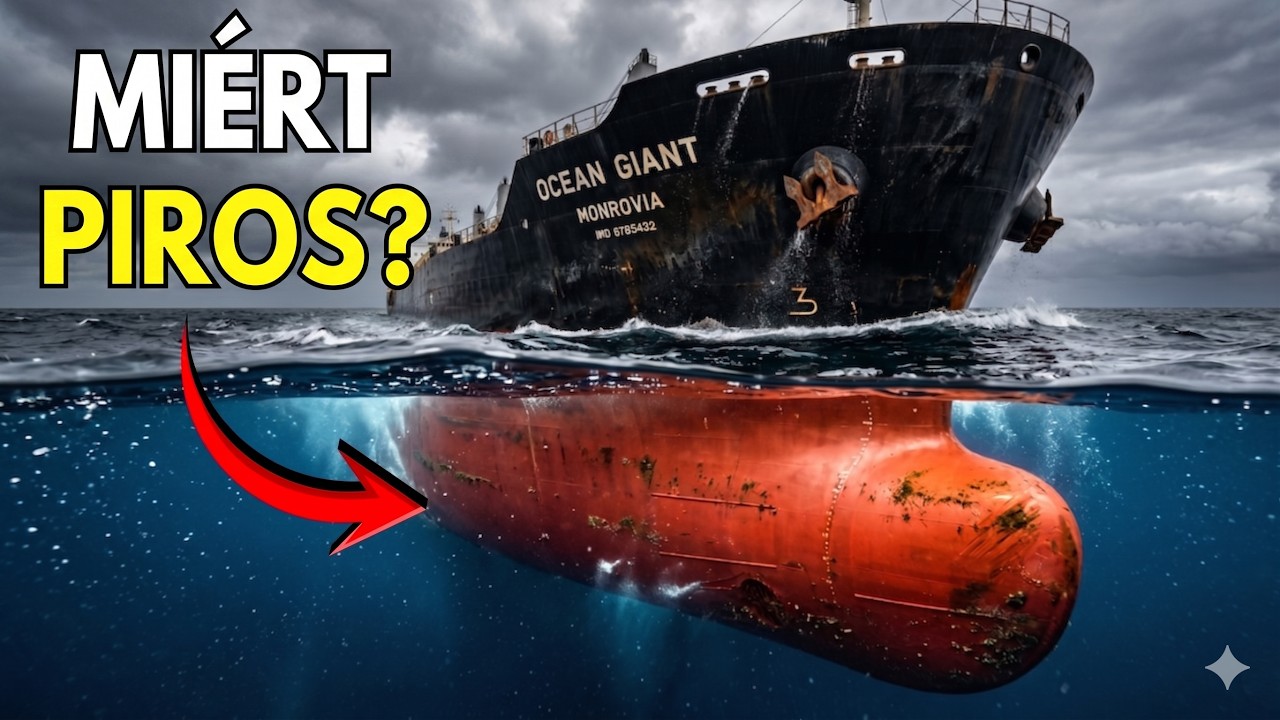
Miért Festik Vörösre A Hajókat A Vízvonal Alatt?
18.3K
The ship bottom is one of the planet's most hostile environments, constantly submerged in saltwater, exposed to immense pressure, temperature fluctuations, and high-speed movement through oceans teeming with organisms evolved to attach to hard surfaces. Within hours of entering water, bacteria form invisible layers; within days, microscopic algae attach; within weeks, barnacles, mussels, and worms accumulate. In tropical waters, untreated ships can develop several-centimeter-thick biological layers within six months. This biofouling creates massive drag, increasing fuel consumption by up to 40% and causing direct structural damage as organisms bore into hulls. Ancient civilizations addressed this with tar, wax, and lead coatings, while Vikings used pine tar. The British Royal Navy experimented with arsenic compounds and copper sheathing, which worked by releasing toxic ions that killed organisms before attachment.
Click to watch →

Long term work and Machine Learning Approaches to DolphinGemma
146
Creating effective underwater speakers requires specialized design because standard air speakers do not work well in water. Custom speakers use particular types of resin for impedance matching with water. The US Navy uses 200-watt amplifiers with large speakers for underwater communication, while wearable systems require miniaturization with lithium batteries. Waterproofing connectors and preventing entanglement are major engineering challenges.
Click to watch →

Speaker plays under water-MTX Thunder 2000 subwoofer
1.9M
Subwoofers can still produce sound when submerged underwater, though the water significantly dampens the audio output and the speaker cone continues to attempt to move despite the resistance.
Click to watch →

Underwater sound and the BC Coastwide Hydrophone network
171
Sea to Shore Systems is developing several acoustic system improvements including an improved low frequency hydrophone calibration system (easier to operate and more portable), a collapsible mooring system (replacing the folding mooring), and an upgraded small boat deployable buoy with array capability for direction finding. These developments aim to improve field deployment and monitoring capabilities.
Click to watch →
Deep Dive
The potential ecological risks of acoustic enrichment, such as habituation, attracting unwanted predators, or disrupting natural behavioral patterns.

CRYPTID NEWS (BASIC RESEARCH PRESENTED )
229
Habituation carries significant risks: animals may lose fear of observers and develop loose fear of hunters, making them easy targets. Habituated primates can become dangerous when they get used to eating garbage and picnic scraps, as bears demonstrate. Scientists seek to study animals without changing their natural behavior, meaning habituation should not involve using food. Healthy habituation takes longer but produces more accurate observations. It should only be attempted in areas where hunting is not a risk, such as national parks where animals are protected.
Click to watch →

17^ IL GIRO DEL MONDO IN 80 GIORNI - VI serie
1.3K
Habituation occurs when wild animals become accustomed to human presence and lose their natural wariness. This makes them vulnerable to vehicle collisions, intentional harm, and trapping. Animals that habituate to humans often stop for extended periods on roads, waiting for food, significantly increasing their risk of being hit by vehicles. The habituation process fundamentally changes the animal's survival strategy and increases mortality risk. Wild animals like foxes have specific ecological roles in maintaining biodiversity, and when they become habituated to human food sources, they disengage from their natural hunting behaviors and ecological functions.
Click to watch →

RAISING A YOUNGLING AS A SOLO PRIME DEINOSUCHUS | THE ISLE
570
Making noise can attract predators and increase danger in survival situations. The player considers how much noise an attack will make, demonstrating awareness that actions have consequences and that noise management is important for avoiding unwanted attention from predators.
Click to watch →

Breeding Ball Pythons; Hatchling Recovery
343
Forcing snakes to endure handling habituates them to accept handling without flinching, but this also comes with behavioral inhibitions. Snakes that are habituated may refuse to come out of tubs and participate in free roaming. Snakes that are never handled but free roam are willing participants and demonstrate adaptive behaviors. Free roaming accelerates development toward snakes that are not shy or fearful and can adapt to different environments. Habituating snakes to handling and suppressing their natural instincts to be afraid compromises other behaviors. While snakes will cease to be afraid of handling, they will also compromise natural behaviors. Over-handling can suppress a snake's natural behaviors and is not recommended.
Click to watch →
PAULINE, la comportementaliste qui murmure a l'oreille des veaux !
48.5K
Playing radio or music provides auditory enrichment for animals. Playing music for one hour in the morning and one hour in the afternoon (not continuously) prevents animals from becoming habituated and ignoring the sounds. Alternating between different stations and music genres keeps the auditory environment stimulating and interesting.
Click to watch →
Deep Dive
An overview of other cutting-edge coral restoration strategies, including larval seeding, microfragmentation, and genetic breeding for thermal tolerance.

Coral Spawning Season 2025 Launch Event and Robing T. Smith Talk
318
Coral restoration at consequential scales requires mass production of coral larvae combined with selective breeding for thermal resilience, where researchers engineer corals by selecting thermally tolerant colonies, crossing them to produce offspring with enhanced resilience, and deploying them using scalable techniques like targeted larval settlement nets to restore reef ecosystems at the scale of entire coastlines.
Click to watch →
Science, Strategies, and Solutions for Responding to Coral Bleaching Events Webinar
591
Large-scale coral restoration combines advanced technology with genetic strategies to rebuild reef resilience. The Nature Conservancy scaled up from small operations to over 20 staff with state-of-the-art nurseries holding 10,000+ fragments. Aerial drone technology enables efficient large-area monitoring, with drones mapping 150 hectares at 1cm/pixel resolution to identify resilient sites for future restoration. After significant bleaching mortality, surviving resilient colonies undergo heat stress testing to determine tolerance levels, guiding outplanting strategies—high-tolerance genets may be incorporated into all sites while low-tolerance genets are excluded from asexual propagation. Assisted sexual reproduction techniques, including in-situ spawning hubs planted at optimal locations through larval dispersal models, enhance genetic diversity and reproductive success. This integrated approach addresses both immediate restoration needs and long-term genetic resilience for future climate challenges.
Click to watch →
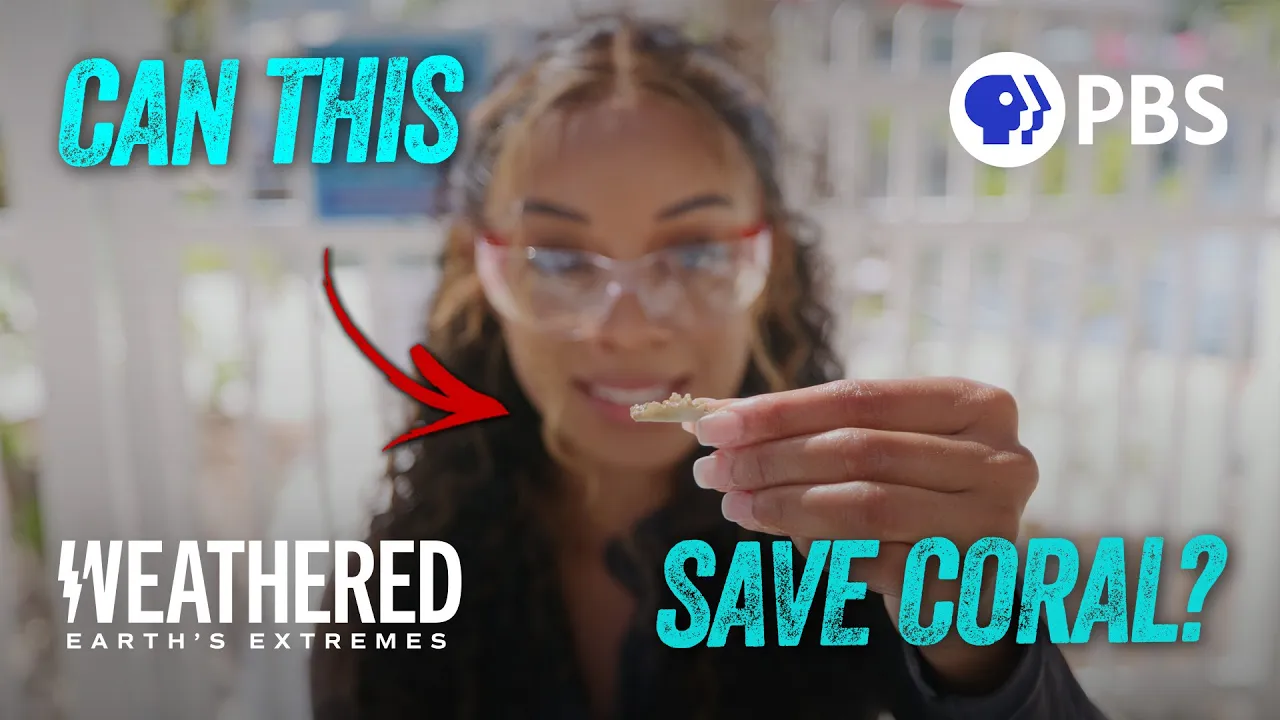
What is Coral Bleaching? The Fight to Save Coral Reefs | Weathered: Earth's Extremes
14.6K
Scientists employ micro-fragmentation techniques to accelerate coral growth by fragmenting resilient coral colonies into small pieces, reducing the time to sexual maturity from decades to just a few years. This selective propagation concentrates heat-tolerant genetic traits, potentially speeding up natural evolution to create more resilient reef populations. However, current thermal anomalies of 3°C temperature increases exceed the adaptive capacity of these interventions. Historical data shows reef coverage declined from 30-60% in the 1960s-1980s to just 2-5% today. During recent surveys, over 90% of corals at high-cover sites showed bleaching symptoms, with temperatures reaching 91-93°F. If temperatures drop sufficiently quickly, some corals may recover, but repeated extreme events threaten irreversible reef collapse.
Click to watch →
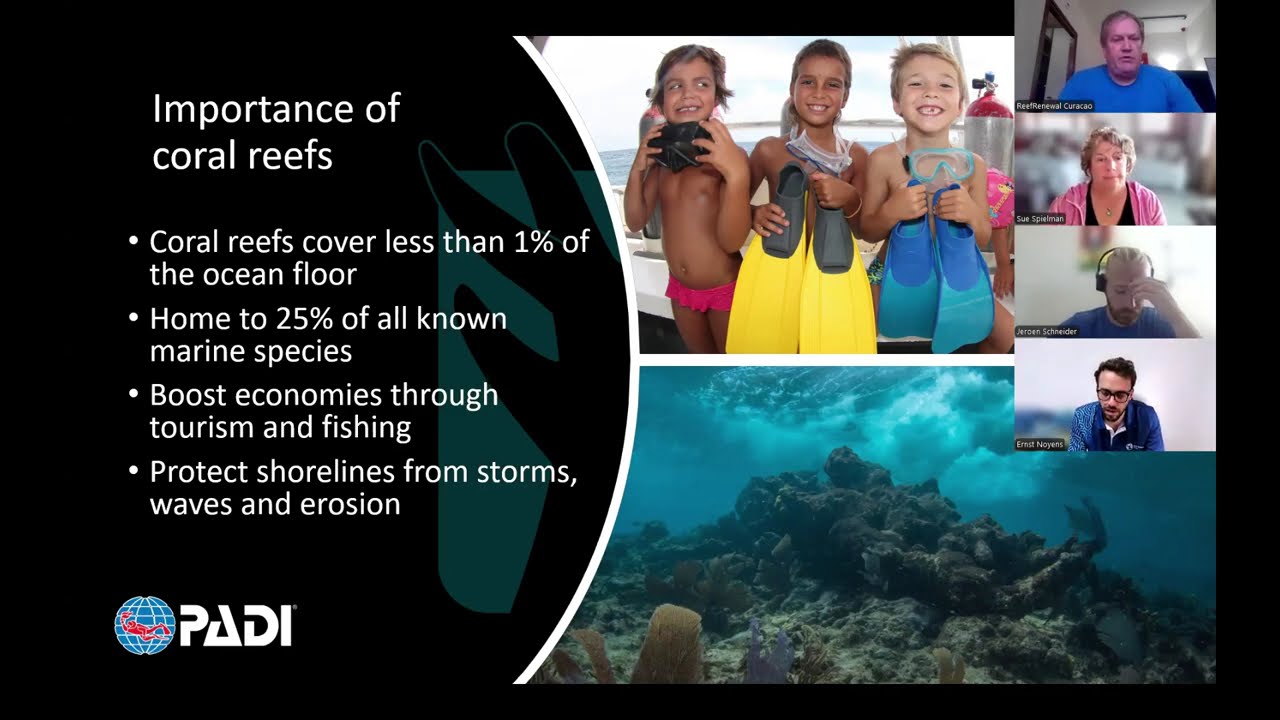
Reef Renewal Foundation Curacao: World Wildlife Day Webinar
285
Coral restoration employs systematic methods to rebuild reef ecosystems: (1) Fragmentation - cutting healthy coral into 10cm pieces and placing them in nursery trees; (2) Nursery cultivation - growing fragments for 1-2 years until they reach substantial size; (3) Outplanting - attaching mature corals to bamboo frames suspended above the reef; (4) Naturalization - allowing corals to grow for 1.5-2 years until the bamboo degrades and corals establish on the reef substrate. Advanced approaches include mid-water column cultivation showing healthier coral microbiomes, damselfish dome studies testing ecological interactions, and selective breeding of naturally selected survivors to create heat-resistant populations. Restoration teams also build artificial reef structures with multiple coral fragments per structure, monitoring growth using 3D modeling technology.
Click to watch →
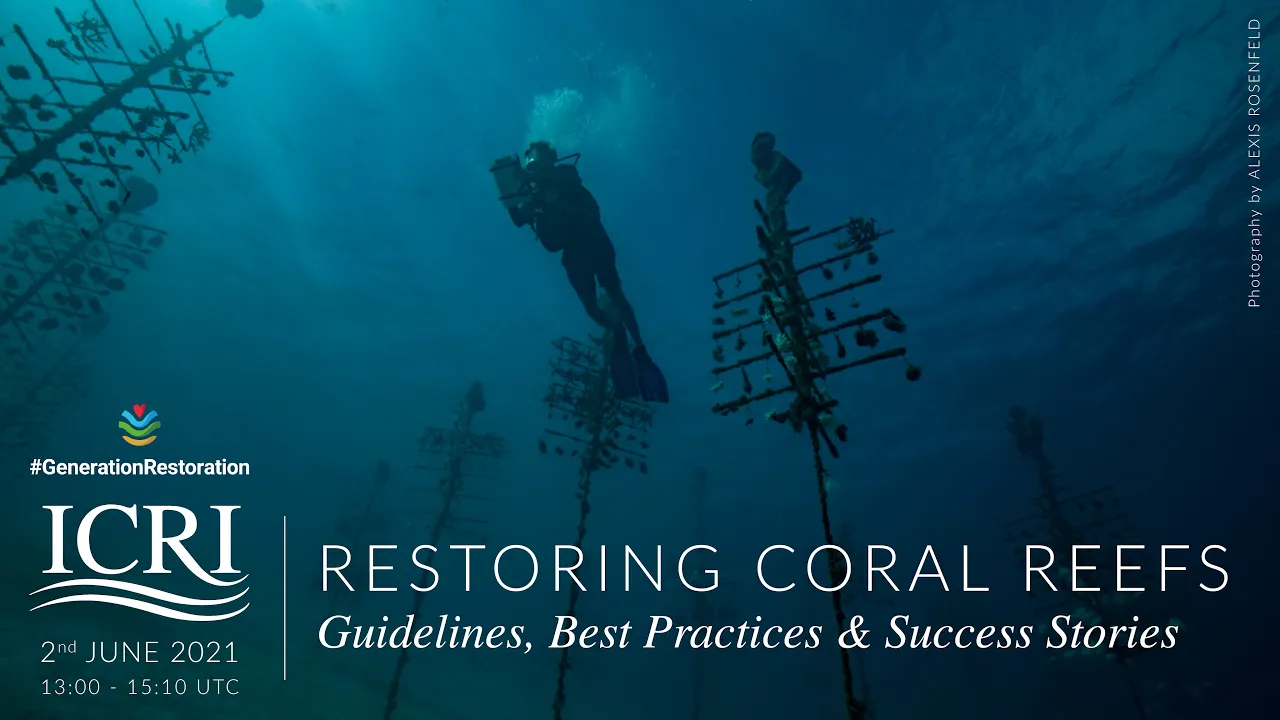
Restoring Coral Reefs: Guidelines, Best Practices and Success Stories
8K
Modern coral restoration facilities integrate multiple systems for mass production and resilience building. Mote Laboratory maintains in-water nurseries with thousands of staghorn coral fragments and a land-based nursery with tens of thousands of fragments, implementing genetic management plans to maintain hundreds of genotypes. Microfragmentation accelerates growth 50 times compared to larger fragments, enabling rapid production of sexually viable corals. Advanced programs screen all genotypes for resilience to disease, high temperatures, and ocean acidification, then conduct controlled crosses between parents with known traits to understand trade-offs. This creates sexually viable resilient corals that reproduce and pass beneficial traits to offspring, simultaneously increasing genetic diversity and population resilience.
Click to watch →
Reef Sounds
Coral Decline
Acoustic Test
Settlement Success
Future Work
Open Question
Reef Sounds
0:00- 1
Healthy coral reefs emit distinct acoustic signatures.
- 2
Scientists propose using these sounds to aid damaged reefs.
The Ecological Trap Hypothesis and Root Cause Limitations
While acoustic enrichment shows promise in attracting marine larvae to degraded reefs, critics and marine biologists raise significant concerns. A primary criticism is the 'ecological trap' hypothesis: attracting fish and invertebrates to a severely degraded habitat that lacks food, shelter, or live coral cover may increase their mortality rather than aid restoration. Furthermore, this method does not address the fundamental drivers of coral reef decline, such as ocean warming, acidification, pollution, and overfishing. Without resolving these systemic stressors, skeptics argue that playing healthy reef sounds is a temporary, localized intervention that cannot scale effectively or sustain long-term ecosystem recovery. There are also concerns regarding unintended consequences, such as attracting predators or disrupting natural marine acoustic cues.
The symbiotic biology of coral reefs, specifically the relationship between coral polyps and photosynthetic zooxanthellae, and their role as biodiversity hotspots.
The fundamentals of underwater physics, particularly how sound propagates faster and further in water than in air, and its importance for marine organism navigation.
The concept of pelagic larval dispersal and recruitment, explaining how larval fish and invertebrates find suitable benthic habitats to settle.
The primary stressors leading to coral reef degradation, including ocean acidification, marine heatwaves, and coral bleaching.
The methodology of passive acoustic monitoring (PAM) as a non-invasive tool to assess and measure biodiversity in marine habitats.
The engineering and deployment challenges of underwater speaker systems, including sound-field calibration and biofouling mitigation.
The potential ecological risks of acoustic enrichment, such as habituation, attracting unwanted predators, or disrupting natural behavioral patterns.
An overview of other cutting-edge coral restoration strategies, including larval seeding, microfragmentation, and genetic breeding for thermal tolerance.
32.6K views1.2Klikes0:43@theGuardianOriginal Release: 2024-04-17
this is the sound a coral reef makes and scientists believe playing the sounds of a healthy coral reef to a dying one could save damage Coral the world has lost half its coral reef since the 1950s due to global heating pollution and over fishing and 14% of the Earth's Coral was lost in less than a decade between 2009 and 2018 using underwater speakers scientists have broadcasted the sounds of a thriving Reef to a degraded one in the Caribbean the lari were up to seven times more likely to settle at a struggling Reef where they played the soundscapes of a healthy ecosystem while the results are promising the scientists say more Works needed to understand whether all species of coral respond to the reef sounds in the same way and whether the corals Thrive after settling
Up Next

38:45
Coral Larval Propagation Field-Based Applications | Kelly Latijnhouwers | DCNA Workshop
@DCNAcommunication
114 views•2024-06-27
50:12
Bacterial Communication: Quorum Sensing and Biofilm Formation Explained
@JHUAAP
12.6K views•2011-06-28

5:35
Enteric Nervous System Explained: The Gut's Brain | Neurobiology Lecture
@alumniu6029
438 views•2018-09-12
7:08
Bacteriophages: Earth's Deadliest Killers and Future Antibiotics
@kurzgesagt
34.6M views•2018-05-13
Related Study Plans & Knowledge Roadmaps
Structured learning paths in Biology
biology
RNAi: Biogenesis, RISC & Gene Silencing
01Molecular Biology Foundations: DNA to Protein
02Introduction to RNA Interference (RNAi)
03Molecular Biogenesis of miRNA and siRNA
+ 2 more learning modules
10h5 modules
Explore Roadmap
biology
Mycorrhizae: Signaling, Biophysics & Ecology
01Foundations of Mycorrhizal Symbiosis
02Molecular Signaling and Root Colonization
03Biophysics and Bioenergetics of Nutrient Exchange
+ 1 more learning modules
11h4 modules
Explore Roadmap
biology
Circadian Clocks: TTFL, SCN & Periphery
01Foundations of Molecular Biology & Gene Expression
02Introduction to Chronobiology and Actograms
03The Core TTFL: Molecular Architecture of the Clock
+ 3 more learning modules
14h6 modules
Explore Roadmap
biology
Population Genetics: Math, Drift & Selection
01Genetic & Probability Foundations
02The Hardy-Weinberg Principle and Baseline Models
03Mathematical Modeling of Natural Selection
+ 3 more learning modules
18h6 modules
Explore Roadmap