

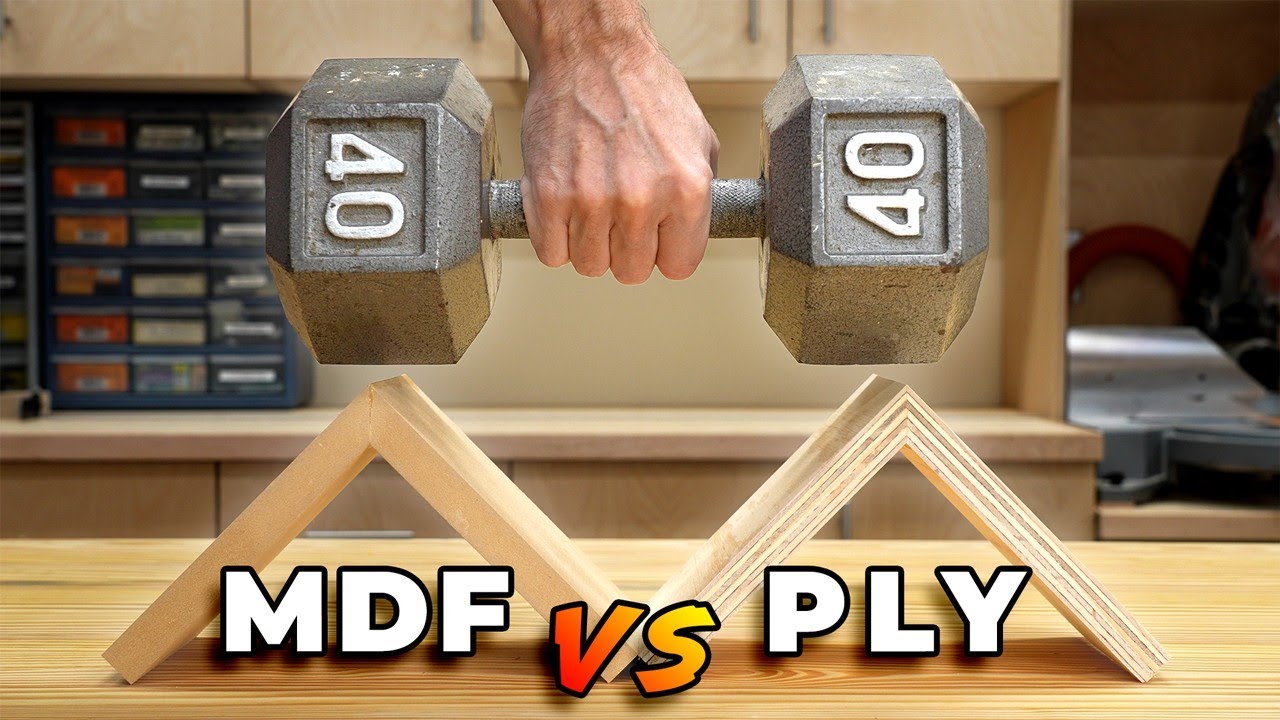







Solid wood speaker boxes can perform comparably to or better than MDF boxes in terms of panel vibration damping, as demonstrated through accelerometer testing showing lower vibration output in solid wood construction; however, solid wood requires accounting for seasonal moisture expansion and contraction, and stuffing materials like fiberglass or rock wool are more effective at damping than polyfill.
Solid Wood vs MDF Speaker Enclosure Vibration Testing
Added:Fundamental differences in material science between anisotropic natural materials (solid wood) and isotropic engineered composites (Medium-Density Fibreboard or MDF).
Basic acoustics and vibration theory, specifically the concepts of mechanical resonance, natural frequencies, and how panel vibration causes acoustic coloration.
The primary function of a loudspeaker enclosure, including the prevention of phase cancellation between the front and rear acoustic waves of a driver.
The working principles of accelerometers and how they are used to measure physical displacement, velocity, or acceleration in vibration analysis.
Advanced cabinet bracing techniques and damping methods, such as Constrained Layer Damping (CLD) and internal bracing geometries to minimize resonance.
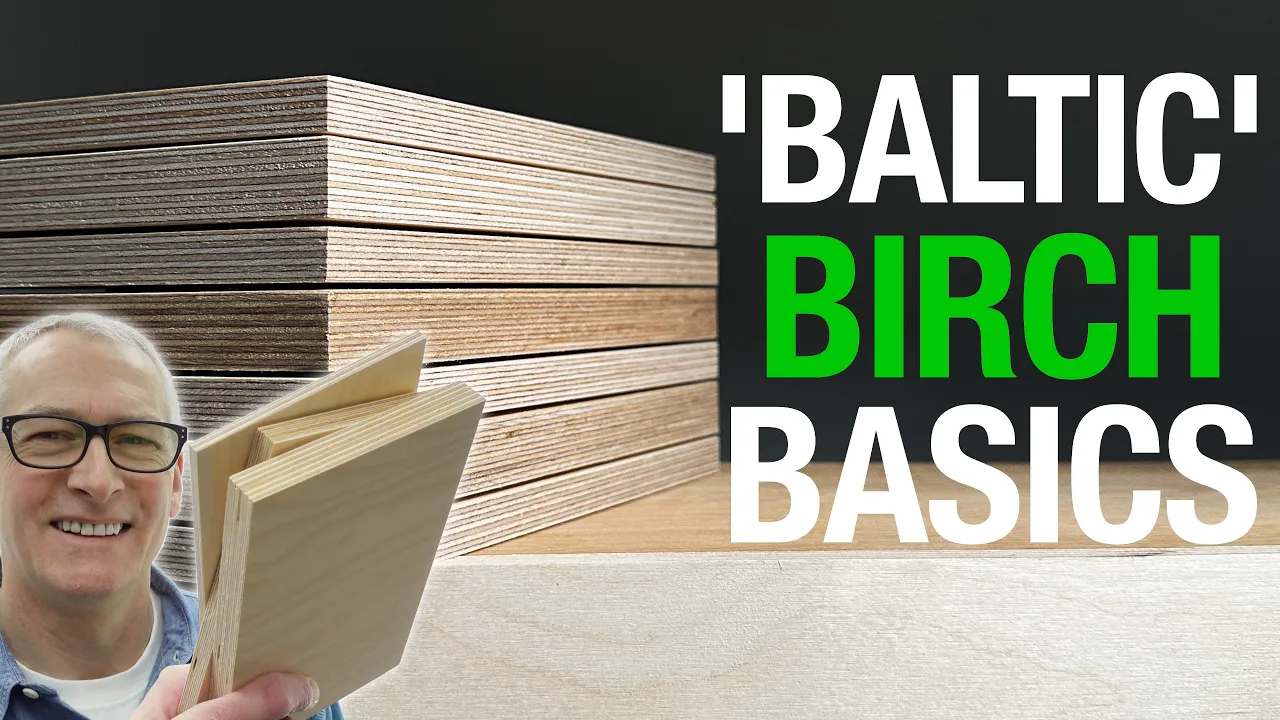
The study of alternative loudspeaker enclosure materials, such as Baltic birch plywood, aluminum, composite plastics, and concrete, and their respective acoustic damping factors.
Psychoacoustics of cabinet coloration, exploring how and to what extent human hearing detects panel resonances across different frequency ranges.
Utilizing Finite Element Analysis (FEA) software to simulate and model enclosure structural behavior and vibration propagation before physical manufacturing.
104.9K views2.1Klikes10:50Original Release: 2021-10-10
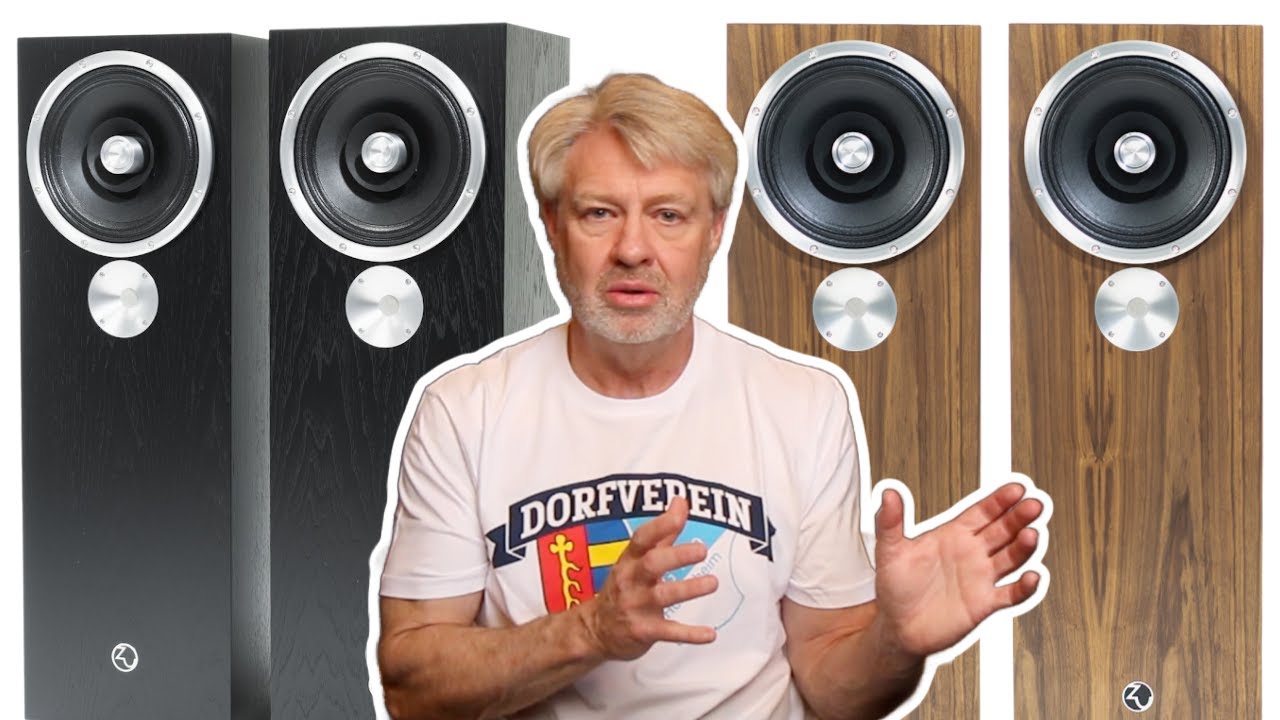
i thought it'd be interesting to compare two similar size speakers one a retail version one you can buy these elacs right here and homemade pair made from solid wood though i made i don't know maybe three years ago but i recently rebuilt them replaced the tweeter redesigned and rebuilt the crossover and all that fun stuff to make them sound proper if you want to watch both of those the original build and the upgrade they're both on youtube full videos and there's a link in the description to both of those if you want to check them out and see exactly how the solid wood speaker is built now i want to compare the two because as is always the case whenever you build a pair of speakers you're going to get comments from people saying that material is no good they say the reason that solid wood is not good for speaker building is that it's more resonant than something like mdf so we're going to put that to the test the same setup is the panel test actually the damping test and i want to talk a little bit more about that at the end of this video so you stick around for that and the test setup is rew on my laptop computer it's connected to my accelerometer that's plugged directly in the accelerometer measures vibrations it doesn't measure sound vibrations of the panels and the box itself and then i get to compare the two so the first one that i tested was the solid wood one and like before i used thin strong double-sided tape to stick the accelerometer to the middle of the panel and then ran the sweep and i have that here right in front of me and it looks really good the only thing that really stands out is a resonance around 350 but it doesn't really have any harmonics that i can see it's just a single peak and everything else looks really good when i compare it to the stuff that i collected before in the previous tests you're free to go back and watch those videos especially the first one where i tested individual panels so after that i put the elac in place and i put the accelerometer in exactly the same spot in the middle of the panel and ran the sweep again [Music] and overall it looks pretty good for what it is i don't know what these boxes are made out of my guess would be mdf and i know that there's some stuffing in here because i can see it in the port i can look in and i see the white polyfill maybe so there is some damping in here and i do know that the panels i don't know for certain but i'm guessing that they're nbf because of the weight you know it's a it's a pretty heavy box so it's well made but these are relatively cheap speakers i mean these are like 300 and i paid i i paid less than 350 a pair for these when i bought them i don't know three four years ago and i can't i don't know if they're like much more than that now but they're well worth it they're good sounding speakers but when you compare the output from this one let the accelerometer is reading and compare it to the solid wood one you can see easily see that the solid wood box is much quieter the output from those panels is much lower now i didn't do anything special in that box i didn't add any bracing to it i just used the solid wood you can see all the construction details everything shown in those two videos that i made the first one shows all the build the second one goes over what i did to fix uh fix them up but like i say i didn't do anything special with the box they're solid wood like top sides and bottom the the back is baltic birch plywood the front is actually baltic birch plywood as well but it has veneer a thick veneer of solid wood on there and cherry is not an especially hard hard not like like say hard maple or ash or oak it's it's relatively soft so i think that these results are outstanding and kind of puts the bed you know nothing here is definitive you know just comparing kind of apples to apples but it kind of puts the bed this notion that you're going to get really strong audible resonances when you use hardwood now there are drawbacks with using hardwood you can go through the build video where i made those speakers and i talked about why i built them the way i did solid wood expands and contracts with seasonal moisture changes and you have to make allowances for those so in that regard it's not the best material to use for you know building speakers because of that you have to make allowances for that it complicates the bills but that would be the only reason it's not the inherent problems that you have with a natural material like that the resonances or the differences in resonances that's another one that people bring up these these differences would be tiny they show up in the measurements but it's very questionable if you could actually hear the difference and then if you can hear the difference that's not to say that one is better than the other so i thought that was interesting to compare those two like i said this is a relatively low cost but very popular set of speakers and they sound excellent i mean these are the ones that i'm using in my basement while i contemplate building my new pair and what i'm going to do with that there'll be more videos on that coming up but they sound great and i did sound samples you know actual open-air recording from my listening position you know what these speakers sound like plus the subwoofer that i built and it's excellent it's it's almost indistinguishable from the original sound file you can go check that out if you missed it now i want to talk briefly about the last video where i talked about damping again best stuffing and there seems to be quite a bit of confusion about what stuffing does inside a speaker box stuffing goes in the speaker box for two reasons the first is for damping dapping by definition is vibration reduction this speaker both with sound waves that emanate from the cone and also mechanical that come from the frame you know the reactionary forces of the cone moving that's mechanical and say the sound waves those are both vibrations and that's what that stuffing is meant to deal with in various ways it depends on what you want from the speaker and what you're expecting to hear from the speaker some people want more damping and they say that sounds great other people want less damping and they sound they say that sounds better okay so it's a subjective thing it's not an objective this is better than the other one i ran those tests to to kind of give an idea of which one is more effective and i did that by weight to make it as fair as possible you can't do this by volume i can't take polyfill and measure the volume accurately without compressing it in some way or having it too loose same with fiberglass rockwool is a little bit different because it's kind of compressed to begin with but to do it by volume would be totally unfair so i did it by weight and that turned out to be enough of a difference that you could actually see between the three materials the other thing you use stuffing for and i've talked about this in other videos in the past is that it changes the apparent size of the box the apparent volume of the box so if you put stuffing in there it makes the box seem bigger from the perspective of the box design itself if you're designing a box in a program like win isd or i use i use when isd and i also use unibox which is older it allows for that it calculates that extra volume and it builds it into the design and when you build a box and then you test it with the proper setup then you'll see that followed through you'll see that extra volume so i had a lot of people questioning why i was measuring the panel to test the stuffing which didn't seem right they thought i should be using a microphone i can use a microphone and it might show a difference but very much like i talked about the difference before between you know which type of wood sounds better or which type of plywood or whatever you can't tell from measuring the frequency response if there is a difference which one is actually more effective this will not be you won't it won't show up and other people say well you you test the impedance i would just test the impedance of the box because that changes when you change the stuffing once again you can't tell which one is more effective at doing what you want it to do the only way to do that is to measure how well it damps the panel and you do that with the setup i have here with an accelerometer measuring it directly into the computer here you can check the panel vibrations and compare them to one another and you'll see which stuffing by weight by mass is better so if your goal is to get as much snapping in the box as possible you know to quiet those panels as much make them as dead as possible you know the knock tests and all that get you know either fiberglass in there rock wool like i said avoid polyfill it's not as dense it's not as good at damping as either one of those if your you know goal is to have something that's lightly damped okay you want to maybe you got some shouty thing going on when you listen to it put some light stuffing in there like polyfill and see what that does right it's just to pop the speaker out put it in have a listen if you like it leave it in there and live happily ever after
Up Next

11:47
Timur Bekmambetov on Screen Life: Profile Filmmaking Insights
@ScreenRantPlus
1.7K views•2021-05-12

26:22
Walking in the City: Urban Rituals and the Flâneur in Contemporary India
@PSBTIndia
1.9K views•2016-08-02

9:49
FastAPI vs Flask vs Django: Choosing the Right Python Web Framework
@TechWithTim
302.5K views•2024-05-26

1:42
Game of Thrones Opening Credits: A Cinematic Analysis
@gameofthrones
46.3M views•2011-04-18
Related Study Plans & Knowledge Roadmaps
Structured learning paths in General & Interdisciplinary Studies
general-studies
Artificial Light: History, Tech & Human Impact
01The Pre-Electric Era: Fire, Oil, and Gas Lighting
02The Incandescent Revolution and Grid Electrification
03Gas Discharge and Fluorescent Illumination
+ 3 more learning modules
14h6 modules
Explore Roadmap
general-studies
Elevator Engineering: History, Physics & Cities
01From Hoists to Safety Brakes: The Dawn of Vertical Lift
02Hydraulic vs. Traction: The Engineering Physics of Elevators
03Modern Speed, Safety, and Algorithms
+ 2 more learning modules
12h5 modules
Explore Roadmap
general-studies
Rubber: Material Science, History & Geopolitics
01Origins of Natural Rubber & Mesoamerican History
02The Chemistry of Natural Rubber & Vulcanization
03The Geopolitics of the Rubber Boom & Colonization
+ 2 more learning modules
12h5 modules
Explore Roadmap
general-studies
Containerization: Evolution, Logistics & Trade
01Ancient Trade & Bulk Cargo: Amphorae to Barrels
02The Industrial Revolution & Cardboard Packaging
03The Containerization Revolution: Malcom McLean
+ 2 more learning modules
12h5 modules
Explore Roadmap