



















Plasmid vectors are autonomously replicating circular DNA molecules used in genetic engineering that contain key features including a multiple cloning site for inserting specific genes, an origin of replication for copying within host cells, and selectable markers such as antibiotic resistance genes; the process involves cutting both the plasmid and target DNA with compatible restriction enzymes (Type II enzymes that recognize specific nucleotide sequences and leave either sticky or blunt ends), treating the plasmid with phosphatase to prevent self-ligation, ligating the fragments together using DNA ligase, transforming the recombinant plasmid into bacterial cells, and selecting for successful transformants using antibiotics; the choice between high-copy-number and low-copy-number origins of replication depends on whether the goal is DNA cloning (high copy for maximum DNA yield) or protein expression (low copy to minimize metabolic burden on host cells).
Plasmid Vectors Explained: Features, Cloning & Protein Expression
Added:this video will give you an introduction to plasmid vectors the main features of them and how we can use them to express proteins in cells now plasmid vectors are typically aut dominous replicating which means that they will copy themselves once they are inside of a cell they have traits such as their ability to be selected such that they are maintained within a cell and they often have appropriate sites for insertion of specific specific genes to which we can then either copy or get expressed now when we're working with plasmid vectors we talk about subcloning when we're talking about subcloning we mean the insertion of a section of DNA into the vector typically we work with cdna what we do is to cut the cdna and the vector and insert them together we call it cutting sticking the place to which this Gene is inserted is put into the multiple cloning site of our Vector now a multiple cloning site means it has a number of locations that can be cut each one of these locations can be cuted by a specific enzyme called a restriction enzyme so what we do is to take our circular piece of DNA shown here cut it such it becomes linear with with a specific enzyme the enzymes that we use are called type 2 restriction enzymes Now a type 2 restriction enzyme recognize a specific section of DNA when it recognizes that specific section of DNA it will cut it and E leave either a blunt or what we know as a sticky end or overhang that we can then use to stick our two pieces of plasmid and DNA together when a restriction enzyme such as Echo R1 cuts it recognizes a specific sequence of nucleotides in this case g a a t t c it cuts that leaving a five Prime overhang to the DNA we also have blunt-ended Cutters such as Echo RV this recognizes the sequence Gat ATC it Cleaves that leaving a blunt end there is no overhang in this occasion and then finally we have enzymes such as pst1 this one recognizes the restriction site CT g c a g and it Cleaves us to leave a three Prim overhang so restriction enzymes cut DNA they cut the DNA leaving either a five Prime overhang a blunt end or a three prime overhang what we then do is to cut our piece of DNA that we're interested in cut the vector with compatible restriction sites and then we stick them together the word we use when we're sticking DNA together is to ligate and we use an enzyme called DNA ligase to do this now DNA liaye finds complimentary bits of DNA either blunt ended that will join themselves up or two sticky ends that are complimentary to each other and what it does is to feel the Nick or the Gap within the DNA it is primed with ATP it recognizes that Gap and it performs a calent reaction bonding those two strands together so when we're working with DNA and working with plasmids we take the gene that we're interested in we cut it we take the plasmid we're interested in and cut that they will have ends that are complementary or compatible with each other and then we stick them together with DNA ligase now when we're cutting and working with our plasmids we quite often have to use something called phosphatase treatment when we cut our plasmid it is initially circular once it is cut it becomes linear and it may have ends that are compatible you can see here that the ends TT a a match the ends a a TT here so it is theoretically possible for this Vector to ligate and stick back on itself and reform the circle to stop that from occurring phosphatase is used which removes the phosphate group from the end of the DNA leaving no compatible site for d for the process to work on and for DNA's lias to find the only thing that has a compatible L with the phosphate group is our new DNA insert so when that comes along the DNA ligase can use this to join up our piece of DNA so in this way we can take a strand of DNA cut a vector take the stranded DNA and cut that getting ends that match each other and then ligate them back together using DNA ligase now once we've got our Vector complete we're going to imagine now that we've integrated a piece of DNA into the multiple cloning site that I'm circling up here this creates a new larger section of circular DNA that we are going to place inside our bacteria cell and we call that transformation transformation is the act of putting the plasmid into the bacterial cell and we'll have another video on transformation at a later date once that plasmid is inside the cell we need to select for it we need to put some pressure on the system so only those bacteria that have taken up our plasmid Vector are able to survive to do that we're going to use an antibiotic resistance Gene in this case the gene detoxifies ampicillin only the bacteria that have taken up our plasmid have this ampicillin resistance gene on it and so can survive in the presence of the antibiotic so the plasmid will be transformed into the bacterial cell once it's in there the bacteria has a new Gene this ampicilin resistance Gene it has got a new PHA type in that it is now resistant to the drug ampicilin and will be able to grow in its presence so bacteria that have taken up the plasmid are able to grow and multiply bacteria that do not have the plasmid are not able to grow in that way we can select for only those bacteria that have taken up our plasmid the next thing we need to do is to work on replicating our plasmid to do that every plasmid contains what's known as an origin of replication the origin of replication is a point at which the plasmid is copied it is recognized by Machinery inside the bacteria that sees this as a site that says copy me here so the origin of replication is responsible for copying the plasmid inside the cell it has to be recognized by the Machinery already present within the bacterial cell to get that copying to occur now there are many different types of origin of replication we can have origins of replication that result in high copy numbers of the plasmid that means there are a large number of copies of the same plasmid inside the cell we call those relaxed in that there are in that the copy number is very high this means there are a number a large number of the gene dosage we also have low copy number plasmids where there may be one or two copies of the plasmid per cell now as a general rule the higher copy number the slower the cells grow due to a process known as metabolic loading a metabolic loading occurs because once the bacteria has taken up the plasmid it has to use some of it energy to copy it the more copies of the plasmid it has the more energy it has to use to maintain it and so the slower it grows low copy number plasmids do not need as much energy and so the cell has more energy able to copy and grow itself we find that low copy number plasmids are useful for gene expression work we want the cells to be able to grow and get to a high biomass to make our protein of Interest so we lose low copy numbers when we're expressing proteins when we're cloning DNA we are interested in the DNA itself and so cloning vectors will often be high copy number in that we have large numbers of the plasmid inside the cell in this instance it's the DNA that we're interested in so different vectors have different origins of replication the origin of replication is responsible for copying that plasmid inside of the cell the higher the copy number the more the metabolic load and the more energy it's needed for the cell to copy itself so let's have a quick overview of our bacterial expression Vector our bacterial expression Vector will have a number of key features here is an example of one called pet blue it will have on it a promoter this promoter is responsible for making mRNA from our Gene of in interest I'll have a separate video later on showing you how the promoters work we'll have a LAX Zed Gene we use this laxed Gene here in order to select for those genes that have taken up our Gene of interest it's going to be inserted in this location here and when we do that we break that laxed Gene in half stopping this enzyme from working and again we'll have a separate video later on blue white screening and the use of the laxed gene we have a multiple cloning site the multiple cloning site is made up of restriction sites for each of the different restriction enzymes we use this to cut the plasmid open to give us a location to insert our piece of DNA sometimes we'll find an F1 origin of replication this is helpful for DNA sequencing as it gives us a handy site to make single stranded DNA and it can also be used to package this Vector inside a bacteria phage if we're interested in doing that we will have an antibiotic resistance Gene this is to select for that plasmid so only those bacterial cells that have taken up our plasmid are able to grow and replicate and finally we'll have an origin of replication the origin of replication is there to copy that plasmid inside of the cell we will have a low copy number if we are interested in gene expression and a high cop Cy number if we're interested in DNA cloning finally for UK carotic expression and to quickly show you the type of features you might see on a vector there I'm going to show you a a piece of DNA called PC DNA 3.1 Vector now in this case many of the same features are present we have a multiple cloning site at the top this is used to cut the plasmid open and give a sight for the insertion of our Gene we have a promoter this promoter in this case is a for malean virus the cyega virus it will cause a large amount of transcription to occur and produce a large amount of mRNA for every Promoter on a bacter on a melan expression Vector we have a polya tail this polya tail is needed such that we'll get correct mRNA which will be expressed inside of our mamalian cells again we can have an F1 origin of replication so that we we can copy and make single stranded DNA we have ampicilin resistance so that we can work with this plasmid in bacterial cells we tend to do our molecular biology in bacterial cells because it's somewhat easier and we have this neamin Gene here which I'll have a video again later for selection in melan cells the idea is the same any cell that has taken up this plasmid we need to select for and neomy produces a gene that confers resistance to the drug g418 again we also have a bacterial origin of replication now this bacterial selection Gene and bacterial origin of replication occur here because working in bacteria and doing our molecular biology in bacteria is easier than doing it in mamalian cells so we often create our plasmids first in bacteria and then transform them into mamalian cells
Up Next

Cloning Tutorial: Plasmid Mapping & Primer Design in Vector NTI
@CloningStrategies
81.5K views•2013-02-21
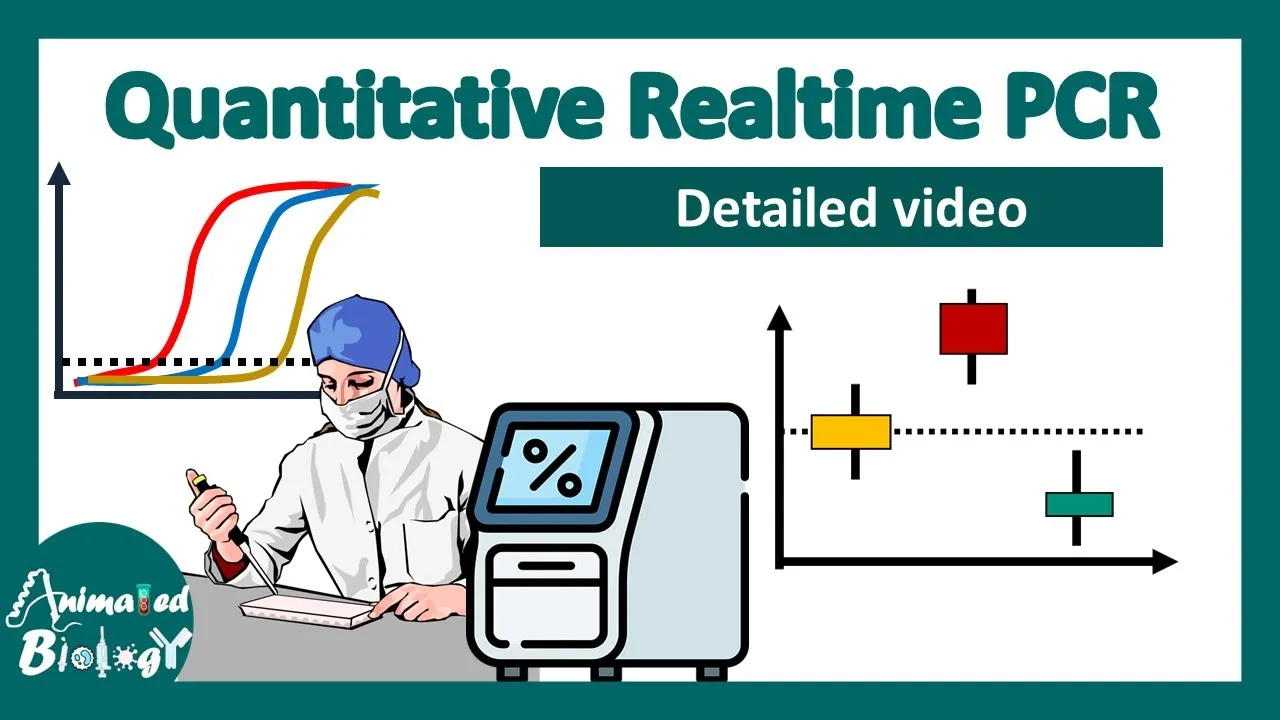
Quantitative Real-Time PCR (qPCR): Principle, Method & Data Analysis
@animatedbiologywitharpan
129.2K views•2023-09-06
Microbial Degradation of Plastics: Biodegradation Pathways & Sustainability
@majeedhammad
2.9K views•2021-04-11
CRISPR and Genetic Engineering: How Gene Editing Works and Why It Matters
@kurzgesagt
30.5M views•2016-08-10
Related Study Plans & Knowledge Roadmaps
Structured learning paths in Biotechnology