






![AQA A-Level Chemistry June 2021 Paper 2 [Walkthrough and Tutorial]](https://i.ytimg.com/vi/LTDWxiqBAHY/maxresdefault.jpg)
![Lec-01: রাসায়নিক পরিবর্তন [গ্রিন কেমিস্ট্রি, E-Factor, Atom Economy, Question Bank Solve]](https://i.ytimg.com/vi/OHZD7V-rqBA/maxresdefault.jpg)








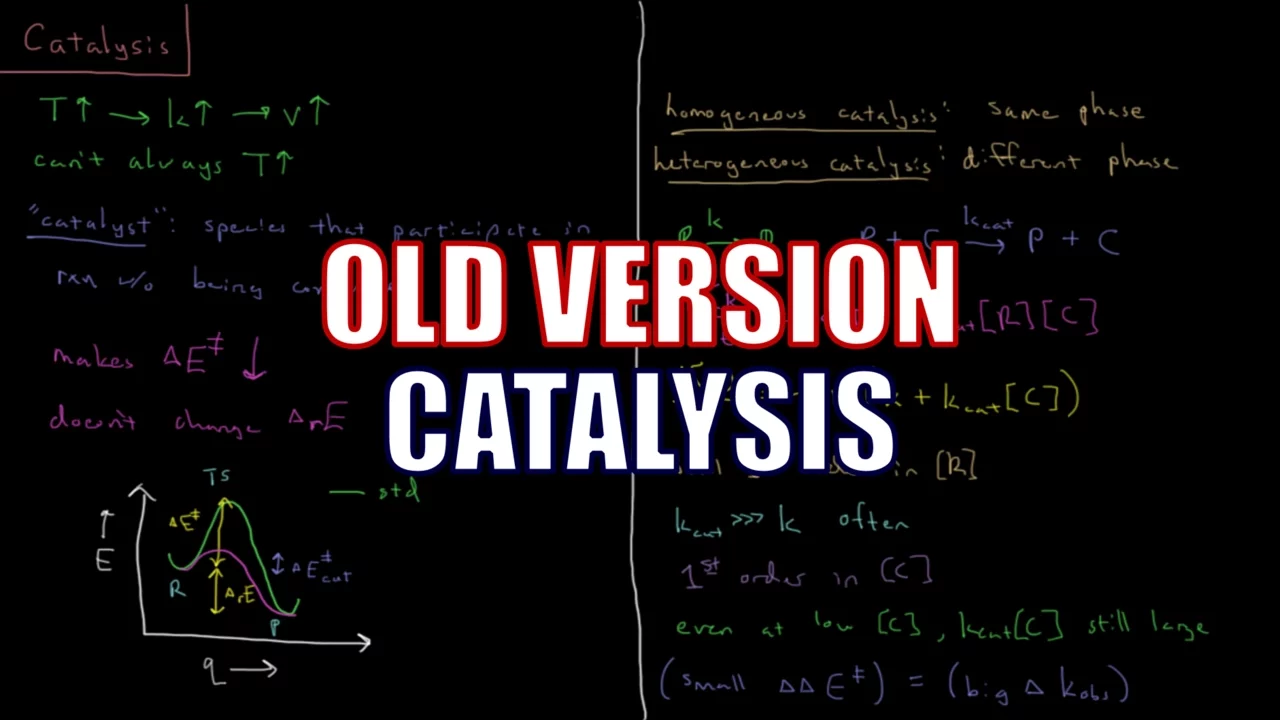
The ninth principle of green chemistry emphasizes that catalytic reactions are superior to stoichiometric reagents because catalysts speed up chemical reactions without being consumed, enabling selective transformations that minimize waste production and maximize atom economy in chemical synthesis.
Catalysis in Green Chemistry: Principle 9 Explained
Added:Basic concepts of chemical kinetics and catalysis, including how catalysts lower activation energy without being consumed.
The fundamental difference between stoichiometric reagents (which are consumed in stoichiometric ratios) and catalytic agents.
An introductory understanding of the 12 Principles of Green Chemistry and the overall goal of minimizing environmental impact in chemical design.
The concept of 'Atom Economy' and how chemical waste is quantitatively measured in synthetic organic chemistry.
Advanced catalytic methodologies, such as biocatalysis (using enzymes) and organocatalysis, which avoid the use of toxic heavy metals.
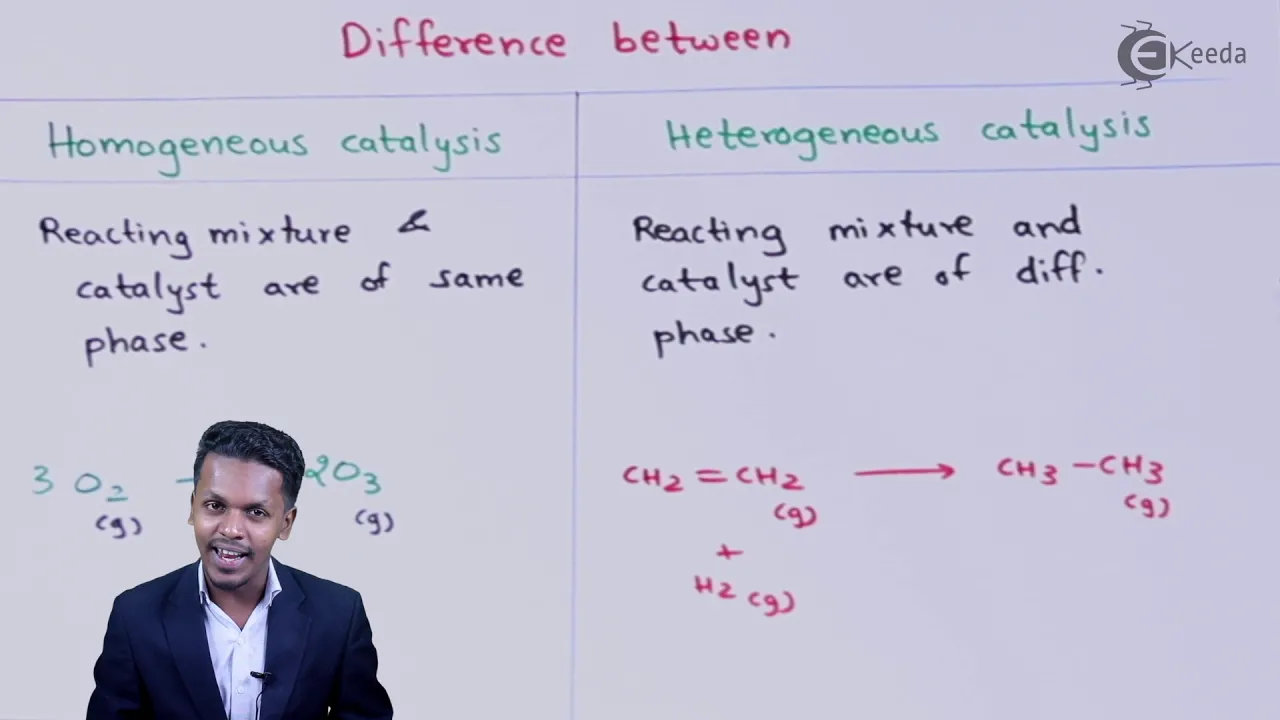
The distinction between heterogeneous and homogeneous catalysis, and their respective engineering trade-offs in green industrial processes.
Evaluating the environmental footprint of catalyst preparation, lifetime, and recyclability using Life Cycle Assessment (LCA) methodologies.
Real-world industrial case studies, such as the green catalytic synthesis of pharmaceuticals like Ibuprofen or Sitagliptin.
17.4K views143likes3:50Original Release: 2017-07-24
[Music] hey I'm Jamie and I stated today were going to be talking to you about the ninth principle of green chemistry which is catalysis this principle states that catalytic creation select the platform are superior to social metric reagent in a synthesis the term stoichiometric first a simple ratio between reagents and palace count or reaction the term catalytic refers to a substance that speeds up a chemical reaction a catalyst is something that participates in a reaction but does not undergo permanent change the term selective here means that the reaction happens on a location on the molecule where we want it and only where we want the problem with unselective reagents was encountered in video 8 to illustrate these terms consider the following example let's say you have a group of babies and you want to put use on them putting 8 shoes on for babies yields for babies which use in this case the stoichiometric ratio between shoes and baby is 8 - 4 in lowest terms that's 2 to 1 however simply giving the shoes to the babies it's unlikely to be to any desired outcome because babies lots of motor skills to put shoes on their own feet in chemistry type the babies are unreactive towards shoes if only there was some way to speed up this process some helpers like your cattle mark so if we add an adult for situation the adult who put shoes on the first baby and the second baby and 3rd baby and then the fourth baby we achieve our desired outcome much faster the adult help at the end the adult is unchanged by the process of putting shoes on the baby's feet just like how a catalyst is unchanged during a chemical reaction it's easy being a catalyst to make reaction spontaneous but in the green chemistry sense why are there preferable to strict geometric reagent to answer this question we'll turn to an example from organic chemistry we want to react this ketone with this hydrogen to make our desired products alcohol however a mixture of just ketone and hydrogen do not react with each other one solution to this problem is to use a more reactive source of hydrogen namely sodium borohydride followed by water by employing this pair of me agents we can synthesize the desired product however because we use stoichiometric amounts of sodium borohydride on water we generated stoichiometric amounts of waste the atom economy of this reaction leaves much to be desired from wireless concepts check out a radio too we want to avoid producing waste products for a number of reasons depending on nature of the way for them it may adversely impact humans and or the environment to check out more of this click on do three different producing waste I mean we're spending actions time and money on materials that is ultimately not incorporated into our joint product furthermore if the waste was also be treated as both basis all the suits more resources away from our purpose of synthesizing chemicals employees we are not being as efficient as you could a better solution to our chemical problem is to combine ketone hydrogen and the catalysts such as palladium on carbon this combination of reagents give the desired product just as the adult helper in the first example or as the shoes that they say on the baby's feet the catalysts Orient's hydrogen so that it is incorporated into the ketone to form the desired product no waste is generated and a catalyst to be filtered all can be used so remember we're given a choice between during matress reagents and a catalytic Regis degree and all choose catalytics thank you for watching be sure to LIKE this video and subscribe to be the rest of our series on principles of green chemistry if you want to learn more about green chemistry initiatives check us out on our website Facebook or Twitter
Up Next
46:07
Periodate Cleavage, Retrosynthesis & Green Chemistry
@YaleCourses
4.3K views•2012-04-05
83:56
Biocatalysis and Catalysis in Islatravir Synthesis | Merck Webinar
@SCIwheresciencemeetsbusiness
675 views•2020-10-08
3:48
Green Chemistry Principle 7: Use of Renewable Feedstocks
@GreenChemUofT
16.7K views•2016-10-31

17:31
Edible Water Bottles: A DIY Guide to Sodium Alginate Spherification
@ryan
10.5M views•2019-06-21
Related Study Plans & Knowledge Roadmaps
Structured learning paths in Chemistry
chemistry
Nuclear Chemistry: Decay, Meds & Fuel Cycle
01Introduction to Nuclear Structure and Radioactivity
02Decay Dynamics and Kinetics
03Radiation Interaction and Detection
+ 2 more learning modules
24h5 modules
Explore Roadmap
chemistry
Supramolecular Chemistry: Forces & Machines
01Foundations of Chemical Bonding and Intermolecular Forces
02Introduction to Host-Guest Chemistry
03Thermodynamics and Dynamics of Self-Assembly
+ 2 more learning modules
16h5 modules
Explore Roadmap
chemistry
Photochemistry: Excited States & Reactions
01Foundations of Light-Matter Interactions
02Molecular Orbitals and Electronic States
03Photophysical Processes and Jablonski Diagrams
+ 2 more learning modules
18h5 modules
Explore Roadmap
chemistry
Coordination Chemistry: Bonding & Properties
01Introduction to Transition Metals and Ligands
02Crystal Field Theory (CFT) and Geometry
03Magnetic Behavior and Spin States
+ 2 more learning modules
14h5 modules
Explore Roadmap