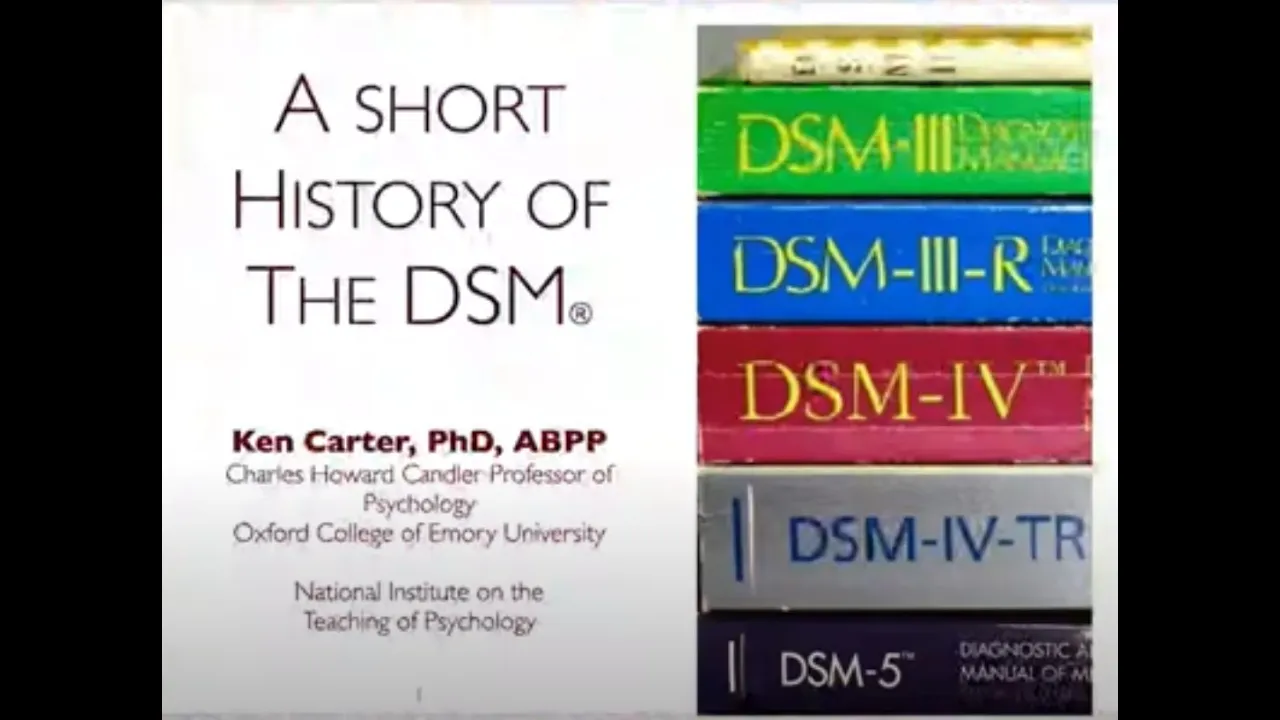














The Diagnostic and Statistical Manual of Mental Disorders (DSM), which has expanded from approximately 106 disorders in the 1960s to around 370 today, was constructed primarily through clinical consensus and voting among small committees of psychiatrists rather than rigorous scientific research, with disorders often being named before biological evidence for their existence was established, raising questions about the scientific validity of psychiatric diagnosis.
How the DSM Was Built: Psychiatric Diagnosis Explained
Added:The purpose and history of the Diagnostic and Statistical Manual of Mental Disorders (DSM) as the standard classification system for mental disorders.
The distinction between diagnostic 'reliability' (consistency of diagnoses among clinicians) and 'validity' (whether a diagnosis reflects an objective biological reality).
Basic scientific methodology, particularly how hypotheses are tested and validated in clinical medicine versus psychological sciences.
The historical shift in psychiatry from psychoanalytic perspectives to the biomedical model of mental illness.
Alternative diagnostic and research frameworks, such as the National Institute of Mental Health's Research Domain Criteria (RDoC) and the ICD (International Classification of Diseases).
The influence of socioeconomic factors, insurance systems, and the pharmaceutical industry on the expansion of diagnostic categories.
The core arguments of the critical psychiatry and anti-psychiatry movements regarding the medicalization of normal human distress.
The ethical, legal, and social implications of psychiatric labeling on self-identity, stigma, and patient autonomy.
63.1K views1.9Klikes34:22Original Release: 2015-09-30
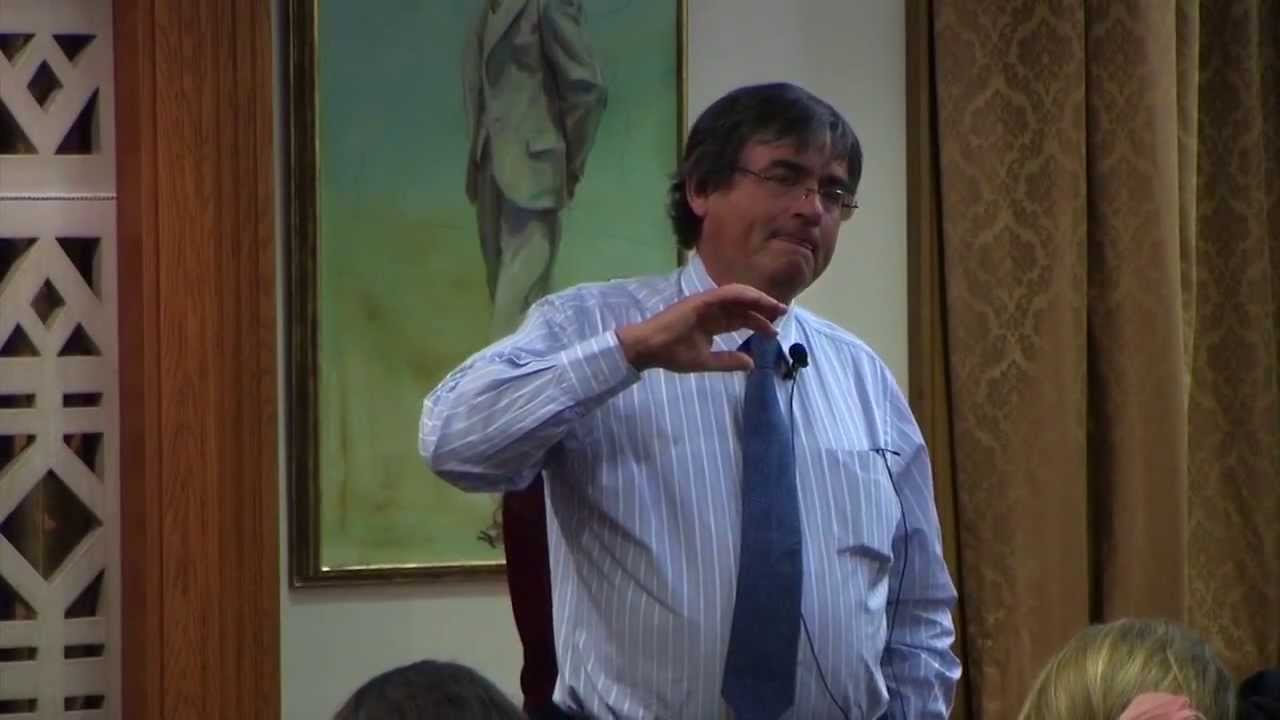
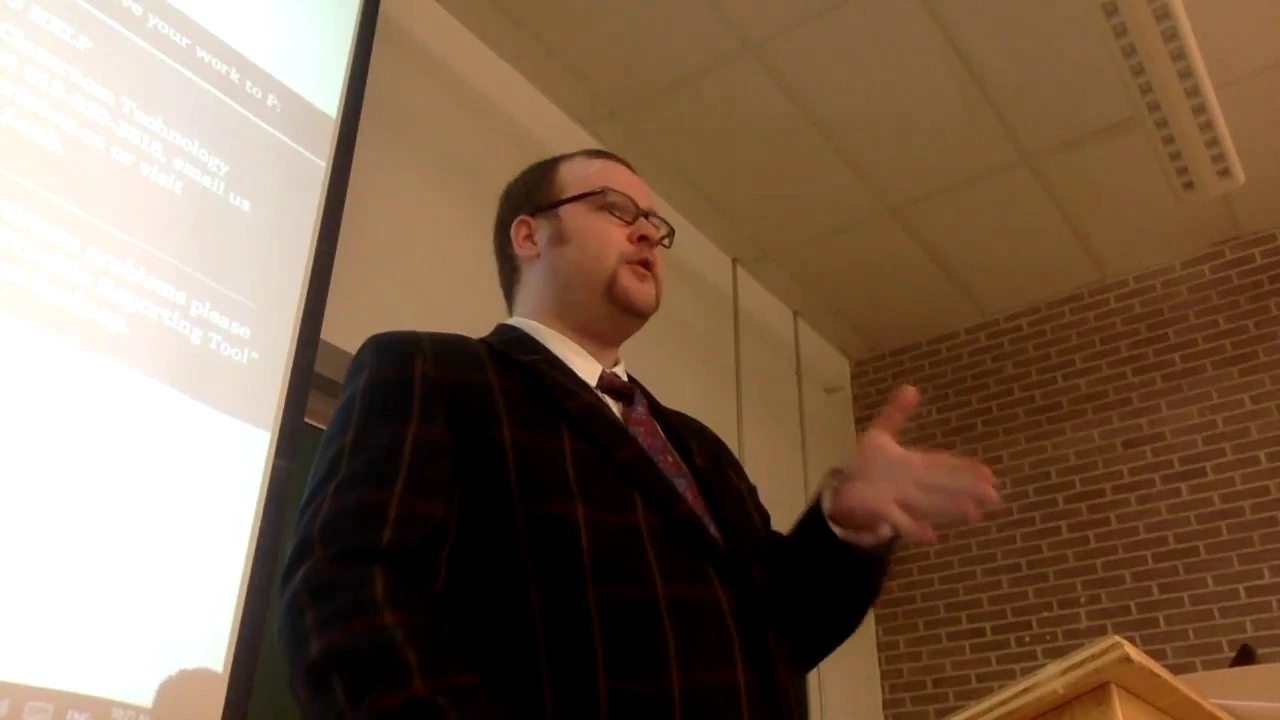
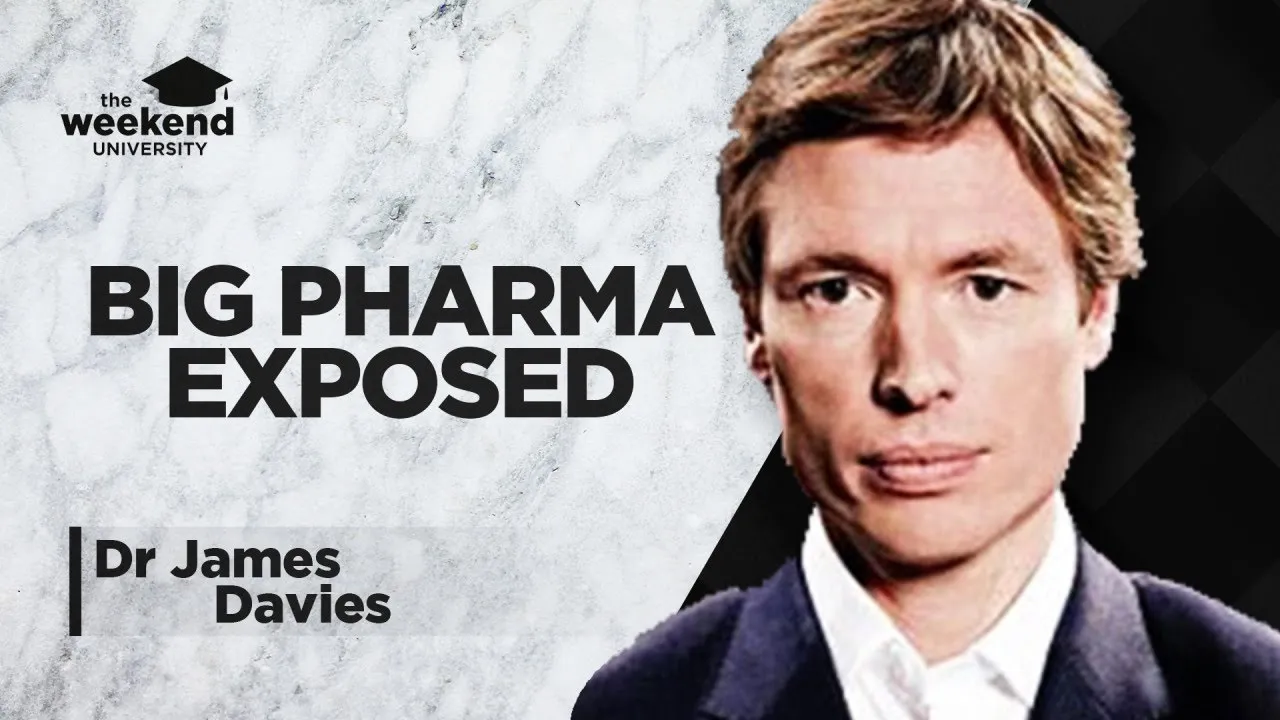
okay now usually at this point uh it would fall to me to introduce our first speaker for this morning but given that I am the first Speaker allow me to introduce myself uh my name is uh James Davis I am a reader in Social anthropology and mental health here at the University of rampton and I'm co-founder of C along with uh Luke montigue uh I've also written on the problems of modern day psychiatry in particular in a book I wrote for the general reader published in 2013 called cracked and I'm going to present a little bit from that book today in particular focusing on psychiatric diagnosis now we felt it important to begin a conference on psychiatric medications with a focus on psychiatric diagnosis because receiv receiving a diagnosis or some kind of diagnostic test is really the first step for most people to receiving a psychiatric prescription so if there is something wrong or problematic with our diagnostic system then everything that follows there from is also to some extent problematic so in other words psychiatric medications can be criticized not only on the grounds of the potential harms they may cause but also on the grounds that the diagnostic justification for prescribing them leaves much to be desired so what I'm going to argue uh today is that Psychiatry under the dominance of the biomedical model over the last 40 years has wrongly medicalized increasing numbers of people in contemporary Society so apparently one in four of us now suffers from a mental health disorder in any given year and I'm going to argue that this figure is so startlingly High because Psychiatry has simply renamed more and more of our natural and normal orbe it painful human experiences as indicating psychiatric conditions that often times require some kind of uh psychopharmaceutical intervention so by reclassifying normality as abnormality Psychiatry has helped create the illusion of a psychiatric epidemic I'm not suggesting the suffering itself is elcer but our tendency to see that suffering as psychiatric in nature now at the heart of this illusion I'm going to argue sits a book called the DSM the diagnostic and statistical Manual of mental disorders the book that includes all of the mental disorders that Psychiatry believes to exist now the interesting thing about this book is that it has expanded at a faster rate than almost any other medical manual in history so for example in the 1960 s it included around 106 disorders whereas today it includes around 370 so what is going on well that's the question I set out to answer when uh writing part of uh my book but I encountered an immediate problem and it was this that there is very little documentary evidence chartering the processes that the Committees who wrote the DSM followed when they put that manual together so I soon realized if I were to write some kind of reconstruction of events then I would have to go and speak to the people who wrote that manual so that's what I did I started with somebody called Dr Robert Spitzer who's now generally regarded to be the most influential psychiatrist of the 20th century because he was chairperson of DSM 3 published in 1980 he headed a team of around nine people it went up to 13 at one point but it was really a team a core team of nine people called the task force who wrote and put that manual together now I'm starting with dsm3 today because by far it was the most important Edition in the Manual's history it established the modern diagnostic system under which we still broadly operate today it introduced 80 brand new mental disorders many of the household name disorders with which some of you may be familiar and it significantly lowered the bar for what constitutes mental illness with respect to many conditions uh including uh depression so what I'm going to do is present you a composite of the data I gathered from interviewing key members of the task force and the data I gathered from Consulting the DSM archives in Washington DC uh last year in March but before I get to that uh data let me first set the scene on a sunny May morning in 2012 I catch the train from New York City as we leave Penn Station the train slowly shunts and rattles under the Hudson River before emerging onto the Wasteland of industrial New Jersey after passing for about 30 minutes through a bleak landscape of nled bogland and abandoned warehouses signs of plusia Suburbia begin to break through as the gain uh train gains Pace with each passing mile the outside scene grows steadily more affluent the houses get bigger the cars shinier and the landscape Lusher until 50 minutes later we terminate at Princeton University now I traveled to Princeton that early May morning because uh three years earlier uh dror Robert Spitzer had moved out there from nearby Westchester his wife had taken a job at a local research laboratory and Spitzer now in his late' 70s had decided to Embark upon One Last Adventure they had chosen a large and comfortable house in the historic leafy suburbs just Northeast of the university and as my taxi pulled up outside it was clear they had chosen well I approached the house knock on the door Spitzer opens it dressed in sandals at shorts a loose Sports top one of the first things he says to me is do you want to stay for lunch and I just finished one of those mountainous American breakfasts so I you know I struggled to decline him politely but then uh to my great relief he said well why don't we first sit down so I can tell you what you want to know so one of the first questions I had for Spitzer concerned what was the rationale for the huge expansion of the DSM that happened under his watch at new disord disorders as I mentioned a moment ago he said the following the disorders we included weren't really new to the field they were mainly diagnoses that clinicians used in practice but which weren't recognized by the DSM so by including them in the DSM we gave them professional recognition so presumably these disorders had been discovered in a biological sense that's why they were included right no not at all there are only a handful of mental disorders in the DSL the opposite way Psychiatry first names a disorder before any pathological Roots have been discovered in the body so in effect a new mental disorder can make it into the DSM and become part of our wider culture even though there is no biological evidence to support its inclusion so I continued so if there are no known biological causes on what grounds do mental disorders make it into the DSM what other supports their inclusion well Psychiatry has to look for other things behavioral psychological we have other procedures I asked what these were I guess our general principle was that if a large enough number of clinicians felt that a diagnostic concept was important in their work then we were likely to add it as a new category that was essentially it it became a question of how much consensus there was to recognize and include a particular Disorder so it was agreement that determined what went into the DSM that was essentially how it went right another important point to be made here agreement does not constitute scientific proof for example if a group of theologians all come together and agree that God exists this does not prove that God exists all it proves is that this group of the theologians believe it does so in what sense is is DSM agreement different why when a committee of uh DSM practitioners comes together and agrees upon something should the rest of us accept they have got it right well the obvious answer to that question would be well surely there were other forms of research that were guiding the committee in reaching the agreements they did and to address that now I want to uh bring into the conversation someone called Paula Jay Kaplan who was professor of psychology at Harvard at Kennedy School now she Paul is very important because she uh was a consultant on DSM 3 and also aggressively uh lobbied at DSM not to include a new disorder this disorder was called self-defeating personality disorder or sdpd for short now she argued uh this shouldn't be incl because there was a historical precedent in the legal literature of uh female victims of violence being diagnosed with this condition the reason for that is because the characteristics of sdpd were very similar to the characteristics that certain women displayed when they had been victims of violence so the danger with this diagnosis is that it could end up pathologizing female victims of violence but in addition to that it could also end up um letting the perpetrators of such violence off the hook because presumably they were just doing what these women wanted because they had a self-defeating Personality Disorder so for these two reasons she lobbied Spitzer not to include the diagnosis but he remained adamant so in a last ditch effort to influence him she decided on a new strategy as she says I decided to scrutinize thoroughly the very research used to justify including sdpd in the DS M now let's have a little look at what she found firstly she only found two pieces of research which is a remarkably small amount by anyone's standards but let's now have a little look at what that research constituted the first piece of research was conducted by Spitzer himself he gathered a group of psychiatrists at only one University who already accepted that sdpd existed and they were shown some old case studies all then unanimous ly agreed the patients in them had sdpd Kaplan pointed out that just because some psychiatrists at One hospital all diagn diagnosed their patients with sdpd was not proof that the disorder actually exists all it proves as Kaplan said is that a group of psychiatrists working in the same institution gave the same label rightly or wrongly to a given set of behaviors it proves nothing more than that but if you think that first piece of research is weak then just consider the second piece a questionnaire was sent to a selected number of members of the American Psychiatric association this asked them whether the diagnosis sdpd should be included in the DSM an official report conducted by the psychologists Kutchins and Kirk showed after doing the calculations that only 11% voted yes which is surely not a representative sample of the psychiatric community now you may say well look sure James but maybe you're you're cherry-picking here you're taking this example it's an extreme example in order to make a wider point and that would be a fair uh response uh to make so let me uh now bring into the conversation someone called Dr Theodore Millan a key member of Robert Spitzer's task force the following quote it refers to not just sdbd but all of the disorders that Spitzer's team included this is what Theodore Millan said there was very little systematic research and much of the research that existed was really a hodgepodge scattered inconsistent and ambiguous I think the majority of us recognized that the amount of good solid science upon which we were making our decisions was pretty modest so let's go back now to my sitting in the room with Robert Spitzer at his home in Princeton I decided to read to Spitzer this quote to see what he made of it and after a short and somewhat uncomfortable silence Spitzer responded in a way I simply had not expected he said the following well it is true that for many of the disorders that were added there wasn't a tremendous amount of research and certainly there wasn't research on the particular way we Define these disorders in the case of millan's quote I think he's mainly referring to the personality disorders but again it is certainly true that the amount of research validating data on most iatric disorders is very limited indeed so you're saying that there was little research not only supporting your inclusion of new disorders but also supporting how these disorders should be defined there are very few disorders whose definition was a result of specific research data now I was so surprised by this admission that I decided to check it out with other members of his his task force so on a rainy English morning once I returned to London I called uh someone called Professor Donald Klein from my office here in this uh University I read to Klein what Spitzer has said to me to see what he made of it and this is how he responded and incidentally uh Donald kleene was unofficially second in command of the T task force so a very important figure indeed sure we had very little in the way of data so we were forced to rely on clinical consensus which admittedly is a very poor way to to do things but it was better than anything else we had so without data to guide you how was this consensus reached we thrashed it out basically we had a three-hour argument there would be about 12 people sitting down at a table usually there was a chairperson and there was somebody taking notes and at the end of each meeting there would be a distribution of events and at the next meeting some would agree with the inclusion and others would continue arguing if people were still divided the matter would be eventually deed decided by a vote a vote really sure that is how it went I then tried uh to check this out with again other members of the task force and the next person uh I spoke to was someone called uh Henry uh pinsker this is what he said about the voting method some things were discussed over a number of different meetings which would sometimes be followed by an exchange of memoranda about it and then there would simply be a vote people would raise hands there weren't that many people regarding the legitimacy of this method pins continued we never had any question that that was how we should proceed I had no reservations at all about working that way and incidentally um when I visited the archives in Washington DC I managed to Source uh 12 uh minuted meetings of the task force with the alist there and uh 10 out of those 12 meeting provided evidence of voting taking place within the meetings and not just voting on one issue but on many different issues that's just to say the archival data very much supports uh what we're hearing here from members of the task force itself finally an important Point needs to be made here um it's an obvious one but I'm going to make it nonetheless voting isn't a scientific [Music] activity when anything is voted into existence whether it's a new Union Leader a new political party or indeed a new mental disorder the likelihood we've got it wrong is never far away so let me now um turn to somebody called renigar finle she uh was a consultant on dsm3 she's important because she sat in on many of the task force meetings I spoke to her in 2013 this is what she said you must understand what I saw happening on the these committees wasn't scientific it more resembled a group of friends trying to decide where they want to go for dinner one person says I feel like Chinese food and another person says no no no I'm really more in the mood for Indian food and finally after some discussion and collaborative give and take they all decide to go have Italian she then gave me an example of how far down the scale of intellectual respectability she felt these meetings could some times fall on one occasion I was sitting in on a task force meeting and there was a discussion about whether a particular Behavior should be classed as a symptom of a particular disorder and as the conversation went on to my great astonishment one Task Force member suddenly piped up oh no no no we can't include that behavior as a symptom because I do that and and so it was decided that that behavior wouldn't be colluded because presumably if someone on the task force does it it must be perfectly normal um I'm going to give you some general Impressions uh of how these meetings unfolded gathered from my interviews and other sources according to other members of the task force these meetings were often haphazard Affairs suddenly these things would happen and there didn't seem to be much basis for it except that someone just decided all of a sudden to run with it one participant said one participant it seemed another member admitted that the loudest voices usually one out with no extensive data one could turn to the outcome of task force decisions often depended on who in the room had the strongest personality but the problem with relying on consensus reiterated garfinkle is that in the discussion some voices will just get quieter either because they don't want to fight or because they see they are in the minority and snap that's when a decision is made admittedly when the task force lacked expertise on a particular disorder Spitzer would consult relevant leaders in the field but this also led to chaotic meetings that members often found difficult to participate in one of the only British uh psychiatrists on the task force a psychiatrist called David Schaffer recalled how such meetings often unfolded in these meetings of the so-called experts who advises people would be standing and sitting and moving around but people would talk on top of each other but Bob would be too busy typing notes to chair the meeting in an orderly way in 2005 a really interesting article was published in the New Yorker magazine uh by a journalist called Alex Spiegel it was called uh entitled a dictionary of disorder and it was a biographical account of Robert Spitzer's influence on uh modern Psychiatry now Midway through that article there's a very interesting section on the construction of DSM and I'm going to quote from that article now because it is pertinent to what I'm I'm I'm talking about today Roger Peele and Paul Paul Lada psychiatrists at St Elizabeth's Hospital in Washington DC wrote a paper in which they use the term hysterical psychosis to describe the behavior of two kinds of patients they had observed Spitzer read the paper and asked Peele and lcada if you could come to Washington to meet them during a 40-minute conversation the three decided that hysterical psychosis uh should really be divided into two disorders brief reactive psychosis and factitious disorder then Bob asked for a typewriter Peele says to Peele surprise Spitzer drafted the definitions on the spot he banged out criteria sets for factitious disorder and for brief reactive psychosis and it struck me that this was a productive fellow he comes in to talk about an issue and walks away with diagnostic criteria IA for two different mental disorders and incidentally both of these disorders went into the DSM with only very minor modification from those original criteria so let me just read a couple of paragraphs before continuing as soon as Spitzer's DSM 3 was published in 1980 it became a sensation overnight the almost 500 Page Long manual sold out immediately the publisher of the DSM the American Psychiatric association was taken completely off guard it took approximately 6 months to catch up with all the orders that came flooding in the new manual was purchased not only by psychiatrists but by nurses social workers lawyers psychologists psychotherapists and the enthusiasm quickly spread far beyond the United States in Britain for example uh the manual had such imp impact that by the end of the 1980s most British psychiatrists were being trained to use the DSM furthermore spitz's DSM categories quickly became those that guided all research into psychiatric disorders internationally this meant that the disorders that were studied by researchers in Germany Australia Canada Britain India and so on and so forth were those defined and listed in Spitzer's DSM in short the book ultimately changed the fundamental nature of research and practice within the field not to mention the lives of tens of millions of people diagnosed with the psychiatric disorders listed therein and yet as the influence of the manual spread the truth about its construction remained obscure most professionals using the manual simply did not know and I would venture still do not know today the extent to which biological evidence or solid research failed to guide the choices the task force made they did not know that the definitions of the disorders contrived the validity of the disorders included and the symptom thresholds people must meet in order to receive the diagnosis were not decided on the basis of rigorous research but with the product of committee uh opinions or decisions which at best reflected the well-meaning professional opinions of a small subset of psychiatrists in short most people did not know that the fundamental changes Spitzer brought to Global Psychiatry only required the consensus of an extremely small group of people nine people and indeed as Spitzer openly confirmed to me in uh our interview our team was certainly not typical of the psychiatric community and that was one of the major arguments against DS M three it allowed a small group with a particular Viewpoint to take over Psychiatry and change it in a fundamental way what did you make of that criticism what did I make of that charge well it was absolutely true it was a revolution that's what it was we took over because we had the power now um I'm just going to spend uh a further minutes if I may uh moving forward into DSM uh 4 I'll be far briefer I promise um in 1994 DSM 3 reaches the end of its shelf life and is replaced by DSM 4 which is the DSM that remained in use for nearly 20 years right up until May 2013 when DSM 5 uh emerged in 2002 and 20 2012 and 13 I interviewed the new chairperson of DSM 4 Alan Francis on a couple of occasions and one of the first questions I had for Alan Francis was with the benefit of hindsight was there anything that your team did uh when putting together DSM 4 that you now regret and he answered in the following way well the first thing I have to say about that is that DSM 4 was a remarkably unambitious and modest effort to stabilize psychiatric diagnosis and not to create new problems this meant keeping the introduction of new disorders to an absolute minimum this needs a bit of qualification uh what does he mean by that well his team only introduced about eight new mental disorders into the main text which is indeed a modest amount compared to the 80 introduced by Spitzer on the other hand from another standpoint this claim to modesty is very shaky because it doesn't take into account the following things firstly France's team actually expanded the DSM by 30 other disorders but put them in the appendix and subdivide Ed many existing conditions in effect creating new ones so if you count the appendix seclusions and the subdivisions all of which people can and are diagnosed with then his team actually expanded the DSM from around 270 disorders to around 370 which is the in my view the opposite of uh conservativism so we continued yet despite that conservatism we learned some pretty tough lessons we learned overall that even if you make minimal changes to the DSM the way the world uses the manual is not always the way you intended it to be used for instance we added bipolar 2 as spurges disorder and finally we added ADHD and well these decisions help promote three false epidemics in Psychiatry I asked him what he meant by that well we now have a rate of autism that is 20 times what it was 15 years ago by adding bipolar to we also doubl the ratio of bipolar versus unipolar depression resulting in lots more use of antis psychotic and mood stabilizer drugs rates of ADHD also tripled partly because new drug treatments were released that were aggressively marketed so every decision you make has a tradeoff you can't assume the way you write the DSM will be the way it'll be used so the way the DSM is being used has led to the medicalization of a number of people who don't warrant their diet agnosis exactly can you put a figure on how many people have been wrongly medicalized there is no right answer to who should be diagnosed there is no gold standard for psychiatric diagnosis so it's impossible to know for sure but when the diagnosis rates triple over the course of 15 years my assumption is that medicalization is going on and that's I think a very uh important uh admission for Francis to make and he's made it in in many other uh places but could the situation be even worse than that because Francis is only talking about the main disorders he put in the main manual he's not talking about the appendix inclusions also he's not talking about the existing problem of medicalization he allowed to live on through into DSM 4 from dsm3 so for example let me give you uh some instance some of the disorders he allowed to live on we have things like uh female orgasmic disorder caffeine related disorder stammering uh stuttering uh transexualism Oppositional Defiant Disorder which is something I I suffer from uh quite quite acutely now no nobody is suggesting that these things aren't experienced as Problems by certain people but whether or not they constitute psychiatric disorders is another matter entir high so my final question for Francis and we're coming to the end now my final question for Francis was given that there was poor research backing for many of the disorders why did you allow them to live on into DSM 4 why didn't you simply remove them on on the basis that there was poor research backing or on the basis that they were some of them were just plainly eccentric and he responded in the following way if we were going to either add new diagnoses or eliminate existing ones there had to be substantial sign scientific evidence to support that decision and there simply wasn't so by following our own conservative rules we couldn't reduce the system any more than we could increase it now you could argue that that is a questionable approach but we felt it was important to stabilize the system and not make arbitrary decisions in either direction but one of the problems with proceeding in that way is that it assumes the DSN system you inher ited from Spitzer was fit for purpose for example it assumes that the disorders Spitzer Spitzer's team included and the diagnostic thresholds Spitzer's team set were themselves scientifically established we did not assume that at all we knew that everything that came before was arbitrary Francis quickly corrects himself we knew that most decisions that came before were arbitrary I had been involved in DSM 3 I understood the limitations probably more than most people did but the most important value at that time was to stabilize the system not change it arbitrarily so you're essentially saying that you set out to stabilize the arbitrary decisions that were made during the construction of dsm3 in other words corrected Francis it felt better to stabilize the existing arbitrary decisions than to create a whole assortment of new ones and I I thought it was a good place to to bring our interview to a to a close there so um and I'm now going to I'm now going to bring my presentation to a close so finally uh what I've discussed today I think poses a serious challenge to those who embrace the conventional view that mental disorders are discreet patterns of biologically rooted pathological feeling and behavior identified by way of objective research processes what an inspection of the construction of DSM rather reveals is that the separate disorders into which DSM organized diverse behavioral and mental phenomena were largely the outcome of vote based judgments settled by a small culturally homogeneous subset of mental health professionals who were socially positioned at a given point in time to have their judgments ratified by the institutional apparatus of the American Psychiatric association now while such judgments May indicate that a group of professionals sharing similar sociocultural beliefs biases Persuasions and interests may see some things in the same way at a given point in time they do not confirm that what they see is either objectively true or stable in any verifiable sense and certainly such judgments do not provide any robust empirical justification for the vaulting levels of Psy psychopharmaceutical prescribing that we have seen in recent years and about which we will hear far more today thank you so much for [Applause] listening
Up Next
137:03
Con Artist's Guide to Snitching: Matthew Cox on Prison Ethics and Escaping the FBI's Most Wanted List
@dannyjones
110.3K views•2023-05-07

68:32
Cognitive Skills for Differentiated Instruction | Teacher PD
@BrainWareLearning
631 views•2017-12-17

9:55
Thinking, Fast and Slow: Daniel Kahneman Animated Book Summary
@FightMediocrity
2.3M views•2015-06-05

6:40
The Nocebo Effect: How Beliefs Can Cause Real Harm
@CGPGrey
10.4M views•2013-12-23
Related Study Plans & Knowledge Roadmaps
Structured learning paths in Psychology
psychology
Neuroscience of Creativity: Networks & Training
01Foundations of Creative Cognition
02The Cognitive Neuroscience of Insight & Fixation
03The Triple Network Model of Creativity
+ 1 more learning modules
15h4 modules
Explore Roadmap
psychology
Imposter Syndrome: Etiology & CBT Framework
01Defining the Imposter Phenomenon
02Socio-Developmental Etiologies
03CBT Fundamentals & Thought Distortions
+ 2 more learning modules
15h5 modules
Explore Roadmap
psychology
Adult ADHD: Executive Dysfunction & Scaffolding
01Neurobiology of the ADHD Brain
02The Core Triad of Executive Deficits
03Executive Dysfunction and Emotional Regulation
+ 2 more learning modules
12h5 modules
Explore Roadmap
psychology
Loneliness: Evolution, Neurobiology & CBT
01Evolutionary Origins of Human Connection and Loneliness
02The Neurobiology and Physiology of Chronic Loneliness
03Maladaptive Social Cognition: The Psychological Loop
+ 2 more learning modules
12h5 modules
Explore Roadmap