














![[Emma Towlson] Network Signatures of Vulnerability to Brain Dysfunction](https://i.ytimg.com/vi/9d6Z72EPn6E/hqdefault.jpg?sqp=-oaymwEmCOADEOgC8quKqQMa8AEB-AH-CYAC0AWKAgwIABABGGUgWShEMA8=&rs=AOn4CLALCMUfwR_5CRvEckV09nWgzwMvUA)




![🎤 Interview [Redif]– Vers une intelligence artificielle vraiment intelligente ? (Bruno Maisonnier...](https://i.ytimg.com/vi/OauJu-43Aeo/maxresdefault.jpg)

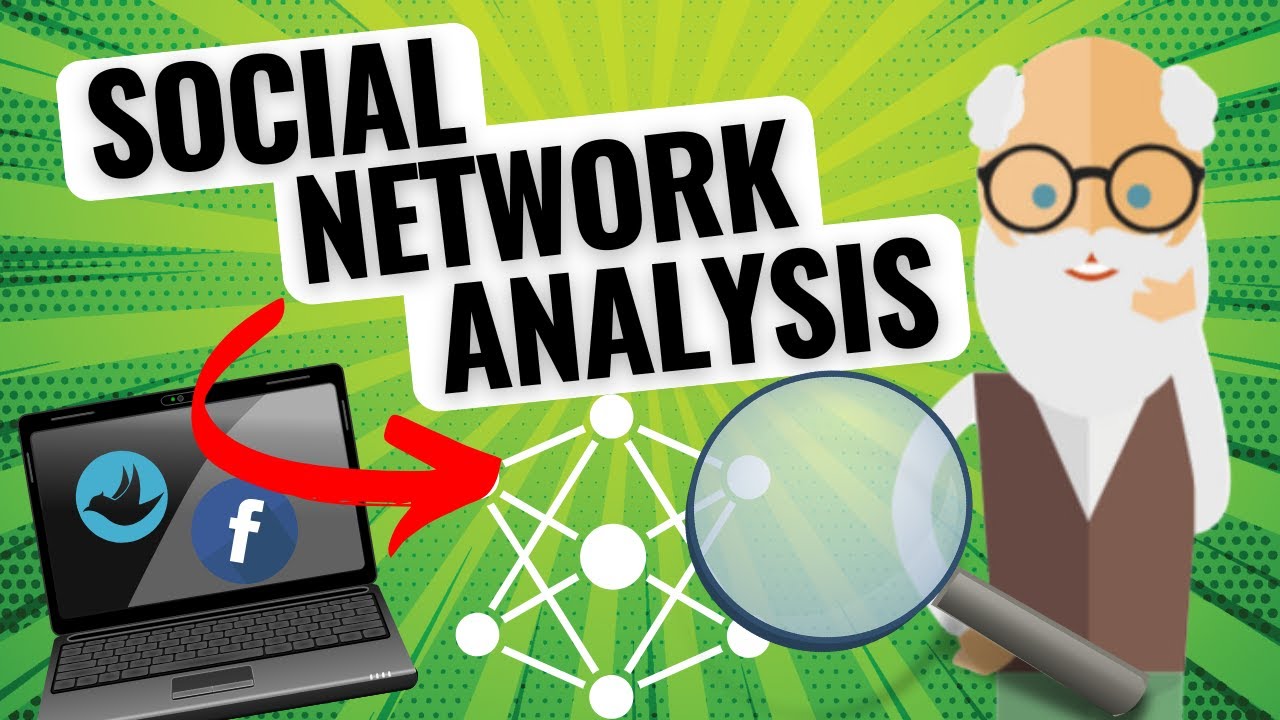
The brain can be understood as a network of interconnected regions (nodes) linked by white matter tracts (edges), similar to how social networks like Facebook are structured; network science provides mathematical tools to analyze these connections, revealing that brain network efficiency correlates with cognitive abilities such as IQ, and that brain flexibility—the ability to change connection patterns during learning—is a key factor in learning outcomes, with implications for neurorehabilitation and education.
Network Neuroscience: How Brain Structure Mirrors Social Networks
Added:Basic Graph Theory: Understanding fundamental network concepts such as nodes, edges, clustering coefficients, and small-world properties.
Introduction to Neuroanatomy and Connectomics: Familiarity with brain regions, synaptic connections, and the concept of mapping the brain's structural wiring (the connectome).
Concepts of Neuroplasticity: Knowledge of how neural pathways reorganize and adapt in response to learning, experience, and environmental changes.
Fundamentals of Social Network Analysis: Understanding how social structures are modeled using networks to represent individuals and their interpersonal relationships.
Dynamic Network Neuroscience: Exploring how the brain's functional networks change and reconfigure over short timescales during cognitive tasks.
Clinical Network Neuroscience: Studying how alterations or disruptions in brain network topology contribute to neurological and psychiatric disorders (e.g., schizophrenia, Alzheimer's).
Network Control Theory: Learning how engineering control theory is applied to brain networks to understand how the brain transitions between different cognitive states.
Bio-inspired Artificial Intelligence: Investigating how the structural and functional properties of human brain networks can be used to design more efficient artificial neural network architectures.
1.5K views19likes19:57Original Release: 2015-12-05
so with that I will introduce our first speaker dr. Dani Bassett she's an assistant professor of bioengineering here at Penn she received her BS in physics from Penn State and her PhD in physics from the University of Cambridge in the UK and she's got a ton of awards just to name a few she was named the American Psychological associations rising star she's an Alfred P Sloan research fellow and she has a MacArthur Fellow genius grant she also founded this really amazing program the Penn network visualization program which is both an undergraduate art internship and a k-12 educational program so with that then title of our talk is Facebook how relates to the brain please help me welcome dr. Dani Bassett great okay can everybody hear me wonderful all right so tonight I'm going to tell you about how we can use Facebook to understand the brain and hopefully you're all wondering what in the world does Facebook have to do with the brain right so on the left hand side Facebook is you know clearly a it's a social networking software program that enables you to link with friends that you know share information share your ideas your hopes your dreams the brain is a mat wet messy organ right so the two of these things don't naturally seem like they should really be going together in the same slide deck however tonight I will be able to tell you why they do belong together so number one it turns out that they are both networks so to understand what that means I need to tell you what a network is right so a network is a very simple representation of complex data it separates complex data into two elements the first is components of the system which are called nodes here and the second is connections between components and those are called edges so this pattern of nodes connected by edges is called a network and that's exactly what underlies the similarity between these two ideas so let's sort of drill down a little bit farther into that how does it how is Facebook a network well Facebook is a network because individual people are the nodes right so those are the components of the the Facebook system and then the edges would be links of friendship so I linked to somebody else because I'm their friends and we say we're friends on Facebook and so therefore there's a link between us okay what's neat about networks is that they have all kinds of interesting structure very oftentimes groups of individuals will cluster together in their friendships and may not necessarily linked to another cluster of individuals so I've put different types of individuals that were at least familiar to me about 15 years ago I don't know if they are still relevant but so there you go there are clusters of individuals that sort of densely interconnected with each other so that's how Facebook is a network how is the brain and network ok so if you look at this do you see a network do you see some nodes do you see some edges you see a nice sort of ball-and-stick diagram no ok good your eyes are working all right so what we want to do is we want to say no definitely not from the outside you can't see that this is a network but we want to put ourselves inside of this little girl and look through a telescope inside the brain and figure out what's going on inside ok so this is what's going on inside so this is using a new type of neuro imaging technique called diffusion imaging and what this does is it maps out the diffusion of water molecules inside of your head so you probably didn't know that your head has a bunch of water molecules that are all bouncing around inside of it right I didn't really know that until a couple years ago either but what happens is that those water molecules bounce along and as they bounce they hit up against walls inside of your head and the walls inside of your head are these big highways along which information can be transmitted they're called white matter tracks but they're basically information highways inside of your head so that's basically how this turns out to be a network so how could we represent it in a ball and stick illustration that I had previously we are missing significant pictures I really want you to see this yes figure it's actually made by a student in the School of Design so what we've been doing he just came back from a internship at Pixar and what we've been doing is we've been combining moviemaking and neuroscience so I want you to see it you just go straight to the next one yes okay cool great all right so this is how you would represent it as a network so here you have little balls that indicate different parts of the brain and then you have links between those balls that indicate these highways or connections in between different parts of the brain so the brain areas will be the nodes in our network and then these highways or white matter tracks will be the edges in our network okay so basically what we have is a twin problem so we have Facebook which is the network and we have the brain which is a network and the question is are there any techniques that we can use from the study of Facebook to understand the brain so I put up here myself and my identical twin to illustrate that it's a twin problem all right so what we're gonna do is we're gonna treat these two as mathematically similar objects these two not those two and see what we can do all right so to do that what we're gonna do is we're gonna pull from a new theory or a new sort of set of science called network science which has been created basically to study social networks like Facebook and this field is an academic field that studies complex networks considering the connections between different nodes or components of a system basically the idea is the pattern of nodes and edges really matters there are different patterns that you see in different systems and that matters for how the system can perform so it brings together lots of different fields brings together math in a specific area called graph theory brings together physics statistical mechanics computer science statistics and specifically sociology so these this was developed to understand and networks like Facebook but because both the brain and Facebook are networks we think that this should be very relevant for understanding how the brain works all right so in reality okay that was the pretty slide and then this is the true slide which is that network science is basically a lot of math which is great for me because I love math but I jumbled them up because you're not supposed to understand any of it that's fine okay so Network science provides a toolbox for understanding the organization of these node and edge patterns as I said every system that we look at has a different set of nose a different set of edges and a different pattern of interconnections between them and so what we're trying to do is use math to understand what that organization is what is the pattern how can we describe the pattern how can we predict the pattern and then ultimately how could we manipulate the pattern potentially to change circuit behavior so I'm gonna give you two illustrations of how this can work to give you an intuition for why this mapping really matters for understanding the brain and the first is an illustration of a concept called network efficiency so network efficiency is the idea that you want to transmit information form from one side of the network to the other and you would like to do that in the most efficient way possible so on the left hand side here we have a network and we want to get from this side to this side the fastest way that we could do that is by going along the red lines so 1 2 3 that's the fastest way that we could get to the other side of the network but you could also probably see a couple longer paths right so we could go along here this would be a little bit longer we could go around some circles and then go over you know if we're sort of feeling a little lazy so there are many longer paths that we could take but the very shortest path from here to here is through these red lines so that would indicate that we have a fairly short path length inside of this network similarly over here we have another network and we illustrate the shortest path so different networks have different shortest paths the networks that have the very shortest paths are most efficient in transmitting information from one side to the other right because you can get information from here to here really quickly along say 3 hops so the idea is would that matter for a brain right so if a brain has a short number of hops would that be better than if the brain had a longer number of hops and the answer is yes so there's a really interesting study by Lee and colleagues in plus computational biology I didn't pull the actual data slide I'm giving you sort of the conception and if you want the original information you can look it up in the paper so basically what they show is they have 170 individuals they calculate the network efficiency of that network architecture that I showed you and then the IQ of the different individuals and you can see that there was a strong positive correlation meaning that people have more efficient brains in terms of their network architecture have higher IQs so that's really fascinating right it means that people will have higher IQs who are potentially able to transmit information from one side of their network to the other really quickly with few hops so that's one sort of comforting fact that suggests to us that the network idea is something that's relevant for how the brain actually works and let's give you an illustration of exactly why so when information is transmitted inside of your brain it's a little bit like these lines of light here these are getting transmitted along those highways that I showed you right so if you're transmitting along the highways and the highways are relatively short or relatively few and you're going to be able to get information across the entire brain really quickly all right thank you - James part Bartolo see who is that Pixar intern all right so then the next question I had was okay this is fantastic something about my network architecture could potentially predict how smart I am on the other hand I hate for somebody to say that there's something biological about me that tells me how smart I am I sort of want to be bigger than that and better than that and be able to potentially adapt to my surroundings so for that to happen what I need to have is a relatively flexible brain not just predicted deterministically from an underlying structure but something that goes beyond that so what I really want to know is whether we can look at the brain as a dynamic network one that's constantly changing constantly evolving constantly getting better depending on what we give it what sort of experience we experience as we give it that was my next question can networks change so what we did to address that question is that we had individual human subjects students actually come into it they come into an MRI machine and practice a bunch of finger movements very similar to playing piano arpeggios and they practice these over and over and over inside of an MRI machine and as they were practicing we captured images of their brains so we could actually watch how their brains were changing while they were learning these little finger movements like piano pieces so what we could do is we could take that information from the brain from the MRI we could section out different parts of that data and create a network architecture of which parts of the brain are communicating at that particular time and then we watch over time as that communication pattern changes so importantly this is not just the underlying structure that I showed you about earlier but it's which connections they're actually using so you don't use all the connections in your brain at every single moment right you may just use a subset and the question is which ones are they using so this techniques it gives us an indirect measurement of which connections they're actually using and how that changes at their learning so what we found is that everybody's brains changed as they learned that's comforting we would hope that that would happen but we also found that there were huge individual differences so some people their brains changed massively and then other people their brains changed just a little bit and we are curious or so what what does that have to do with you know how they're learning so intuitively you might imagine that people who are able to change their brain a lot are able to learn better and then people who cannot change their brain very much might learn worse and that's exactly what we found so here you can see the network flexibility of the brain so how much that network is changing over time and how much people are learning there was a positive correlation here meaning that people who are more flexible in the patterns of connections in their brain that they're using are able to learn better than people who have more rigid brains and these are the particular areas that are important in that and specifically their areas that are important in difficult decision-making strategic planning and and higher-order functions like learning so these are the areas that really need to be flexible in order for you to learn so I saw I thought fantastic at least now we have something that's a little bit more free it's not completely deterministic we have some amount of flexibility this is changing constantly and depending on our experiences and how we use our brain we may be able to adapt and change so then of course my question is how do I become more flexible right should I drink more coffee I already do a lot of that maybe I should read some more classic literature I did that a lot in high school and in college and I sort of like not done it very recently um maybe I should eat more vegetables like my mom always told me or maybe I should spend more time with my family and those are some of the questions that we're pursuing right now in my research lab is to try to identify what is it what sorts of experiences can we have that would enhance our flexibility all right but the bigger picture is the question of can we use these techniques these sort of general techniques of looking at the brain as a network to really change the face of society and we think the answer is yes in two different areas one is in clinical care so if we can identify who is flexible and how to enhance flexibility then we could really have an impact on neuro rehabilitation after stroke for example in addition if we could enhance flexibility in children then we may potentially be able to affect educational outcomes in schools specifically I'm very interested in the question of how you would create an environment for a child that would not just enhance behavioral outcomes but would enhance neuro physiological changes that would occur in the kid to then enable future learning and I think by combining educational theory and neuroscience we're going to have a lot more power to impact childhood education in the future so with that I would love to take any questions what one thing we asked if you have a question please wait for a microphone to be passed to you for asking it with the ball-and-stick model from the diffusion imaging and also during the arpeggiator experiment what are the nodes that you're using to make your model so their individual brain regions so they're contiguous volumes of tissue and most of them directly relate to anatomical areas that are important for specific functions so you could imagine v1 the visual cortex in the in the back of your brain would be one area of interest prefrontal cortex which is a little piece in the in the sort of part way towards the front of your brain would be one area of interest motor cortex is actually separated into a bunch of different areas depending on which part of the body is it's it's controlling thanks so you kind of talked about diffusion imaging really quickly and I was like touch on I was actually wondering a little bit more about how that work does it like does it the water you can use to kind of translate to what area of the brain is being used just like with oxygen fMRI yeah that's a really good question so it really just is about the structure the underlying structure so water molecules will bounce around by Brownian motion they'll hit up against white matter tracks and by watching where they hit you can reconstruct where the paths were but you can't tell which paths were used when so you actually have to use something like functional MRI or EEG or M eg or another functional neural imaging technique to see which pieces are used and when okay so can only be used in conjunction with something never by itself if your question is understanding dynamics you need to use something else yeah but if you're just interested in structure and there's a lot of interesting questions there you can use just effusion imaging thank you I question so thinking about network efficiency and flexibility in future tech yeah yeah I'm right in front of this thing so my question was so you touched on network efficiency and flexibility thinking about either development or even personality is did you for future testing I'm sure you haven't tested this but did you see any correlation or have you thought about any correlation between things that people do in development that relate to a higher either efficiency or flexibility later in life because I know you talked a little bit about education and then the bigger picture as well so we're definitely looking at changes in brain structure and function over development so we're collaborating with racquel and Rubin Kerr and Ted Satterthwaite in the Department of Psychiatry here at Penn and so they have some really beautiful data in children ages 8 through 22 and so we are mapping out those changes but the question that you're asking is is there something that we can do for one person and then watch how that impacts on their life which is which is a longitudinal study at the moment we have not yet done that but I think that that would be really important I think the work of Martha Farah here is particularly important in that in that vein because she works on the impact on of socioeconomic status on brain development so I think that probably in future you know putting the two lines of research together would be really fascinating yeah hi my question is also in the education part has there been any findings that prove the effectiveness of brainwave entrainment or isochronic tones or binaural beats and stuff like that that improved cognitive functions in learning so not that I know of but I don't know that field particularly well yeah thank you unfortunately we're gonna have to stop questions for now but feel free to stick around and ask the neuroscientists after we're gonna get onto our next speaker thank you very much dr. Bassett
Up Next

16:13
The Science of Aha Moments: Triggering Creative Insight
@TheGreatCourses
8.7K views•2022-02-04
21:55
Deciphering Neural Circuits Controlling Anorexia in Mice | Richard Palmiter
@AllenInstitute
2.3K views•2011-10-10
11:08
Neuroeconomics: How Your Brain Decides | Penn Neuroscience
@pennngg7505
1.5K views•2018-04-06
13:03
How Exercise Benefits Your Brain: Science Explained
@TED
11.4M views•2018-03-21
Related Study Plans & Knowledge Roadmaps
Structured learning paths in Neuroscience
neuroscience
Appetite Regulation: Brain Circuits & Hormones
01Foundations of Endocrinology and Brain Anatomy
02Introduction to Energy Homeostasis
03Peripheral Signals: Leptin, Ghrelin, and Insulin
+ 2 more learning modules
14h5 modules
Explore Roadmap
neuroscience
Neuroeconomics: Value, Risk & Brain Mechanisms
01Foundations of Neuroscience and Brain Anatomy
02Introduction to Neuroeconomics and Subjective Value
03Dopaminergic Prediction Errors & Reinforcement Learning
+ 3 more learning modules
18h6 modules
Explore Roadmap
neuroscience
Spatial Navigation: Cells, Grids & Brain Maps
01Foundations of Brain Anatomy and Memory
02Place Cells and Head-Direction Cells
03Grid Cells: The Brain's Coordinate System
+ 2 more learning modules
12h5 modules
Explore Roadmap
neuroscience
BCIs: Neural Decoding & Prosthetic Control
01Neuroscience Foundations: How the Brain Signals Intent
02Signal Acquisition: Recording the Brain's Activity
03Neural Decoding: Translating Brain Waves into Data
+ 2 more learning modules
25h5 modules
Explore Roadmap