

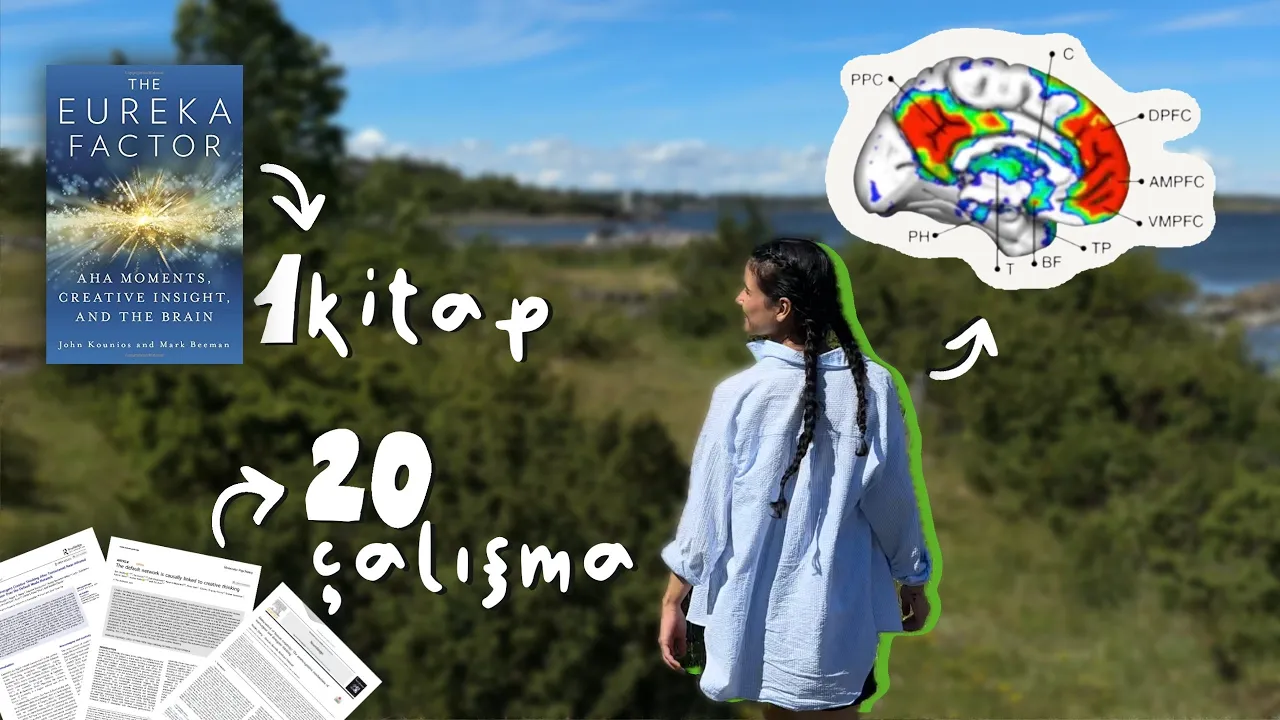


















Creative breakthroughs, or 'aha!' moments, occur when the brain spontaneously reinterprets information to reach novel conclusions, and research reveals that effective creativity requires both deliberate preparation (gathering diverse knowledge and expertise) and unconscious incubation (stepping away from problems to allow the brain to make unexpected connections), with brain imaging studies showing that insight solutions activate the anterior superior temporal gyrus in the right hemisphere while analytical solutions engage the occipital lobe.
The Science of Aha Moments: Triggering Creative Insight
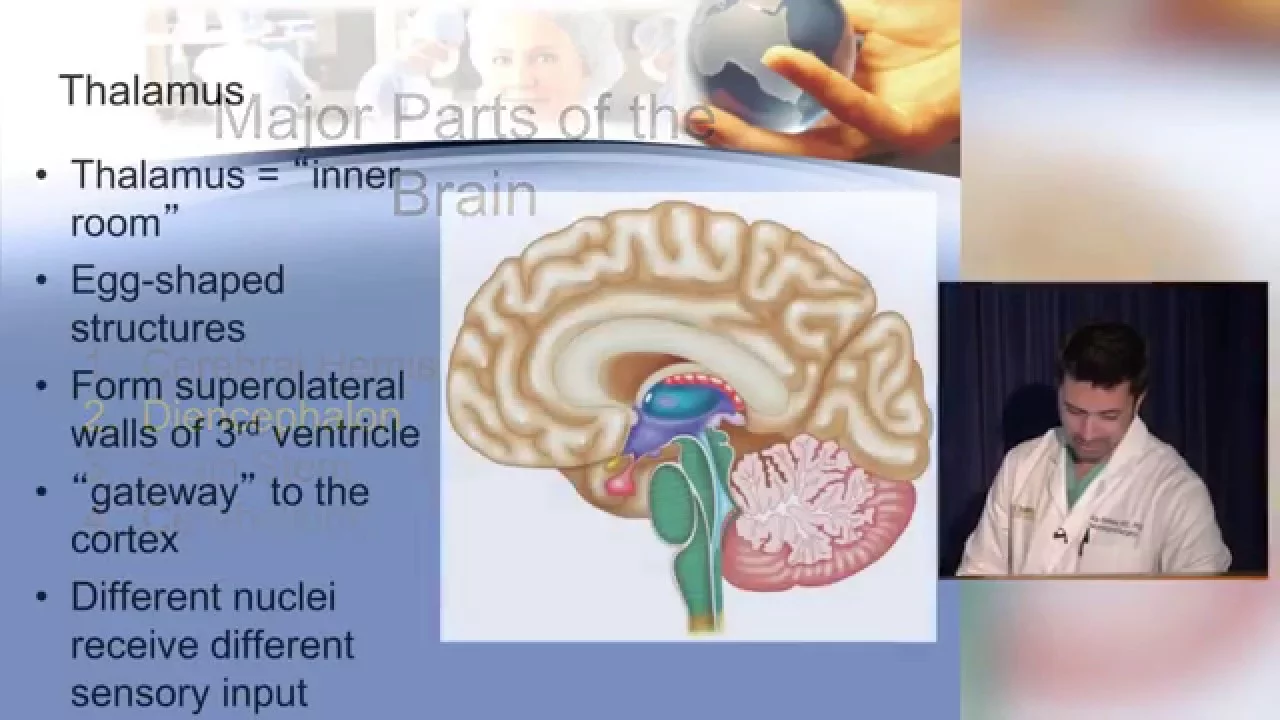
Added:Basic neuroanatomy, specifically the functions of the prefrontal cortex, temporal lobes, and the Default Mode Network (DMN).
The dual-process theory of cognition, distinguishing between analytical, effortful processing and automatic, intuitive processing.
Graham Wallas's classic four-stage model of the creative process: preparation, incubation, illumination (insight), and verification.
Fundamental concepts of brain wave states, particularly how alpha and gamma waves relate to different levels of focus and mental relaxation.
Advanced neuroimaging techniques (such as fMRI and high-density EEG) used to study real-time cognitive transitions and neurological shifts during insight.
The application of creative insight theories to organizational psychology, workplace design, and fostering innovative corporate cultures.
The neurobiology of sleep and incubation, focusing on how REM sleep and non-focused states facilitate subconscious problem-solving.
Cognitive-behavioral methodologies for overcoming mental blocks, functional fixedness, and cognitive bias in scientific and artistic fields.
8.7K views245likes16:13Original Release: 2022-02-04
take a moment to look at this image what do you see just a neural network perhaps you spotted the hidden figure if so you have just had a moment of insight you may have felt a similar jolt when discovering the solution to a math problem understanding a joke or metaphor or realizing something unexpected about yourself these aha moments occur when your brain spontaneously reinterprets information to reach a novel non-obvious conclusion nessa bryce painted neurons a few years ago for an art exhibit she had designed the piece to portray the idea that our brain's neural networks make us who we are after joining psychologist james t ends vision laboratory at the university of british columbia in 2013 she had her own abrupt realization she recognized how her art could inform science using this piece along with other hidden object images she investigated how a person's focus and attention change when experiencing an unexpected revelation creative people have sudden breakthroughs instances when they are able to recombine information in a new and useful way scientists view these flashes of insight as markers of the creative process and observing them in the laboratory elucidates what happens in the brain during problem solving a story is emerging about all the factors that lead up to an insight says cognitive psychologist john cunos who studies creativity at drexel university what researchers are finding is that the contemporary science of creativity largely bolsters an almost century-old theory in 1926 political scientist graham wallace defined the creative process as four distinct stages preparation incubation illumination and verification since then scientists have broken some of his stages into substages to reveal distinct cognitive processes for example preparation now consists of two parts one involving general learning and the other more focused on skill building these stages really seem to be universal whether you are a scientist artist writer or musician says harvard university psychologist shelly carson who has interviewed more than a thousand creative people for her research and creativity is not restricted to a subset of highly talented artists and thinkers carson says these innovative people have a distinct style of thinking and breaking down their approach can allow anyone to recreate the process brain research has revealed that we can all get closer to achieving that magical spark of insight with the help of a few simple techniques roughly speaking people solve problems in one of two ways they either tend to rely on moments of insight or they approach them analytically answering questions with analysis involves finding solutions through deliberate methodical trial and error whereas insight is perceived as an abrupt epiphany both methods are useful but insight is typically seen as the best option for out-of-the-box solutions kunios and his colleagues monitored the brain activity of 26 study participants using electroencephalography or eeg while they sat quietly in a room after recording these electrical signals the researchers asked the participants to try to solve 180 anagram problems which involved reorganizing a word such as west to form another word like stew subjects also reported whether they had used an insightful or analytical approach to solve each problem cunios found that the brain activity of people who used insight differed significantly from that of people who preferred the analytical approach before they even began solving problems most members of the insight group exhibited less activity in the occipital lobe a region involved in visual processing compared with the analytical set specifically the brains in the insight group showed less activity in the so-called alpha wave range which reflects neural inhibition and the beta one wave range which is linked with selective visual attention in other words these findings suggest that people who rely on insight tend to experience diffuse visual attention when they're not actively engaged in a task in a way this study along with carson's reports from highly creative individuals suggests that to prime your brain for creativity you should wander the world with an open mind gathering a broad base of knowledge is the first stage of the creative process which usually comes naturally to people through intellectual curiosity carson says another way to break your thought habits is by asking questions such as how can i do this differently and by stepping outside your comfort zone a poet with writer's block for example might be advised to take up a new hobby such as scuba diving or dance lessons neuroscientist turned artist greg dunn discovered an entirely different way to depict the brain when he began studying sumi a art an asian style of painting his experimentation with the style's free-flowing ink led to a simple yet elegant new method for painting neurons yet simply exposing yourself to new things does not seem to be the full story according to a study by sergio agnoli and his colleagues at the marconi institute for creativity at the university of bologna in italy how you engage thoughts that arise through new experiences is important for facilitating creativity they found that people who can deliberatively engage in focused mental exploration come up with more original solutions to problems than those who reported little ability to control how their mind wanders therefore building a solid foundation from which creativity can grow requires both exposing yourself to new experiences and intentionally engaging with the thoughts and feelings that arise as a result psychologist dean keith simonton of the university of california davis has linked creativity with the acquisition of expertise he compared the cumulative years of experience of 59 opera composers with their aesthetic success he measured aesthetic achievement in eight different ways tallying the number of times an opera was recorded and performed in major opera houses for example as well as the number of pages devoted to the work in opera histories simonton found that a composer's years of musical experience were a powerful predictor of an opera's acclaim he also found that if the composer had already created a number of other works within the same genre this would actually hurt the opera's critical reception and legacy in other words solutions to great problems demand practice skill and study yet creative solutions occur when someone applies their experience to new domains whether you are proving fermat's last theorem or planning a birthday party finding novel solutions involves a little advanced research how much preparation you will need will vary but the more you know about a problem the better equipped you are to solve it some of the most creative minds in history were masters of their respective fields given that these people spent large amounts of time immersed in their studies one of the best ways to maximize your creativity is to find an area you would like to develop an expertise in then begin to follow that passion once you have immersed yourself in a problem the best way to come up with a creative solution is to stop consciously thinking about it kunios and his colleagues used functional magnetic resonance imaging to record the brain activity of 44 people as they solved 185 remote association problems these word puzzles require finding a single word that can pull together three seemingly unrelated words for example the solution to foam deep and salt is c after finding an answer the subjects reported whether they had solved the problem using insight or analysis cunos found that in the two seconds before a problem appeared the insight users prepared for the challenge by shifting from their scattered outward attention to an inward focus puzzles solved insightfully were preceded by increased activation in the anterior cingulate cortex a brain region that monitors internal attention to different ideas among other things in contrast tasks solved analytically were preceded by significant activity in the occipital lobe which handles visual processing this increase indicates that the analytical solvers concentrated more on what they were looking at research from the university of amsterdam and the university of bologna in italy has demonstrated that sleeping on a problem or stepping away from it and then immersing yourself in an alternative activity can help you unconsciously cultivate creative solutions taken together the findings reveal a benefit to forcing your brain to shift gears or look within one reason might be that your attention can then be captured by a surprising solution your unconscious mind has been ruminating on so take a nap or try your hand at something new history is replete with examples of creative individuals who describe being hit with inspiration while daydreaming or attending to a different task writer robert louis stevenson and musician paul mccartney for instance used dreams as starting points for new works many day-to-day problems can be solved this way which explains why so many people recall stumbling on ideas while taking a shower driving to work or walking when insight hits certain changes happen in the brain psychologist mark beeman of northwestern university led a study that measured people's brain activity with fmri and eeg during the moment of insight as in kunios's studies participants tackled remote association problems and then indicated if they had cracked the problem using insight the results showed significantly increased activity in the anterior superior temporal gyrus of the right hemisphere at the critical moment when the solution appeared in comparison to problem solvers who did not experience such an aha moment this gyrus is a prominent ridge on the cortex of the right hemisphere and it plays a fundamental role in recognizing distant connections between words the activity surge in the right but not the left lobe may also be meaningful according to the researchers there are areas in the right side of your brain that interpret information more loosely than areas on the left side this means that the information is less tightly defined allowing you to access other concepts more readily which is a key component of creativity both hemispheres are working all the time but parts of your right hemisphere might loosely define a cat as a mammal making it easy to see how a cat relates to say an elephant parts of your left hemisphere however might describe a cat as a small carnivorous mammal with soft fur a short snout and retractile claws something very different from an elephant research has suggested that you can tip the scales toward a looser style of understanding by describing objects or issues in unusual ways for example by thinking of a hanger as a long twisted wire instead of as a metallic instrument for hanging coats you might discover other uses for it try this technique every so often as you are actively working to solve a problem it might help prime your brain to forge connections between distant concepts the moment of insight is also accompanied by a burst of alpha activity in the visual cortex according to beeman's study alpha activity inhibits neuron firing meaning that during a breakthrough your brain is less involved in processing visual information perhaps because visual stimuli can be distracting these findings suggest that you could help your brain discover an insight simply by closing your eyes probably the most famous moment of insight in history is archimedes eureka legend has it that the ancient greek mathematician had been challenged to figure out whether a crown that king hero ii of syracuse had commissioned was made out of solid gold archimedes was preparing a bath when he discovered how to measure an object's volume and thus its density after noticing the displacement of water as he climbed into the tub although the story may be apocryphal it has gone down in history in part because it illustrates perfectly how insight strikes once you have had a moment of insight you might find yourself feeling elated a study by tufts university researcher tad brunier showed that subjects who came up with broad associations between words such as associating pipe with flute rather than smoke experienced a boost in mood take advantage of the positive mood to check whether your solution works when you have an insight it comes with a lot of conviction carson says so you really have to be objective and evaluate that idea this stage is an ideal time to bounce ideas off of trusted friends their feedback and support could help you determine how well your solution works we'll discuss how creativity is collective in an upcoming lecture do not be discouraged though if your personal eureka is less than perfect creative people often describe going through many failures before reaching a successful solution those failures helped to inform the end result making them a necessary step in the process when a student asked chemist and two-time nobel laureate linus pauling how he came up with so many good ideas pauline replied i have a lot of ideas and throw away the bad ones in practice each stage does not always follow easily from the one before it many people have to revisit earlier steps several times before hitting on inspiration but ultimately the process is very rewarding creativity not only makes creators happy but also benefits all those who will enjoy their creations the joys of an aha moment may even serve a deeper purpose in 2013 psychologists claudia mooth and claus christian carbon of the university of bomberg in germany found that participants who identified a hidden face in a picture liked the image more than those who did not identify the face muse hypothesizes that insight is rewarding for evolutionary reasons she says it could explain why we explore the world and why we have interest in things that are new being curious and pursuing creative endeavors provides you with the opportunity to discover new interests explore unfamiliar territory develop expertise and take breaks in short working to develop and maximize your creativity serves to enrich your life as carson puts it once you realize that you can be creative it opens up this whole new world
Up Next

88:46
How the Creative Brain Works: Neuroscience with Dr. Roger Beaty, PhD
@ColegioHaciendaLosAlcaparros
281 views•2022-02-15
21:55
Deciphering Neural Circuits Controlling Anorexia in Mice | Richard Palmiter
@AllenInstitute
2.3K views•2011-10-10

4:10
Vagus Nerve (CN X): Anatomy, Nuclei & Functions Explained
@Alilamedicalmedia
305.2K views•2022-10-31
13:03
How Exercise Benefits Your Brain: Science Explained
@TED
11.4M views•2018-03-21
Related Study Plans & Knowledge Roadmaps
Structured learning paths in Neuroscience
neuroscience
Appetite Regulation: Brain Circuits & Hormones
01Foundations of Endocrinology and Brain Anatomy
02Introduction to Energy Homeostasis
03Peripheral Signals: Leptin, Ghrelin, and Insulin
+ 2 more learning modules
14h5 modules
Explore Roadmap
neuroscience
Neuroeconomics: Value, Risk & Brain Mechanisms
01Foundations of Neuroscience and Brain Anatomy
02Introduction to Neuroeconomics and Subjective Value
03Dopaminergic Prediction Errors & Reinforcement Learning
+ 3 more learning modules
18h6 modules
Explore Roadmap
neuroscience
Spatial Navigation: Cells, Grids & Brain Maps
01Foundations of Brain Anatomy and Memory
02Place Cells and Head-Direction Cells
03Grid Cells: The Brain's Coordinate System
+ 2 more learning modules
12h5 modules
Explore Roadmap
neuroscience
BCIs: Neural Decoding & Prosthetic Control
01Neuroscience Foundations: How the Brain Signals Intent
02Signal Acquisition: Recording the Brain's Activity
03Neural Decoding: Translating Brain Waves into Data
+ 2 more learning modules
25h5 modules
Explore Roadmap