



























In the Mundell-Fleming model with imperfect capital mobility, fiscal policy is effective under fixed exchange rates (as central banks accommodate by adjusting money supply) but ineffective under flexible exchange rates (as currency appreciation crowds out net exports); conversely, monetary policy is effective under flexible exchange rates (currency depreciation boosts net exports) but ineffective under fixed exchange rates (central bank intervention cancels the monetary expansion).
Mundell-Fleming Model: Imperfect Capital Mobility Explained (4 Cases)
Added:The foundational IS-LM model for closed economies, including how fiscal and monetary policies shift the respective curves.
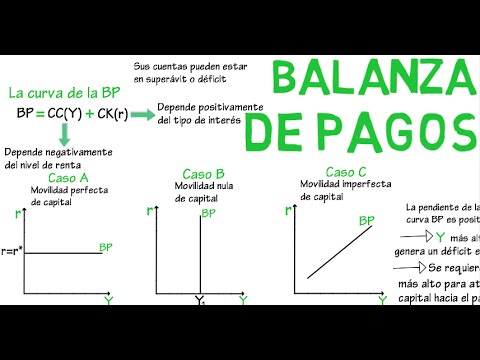
The basic Mundell-Fleming model under the assumption of perfect capital mobility (where the BP curve is perfectly horizontal).
The structure of the Balance of Payments (BP), specifically the relationship between the current account and the financial account.
The fundamental differences between fixed and flexible exchange rate regimes, including how central banks intervene in foreign exchange markets.
The Policy Trilemma (or Unholy Trinity) and its implications for monetary autonomy, exchange rate stability, and capital mobility.
The Dornbusch Overshooting Model, which explains exchange rate volatility and adjustment path when prices are sticky in the short run.
Analysis of real-world capital controls and sterilized interventions, using historical case studies of emerging market economies.
The transition from short-run Mundell-Fleming analysis to long-run open economy aggregate demand and supply (AD-AS) models with flexible price levels.
1.5K views55likes8:27Original Release: 2025-12-07
Hello everyone, my name is Mini. I hope you all are staying healthy. Today we are going to talk about Mundle flaming model under imperfect capital mobility.
We will see four cases. First, fiscal policy under flexible exchange rate and imperfect capital mobility. Second, monetary policy under flexible exchange rate and imperfect capital mobility.
Third fiscal policy under fixed exchange rate and imperfect capital mobility.
Last monetary policy under fixed exchange rate and imperfect capital mobility. One by one we discuss about each.
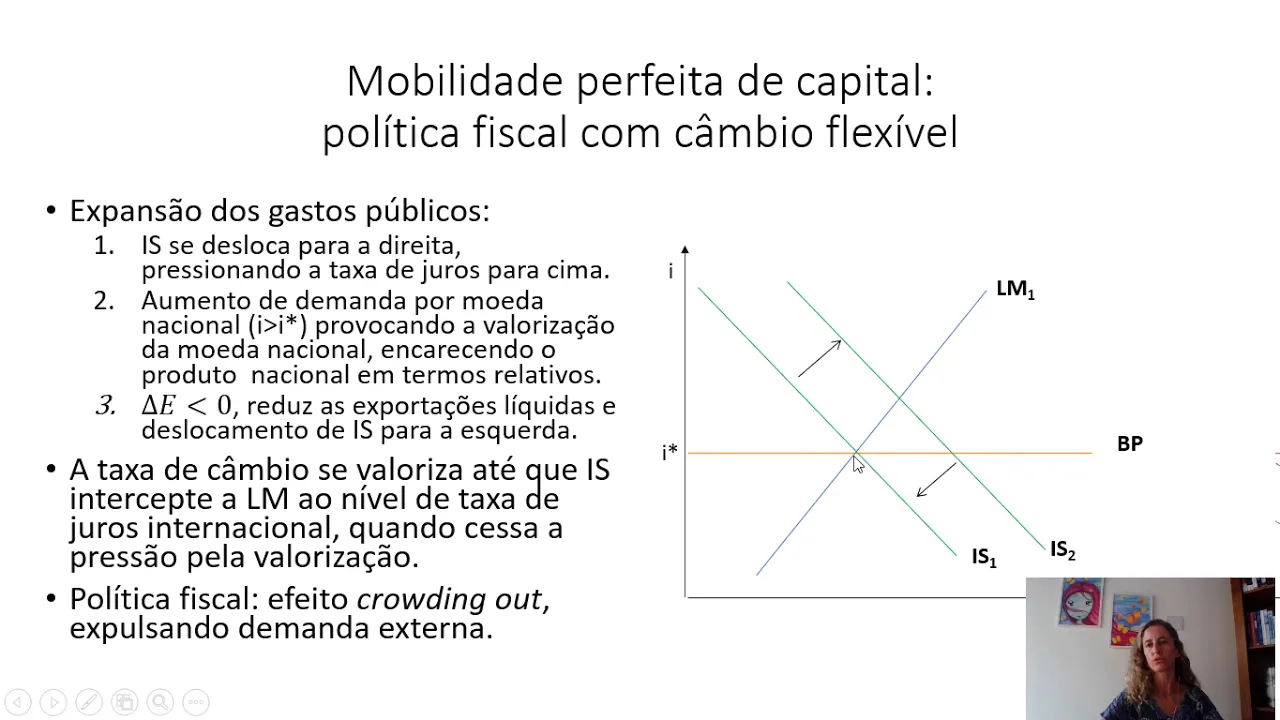
First case fiscal policy under flexible exchange rate and imperfect capital mobility. Horizontal side income vertical side interest rate. Initial is curve initial LM curve. Initial balance of payment curve and at E point all curve intersect. So E will be called initial equilibrium point. Initial income initial interest rate. Now suppose expansionary fiscal policy shift is curve from is0 to IS1. This is our new IS curve which lead to increase in interest rate and increase in income.
Increase in interest rate increase foreign investment in our country. As foreign investment increase that means capital inflow increase in our country and increase in capital inflow make our balance of payment surplus and due to surplus balance of payment our balance of payment curve shift upward. So this is our new balance of payment curve BP1.
Surplus balance of payment lead to appreciation in currency. Surplus balance of payment lead to appreciation in currency and appreciation in currency reduce export increase import. Export reduce because now our product become expensive for foreigner. Import increase because now for us another country product become cheaper. As export fall but import increase eventually net export will fall. As we know net export are part of aggregate demand. As aggregate demand reduce our is curve will shift backward. As aggregate demand reduce our is curve will shift leftward or you can say the is curve shift backward. This is our new is curve is2.
Obviously here as compared to original income increase and interest rate also increase.
So E2 is our final equilibrium point. No doubt at this E2 point as compared to original our income increase as well as interest rate also increase. But still here fiscal policy is not very effective. No doubt fiscal policy is effective because income increase but fiscal policy is not very effective. But why? Because we could achieve this point. Government through fiscal policy could achieve this point now. But we are not able to achieve this uh point because our net export of fall or in short you can say that through expansionary fiscal policy government wanted to give a big boost to economy but actually these effect cancel out or you can say that actually these effect crowded out due to fall in net export.
So we can say that our fiscal policy is not very effective in this case. Second case, monetary policy under flexible exchange rate and imperfect capital mobility. Initial is score, initial LM curve, initial balance of payment curve, initial equilibrium, initial income, initial interest rate. Now suppose expansionary monetary policy will shift LM curve. This is new LM curve which lead to fall in interest rate but increase in income. Here you can see our interest rate fall but income increase.
If interest rate fall in our country that means we start doing investment in foreign. If we are investing in foreign that means outflow of capital will increase. If outfall of capital increase that means uh deficit of balance of payment increase and deficit of balance of payment will lead to depreciation of currency. As a result, balance of payment curve will shift down. So this is our new balance of payment uh curve.
Depreciation of currency will increase our export and reduce our import.
Depreciation of currency increase our export and reduce our import. Eventually net export increase. Net export is component of aggregate demand. That means aggregate demand increase. As aggregate demand increase our is shift.
And this is our new is curve. And this one is our new equilibrium point. Here you can see interest should fall and income increase. If income increase that means our monetary policy is effective interest rate either can high or constant but income will definitely increase. So we can say that at this even equilibrium point our monetary policy is effective. Next case, fiscal policy. Under fixed exchange rate and imperfect capital mobility under flexible exchange rate, fiscal policy was not very effective because currency was appreciated. As a result, net export fall eventually make fiscal policy not very effective. But under fixed exchange rate, fiscal policy is effective because due to fixed exchange rate, currency will not appreciate. But how? Here you can see initial equilibrium point is E.
Now suppose expansionary physical policy shift is curve as a result interest rate increase income increase. As interest rate increase capital inflow increase and balance of payment become surplus.
We have already discussed but here currency will not appreciate because in order to keep exchange rate fixed central bank will increase money supply.
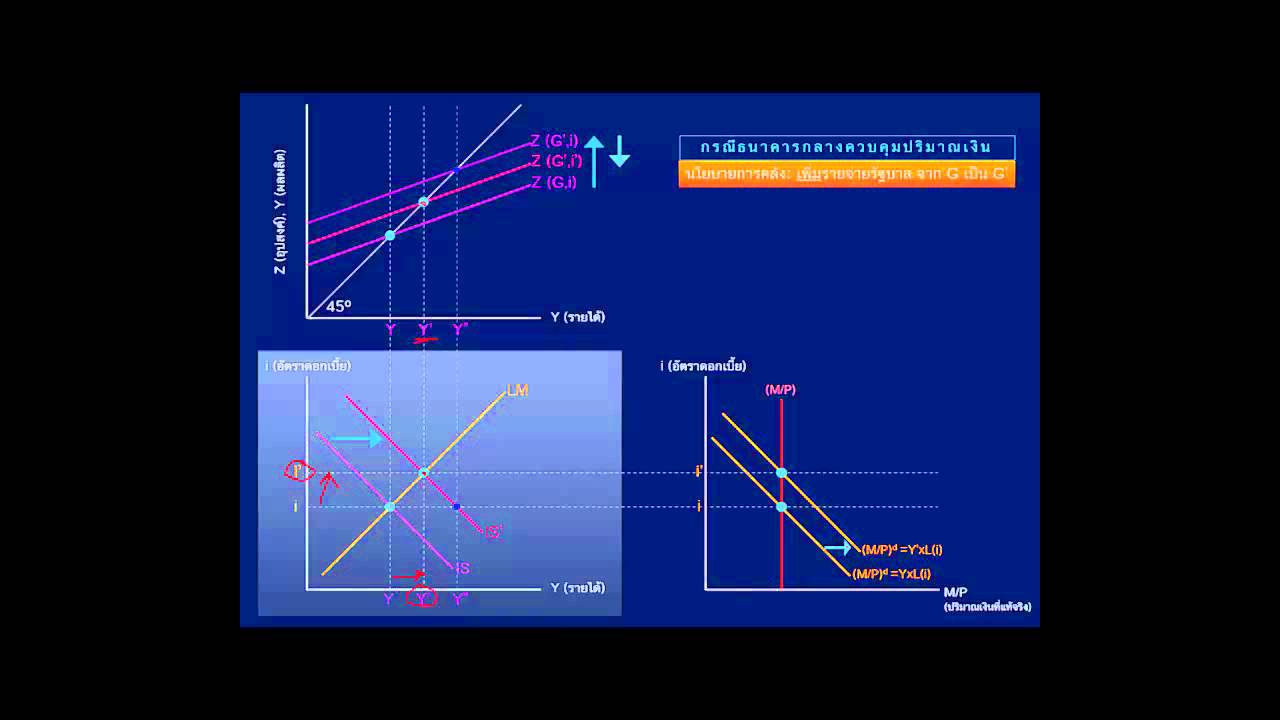
As central bank increase money supply, LM shift rightward and this is our new equilibrium point. So here you can see interest rate and income both are increased. Here you can clearly see uh this point is better than this point because at this point our income has increased so much. So we can say that in this case our fiscal policy is effective. Next case, monetary policy under fixed exchange rate and imperfect capital mobility. Initial equilibrium point E. Now suppose expansionary monetary policy will shift LM from LM 1.
Here you can see interest rate fall and income in increase. Here you can see interest rate fall.
Interested fall and income incuries. As interested fall that means outflow of capital increase and outflow of capital lead to deficit balance of payment. But currency will not deprecate due to fixed exchange rate. That's why in order to keep exchange rate fixed uh central bank will reduce money supply. As a result this LM again move to this LM means we again come to this equilibrium point where income is constant interest rate is constant. If both are constant that means your monetary policy is ineffective. So in such a case our monetary policy is ineffective. This is all about today's video. I think you got it and thank you so much for watching this video. Bye. Take care.
Up Next

19:48
Mundell-Fleming Model | Fixed Exchange Rate Analyses
@Vidyamitra
3.3K views•2016-03-16

5:07
Impact of Yuan in Indo-Russian Trade Amid Sanctions
@WION
261.9K views•2022-07-01
10:33
Behavioral Economics Explained: Rationality, Nudges, and Risk
@crashcourse
1.1M views•2016-03-12

113:18
The Age of Easy Money: Fed & Inflation | Full Documentary
@frontline
21.2M views•2023-03-15
Related Study Plans & Knowledge Roadmaps
Structured learning paths in Economics
economics
Sovereign Debt: Defaults, IMF & Restructuring
01Introduction to Sovereign Debt & Government Bonds
02Debt Sustainability & Credit Ratings
03Anatomy and History of Debt Crises
+ 2 more learning modules
12h5 modules
Explore Roadmap
economics
Market Design: Matching Theory & Gale-Shapley
01Introduction to Market Design and Price-Free Markets
02Two-Sided Matching & The Gale-Shapley Algorithm
03School Choice Systems and Mechanism Design
+ 2 more learning modules
10h5 modules
Explore Roadmap
economics
Impossible Trinity: Forex, Capital & Policy
01Introduction to Monetary Policy and Central Banking
02Exchange Rates and International Capital Flows
03The Mundell-Fleming Model
+ 2 more learning modules
8h5 modules
Explore Roadmap
economics
Healthcare Economics: Market Failures & Systems
01Introduction to Healthcare Markets and Market Failure
02Asymmetric Information and Adverse Selection
03Moral Hazard and Insurance Design
+ 2 more learning modules
12h5 modules
Explore Roadmap