














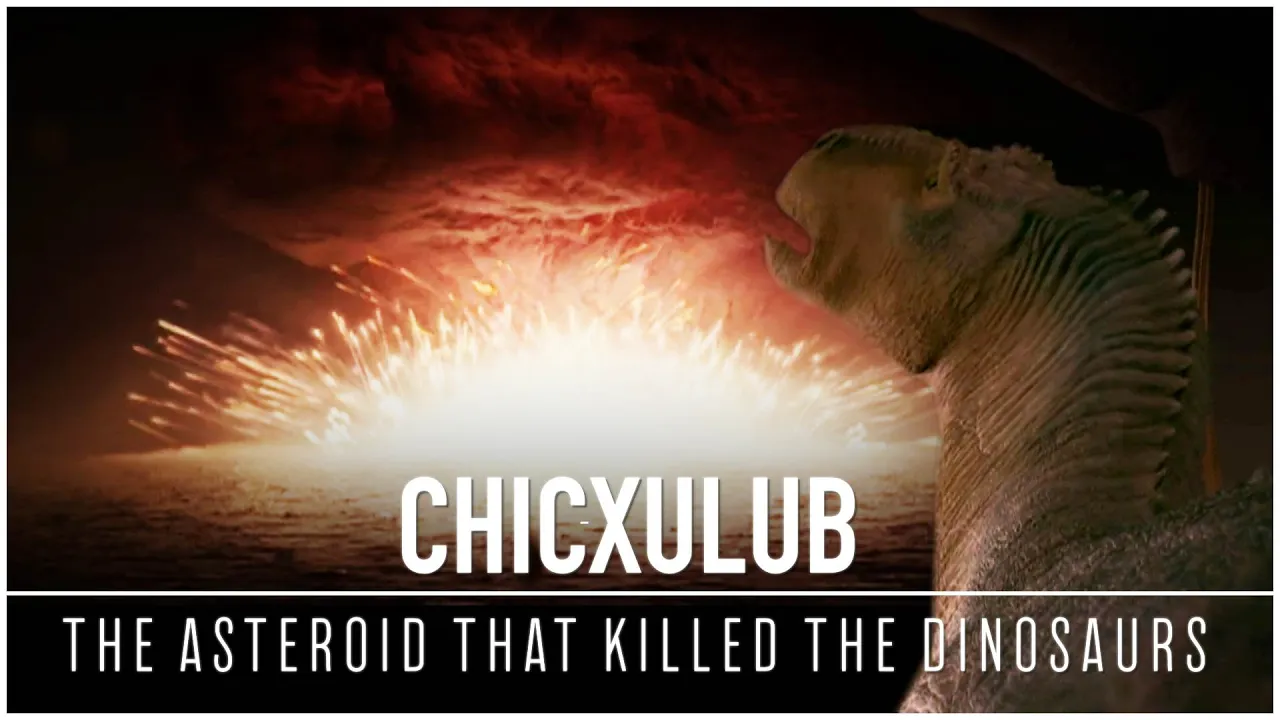



The Cretaceous-Paleogene extinction event 66 million years ago was caused by a massive asteroid impact (the Chicxulub crater in Mexico), which triggered a cascade of catastrophic effects including earthquakes, tsunamis, wildfires, acid rain, and a 'nuclear winter' that lasted approximately 10 years, ultimately wiping out 75% of life on Earth, including all non-avian dinosaurs; this extinction event demonstrates how highly successful species can be vulnerable to sudden environmental catastrophes and paved the way for mammals to evolve and eventually lead to humans.
The Cretaceous-Paleogene Extinction Event, Explained: Asteroid Impact
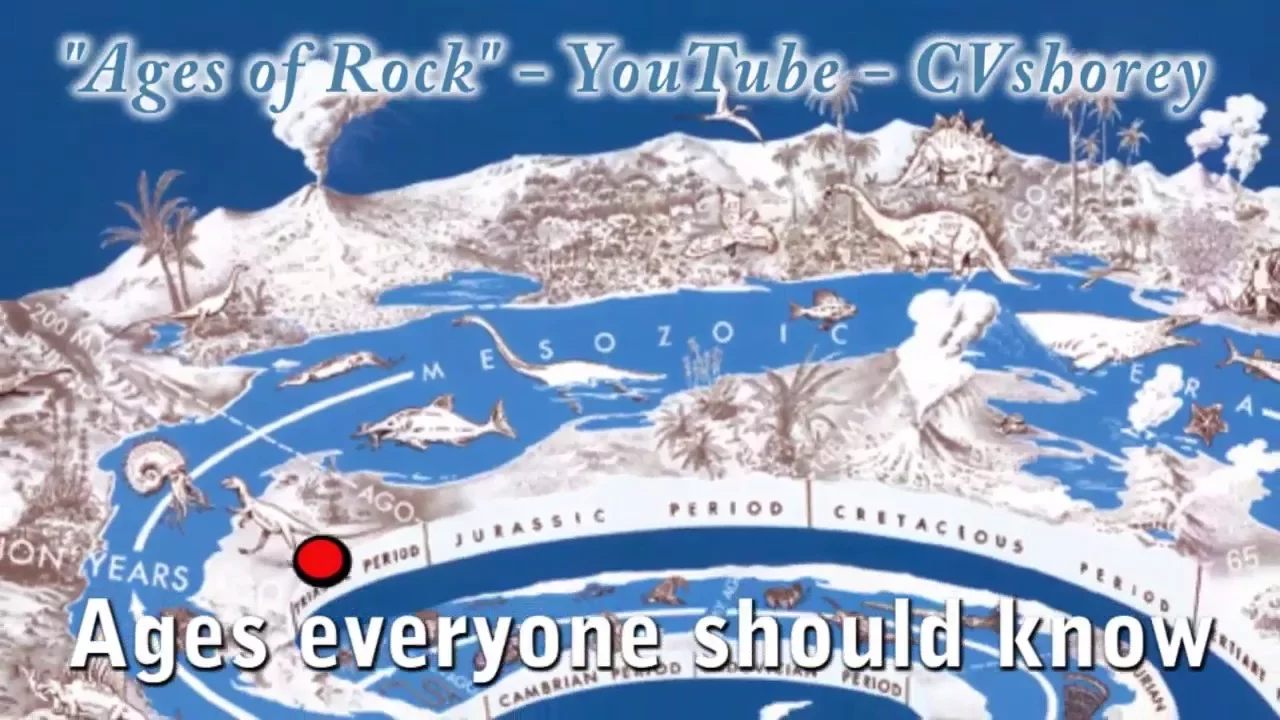
Added:The structure of the geologic time scale, specifically the transition between the Mesozoic and Cenozoic eras.
The fundamental principles of ecological food webs and how disruptions to primary producers (like plants) affect apex predators.
The scientific distinction between natural background extinction and catastrophic mass extinction events.
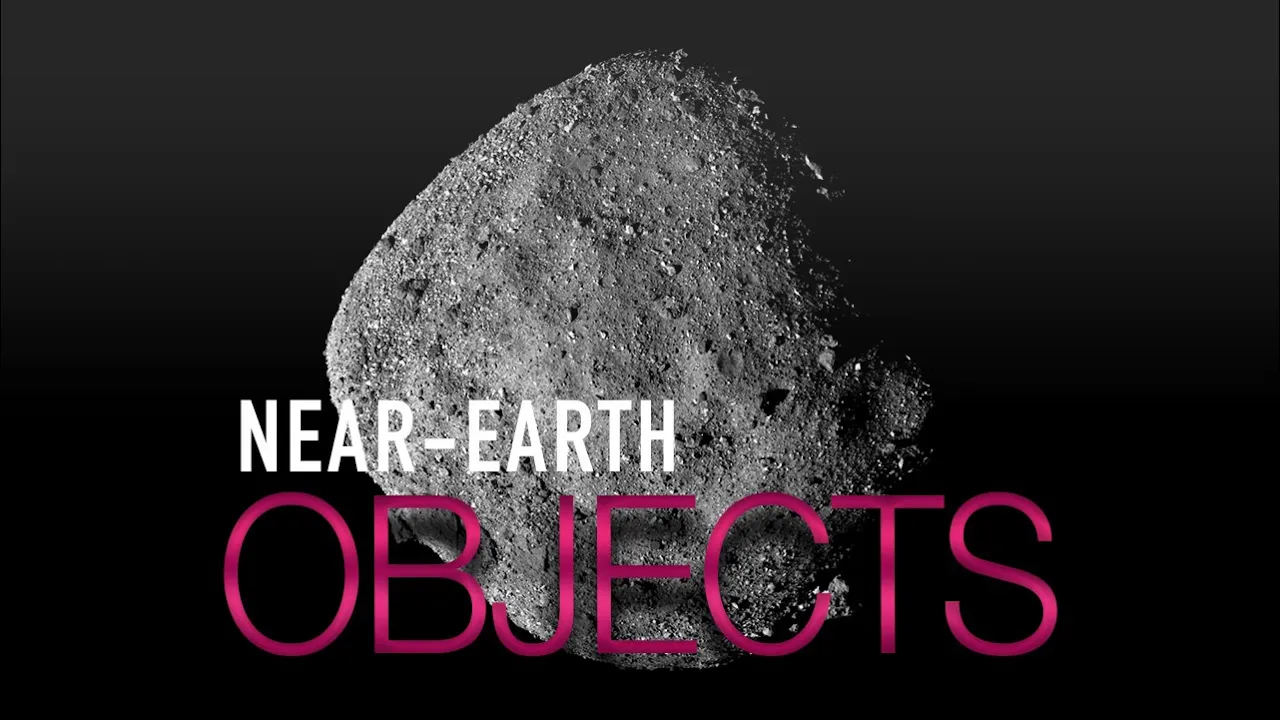
Basic astronomical concepts regarding near-Earth objects, including the physical characteristics of asteroids and the mechanics of impact cratering.
The concept of adaptive radiation, focusing on how the void left by non-avian dinosaurs facilitated the rapid diversification of mammals and birds.
The specific geological evidence supporting the Alvarez Hypothesis, such as the global iridium anomaly, tektites, and shocked quartz.
A comparative study of the other 'Big Five' mass extinctions, particularly the Permian-Triassic extinction, to understand different extinction triggers.
Modern planetary defense initiatives, including how astronomers track near-Earth objects (NEOs) and develop asteroid deflection technologies.
235.8K views2.9Klikes52:28Original Release: 2025-08-17
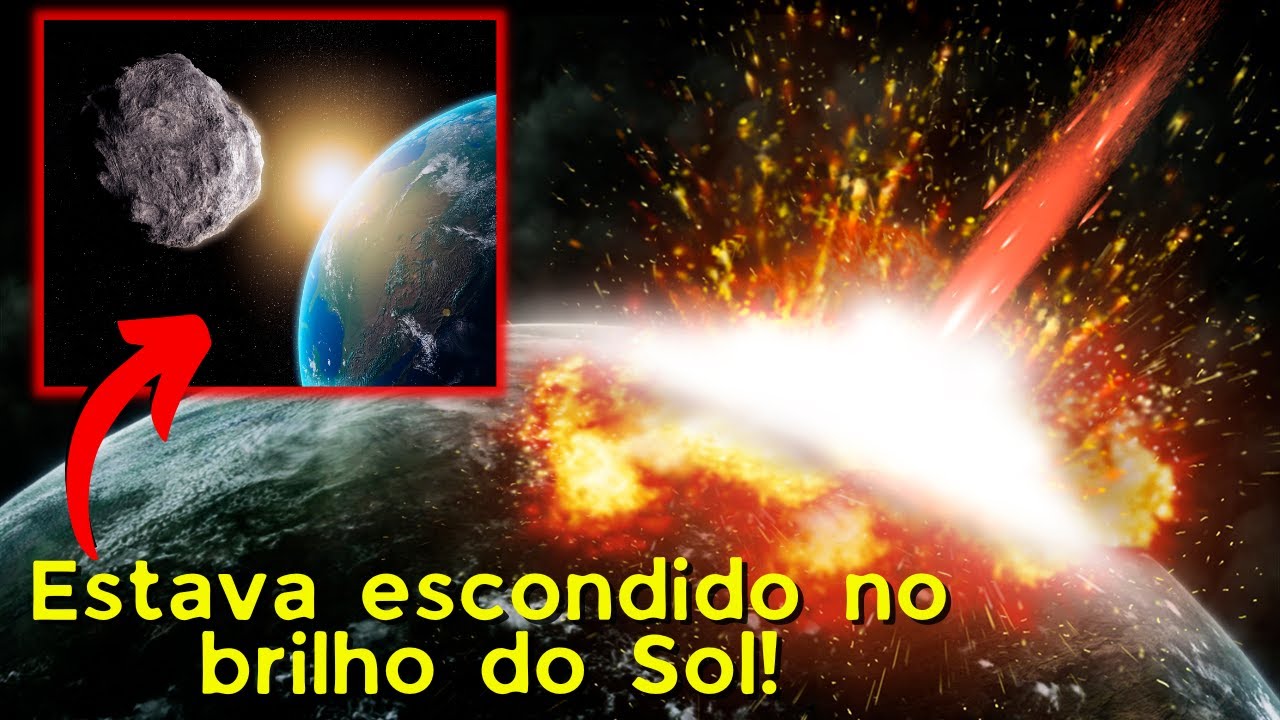
Dinosaurs. Until 66 million years ago, these legendary animals ruled the world. Life for them may have not been carefree, but these elegant masterpieces of evolution surely never considered being stopped dead in their tracks by a killer from another world. What the dinosaurs don't know is there is an asteroid hurtling through space, traveling something like 10 times faster than a bullet shot from a gun.
It hit the ground with such a strength that you cannot even imagine.
Meaning that when its lower part struck the earth, its highest point was still above the level of the atmosphere, which makes you think, "Wow!"
The impact triggers a series of chain reactions that in less than a day obliterates the dinosaurs world.
Earthquakes, fires, tsunamis, hurricanes, and volcanic eruptions along with a hail stom of burning shards and deadly acid are unleashed in a hellish fury. This fifth mass extinction in history wipes out 75% of life on Earth.
The Earth itself oscillated up and down very strongly.
If you picture the biggest tidal wave you've ever seen, it's going to be a lot bigger than that. Gases and dust are released on a scale that we have never experienced. If you don't get killed by one thing, you'll get killed by another.
It was the single worst day in the history of the earth.
Those fortunate enough to survive this day in hell must then endure a nightmarish 10-year winter.
10 years of unrelenting misery with no daylight in an unbreathable atmosphere.
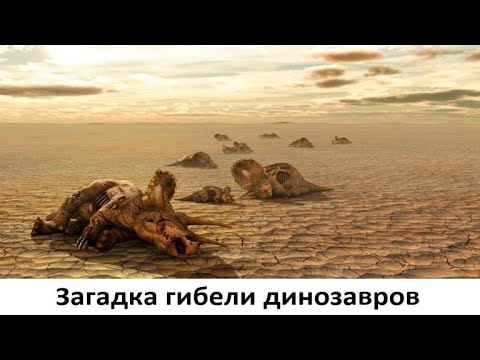
Dinosaurs wear fridge who were cold and they were very miserable. The planteing dinosaurs die and there's not enough food for the meat eatating dinosaurs, so they die. Never again would there be a T-Rex. Their day in the sun came.
Now, a panel of world-renowned paleontologists, astrophysicists, oceanographers, and geologists, including the two scientific adviserss to the Jurassic Park saga, chronicle the events that destroyed a world. Prepare to relive the dinosaur apocalypse.
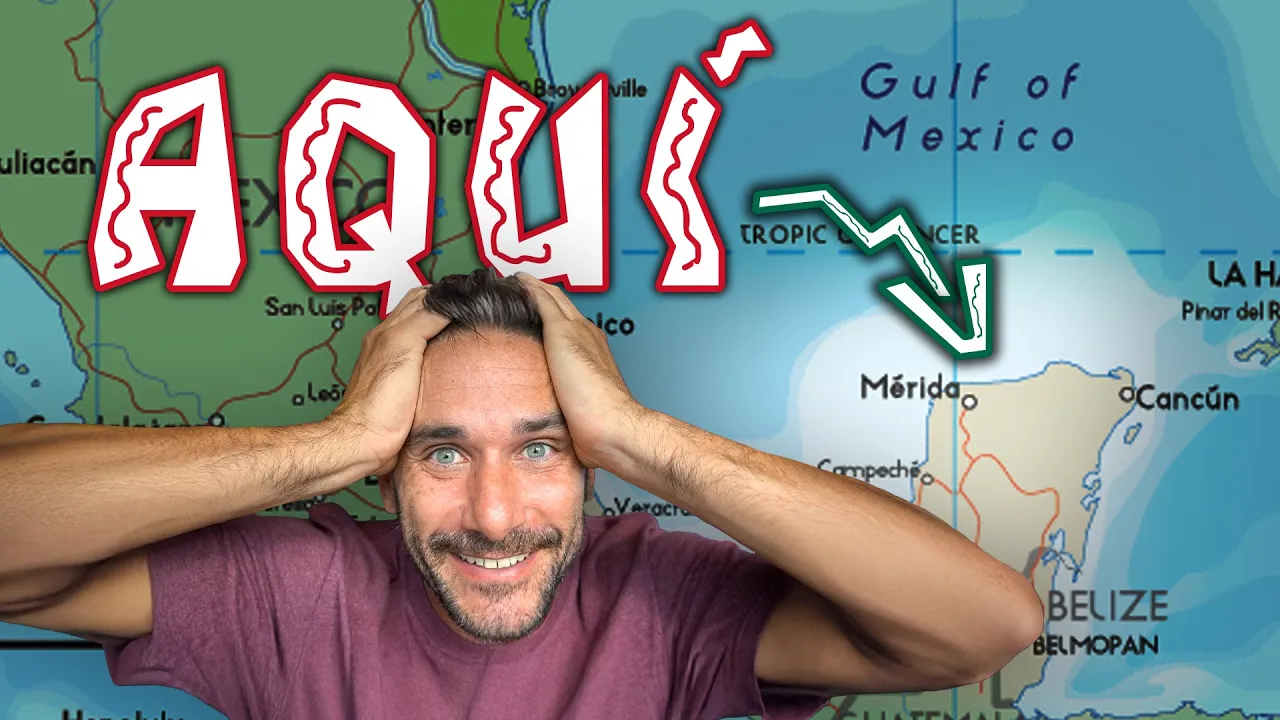
[Music] Chickixaloo on Mexico's Yucatan Peninsula. This ancient Mayan land, aptly named the Devil's Tale, bears the scars of the most violent shock the Earth has ever experienced. On the surface, there is no trace of what happened here 66 million years ago, except perhaps for the cenotes so popular with tourists. Deep beneath the waters of the Gulf of Mexico lies the scene of a tragedy of colossal proportions. A gigantic scar over 180 km in diameter or 10 times the width of Paris.
Now Chicks Lubes is the largest most recent crater that we know of for sure.
Once it was discovered, it was a real revelation. It's huge, huge impact. What could have split open the surface of the earth with such force?
Geologists have provided the key to this enigma. In 1980, they discovered traces of uridium, an extremely rare chemical [Music] element. Ridium's is a trace element that is concentrated in extraterrestrial bodies, but not on Earth. You measure that and you know, uh-oh, something from outer space hit Earth.
It is undeniable. There was a huge asteroid about 10 km wide that smashed into the earth 66 million years ago. It formed a a hole. The Chickixaloo Crater is one of many remnants of a distant apocalypse. A legacy of one of the darkest days in the history of our planet. The day the dinosaurs became extinct.
There are things that happen in a sudden burst, a cataclysm that changed the course of that evolution overnight. We know the time. And after that time, no more dinosaurs and no more lots of other things. It was a worldwide, specieswide, plant-wise, animalwide disaster.
Immediately beforehand, they had been the masters of the world, the largest animal group that had ever existed. It was an earthly paradise, resounding to the roar of these mythical behemoths. The next moment, it was transformed into chaos. Several Borah holing campaigns in the Chickixaloop crater, along with multiple paleontological digs in the four corners of the earth, have shed light on this terrible catastrophe.
the things the asteroid left behind, the damage, the clues from the crime scene.
You can find that stuff all over the world in rocks 66 million years old because the asteroid, it triggered a cascade of destruction. And that destruction, it affected the entire Earth. These valuable clues allow us to piece together a fairly accurate scenario of the dinosaur apocalypse. But first, we must go back to the day before the tragedy, to a world that is now disappeared forever. The era known as the late Cretaceous.
[Music] 66 million years ago, pangia, a primordial superc continent, is already slowly breaking up under the influence of plate tectonics. Europe is now separated from Africa in the Americas by vast oceans. Europe is like an island archipelago, really different from today. And we have North America that is like bisected into two big land masses by the western interior seawater. At this point, you're actually starting to see a very modern layout of the continents, like something that we would actually recognize of like, oh yeah, that's Earth.
The oceans are shallower than they are today and sea levels are much higher. It is also a warmer world with no ice at the poles. A world where days are 30 minutes shorter, a world dominated by a closer moon.
Then the moon was considerably closer.
tides were bigger and the light at night would have been 15% more. So, it's a very warm climate was sea level higher, CO2 also much higher than today.
Probably five to to 10 times higher. And it was a time that the dinosaurs ruled.
[Music] Dinosaurs, the biggest, heaviest, and most fascinating animals to ever walk the planet. From the tropical lagoons of Europe to the immense coniferous forests of America, the footsteps of these legendary giants can be heard everywhere. It is a dinosaur world. Wherever there is land, there's dinosaurs living on that land.
We have herbivores and carnivores. It seems like there's not so much competition among species. There's enough food for everyone. Man appeared less than 3 million years ago. Dinosaurs, on the other hand, colonized every continent and occupied the majority of ecological niches in the 150 million years of their existence. They rule over an animal kingdom made up of reptiles, mammals, birds, and insects. all coexist in a rich and varied ecosystem evolving alongside one another.
You have predators which are on the top and they're going to eat meat. So, they're going to eat like herbivores and then you have those herbivores eating leaves and things like that.
And here is the star of the herbivores, the triceratops.
This Titan has a compact body measuring 9 m long and weighing 14 tons, three times that of the African elephant. With its meter long defensive horns, this Hercules on legs is a fearsome natural tank. Triceratops is a plant guzzler.
Planteater you wouldn't want to mess with. You'd want to stay out of its way just because it was so big. And when the upper and lower jaws of Triceratops come together, those guillotine blades of the upper and lower jaw work like scissors.
We do find groups of Triceratops. All the evidence we have suggests that all of the horn dinosaurs are very gregarious that they lived in groups together.
Like all herbivores, it's a favorite target of the greatest of all predators, the one at the very top of the food chain, the king of the dinosaurs, the T-Rex. Weighing in at 7 tons, only half that of the triceratops, it measures 13 m long and is the size of a double-decker bus. The T-Rex has a gigantic appetite, able to swallow over 200 kilos of meat a day.
The T-Rex is the biggest baddest meate eater that's ever lived on land in the entire history of the Earth. As far as we know, there was really nothing that was as powerful, as dominant, as incredible as T-Rex.
[Music] It's hard to escape unless you have strong defenses like the Triceratops.
How could these champions of evolution ever disappear?
There was no sign that the dinosaurs were in any sort of serious trouble.
This would have just been another day in their long evolutionary reign.
But this world is coming to an end.
None is aware that a monster, the most lethal object of destruction ever, has emerged from the farthest reaches of space to seal their fate. What the dinosaurs don't know is there is an asteroid hurtling through space.
The solar system is a very violent environment. We have a lot of asteroids that are cruising close to the earth and from time to time they can come [Music] close. This huge rock over 10 km in diameter the size of Mount Everest comes straight from the asteroid belt between Mars and Jupiter 300 million km from Earth. It is thought to have been created by a collision between two colossal asteroids.
Like many others, it then made its exit from the asteroid belt. It then moves through the inner solar system passing Mars and the Earth. And in fact, these encounters modify its trajectory.
Most likely a lot of them would end up in the sun, which is the largest mass available, but some could be, you know, sent on an orbit and could collide with planet Earth.
The globe is dotted with smallcale meteorite impact sites.
But a gigantic asteroid of this size is a ruthless killer capable of disrupting life on our planet. On average, one crosses the Earth's path only once every 100 million years. This asteroid, it could have gone anywhere, but it just so happened to have a pathway to the Earth. It was barreling towards the Earth, traveling something like 10 times faster than a bullet shot from a gun. With a slightly different trajectory, this object would have missed the Earth completely. But at some point, it develops a trajectory that gets it here. Among all the trajectories it could have chosen, some led to the Earth, and it was on one of them.
The Earth though has a natural bullwark capable of withstanding the shock of such an impact. Our moon, its surface features more than 30,000 craters, including the Tao crater and the South Pole Aken Basin, the largest in the solar system at 2,500 km in diameter. The moon is our planet's last chance to avoid a collision.
The moon can serve as a shield. Every now and then, an object will hit the moon rather than the Earth since it's in its path. But in simple terms, while the moon revolves around the Earth, it is relatively small and thus not a very effective shield. Unfortunately, the Globe's permanent natural satellite is not in the asteroid's path. Catastrophe is inevitable. The dinosaur apocalypse is imminent.
[Music] On Earth, the picturesque and grandiose scenery is a glow for the last time in many thousands of years. Triceratops and T-Rex continue their fierce struggle for survival. For their part, the mammals survive as best they can in a world not made for them.
They b their time unaware that an icy winter is about to turn their lives upside down.
That's a day like another like they got up in the morning and you know they're going to go around maybe the sun is out and it's a lovely morning. The dinosaurs had no idea that this thing was out there. They had no idea that the shot was already fired, that their death warrant was already signed and sealed.
They didn't get it until, depending on where they were, until something happened to them. The pitiles cannonball arrives at a speed of over 12 km per second, 100 times faster than an [Music] airliner. As it bursts into the atmosphere, it compresses the ambient air and raises the temperature.
The air becomes five times hotter than the surface of the sun and spontaneously ignites.
When the day comes that there's a catastrophic impact, then all bets are off. There's no way to prepare for an impact. It would just really be a matter of seconds to impact. That was it. The dinosaur apocalypse has begun.
[Music] 10 km in diameter, meaning that when its lower part struck the Earth, its highest point was still above the level of the atmosphere, which makes you think, "Wow, wow."
The Mount Everest sized asteroid strikes the Earth in the shallow waters of the Gulf of Mexico with an impact force estimated to be equivalent to over 100,000 billion tons of TNT or 7 billion Hiroshimas.
It hit the ground like with such a strength that you cannot even imagine of today. We never had something that much intense since then.
[Music] The earth itself oscillated up and down very strongly.
The impact creates a huge flash of light.
The meteorite penetrates the Earth's crust and mantle, slicing the surface to a depth of 40 km, four times that of the Mariana Trench, the world's largest oceanic trench. The pressure and heat generated by the impact instantly liquefy the rocks.
The resultant shock wave reverberates into the earth. But part of it also propelled into the asteroid which duly explodes making a crater that on average is 10 to 20 times the size of the asteroid.
[Music] The chickaloo crater.
But that wasn't it.
The rocks that were compressed are going to start to bounce back, but at the same time, all the vaporized material that you have in this cavity are going to go up, forming a huge cloud. The chasm collapses in on itself in a cataclysmic explosion, ejecting billions of tons of material into the atmosphere.
20,000 cubic kilm of rock, equivalent to 8 million Chihop's pyramids are pulverized.
The impact would have thrown a lot of water and trees and dirt and dinosaurs and all sorts of things. Everything within about thousand kilometers of where that asteroid hits the earth is just turned to nothing.
turned to ghosts, completely and utterly vaporized. Many marine species are wiped out, erased forever from the record of life on Earth. The death nail also has sounded for dinosaurs. For the ones closest to the impact, death is swift.
They probably don't see anything because they're dead before they know it.
For others, it is the beginning of a long nightmare. They are subjected to the criminal rule of a mass murderer from way across the solar system. Those dinosaurs were supremely well adapted to their world. But then everything changed when the asteroid hit and that world vanished in an instant and it just wiped out 75% of the life on Earth.
The collision doesn't just create the Chixalube crater and destroy the surrounding area of the Yucatan Peninsula. It is the starting point of a chain reaction that makes this meteorite the biggest serial killer of all time.
As this shock wave propagates downwards, it's losing energy very quickly. And after a while, it's not going to be able to continue to excavate. It's going to turn itself into the seismic wave and then nothing like silent. The countdown to the dinosaur apocalypse has begun.
5 minutes after the collision, another monster from the depths of the Earth launches an all-out assault on the planet. A Titanic earthquake that destroys everything in its path.
Everything that's semi loose on Earth is disturbed without anything else happening. Just the shape of the impact itself, it's felt far and wide. It's very hard to imagine like just to imagine something like that hard as the ground starting to like move like some kind of yeah trampoline.
This earthquake exceeds a magnitude of 11 on the RTOR scale. Two levels above the largest earthquake recorded by man in Chile in 1960. It spreads over a radius of several thousand km around the impact crater.
The dinosaurs populating the American continent suffer the wrath of the earth.
These dinosaurs probably literally were bouncing around, bouncing up and down in the air, flying around, smashing into each other. You can imagine they're like pinballs in a pinball machine. There's no way to evolve a protection for an earthquake in biological life. you uh either survive it or you don't.
This earthquake is followed by countless more earthquakes and aftershocks. Colossal landslides wipe hills and canyons off the map. Lakes and rivers overflow their banks and engulf entire territories. By this point, everything that's living around the world will know that something is wrong. Something is changing and something is happening fast.
When this giant shaker finally stops, it leaves a totally devastated landscape.
Most of the dinosaur population is lying dead or injured on the ground. The sky turns red and the temperatures exceed 1,000°. It doesn't look good. That's for sure. If you're a dinosaur, you you see trouble coming. That is very clear. They would have been disturbed, probably knocked off their feet, but they really wouldn't have known what was going to happen next. Any dinosaur surviving the waves of earthquakes now face a new danger. This time it comes from the sky. A hugely menacing storm cloud looms over the animals treading North American soil.
It is loaded with molten rock from deep within the earth.
It's generated by the impact and it and this liquid rock is thrown up into the air and it spreads like a spray.
Of course, anything that's come up has to go down. That's gravity.
[Music] And when it starts to fall back down to the earth, it solidifies.
It turns into little bullets of glass and it would have started to rain, but the rain wasn't water.
15 minutes after impact, burning daggers begin to rain down on the North American continent. The downpour will last an hour. For the dinosaurs, it's a journey to hell. And if you're a dinosaur, you would have been pelted with that rain of bullets, and it would have caused incredible damage. Honestly, this was probably the worst day ever. I wouldn't like to be there.
This infernal deluge spreads around the globe, pounding the ground and everything on it with a hail of incandescent bullets. They lacerate the survivors of the earthquake, cutting to pieces these behemoths with feet of clay. The only possible escape is to find shelter.
Little mammals, little reptiles, little snakes, you know, they could hide away.
But a big T-Rex, a triceratops, where are they going to go? So, they had to face those glass bullet rings.
There was nowhere to run.
But the worst is yet to come. This hellish shower gives rise to a new, far more dangerous phenomenon, making the interstellar shock even more horrifying.
And from that point on, the catastrophes just continue to multiply until the entire Earth is reshaped. If you don't get killed by one thing, you'll get killed by another.
The heat accumulated by these billions of molten bullets spreads throughout the atmosphere.
30 minutes after the meteorite collision, the Earth turns into a veritable furnace with temperatures exceeding several hundred°. Huge fires break out. The tide of fire turns entire ecosystems into infernos and it becomes hotter than an oven. So hot that forests, tree spontaneously combust.
They just start to burn. And this happens all over. So now you have wildfires raging.
[Music] It would have been a bad day for forests and all organisms living within them.
Any animals that lived in it were decimated unless they could hide underground. And even there you worry about oxygen to breathe.
How to escape this hell on Earth? The mighty T-Rex and Triceratops cannot dodge the worldwide conflration. The only refues are caves or burrows inaccessible to most dinosaurs. This probably like covered literally of calvers everywhere. The animals who survive are probably like tried to steal hide. A very terrible moment. Everything is dead around.
But another even deadlier threat is gathering.
An hour after the apocalypse began, new much darker and much more menacing clouds suddenly appear. This is the storm triggered by the impact at Chickixaloo. The clouds move at a breakneck speed of 340 m a second, announcing themselves with a deafening roar. Hurricane force winds howled across the land. That sound would rupture eardrums. It would be incredibly deafening.
A combination of gusts and tornadoes of up to 1,000 km an hour, four times the speed of Hurricane Katrina, ravaged the land. The lightning spat out by the storm triggers more fires. For any dinosaurs that managed to survive the impact, this is yet more torture. More powerful than the current hurricanes that we know.
This is like the perfect storm to make everything worse.
By this stage, the only animals still able to survive are those that can hide, such as marine reptiles deep in the ocean and small land animals in their burrows. But they are about to face a new threat, a monumental peril from which no mammal can escape.
Just when you think, "Oh, it's done.
It's over." something else happens. An even more devastating phenomenon, maybe the worst possible, is on its way. An unstoppable, lethal mass of water that destroys everything in its path, a tidal wave, the like of which has never been seen. The asteroid is collided with the Earth at the worst possible place, in the waters of the Gulf of Mexico. Rather than landing in the deep ocean or strictly on land, it landed in shallow water, which means it impacted both the ocean and the crust. The whole earth was gouged out and thrown up into the atmosphere in this wedge of material like this causing a [Music] wave. By striking the shallow coastal waters of Chickixaloo, the asteroid creates what scientists call a rim wave. This wall of saltwater quickly reaches a height of 1 1/2 km, five times higher than the Eiffel Tower and the wave is 50 km wide. If you picture the biggest tidal wave you've ever seen, it's going to be a lot bigger than that. You know, I almost kind of wish I was there. It would have been a global disaster of an epic proportion that humans have never experienced.
Dinosaurs just couldn't even run. You just can't do anything. You're just like looking at it and be like, "This is the end for me."
It is now 3 hours after impact. The ogre is engulfing the entire Mexican coastline and spreading inland. The deadly wave hits North America with full force.
Billions of tons of water wipe out every form of life. The tsunami would have probably washed a lot of dinosaurs away that existed at that time in the central regions, maybe Colorado, Nebraska, Kansas, Texas.
[Music] Then the aquatic juggernaut slows down and comes to a halt. A section of North America is covered by water. The sea level has risen by 100 m.
It's like this wall of water that just moves in, you know, and covers all this huge material and then slowly goes back. It's really a very strong tsunami effect and it's eroding and it's carrying this material down to the deep water. A lot of stuff has happened. A lot of carnage has already gone down. Could anything have survived this? Well, yes.
for the time being. At any rate, because this colossal wall of water is not a one-off, it is immediately followed by a wave of more tsunamis, this time triggered by the earthquakes.
It's just going to be like a horror like movie completely.
The devastating tidal wave that hit Japan in 2011 was up to 55 m high and killed almost 16,000 people. We saw trucks and buses approaching the size of a dinosaur being swept around like this.
You know, this tsunami was a lot bigger than that one. 66 million years ago, the earthquakes triggered by the Chickixaloo impact generated even more powerful tsunamis. 100 to 200 meter high waves break one after another, surging across the oceans at speeds of 140 kmh.
There were tsunamis that would make the what we have ever recorded in history look small. These washed up onto shore hundreds of miles and would have destroyed everything in in their path.
If you're a dinosaur living anywhere near the water, especially if you're in North America or Europe, you might get hit by one of these super tsunamis.
The monstrous waves circle the globe many times over. In the first seven hours after impact, they dissipate 29,000 times more energy than the 2011 tidal wave. That would have been probably 10 plus meter inundations even in places on the other side of the world and right near where the thing happened. It would have been much bigger than that even. This fearsome mangling machine is scouring the ocean floor.
The tsunamis shift huge quantities of sediment, rock, and sand, not to mention marine reptile carcasses over dozens of kilome. Land animals, whether dead or alive, are mercilessly dismembered. The raging ocean sweeps to and fro across the land, raising the dinosaur's world to the ground before engulfing it forever.
The effect of a tsunami is so violent that it just sweeps away everything and you get buried. Uh you're swept away in mud and debris and so on and so you don't have a chance. Probably most dinosaurs are gone. A lot of things are dead, but some animals are still holding on, but there would still be more challenges and more danger to come.
And the challenges are not insignificant. Here in the vast and grandiose landscapes in the heart of India lie the remnants of the most terrifying weapon of mass destruction the planet had seen prior to the asteroid collision. Vistigages of the most lethal jaws from the dinosaur era. These are the deacon traps. The legacy of massive lava flows from the most deadly volcanoes of the time.
The Kilawea furnace in Hawaii is probably the closest Latter-day [Music] equivalent. In Hawaii, it's a volcano that's erupting and we're all excited about. It's going to cover some highways. But that's nothing compared to the volcano and the output that literally poured across a huge part of the Indian subcontinent right down to the oceans.
They have been spitting fire for millions of years, covering the surrounding area with their deadly lava.
So powerful, so devastating that some researchers have long believed that they alone were responsible for the extinction of the dinosaurs. We now know that their dramatic eruptions added to the effects of the asteroid impact to kickstart a hellish chain of events. Some people have suggested that it's the anti-pole, right? So the impact hits on one side of the earth and the decon traps are on the opposite side of the world. And being well linked, well connected to the mantle, it could be that this triggered a very major new flow of eruption. Nowhere on earth were you safe at the time. That's for sure. Their magma flows are patiently, methodically covering the surface of India, which is at this stage just a gigantic island in the middle of the oceans, separating Asia from Antarctica. But the impact of the meteorite will quite literally drive them into a frenzy. Dozens, perhaps hundreds of eruptions are triggered in the hours following Chickaloo as seismic waves shake the bottom of the Indian Ocean.
And those volcanoes went into hyperdrive and they started to erupt more lava and release more greenhouse gases. Gases and dust are released on a scale that we have never experienced.
Demonic carnage descends upon the west of the continent. An endless flow of lava invades the region around modernday Mumbai.
It covers the ground with a several hundred meters thick layer of lava across an area of some 2 million square kilm, four times the size of France.
It was the single worst day in the history of the earth. It was absolute chaos and carnage and catastrophe. This is like the most unbelievable Hollywood disaster movie you can imagine. But it was all real. One day and one night have passed since the asteroid crashed into the Earth. 24 hours of pure madness. This is the dinosaur apocalypse. The face of our planet has unquestionably changed. The majority of land animals of every type have perished.
The next day, the sun would have struggled to break through all of the dirt that was still in the atmosphere.
Animals would have come out of their burrows. It would have come out of hiding, and they would have seen a world totally wrecked. The survivors are in very bad shape. Some are fairing a little better than others. As is the case with small mammals, they have survived by hiding in holes. They have managed to escape being crushed by earthquakes, burned by fires, or drowned by tsunamis. But their ordeal is not over yet. There is a lot of things forward, but before that, there is still like a lot of different steps to pass.
Death reigns across the land. Meanwhile, another dramatic phenomenon has begun to take shape. The cataclysmic cloud over Chickixaloo and the devastating fires around the globe build up in the atmosphere, reaching a point of no return. This dust cloud and all these rocks as they go up into the atmosphere become accelerated once they're in a thinner air and then also would begin to move all around the planet. And there was so much of all of this nasty stuff that it formed a blanket in the atmosphere. It choked the atmosphere and it was so thick that sunlight could not break through. The tons of ash and carbon dioxide released into the atmosphere plunged the entire planet into an unprecedented winter. This new ordeal now has a name, the nuclear winter.
If you were an animal on the surface of the earth looking up, well, you wouldn't have seen much. It just would have been dark. There would have been no sun, no moon, no stars. Who has the cart that might be the one that could be used to survive such an event?
The collision has triggered global cooling. Every corner of the planet is affected. The animals that have so far survived don't know it yet, but they are about to spend nearly 10 years in freezing cold temperatures.
A lot of the organism may have been used to darkness during winter, but not a major cooling. So, dinosaurs were in the fridge. They were cold and they were very miserable.
Things that would have survived the tsunamis, the wildfires, the earthquakes, the glass rain, then couldn't survive years of coldness and darkness. Winter has arrived for the last survivors, and cold is not the only danger. All life forms are now directly threatened because they lack the energy they need to function properly.
light. I mean, we are a plant-based world. If you don't have organisms that are taking sunlight, then everything falls apart. Without the sunlight in order to do photosynthesis, they have nothing for energy. And without energy, you cannot live.
Plants that resisted the fires have stopped growing. Their seeds, protected by hummus, resist and survive, but they don't germinate. Any forests that haven't gone up in smoke will soon die out from lack of nourishment. Vegetation is still eatable for a little bit of time and then it stops. There's nothing to eat anymore. The food chain collapses like a house of cards. Any large predators like the T-Rex that have miraculously survived now have nothing left to eat and die.
The planteing dinosaurs die and there's not enough food for the meat eatating dinosaurs. So they die. This is a complete collapse of that ecosystem that was so flourishing, so beautiful during the Incretaceious. It's like vanished.
But there is more to come. A new phenomenon will be added to the previous calamities.
Sulfur. Chickaloo's impact alone has sent 350 billion tons into the atmosphere. The equivalent of 2 million fully loaded container ships. It hit like kind of half on land, half in a shallow sea. And because of this, there was a very certain type of rock that got vaporized. And so this type of rock um anhydrite then released in the form of vapor sulfur dioxide.
Combined with the smoke from the fires, it forms a devastating new phenomenon extending the dinosaur apocalypse into a final funeral march.
It must have been like really hard to see. And so all this dust in the sky is going to fall down in rain. The rain in these storms was not normal rain. It was acid rain.
Any boreal forests or moors in the depths of Antarctica fortunate enough to have withtood the disaster will now be wiped out by sulfuric rains. It's going to burn you. Don't want to be in a major acid rain shower. That acid rain would have scalded these dinosaurs and these other animals that were still alive.
Meanwhile, in the oceans, deprived of light, 90% of phytolankton is eradicated. But acid rain also contributes to the collapse of marine food chains. All living creatures weighing more than 25 kilos are wiped off the face of the earth. This apocalypse is the fifth mass extinction in history. 75% of animal species are being wiped out. The reign of the dinosaurs is coming to an end. Never again would there be a T-Rex. Never again would there appear on land anything that looks like a T-Rex or for that matter a triceratops. Their day in the sun came.
The dinosaurs were stopped dead in their tracks. The world around them changed so quickly that they didn't have time to adapt.
How could such highly evolved animals disappear without putting up any more resistance? Quite simply, they were victims of their own success. Dinosaurs formed a tight network of species closely dependent on each other for food and reproduction. If you cut one link between two species, one is okay. There might be other link between other species that link that one. But if you just cut like multiple ones, it's just going to collapse. But the behemoths with feet of clay fell in a flurry. In fact, the asteroid struck at the worst possible moment. A few million years earlier, the ecosystems were solid and might have withstood the cataclysm. A few million years later, and they would have evolved sufficiently to escape annihilation.
But it changed the course of life. It extrepated species, large number of them, and the ones that came to replace them were different. 10 years after the Chickixaloo impact, the thick layer of dust enveloping the Earth begins to dissipate. Daylight reaches the surface once again. The nuclear winter has come to an end.
the survivors, the animals that just so happened to make it through, they now had a new world, a largely empty world.
So, it's actually a miracle that anything survived.
Only small creatures held up in their burrows have been able to rise to the challenges of this nuclear winter. They have breathed extremely toxic air and faced the freezing temperatures and darkness. And yet, they have survived this terrible tragedy.
And if you're small, you require less resources to survive. Small is beautiful. That's that's the obvious lesson. That was the winning hand of cards to win that poker game of chance and of luck when the Earth turned into this fickle casino after the asteroid hit. 25% of species have survived.
Among them are some extraordinary animals for whom the dinosaur apocalypse is synonymous with rebirth. They don't know it yet, but for them a new era is about to begin. These are our ancestors, the mammals. There was probably a very major lack of luck for the dinosaur, but there was a big opportunity for the mammals.
For 150 million years, mammals lived alongside dinosaurs. No mammal ever got larger than a house cat.
But the mammals were forced to adapt, to survive, to endure, and they became resilient. Using the means at their disposal, they managed to feed themselves mainly on carcasses, insects, and seeds. Once the catastrophe has passed, the surviving mammals begin to evolve rapidly in an empty, predator-free world.
Although many of these rodents were wiped out by the asteroid, it marked the beginning of a 66 million-year reign for a fabulous group of animals that would eventually lead to the human species. We here because we were lucky.
There's no way the dinosaurs would have gone extinct at this point. They were doing very well.
we would not have had a chance to to evolve like we did with T-Rex and and a couple of his cousins and and brothers roaming around.
It took 100,000 years for the forests to regrow and another 200,000 for them to regain their original [Music] diversity. There may be no more T-Rexes or Triceratops in our midst, but we still live in perfect harmony with dinosaurs.
Yes, you can look every day and you can see those dinosaurs they eat around us, birds. Whether it's a sparrow, a pigeon, an eagle, an ostrich, whatever it is, they're dinosaurs. They're part of the dinosaur family tree. They evolved from raptortype dinosaurs. Too dependent on forests, birds that were able to fly before the asteroid impact disappeared.
But some managed to survive and continue their lineage to this day. Birds in sheltered nesting environments may have had greater chances of survival. It's also possible that some birds were using cavity nests or something that may have protected them.
Not only did they survive the catastrophe, they gave rise to the 14,000 species of modern birds.
They remain the last survivors of an animal species that continues to fascinate generations of humans. One thing is for certain, it took an asteroid the size of Everest to wipe out the most formidable family of animals that ever lived on Earth. It took such a cataclysm for our species to take over and dominate the world. But until when would we in turn be capable of surviving such a collision? Are we prepared for something that is going to be on the scale of the asteroid impact that ended the dinosaur?
It's inevitable that that will happen again.
Yeah. Whether it happens in the next 10 years or 100 years or a thousand years, we don't know.
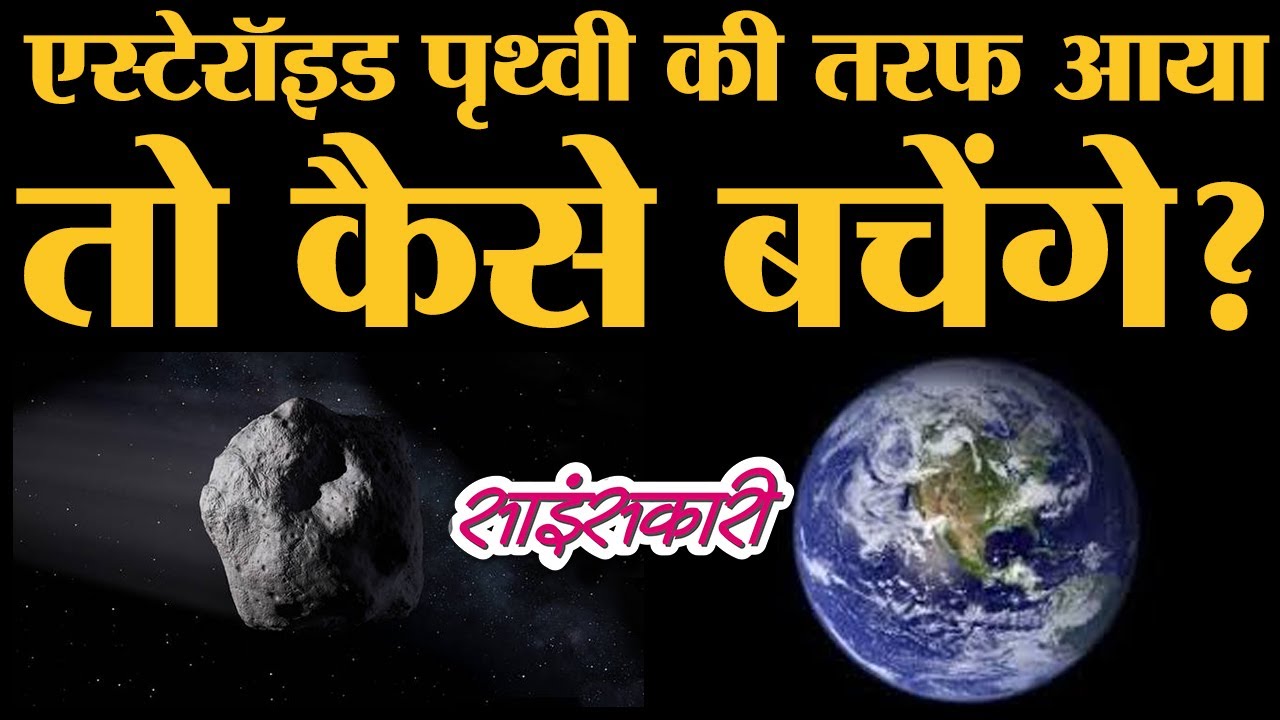
Another impact on the scale of Chickixaloo could wipe out all life on Earth. To avert a new apocalypse, international space agencies are using groundbreaking technologies and revolutionary asteroid deflection tests designed to reverse the balance of power against any destructive cosmic colossus.
NASA and the European Space Agency are working in tandem to develop the very best technologies for emergency impact situations. Pioneering tests that potentially offer our planet a chance of survival in the event of Armageddon.
Press it.
[Music] What we're trying to do is avoid sacrificing Bruce Willis to deflect a missile. Which is why we are sending out an artificial impactor to redirect an asteroid.
Maybe the next time a big one comes, we can alter its course so that it misses the Earth. Who knows?
The takeaway from the dinosaur apocalypse is that we must always be on our guard.
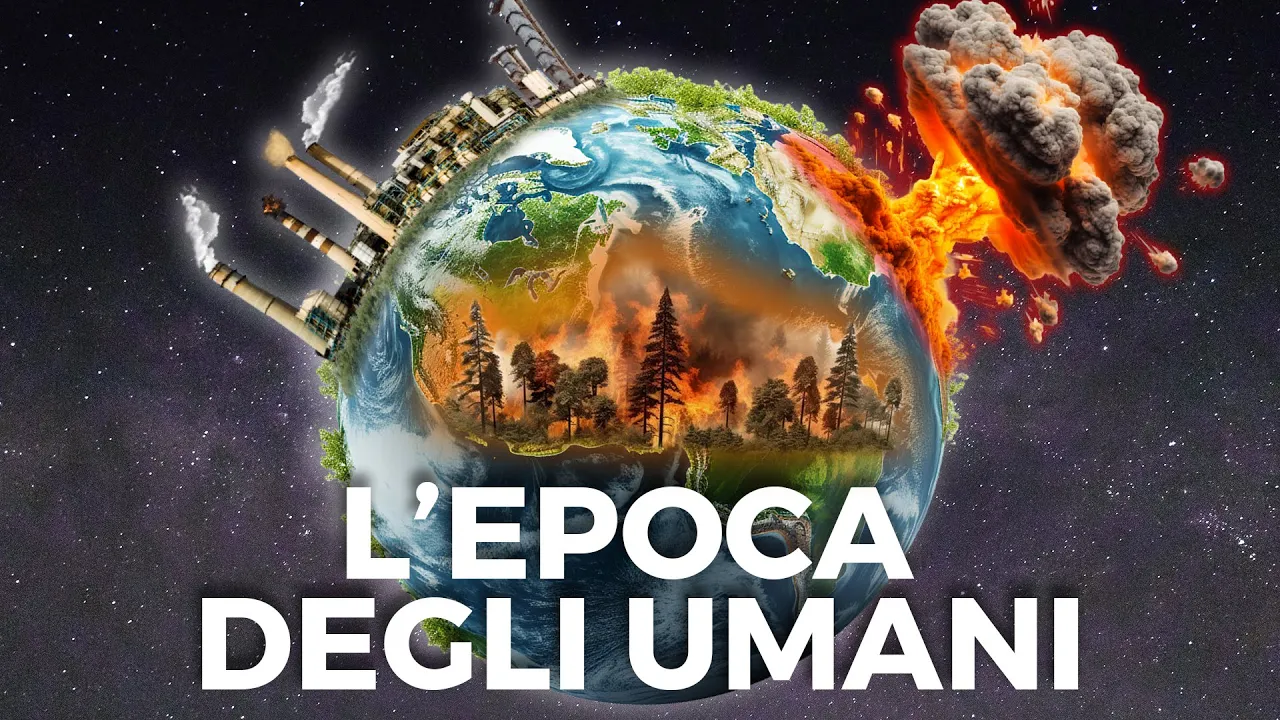
This fifth mass extinction in history was a chain reaction triggered by an extraterrestrial collision. But those that preceded it were caused by volcanic eruptions, ice ages, and global warming. Environmental disasters we are all familiar with, the type of which our world is facing today. What's happening today is that climates, environments are changing so quickly, so dramatically because of us, because of human activity. It's very clear like we have a negative impact on the planet. We have to do something if we don't want to end up like the dinosaurs. From the very outset of the animal kingdom, humans were the first species to adapt the world to its needs and desires. Our attitude and way of thinking brings about clear changes in our environment and ecosystems.
There's not a place on Earth that you could go into the soil, go into the water and not see the effect of humans on the globe. We have changed the game and we are now the asteroid impact. Are we in the early stages of a chronicle of an extinction foretold of the human species? Maybe. In any case, the alarm bells are ringing. Time to wake up. The only way to ensure the survival of our species and avoid the same fate as the dinosaurs is to protect our planet.
[Music]
Up Next

11:14
Tragedy of the Commons: Private Property Rights and Prosperity
@LibertyPen
80.9K views•2012-12-12

12:54
Triumph of Orthodoxy Icon: Byzantine Art & History Explained
@BenCallan
2.1K views•2024-08-06

9:49
FastAPI vs Flask vs Django: Choosing the Right Python Web Framework
@TechWithTim
302.5K views•2024-05-26

1:42
Game of Thrones Opening Credits: A Cinematic Analysis
@gameofthrones
46.3M views•2011-04-18
Related Study Plans & Knowledge Roadmaps
Structured learning paths in General & Interdisciplinary Studies
general-studies
Elevator Engineering: History, Physics & Cities
01From Hoists to Safety Brakes: The Dawn of Vertical Lift
02Hydraulic vs. Traction: The Engineering Physics of Elevators
03Modern Speed, Safety, and Algorithms
+ 2 more learning modules
12h5 modules
Explore Roadmap
general-studies
Rubber: Material Science, History & Geopolitics
01Origins of Natural Rubber & Mesoamerican History
02The Chemistry of Natural Rubber & Vulcanization
03The Geopolitics of the Rubber Boom & Colonization
+ 2 more learning modules
12h5 modules
Explore Roadmap
general-studies
Containerization: Evolution, Logistics & Trade
01Ancient Trade & Bulk Cargo: Amphorae to Barrels
02The Industrial Revolution & Cardboard Packaging
03The Containerization Revolution: Malcom McLean
+ 2 more learning modules
12h5 modules
Explore Roadmap
general-studies
Textile Tech: Evolution, Labor & Global Impact
01Pre-Industrial Textiles: Handloom & Cottage Industry
02Mechanization: The Spinning Jenny to the Power Loom
03The Factory System & Global Labor Transformation
+ 2 more learning modules
10h5 modules
Explore Roadmap