


![1968 | [Garrett Hardin] | The Tragedy of the Commons](https://i.ytimg.com/vi/0YSLD6Bjx2A/sddefault.jpg)















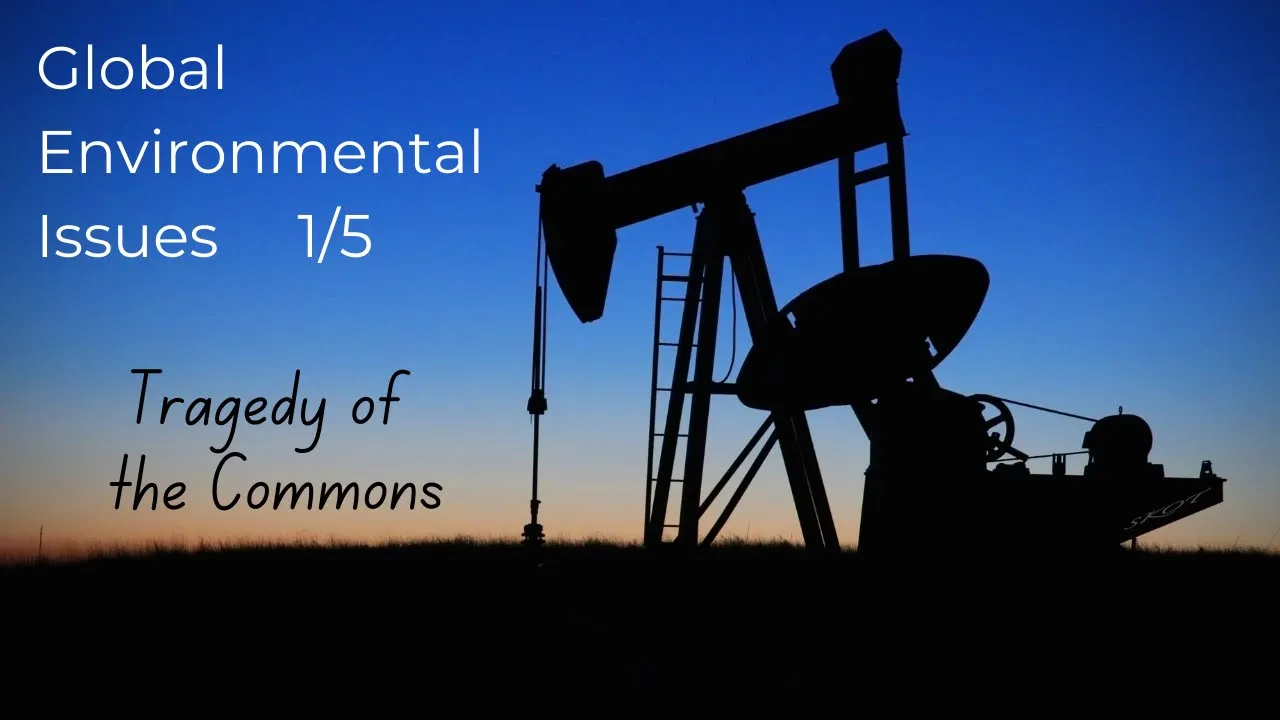

The Tragedy of the Commons is an economic concept where shared resources get depleted because no individual has ownership responsibility, leading to overuse and destruction; however, when property rights are clearly defined and individuals own resources, they have incentives to maintain and improve them, resulting in greater prosperity and productivity.
Tragedy of the Commons: Private Property Rights and Prosperity
Added:The basic economic concept of scarcity and how resources are allocated in an economy.
The definition and characteristics of 'Common-Pool Resources' (non-excludability and rivalry in consumption).
Garrett Hardin's foundational thesis on the 'Tragedy of the Commons' and the concept of negative externalities.
An understanding of what property rights are, including how they are legally defined and enforced.
Elinor Ostrom's Nobel-winning research on governing the commons through community-based, collective action without privatization.
The Coase Theorem and how assigning property rights allows private parties to negotiate solutions to externalities.
Real-world applications of market-based environmentalism, such as Individual Transferable Quotas (ITQs) in fisheries and carbon Cap-and-Trade markets.
The limitations, ethical dilemmas, and transaction costs associated with privatizing public or natural resources.
80.9K views817likes11:14Original Release: 2012-12-12
look at this place a big public park it's a big space where anyone can come no one person owns this everyone shares It sharing is caring it can be fun it feels good just like this children song makes you feel good about sharing sharing ising it can be fun and when I asked what's better public or private private most people said well obviously public if it were private they'd probably charge you a fee for looking wouldn't you say public otherwise we wouldn't be here right now right but wait is that true supermarkets are private so are churches but both are more accessible to the public than say Public Schools also public sometimes isn't very nice what comes to mind when you hear the words public toilet oh well that's gross those are gross yes this is the image I have of public toilets and my Town's public parks including this one used to look gross too garbage everywhere buildings covered with graffiti Fields be of grass sharing is not necessarily caring sharing can mean neglect but then why is this park now so nice because it's Under New Management private management I to know that that's interesting but that goes against what people expect this is actually a privately managed car really I did notice last week and I was here they have awesome toilets yes even the toilets are better great toilet because they clean it very nicely because when you own something you take care of it when no one owns it nobody takes care of it nobody washes a rental car people destroy other common property like much of the world's rainforest American settlers nearly killed all the Buffalo now we're overfishing the ocean when everyone owns a resource no one really cares about it no one really takes care of it it's called The Tragedy of the [Music] commment we like the idea of sharing communal property but it does lead to what economists call the tragedy of the commons it's a tragedy because nasty things happen when everyone owns something I first heard that phrase in a story about some Shepherds who lived around a grassy area they called a common since all the Shepherds shared this free green grass they grabbed as much of it as possible they kept breeding sheep and bringing many more sheep to graze but soon all the grass was gone the Sheep died and the Shepherds had nothing so then they divided the common into Parcels now each Shepherd owned one each had an incentive to limit the number of sheep that grazed on his grass Prosperity happened and everyone lived happily ever after have you ever been to an Indian Reservation if you have you probably saw serious poverty and alcoholism and drug abuse is it because there's something about Indians that makes them lazy or irresponsible no when Indians own their own land they do about as well as other Americans Manny jwes wants to see more of that he was chief of the cam loops Indian band and Canada for 16 years Manny why are so many Indians so poor well first of all John nobody chooses poverty one of the things that's happened is we've been legislated out of the economy by the federal governments both in the United States and Canada what do you mean they've been taking care of you that sounds like the best deal well by taking care of us that means providing social welfare programs the only way to break the cycle of poverty I believe is by the recognition that every other Canadian and American takes for granted and that's real property rights so in Canada as in much of the US reserves the are owned by the government yes so the Indian has some piece of paper that says this is my lot but underlying that title is the fact that in Canada the federal government owns the land so you can't borrow against it borrow you can't get a mortgage you can't be bonded there's nothing that you can have that'll be allow you to be able to go to the bank on your own without the minister co-signing that loan let's bring another guest from perk uh Economist Terry Anderson into this Terry you find Indians do much better when they own their own land yes John I uh first got interested in this subject in 1976 when I visited uh a member of the Flathead Indian reservation and while uh visiting his house I I noted just how well off he was he was not in poverty and I asked how do you explain this and I'll never forget him leaning across the table resting his chin on his hand and elbow saying I own this place and that was my first introduction to the fact that many uh reservations in the United States do have some fee simple land that is privately owned land like you and I own our houses and uh the Indians that have privately owned land do much much better their land is way more productive than the land that is overseen by the federal government held in TR to 90% more productive you found yes the the the the statistics are just astounding I've done a lot of uh Gathering of those data and they show that uh that fee simple lands are anywhere from 40 to 90% more productive uh than the the lands held in trust and as Manny said these Indians who have their land under the trustee ship of the federal government can't borrow against them uh they are are really locked into a poverty cycle as a result now I want to introduce you to one of the most impressive people I know I first met him maybe 15 years ago was one of those lunches with some Economist from South America had some ideas about solving poverty I go to lunches like that cuz it bugs me that America is so rich well most of the world is poor and the world hasn't figured out a way to give them what it was that gave us the power to prosper so I go to the lunch I'm skeptical but there sits Hernando doodo of the institute for Liberty and democracy it's a think tank based in Peru and he starts pulling these pictures out of his briefcase the pictures show slum dwellings built on top of each other much like this and doota went on to explain well I'll let you explain it what what do these pictures show these pictures show that roughly about 4 billion people in the world actually build their homes and own their businesses outside the legal system so it's all halfhazard and disorganized but because of the lack of rule of law the Precision the definition of who owns what and because they don't have addresses can't get the credit can't get all what do you mean they don't have addresses well to get an address somebody's got to recognize that that's where you live that means that there's legal recognition legal recognition means property when you've got property you know you've got mailing addresses and when you make a deal with someone you can be identified at the end the first characterist the second characteristic of identity is your address you go anywhere they say what's your name and the second thing is where do you live until property is defined by law uh they can't get into the kind of deals or the division of labor which is cooperation with other people to specialize and create wealth because that's what makes you wealthy the fact that you don't have to milk a cow every day you don't have to work your land every day you don't have to build your own house you can stick to doing a TV program or you can do this part of a Blackberry and the whole Market puts it together these guys can't they've got to do their whole building take care of it and they can't specialize and that's the reason of their poverty the day that they get titled the day that the businesses in their homes the sewing machines the Cotton Gins whatever it is they've got there the car repair shop finally gets recognized they can start expanding they can start using scale but they need to be recognized by someone local Authority who says this is yours they need to work within the law the law many of these places barely have law that's right so they take a risk they just work a deal with the guy on the first floor and they build their house on the second floor that's right probably the guy on the first floor who had the guts to squat and make a deal with somebody from government who decided to look the other way has got an invisible property right you know it's not very different from when you Americans started going west all the way to California like for example the corn California Gold Rush the land didn't belong to them hey the country didn't belong to them it was Mexico but you went in there you put 800 mining claims Association 3 million Americans big guns and after a while you decided why you keep on shooting at each other so between 1848 say 1856 and the beginning of the 20th century you went out created a private property system and you created Prosperity China is still developing such property rights but in much of the countryside the past prevails and the land is owned collectively the whole notion of property rights has been pretty alien to formerly socialist countries because right from the beginning Mark said it in the 19th century property is theft but compare the countryside to cities like Shanghai I visited Shanghai about 30 years ago and none of these buildings existed at that time it's incredible what happens when you just change the rules of the game what should the rules of the game be the rules of the game have to say and recognize who really owns what what I'm trading today is is roughly a thousand Futures contracts that represents about 40,000 head of cattle I never see this cattle I actually have never been outside of Chicago to the west to see where these animals are in the United States and Western Europe your documents go to the market and practically work for you and think for you in developing countries and most of the former Soviet Union the majority of people actually have to bring their animals to Market people in the developing world have cattle land and houses the same way they do in the Western World what is missing is the rule of law and you say if they just had rule of law they'd be as rich as we oh yes of course but let me tell you bringing in the rule of law is no easy thing you're trying it now in Iraq you ain't getting there you're trying in Afghanistan you're
Up Next
82:24
Evolution & Cooperation | David Sloan Wilson | The Great Simplification #56
@thegreatsimplification
8.4K views•2023-02-02

12:54
Triumph of Orthodoxy Icon: Byzantine Art & History Explained
@BenCallan
2.1K views•2024-08-06

9:49
FastAPI vs Flask vs Django: Choosing the Right Python Web Framework
@TechWithTim
302.5K views•2024-05-26

1:42
Game of Thrones Opening Credits: A Cinematic Analysis
@gameofthrones
46.3M views•2011-04-18
Related Study Plans & Knowledge Roadmaps
Structured learning paths in General & Interdisciplinary Studies
general-studies
Elevator Engineering: History, Physics & Cities
01From Hoists to Safety Brakes: The Dawn of Vertical Lift
02Hydraulic vs. Traction: The Engineering Physics of Elevators
03Modern Speed, Safety, and Algorithms
+ 2 more learning modules
12h5 modules
Explore Roadmap
general-studies
Rubber: Material Science, History & Geopolitics
01Origins of Natural Rubber & Mesoamerican History
02The Chemistry of Natural Rubber & Vulcanization
03The Geopolitics of the Rubber Boom & Colonization
+ 2 more learning modules
12h5 modules
Explore Roadmap
general-studies
Containerization: Evolution, Logistics & Trade
01Ancient Trade & Bulk Cargo: Amphorae to Barrels
02The Industrial Revolution & Cardboard Packaging
03The Containerization Revolution: Malcom McLean
+ 2 more learning modules
12h5 modules
Explore Roadmap
general-studies
Textile Tech: Evolution, Labor & Global Impact
01Pre-Industrial Textiles: Handloom & Cottage Industry
02Mechanization: The Spinning Jenny to the Power Loom
03The Factory System & Global Labor Transformation
+ 2 more learning modules
10h5 modules
Explore Roadmap