




![مراجعة شاملة على الفصل الأول | التيار الكهربى [ تالتة ثانوى ]](https://i.ytimg.com/vi_webp/I-IvfIGTLww/maxresdefault.webp)
















Faraday's Law states that an induced electromotive force (EMF) in a loop of wire is proportional to the rate of change of magnetic flux through the loop, calculated as EMF = -N(dΦ/dt), where N is the number of loops and Φ = BAcos(θ) represents magnetic flux depending on magnetic field strength (B), area (A), and the angle (θ) between the magnetic field and the normal to the surface; Lenz's Law provides the direction of the induced current, stating that the induced magnetic flux always opposes the change in external magnetic flux, meaning if the external flux is increasing, the induced flux points in the opposite direction, and if decreasing, it points in the same direction as the original flux.
Faraday's Law & Lenz's Law | General Physics
Added:Understanding of magnetic fields, field lines, and how they are generated by permanent magnets or moving charges.
Basic concepts of electric current, voltage, resistance, and Ohm's Law.
The definition and calculation of magnetic flux, including vector dot products and surface area.
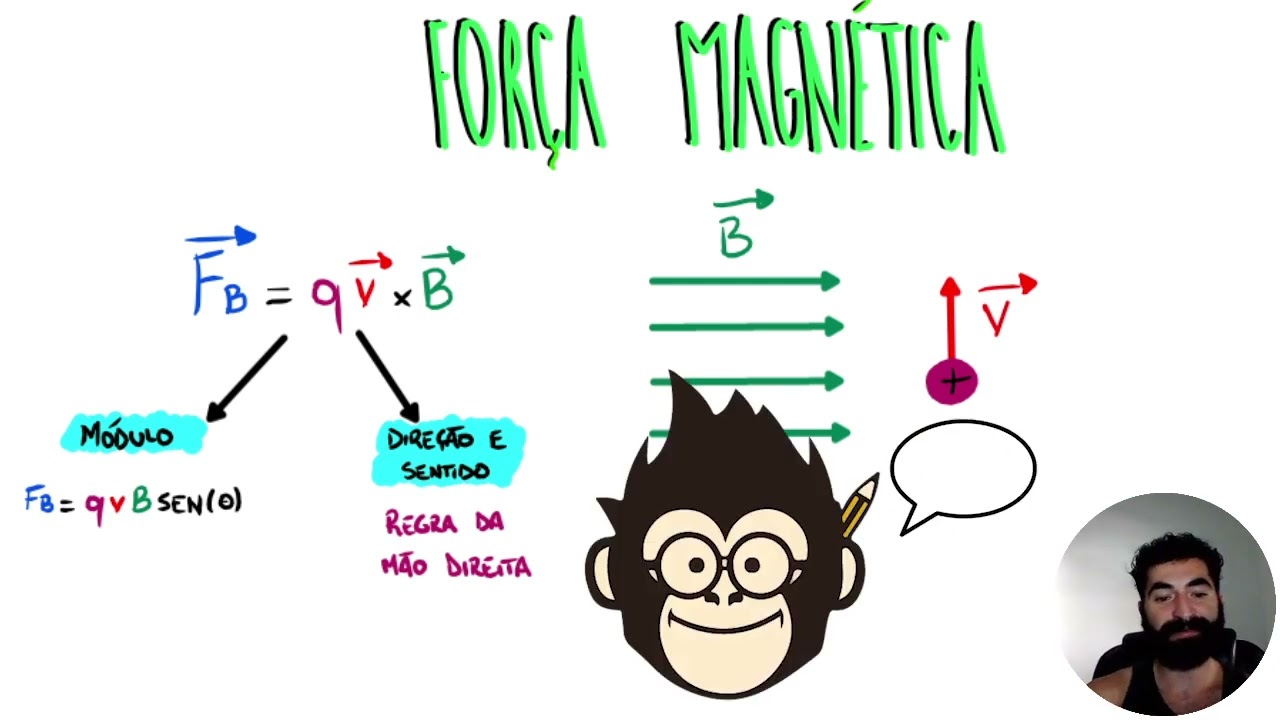
Familiarity with magnetic forces on moving charges (Lorentz force) and the right-hand rule.
Exploring self-inductance, mutual inductance, and the behavior of inductors in AC and DC circuits.
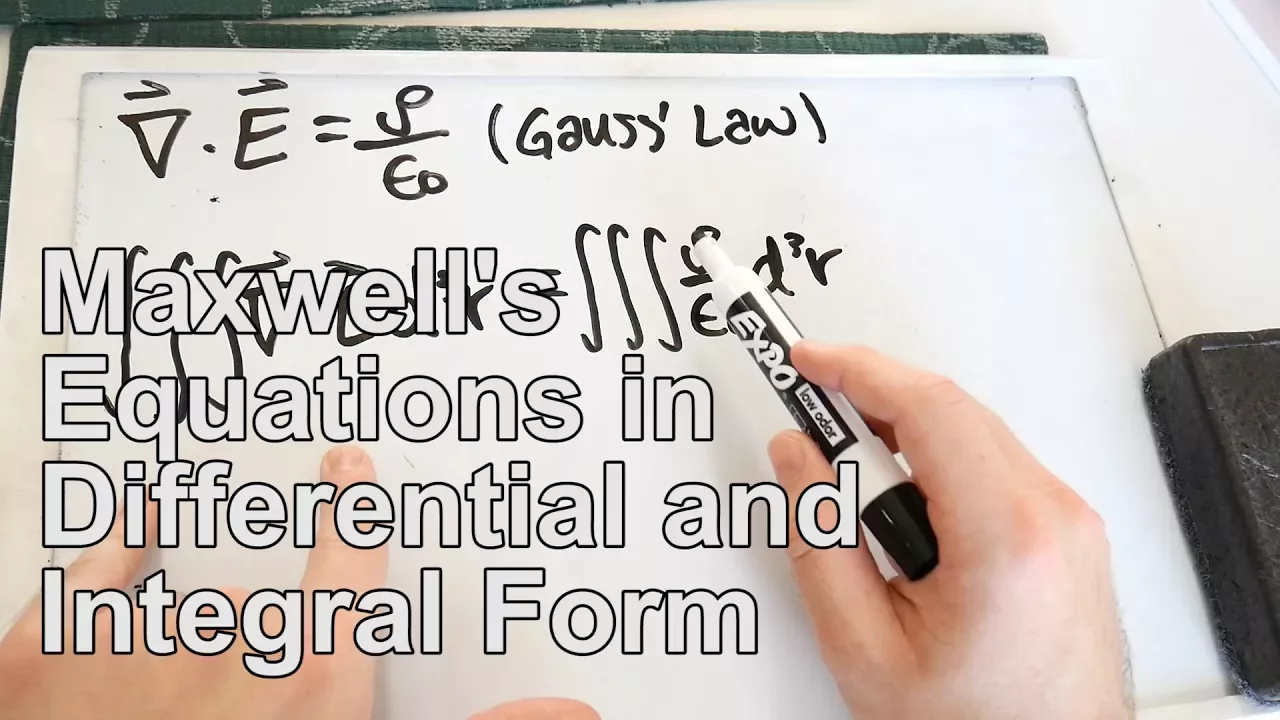
Analyzing Maxwell's Equations, specifically how Faraday's Law is formulated in differential and integral forms.
Practical applications of electromagnetic induction, such as the working principles of electric generators, transformers, and induction stoves.
Understanding electromagnetic wave propagation and how changing electric and magnetic fields sustain each other.
34.2K views698likes35:51Original Release: 2024-02-26
Faraday's law and lens's law going to be the topic of this lesson in my new General Physics playlist which when complete will cover a full year of University algebra based physics in this lesson we're going to Define magnetic flux we're going to find out that when you have a changing magnetic flux you can induce an EMF and a current in a loop of wire so Faraday law is going to allow us to calculate the magnitude of that induced DMF and then lens is law the direction of the induced current in the loop my name is Chad and welcome to Chad's prep where my goal is to take the stress out of learning science now if you're new to the channel we've got comprehensive playlists for General chemistry organic chemistry General Physics and high school chemistry and on Chads prep.com you'll find premium Master courses for the same that include study guides and a ton of practice you'll also find comprehensive prep courses for the DAT the MCAT and the oat now before we Define magnetic flux we're just going to do a quick review of electric flux here from a few chapters ago and so electric flux was related to the number of electric field lines passing through a surface and it could be a real surface or it could be some imaginary surface where we like apply gauss's law and things of this sort so either way so but in this case the more field lines that pass through a surface the greater the electric flux well how do you get more field lines to pass through a surface well you've got three ways you can have a stronger electric field that's the first way you can have a bigger surface area for your surface just a larger surface because it's larger by you know by just the nature of its size more Electric field lines are going to pass through it and so the area is related but also how it's oriented with respect to the electric field so it turns out if you're surface and the electric field are in the same plane well then no field lines are going to pass through it so but you're going to get a maximum of field lines passing through it when they're perfectly perpendicular to one another and so if the electric Field's in one plane and the surface is perfectly perpendicular to it that's when it reaches its maximum for this electric flux so Theta here is defined in a very specific way it is not the angle between the Surface and the electric field it is the angle between the normal to the surface and the electric field and so in this case if this really is lined up in such a way that this plane this surface here is perpendicular to the electric field that would mean the electric field is exactly 90 degrees from the surface which means it's 0 de from the normal to the surface that's Theta and when you have the cosine of0 so the cosine of 0 is 1 and this electric flux reaches its maximum well it turns out that magnetic flux works exactly the same way but instead of looking at a surface in an electric field we're now going to look at a surface in a magnetic field instead and so now we'll be calculating the magnetic flux so but it's still related to the number of now magnetic field lines that are passing through the surface and so that's going to rely not on the strength of the electric field but the strength of the magnetic field still on the area of the surface and Theta is defined EX exactly the same way it is how far now the magnetic field is away from being perpendicular to your surface away from the normal of the surface if they're perpendicular then Theta is zero and cosine Theta is one and we've reached our maximum for magnetic flux so once again if your surface and the magnetic field are in the same plane then no field lines pass through it and Theta would be 90° and cosine of 90 is zero and the magnetic flux is zero in that case Okay so that is magnetic flux and we have to Define this because Faraday's law allows us to calculate uh an what the magnitude of an induced EMF is in a loop of wire when it experiences a change in magnetic flux now it has to have a change in magnetic flux and to get a change in magnetic flux you've got to have a change in one of three things either the strength of the magnetic field is changing the area of the loop is changing or the angle so how far away we are from the normal if you will has to be changed one of those three things has to fundamentally be changing to have a changing magnetic flux but if it does then you can induce an EMF in a loop of wire and that Loop of wire having this induced EMF doesn't have to be hooked up to a power source at all doesn't have to have a battery as part of it or anything of the sort me you can still induce an EMF and a current in that loop with this changing magnetic flux and that's what Faraday's law describes it describes the magnitude of that induced EMF relative to a changing magnetic flux over time now if you have a single Loop of wire that's what n is it's the number of Loops of wire single Loop of wire this is just one so in the EMF would simply equal just the change in the magnetic flux over the change in time now there's a negative sign here but we'll find out with lens's law that this negative is really all about Direction not about the magnitude the magnitude here is just going to be the change in magnetic flux over change in time for one Loop of wire if it was 100 Loops of wire well then you just have to Simply multiply by 100 that's where n comes into play all right so little quick review here so say we've got a loop of wire and let's say we've got a current in this wire going around like so and just a quick reminder that we developed a right hand rule that says if you Loop your fingers in the direction of that current then where the magnetic field generated coming out the center of that Loop or in you know at the center of loop will be your thumb and so in this case this is going to generate a magnetic field right coming out of the board at the center of this Loop we want to keep that in mind that's going to help us kind of uh analyze lens's law just a little bit now there's one other thing we got to talk about and that's the relationship between like velocity and acceleration which you might be like well where is that coming into play here it'll become evident in a second here for just so let's say I take and throw this marker up in the air and I throw it up in the air I was supposed to catch that I kind of missed it but as it was traveling upward which way did its velocity Point well it pointed up my question for you was it speeding up or was it slowing down well on the way up it was slowing down and so the key here is that the velocity pointed up but the acceleration pointed down so and when your acceleration and your velocity point in opposite directions that's the evidence that something is slowing down and if you recall that acceleration is equal to the change in velocity over the change in time that's acceleration and I don't really care about acceleration what I really want to you know relate though in this case is the relationship between velocity and the change in velocity so if your velocity and your change in velocity point in opposite directions that object's slowing down but if your velocity and your change in velocity point in the same direction that's an object that's speeding up and again when this marker was on the way up it was slowing down but when it revers Direction it was coming back down its velocity now pointed down and it was speeding up which means its change in velocity also pointed down so velocity pointed down and now instead of acceleration I really want to highlight change in velocity also pointed down and again in this case you might be like well yeah the acceleration pointed down because gravity always points down Chad well rightfully so but the key is really just the relationship between velocity and change in velocity when they point in the same direction Something is speeding up when velocity and change of velocity point in opposite directions something is slowing down so just keep that in mind here when we kind of look at lens's law for just a second all right so say we've got this lovely Loop right or this lovely Loop and let's actually redraw it let's get this all out of here and start from a fresh board so let's say we've got a loop now and now this Loop does not have a current in it there's no battery hooked up to it anything of the sort but there is a magnetic field there and this is a constant magnetic field so and this Loop is just sitting there in this constant magnetic field and my first question for you is is there any reason to believe there should be an induced EMF here well in this case we need the magnetic flux to be changing well if it's a constant magnetic uh field and the loop is not changing its size in any way shape or form it's not rotating that the angle changes in the way shape or form well then we shouldn't expect there to be any change in magnetic flux and if there's no change in magnetic flux there's no induced EMF whatsoever but let's say for a second now that instead this lovely magnetic field is either increasing in strength or decreasing in strength and we'll consider both for just a sec so let's say it's increasing in strength increasing in magnitude of the magnetic field well if the mag if this B value is getting larger then the magnet magnetic flux is getting larger and if the magnetic flux is getting larger then we have a change in the magnetic flux over time all right so the question though is if this magnetic field is increasing over time then what's going to be the direction of the induced current in this Loop of wire which is kind of how we look at the direction of the induced EMF as well well that's what the negative sign in in Faraday's law deals with and that's ultimately what lens's law puts into words and ultimately what say what it says is this is that the magnetic flux that results from the current in your Loop will oppose the change in the magnetic flux that you have as well so let's take a look at this for a second so first I want to take a look and say what is the direction of just the plain old magnetic flux and turns out the magnetic flux the direction of it is just going to be the same direction as the magnetic field and in this case it's going into the board and so it's into the board now the question though is what is the direction of the change in magnetic flux well in this case we said the magnetic flux is going into the board and it's increasing so just like when you have a velocity in a certain direction and it's increasing I you're speeding up that means the change in velocity pointed in the same direction same thing's going to be true here if the magnetic flux points into the board and it's increasing that means the change in the magnetic flux also points into the board symbolized by that X here in this case that's what I needed to know it's not super important important it turns out in this case that the magnetic flux points into the board what I need to know is which direction does the change in the magnetic flux point and the reason that's so important is because the induced current in this Loop is going to cause its own so kind of magnetic flux and induced magnetic flux and it has to be in the opposite direction of this which means in this case it needs to be coming out of the board instead and so the loop of wire here either is either going to have a current going around this way or going around this way if it's going around this way it's going to induce a magnetic field coming out of the board if it's going around this way it's going to Inc induce a magnetic field going into the board what I need is for it to induce a magnetic flux out of the board and to induce a magnetic flux out of the board so that I need it to have a magnetic field coming out of the board as well which will happen when the current in this case is going around counterclockwise from our perspective and so going around this way to our right hand rule it shows my thumb coming right out of the board opposite in direction to my change in magnetic flux now a lot of students get confused with this and they they struggle to see the difference between your magnetic flux's Direction and your change in magnetic flux's Direction so but it's really important and again if your magnetic field is increasing in strength so or if your magnetic flux is increasing well then your magnetic flux and your change in your magnetic flux point in the same direction but if it's decreasing that's just like when your velocity is slowing down if your velocity is slowing down that means your change in velocity opposes your velocity it's in the opposite direction as your velocity and so the other option we said we' take a look at here let's go back and we're going to leave the magnetic field pointing into the board but now we're going to say that the magnetic field is actually decreasing in strength and so with your magnetic decreasing in strength well one the magnetic field still points into the board that's clear if the magnetic field points into the board that means the magnetic flux points into the board but if that magnetic flux is now decreasing because the magnetic field is decreasing then that means that the change does not point in the same direction as the magnetic flux it points in the opposite direction coming out of the board instead all right which means then that the induced magnetic flux due to the current in the wire is going to have to point back into the board it doesn't oppose the magnetic flux itself it imposes the change in the magnetic flux and again this is the real tricky part that some students uh struggle with with lens's law all right so in this case then I need the magnetic flux let's get a B on there so due to the induced current to point into the boards my thumb needs to go into the board and that means I'm going to Loop my fingers around now in a clockwise fashion instead so fingers are on the current thumb is the direction of the magnetic field and therefore the induced magnetic flux as well and it's in the opposite direction as the change in the magnetic flux that's lens's law let's look at some applications of this so the first example we're going to take a look at comes with a diagram looking a lot like this it's actually prettier on the study guide here so but it says the North Pole of a maget is moved toward a metal loop at constant velocity what is the direction of the induced current in the wire as perceived from the right and this is supposed to show that this Loop is in the plane perpendicular to the magnet as the magnet moves towards it all right so we got a couple questions to ask ourselves here and so uh one of them is the direction of the magnetic flux we're going to ask ourselves if there's any change in the magnetic flux and then we want to talk about the current induced in the loop to induce a magnetic flux in what direction that might be in so those are our three questions we're going to answer and so keep in mind again that we're going to have this bar magnet moving to the left here we're going to have a loop that's in the perpendicular plane if you will with the magnet moving towards it so first thing we want to ask ourselves is what is the direction of the magnetic field and therefore magnetic flux at the Loop due to this magnet well if we look at our field lines here our field Lin lines kind of going around like so so for our magnetic field lines and so in this case at the Loop the magnetic field points to the left and therefore the magnetic flux also points to the left now the question becomes is as you move this bar magnet to the left that's going to change either b or a or cosine Theta if there's going to be a change in the magnetic flux well the area of the loop is not changing and it's remaining in the perpendicular plane to this magnetic field in which the bar magnet is moving towards it the whole time so Theta is not changing but the strength of the magnetic field what's going to change as the bar magnet moves closer to the loop that strength of the magnetic field is going to go up and so B is changing here and it's increasing and that's the key is it's increasing and so just like when you have a velocity and that that velocity is going up that means that the change in velocity points in the same direction as the velocity same thing here not only does the magnetic flux point to the left but because it's increasing as the magnet gets closer and closer and closer to the loop then the change in the magnetic flux also points to the left which means that the induced magnetic flux as a result of the current in the wire that's going to need to point the opposite direction according to lens's law it's going to need to point the word right doesn't start with a B it's going to need to point to the right in this case so if we look that means my thumb is going to need to end up pointing to the right and so that means that my current going around this Loop so the part that's further back is going to be going up and then the part that's closer to us is going to be coming down so that my thumb points to the right instead so if we look at how we Define this typically we're going to Define this from the side where the magnets on so in looking at how that's coming around from this perspective if you see what I'm doing here that's going to be counterclockwise from the side of the magnet looking at from the side of the magnet if you look at it from the other side it would be clockwise but from this side it is counterclockwise all right so that's question number one not so bad question number two we're going to use the same diagram just redefine some things here so in this case instead of a velocity that is moving the bar magnet toward the loop we're now going to have a velocity that is moving the bar magnet away from the loop well if you notice our field lines haven't changed their Direction those magnetic field lines Still Point to the left that hasn't changed let's get that up there so magnetic field lines and then the for the magnetic field points left but now we got to talk about the change in the magnetic flux and in this case the question is is the magnetic flux increasing or decreas increasing if it's increasing then it's going to point left just like the magnetic flux itself but if it's decreasing then it's going to point to the right instead in this case as the magnet gets further and further and further from the loop well then the magnetic field strength at the position of the loop is going to go down it's decreasing and if it's decreasing then the change in the magnetic flux actually points to the right the direction opposite of the magnetic flux itself which means then according to lens's law so the induced magnetic flux due to the induced current needs to oppose the change not the magnetic flux itself but the change in the magnetic flux and if that changes magnetic flux points right then my induced magnetic flux is going to need to point to the left and so once again we've got our Loop here off to the side and now I don't need my thumb to point right I need my thumb to point left instead and if we look at what this ultimately means to make that happen I need now a clock clockwise current from this perspective in that Loop and that's the answer it's going to be clockwise from the perspective as viewed from the side that has the magnet on it so our third example is going to switch things up just a little bit so we're going to change the orientation of the magnet but still have it moving away from the loop and the question says the South Pole of a magnet is moved away from a metal loop at constant velocity what is the direction of the induced current in the wire as perceived from the right all right so let's draw those magnetic field Lin lines on here again again magnetic field lines outside the magnet come from the north and come back into the south end so we can see here that where the loop is positioned the magnetic field is going to point to the right and if the magnetic field points to the right that means the magnetic flux points to the right as well but the question is not where the magnetic flux point but where does the change in the magnetic flux point and as we move this magnet further and further away from the loop the magnetic field strength is still going to be decreasing and that's the key if your magnetic flux is increasing then your change points in the same direction as the magnetic flux itself but if your magnetic flux is decreasing and it is here with the magnetic field strength decreasing so that's when your change in magnetic flux again points in the opposite direction to the magnetic flux itself so if the magnetic flux points to the right but it's decreasing then the change points to the left which means that our induced magnetic flux needs to oppose that change and point to the right so getting our lovely loop again and turning it sideways here so I need my thumb to point to the right and again that from viewed from the right is going to be in the counterclockwise Direction yet again so hopefully you're getting the gist of this and again the key is again figuring out if your change in magnetic flux points in the same direction as the magnetic flux or the opposite and it really just comes down as your magnetic flux increasing then it's the same direction if it's decreasing then it points in the opposite direction so the next example we're going to take a look at so we're actually going to have the loop rotating so the first three examples of lens's law application we dealt with there was a change in the magnetic flux because there was a change in the strength of the magnetic field but in this example there's actually going to be a change in the angle Theta resulting in the change in the magnetic flux uh and we'll treat it the same way though and figure out what is the direction of the induced current so in this case we're going to start actually let just read this real quick so a single Loop is rotated with constant angular velocity a quarter turn as shown in the diagram and there's a single point uh on the loop is shown in red for reference so here uh this Loop is in the plane of the board in the same plane as the magnetic field and then it's going to be rotated so 90° to where it's perpendicular to the magnet field instead all right if there is a constant magnetic field directed to the right and the plane of the loop is initially parallel to the field then in what direction is the current in the loop during this time assume as I'm sorry assign as clockwise or counterclockwise relative to the diagram at T equals z so we're going to design you know as this Loop turns so obviously this Loop is going to turn perpendicular here but we're going to define the current as either clockwise from this perspective or counterclockwise from thisp perspective at T equals 0 so that's kind of what the question's getting at so in this case then again the magnetic field strength not changing the area of the loop is not changing so b and a are constant it's the angle Theta that's changing and so initially we are 90° away from being normal to the plane of the loop so and again when cosine is of 90 is zero you get no magnetic flux to start with so in fact we can write that down so the magnetic flux equals 0 now over here when Theta is equal to 0 cosine of 0 is 1 and your magnetic flux equal to B * a this is when your magnetic flux reaches a maximum and so that's why we got a changing magnetic flux it's going from zero to this maximum value of B * a and again we don't have any math to do here we just want to know what's the direction of the induced current as a result of this changing magnetic flux well in this case we got to ask ourselves the same question what direction does the magnetic flux Point what direction does the change in magnetic flux point and therefore what is going to be the direction of the induced magnetic flux as well well in this case what direction does the magnetic field point the whole time it points to the right and if the magnetic field points to the right the magnetic flux points to the right and in this case is that magnetic flux increasing or decreasing well in this case it's going from zero up to its maximum value that's an increase and again as long as the magnetic flux is increasing then the change in magnetic flux points in the same direction as the magnetic flux itself which in this case is also to the right and so lens's law predicts that are induced uh the the magnetic flux associated with our induced current is going to have to point opposite to that change and therefore in this case point to the left and so again if we pull our Loop up so per I 90° here so if I want my thumb to point left so then I can see here if I match this back up here I'm curling around in the clockwise Direction relative to this first one and our current here is clockwise relative to this diagram right here and again it's a little harder to see on this one but same kind of thing as well but it is clockwise relative to this diagram which is kind of the hint the question gave these are some of the more common lenses law applications you're going to see we going do another example here that's now going to deal with an application of Faraday's law and a calculation to go with it but also still an application of lens's law so the special application of Faraday's law we're now going to look at is what we call motional EMF so before we talk about it we just want to talk about kind of the foundation of it and that's taking and moving a conducting rod in a magnetic field and what we're going to do here is we're going to take this lovely conducting rod and move it to the right so and if you recall this lovely equation right here so fals QV V sin Theta so we got a conducting Rod it's got electrons that are free to move although we like to usually think of it with conventional current and I do want to talk about this in the context of current as you'll see so but with conventional current we we talk about the imaginary flow of positive charges and I'm going to kind of look at it more from that perspective but as I move this bar to the right these charges are moving that direction as well and if we point our fingers in the direction of the magnetic field and our Thumb in the direction of that velocity we have a force coming out our Palm on those positive charges and so you're going to get the buildup of positive charge right there well as those positive charges migrate again what's really happening in this conducting Rod as we do our right hand rule it's not that positive these imaginary positive charges are actually migrating to the top of the rod it's really that electrons are coming being negative charge coming out the back of our hand and migrating down to the bottom that's what's really happening but the result is the same either way you're getting a buildup of positive charge at one end of the rod and a buildup of negative charge at the opposite end and you end up with an EMF across this lovely bar all right now in this case we don't actually have a current because we're this is not connected to you know any kind of loop of wire or anything like that but that's the next step we're actually going to connect it to a lovely Loop of wire and so in this case we're still going to have this conducting Rod so on a rail system and it's going to slide along this Loop of conducting wire and so we have an actual complete circuit and so in this case as that happens again we're going to get the positive charges wanting to migrate to the Top If You Will so but in this case they don't just pull up at the top they actually can flow all the way around the loop and in a current in this fashion and we can see that oh if the positive charges wanted to flow this way if you will well flowing up through the bar then they can go around the loop and we can predict the direction of the current but we can also predict the direction of the current using lens's law in conjunction with Faraday's law in such a situation as well and so if we take a look here in this case if I start moving this lovely bar to the right so let's take a look at our magnetic flux our change in our magnetic flux and then our magnetic flux associated with any sort of induced current in this case well in this case our magnetic field lines all Point into the board and therefore our magnetic flux also points into the board as well now in this case magnetic flux is it changing well the magnetic field strength's not it looks pretty constant on the board and stuff like that what's changing though is the loops getting bigger and bigger and bigger as we move to the right and if the Loop's getting bigger its area is getting bigger then the magnetic flux is increasing had we been moving this bar to the left instead well then the magnetic flux would have been decreasing instead but in this example that Loop's area is getting bigger if it's increasing then the change in the magnetic flux points in the same direction as the magnetic flux itself and points into the board in this case which means that the induced magnetic flux if you will is going to have to be coming out of the board instead well again we already knew that we had a current flowing this direction through this Loop so we we reason that out just by the the charges and stuff like that feeling a force as they migrate through this magnetic field but in terms of Faraday's law now we can see why they would have to be this direction as well so because I need the induced magnetic field due to that current to point out of the board and it does if the current Moves In This counterclockwise Direction okay so a couple things to deal with in this case so if we actually look at this induced EMF one more time so there's our Faraday log again and in this case again that's going to be your change in ba a cosine Theta all over your change in time in this case we're going to do this for that single Loop of wire this is a single rail on a single Loop of wire so the n in this case is going to be one that's why I kind of left it out here whereas you see it here so but in this special application it's just one Loop all right so and again what's changing here it's not B it's actually a and it's not Theta either in this case this Loop is perfectly perpendicular to the magnetic field the entire time and so actually cosine of theta in this case Theta being zero since zero away from the normal is one and that goes away and so and then we can go even one step further it's the change and really I should have put this in parentheses change in ba but really that's B times the change in the area over the change in time okay well it turns out we're going to Define some things so the length of this rail right here we're going to Define as l in this case so in this example up here we're going to find out that that L is going to equal 1.0 meters here so and we've got a rectangular or at least maybe a square but some sort of rectangular Loop in this case that's going to have a width here and so that change in area well the length here is not changing it's the width that's going to be changing and so we can write this again one more time as B and then the change in the area would actually be L times the change in the width over the change in time okay well as we move this lovely thing in this case it's moving in the X Direction so look instead of looking at this change in width I'm actually going to look at it as the change in X and again it could you know if I orent this different it could be moving up down left right whatever so but I want to make this look exactly like we need it to to Define some things here so but if you notice we get the displacement Delta X over delta T and what is displacement over time it is velocity and ultimately that's what this turns into is B * L * the velocity this is a special application of Faraday's law in this case to uh get a a separate equation but really is the same equation looking a little different terms term what we call motional EMF so and if you've got motional EMF due to this lovely Rod you know conducting Rod moving on a rail system of wire here so you can use this equation now we just derived it from Faraday's law you can always use Faraday's law but in this one special application it might be easier to use this lovely equation instead so and that's the next problem we're going to do here it actually applies to this diagram here and it says what is the magnitude and Direction either clockwise or counterclockwise of the induced EMF in the conducting wire in the diagram as the conducting rail slides along it to the right with a speed of 0.50 m/s okay this gets to be as far as magnitude goes pretty simple plug and chug we know the strength of the magnetic field is 2.0 Tesla we know the the length of the rail is 1.0 M and we know the velocity is 50 m/s and if we use the formula here for motional EMF it's a fairly straightforward plug-and-chug calculation so we're going to get strength of magnetic fields 2.0 Tesla length here is 1.0 M so and the velocity is given as 0.50 m per second and so in this case we're going to get 2 * 1 * half is just equal to 1 in this case 1.0 Vols going to be our answer now the direction here now this formula for motional EMF you notice I lost that negative sign somewhere along the way and again that negative sign deals with Direction and for whatever reason with this motional EMF we leave that off it's just magnitude the Direction Still comes down to lens's law and in this case with it moving to the right we figured out the current would have to be around in this counterclockwise Direction that way the induced uh magnetic flux pointed out of the board now a couple other things to look at here so as you're pulling on this lovely Rod to kind of pull it down this direction there's an opposing force and the harder you pull the heart of the opposing Force gets as well as we'll see so if you recall now this equation we had fals i l b sin Theta you might have had it as B sin Theta same diff so but in this case this was the uh force on a current conducting wire in a magnetic field and it had its own right hand rule as well and for that right hand rule I want to focus just on the current right here you put your thumb in the direction of that current you put your fingers into the board here in the in the direction of the magnetic field and then coming out your palm was the direction of the force and as a result as this thing slides this way there's an actual magnetic force in the opposite direction so you don't get a free lunch here so as you're creating this induced EMF you're actually giving the current you know the charged particles that make up the current in that uh you're giving them potential energy effectively where does that energy come from well you're overcoming this lovely Force right here so you're having to pull there's not like no Force required to move this bar so and the harder you pull it the greater the induced Uh current going around this Loop and the greater this opposing force is going to become uh as you go so no free lunch here you don't just you didn't just create energy but you can convert mechanical energy if you're actually using a force to pull this so and convert that into some form of electrical energy in this case now in the rest of the chapter we're going to deal with things like generators and motors and back EMF and inductance and then RL circuits which we've kind of laid the groundwork for here if you found this lesson helpful consider giving it a like happy studying
Up Next
3:42
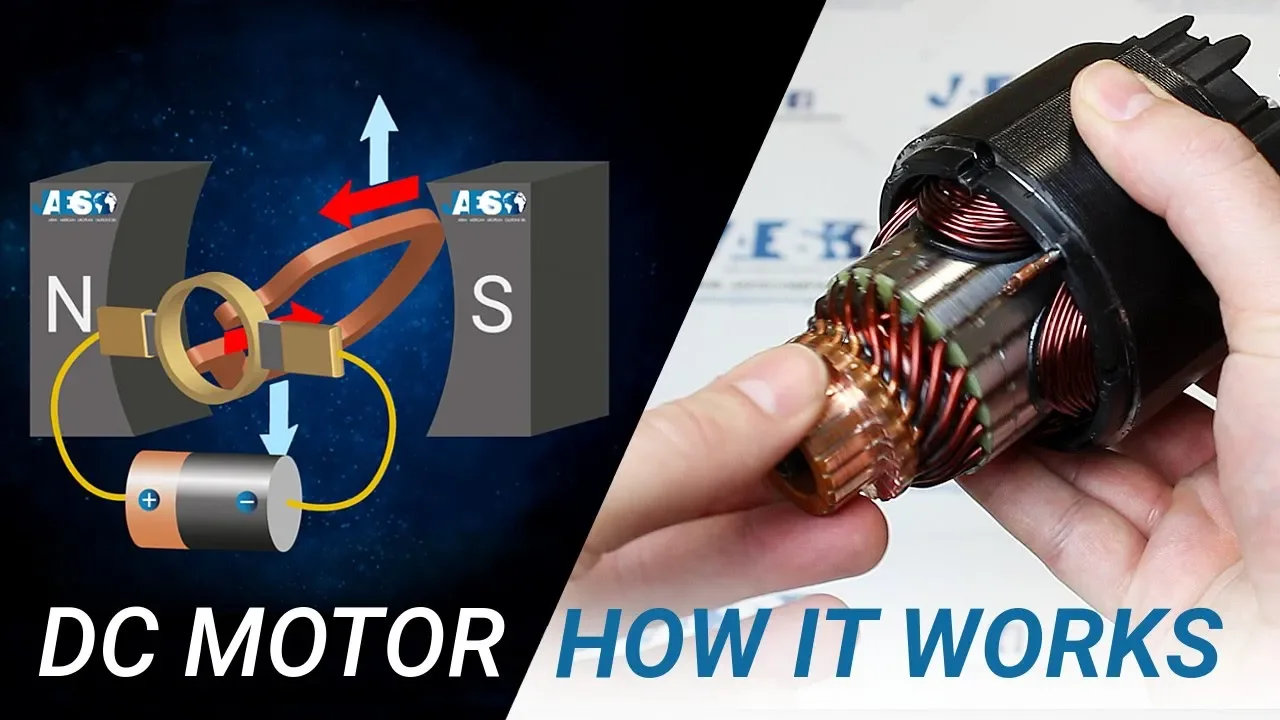
DC Motor Working Principle: Lorentz Force and Electromagnetic Field Explained
@Jaescompany
863 views•2019-01-16

12:53
21cm Hyperfine Transition in Neutral Hydrogen: Radio Astronomy Basics
@AaronRobertParsons
12.4K views•2011-10-13

32:32
NMR Spin Physics I: Zeeman Effect, Resonance Condition & Larmor Frequency
@nptel-indianinstituteofsci8064
2.3K views•2024-01-17

27:14
Entropy and the Second Law of Thermodynamics Explained
@veritasium
27.5M views•2023-07-01
Related Study Plans & Knowledge Roadmaps
Structured learning paths in Physics
physics
Nuclear Physics (Decay, Fission & Reactors)
01Atomic Structure and the Binding Force
02Radioactive Decay and Half-Life
03Nuclear Fission Mechanics and Chain Reactions
+ 2 more learning modules
12h5 modules
Explore Roadmap
physics
Soft Matter (Polymers, Colloids & Rheology)
01Foundations of Soft Matter & Thermal Forces
02Polymer Physics and Macromolecules
03Colloids, Surfactants, and Self-Assembly
+ 2 more learning modules
38h5 modules
Explore Roadmap
physics
Analytical Mechanics: Lagrangian & Hamiltonian
01Mathematical Foundations: Calculus of Variations
02From Newtonian Mechanics to Constraint Dynamics
03The Principle of Least Action & Lagrangian Mechanics
+ 3 more learning modules
28h6 modules
Explore Roadmap
physics
General Relativity (Spacetime & Cosmology)
01Foundations of Relativity: Special Relativity
02The Geometry of Spacetime: Equivalence Principle & Curvature
03Einstein's Field Equations: The Mathematics of Gravity
+ 2 more learning modules
55h5 modules
Explore Roadmap