











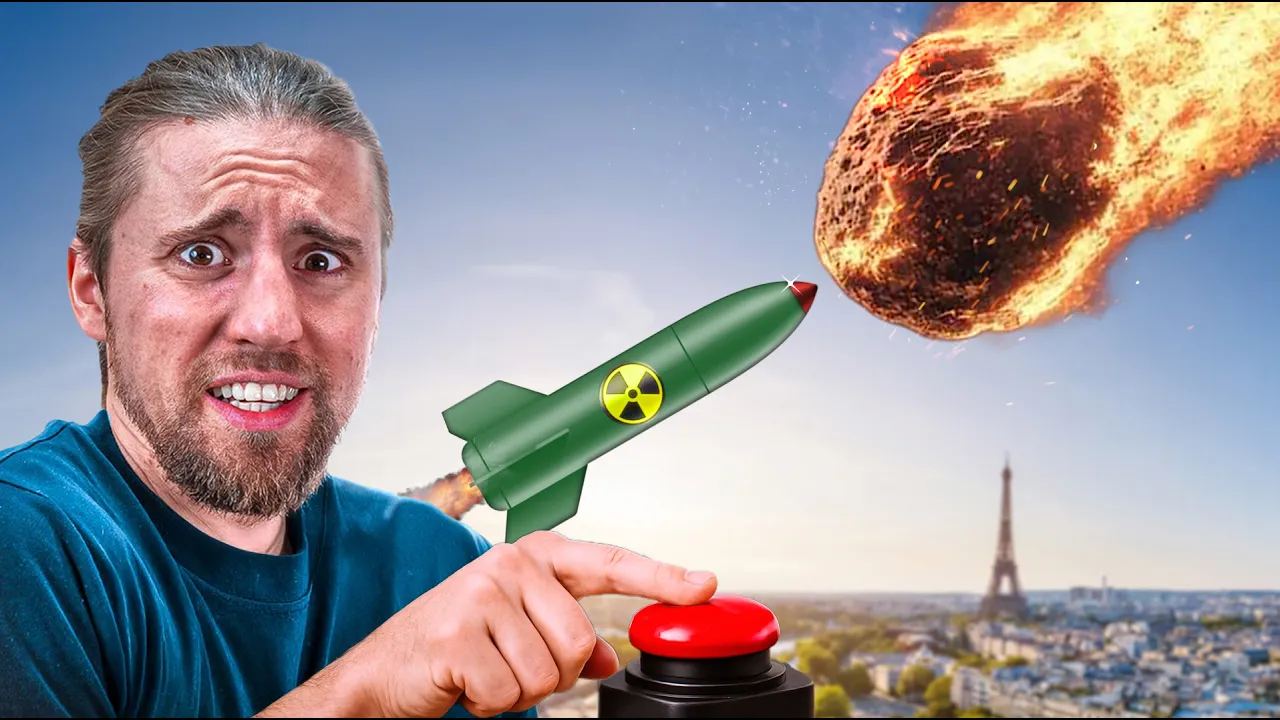




Planetary defense against asteroid impacts requires international cooperation, early detection through ground-based and space-based telescopes, and development of deflection technologies such as kinetic impactors, gravity tractors, and nuclear explosives. NASA has detected approximately 95% of large civilization-ending asteroids (1 km+ diameter) but only about 1.5% of city-threatening asteroids (40 meters+ diameter), highlighting the need for enhanced detection capabilities. The recommended strategy involves launching a space-based infrared telescope (NEOCam) to complete asteroid cataloging and conducting a deflection demonstration mission to prove our ability to alter an asteroid's trajectory if needed. With proper preparation and international collaboration, humanity can prevent potential asteroid catastrophes that could otherwise cause mass extinction or civilization collapse.
Planetary Defense: Astronaut Tom Jones on Asteroid Threats
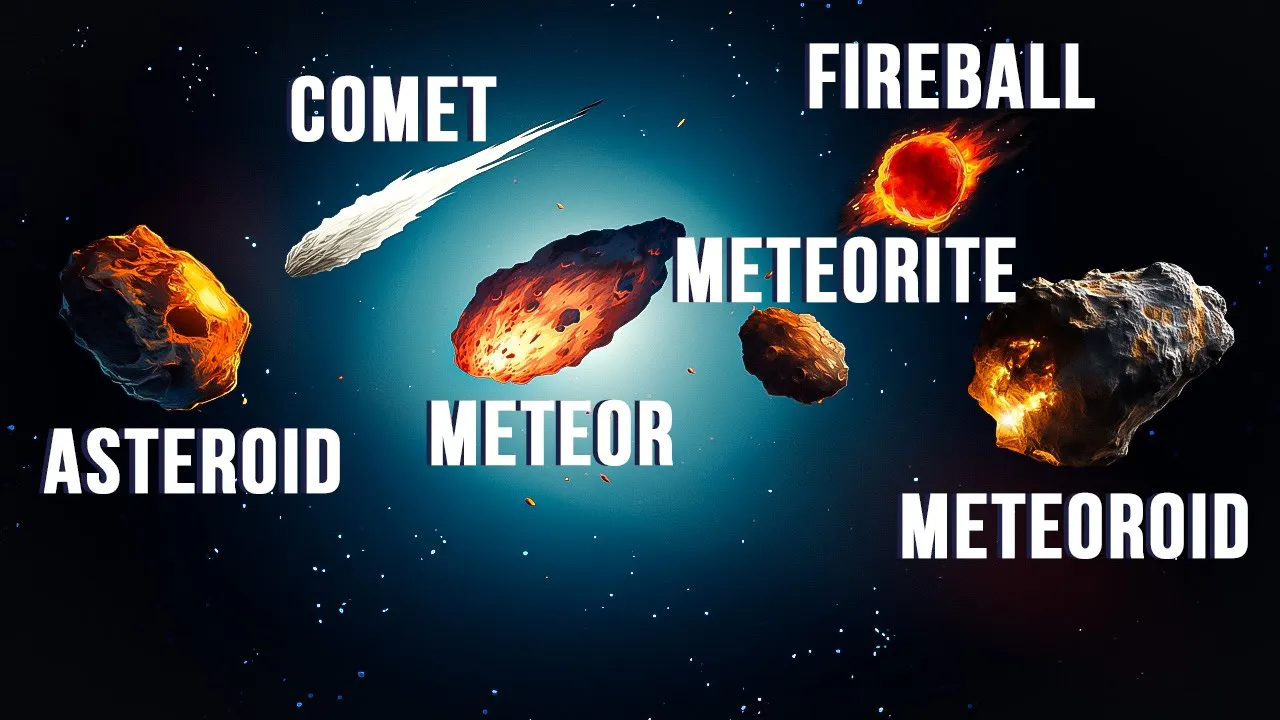
Added:welcome to stem talk stem talk stem stem talk talk stem talk talk stem talk welcome to stem talk where we introduce you to Fascinating People Who passionately inhabit the scientific and Technical frontiers of our society hi I'm your host Don caras and joining me to introduced today's podcast is the man behind the curtain Dr Ken Ford ihc's director and chairman of the double secret selection committee that selects all the guests to appear on stem talk hi Don great to be here today's guest is someone who's familiar to our regular stem talk listeners Tom Jones a veteran NASA astronaut and Senior research scientist at ihmc who has occasionally served as co-host for stem talk today we will talk to Tom about planetary defense and the threat of near Earth asteroids a topic where Tom has both great passion and substantial expertise but before we get to today's interview with Tom we have some housekeeping to take care of first we really appreciate all of you who have subscribed to stem talk and we are especially appreciative of all the wonderful five-star reviews piling up on iTunes as we announced in several earlier episodes The Double secret selection committee has been continually and carefully reviewing the iTunes reviews with an eye towards selecting the wittiest and lavishly praise filled reviews to read on stem talk as always if you hear your review readed on stem talk just contact us at stem talkh mc.us to claim your official stem talk t-shirt today our winning review was posted by someone who goes by the rather cool [Music] International Space Station the American Destiny laboratory Tom is a graduate of the United States Air Force Academy and received his Doctorate from the University of Arizona in 1988 his research interests include remote sensing of asteroids meteorite spectroscopy and applications of space resources he became an astronaut in 1991 and received the NASA space flight medal in 1994 1996 and 2001 he also received the NASA exceptional service award W in 1997 and again in 2000 and in 1995 was awarded the NASA outstanding leadership medal tomog 52 days in space including three space walks totaling more than 19 hours he is the author of four books including skywalking and astronauts Memoir which The Wall Street Journal named as one of the five best books about space his latest book is ask the astronaut a galaxy of astonishing answers to your questions about space stem talk stem stem talk talk stem talk talk stem talk hi this is Don cargas your host for stem talk and today I'd like to welcome Tom Jones as our guest for stem talk thank you Don it's great to be with you and Ken today and also joining us is Ken Ford hi Don and hello Tom so Tom although you've been at times a co-host on stem talk it's pretty awesome to turn the microphones around and talk with you about your career as an astronaut and also your passion for planetary defense it's a great topic it's a if there's one way to follow up an astronaut career it's to engage in something that's important in planetary defense you know saving our society our civilization from a natural disaster that we can prevent well said like uh many of our guests you've traveled a remarkably interesting path through your life and it seems that this is true for you know just most of the interesting people in the world there tend to be serial reinventors of themselves can you give us a synopsis of your pth of reinvention well it was an interesting path towards getting to be an astronaut it wasn't a straight one uh but it was interesting and fun along the way so I grew up in the space race up in Baltimore Maryland and it turned out that in my hometown there was a rocket Factory building rockets for the gony astronauts to rehearse the moonlanding techniques that we would need so as a kid 10 years old saw these Rockets being built and thought wow what a great job it would be to ride on one of those so I followed the pace of the space program and learned more and more about astronautics until I was in high school and we were Landing the first people on the moon then I knew that astronauts were mostly test pilots the only one scientist went to the moon Jack Schmidt the rest were military aviators so I thought that's the best chance for me so uh I thought I should learn how to fly went to the Air Force Academy got my science degree there learned how to fly I was soon flying B-52 bombers in the Air Force but that was not the best place to be to become a test pilot in the Air Force because heavy aircraft bombers 52s that was not where they were picking their test pilot candidates from so I'm scratching my head thinking how I could get towards the space goal nask brought out the new space shuttle and it had not only test pilots at the controls two of them but there were also scientists and Engineers on board and I just made a judgment in my mid-20s that thought that um science might be a better path to pursue to increase my likelihood of eventually trying to work in space and I loved science in school was my favorite subject so I went back graduate school University of Arizona got a PhD in planetary science studying asteroids and comets and when I finished up that degree I was at least eligible to apply to the astronaut program and I guess you know my my profession at the time was I was working for a year as an engineer at the CIA up in Washington DC and then I got a job working uh in support of NASA headquarters as a contract scientist and while I was doing those things I thought that well at least my application will be unusual in that there aren't many scientists who have a th000 or 2,000 hours of jet flying time and there aren't many Pilots uh ex aviators from the Air Force who have a PhD in Sciences so I guess that's what may have uh gotten them to take a second look at my application I actually failed twice getting hired at Nasa before the third time I applied they actually asked me down for an interview and it succeeded so glad it all worked out that way I had a lot of fun flying and doing science along the way and I was so fortunate to be able to represent the US in space and Tom you've been on an impressive Force shuttle missions can you talk about some of the goals and highlights of those missions that you were on well luckily for me uh three of them were science missions and two were missions to planet Earth to study our changing planet with a radar imager called the space radar lab so on two flights of that instrument uh each 11 days long I was the first the deputy scientist and then then the chief scientist the What's called the payload commander on board the shuttle Endeavor and so we uh image the changing face of the Earth man-made change natural change with this sophisticated uh radar instrument and we basically did almost every kind of earth science investigation you can do from looking at volcanoes and asteroid craters to the biosphere and looking at Plankton blooms the health of the forests around the world looking at tectonic faults you know the traces of past earthquakes and predicting where tensions might produce a future one agricultural measurements were made as well so it was really a great broad study of how we can use a phisticated radar in orbit to keep track of changes on our Earth third mission was on the colia the very first shuttle and we carried two science satellites to space that we launched out into orbit and then I was one of the robot arm operators who used the Canon arm to retrieve the satellite and bring it back into the payload Bay one was a small telescope a cousin of the Hubble if you will and then the second was a a material science lab for making computer chips out in the the contamination free vacuum of space and we retrieved both of those satellites successfully and came back home after 18 days that turned out to be the longest space shuttle mission ever flown then the Capper was uh for me the shuttle mission on Atlantis that took us to the International Space Station and delivered the US science lab named Destiny so it's a science lab that we were putting in place on the growing space station now I didn't get to do experiments in the new lab I was a construction hard hat worker basically we were installing the lab and activating it uh but that gave me the chance to do three space walks while I was out there installing the lab with the rest of my crew so that mission rolled up just about everything you could do on a space shuttle into one flight and when we left we had given the space station crew a brand new laboratory to operate and it's still the nerve center of the space station today very satisfying it's really impressive we could probably do a stem talk episode on each of those missions actually um so although you no longer fly in space you and some colleagues like Rusty schwart who we actually interviewed on an episode of stem talk which is episode number nine you guys are now involved in another space mission which is arguably the most important space mission of all time one that could save the Earth or a large part of it from destruction how did you become interested in planetary defense from asteroids well as an asteroid scientist doing my research work I was looking for water on the surfaces of asteroids out there between Mars and Jupiter and when you study that field you become aware that little fragments of these bodies get sent into the inner solar system by the fluence of Jupiter's gravity it nudges their orbits and sends them zinging through the orbits of the inner planets like Mercury Venus and Mars and Earth but there's also collisions in the asteroid belt and they send asteroids into the inner solar system and what happens to these near Earth objects mostly asteroids but a few uh short period comets what happens to them is that they either run into a planet and make an explosion a crater or they get bent their orbit gets bent by the gravity of a planet and they get thrown out of the solar system or into the Sun so they only reside in the inner solar system for about 10 million years but they create what is for earth a shooting gallery and so we are spinning on our planet through space that's inhabited by all these leftovers from the formation of the planets and some of them are big enough to actually end our civilization on Earth if we don't do something about them and when I flew in space as an astronaut I could look down on Earth and see several dozen impact scars some quite well known some a little bit more subtle on the landscape but these circular craters are the scars of past impact so it's easy to understand that uh the Earth has been subed to this bombardment for its entire 4.5 billion year history and we are going to be struck again uh those impacts have changed the course of life on Earth and unless we do something about them as a human species we will go the way of the dinosaurs so it brings it home to you in a very U real visual way and so when I finished astronaut work I thought this would be a good uh area to engage engage in to help us lay some groundwork for our conversation let's pin down definitions of common terms that are often misunderstood and misused could you explain the differences between asteroids comets meteoroids meteors and meteorites just quick uh if you could uh clear those up for folks sure uh when the planets got made 4 five billion years ago most of the solid material in the solar system wound up in those planets but some was left over and one planet that tried to assemble itself but was not able to because of Jupiter's uh hog you know hogging the show gravity if you will uh was the material in the asteroid belt between Mars and Jupiter that planet never coalesced and so that is the source of much of the material that threatens the Earth today that asteroid belt has been sending these fragments as I mentioned into the inner solar system so asteroids are rocky bodies no bigger typically than the state of Texas and smaller than that reside in the inner solar system there are comets those are also leftovers from planetary formation they're on the outer reaches of the solar system Beyond Uranus and Neptune and some of them are nudged by passing Stars gravity and then sent into into the inner solar system but it's usually the asteroids that give us the biggest threat now those comets have IES because they're far from the Sun and those vaporiz and form the Comet Tail that you see when they warm up on a close passage by the Sun but both asteroids and comets are leftovers from planet formation now a small fragment of an aster roid zinging through space we call that a meteoroid and it could be the size of a basketball or a pickup truck or the size of a sand grain when we look up in the night sky and see one of those meteoroids enter the atmosphere and vaporize because of its high speed and the friction of it hitting the atmosphere that flash of light you see is called a meteor so from meteoroid when it hits the atmosphere it gets transformed into a meteor that's the flash we see and we're familiar with those we call them shooting stars or fireballs and then if fragment of that meteoroid lands on the ground and we pick it up that fragment of an asteroid or fragment of a comet is called a meteorite other than the obvious how would you define in your Earth asteroid okay there's a scientific definition basically the outlines of that are these are the small asteroids in the inner solar system and their orbits bring them uh within 1.3 times the distance from the Earth to the Sun and we call that an astronomical unit so if the asteroid's orbit brings it to within 1.3 astronomical units of the sun it's close enough to the Earth's orbit that we call it a near Earth asteroid so Tom how frequently do asteroids strike the Earth for example how frequently will we see another chellin or tunguska event well asteroids are striking the Earth all the time in the form of these little meteoroids typically about a 100 tons of asteroid or Comet debris falls on the Earth every day most of it's vaporized in the atmosphere and then reaches the Earth surface as just dust but a few chunks meteorites we can see and pick up now we get struck by larger pieces more infrequently uh the larger the asteroid the less likely it is to strike the Earth but there are fewer of them out there so chelia bin was the 2013 Collision of an asteroid that ran into the Earth it was about 20 met across something like 65 ft and it um strike it struck over Russia and sent a shock wave that sent about a thousand people to the hospital uh when it struck the ground the shock wave struck the ground so the asteroid disintegrated in in the atmosphere but the blast wave reached the city of chel binskin injured these for poor folks fortunately nobody was killed that event occurs every 20 to 40 years because that's such a small 20 meter asteroid there are millions of them out there in the inner solar system tunguska the most uh powerful impact event that we know of in human history that one occurred in 1908 again over the far reaches of Siberia that asid was about 40 m you know 40 yards across basically and it came into the atmosphere over uh Siberia was not big enough to make it down through the Earth's protective atmospheric layers and so it detonated in the atmosphere with the force of about uh five megatons of explosive power and that uh event didn't form a crater and it didn't kill anybody because very few people live in that section of Siberia that event tunguska about a 3 to 5 Megaton explosion about every 500 to a th000 years easily capable of destroying a city so you might look at a city like uh Pensacola or Orlando or New York City uh that is that's an area that could be wiped out by one of these million or so small asteroids and so the key to preventing that disaster is to find out where those asteroids are right now and where they'll be in about a hundred years by knowing the with Precision their orbital path around the Sun well with all that in mind how How likely am I to die in an asteroid catastrophe statistically speaking or maybe put that hazard in context with other natural disasters sure well your lifetime chances of dying are 100% yeah thank you okay what a shocker but if if we break that 100% down into various causes uh asteroids rank rather low on the scale so it's that your chances over your lifetime of dying in an asteroid catastrophe are something like 10 times less than you dying in a tornado okay um uh it's 1 in 700,000 that's the current uh risk you face from dying over the course of your lifetime from an asteroid strike from an airplane crash about 150,000 so you're well under 10 times less likely to die from an asteroid so you don't have to worry when you lay your head down on the pillow at night about dying in an asteroid catastrophe because these events are very infrequent uh but when they do strike they have the potential for killing hundreds of millions or billions of us so there's nobody in human history that we can point to that was killed by an asteroid uh we don't have any record of a mass extinction since o over the last 66 million years that's when the dinosaurs went went out because of a cosmic impact so big planet ending disasters are very rare but intermediate size asteroid strikes you know every uh 100,000 years you're going to have a multi-state region destroyed by an asteroid impact every 10,000 years you're going to have um a one state region destroyed and then like I said about every Millennium you'll wipe out a city sized area from an asteroid strike so your lifetime chances individually are very small from dying in an asteroid strike but Humanity's chances of being damaged or even having our civilization collapse from an asteroid strike is 100% unless we intervene to stop a rogue asteroid from striking the Earth so in February 2011 there was an excellent article on planetary defense that appeared in the New Yorker with a pyy name verment of the sky and in that article Ken is quoted as saying the very short perspective we have as humans makes the threat of asteroids seem smaller than it is people of All Sorts find it easier to Kick the Can down the road and hope for a mystical solution so in other words he's saying death by asteroid is low risk for any individual person but a relatively high risk for society as a whole taken over the long run which is what you were just saying exactly and so for a politician who might be in office for 10 or 20 years the chances of him of him being criticized for avoiding the asteroid problem are very small the chances are he's we're never going to see a policy maker held accountable for neglecting the asteroid in Impact problem but it is a public safety issue and it's a global issue that's one thing that we should understand is that we're being struck by material from space all over the globe pretty evenly and so the way to solve this is internationally uh with resources required and we don't need actually very many resources in terms of space programs and so forth uh that those resources should come from International collaboration uh so we can solve this problem together and there are also geopolitical reasons why you would want to involve other countries for example if NASA comes up with a solution to stop an asteroid strike on France the French may very well second guess that plan and they would have a right to say hey let us have some input on this and so um because the problem is a global problem you want to have multinational cooperation in thinking about it and then acting to prevent an impact in that same New Yorker article Clark Chapman notes that unlike Hurricane Katrina we can do something about an asteroid the question is whether we'd rather be wrong in overprotecting or wrong in under prototec one can imagine the near complete societal collapse should it be announced that with high confidence an asteroid was on a collision course with Earth and as a society we had no means to deflect it humans would come to Envy the dinosaurs who had no time to ruminate about their fate uh can you just imagine the societal disruption of uh that announcement it would be totally unprecedented because we don't have in human history a record of one of these big asteroid strikes which far exceeds in magnitude any natural disaster that we're familiar with hurricanes tsunami earthquakes where we lose thousands of people but this could be a civilization Ender so let me give you the good news first the good news is that of the large asteroids in the inner solar system about a thousand of them and NASA has found 93 to 95% of those and none of them are on a collision course with Earth and for the remainder and for smaller asteroids that we detect if we have enough warning time we actually can do something using our space technology to ward off one so I think the way you quell public anxiety or uh panic at the announcement of an asteroid on the way to hit us is to know about it 20 or 50 years in advance and then to already have a tested technology plan that you can apply to to nudge it off course and if you have enough warning time you can even try to deflect it multiple times so we have a lot of tools in our toolbox if we just make sure that they work in advance and that would I think assure the public so in early January of this year the US government released a strategy for preparing for a neear object impact do you think the strategy is on the right track it's a big step forward because up to now asteroids were treated as a science problem and a few scientists would be interested in knowing about asteroids and exploring them and maybe finding out how to use them in future space exploration efforts but the danger from them was not given to anybody else besides NASA the government basically said hey we'll come up with a plan when we find a problem that's actually headed our way otherwise we have other priorities other fish to fry that are more important so this development just um less than a year ago of this planetary defense strategy uh puts in place some priorities for the government shows how that the agencies of the government like NASA of course but also the Pentagon U the uh energy Department people who have expertise that could help us deflect an asteroid uh FEMA for example how do you prevent repercussions on the ground all these agencies can now collaborate based on this strategy that's been developed and some key recommendations in the strategy for the government to pursue involve more capable tracking resources on the ground in other words better groundbased telescopes and a Space Telescope that's sensitive to detecting asteroids that would be a big step forward and a second important element of that strategy is to implement a deflection demonstration where we actually test uh our techniques in space against a harmless asteroid to show that we can actually nudge one in its orbit so those two priorities that were laid out in the strategy even though they're unfunded they lay out a very good direction to follow so Tom give us a sense of how NASA deals with the asteroid Hazard today I have to give NASA a lot of credit because over the last 20 years they've really taken on the asteroid problem and carried it farther than any other space agency on the planet so in the late 90s NASA was told to search for the big civilization killer asteroids in the inner solar system objects that are bigger than about 1 kilometer something like 2/3 of a mile across and if those objects were to strike the Earth there would be Global con consquences the dust thrown into the atmosphere would make the sky so dark that it would collapse the growing season for about a year and that would mean the end of Agriculture and billions of people would starve to death in that year or two following that event so over the last 20 years NASA was given a small budget started out at about $4 million a year to find the big ones and it has done so up to the 95% level there's still a few lurking out there that we haven't found then in the Last 5 Years NASA has been given expanded search budget they're up to about $50 million a year now from the Congress and the president and they're using that to enhance the groundbased telescope network and to prepare to launch the Space Telescope although that's not been approved yet so they've been efficient in creating a network of tracking and warning telescopes if you will that information is shared internationally and NASA has been able to lead by this search program uh lead other nations to participate in sharing information about about asteroid orbits and predicting future impacts fantastic so as NASA's interest in asteroids has increased do you think it's striking the right balance between science exploration and planetary defense NASA's always had an interest in asteroids scientifically they um are small objects that are mostly preserved intact from when the planets got put together and the Earth has been altered so much by its active geology its tectonic activity that most to the evidence of how Earth formed here is gone so if we can find these small fragments that have not been altered in 4 and a half billion years meteorites are one way to study them but actually going to asteroids and sampling pristine material from them can help us uh unravel the early history of the solar system and particularly our planet's formation I think where NASA's perhaps been lacking is taking advantage of the exploration opportunities that asteroids offer there are natural resources like water on some of them that we can use to create rocket fuel in space and help reduce the cost of going to the moon or the asteroids or Mars in the future so NASA could be a bit more aggressive in helping industry get into asteroid mining for example and on planetary defense even though NASA has been very good at their telescopic searches they haven't been able to shake the tree enough to get federal dollars to launch this asteroid Space Telescope it's called neocam Uh in its current version and if we put that small telescope into space the mirror is only the size of a desktop uh it's about the size of an SUV for the whole spacecraft if that um satellite were orbited we could actually pick up all the city threatening asteroids in the course of about 10 years and do a very thorough catalog that then would enable us to have the warning time necessary to deflect one so I hope that NASA will continue to be a loud voice saying we need to do a little bit more and as a small fraction of the NASA budget as this is it's well worth investing in it to prevent a future catastrophe you and Rusty schwarer coach shed the NASA advisory cil's ad hoc task force on planetary defense in October of 2010 your task force made five primary recommendations let's review them and briefly discuss what has transpired in the year sense so here are the five recommendations made to NASA and we'll just hit them one at a time in turn in a lightning round format so this is the sort of brief answers so the first recommendation was organize for effective action on planetary defense how are we doing since 2010 on that good marks for NASA because they have created this planetary defense coordination office asteroids used to just be a science topic within the NASA Planetary Exploration office now they have a separate coordination office to try to uh improve coordination and the Synergy between say human exploration and robotic exploration and scientific investigation at Nasa so they have a planetary Protection Officer who's in charge of the search program and uh dispersing the $50 million a year and he Lindley Johnson uh the guy in charge of that office is now been able to move forward on this demonstration deflection Mission and get preliminary design funds for that good good marks indeed number two acquire essential search track and warning capabilities okay as we mentioned NASA has been using that $50 million a year lately to improve its ability to detect uh not only the large asteroids but smaller ones they're going after now a congressional goal of um finding all 90% of the asteroids that are bigger than 140 MERS across unfortunately the Congress did not give NASA explicit funding for that search so NASA is lagging well behind the 2020 goal uh that Congress set for it so I would say that they're doing well with groundbased telescopes but until they can fly this space-based infrared telescope we're going to be lacking in the early warning information we need to deal with the the large numbers of smaller asteroids there are about a million out there that could destroy a city-wide area number three investigate the nature of the impact threat again with this $50 million NASA is able to fund laboratory investigations and simulations on supercomputers of how asteroid impacts affect the earth when an actual asteroid strike or Comet strike occurs so we're learning more about the physics and this chabin impact back in 2013 was better understood in terms of how that blast wave reached the ground because of some of this NASA research so I give them a b great number four prepare to respond to impact threats NASA has been coordinating I think adequately and effectively with FEMA and Homeland Security on what we would do if we had the last minute detection of a small asteroid that we could do nothing uh to prevent uh collision with the Earth so in that case you just have to warn people in advance and get them out of the area and so NASA has actually started the hand shaking and the Telephone Connections the internet connections that are needed to prepare not only our own Nation but other nations around the country to react around the world to react to a last minute warning of an asteroid strike and so that's a civil defense problem we already practice that for hurricanes and tornadoes and earthquakes and we can use the United Nations procedures that are already in place place to avoid the consequences on the ground or mitigate the consequences on the ground so again I give him a a b for that and number five somewhat related to number four is lead us planetary defense efforts in National and international forums NASA has done well by getting this planetary defense coordination document approved that Neo strategy that we were talking about that's good in international forums NASA because of its $50 million a year budget far more than other countries are spending has the clout at the United Nations and in international uh Forums on asteroids to say we would like to lead these technology efforts towards early warning and orbit prec orbit determination and asteroid impact warning and we'd like to lead the deflection efforts but $50 million a year is not enough to buy a deflection Mission or even that infrared telescope we talked about so the cost would be something like for the telescope about half a billion dollar over 10 years that's $50 million a year in addition to what NASA already gets they haven't been able to get that money turned loose and so on the international front I would say that NASA still has work to do to persuade other countries to chip in the resources that would help us fund this telescope and the deflection Mission and I can get into the specifics of the deflection mission in a minute but I think it's important that NASA continue to push its Partners to to Pony up the money that we can collectively devote to this International problem great nice job on the lightning round yeah that was excellent so Tom while we're talking about current progress what is the current scorecard on our detection of Neos and the percentage of the Neo population discovered are we making good progress on large medium and small diameter asteroids good progress on the civilization Enders the ones that will collapse our civilization the one kilometer and larger asteroids they found about 95% of that number and the search continues for the the last few that are out there so that's good uh on the total asteroid detection front the NASA mostly the NASA search programs have found over 16,000 near Earth asteroids and comets over the last 20 years so the catalog is up over 16,000 but remember there's about a million objects 40 MERS and larger that could do in a city so we're only about 1 and a half% of that total at this point a lot more detection work to do again be because we need more capable telescopes at least one in Space the medium diameter asteroids that's the ones that Congress has told NASA to go after 140 me meters and larger and that 140 meters number is significant because it represents about 90% of the remaining risk to our planet so you go after the low hanging fruit you want to find the bigger ones that can cause the most damage so again NASA needs to pursue that with space-based technology rather than just groundbased if we just stick with groundbased telescopes because of clouds in the sky and the fact that the moon's up sometimes U those groundbased telescopes don't get very efficient in the search it might take us 30 or 40 years to find that 140 meter class of object there are about 20,000 of those so we need to get better and the most efficient way is to launch a Space Telescope yeah and speaking of so I know it can seem worrisome that we often hear of asteroid detections after they've actually flown by Earth so why don't we get more notice of these approaching objects oh I'm glad you asked that because they are a tough problem asteroids are small and they're usually made of dark material so they're tough to detect in telescopes they don't reflect much sunlight and sometimes their orbits are bringing them in towards the Earth from the Sunny Side of Earth the daylight side and then our telescopes are completely helpless to find them there so again space-based Solutions a small search telescope in orbit uh can do a great job at overcoming those shortcomings so we often hear in the news about a near Miss a close approach by an asteroid and we scratch our heads and say why didn't NASA pick that up early well it's because of the geometry and the limitations of groundbased telescopes so it you really can't criticize us or criticize NASA for not picking these up early it's just the limitation of the equipment we have and we can do better if we could just get this 10-year infrared telescope project funded and you talked about these limitations of the groundbased detection can you talk about why groundbased detection has these limitations one reason is just size because the asteroids are often far from Earth and they're small uh they just don't send much reflected sunlight our away so you need a big telescope mirror to detect those photons coming in and so far you know the NASA telescopes applied to the asteroid problem are on the order of a a meter or a couple of meters across the most capable one right now is the pan Stars telescope on the island of Maui uh which has um um a perfect perch for looking for asteroids and the right design but it's just not big enough to find all of them very quickly we also use uh telescopes very capable ones at the top of the Catalina mountains near Tucson Arizona that's the Catalina Sky survey and another of a number of other asteroid surveys around the globe there's even one NASA funded Network that uses small off-the-shelf telescopes that only looks for nearby asteroids that are about to hit us and that's called The Atlas program and I really like it because it can pick up asteroids a week before they hit when they're getting really close now we can't deflect them with such little warning but at least we can tell people to get out of the way and that's a great way that we should fill in the gaps in our search program using these off the shelf pieces of equipment so you're talking about these space-based detection missions um which have practical cons as well as Pros what are some of the cons and are those solutions to those cons well if we're going to go to space with a telescope uh we Face several problems you know you launch a satellite it's complex it's expensive if you uh launch it it's got a chance of blowing up on the rocket on the way to orbit so there are some risks involved in just getting it up there and then the ideal orbit for this space-based asteroid detection telescope neocam is what NASA is calling it is in an orbit that's inside the Earth's orbit going around the Sun sort of the inside track if you will so picture a telescope on the inside track inside of the Earth's orbit and it can look out past the Earth and it can look ahead of the earth and behind the Earth and pick up a lot of the asteroids that uh our groundbased telescopes cannot because they only work at night they don't face the daytime side of the sky and groundbased telescopes can't look too close uh to Sunrise or Sunset and the full moon interferes with their work as well as well as just clouds in the sky so the the pros of being in space are you get better geometry and better sensitivity the cons are that it's more expensive and you have a communication uh bottleneck where if you're far from the earth on your mission to detect asteroids you have to radio the camera results back to Earth and it can be tough to get all of those uh bits of information from your sensitive telescope back to processors on the ground so it presents a challenge in processing and communicating the data over great distances and you asked me for Solutions and I think the solution is to um uh keep the telescope modest in size don't let it balloon to a goldplated instrument and then you'll have to design in some ability to process and filter the asteroids that are found on board the spacecraft to limit the communications problem that you face so if the machine is smart enough to dump out objects that we're not interested in or to eliminate the ones that we've already already detected then we'll only have to send back the new results back to Earth so I think it's practical I think it can be done and it's the next step in uh preparing us to deflect an [Music] asteroid stem talk is an educational service of the Florida Institute for human machine cognition a not for-profit research lab pioneering groundbreaking technology aimed at leveraging and extending human cognition perception Locomotion and resilience okay so Tom I'm going to change the subject just a little bit what did we learn from the chabin impact in 2013 what a fortuitous impact even though we lost we didn't lose any human lives but we sent a lot of people to the hospital in Russia that was unfortunate but it was a reminder of how frequent and how damaging these asteroid impacts can be even at the small scale I happened to be at the United Nations discussing the near Earth object Hazard uh for the association of Space Explorers there when this impact occurred and so we were having a session that very morning and all of a sudden we had video of this asteroid exploding over the city of chubin what we learned was that even a small 20 M object object weighed about 12,000 tons if it comes in at the right angle uh even though it blows up in the sky because of the weakness of the object itself it can't punch its way through the atmosphere without just ripping itself apart the shock wave can propagate all the way to the ground and that essentially giant Sonic Boom can blow in doors and windows and it sent all these folks to the hospital with flying glass and flying debris injuries and had that angle been a little steeper on Chelly bin instead of about 18 degrees if it had been up around 30 the shock wave would have been so concentrated that buildings probably would have collapsed and then we would have had deaths involved so what we considered an object that we could ignore 20 m in size because the atmosphere will take care of it we now learn presents a hazard to us if it comes in with an unfavorable trajectory and speed and angle so NASA's doesn't have the sensitivity yet to go after all the 40 meter let alone 20 meter objects which are far more than a million out there but at least in finding the 140 meter objects NASA can design a program with its Partners around the world to accidentally or incidentally pick up a lot of these smaller objects and then we'll have some chance of detecting them before a strike occurs and so this is going to be kind of a high level question how much will it cost to deal with the asteroid threat effectively oh a really good question because you have to place asteroid threats into the context of other natural disasters so we do spend money on tornado warning networks and people do dig shelters in their backyards to escape from tornadoes if they live in Tornado Alley and of course we allocate lots of money to track satellite tracking hurricanes with satellites from space and sending airplanes into them to assess their strength so it's a similar problem to those natural disasters I think a little insurance money invested UPF front can help prevent problems down the line big losses in in human life so I would say that uh from our task force in 2010 that Ken mentioned earlier that we recommended a a budget a little over $200 million a year for about 10 years for NASA that would allow us to launch the search telescope and get that catalog filled out that we need and it would also allow us to lead the way on this demonstration mission to nudge a harmless asteroid and then once we knew we had the skills and once we knew we had the warning ability then we could put a plan on the shelf and scale back the funding to a much lower level back to this $50 million level and just keep track of the asteroids in the catalog and then you dust off the plan when you need to mhm clearly these relatively modest preventive costs would be entirely dwarfed by several orders of magnitude for any significant impact on Earth in a populated area that's true uh this is a small investment you know the what we recommended in that $200 million for 10 years proposal that was only 160th of the NASA budget uh over that 10-year period so it's it's a very small amount that could be devoted to planetary defense and we would expect that we we would find our friends around the planet with space agencies and even those states that don't have space agencies to chip in on this common Hazard that we confront and then once we had diagnosed and dealt with the problem in terms of Technology we could be assured that we would be able to work together in the future so very small compared to the the scale of things that um that even were familiar with like the tsunami in Indonesia back in 2005 you know over 200,000 people were killed an asteroid strike could dwarf that if it was a big one and we didn't have enough time to do anything about it to put that in perspective the uh initial annual cost that you estimated and that was in the report is essentially the cost of a single Frontline jet fighter oh these days that's pretty true and I always talk about this search telescope that we're talking about uh orbiting that's the cost of putting an Orbiter around Mars and we do that almost every two years uh for our scientific exploration programs it seems to me that we can devote uh the funding for one such mission to protect life here yeah perspective um so Tom you're a science ad along with Ken for the b612 foundation which is now creating a new asteroid Institute at the University of Washington so aside from searching for NEOS what is your take on the new activities that this institute will be enabling b612 Foundation uh was going to orbit a private asteroid search telescope to do the job of detecting these middle medium- range and smaller sized asteroids they gave way to NASA's neocam effort thinking that was a more efficient way to have the government lead the way on the technology of that telescope and it they also had funding challenges in raising enough money to to launch a half a billion dollar telescope so now with this asteroid Institute they will be able to talk about the hazard from a scientific point of view with the experts they have on their faculty team up there and they'll be able to raise public awareness of the asteroid Hazard good example of that was just last June June 30th when we celebrated the 2017 asteroid day that's June 30th the anniversary of the Tung gusa impact back in 1908 and so b612 played a large role in creating a global event with the asteroid day organizers to have over 700 events around the world where the public gathered to learn more about the asteroid Hazard talked about what we can do to prevent an asteroid strike and how we can bend the ear of policy makers and lawmakers to get the funding to make sure that these measures the telescope and the deflection Mission happen so I think the asteroid Institute and b612 will be big players in again keeping the policy measures in the Forefront of public discussion so that lawmakers can act on them and Tom you had previously mentioned being associated with the association of Space Explorers so why are they interested in planetary defense that's the professional Society of astronauts and cosmonauts that have flown in space we have members from 36 countries around the world and over 300 some members all of us who have flown in space have looked down at the Earth and seen the asteroid scars there you can look out at the Moon a few of the members of The Association of Space Explorers have been on the moon and have walked over craters that have battered that body for 4.6 billion years so we have the evidence in front of us as human beings about the bombardment that Earth has suffered so we also have as one of our missions in the association of Space Explorers the stewardship of our planet Earth our spaceship earth and of course this is one of the biggest threats to spaceship earth is the the the demolition of our human civilization if we don't act accordingly we have the space skills we members of the astronaut and cosmina Society know how to apply space skills to solve problems we'd like to see our space technology and our planetary stewardship combined to prevent this hazard from uh threatening our human society let's imagine that we have detected a near Earth object that seems to be on a collision course with Earth please review the leading proposed ideas on how Humanity might deflect it sufficiently for it to actually miss the Earth well there are a number of techniques we can apply and fortunately the public is sort of well educated on the idea that we can deflect an asteroid Hollywood has done that job for us in movies like deep impact and Armageddon where the the crowd pleaser in the Hollywood sense is that you send a team of rough necks up there to drill a hole in an asteroid and put a bomb in there and and obliterate it but at least people know that there's at least a chance that we can use current technology to deflect an asteroid so the ones actually do work as opposed to Hollywood the most likely one to be applied would be a kinetic impact and that means you strike the asteroid with a high-speed bullet a spacecraft that plunges into the asteroid at tens of kilometers per second and at that High Velocity you transfer enough momentum in this impact this uh slug hitting the asteroid that you actually change the asteroid's speed slow it down speed it up and that means its orbit changes so that it misses its appointment with Earth 5 10 15 years down the line so kinetic impact number one an even more elegant way to alter an asteroid speed would be to use What's called the gravity tractor Rusty schwier edl uh were protagonists of this technique Stan Love was the other astronaut involved so Ed and Stan and Rusty they talked about parking a spacecraft next to an asteroid and with its small ion engines it would hover above the asid and just the tiny Mutual gravity between that multi-ton spacecraft and the thousand million ton asteroid that small gravitational tug could change the speed of the asteroid over months or years and then it would miss its appointment with Earth so that's the gravity tractor you don't even have to land or touch the asteroid for that to work there's the uh exotic way of using the exhaust from an ion engine or the beam from a laser both solar powered a rocket engine Sol rocket engine or a laser you could pound an asteroid with the exhaust from an engine or strike it with Pulses from a laser and that impact on the asteroid would alter its velocity over again months of operations that makes it Miss its appointment with Earth down the line and then in the last ditch case when you have a large asteroid that you never saw before and it's going to hit the earth in just a couple of years there's no time to do anything else you might have to use a nuclear explosive we have nuclear explosives we have spacecraft can carry them out to the asteroid you marry those two technologies together and instead of drilling a hole in the asteroid with human explorers you send a robot that carries the nuclear uh explosive right next to the asteroid when it detonates at close range it fries that side of the asteroid that faces the explosion and that puff of vaporized Rock and gas jets away from the asteroid and pushes it in the other direction like a little rocket engine like a big rocket engine in fact and so that will alter the orbit of the asteroid and perhaps make it misar but it's a crude technique and it's hard to test nuclear explosives given current treaties in space so it's the least likely to be needed and it's probably the least likely that we'd want to apply it so once we divert an asteroid Collision is it gone for good how can we prevent an asteroid on its elliptical orbit from passing through a gravitational Keyhole and returning to threaten Earth again that's a pretty challenging question Ken but I'll try to explain it the physics of diverting an asteroid we just talked about but if it misses the Earth and flies by at a certain distance away from the earth okay we can breathe a sigh of relief that it missed us but if it misses us by some unlucky distance it's going to enter a region of space called a gravitational Keyhole right near the the planet and what that means is in this Keyhole if you fly through it the Earth's gravity is going to bend the asteroid's orbit because the gravity tractor can sit there and hover over the asteroid for months and exactly precisely change the velocity by the amount needed to miss the Earth at a safe distance that avoids keyholes so Rusty schwier has argued this repeatedly and it's a good idea that when you launch a spacecraft to deflect an asteroid you accompany it with a second spacecraft that's going to be the the fine tuner the gravity tractor will then fine-tune the trajectory after the initial deflection and make sure that it's going to miss all these potenti keyholes good example is the asteroid apus which was once predicted to strike the Earth in 2036 and what was going to happen was it's going to naturally miss the Earth in 2029 on its orbit around the Sun but it's going to come so close to Earth that it was going to be bent perhaps through a keyhole and then come back in 2036 and strike us we now know from tracking of apus that it's going to miss the keyhole and not come back and hit us in 2036 so no action by us is necessary however it's a good example of how you've got to have that knowledge of the keyhole locations and the gravity tractors give us the ability to not only know where the keyholes are but to make sure we miss them so Tom from what I understand Issa and NASA have been discussing a joint asteroid deflection demonstration Mission so what are the prospects for that mission this was a mission called AA asteroid impact de deflection assessment and so Issa would provide a monitor spacecraft that would hover near an asteroid a harmless one called dimus and NASA would provide a bullet to strike the small companion of this asteroid dius a smaller uh moonlet of this asteroid and with NASA's bullet striking it the European spacecraft would be able to monitor precisely the the orbital change that this impact created and so it was a very nice symmetry there between an active deflection and the Precision monitoring that we would need so last winter unfortunately the European Space Agency declined to bump up the funding needed to create and build and launch their asteroid impact monitor the aim spacecraft so that's sort of on the table or in a holding pattern right now and it doesn't look like it's going to be ready in time for the encounter with dimus in 2022 so NASA has decided through its planetary defense coordination office to move to the next stage in planning this Mission it's moved from conceptual to Mission design phase preliminary Miss design to really assess the design of the spacecraft and how much it would cost and really put the start putting the blueprints together so that's a good piece of news on NASA's part I wish it would be a continual continued joint Mission but even without the European uh monitor spacecraft we can do a good enough job from the ground tracking the changed orbit of this little moonlet around dimus that uh we could determine the effectiveness of the deflection so the dart spacecraft from NASA the Dual asteroid redirection test that NASA spacecraft alone could give us convincing evidence that our deflection Technologies would work do you think the UN is the best organization to plan for a public safety hazard of this magnitude yeah well my opinion of the United Nations is that it's the most dynamic efficient organization in the world in dealing with every kind of problem that Humanity faces not and unfortunately the wheels at the United Nations grind slowly and it's a it's a very unsatisfying or or um frustrating uh institution to deal with in many areas of of of our common concerns but the United Nations does deal repeatedly with helping people recover from natural disasters around the world they deal with disease prevention and control uh they help us um plan for future disasters and the countries of the world do come together on a regular basis at the UN to talk about topics like this so asteroid hazards are a natural disaster that's waiting to happen and so it's a natural place at the UN to come together and discuss what we collectively do and so I got to give credit to the UN and its committee on the peaceful uses of outer space for bringing together the space agencies on a twice a year basis really to discuss this topic in Vienna Austria and as the association of space explore chairman of our near Earth asteroid committee uh I go to the UN sometimes to participate in these discussions as I mentioned when we learned about chelia bin so we do have a regular Forum at the UN to talk about uh asteroid impact prevention measures and the UN officially endorsed asteroid day as an annual educational event it's also endorsed several of the measures uh that have given us the early warning and information sharing capability and the deflection planning studies that have been going forward so those International groups called the international asteroid warning Network and the space missions planning Advisory Group both of those were basically blessed by the UN and now they're supported around the world by the space agencies of the world at the time a decision needs to be made to deflect an asteroid nobody will know for sure where it will eventually impact Earth and even if its orbit will definitely intersect with that of Earth at all so could you please talk about the natural uncertainty associated with projecting the exact place of impact on earth and the implications for planning a deflection Mission early warning is the key uh we've got to have advanced warning of where the asteroid is coming from where it's going along its orbit and when that orbit might intersect the Earth my asteroid colleague over at jet propulsion lab Don Yan's one of the world's top experts on asteroid orbit prediction says you know the three top things we must do to prevent an asteroid impact on the Earth are number one find them early number two find them early and number three find them early and then armed with early warning we can actually do something about them but it's tough to find them early again because of our groundbased telescope limitations we hope to add the Space Telescope and even when you do observe an asteroid in its orbit there is some imprecision with determining that orbit and that uncertainty creates uncertainty about where and exactly when it will strike the Earth so this year for example in Tokyo in May at the planetary defense conference that's held every two years uh the members of that conference the attendees participated in an asteroid impact exercise where they were confronted with an asteroid on a collision course but given the uncertainties we didn't know exactly where on the earth it was going to strike uh on a line from one side of the Earth to the to the other we at least know that we know the asteroids orbit to determine which line the possible targets could be along but we won't know exactly where on that line until impact is just a few weeks away and then of course it's too late to do anything about it so the conundrum here is that policy makers must make a decision to fly out to and deflect an asteroid even if we're not sure where it's going to hit and perhaps even whether it's going to hit at all uh the probability may not be giving you a certainty of a hit but you can't afford to take the risk so it's tough to deal with that as a policy maker do you gamble that a 10% probability of an impact is enough to just breathe a sigh of relief and ignore it or should you take action as a conscientious member of a government and say we can't afford a 10% risk we're going to go off and deflect it so some of the uncertainties are due to orbit determination and those mathematical uncertainties in observing an asteroid and predicting its orbit and then there are things like perturbations uh from the Sun if it happens to be a near Earth Comet it might be emanating a gas as it comes close to the Sun and that could alter its orbit like a little rocket motor so there are imprecisions in how the orbit changes over time we're good enough to see about a 100 years into the future and know where an asteroid is roughly going to be but any longer than that in our prediction start to break down okay so wrapping up our discussion of near Earth objects why is it that this topic seems to fly under the radar and be of so little interest in comparison to other threats of much less gravity so to speak I think the answer is simply that we as human beings don't have the experience with the destructive effects of a large asteroid impact even though you intellectually know that one is going to occur with certainty in the future we just don't have any record to point to to see how expensive it would be to recover from uh an impact of any moderate size and then of course in the large scale impact case it could actually collapse our civilization we just don't have the the human ability to deal with disasters on that scale so it's tough for us to put our efforts in context and know when is the right time to act and how much effort should we devote to acting and and learning how to deflect asteroids so I would argue that we should approach this from an insurance standpoint you know today as Rusty schwier says you know we're driving around the solar system without Insurance in large degree so by just spending a little bit of money for 10 years to do the detection problem and find the catalog of asteroids that could threaten us and put that on the Shelf with uh good knowledge of asteroid orbits and then doing one demonstration so that we we know that we can put together our technology to deflect an asteroid properly I think that's sufficient knowledge sufficient insurance that then we can rest easy that we can deal with the threat that pops up in the future we will have to keep tracking asteroids for decades and centuries we can't ever just ignore them but with the knowledge that our space technology is constantly getting better and the knowledge of the population of asteroids and where they've been where they're going in the future that's a pretty good way to defend ourselves against this threat that has in fact wiped out other species on Earth we just want to make sure that we don't go that same direction I also think It suffers from the sky's falling syndrome you know evoking the story of chick and the little political leaders tend to think of in terms of news Cycles or at best election cycles and it's hard to get them excited about potentially cataclysmic events that are nearly certain to happen in the long run but vanishingly unlikely in any given year in any given place including their District yeah I would appeal to lawmakers let's say the US Congress and since that's where I live you know I would say devote a little bit of resources you know again a tiny fraction of NASA's budget to doing a public safety job for all of us and that seems to me good stewardship on the part of a lawmaker is to you know weigh the potential disastrous consequences of an impact with the small amount of money needed to uh prevent that hazard from ever occurring and it's very obvious I think from our knowledge in the public domain in our culture of how good space technology is at putting Rovers on mars or building the Hubble Space Telescope or Landing people on the moon that we have the capacity to do this it's not going to break the bank and I hope that the Congress will back up its direction to NASA to find asteroids with the funding necessary to actually accomplish the job the cost is vanishingly small right again to underline that it's only $50 million a year to fly the Space Telescope for 10 years and the NASA budget is about 20 billion dollars a year it's a tiny tiny fraction so Tom we're going to shift gears again and this time to human space flight NASA's 2017 budget eliminates funding for the asteroid redirect Mission which is to return turn a boulder from a near Earth asteroid and put it in orbit around the Moon does this cancellation affect our planetary defense efforts in any real sense yeah the cancellation of the asteroid redirect mission was I think unfortunate because I'm an asteroid scientist and I would have loved to have brought back a big chunk of early solar system material to an accessible orbit around the moon but it's uh not going to be flown and what we lost in planetary defense was a chance to demonstrate the gravity tractor method of asteroid deflection once the spacecraft grabbed a boulder off the surface of a larger asteroid a few hundred meters across that heavy spacecraft and heavy Boulder could hover over the asteroid and demonstrate how the gravity tractor would work now we can do that with another spacecraft on a dedicated Mission but it seemed a a nice benefit of that asteroid redirect Mission which was primarily a human exploration and robotic technology demonstration seemed a nice benefit to get this planetary Defense work in but it can be done in other ways and I hope that the dart mission that we just talked about will accomplish the kinetic impact demonstration that will give us some good assurance that we can harness our technology to stop an asteroid impact so Tom how can we use neear asteroids and their resources to Aid our human space flight exploration efforts because there are so many near Earth asteroids and they approach Earth on a regular basis we can identify ones that actually are of the right composition and the right orbital access if you will so that we can use their resources to generate rocket fuel out there in space so let me give you an example we already have meteorites in our collection that are 10 or 20% Water by weight they have Clay minerals in their surface makeup and they contain water molecules so if we can tap one of those nearby asteroids a few million miles from Earth with robots we can use solar energy to bake the water out of its surface and that oxygen and hydrogen from the water can be recombined in a rocket engine to be a quite powerful chemical rocket so the resources on the asteroids can help us lower the costs of generating the fuel that we need to get to Mars one day for example and I think of Nee asteroids as literally resource Stepping Stones on the way to Mars Tom Phobos and deos moons of Mars I find them absolutely uh fascinating particularly Phobos uh these May in fact be asteroids could you talk a little about Phobos and deos and why they're such great interest also has a potential stepping stone or asset that can be leveraged with respect to Mars Exploration with humans sure Mars has these two little moons Phobos and damos Phobos is the one that's closest to Mars they're at the biggest they're the size of a city that's about the size of these two Rocky objects and one argument is that they're captured asteroids that got uh captured into an orbit around Mars early in the planet's history another theory is that a large asteroid impact into Mars itself blew up a debris ring around the planet circling it in orbit and that ring of debris coalesced into Phobos and and deos in separate impact incidents and so they might be U Mars material that's been uh blown into orbit and then coales we don't know the answer to that what we don't know also is whether they'd have water locked up in the minerals on their surfaces too it would be immensely valuable for human exploration of Mars to know that there's water uh waiting to be tapped on Phobos or damos because then we could generate Rocket Fuel we could generate oxygen we could generate breathing uh I'm sorry we could generate Rocket Fuel we could generate oxygen to breathe and we could generate water to drink directly in Mars orbit and not have to haul those supplies all the way from Earth so I think an important priority for our Mars exploration efforts with humans is to send a robot soon to tap these two moons get up close and personal touch the surface and assess what's really there so we can plan accordingly now Phobos and damos are also in such good positions around Mars that we might use them as base camps for exploration of the red planet Itself by putting a laboratory or an outpost on one of those moons we could teleoperate Rovers in near real time on the surface just a few thousand miles away so humans on these moons of Mars could explore with capable robots in a way that we can't do it from the distance between Earth and Mars 35 million miles at a minimum where the time delay is often 20 minutes in each Direction so an orbital Outpost around Mars could be extremely valuable especially if the resources are there that would allow us to tank up our Landers for getting down to the red planet surface so Phobos and deos uh we' best take advantage of them and we can learn about operating on small bodies like that by going to the nearby near Earth Asteroids for our listeners interested in phob in deos I recommend that you check out an earlier stem Talk podcast where we interviewed Pascal Lee on this very topic the Pascal Lee interview was number 17 on stem talk speaking of Mars and Stepping Stones what do you see as the role and timing of lunar activity in the larger scheme of human space exploration well as a planetary scientist I love the fact that we have such an accessible planetary body just 3 days away from us and the moon seems an obvious way to rehearse some of the techniques and skills we would need to reach Mars One Day the nice thing about the Moon is that it's not just a great science Target for learning about the Earth Moon system and how it got put together but there is water at the poles of the Moon we know that as well North and South Poles have these deeply shadowed craters at low temperatures that preserve millions of tons of water ice and so robots and perhaps humans if necessary can go to the poles of the Moon and start extracting the water there not only to support efforts to explore the moon locally but we can perhaps export that water off the surface of the Moon and again use it to fuel up the tanks of a future Mars Expedition and the Mars is expensive because it's such a challenging place to go it's a it's a harsh environment it's a long way away you're talking about Expeditions that last three years and spacecraft that weigh thousands of tons and so getting the fuel sent up from Earth is going to be tremendously expensive even with the latest commercial Innovations in reducing launch costs if we can use Rocket Fuel and breathing oxygen that's already on the surface of the Moon or the nearby asteroids then it's going to lower our our overall cost of such a mission and make it more sustainable in other words we can keep going to Mars after after the first flight rather than knock it off after six flights like we did with Apollo what do you see is the best way for government to conduct its programs so as to help enable the sucess of commercial space products and service providers without directly subsidizing them well I think that government can do a test or demonstration of a particularly valuable or useful technique uh let's talk about asteroid mining for example uh if we had brought back this Boulder from uh a nearby asteroid in the asteroid redirect Mission we could have chosen the right asteroid to give us a water Rich Boulder and then NASA in its initial placement of this object in lunar orbit could have had its astronauts bring back samples of course but we could have actually imp placed small robots that would have been extracting the water from that body in a demonstration of how an asteroid Mining Company might like to try that exercise in the future and we would have of course placed this Boulder close enough so that a private company could approach the asteroid on its own and tap that Boulder for tests of its own uh Innovative techniques for asteroid Mining and making a profit with that water Min from the asteroid so I think NASA's role is to give an opportunity to private companies to start to exploit these natural resources maybe NASA would provide uh a launch to the surfaces surface of the Moon at the North or South Pole and let a private company do the water extraction demonstration and then scale that up to the level where you can support astronauts on the surface or then export the water to an expedition that NASA is mounting from an orbital location around the moon or around the earth so the role of NASA should be to provide the seed money or a demonstration to show that something's practical and then let the economically valuable profitable operations be done by commercial operators so Tom you've had a really impressive career path what advice would you give to others who would someday like to work in space or explore the solar system that's an exciting career Prospect I think in the 21st century here we're going to see humans get to Mars eventually I can't predict the exact timetable and I think even more exciting to me than Mars and and the search for life up there is no doubt significant and and important I would like to see US expand our economic sphere to include the surface of the Moon and the nearby asteroids and so it's going to take not just robots to do that job you need humans on the ground to design robots that can mine asteroids or extract ice from the poles of the moon but in some cases humans have the right sets of skills the only set of skills that can make these things happen so we're going to need human explorers to be on the moon I think both for scientific and and economic reasons and maybe we're going to have to have human explorers visit nearby asteroids to uh uh to advance the technology of Mining and then turning it over to robotic Endeavors so if you want to be a member of the team that gets out to the moon and the asteroids and eventually to Mars you certainly need academic preparation in Sciences in The Sciences or engineering uh you need to make yourself an expert in those fields so that you can apply your knowledge to an Endeavor that NASA or another space agency or private space company is participating in so aim your efforts at a practical side of of space exploration not just academic research it helps to be it helps to have a sense of fun about the uh the just the joy of exploration so I would encourage someone to not only steep themselves in the engineering or the science of space exploration but also see how it can provide uh adventure and joy in their lives I had so much fun being a bomber pilot and then transitioning over to the AST core I didn't get to go to the moon or an asteroid but I got to talk about it and perhaps build the space station that will enable some people to do that someday so I would really like to see that a new generation of explorers you know cut their teeth on pioneering the exploitation of the natural resources out there and I think that's a a problem that we're going to tackle and it's going to be all to our benefit jointly because there's so many resources Energy Water Metals out there that we can tap but that's the way to make sure that our our population of 7 billion and growing on Earth has all the resources it needs to thrive in the 21st century so Tom you've written four books on space flight I think the first title is my favorite the complete idiots guide to NASA and then we have three more skywalking and astronauts Memoir planetology unlocking the secrets of the solar system and ask the astronaut a galaxy of astonishing answers to your questions about space flight well thanks Don for mentioning those books one of the things I've enjoyed doing since flying in space is writing about my space experience and with the last book Ask the astronaut I'm particularly trying to reach younger uh explorers those who are just thinking about careers in science and engineering and involving themselves in the space program so in ask the astronaut I have 343 questions and answers the most common ones that I get asked in all the hundreds of public talks I've given about space flight and in particular there's a chapter in that book called your future in space which talks about where young people might find themselves in a couple of decades you know working for a private space company running a space Hotel being an adventure tour guide on a a journey to the Moon surface for a private company or being out there on the frontier tapping the nearby asteroids and eventually going to Mars so I try to open up people's imaginations young people's imaginations about their future careers and how they should apply themselves now so they can make themselves best suited give themselves the right skills for pursuing those careers such an excellent resource and in any of these books do you deal with the asteroid Hazard or planet defense well planetology uh which is a great beautiful National Geographic book about the forces that shape the planets of the solar system that includes a whole chapter on Cosmic bombardment which is just what we've been talking about which has so shaped the history of the earth and the other uh planets in the solar system and particularly the course of biology on our planet so check out planetology for that one I just wrote a a new special issue of National Geographic called the next Earth my co-author is Ellen stoan who's the former Chief NASA scientist and the next Earth talks again about the cosmic bombardment process with the latest results from chelin folded into that one the next Earth and in ask the astronaut I do deal with this question of are we going to go extinct because of an asteroid impact and I talk about what we as humans with our space skills can do to prevent that natural disaster your first book the uh complete idiots guide to NASA could you could do the nation and the world a great favor by heavily Distributing that book in uh certain quarters of DC certainly as a new astronaut I wish I had had that volume in my hands when I walked in the front door but um I think yes it's a it's a good guide to NASA's history unfortunately it's out of print so you're going to have to find it on Amazon as a as a Remnant so Tom in addition to space what other interests do you pursue now in your spare time well I volunteer again in the planetary defense area I do work with you and Ken on our future space exploration plans and how we can enable human explorers to establish themselves at the moon and the asteroids and Mars and I'm really a fan of getting out and speaking about space exploration so I do public speaking as a large part of my work in fact when as we're talking here I'm in the middle of a stint over at the Kennedy Space Center Visitor complex meeting uh guests over there we witnessed a rocket launch last night where a falcon 9 sent a communication satellite to orbit and I talk about the next generation of human explor and and how that can benefit all of us back here well this was great fun Tom and we will put links to your books in the show notes and we appreciate you coming on stem talk much obliged thanks for the opportunity yeah thank you Tom it's a pleasure Don stem talk stem talk talk stem talk talk stem talk it was such a blast having Tom on the other side of the microphone he's such a wonderful colleague and has had such an incredible career I'm so so happy that we had him as a guest this time around absolutely I could not agree more Don given the hazard associated with asteroid strikes one would think that this topic would be a high priority for World governments but alas not so far the good news as we discussed in the podcast is however that NASA has announced formation of the planetary defense coordination office and has started to fund it this new office with really modest funding is a giant step in the right direction but there is still far to go and many steps to take for those interested in planetary defense we invite them to check out stem talk episode number nine where we interview Rusty schwier on this very topic if you enjoy this interview as much as we did I invite you to visit the stem talk web page where you can find the show notes for this and other episodes stem talk. us this is Don kega signing off for now and this is Ken Ford saying goodbye until we meet again on stem talk thank you for listening to stem talk we want this podcast to be discovered by others so please take a minute to go to iTunes to rate the podcast and perhaps even write a review more information about this and other episodes can be found at our website stem talk. us there you can also find more information about the guests we [Music] interview
Up Next
Asteroid Defense: NASA's 3 Strategies to Save Earth
@lifenoggin
419.7K views•2018-05-10
First Billion Years of the Universe with the Square Kilometre Array
@iaaudc
121 views•2022-05-26

Kepler's Laws of Planetary Motion Explained (Educational Astronomy Video)
@Peekaboo_Kidz
404.9K views•2023-02-17
Gamma-Ray Bursts: Cosmic Snipers Explained | Astronomy
@kurzgesagt
15M views•2016-07-31
Related Study Plans & Knowledge Roadmaps
Structured learning paths in Astronomy