
















Scientists have developed three main strategies to protect Earth from asteroid impacts: the Gravity Tractor approach uses spacecraft to gradually alter an asteroid's trajectory through gravitational influence; the HAMMER mission proposes using nuclear detonation to blow off surface material and redirect large asteroids; and the Kinetic Impactor technique involves physically colliding with asteroids to nudge them off course, a method successfully demonstrated in 2005. NASA has cataloged approximately 15,000 Near Earth Asteroids, and the International Asteroid Warning Network coordinates global efforts to detect, track, and analyze potential threats.
Asteroid Defense: NASA's 3 Strategies to Save Earth
Added:Basic principles of orbital mechanics, including Newton's laws of motion and universal gravitation, to understand how celestial bodies move and interact.
The classification and composition of Near-Earth Objects (NEOs), such as asteroids and comets, and how their physical makeup affects deflection strategies.
The concepts of momentum, kinetic energy, and collision dynamics to grasp the physics behind kinetic impactors.
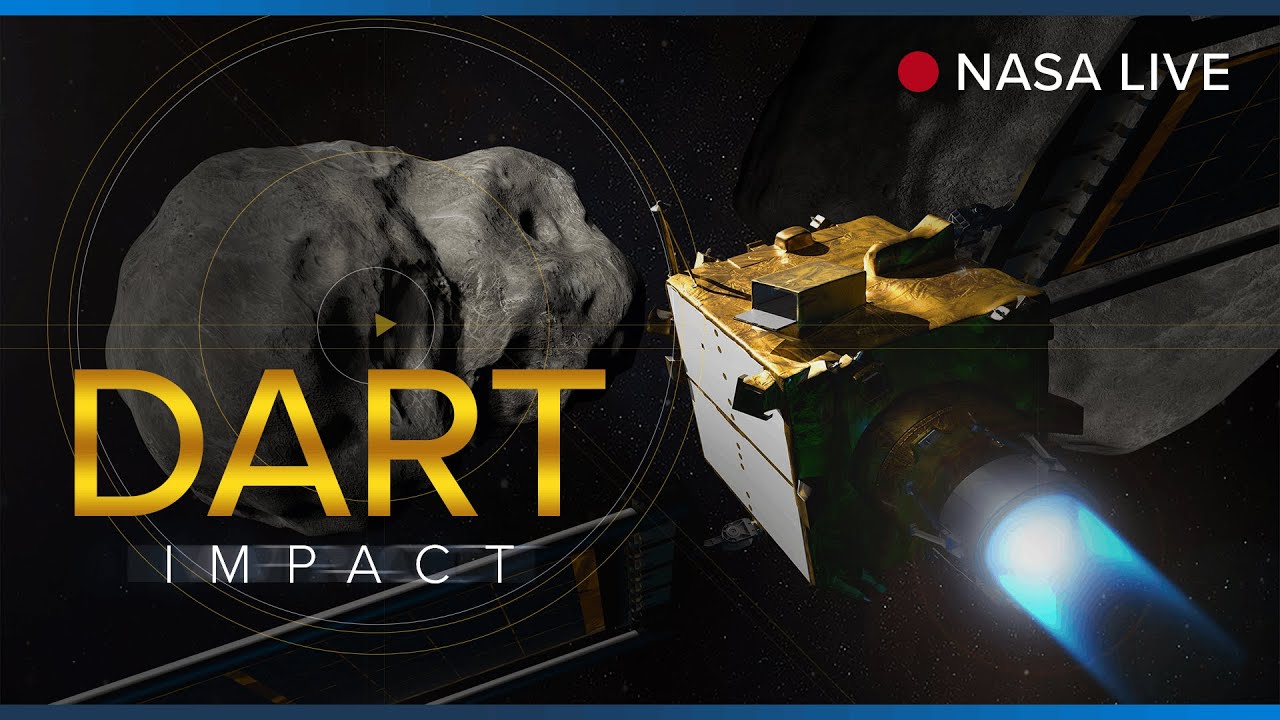
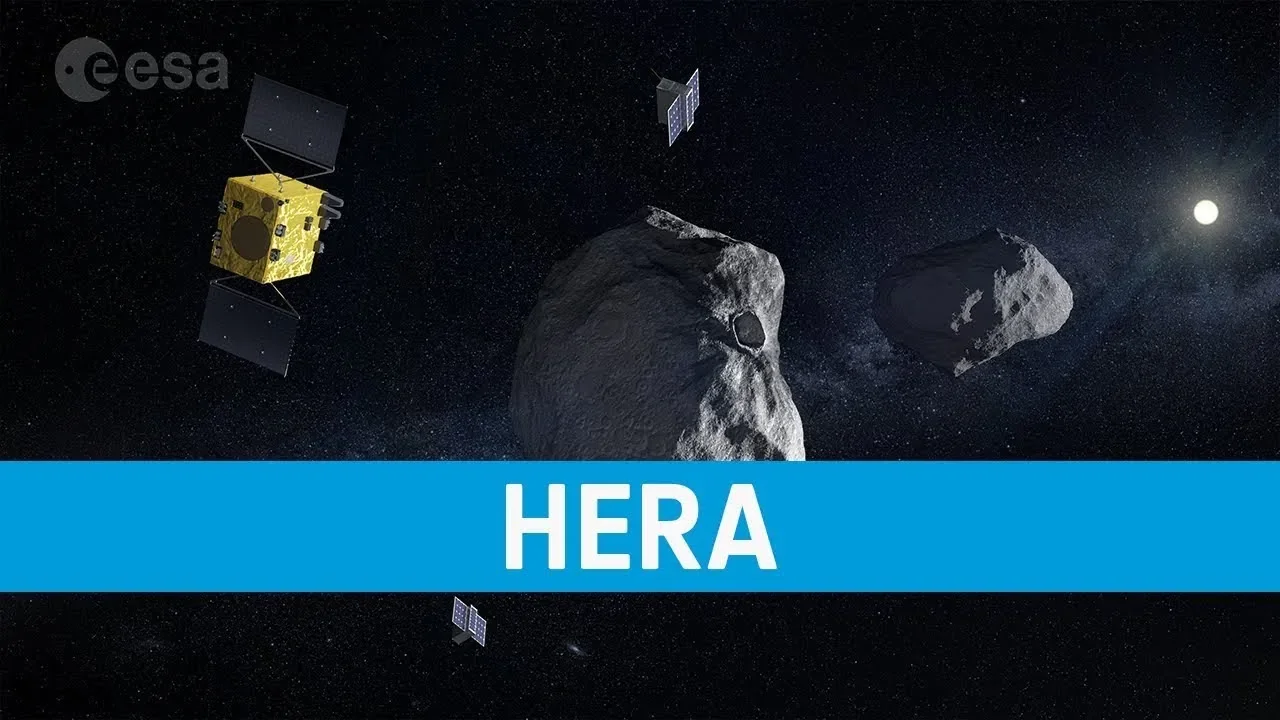
Analysis of real-world planetary defense missions, specifically NASA's DART (Double Asteroid Redirection Test) and the follow-up ESA Hera mission.
The astronomical methods and technologies used to detect, track, and calculate the collision probabilities of asteroids, including the Torino and Palermo impact hazard scales.
The geopolitical and legal frameworks governing planetary defense, including the Outer Space Treaty's restrictions on detonating nuclear devices in space.
Advanced or theoretical deflection concepts beyond the primary three, such as laser ablation, asteroid-vaporizing solar sails, and mass drivers.
419.7K views19.9Klikes4:25Original Release: 2018-05-10
Ian: [off cam] Hey Pat?
Pat: Yeah?
Ian: Two weeks ago you wrote "Pat's Special Surprise" in the idea doc.
Pat: Yeah? What about it?
Ian: What is that?
Pat: Ian. Picture this.
a theatrical episode of Life Noggin!
Ian: No Pat: Titled "Life Noggin On Stage" What do you think!?
Ian: Pat did you already do it?
Is that where you've been going at night?
Ian: [OFF CAM] Pat!?
Hey There! Welcome to Life Noggin!
65 million years ago, an asteroid about 10 kilometers wide struck the surface of the Earth and killed off the dinosaurs.
This obviously wasn’t great and now, people and organizations are working hard to prevent this from ever happening again.
The last thing we want is for humans to be wiped out.
because then, who's gonna watch our videos?
There’s actually a chance that an asteroid called Bennu that’s about 500 meters in diameter will strike Earth in about 200 years, which is pretty soon when you think about it.
Sure, it’s only a one in 2,700 chance, but scientists are beginning to prepare for the worst.
Bennu is one of many potential threats in our solar system.
There are around 15,000 Near Earth Asteroids catalogued by NASA and while the chance of any of them hitting is small, NASA’s Office of Planetary Defense has 3 pretty viable options in their tool belt to protect us.
The first is the Gravity Tractor approach.
A spacecraft would fly up to an asteroid and set up shop right beside it.
After a few years, the presence of a nearby object would alter the gravity of the asteroid, shifting it’s trajectory, and rerouting it away from Earth!
We wouldn’t even need to touch it.
Another idea is a bit more… violent than the Gravity Tractor method.
Enter the Hyper-velocity Asteroid Mitigation Mission for Emergency Response, or HAMMER.
Is there, like, a committee of cool people who chooses these names?
The idea is that we’d launch a spacecraft equipped with its very own nuclear weapon.
If a big asteroid starts to approach Earth, we’d be able to detonate the nuclear warhead, blowing off a chunk of the asteroids surface, changing its direction to save Earth!
The last is the Kinetic Impactor technique.
This seems to be the most straight forward plan and would only require us to nudge an asteroid in just the right way to shift its path.
It’s so simple and thankfully, we were already able to do this on a small scale with a comet in 2005.
Which is definitely promising, but a comet is actually quite different than an asteroid.
Asteroids are made up of rocks and metals, while comets are more ice, gas, dust and rock.
The size of asteroids range from just 2 meters to 1,000 km!
Comets are typically less than 10 km wide.
Both objects orbit the sun, but comets are further out.
They often have tails behind them because as they orbit closer to the sun, the ice and dust they’re made of begin to vaporize, creating that trail we can sometimes see from Earth.
Another type of space object we see down here are meteors.
When a small part of an asteroid breaks off after a collision and is vaporized in Earth’s atmosphere, streaks of light appear in the sky.
This is what people often mistake for shooting stars, but it’s purely part of an asteroid burning up above us.
How beautiful!
There’s always a lot of space activity going on around our beautiful planet, and most of the time, it’s harmless, but threats do exist.
Before we can protect ourselves, we need to know the threats are there.
The International Asteroid Warning Network is dedicated to finding, following and analyzing Near Earth asteroids and just last year, a group of astronomers successfully carried out the first international asteroid tracking exercise and it went really well.
Once we know about any dangerous asteroids, space agencies can decide how to respond in order to save you and your planet.
What other space questions do you have for me?
Let me know in the comment section below.
Click here to subscribe and hit the bell button, so you're notified every time we post a new video.
and check out this video here!
Thank you so much for watching!
As always, my name is Blocko, this has been Life Noggin, don't forget to keep on thinking!
Up Next
15:59
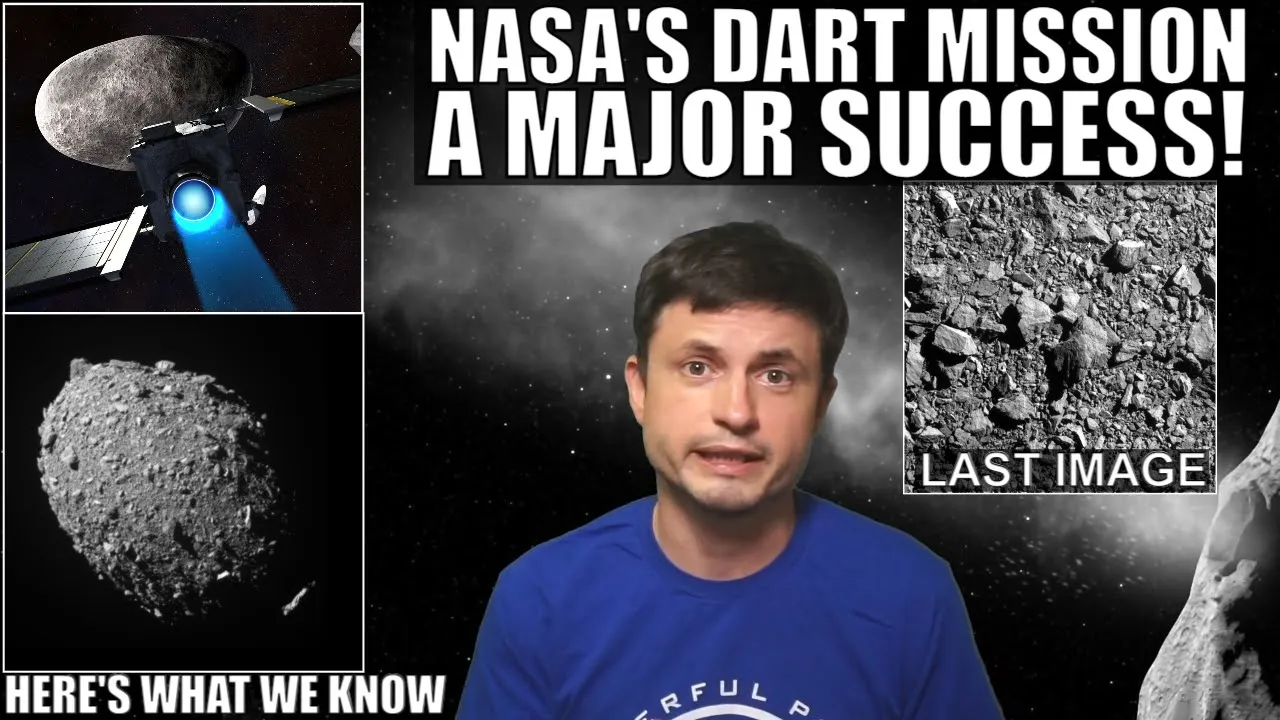
NASA's DART Mission: Testing Asteroid Deflection Techniques
@whatdamath
162K views•2022-09-29
61:17
First Billion Years of the Universe with the Square Kilometre Array
@iaaudc
121 views•2022-05-26

6:25
Kepler's Laws of Planetary Motion Explained (Educational Astronomy Video)
@Peekaboo_Kidz
404.9K views•2023-02-17
6:10
Gamma-Ray Bursts: Cosmic Snipers Explained | Astronomy
@kurzgesagt
15M views•2016-07-31
Related Study Plans & Knowledge Roadmaps
Structured learning paths in Astronomy
astronomy
Reionization: Pop III Stars, IGM & 21cm Line
01Foundations of Cosmology & the Early Universe
02Population III Stars & Cosmic Dawn
03Physical Mechanisms of Reionization
+ 2 more learning modules
17h5 modules
Explore Roadmap
astronomy
Planetary Rings: Dynamics, Roche & Resonances
01Foundations of Gravity and Orbital Mechanics
02Tidal Forces and the Roche Limit
03Structure, Composition, and Collisions
+ 2 more learning modules
10h5 modules
Explore Roadmap
astronomy
Asteroseismology: Stellar Waves, Ages & Cores
01Foundations of Stellar Astrophysics & Wave Mechanics
02Stellar Oscillation Modes: P-modes and G-modes
03Mathematical Framework of Asteroseismology
+ 2 more learning modules
35h5 modules
Explore Roadmap
astronomy
Adaptive Optics: Physics, Engineering & Control
01Foundations of Wave Optics and Wavefronts
02Atmospheric Turbulence & Optical Distortion
03Wavefront Sensing Technologies
+ 3 more learning modules
35h6 modules
Explore Roadmap