



![How the Bizarre Path of Mars Reshaped Astronomy [Kepler's Laws Part 1]](https://i.ytimg.com/vi_webp/Phscjl0u6TI/maxresdefault.webp)



![Những HIỂM HỌA từ vũ trụ không ai lường trước | Destroyer of Worlds | SAMURICE [SUB]](https://i.ytimg.com/vi_webp/OkFqLfYtId8/maxresdefault.webp)

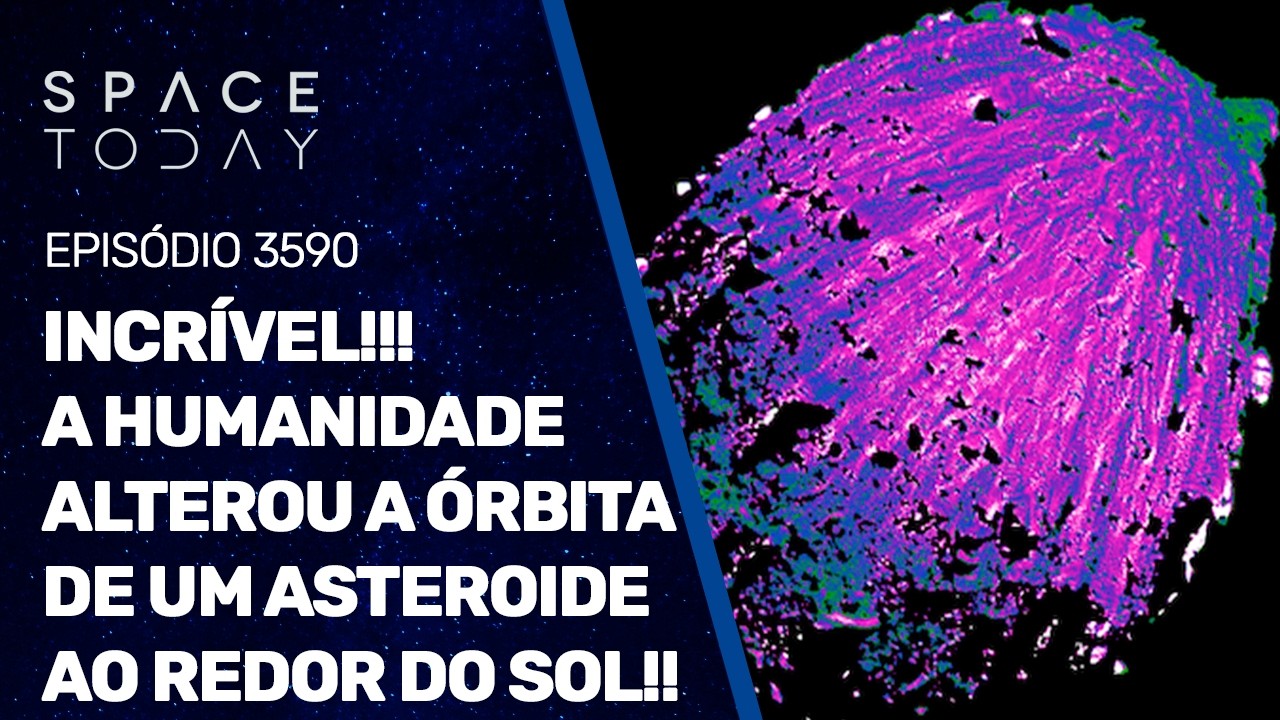
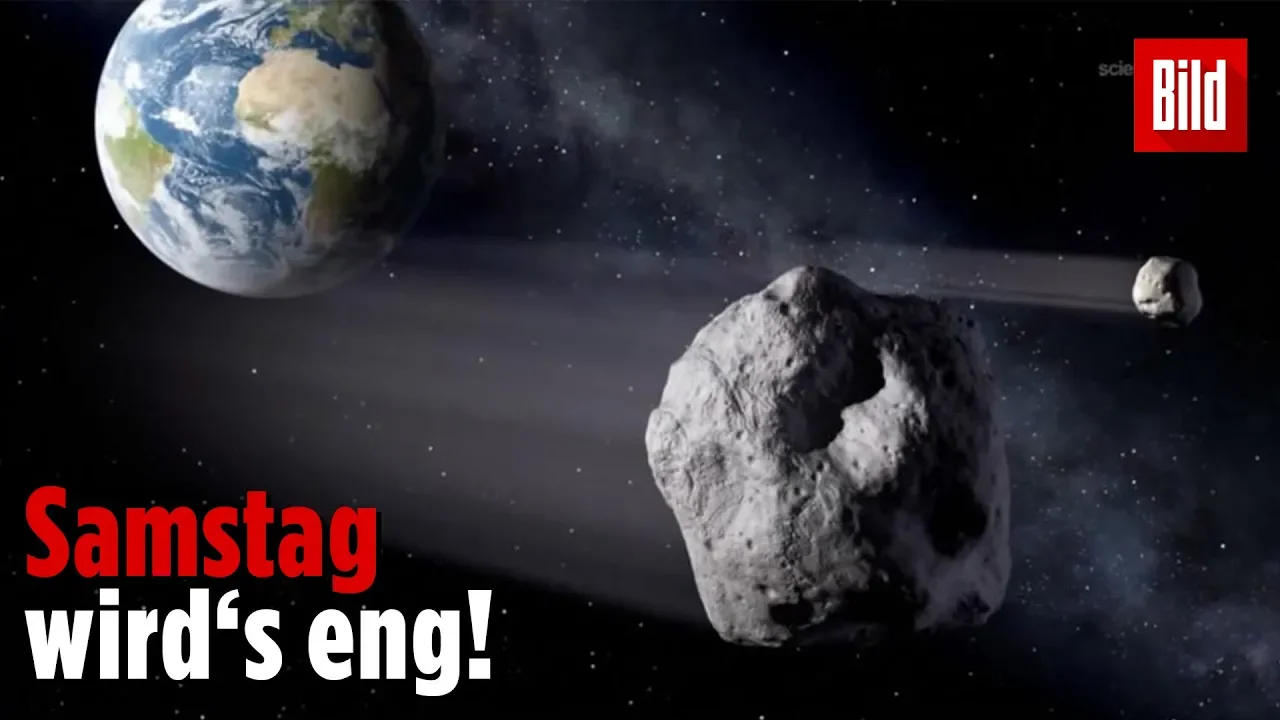









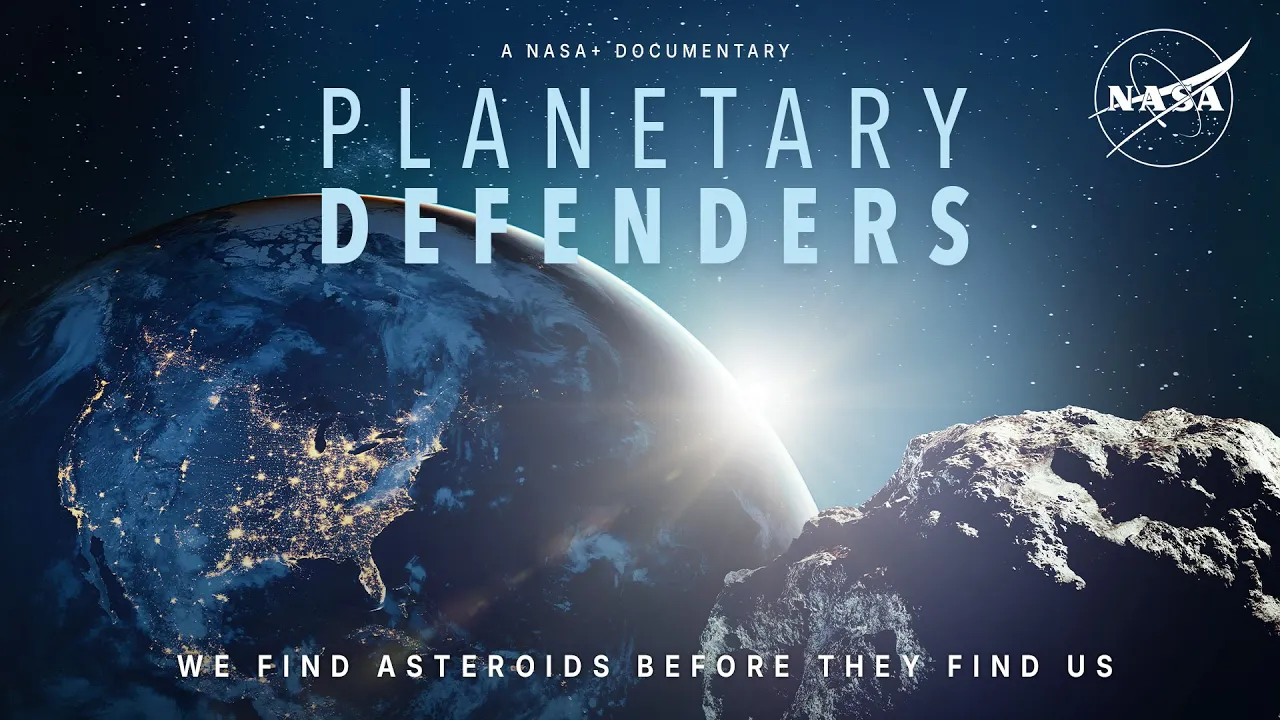
The DART (Double Asteroid Redirection Test) mission successfully demonstrated that kinetic impactors can effectively redirect potentially hazardous asteroids by intentionally colliding a spacecraft with an asteroid's moonlet (Dimorphos) to alter its orbit, providing a tested method for planetary defense against future asteroid threats.
NASA's DART Mission: Testing Asteroid Deflection Techniques
Added:The physical principles of momentum transfer and kinetic energy, which govern how an impactor alters the velocity of a target body.
Basic orbital mechanics, particularly Kepler's laws of planetary motion and how a minor perturbation can alter a celestial body's orbit.
The definition and classification of Near-Earth Objects (NEOs) and the historical threat they pose to Earth's biosphere.
The characteristics of binary asteroid systems, specifically how a smaller secondary body (moonlet) orbits a larger primary asteroid.
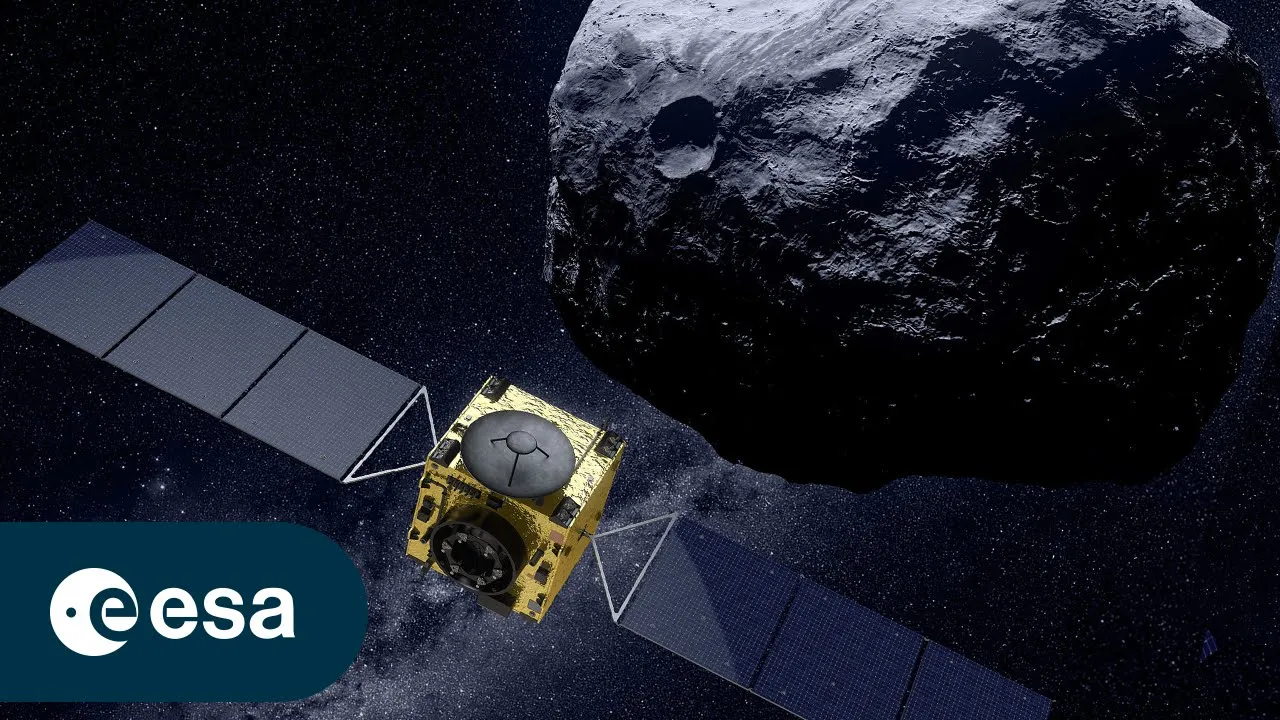
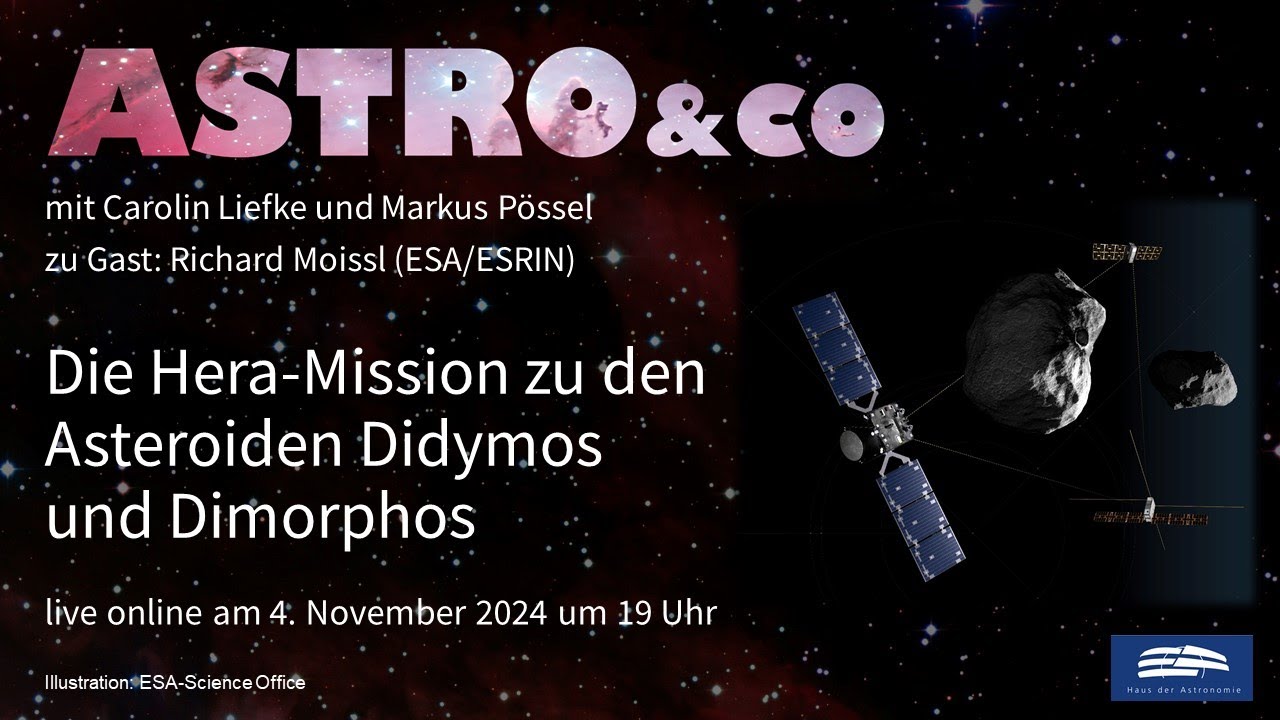
The European Space Agency's (ESA) Hera mission, which is designed to conduct a detailed post-impact survey of the Didymos-Dimorphos system.
Alternative asteroid deflection technologies, including gravity tractors, laser ablation, and nuclear disruption techniques.
The concept of the 'beta factor' (momentum enhancement factor) and how ejecta dynamics influence the overall change in an asteroid's velocity.
The international policy, legal, and coordination frameworks for planetary defense, such as the Space Mission Planning Advisory Group (SMPAG).
162K views11.2Klikes15:59Original Release: 2022-09-29
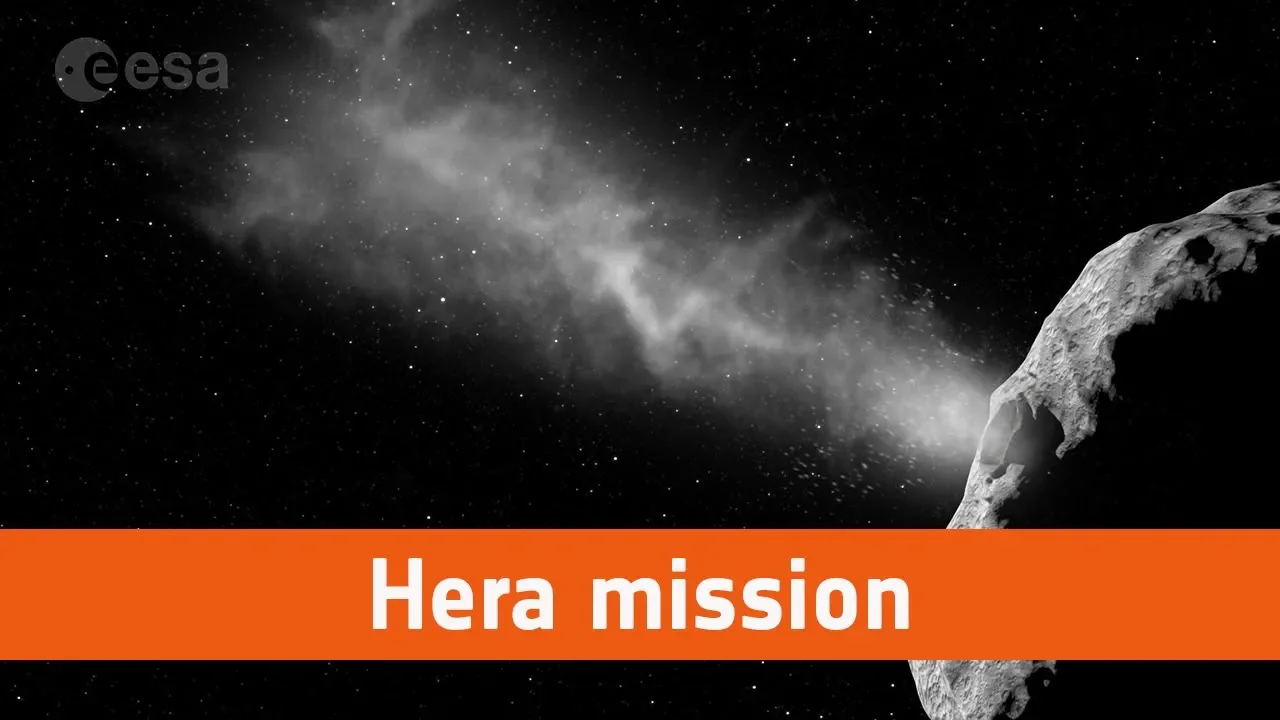
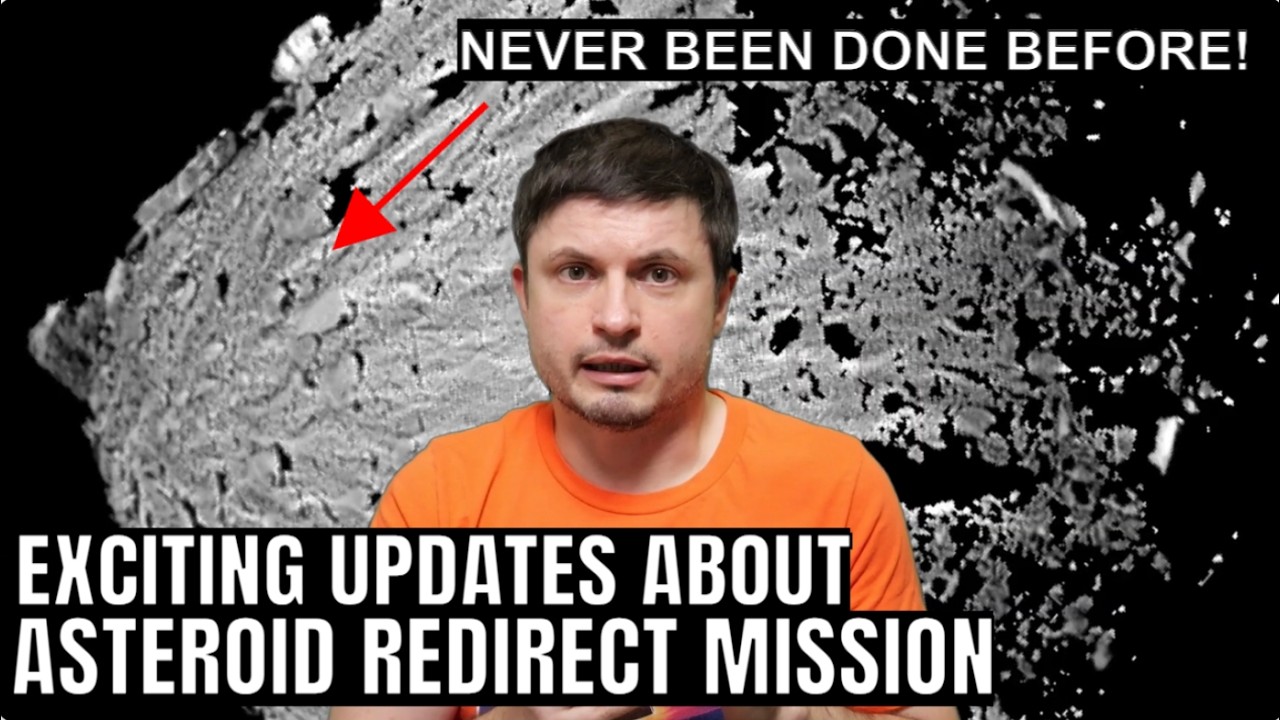
so the picture right behind me is actually kind of impressive this is the last picture that was taken by the dart probe right before it crashed into one of the asteroids at the speed of about 6.1 kilometers per second but not by accident of course on purpose this was part of what's known as the asteroid redirect Mission or to be more exact double asteroid redirection test Dart the mission we thoroughly discussed back in 2019 in a video in the description and the mission that has officially reached its main part the collision with a tiny Moonlight of an asteroid didymus in order to observe by how much the orbit is going to be shifting as a result but the image behind me being the last shot right before the Collision okay not exactly the last shot the last shot looked like this it basically had almost no information but this was the penultimate frame right before the Collision occurred Something That Was Then observed and confirmed by various observatories such as the atlas Observatory that saw this the particle emission that occurred after the collision and some something that's not going to be teaching us about how we can maybe one day redirect an asteroid if it's coming toward Earth potentially causing a hazard to one of the cities or one of the regions on Earth whole and full person this is Anton and so today I wanted to once again discuss a little bit more about this particular Mission highlight its importance and also help you understand what's going to be the next step and what the scientists are going to be doing now because that particular Collision even though it was important was actually only the first step of the mission itself and technically was one of the easier Parts the harder part is not going to be determined exactly what effect this had on the moonlet of the asteroididymis and what we can learn about this if one day we have to really use this to redirect an asteroid that potentially has a collusion chance with planet Earth but I guess first of all it's also important to understand that this is not the first time such a collision was specifically designed to observe something on the asteroid surface the first ever Collision was the Deep Impact space probe whose main purpose was to try to intercept the temple one Comet that you see imaged right here from a distance of about 4 million kilometers whose Collision was also quite thoroughly studied and quite thoroughly explored and even created this beautiful video that you see right here but with the color in here being for a very different purpose it was really to try to understand what exactly the comments are made from by trying to disrupt the upper layer of a comet which would then emit some of the minerals and some of the deposits from underneath allowing the scientists to understand the structure and the composition of a typical cometary object that often approaches the inner solar system and produces the cometary tale we can see from planet Earth and this was achieved back in 2005 so nearly 17 years ago with the impact being equivalent to about 5 pounds of TNT exploding all at once creating a crater that was about 150 meters in size but more importantly changing the orbit of the Comet not by much because the comet in this case was pretty large but it's believed that it changed the orbit by about 10 centimeters and the velocity of the common by about.0001 millimeters per second although in this case because it's a comet and it has a lot of other influences from various other effects it was never entirely certain by how much this Collision affected the orbit and that's exactly why NASA decided to try this again and in this case focus on an asteroid known as didimus that not so long ago was discovered to have a tiny Moon a moon that in this simulation you can see is already casting a shadow on the dynamos itself and so in this case this is a really intriguing system a system of an asteroid orbiting another asteroid or the orbital parameters are extremely well known and more importantly where the movement itself is not actually that large it's not really that massive and so colliding in any kind of a fast moving object into this Moon would actually change its orbit quite significantly enough to be measurable from very far away distances and this particular asteroid is actually a really interesting choice for several reasons with the main reason being that this is part of what's known as near-earth asteroids also known as NEOS these are asteroids that we believe usually represent a relatively High chance of at some point colliding with planet Earth and potentially creating devastating conditions on the surface in the last few months we've already discussed several different new craters that were discovered on the planet would many of them produce by various similar rocks of very similar size to the dimness this one here is just a little bit less than one kilometer across but it's Moonlight the morphus is quite smaller it's about 160 meters across and orbits around the larger partner every 11 hours and 55 minutes and because ludimus itself represents atypical Neo but it also has a partner it then becomes possible to use this particular Rock for a lot of different tests when it comes to the idea of planetary defense basically trying to find a way to redirect or destroy an asteroid before it potentially collides with planet Earth NASA actually has an entire office dedicated to this and it was only formed in 2016 and mostly because of something that happened in chillables in Russia back in 2013. the 2013 celebrants meteor was a kind of a rude awakening for the scientific Community reminding us how extremely common and how potentially dangerous these particular events can be we'll discussed this event in many other videos you can find them in the description but in this case the point was pretty simple try to find a relatively affordable relatively effective and easily executable technique that can in theory somehow destroy or redirect an asteroid that has a chance of colliding with Earth and though naturally in a lot of different movies the idea of nuclear weapons sort of come into play several NASA Studies have already established that this will be a pretty bad idea for a lot of different reasons but the main reason being radioactivity instead of dislodging an asteroid or destroying it with a nuclear weapon instead it creates a lot of different particles and a lot of different debris that's now radioactive and is probably still going to be heading toward Earth so something entirely different had to be proposed in order to make these missions relatively effective and for a very long time the second Reaper position has always been well why don't we just hit the asteroid with something really heavy and nudge it just a little bit that over a period of let's say a year or two years is going to move away from its potential trajectory and thus instead of hitting planet Earth ends up missing planet Earth and moving into a completely different direction and so this is what this mission was always trying to test but unlike the previous Deep Impact Mission with the temple one Comet the scientists had to find something where the measurements can be extremely accurate and so the discovery of bitumus and its moonlet created a perfect opportunity here these two objects represent a typical asteroid that we kind of think might be dangerous to planet Earth typical in terms of both composition structure and even size but more importantly they have a permanent and stable orbit around one another and so by dislodging one of the objects it becomes possible to then measure the effects applying the observations to a lot of different similar objects out there something that would be very difficult to do with an asteroid that does not have a moon for a very simple reason the actual orbits of an object around the Sun can change for a lot of different reasons for example the sun itself tends to produce what's known as yarkovsky fact it warms up various asteroids and makes them move around the solar system in somewhat unpredictable ways and so even if you were were to hit an asteroid and try to measure the orbital changes over a period of let's just say one year the sun itself is going to create a lot of additional effects that cannot be predicted and cannot be easily calculated making the actual orbital changes very difficult to assess and so instead by using an object that already has a moon where the solar facts are not as dramatic the orbital calculations become much more precise and thus the mission was born launched a little bit less than a year ago and now has entered its first important stage the Collision stage but that's just the beginning of course now the scientists have to do the hard part they have to start measuring the effects and figuring out exactly what happened on the Moonlight and if this technique can be then applied to something else in the future and the first results are going to be coming to us in the next few weeks from the mission known as lysia cube which was approximately 55 kilometers away from the amorphous observing measuring and calculating everything as it happens this particular mission is also going to be capturing very precise images of the ejecta which based on just this video that you see right here are expected to look quite Grand Euros but this right here is already kind of a bad sign for one simple reason the Sciences did not expect so much projector from this relatively small collision and that implies that the structure and the composition of an asteroid might have created what in physics we refer to as inelastic collision in other words where the kinetic energy of a fast moving object is then dramatically reduced by something like for example friction some kind of a air or atmospheric resistance or some other physical effects that essentially absorb some of the kinetic Force for example in a perfect world scenario in a case of an elastic Collision this basketball would be bouncing in exactly the same way no matter what but because this is an inelastic collision the height of every jump reduces every time the basketball touches the ground and so in a similar fashion the total amount of debris released after this Collision May indicate that some of the kinetic energy was absorbed by something on the surface of the moonlet and thus the total changes in orbital Dynamics might not be as dramatic as the scientists originally hoped at least as the initial implication based on the observations from the ground from planet Earth or basically just based on this one video that you see right here but that's of course just one first assumption in reality because this is such an important Mission it was absorbed by a lot of different observatories from the ground and it now also has another second part that's going to be launching in the next years here's by the way yet another video showing us the approach of the probe toward didymus and toward its moon with the Collision happening pretty much any second now these are actual photos taken right before the Collision as a matter of fact European Space Agency is going to be launching Hera that's going to be carrying two different cubesats nulani and Juventus which are going to be arriving here in the next five years in 2027 with only one main purpose for this Mission direct and exact investigation of exactly what happened to dimorphos and of course its orbit 5 years after the initial collision with dart because unfortunately here from planet Earth even the most accurate observations of its orbital changes can only be done in one single way it can only be done by measuring the minute changes in reflectivity of dudimus as the moon orbits around it and as it sometimes changes the reflectivity of didymus but that's not a very precise method and so going here once again and trying to take more pictures and measuring a lot of these orbits directly is really the only way and in case you're wondering why can't we just use the mission that's already here well that's because the mission is not staying in orbit around this asteroid meaning that the camera that's currently operating here just doesn't have enough fuel to assume an orbit around the asteroid and is not going to be able to stay here much longer but because this event was also observed by approximately 30 different ground telescopes in Optical radio and radio frequencies it means that the scientists are going to have quite a lot of data to work with even before Hera launches and arrives to this object once again but that's of course the first step in the so-called planetary defense the other step also involves finding these asteroids nearly 28 1000 have already been discovered in the last decade or so and approximately 3 000 are added every single year you can actually find all of them in this NASA's Center for near-earth object studies website smells for short that basically shows you every single Rock discovered and its chance or its extremely minute chance of a collision with planet Earth in the next few hundreds of years all this is actually based on a system known as sentry with the current record holder being asteroid banno with 157 potential impacts between the year 2178 and 2020 90. but the actual chance for these collisions being less than one percent as a matter of fact of all of the larger Astros discovered in the last few decades none of them have a significant chance of colliding with Earth in the next hundred or so years but there might be one that we discovered that does have a chance which is why the dark mission is super important although the main reason I wanted to talk about this is because NASA now is actually introducing its second part of it's more Advanced version of Sentry Sentry 2.0 the system that's not going to be using slightly different statistical analysis to find even more potential collisions on various asteroids and to focus on a lot of previous effects such as yarkovsky effect that have previously been difficult to calculate changing the accuracy of each calculation quite dramatically and so that's going to be an extremely important update for various missions module has now been done pretty much automatically by the system itself without the need for any manual calculations which means that in the next few years we're going to suddenly have so much new data on various asteroids and even previously discovered asteroids that was not available before which also means that this particular table is probably going to be changing and sort of being reshuffled once all this becomes operational and all this is super exciting to see because 10 years ago we didn't have pretty much most of this now we don't just have a way for us to detect asteroids but the scientists have officially tested the first ever redirect Mission potentially allow allowing us to save the planet from an imminent collision and so I can only imagine what we're going to have in the next 10 years or at least for now we're going to be getting so much new data from this mission in the next few weeks so if there is something really unusual or something really surprising I'll make sure to follow this up with another video and so until then thank you for watching subscribe maybe share this with someone who has learned about space and Sciences come back tomorrow to learn something else and maybe support this channel patreon by doing internet membership or by buying the wonderful person t-shirt you can find in the description stay wonderful I'll see you tomorrow and as always bye foreign [Music] [Music] thank you foreign
Up Next

41:52
Radio Astronomy Introduction: From Jansky to Modern Amateur Observing
@radio-astronomy
18.5K views•2022-07-20
61:17
First Billion Years of the Universe with the Square Kilometre Array
@iaaudc
121 views•2022-05-26
14:59
JWST & ALMA Reveal New Planet Formation Secrets
@whatdamath
82.3K views•2024-03-13
6:10
Gamma-Ray Bursts: Cosmic Snipers Explained | Astronomy
@kurzgesagt
15M views•2016-07-31
Related Study Plans & Knowledge Roadmaps
Structured learning paths in Astronomy
astronomy
Reionization: Pop III Stars, IGM & 21cm Line
01Foundations of Cosmology & the Early Universe
02Population III Stars & Cosmic Dawn
03Physical Mechanisms of Reionization
+ 2 more learning modules
17h5 modules
Explore Roadmap
astronomy
Planetary Rings: Dynamics, Roche & Resonances
01Foundations of Gravity and Orbital Mechanics
02Tidal Forces and the Roche Limit
03Structure, Composition, and Collisions
+ 2 more learning modules
10h5 modules
Explore Roadmap
astronomy
Asteroseismology: Stellar Waves, Ages & Cores
01Foundations of Stellar Astrophysics & Wave Mechanics
02Stellar Oscillation Modes: P-modes and G-modes
03Mathematical Framework of Asteroseismology
+ 2 more learning modules
35h5 modules
Explore Roadmap
astronomy
Adaptive Optics: Physics, Engineering & Control
01Foundations of Wave Optics and Wavefronts
02Atmospheric Turbulence & Optical Distortion
03Wavefront Sensing Technologies
+ 3 more learning modules
35h6 modules
Explore Roadmap