


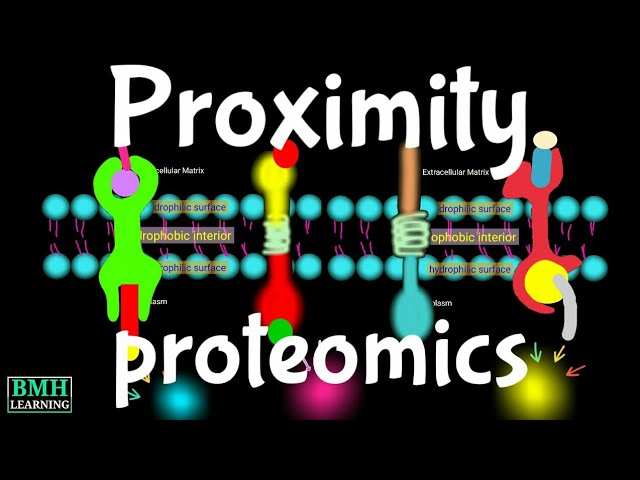
TurboID is a proximity labeling technology developed through directed evolution that enables rapid (as little as 10 minutes) and efficient proteomic mapping in plants by overcoming the limitations of existing methods like APEX (toxic, fast) and BioID (non-toxic, slow), as it maintains high catalytic activity at lower temperatures (30°C) compared to BioID's optimal temperature of 37°C, making it particularly suitable for plant research where growth temperatures are typically below 37°C.
TurboID Proximity Labeling for Plant Proteomics | Dr. Tess Branon
Added:Fundamentals of proteomics and mass spectrometry-based protein identification.
The concept of directed evolution in biochemistry and how enzymes are engineered for specific cellular functions.
Basic principles of proximity-dependent biotinylation (such as classic BioID or APEX) used to map protein interactomes.
General plant cell biology, including sub-cellular compartmentalization and the historical challenges of biochemical isolation in plants.
Comparative analysis of TurboID versus alternative proximity-labeling tools like miniTurbo, APEX2, and Split-TurboID.
Experimental design for targeting proximity-labeling enzymes to specific plant organelles, such as chloroplasts and mitochondria.
Bioinformatic workflows for filtering false positives and analyzing quantitative mass spectrometry data from proximity labeling experiments.
Application of TurboID to map dynamic, stimulus-induced proteomic changes in plants, such as hormone signaling pathways or pathogen defense responses.
2.4K views60likes6:07Original Release: 2021-01-15
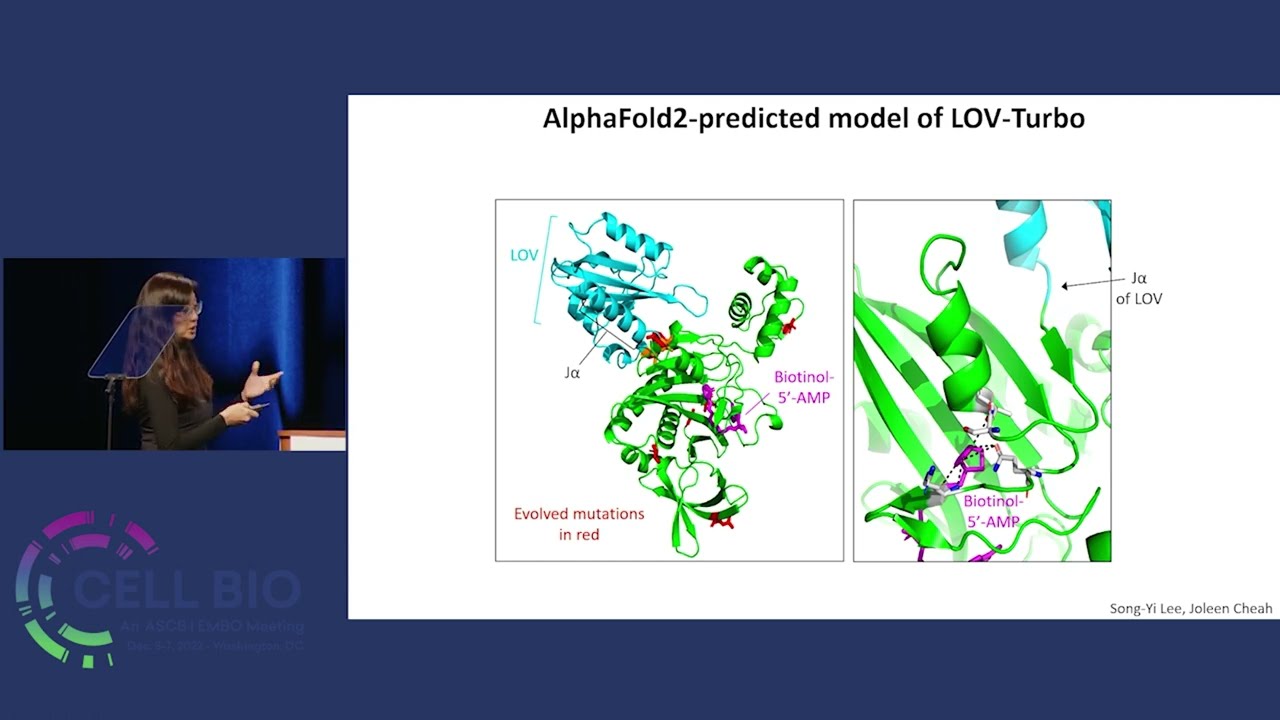
so good morning uh my name is Tess Brandon I'm a postdoc at Brickley but today I'm actually going to talk to you about a technology I developed while I was in graduate school um in Alice ttings lab and the technology is Turbo ID which has enabled promic mapping in several new contacts including in plants so several key questions about the molecular mechanisms that underly cell biology surround proteins so what are the targets of this enzyme what proteins compose the structure where are these proteins in the cell and what other proteins are interacting with them there uh traditional approaches to anere such questions like amuno precipitation and biochemical fractionation have enabled countless discoveries uh but they also have some serious limitations they often miss transient or weak interactions which can sometimes be the most important in a biological process and they often suffer from contamination and loss of material so to further address these questions our lab The Ting lab and others have been developing new approaches called proximity labeling and proximity labeling is different from IP or fractionation because the information is recorded while the cell is alive and intact so to a region of Interest or protein of interest uh you can genetically Target an enzyme that generates a reactive species that um diffuses a way to tag surrounding proteins with a chemical handle such as Biotin and the reactive species will quench a few nanometers out so only proteins proximal to the enzyme that is proximal to the region or protein of interest um gets labeled and then you can then use that chemical handle to pull down the tagged proteines and identify them using mass spectrometry so two major tools that are currently used for proxim leting are Apex a peroxid space method and um which was developed in our lab and bio ID a bioen li G Bas method and both of these come with trade-offs Apex is very fast allowing short um userdefined labeling Windows to probe Dynamic changes um on the order of minutes and uh however Apex is toxic uh it requires hydrogen peroxide which is toxic to cells uh bioid on the other hand only requires Biotin and no toxic reent so it's much more amendable for invivo applications however bio is slow and it requires labeling times of 18 hours or longer therefore when I in The Ting lab I work to develop a new tool that's both non-toxic and fast so we can explore Dynamic biological processes in a much wider variety of settings and organisms um because we wanted the non-toxic labeling conditions we knew we wanted to start with the biotin Li a based method um but how can we increase the efficiency of these slow enzymes it's actually very difficult to do that using rational design so we turn to Nature's finest protein engineer which is evolution um to perform the directed Evolution we generate a library of liase mutants and displayed them on the surface of yeast where we can carry out the labeling under various conditions and then use flow cytometry to separate out mutants that have high activity to expression ratios from those that have lower ones and using that selection platform we gener generated two mutants uh one with 14 mutations that we call Turbo ID and a second mutant mini turbo that's smaller with a few trade-offs of Turbo ID that I'm not going to get into right now but I'll be happy to discuss further with anyone who's interested uh in contrast to bio ID which requires this 18 hour labeling time both mini turbo and turbo ID require as little as 10 minutes of labeling and sometimes less and they have higher labeling yields which gives High coverage um podiums and they maintain High specificity um in those podiums so these faster more efficient enzymes have allowed Proxima labeling to be extended to several new biological questions and model systems that were previously inaccessible to the technique and one of those areas which these enzymes have been proven very useful is for pric mapping and plants um proximity labeling has gotten a slow start in Plants uh prox based methods like Apex don't really work very well because plants have a lot of their own peroxidases that can produce High background using the same sub rates uh in fact all versions of proximity labeling peroxidases that are currently being used were all derived from Plants um so the chemistry employed by these uh peroxidase space methods like Apex isn't really compatible for pumic mapping and plants because it's not orthogonal uh there's been a couple of studies in Plants using bio ID but in these studies the bait protein had there had to be highly overexpressed or the labeling yield was kind of low and resulted in a low coverage proteome so this is due to the low catalytic activity of bioid especially at the temperatures at which plants normally grow which is below the optimal temperature of Bio ID which is 37° Celsius uh turbo idea and mini turbo on the other hand were evolved in yeast which grow at 30 degrees so on top of the shorter labeling times um required by the enzymes they also retain higher activity at lower temperatures which has enabled much higher labeling yields in organisms like plants that grow below 37 degrees so for example Dominique Brigman which some of you may have heard in the first session of the workshop showed that turbo ID and mini turbo give robust labeling in a couple different plant species compared to bio ID um bio ID here shown as Beret star and then they use turboid to map the interative of a low abundance transcription factor and a r transient cell type uh other groups like The dases Kumar group um Davis have also demonstrated higher activity of turboid compared to previous Technologies in plants and then use turboid to identify Regulators of immune receptors and plants which they functionally validated by assessing their role and protection against infection and our own organizer shiang Wong group has also been using terab and some very cool work to map the interactors um and substrates of a Kines called bentu in arabidopsis so in summary we have used directed Evolution to develop this new proximity labeling tool that we hope is going to open many more biological questions for investigation and plants uh thank you all for your time and if you're interested the original CH publication can be found in uh bi technology and all of our plasmas are on ading so please check them out okay and I will
Up Next
2:30
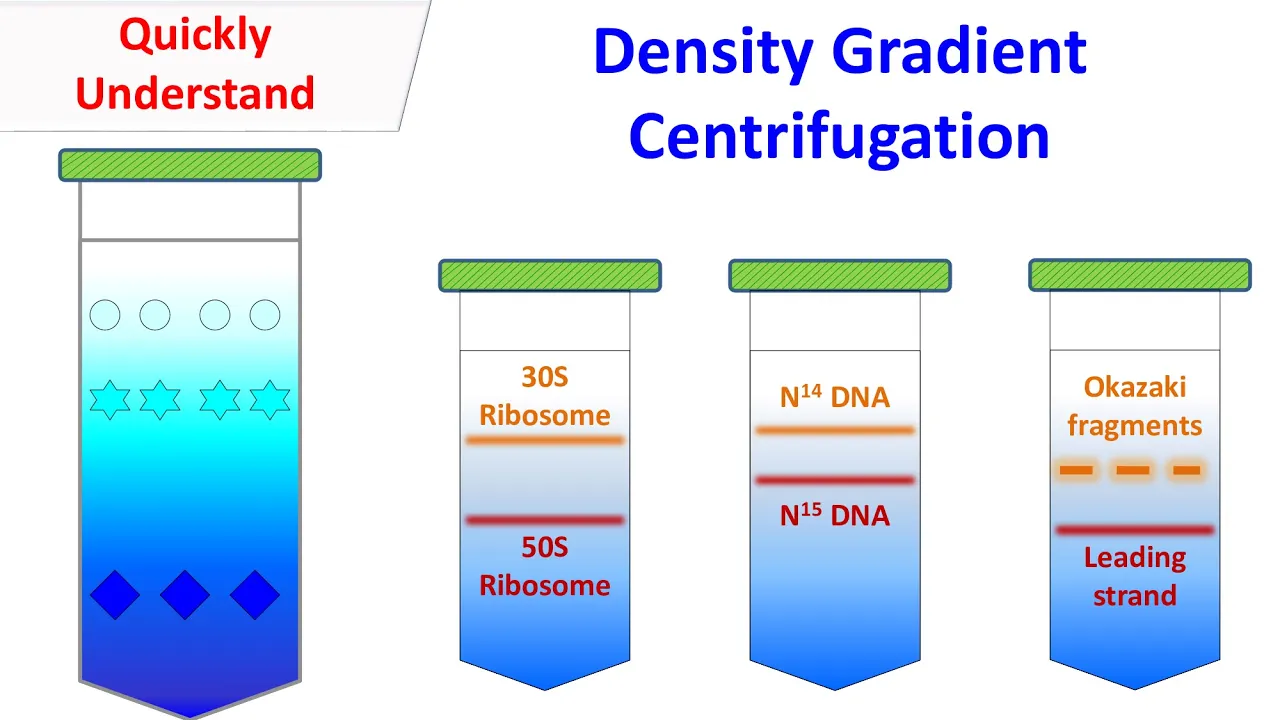
Density Gradient Centrifugation | Principle and Applications
@quickbiochemistrybasics
89.1K views•2022-04-29
50:12
Bacterial Communication: Quorum Sensing and Biofilm Formation Explained
@JHUAAP
12.6K views•2011-06-28

5:35
Enteric Nervous System Explained: The Gut's Brain | Neurobiology Lecture
@alumniu6029
438 views•2018-09-12
7:08
Bacteriophages: Earth's Deadliest Killers and Future Antibiotics
@kurzgesagt
34.6M views•2018-05-13
Related Study Plans & Knowledge Roadmaps
Structured learning paths in Biology
biology
RNAi: Biogenesis, RISC & Gene Silencing
01Molecular Biology Foundations: DNA to Protein
02Introduction to RNA Interference (RNAi)
03Molecular Biogenesis of miRNA and siRNA
+ 2 more learning modules
10h5 modules
Explore Roadmap
biology
Mycorrhizae: Signaling, Biophysics & Ecology
01Foundations of Mycorrhizal Symbiosis
02Molecular Signaling and Root Colonization
03Biophysics and Bioenergetics of Nutrient Exchange
+ 1 more learning modules
11h4 modules
Explore Roadmap
biology
Circadian Clocks: TTFL, SCN & Periphery
01Foundations of Molecular Biology & Gene Expression
02Introduction to Chronobiology and Actograms
03The Core TTFL: Molecular Architecture of the Clock
+ 3 more learning modules
14h6 modules
Explore Roadmap
biology
Population Genetics: Math, Drift & Selection
01Genetic & Probability Foundations
02The Hardy-Weinberg Principle and Baseline Models
03Mathematical Modeling of Natural Selection
+ 3 more learning modules
18h6 modules
Explore Roadmap