





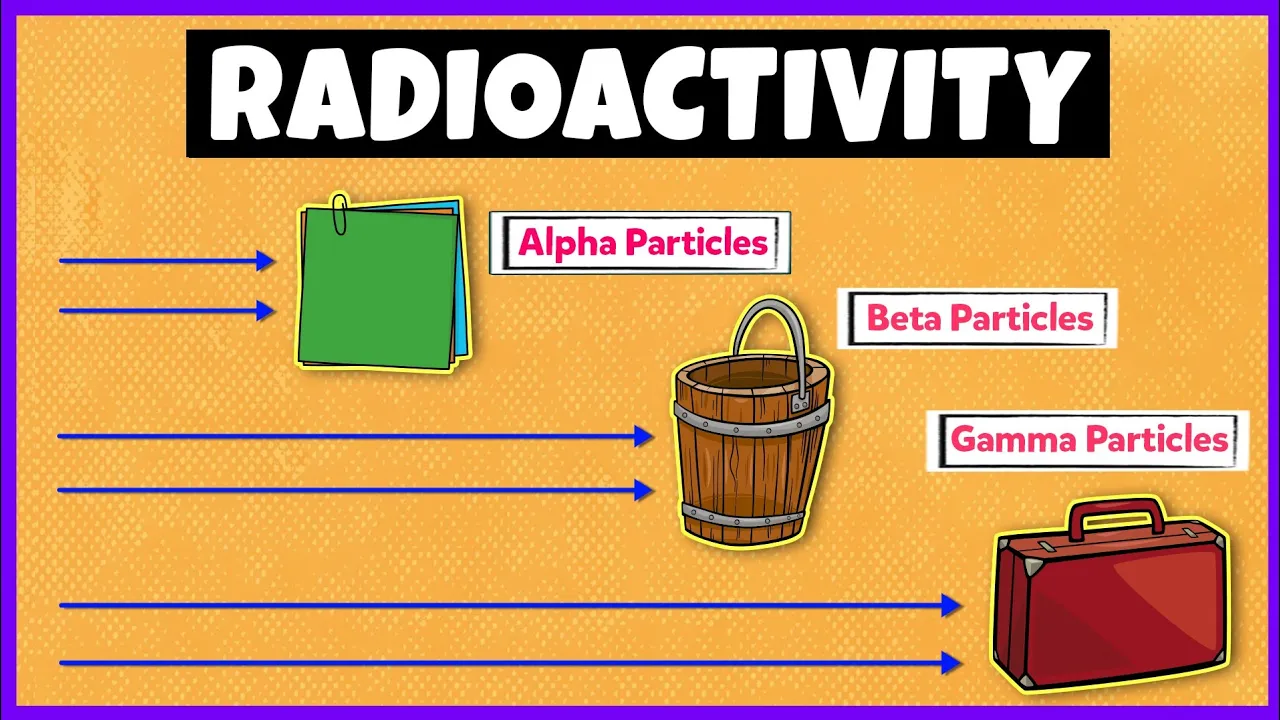














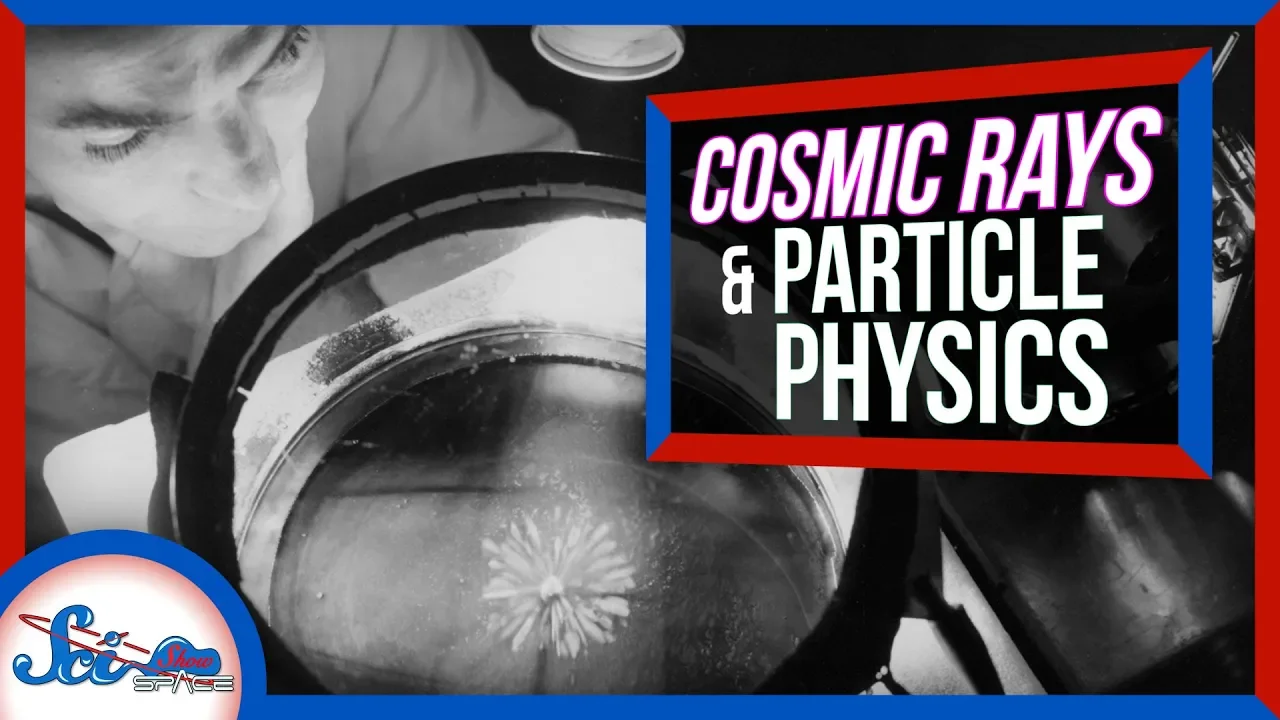







A cloud chamber detects ionizing radiation by creating a supersaturated alcohol vapor that condenses around ions formed when radiation particles collide with air molecules; alpha particles (heavy helium nuclei) produce straight, thick tracks due to their large mass, beta particles (light electrons) create wiggly, curved paths because they are easily deflected by air molecules, and gamma rays appear as small squiggles from the electron-positron pairs they create, allowing visualization of otherwise invisible radiation.
Detecting Ionizing Radiation in a Cloud Chamber: Electron Beam Visualization
Added:Basic understanding of atomic structure, including the properties of protons, neutrons, and electrons.
The definition of ionizing radiation and the fundamental differences between alpha particles, beta particles, and gamma rays.
The concept of phase transitions, specifically how supersaturated vapors condense into liquid droplets around nucleation sites.
How moving charged particles interact with electromagnetic fields and surrounding matter.
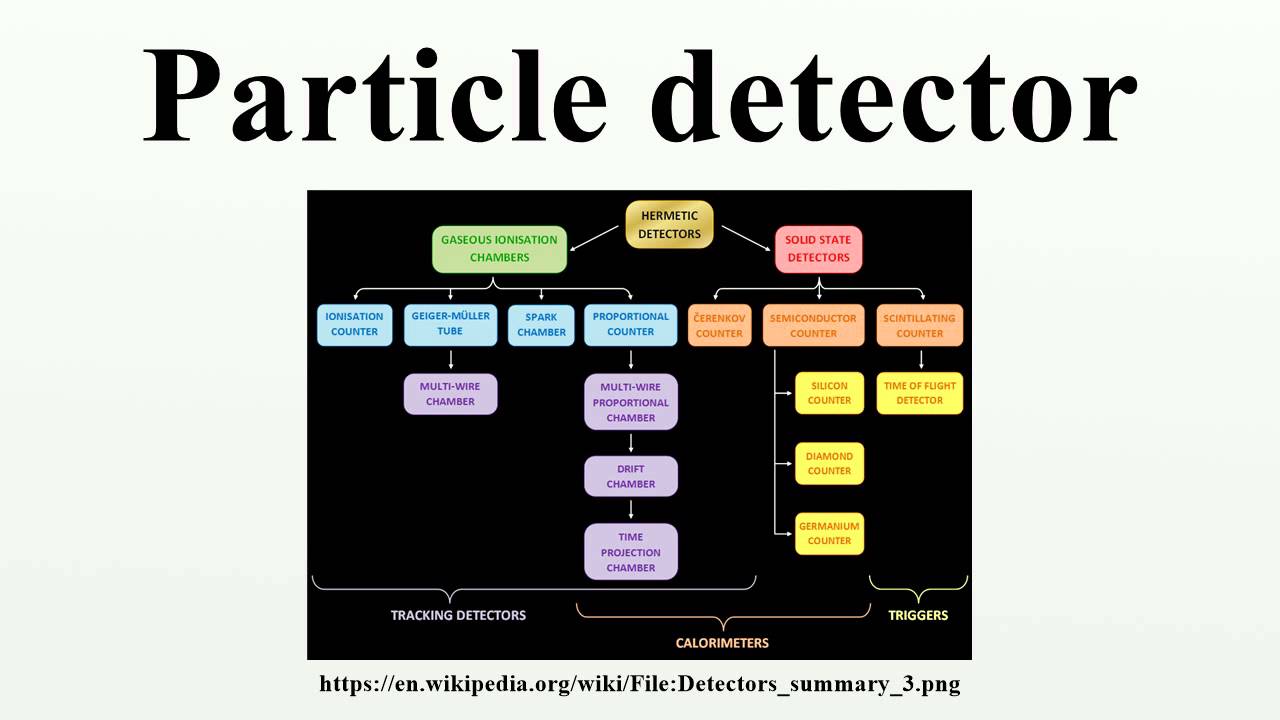
The technological evolution of particle detectors, moving from cloud chambers to bubble chambers and modern gaseous ionization detectors.
Quantitative analysis of particle tracks, such as calculating particle momentum and charge based on track curvature in magnetic fields.
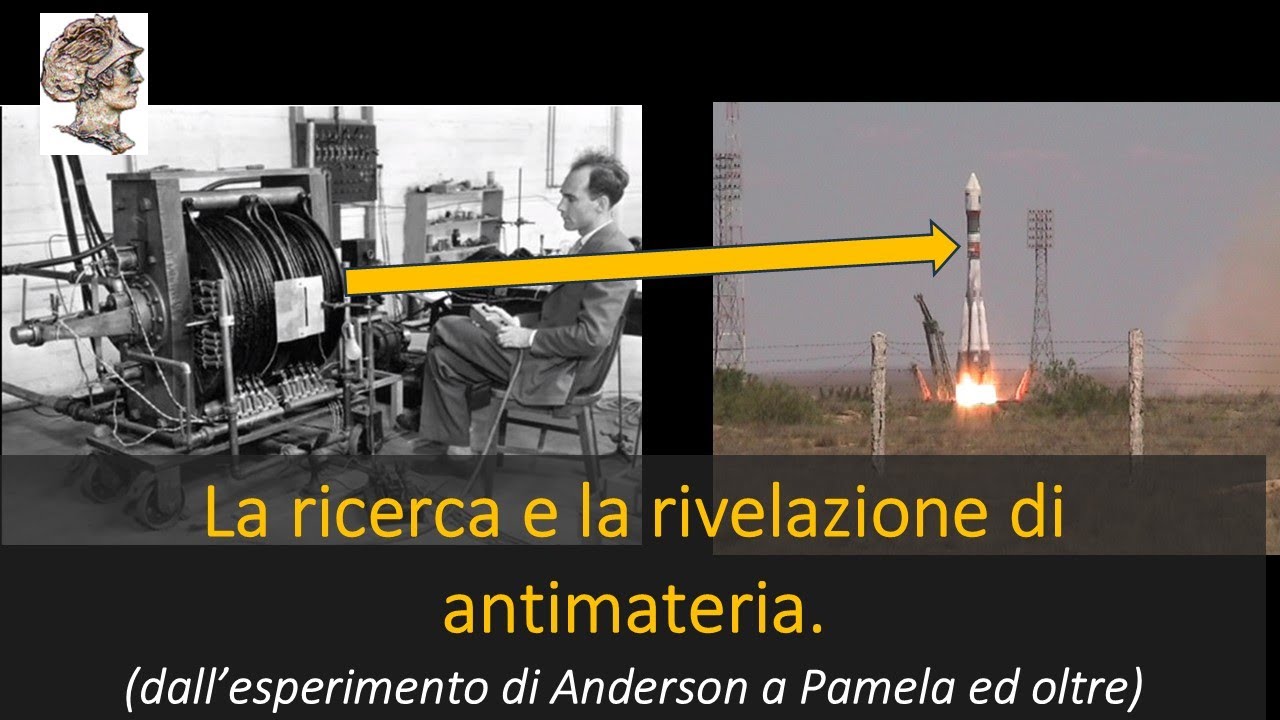
The study of cosmic microwave background and cosmic rays, including how early subatomic particles like positrons were discovered.
Applications of radiation detection in nuclear medicine, radiation shielding design, and health physics dosimetry.
279.8K views14.6Klikes6:43Original Release: 2021-08-19
hey everyone today i'm going to be blasting a cloud chamber with electrons and i'd like to thank mel science for sponsoring this video i'll tell you a little bit more about them later on in the video so as you know there's ionizing radiation all around us it's continually whizzing past the air in order to detect these particles we have to make a cloud chamber now this may sound a little bit difficult to do but it's actually not it's really easy i just spread some dry ice out here and then i put this plate of aluminum on top and this is black aluminum so i can see it a little bit better all you really need to do this is some isopropyl alcohol now the higher percentage you can get it the better it'll work so i'm using 99 isopropyl alcohol here then i just pour the alcohol on the aluminum spread it all around i'm also going to spread some alcohol in the chamber itself to get a little bit more alcohol vapor then i'm just going to put my vacuum chamber over top of it i could use any clear glass chamber here just any clear chamber that i can see through and then just wait around five to ten minutes for it to form a stable alcohol cloud in there okay while we're waiting for the cloud to form in our chamber let me tell you a little bit about our sponsor male science if you like my channel and the experiments that i do on my channel then you'll love male science kits mel science kits are a subscription kit that's sent to you monthly mel science has a lot of different kits available from chemistry to physics to even their kids section as well for example this is one of the boxes from the mel's kids section called jungle jack i'll let my kids do this set look how cool this is i highly recommend mel science kits because one of the best ways to learn something is by doing it yourself and experimenting yourself and their science kits bring those experiments to you at home so if you want to check out mel science kits which i highly recommend click the link in my description and use the code action lab for 50 off your first month now let's get back to our experiment what we're going to be doing here is creating a super saturated vapor of isopropyl alcohol because the top is warmer than the bottom as the vapor reaches the bottom it's going to want to condense but it needs a nucleation point to do that now some of it will spontaneously condense and that's these little droplets that you can see in the air falling down but then there's some of the isopropyl alcohol that is still in the vapor state that hasn't condensed yet even though it's cold enough to do so one way that we can get this supersaturated alcohol to condense is to create ions near it when particles of radiation fly through the air they can hit into the air molecules and knock electrons off of them so once they've knocked electrons off those air molecules are now positively charged and so that can induce the isopropyl alcohol to want to gather around that charge so it will actually make a small droplet around that positive ion and so wherever that radiation particle flew through the air you can actually see small droplets form as condensation this is the basic mechanism by which cloud chambers work now the interesting thing about these cloud chambers is that not only can you see the path that the radiation particles took through the chamber but you can actually even tell what type of particle it is for example the most massive radiation particle is alpha radiation this is a helium nucleus containing two protons and two neutrons but no electrons these particles make the large wide paths and straight lines like this they make straight lines because they have a larger mass and they're moving very fast so they don't get knocked by the air molecules very much now the next type of radiation we can see are beta particles beta particles are electrons that are moving very fast and they aren't contained in an atom these beta particles are around 8 000 times less massive than alpha particles so they can get knocked around by the air molecules so they don't show up as straight lines as often they make wiggly curved lines in the cloud chamber like this then we have gamma radiation these are the high energy photons and they have no mass or no charge so we can't see their path directly but what we can see is the path of ions they create so they can knock electrons off of atoms or they can also spontaneously create an electron positron pair that make their own paths in the chamber so gamma particles look like small squiggly lines and wiggles you can see a gamma particle here and then a beta particle here and then a straight alpha particle and then in this shot we get a gamma an alpha and then a beta that goes right across it see what you can spot coming off of my uranium sample here there should be a ton of gamma and beta and a little bit of alpha coming off of it so we know that we can see beta particles which are electrons in a cloud chamber so what would happen if we actually blasted the cloud chamber with billions of electrons so i'm going to create an extremely high voltage nail that's going to shoot a blast of electrons at the cloud chamber let's see what it looks like i have a nail connected to one part of my wim's heart's machine and then the bottom plate connected to the other side turn it on whoa so what's happening here is the high voltage from the air is actually ripping air molecules apart and ionizing the air okay here we go three two one whoa so this is not ionizing radiation what it is is ionizing the air very quickly and suddenly in the cloud chamber and so it suddenly condenses all the alcohol vapor in one big blast this is my favorite one here you can see an alpha particle go by right before the sudden blast whoa that is so cool and because the alpha particle condensed the alcohol right before the big blast that's where it didn't condense so instead of single electrons at high speeds we have a bunch of slow-moving electrons that are creating ions and these ions make a sudden cloud in the cloud chamber so this is really cool even though the electrons that i'm creating here aren't ionizing radiation per se i'm able to ionize the air with this high voltage and that ionized air then can condense in the cloud chamber hey everyone thanks for watching another episode of the action lab i hope you enjoyed it if you did don't forget to subscribe if you haven't subscribed yet and hit the bell so you can be notified when i release my latest video and thanks for watching and i'll see you next time
Up Next

3:41
Cloud Chamber Physics: Brian Cox Explains Cosmic Mutations
@BBC
229.2K views•2013-02-06

12:53
21cm Hyperfine Transition in Neutral Hydrogen: Radio Astronomy Basics
@AaronRobertParsons
12.4K views•2011-10-13
8:50
Acoustic Levitation Physics: Standing Waves and Pressure Nodes Explained
@TheActionLab
306.5K views•2022-03-11

27:14
Entropy and the Second Law of Thermodynamics Explained
@veritasium
27.5M views•2023-07-01
Related Study Plans & Knowledge Roadmaps
Structured learning paths in Physics
physics
Nuclear Physics (Decay, Fission & Reactors)
01Atomic Structure and the Binding Force
02Radioactive Decay and Half-Life
03Nuclear Fission Mechanics and Chain Reactions
+ 2 more learning modules
12h5 modules
Explore Roadmap
physics
Soft Matter (Polymers, Colloids & Rheology)
01Foundations of Soft Matter & Thermal Forces
02Polymer Physics and Macromolecules
03Colloids, Surfactants, and Self-Assembly
+ 2 more learning modules
38h5 modules
Explore Roadmap
physics
Analytical Mechanics: Lagrangian & Hamiltonian
01Mathematical Foundations: Calculus of Variations
02From Newtonian Mechanics to Constraint Dynamics
03The Principle of Least Action & Lagrangian Mechanics
+ 3 more learning modules
28h6 modules
Explore Roadmap
physics
General Relativity (Spacetime & Cosmology)
01Foundations of Relativity: Special Relativity
02The Geometry of Spacetime: Equivalence Principle & Curvature
03Einstein's Field Equations: The Mathematics of Gravity
+ 2 more learning modules
55h5 modules
Explore Roadmap