Cosmic rays—high-energy particles originating from outside our solar system and accelerated by galactic magnetic fields—can strike Earth's atmosphere and potentially hit DNA molecules, causing mutations that may be either detrimental or occasionally beneficial; these cosmic-induced mutations represent one of the natural processes that contribute to the variation in DNA structure across living organisms.
Cloud Chamber Physics: Brian Cox Explains Cosmic Mutations
Added:Deep Dive
Basic understanding of DNA structure, replication, and how genetic mutations occur.

📍Génétique bactérienne ✅️ ارواح تفهم
150
DNA is the genetic material composed of nucleotides containing deoxyribose sugar, phosphate groups, and nitrogenous bases (adenine, guanine, cytosine, thymine). Bases pair specifically: A-T (2 bonds) and G-C (3 bonds). DNA replication is semi-conservative, requiring helicase, primase, DNA polymerase, and ligase. Mutations include point mutations (substitutions, insertions, deletions) and frameshift mutations. Transitions (similar bases) are more common than transversions (different bases). These mechanisms underlie genetic variation and inheritance.
Click to watch →

Evolúcióbiológia04 - Mutáció és változatosság | 2025
478
DNA stores genetic information in base pairs (A-T, C-G) connected by hydrogen bonds, with purines larger than pyrimidines. Replication is semi-conservative, producing one old and one new strand. DNA polymerase synthesizes only in the 5' to 3' direction, creating asymmetry between leading and lagging strands. Mutations include point mutations (silent, missense, nonsense), insertions, deletions, and frameshifts. Chromosomal mutations affect multiple genes through deletions, duplications, inversions, and translocations.
Click to watch →
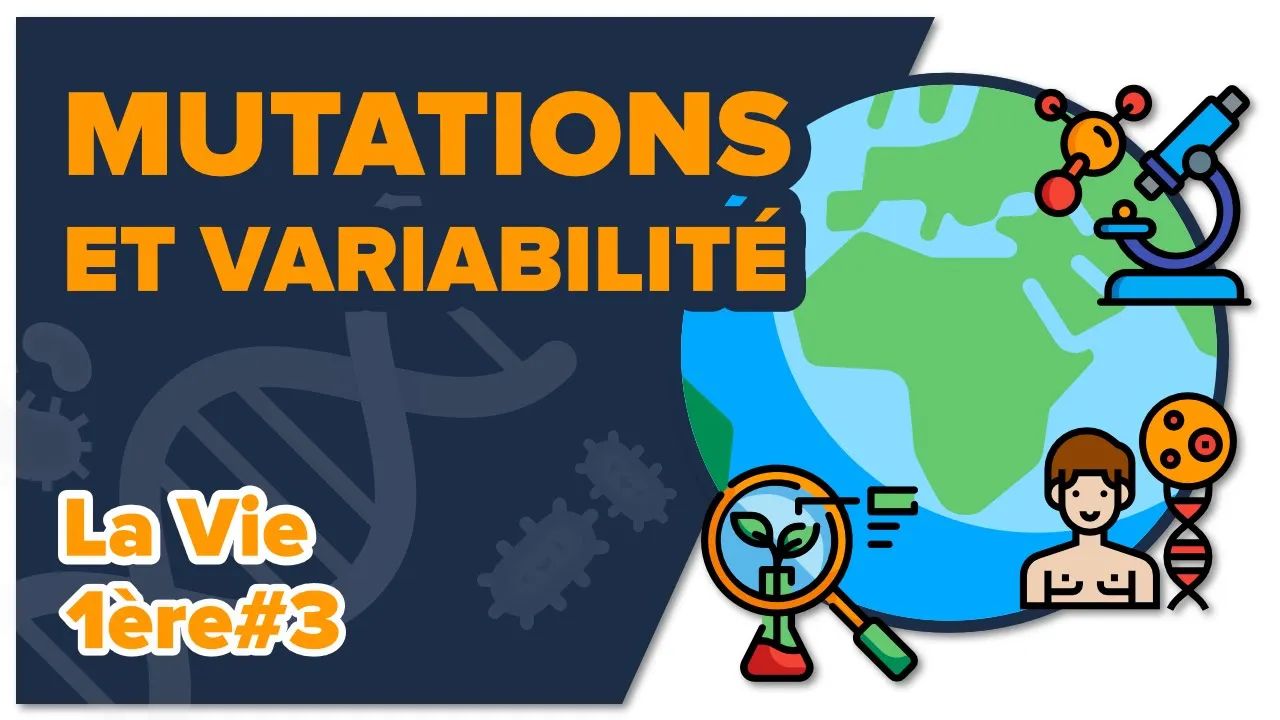
Mutations de l'ADN et variabilité génétique -SVT - LA VIE 1ère spé #3 - Mathrix
260K
DNA is a double helix composed of two polynucleotide chains containing genetic code organized into genes. During S phase (synthesis), DNA replicates semi-conservatively using enzymes including DNA polymerase, which has an error rate of approximately 1 error per 10,000 nucleotides. Cells are categorized as prokaryotic (DNA in cytoplasm) or eukaryotic (DNA in nucleus). Mutations arise from two sources: endogenous (spontaneous errors during replication) and exogenous (external agents called mutagens). This foundational understanding explains how genetic information is transmitted and how variations emerge in biological systems.
Click to watch →
🚨 أقوى مراجعة DNA في الجمهورية لكل المستويات 🔥 |كل حاجة عن DNA في فيديو واحد | احياء 3 ثانوى 2026
230
DNA (deoxyribonucleic acid) is a double helix molecule composed of two antiparallel strands made of nucleotides, each containing a deoxyribose sugar, a phosphate group, and a nitrogenous base (adenine, thymine, guanine, or cytosine). The bases pair specifically (A-T with 2 hydrogen bonds, G-C with 3 hydrogen bonds), forming the rungs of the DNA ladder. DNA replication is semi-conservative, occurring before cell division through the coordinated action of enzymes: helicase unwinds the double helix, primase synthesizes RNA primers, DNA polymerase builds new strands in the 5' to 3' direction, DNA polymerase I removes primers and replaces them with DNA, and DNA ligase seals the fragments. Mutations are changes in genetic material that can be gene mutations (substitutions, insertions, deletions) or chromosomal abnormalities (nondisjunction, translocations, inversions), which may be spontaneous or induced and can affect phenotype depending on whether they occur in somatic or germline cells.
Click to watch →

Am I a Mutant? - Allison Woollard's 2013 Christmas Lectures 2/3
651
DNA consists of two antiparallel strands forming a double helix, with four nucleotide bases (A, T, C, G) that pair specifically (A-T, C-G). During replication, the DNA unwinds and each strand serves as a template for synthesizing a complementary strand, ensuring faithful genetic transmission. However, replication errors called mutations can occur—tiny changes in the DNA sequence that alter genetic instructions. These mutations, though seemingly minor, can accumulate and significantly impact an organism's characteristics over generations.
Click to watch →
Deep Dive
The concept of ionizing radiation and how high-energy particles interact with atoms and molecules.
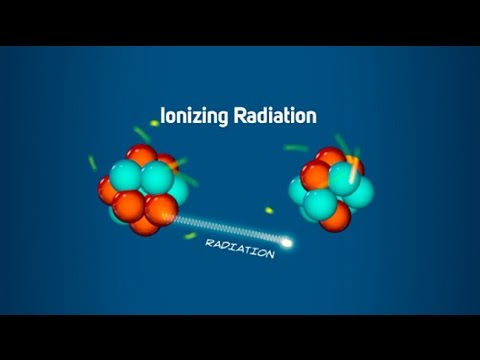
Ionizing Radiation Explained: Risks, Exposure, and Safety
230.7K
Ionizing radiation is energy given off by radioactive materials that has much more energy than low-energy radiation from radio waves, cell phones, and microwaves. This high-energy radiation can interact with and change atoms and molecules. In contrast, low-energy radiation like radio waves, cell phones, and microwaves are called non-ionizing radiation because they lack sufficient energy to cause such molecular changes.
Click to watch →

Learning About Radiation And Geiger Counters - With Radiacode RC 110
3.6K
Ionizing radiation is high-energy radiation capable of stripping electrons from atoms and molecules. This distinguishes it from non-ionizing radiation like radio waves, microwaves, and visible light. Ionizing radiation includes alpha particles, beta particles, gamma rays, X-rays, and cosmic rays. The key characteristic is its ability to ionize atoms by removing electrons, which is why it can cause biological damage.
Click to watch →

Physics for Future Presidents: Lec 06 - Radioactivity II
2.1K
Ionizing radiation consists of charged particles (alpha/beta) or high-energy photons (gamma/X-rays) that carry sufficient energy to knock electrons off atoms, creating ion pairs along their path. This ionization process damages biological molecules including DNA. The key distinction is between ionizing radiation (which directly damages tissue) and colliding radiation (which transfers energy to electrons, potentially causing indirect damage). Alpha particles (helium nuclei) are stopped by cardboard, beta particles (electrons) by thin metal, while gamma rays penetrate deeply and require thick lead shielding.
Click to watch →
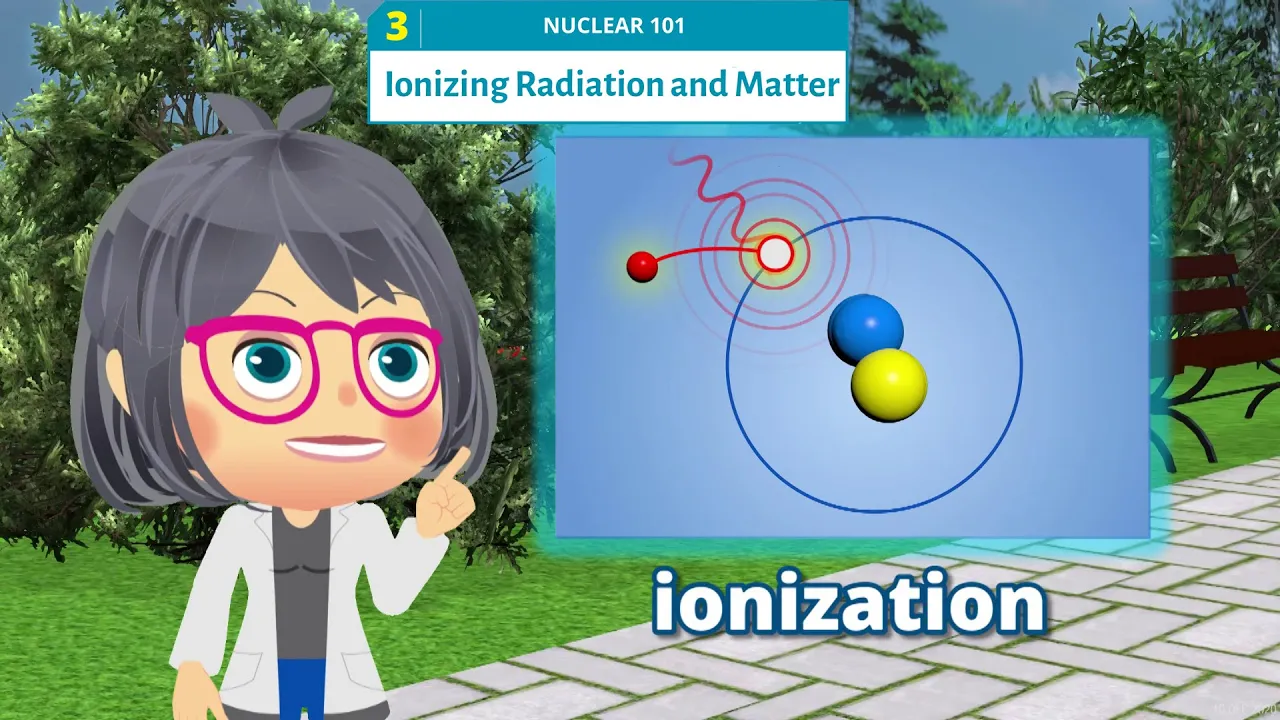
NUCLEAR 101 Topic 3 - Ionizing Radiation and Matter
3.4K
Ionizing radiation interacts with matter through three mechanisms: excitation (electron absorbs energy but stays bound), ionization (electron escapes the atom), and radiative losses (energy emitted as radiation). Atoms consist of a nucleus with protons and neutrons, surrounded by electrons in quantized energy levels. When radiation energy matches or exceeds electron binding energy, ionization occurs, potentially causing biological damage. Everyday natural background radiation poses minimal danger, but high-dose exposure can disrupt molecular structures in living tissues.
Click to watch →

Chapter 9 - Electrons in Atoms and the Periodic Table
820
X-rays and gamma rays are called ionizing radiation because their high-energy photons can ionize atoms and molecules. When ionizing radiation interacts with biological molecules, it can permanently change or destroy them. This property makes ionizing radiation both dangerous and medically useful, depending on its application and dosage.
Click to watch →
Deep Dive
Fundamentals of phase transitions, specifically supersaturation and condensation, which govern cloud chamber operation.

Uranium Ore in My Homemade Cloud Chamber
94.2K
The fundamental principle of a cloud chamber relies on supersaturation. Alcohol evaporates from a felt pad onto the cold bottom plate, cooling and becoming less soluble in the air. This creates a metastable state where the vapor wants to condense but needs nucleation sites. Radioactive decay particles provide this missing energy, allowing vapor to condense into visible trails.
Click to watch →

How to Build and Use a Cloud Chamber
58.5K
The cloud chamber operates on the principle of supersaturation. The dry ice cools the evaporated alcohol vapor, creating a supersaturated layer approximately half an inch above the bottom surface. This supersaturated layer functions similarly to clouds in Earth's atmosphere—when a jet flies through clear sky under right conditions, a contrail forms behind it. Similarly, when ionized particles pass through the supersaturated alcohol vapor in the cloud chamber, they ionize the alcohol atoms, causing other alcohol atoms to condense around these ions and produce visible cloud tracks.
Click to watch →
![26 수능특강 [과학기술03] 윌슨의 구름상자 실험](https://i.ytimg.com/vi/CHR8BW1Omp4/maxresdefault.jpg)
26 수능특강 [과학기술03] 윌슨의 구름상자 실험
914
The cloud chamber is a device that creates artificial clouds by expanding air in a sealed container. When air is compressed and then rapidly expanded, the temperature drops, causing water vapor to condense into tiny droplets. These droplets form visible clouds that can be used to detect particles. Condensation nuclei are tiny particles or droplets in the air that serve as centers for water vapor to condense into liquid droplets. Without condensation nuclei, water vapor cannot easily condense into visible droplets even when the air is supersaturated. Supersaturated air contains more water vapor than it can normally hold at a given temperature and pressure, creating an unstable state where any condensation nuclei present will cause rapid condensation.
Click to watch →
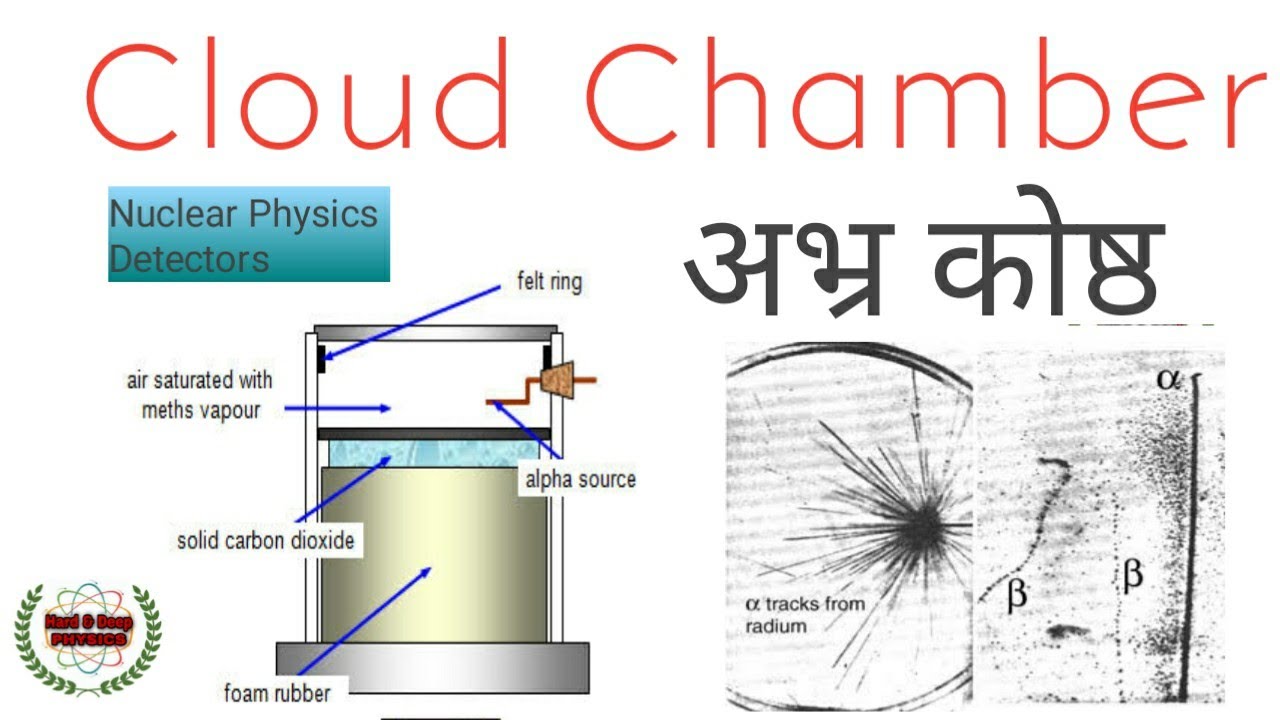
Cloud Chamber।। अभ्रकोष्ठ।। by Hard&Deep Physics with Hardeep Sir।।
195
A Cloud Chamber consists of a chamber filled with supersaturated vapor, a rapidly movable piston, an electric field for droplet removal, cameras for 3D photography, and a light source for illumination. The operation cycle involves: rapid piston compression (adiabatic heating), rapid piston expansion (adiabatic cooling), gas cooling below dew point creating supersaturated vapor, charged particles passing through creating ionization tracks, condensation droplets forming along tracks, and electric field removing residual droplets. The adiabatic expansion causes internal energy decrease and temperature drop, causing supersaturated vapor to condense into liquid droplets around ions created by passing charged particles.
Click to watch →
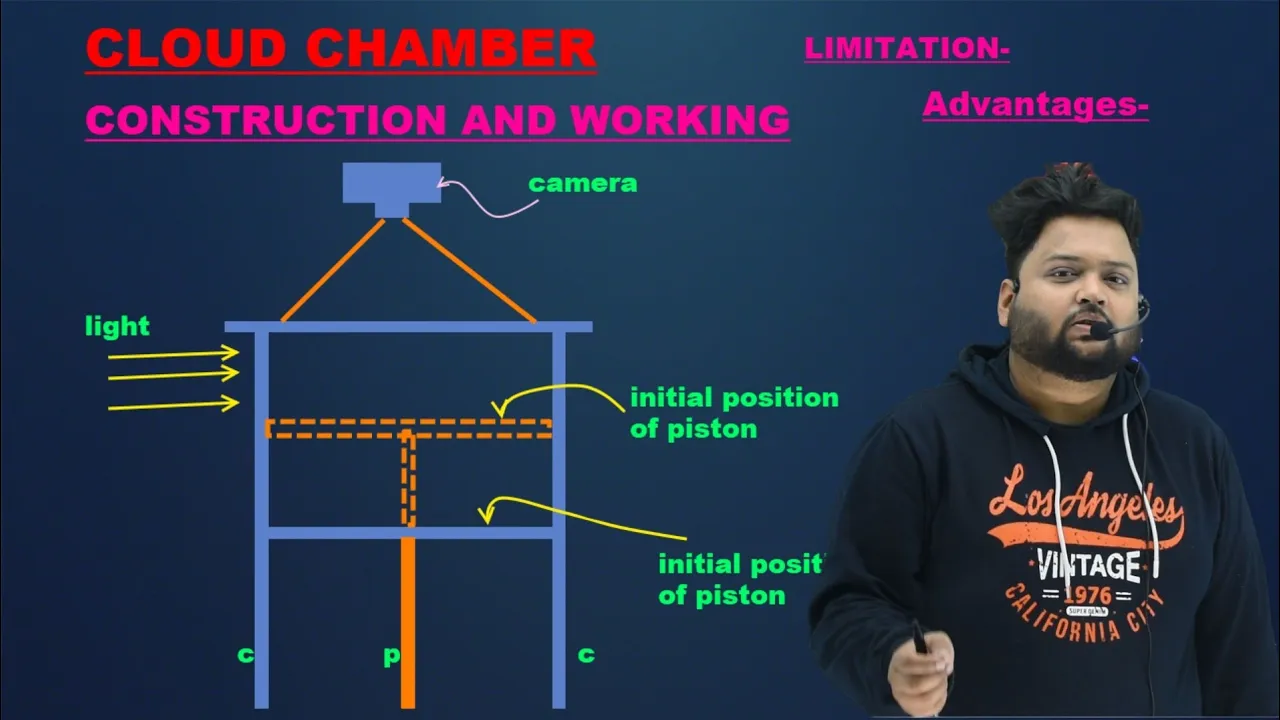
WILSON CLOUD CHAMBER || PRINCIPLE, CONSTRUCTION, WORKING OF WILSON CLOUD CHAMBER || WITH EXAM NOTES
3.5K
The cloud chamber operates by maintaining high pressure inside the chamber with air saturated with liquid vapor. When the piston moves down rapidly, the pressure drops suddenly, causing the temperature of the liquid to fall. This adiabatic expansion creates a supersaturated vapor state where condensation occurs immediately upon ionization by passing charged particles, forming visible droplet trails along the particle's path.
Click to watch →
Deep Dive
An introduction to subatomic particles (such as protons, electrons, and muons) and the origin of cosmic rays from deep space.
Protons, Neutrons, and Electrons (Intro to Subatomic Particles!)
108.2K
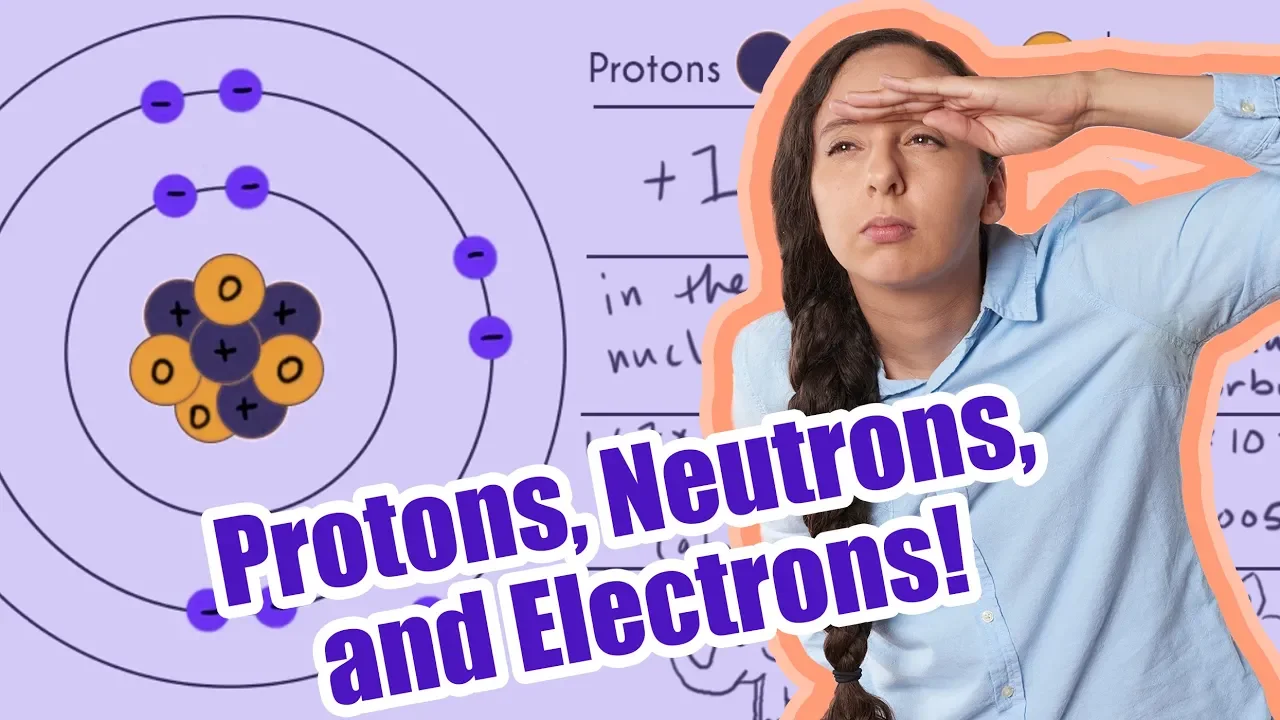
Atoms are composed of three subatomic particles: protons (positive charge, located in the nucleus, mass = 1 amu), neutrons (neutral charge, located in the nucleus, mass = 1 amu), and electrons (negative charge, orbiting the nucleus, mass ≈ 0.0005 amu); since protons and neutrons are approximately 1,836 times heavier than electrons, almost all atomic mass comes from the nucleus, and atoms remain electrically neutral when the number of protons equals the number of electrons.
Click to watch →
CONSTRUÍ UN DETECTOR DE RADIACIÓN Y RAYOS CÓSMICOS
138.2K
Cosmic rays are highly energetic particles, primarily protons, accelerated to relativistic speeds by electromagnetic fields in stars. Only particles from outside our solar system qualify as cosmic rays; solar particles are called solar wind. Earth protects us through its magnetic field, iron core, and atmosphere. In 1991, an 'OMG' cosmic ray was detected with energy equivalent to a baseball at 94 km/h concentrated in a single proton. These particles originate from supernovae and quasars, can penetrate atmosphere and rocks, and can damage genetic material. When entering Earth's atmosphere, they collide with atoms at extreme energies, disintegrating protons and neutrons into quarks. Quarks prefer to exist in groups of two or three, forming stable protons and neutrons. When separated by sufficient energy, quarks materialize into new particle pairs, demonstrating energy-to-matter conversion. Muons form high in the atmosphere from decaying pions and kaons, with a half-life of 2.2 microseconds. Despite this short lifetime, muons reach Earth's surface due to time dilation at relativistic speeds, where time passes more slowly for them relative to stationary observers.
Click to watch →
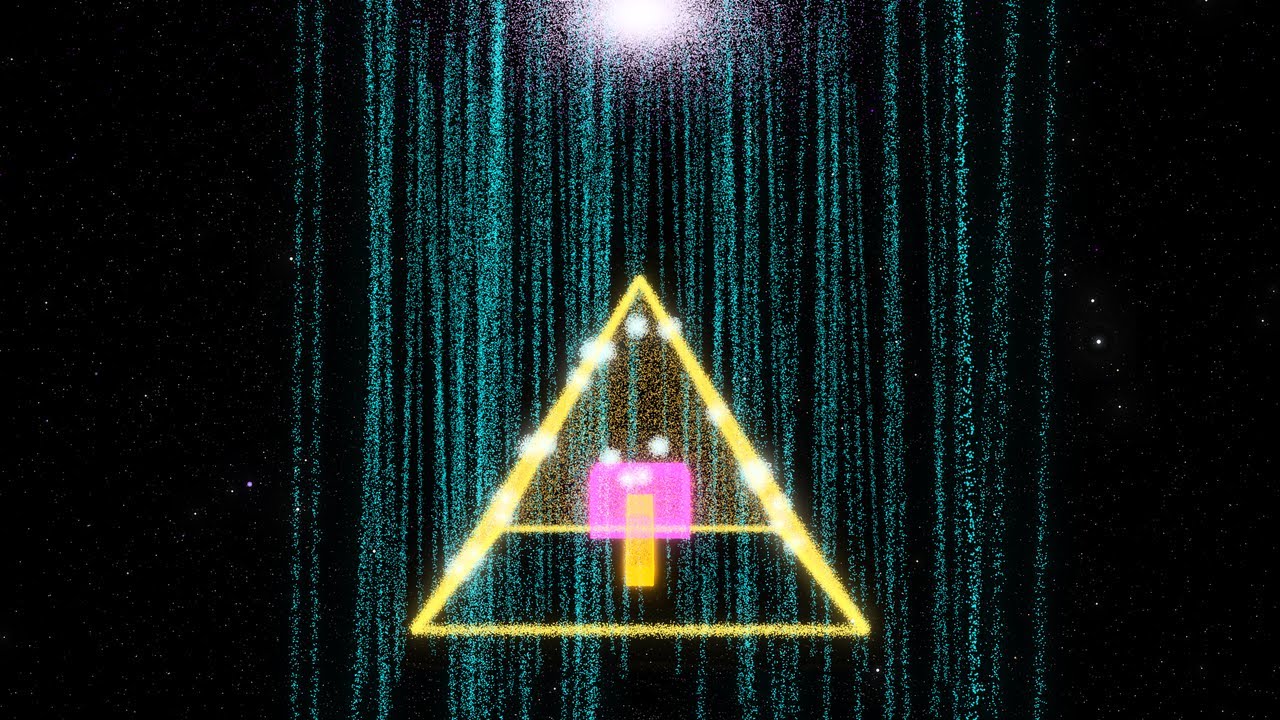
Muography: how cosmic rays see inside the Pyramids?
200
Humans are constantly bombarded by approximately 1,000 muons per minute from space. These particles originate from supernovae—violent stellar explosions that scatter subatomic particles at near-light speeds across cosmic distances. When cosmic ray protons collide with nitrogen molecules in Earth's upper atmosphere at velocities approaching 300,000 km/s, they release enormous energy that transforms into new matter according to E=mc². This collision produces pions, which subsequently decay to create muons. This continuous cosmic bombardment has been occurring since the formation of our galaxy.
Click to watch →

فیزیا - بهشی 5 - وانهی پێنجەم
72K
This video introduces the three fundamental subatomic particles that make up atoms: protons (positively charged particles found in the nucleus), neutrons (neutral particles also found in the nucleus), and electrons (negatively charged particles that orbit around the nucleus). The instructor explains that these particles are the building blocks of all matter and discusses their basic properties and locations within atoms.
Click to watch →
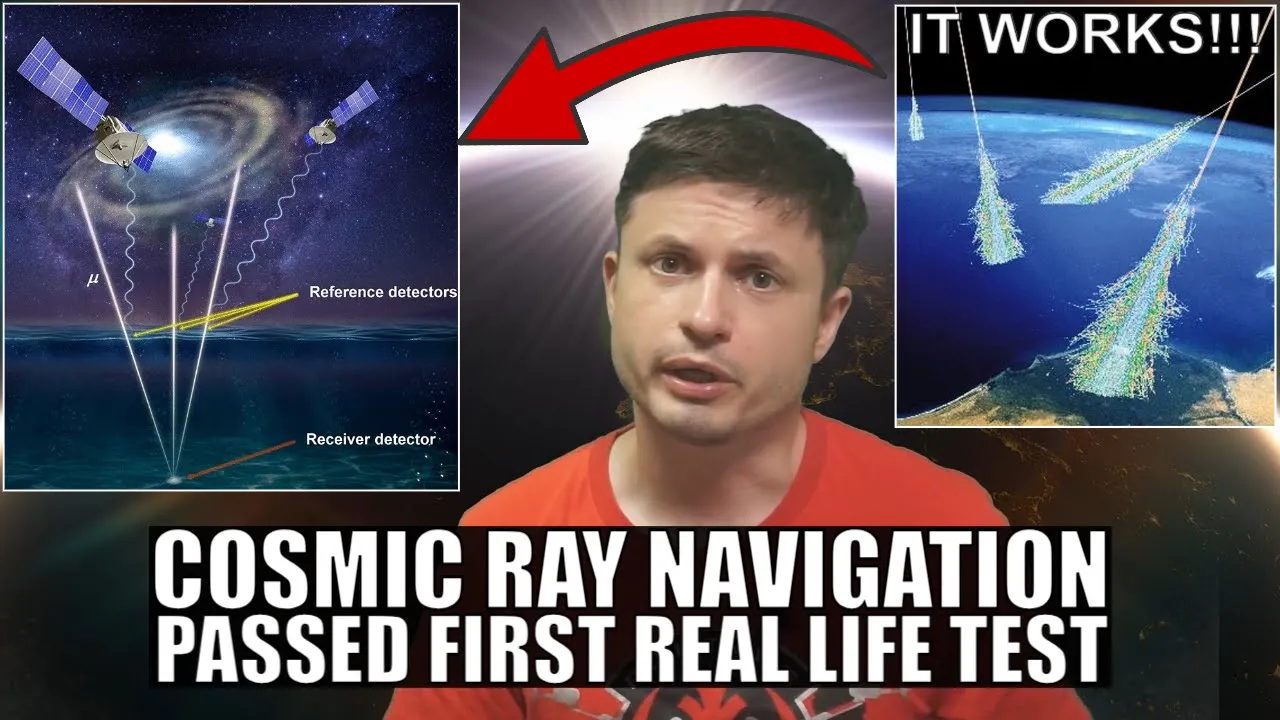
First Real Life Test of Cosmic Rays In Navigation...It Worked!
92.2K
Muons originate from cosmic rays, which are primarily fast-moving protons or hydrogen nuclei from outer space. When these cosmic rays strike atmospheric atoms (oxygen, nitrogen, or carbon), they initiate a cascade called an air shower, producing numerous subatomic particles including muons. These particles retain much of the original cosmic ray's energy and direction while transforming into different types of particles throughout the process.
Click to watch →
Prerequisite Knowledge
- Concept 01Basic understanding of DNA structure, replication, and how genetic mutations occur.
- Concept 02The concept of ionizing radiation and how high-energy particles interact with atoms and molecules.
- Concept 03Fundamentals of phase transitions, specifically supersaturation and condensation, which govern cloud chamber operation.
- Concept 04An introduction to subatomic particles (such as protons, electrons, and muons) and the origin of cosmic rays from deep space.
Subsequent Learning
- Step 01The evolution of particle detection technology, from historical cloud chambers to modern bubble chambers and silicon trackers used at CERN.
- Step 02The role of background and cosmic radiation in long-term biological evolution, specifically its contribution to the baseline rate of genetic variation on Earth.
- Step 03Space radiation hazards and the engineering of advanced shielding technologies to protect astronauts and electronics during deep-space missions.
- Step 04Astrobiology and the study of how planetary magnetospheres and atmospheres protect potential alien life from harmful cosmic rays.
Cloud Chamber
Mutation Source
Cloud Chamber
0:03Playing Section
- 1
Explains how cosmic rays reveal DNA variation origins.
- 2
Demonstrates a particle detector using alcohol vapor and dry ice.
- 3
Shows vapor trails marking cosmic ray impacts from space.
Endogenous Factors and DNA Replication Errors as Primary Mutation Drivers
While cosmic rays detected by cloud chambers certainly cause DNA mutations, evolutionary biology and genetics suggest their role in driving natural mutations is relatively minor. The vast majority of spontaneous mutations in living organisms are caused by endogenous (internal) processes rather than exogenous cosmic radiation. These internal drivers include DNA replication errors by polymerases, spontaneous chemical degradation (such as deamination of bases), and oxidative damage from reactive oxygen species produced during normal cellular metabolism. Additionally, at Earth's surface, terrestrial background radiation from isotopes like Potassium-40 and Radon-222 contributes far more to radiation-induced mutations than cosmic rays. Therefore, emphasizing cosmic rays as a primary driver of biological mutation oversimplifies the diverse and predominantly internal mechanisms that shape genetic variation and evolution.
Deep Dive
The evolution of particle detection technology, from historical cloud chambers to modern bubble chambers and silicon trackers used at CERN.
Wie die verborgene Realität der Materie, enttarnt wird.
9.9K
Particle detectors visualize subatomic particles by detecting traces they leave in materials. Cloud chambers, developed over a century ago, use gas that condenses when ionized by charged particles, creating visible droplet tracks. Magnetic fields cause charged particles to curve, revealing their charge and momentum. In the 1930s, cloud chambers led to discoveries of the positron, muon, and tau. Bubble chambers, developed in the 1950s, use liquid that forms steam bubbles along particle paths. Multi-wire proportional chambers (1968) revolutionized detection by recording millions of tracks per second, enabling discoveries of the charm quark, gluon, and W/Z bosons. Time projection chambers with liquid argon provide 3D high-resolution imaging. Cherenkov radiation detects particles moving faster than light in a medium. Modern detectors at CERN integrate multiple technologies within strong magnetic fields, using computers to reconstruct collision events.
Click to watch →

An Amazing Trip to CERN (Experiments and Library)
271
Particle detection technology evolved from early cloud chambers used in high-altitude balloon experiments to sophisticated underground detectors at CERN. Cloud chambers allowed physicists to photograph radiation tracks by observing ionization effects in supersaturated vapor, revealing particle paths similar to aircraft contrails. The synchrotron accelerator represented an early breakthrough, using large electromagnets to steer electrons in circular paths, demonstrating controlled particle beam manipulation. This evolution enabled reproducible experiments compared to unpredictable cosmic ray observations, fundamentally transforming how physicists study fundamental particles and their interactions.
Click to watch →
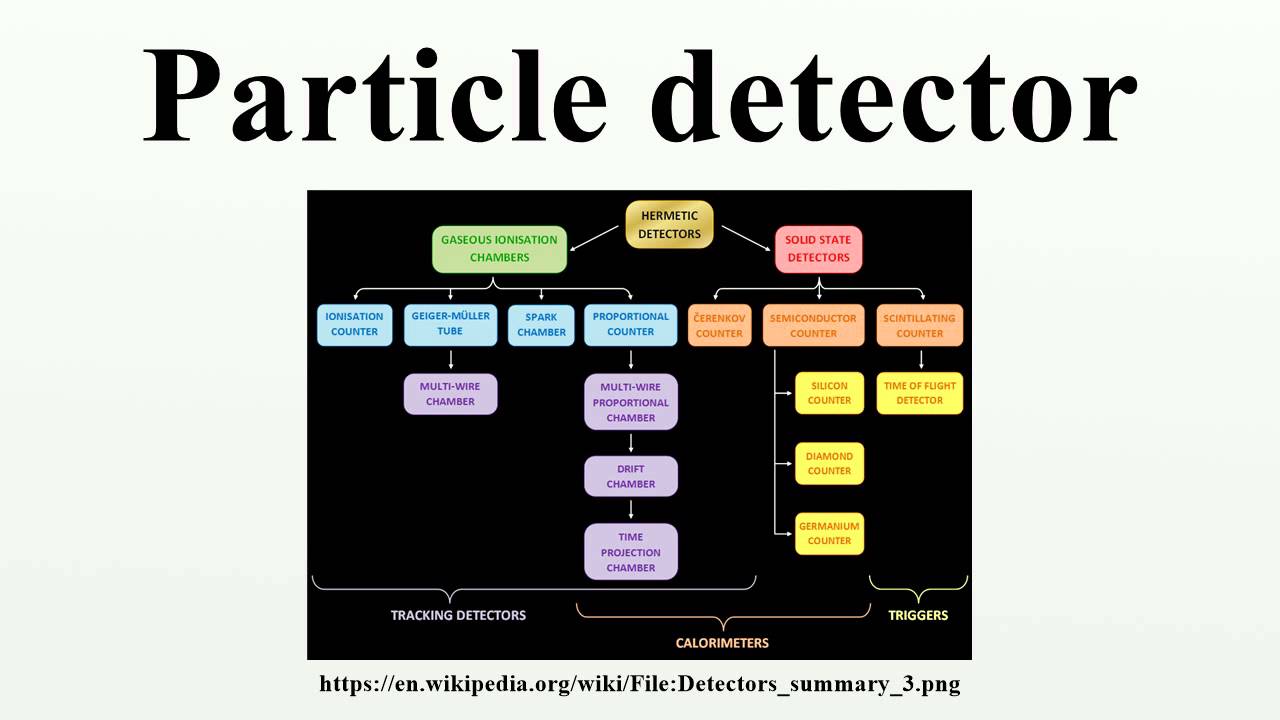
Particle detector
113
Particle detectors (radiation detectors) detect, track, and identify high-energy particles from nuclear decay, cosmic radiation, or particle accelerators. Modern detectors serve dual roles as calorimeters measuring radiation energy and can determine particle attributes like momentum, spin, and charge. The terminology distinguishes 'counters' (which count particles without resolving energy/ionization) from general detectors. Historical development progressed from ionization and scintillation detectors to advanced principles like Cherenkov light and transition radiation. Early examples include bubble chambers, Wilson cloud chambers, and photographic plates. Modern layered detector systems combine multiple technologies in hierarchical structures, exemplified by collider experiments like CMS, ALICE, and LHCb at CERN, along with non-collider applications such as Super Kamiokande and AMANDA for neutrino and dark matter research.
Click to watch →

UKRN webinar: OpenMAPP UK - Meta-Analysis and reinterpretation in particle physics
282
Particle detection evolved from cloud chambers (CTRW Wilson, Scotland) to sophisticated silicon detectors. Modern detectors like ATLAS (20m high, 40m long) have layered systems measuring different particle properties. The LHC is a 27km tunnel at CERN accelerating protons to unprecedented energies. Events showing asymmetric particle distributions may reveal dark matter production. This technological progression demonstrates how increasingly complex instrumentation reveals fundamental physics, with each generation enabling deeper exploration of cosmic structure.
Click to watch →

How progress is made in fundamental science - cutting-edge instrumentation - W. Riegler
979
Particle detection evolved from Wilson's cloud chamber to sophisticated modern instruments. Early electronic coincidence experiments proved the anti-proton's existence and detected neutrinos through characteristic signal fingerprints. Modern LHC detectors produce one billion collisions per second, requiring sophisticated trigger systems reducing rates to 5,000-10,000 events per second. Unlike early discoveries where single events provided clear signatures, modern searches require statistical analysis of many events. New particles appear as bumps above irreducible background in invariant mass plots. This evolution demonstrates how detector technology has scaled dramatically while maintaining fundamental principles of electromagnetic interactions between particles and matter.
Click to watch →
Deep Dive
The role of background and cosmic radiation in long-term biological evolution, specifically its contribution to the baseline rate of genetic variation on Earth.

moistcr1tikal reacts The Universe is Hostile to Computers
197.3K
In the history of Earth, cosmic rays may have played a larger role in evolution by flipping bits not in electronics but in the genetic codes of living organisms. These mutations provided some of the variation on which natural selection acts. This suggests that cosmic rays have been a constant factor in biological evolution, potentially contributing to genetic diversity over millions of years through random mutations caused by radiation exposure.
Click to watch →
Le Rayonnement Cosmique, quand l'univers nous tire dessus
460.1K
Cosmic rays may influence biological evolution by increasing mutation rates in living organisms. Since cosmic ray particles sometimes originate at the far reaches of the universe and can reach Earth's surface, they may occasionally penetrate deep enough to affect DNA within organisms. This raises the possibility that cosmic radiation has played a role in shaping evolutionary paths of species throughout Earth's history.
Click to watch →
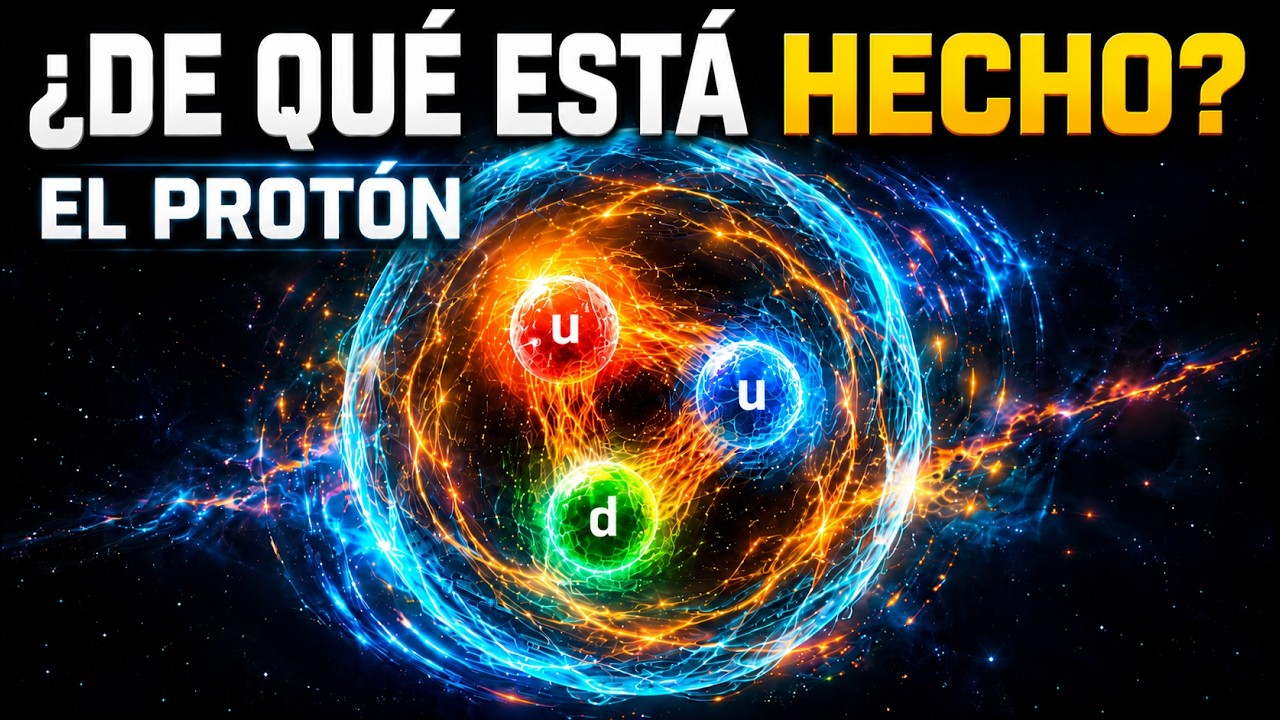
Qué Es Realmente un Protón… Y Por Qué Es Principalmente Energía
132
Although we are not consciously aware of it in our daily lives, this quantum rain of secondary particles is bombarding us constantly at this very moment. If you extend the palm of your hand toward the sky, several muons created by impacts of distant cosmic protons are passing through it right now, crossing your cells and subtly altering the molecular environment before burying themselves deeply in Earth's rocky crust. This natural ionizing radiation background has been one of the invisible engines of biological evolution throughout the history of life, inducing occasional genetic mutations in the DNA of living organisms.
Click to watch →
Cosmic Calm: Drift into Universal Peace for Deep Sleep & Revival
512
Mutations in DNA that are seen on Earth are sometimes caused by cosmic rays. Supernova and other occurrences that occur in space are the sources of cosmic rays, which are particles that possess a great deal of energy. When they collide with the atmosphere of the Earth, they generate showers of secondary particles that make their way to the surface. On occasion, these particles can infiltrate living creatures, which can lead to DNA alterations. The majority of mutations are either innocuous or are fixed, however, there are a few that play a part in the evolution and genetic variety of species. The biological history of Earth is connected to the cosmos at large by the continuous reign of cosmic rays.
Click to watch →
Lec21 You'll Always be a Star
215
The radiation from supernovae causes mutations by breaking DNA bonds. While most mutations are harmful, occasionally they are beneficial. This steady source of cosmic radiation provided the right pace of genetic mutations throughout Earth's history - not too much to kill off all life, but not too little to prevent beneficial mutations. This radiation was essential for the evolution of new species. We are literally 'star stuff' - the carbon in our hands and oxygen in our lungs were forged in stars, while the iron in our blood came from stellar deaths. We are chemically and genetically tied to the universe.
Click to watch →
Deep Dive
Space radiation hazards and the engineering of advanced shielding technologies to protect astronauts and electronics during deep-space missions.
The Tech We Need to Colonize the Solar System
332.1K
Beyond Earth's magnetosphere, radiation becomes a major hazard. On Earth, annual radiation exposure is about 3 millisieverts, equivalent to about three chest X-rays, allowing the body time to recover. On the moon, dosage increases 200 times. Solar particles and cosmic radiation damage DNA, causing acute symptoms like fever, nausea, and vomiting, plus long-term problems like cancer and sterility. Most space agencies put a lifelong radiation cap around 1,000 millisieverts, permanently grounding astronauts who exceed it.
Click to watch →
5 MOTIVOS PARA NÃO IR PARA MARTE!
2.4M
Spacecraft can be protected against radiation using materials like aluminum and plastic (specifically PET plastic), which contains hydrogen that blocks space radiation. Another strategy involves using astronaut waste as radiation shielding by attaching it to the exterior of the spacecraft. This approach is already used on the International Space Station. Emerging technologies like boron nitride nanotubes (BNNTs) are being developed as flexible radiation shields that can also be used to construct buildings on Mars after arrival.
Click to watch →
How NASA Will Protect Astronauts From Space Radiation
134.8K
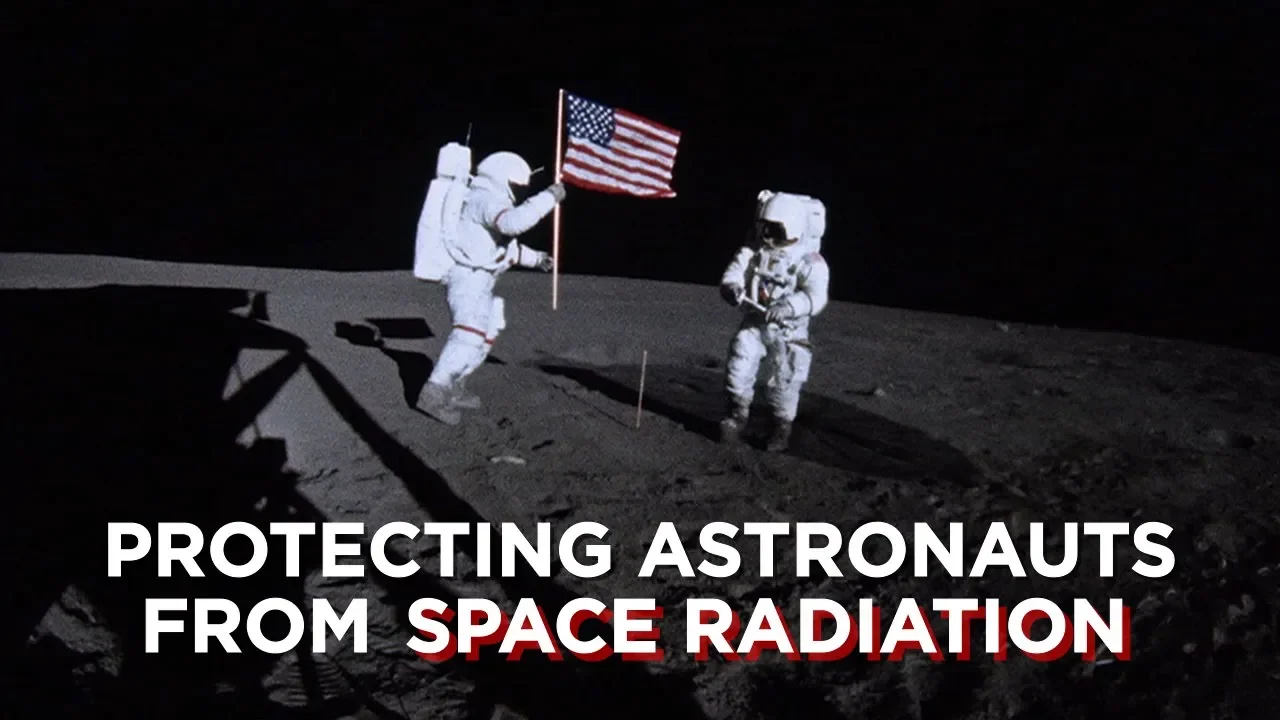
NASA protects astronauts from space radiation through predictive modeling of solar activity and strategic shielding; solar eruptions produce harmful solar energetic particles (SEPs) that can damage DNA and increase cancer risk, while galactic cosmic rays provide constant low-level radiation throughout space travel, making accurate forecasting and multi-layered protection systems essential for safe lunar and Mars missions.
Click to watch →
His Biggest Argument Against Science...Is a Drawing
22.8K
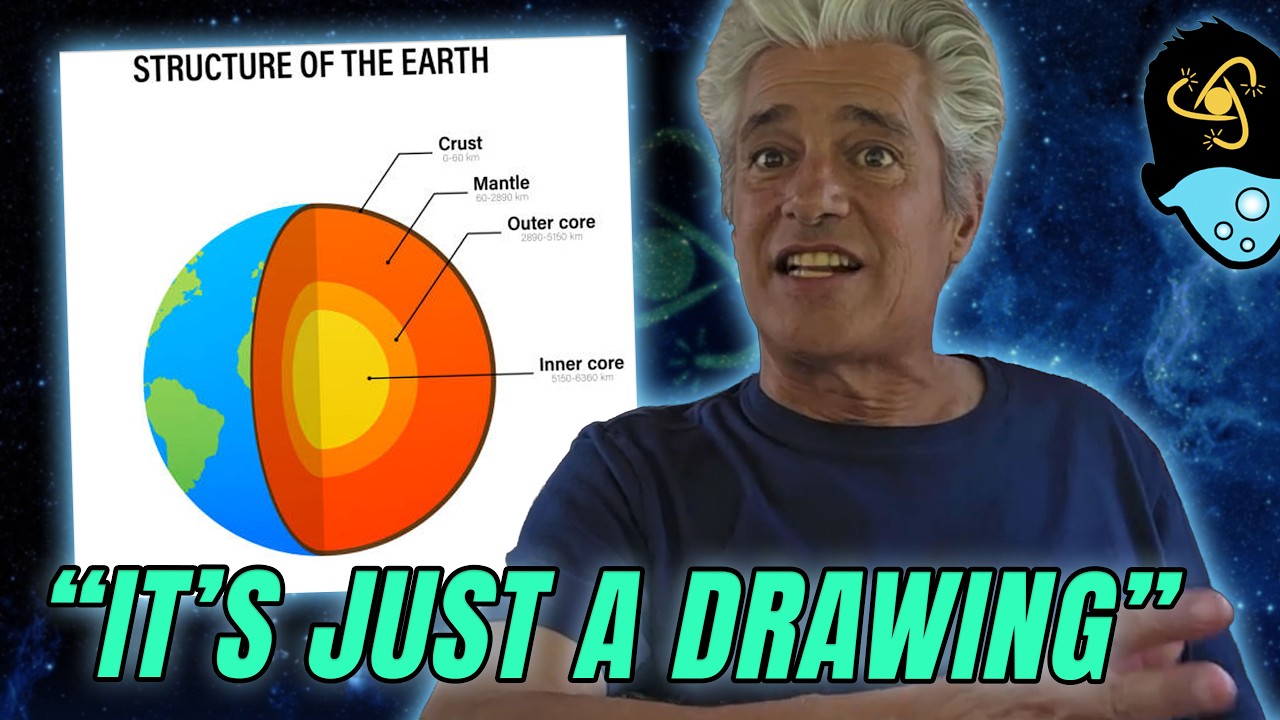
Different types of radiation require different shielding strategies. Lead is excellent for blocking X-rays and gamma rays on Earth, but in space, high-energy cosmic particles hitting heavy metals like lead can create secondary radiation, making the problem worse. Spacecraft are largely built from lightweight materials like aluminum, with water, fuel, and equipment positioned to provide additional shielding where most useful. The goal is reducing exposure to acceptable levels, not eliminating it entirely.
Click to watch →
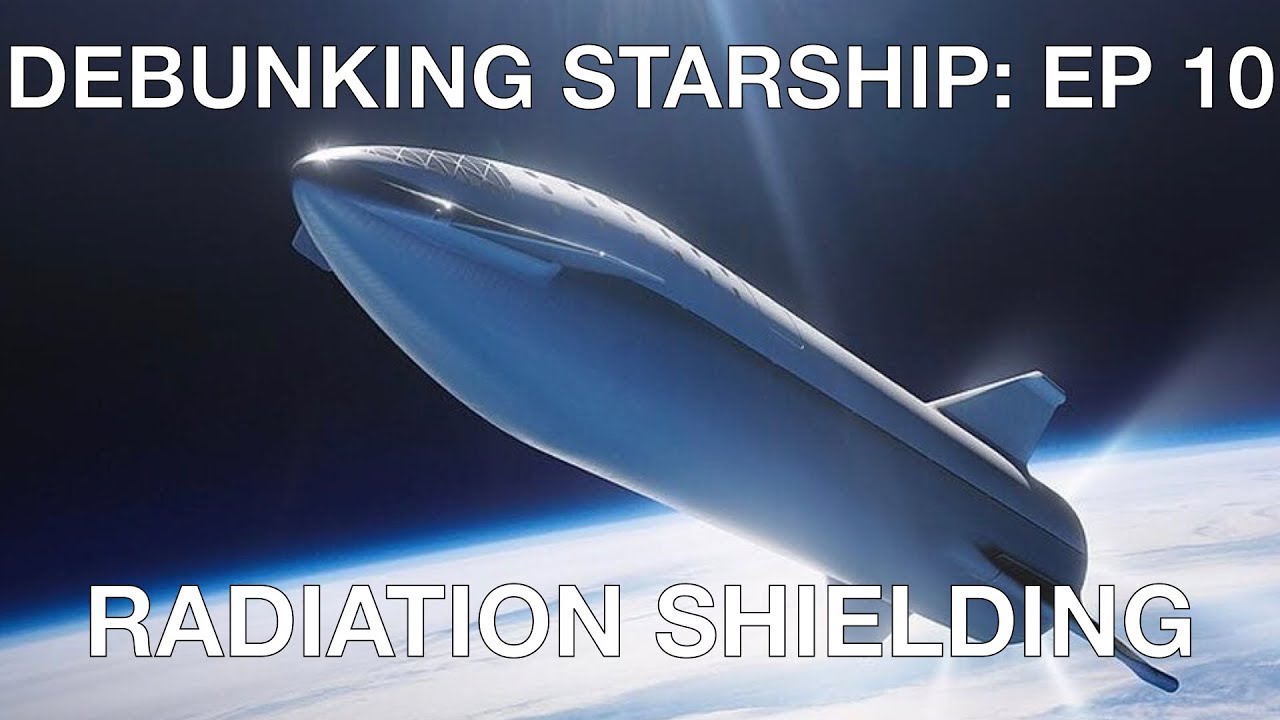
STARSHIP EP10 - RADIATION SHIELDING (1080p)
26.4K
Using SpaceX's Starship specifications (50m tall, 9m diameter, 100-ton payload), calculations demonstrate that a 50cm thick water shield surrounding the crew compartment would require 239 tons of water—exceeding the ship's total payload capacity and providing minimal radiation protection, as studies indicate 2 meters of water is needed to reduce galactic cosmic ray exposure by half.
Click to watch →
Deep Dive
Astrobiology and the study of how planetary magnetospheres and atmospheres protect potential alien life from harmful cosmic rays.
What Voyager Found at the Edge of the Solar System is Shocking
9K
The heliosphere acts as a protective shield against cosmic rays - high-energy particles from supernovae that can damage DNA and disrupt electronics. Without this protection, cosmic ray bombardment at Earth's surface would be significantly higher. Studies suggest mass extinctions may correlate with periods when the heliosphere was compressed by dense interstellar clouds. Every star with a stellar wind creates an astrosphere protecting its planetary system, with sizes varying based on stellar mass, age, and local conditions. For planets to be truly habitable, they may need to exist within sufficiently protective astrospheres - too small an astrosphere exposes planets to harmful cosmic rays, while too unstable an astrosphere creates fluctuating radiation environments.
Click to watch →
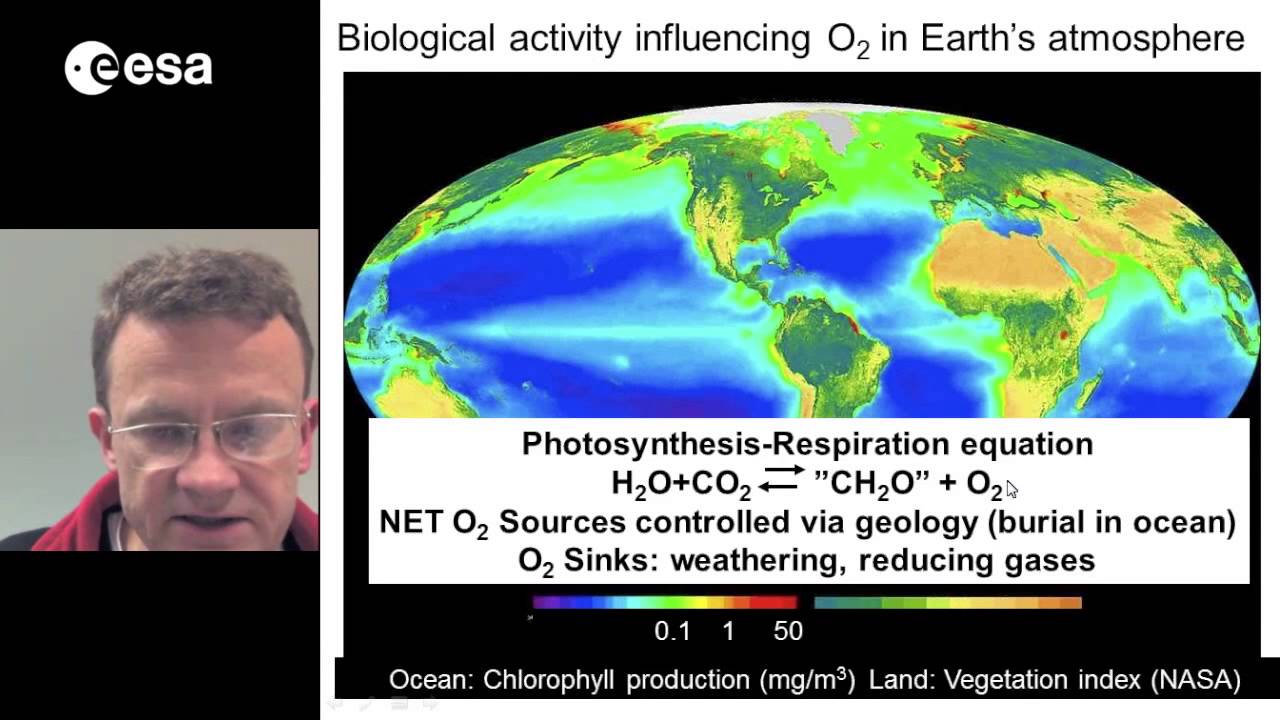
Atmospheric Biomarkers
1.3K
This section examines cosmic ray impacts on exoplanet atmospheres. Cosmic rays penetrate atmospheres and break N2 molecules into nitrogen atoms, which rapidly form NO. Increased cosmic ray flux (from active or flaring M dwarfs) dramatically increases NO production—up to 10,000× Earth levels. High NO levels destroy ozone through catalytic cycles, potentially eliminating the ozone biomarker even when life is present. Planetary protection from cosmic rays depends on magnetospheric shielding. Tidally locked planets face additional challenges: whether atmospheres can redistribute heat from hot day sides to cold night sides determines habitability. 3D modeling studies suggest most atmospheres can transfer sufficient heat, though cosmic ray exposure on the night side remains a concern for potential life.
Click to watch →

FYBA Topic-3 वातावरण (Atmosphere)
4.8K
Earth's magnetosphere protects the planet from harmful cosmic radiation by deflecting charged particles from the sun. This protective shield is essential for maintaining Earth's habitability and preventing damage to living organisms. The magnetosphere extends into space and works in conjunction with the atmosphere to provide comprehensive protection. This dual protection system is crucial for maintaining Earth's environmental conditions and supporting life.
Click to watch →

Stellar Magnetism and Lifeby Prof. Dibyendu Nandi (IISER, Kolkata)
244
All stars emit supersonic plasma winds carrying magnetic fields into interplanetary space. The magnetopause forms where Earth's magnetic pressure balances solar wind dynamic pressure, stopping stellar plasma from entering. This boundary lies 5-8 Earth radii out, far beyond our 60-km atmosphere, providing crucial protection. Without magnetospheres, atmospheres erode directly by stellar winds. Mars lost its global magnetosphere ~1.5 billion years ago and subsequently lost its atmosphere, now having only a 50-meter CO2 layer. This demonstrates that planetary magnetospheres are essential for atmospheric retention over geological timescales.
Click to watch →

초거주 가능 행성: 지구보다 더 나은 외계 낙원이 실제로 존재할까요? | 우주 다큐멘터리 - 유니버스 다큐멘터리
568.4K
A magnetosphere is a protective magnetic field generated by a planet's rotation and liquid metallic core. Earth's magnetosphere protects the planet from cosmic radiation and solar wind by deflecting charged particles. Without this protection, cosmic radiation could damage DNA and cause genetic mutations, while solar wind could strip away the atmosphere. A strong magnetosphere is therefore essential for protecting life on a planet.
Click to watch →
Cloud Chamber
Mutation Source
Cloud Chamber
0:03- 1
Explains how cosmic rays reveal DNA variation origins.
- 2
Demonstrates a particle detector using alcohol vapor and dry ice.
- 3
Shows vapor trails marking cosmic ray impacts from space.
Endogenous Factors and DNA Replication Errors as Primary Mutation Drivers
While cosmic rays detected by cloud chambers certainly cause DNA mutations, evolutionary biology and genetics suggest their role in driving natural mutations is relatively minor. The vast majority of spontaneous mutations in living organisms are caused by endogenous (internal) processes rather than exogenous cosmic radiation. These internal drivers include DNA replication errors by polymerases, spontaneous chemical degradation (such as deamination of bases), and oxidative damage from reactive oxygen species produced during normal cellular metabolism. Additionally, at Earth's surface, terrestrial background radiation from isotopes like Potassium-40 and Radon-222 contributes far more to radiation-induced mutations than cosmic rays. Therefore, emphasizing cosmic rays as a primary driver of biological mutation oversimplifies the diverse and predominantly internal mechanisms that shape genetic variation and evolution.
Basic understanding of DNA structure, replication, and how genetic mutations occur.
The concept of ionizing radiation and how high-energy particles interact with atoms and molecules.
Fundamentals of phase transitions, specifically supersaturation and condensation, which govern cloud chamber operation.
An introduction to subatomic particles (such as protons, electrons, and muons) and the origin of cosmic rays from deep space.
The evolution of particle detection technology, from historical cloud chambers to modern bubble chambers and silicon trackers used at CERN.
The role of background and cosmic radiation in long-term biological evolution, specifically its contribution to the baseline rate of genetic variation on Earth.
Space radiation hazards and the engineering of advanced shielding technologies to protect astronauts and electronics during deep-space missions.
Astrobiology and the study of how planetary magnetospheres and atmospheres protect potential alien life from harmful cosmic rays.
229.2K views3.3Klikes3:41@BBCOriginal Release: 2013-02-06
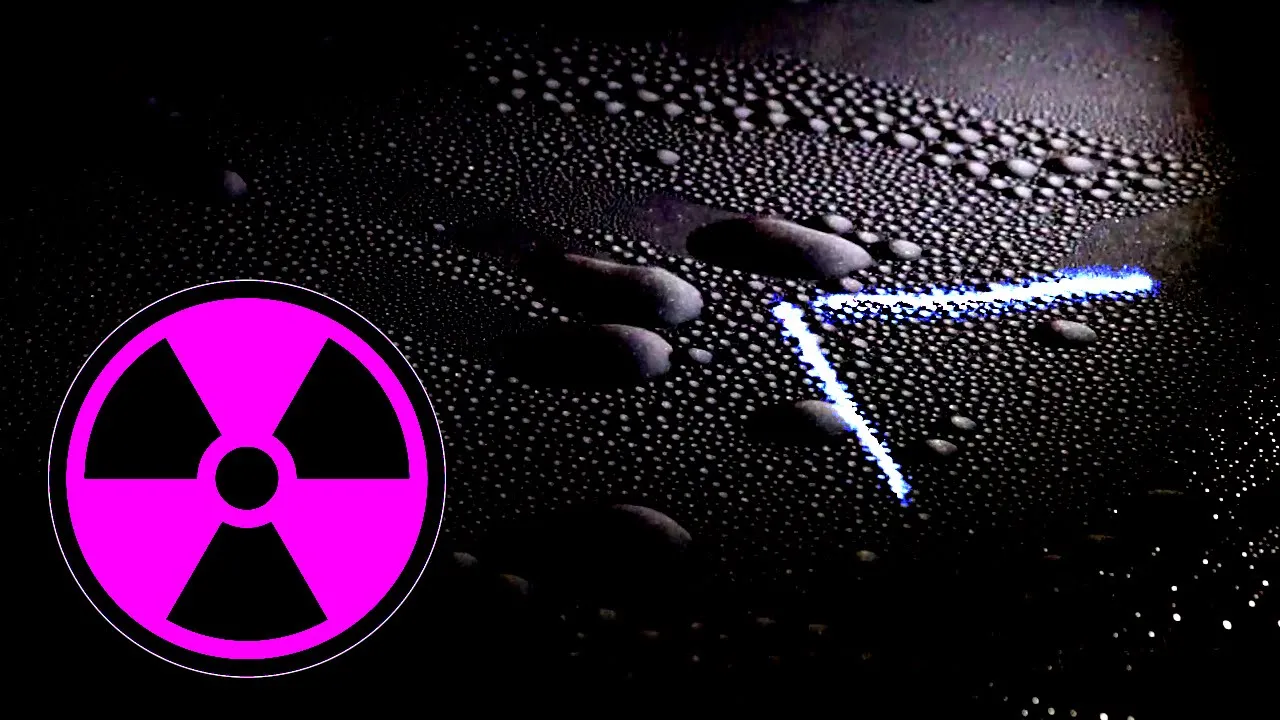
we now know that the answer to the question why is life on Earth so varied is actually the answer to the question why is the DNA molecule itself so varied what are the natural processes that cause the structure of DNA to change well part of the answer actually doesn't lie on Earth at all it lies up there amongst the stars and I can show you what I mean using this which is a cloud chamber a piece of apparatus that has a unique place in the history of physics I'm going to cool it down using dry ice frozen carbon dioxide just below - 70° c i put the top on you hear that that's the metal at the bottom of the tank cooling down very rapidly Min - 70 the cloud chamber works by having a super saturated Vapor of alcohol inside the chamber plenty on there now I want to get that alcohol I want to boil it off to get the vapor into the chamber so I'm going to put a hot water bottle on top I mean this is the first genuine particle physics detector it's the piece of apparatus that first saw antimatter and it really does consist only of a fish tank some alcohol a bit of paper and a hot water bottle [Music] there look at that you see that cloud that vapor trail that's a cosmic ray that was initiated by a particle probably a proton that hit the Earth's atmosphere it almost certainly originated outside our solar system and was accelerated by the magnetic fields of our galaxy it may even have begun its life beyond our [Music] galaxy now imagine if one of those hits the DNA of a living thing what that will do is cause a mutation that mutation may be detrimental or very very occas occasionally it might be beneficial and I think it's quite wonderful to imagine that maybe one of the key mutations that was selected for over the Millennia that led to some trait in me was caused by some particle that began its life perhaps in a massive Supernova explosion perhaps outside our galaxy and went and hit the DNA of something and cause some kind of beneficial mutation we don't know but you can dream can't you
Up Next

2:21
DIY Cloud Chamber with Peltier Cooler (No Dry Ice) | Particle Detection Demo
@Nothinglabs
6.2K views•2010-02-03

12:53
21cm Hyperfine Transition in Neutral Hydrogen: Radio Astronomy Basics
@AaronRobertParsons
12.4K views•2011-10-13

4:17
How Spectroscopy Reveals the Chemical Composition of Stars
@BBC
320.9K views•2011-03-11

27:14
Entropy and the Second Law of Thermodynamics Explained
@veritasium
27.5M views•2023-07-01
Related Study Plans & Knowledge Roadmaps
Structured learning paths in Physics
physics
Nuclear Physics (Decay, Fission & Reactors)
01Atomic Structure and the Binding Force
02Radioactive Decay and Half-Life
03Nuclear Fission Mechanics and Chain Reactions
+ 2 more learning modules
12h5 modules
Explore Roadmap
physics
Soft Matter (Polymers, Colloids & Rheology)
01Foundations of Soft Matter & Thermal Forces
02Polymer Physics and Macromolecules
03Colloids, Surfactants, and Self-Assembly
+ 2 more learning modules
38h5 modules
Explore Roadmap
physics
Analytical Mechanics: Lagrangian & Hamiltonian
01Mathematical Foundations: Calculus of Variations
02From Newtonian Mechanics to Constraint Dynamics
03The Principle of Least Action & Lagrangian Mechanics
+ 3 more learning modules
28h6 modules
Explore Roadmap
physics
General Relativity (Spacetime & Cosmology)
01Foundations of Relativity: Special Relativity
02The Geometry of Spacetime: Equivalence Principle & Curvature
03Einstein's Field Equations: The Mathematics of Gravity
+ 2 more learning modules
55h5 modules
Explore Roadmap