
























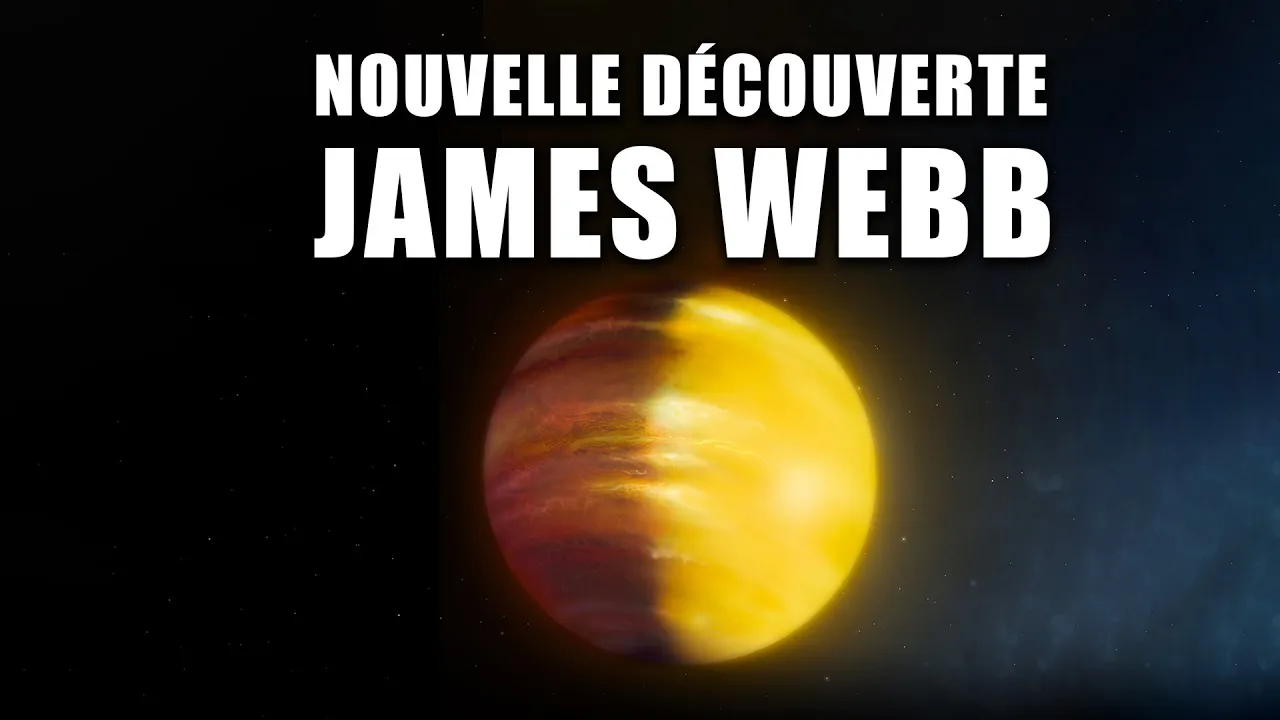
Astronomers use spectroscopy to determine what stars are made of by analyzing absorption lines in starlight, which appear as dark lines in a star's spectrum; each element absorbs light at specific wavelengths, creating a unique spectral fingerprint that allows scientists to identify the chemical composition of stars across the universe, revealing that while elemental abundances vary between stars, only the same 92 elements found on Earth exist throughout space.
How Spectroscopy Reveals the Chemical Composition of Stars
Added:The wave-particle duality of light and the organization of the electromagnetic spectrum, particularly the visible light range.
Basic atomic structure, specifically how electrons occupy distinct, quantized energy levels around a nucleus.
The mechanisms of photon emission and absorption that occur when electrons transition between different energy states.
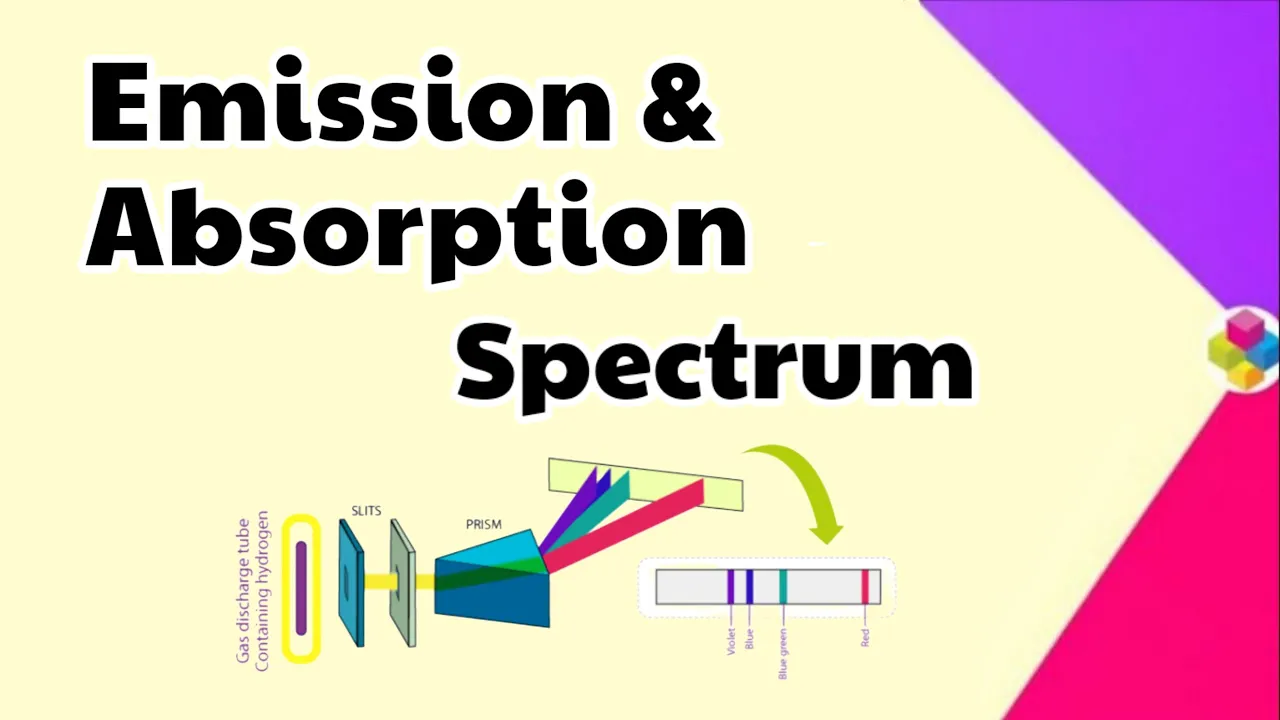
The fundamental differences between continuous, emission, and absorption spectra (Kirchhoff's laws of spectroscopy).
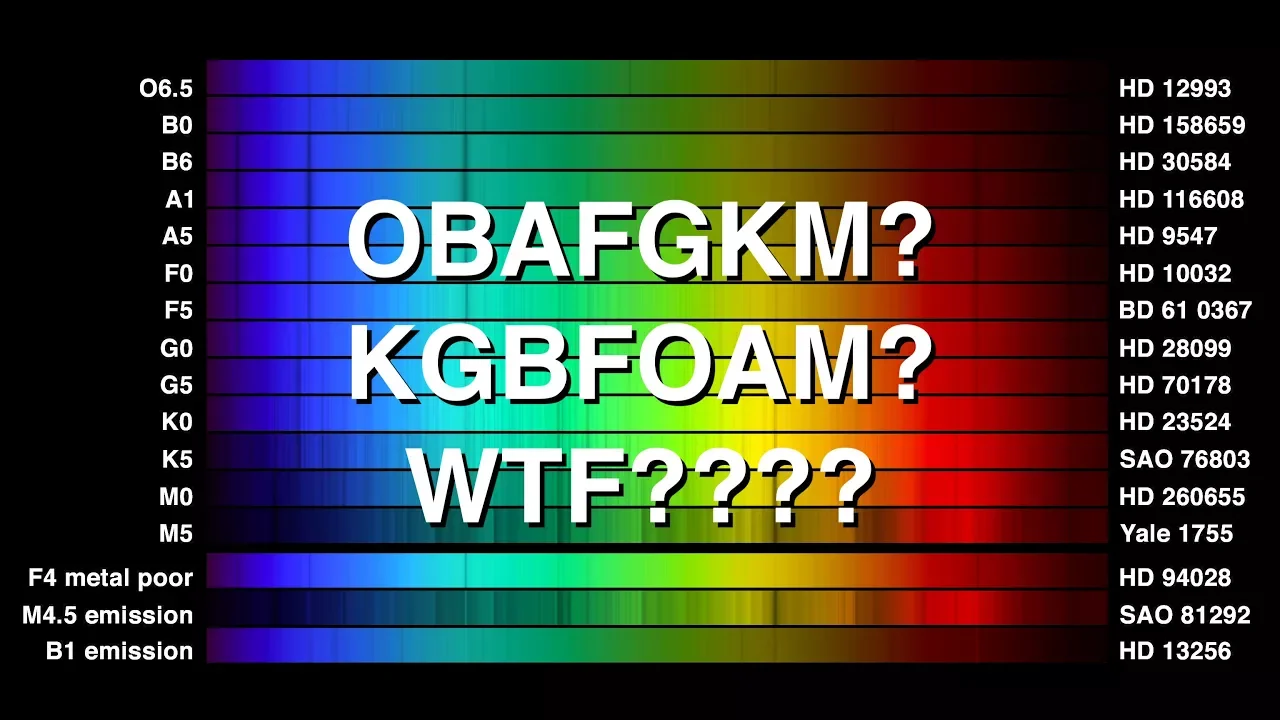
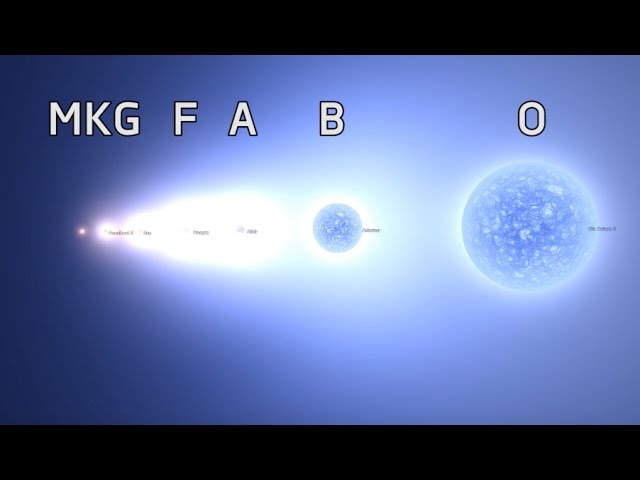
Stellar classification schemes (such as the Morgan-Keenan OBAFGKM system) based on spectral features and temperature.
The Doppler Effect and how redshift or blueshift in stellar spectra is used to measure radial velocity and detect exoplanets.
Stellar nucleosynthesis and chemical evolution, understanding how stars forge heavier elements (metals) throughout their lifecycles.
Using transmission spectroscopy to analyze the chemical composition of exoplanet atmospheres as they transit their host stars.
320.9K views2Klikes4:17Original Release: 2011-03-11
our only contact with the distant stars is their lights that's journeyed across the universe to reach us and Encoded in that light is the key to understanding what the universe is made of and it's all down to a particular property Of the chemical elements you see when you heat the elements when you burn them then they give off light And each element gives up its own unique set colors So this strontium and it burns with a beautiful red color sodium is yellow Potassium is lila and Copper is blue Each element has [its] own characteristic color it's this property that tells us what the stars are made of But it's a little more complicated than simply looking at the color of the light that each star emits You can see why by looking at the light [from] our nearest star the sun?
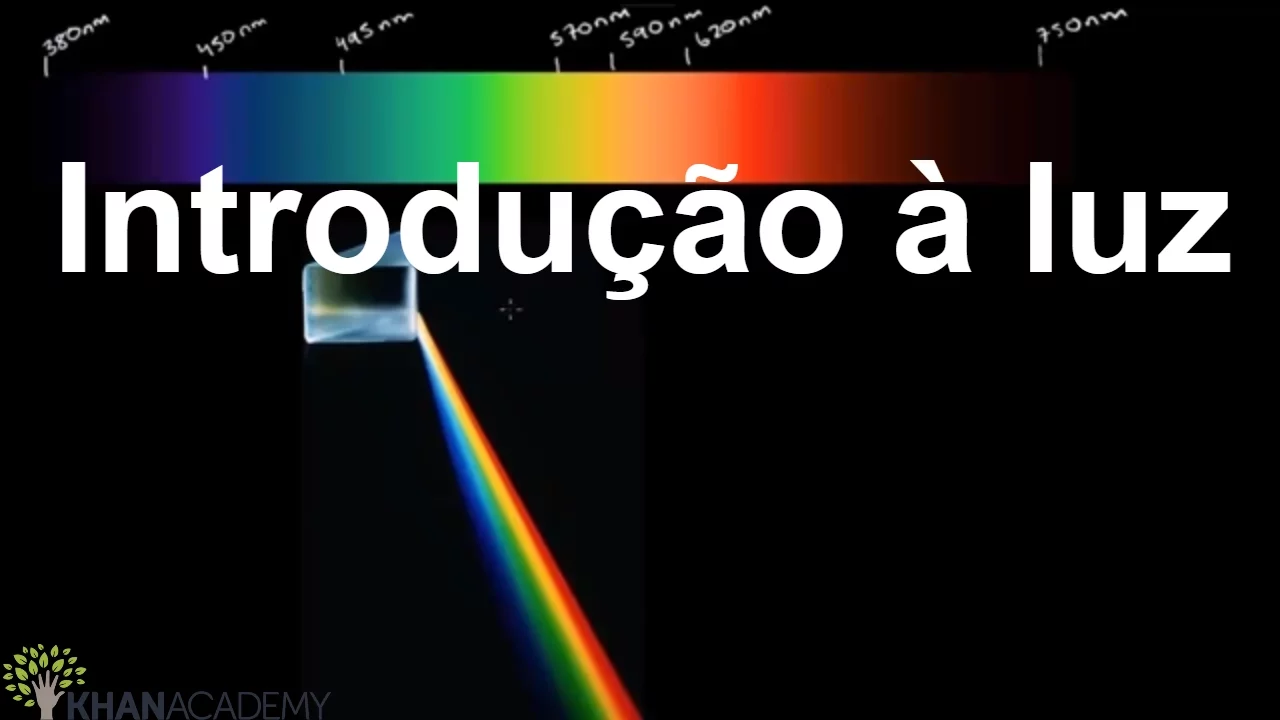
This is a spectrum of the light taken from our sun, and you know at first glance. It looks very familiar it looks like a stretched out rainbow because that's [exactly] what a rainbow is is the spectrum of the light from the Sun in the sky But if you look a bit more closely, then you see that this spectrum is covered in Black Lines These are called absorption Lines Each element within our sun that only emits light at a certain color it also absorbs light at the same color By looking for these black lines in the sun's light. We can simply read off a list of its constituent elements like a barcode For example these [two] black lines in the yellow bit of the spectrum sodium you can see Iron right down here You can see hydrogen so by looking at these lines in precise detail you can work out exactly What elements are present in the sun and it turns out that that's about 70% hydrogen 28% helium and 2% the rest and you can do this not only for [the] sun But for any of the stars you can see in the sky and you can measure exactly, what it made of so That star there is Polaris [pulstar] and you can see that because all the other stars in the night sky [theater] rotate around it now it's [430] [Light] [Years] away But we know just by [looking] at the light that it has about [the] same heavy element abundance as our sun But it's got markedly less carbon and a lot more nitrogen and the same applies for other stars Vega [the] second brightest star in the Northern sky has only about 1/3 of the metal content of our sun Whereas other stars and metal heavy Sirius the dog star contains three times as much iron as the sun And Proxima Centauri is rich in magnesium But although the quantities of the elements may vary wherever we look across space We only ever [find] the same 92 elements that we find on Earth
Up Next
15:39
Testing Geocentrism Part 7: Light, Spectra & Stellar Motion P2
@CoolHardLogic
123.6K views•2013-10-27

12:53
21cm Hyperfine Transition in Neutral Hydrogen: Radio Astronomy Basics
@AaronRobertParsons
12.4K views•2011-10-13

3:41
Cloud Chamber Physics: Brian Cox Explains Cosmic Mutations
@BBC
229.2K views•2013-02-06

27:14
Entropy and the Second Law of Thermodynamics Explained
@veritasium
27.5M views•2023-07-01
Related Study Plans & Knowledge Roadmaps
Structured learning paths in Physics
physics
Nuclear Physics (Decay, Fission & Reactors)
01Atomic Structure and the Binding Force
02Radioactive Decay and Half-Life
03Nuclear Fission Mechanics and Chain Reactions
+ 2 more learning modules
12h5 modules
Explore Roadmap
physics
Soft Matter (Polymers, Colloids & Rheology)
01Foundations of Soft Matter & Thermal Forces
02Polymer Physics and Macromolecules
03Colloids, Surfactants, and Self-Assembly
+ 2 more learning modules
38h5 modules
Explore Roadmap
physics
Analytical Mechanics: Lagrangian & Hamiltonian
01Mathematical Foundations: Calculus of Variations
02From Newtonian Mechanics to Constraint Dynamics
03The Principle of Least Action & Lagrangian Mechanics
+ 3 more learning modules
28h6 modules
Explore Roadmap
physics
General Relativity (Spacetime & Cosmology)
01Foundations of Relativity: Special Relativity
02The Geometry of Spacetime: Equivalence Principle & Curvature
03Einstein's Field Equations: The Mathematics of Gravity
+ 2 more learning modules
55h5 modules
Explore Roadmap