In Specht v. Netscape Communications Corp. (2002), the U.S. Court of Appeals for the Second Circuit held that a software company cannot compel arbitration based on a hidden license agreement when users are not adequately alerted to the terms and are not required to manifest assent to them as a condition of downloading the software; the court emphasized that for an arbitration clause to be enforceable, users must be clearly informed of the terms and given a meaningful opportunity to accept or reject them before proceeding.
Specht v. Netscape Communications Corporation Case Brief Summary | Law Case Explained
Added:Deep Dive
Fundamentals of Contract Law: The core principles of mutual assent, offer, acceptance, and consideration required to form a legally binding agreement.

Law of Contracts L-1 | Legal Reasoning for clat 2025 Preparation | Abhyuday Pandey | NLSIU Bnagalore
65.1K
Contract law is civil and codified in the Indian Contract Act of 1872. A contract is an agreement enforceable by law, meaning legal action can be taken if terms are not fulfilled. Every contract is an agreement, but not every agreement is a contract. Five essential elements make a contract valid: (1) Two or more parties, (2) Competent parties (minors and mentally unstable persons cannot contract), (3) Free consent (not obtained through force, fraud, or undue influence), (4) Lawful consideration and lawful object, and (5) The contract must be made. A proposal (offer) is an act of proposing to do or not do something in certain terms. A promise is the acceptance of a proposal. Consideration is the price paid for the promise. An agreement is a promise or set of promises, while a contract is an agreement enforceable by law. A void contract is invalid from the beginning and can never be validated. A voidable contract is valid until avoided by the aggrieved party. There are seven types of offers: express, implied, general, specific, standing, counter offer, and cross offer. A counter offer terminates the original offer and creates a new one. A cross offer occurs when two parties make identical offers simultaneously, which does not create a contract.
Click to watch →

Contract Basics 101 from UVM Legal Issues in Higher Education Conference
172.6K
A contract is simply an enforceable agreement between two or more parties. Three essential elements must be present: offer, acceptance, and consideration (something of value exchanged, even as minimal as a 'pepper corn'). Contrary to common belief, contracts do not require negotiation, written documents, signatures, or fairness. What matters is mutual assent and exchange of value. Many everyday interactions—from clicking website terms to purchasing airplane tickets—constitute legally binding contracts.
Click to watch →

(VIEW VIDEO DESCRIPTION) 2.0 CKC - Video 3 - Contracts, Consideration, Novations and Definitions
85.9K
A contract is a promisory agreement between two or more persons that creates, modifies, or destroys a legal relationship, requiring sufficient consideration to do or not do a particular thing. Essential elements include competent parties, legal subject matter, legal consideration with value in the eyes of the law, mutuality of agreement, and mutuality of obligation. Consideration is the inducement, cause, motive, price, or impelling influence that induces a contracting party to enter into a contract—something of value in the eyes of the law, moving from the plaintiff either of benefit to the plaintiff or of detriment to the defendant. Value is the utility of an object in satisfying human needs or desires, or its worth in purchasing other objects. Payment is the fulfillment of a promise or performance of an agreement, representing the discharge of an obligation or debt. The most critical principle is that nothing is consideration that is not regarded as such by both parties. A driver's license is not consideration because it provides no benefit to the holder. Adequate consideration is equal or reasonably proportionate to the value of what it is given. If consideration is not adequate, the contract may be an adhesion contract, where one party has more bargaining power and presents terms on a take-it-or-leave-it basis.
Click to watch →

Princípios Contratuais - Direito Civil 3
33.4K
The five fundamental principles of contract law are: (1) Autonomy of Will - parties have freedom to contract, choose counterparty, and determine content; (2) Consensualism - contracts are validated through mutual consent of all parties; (3) Binding Force of Contracts (pacta sunt servanda) - contracts must be respected and fulfilled; (4) Relativity of Contractual Effects - contracts only produce effects between the parties who signed them; (5) Good Faith - contracts must be performed honestly and fairly between parties, ensuring balance and security in legal relationships. These principles form the foundation of contract law and ensure that contractual relationships are voluntary, consensual, binding, personal, and conducted with integrity.
Click to watch →
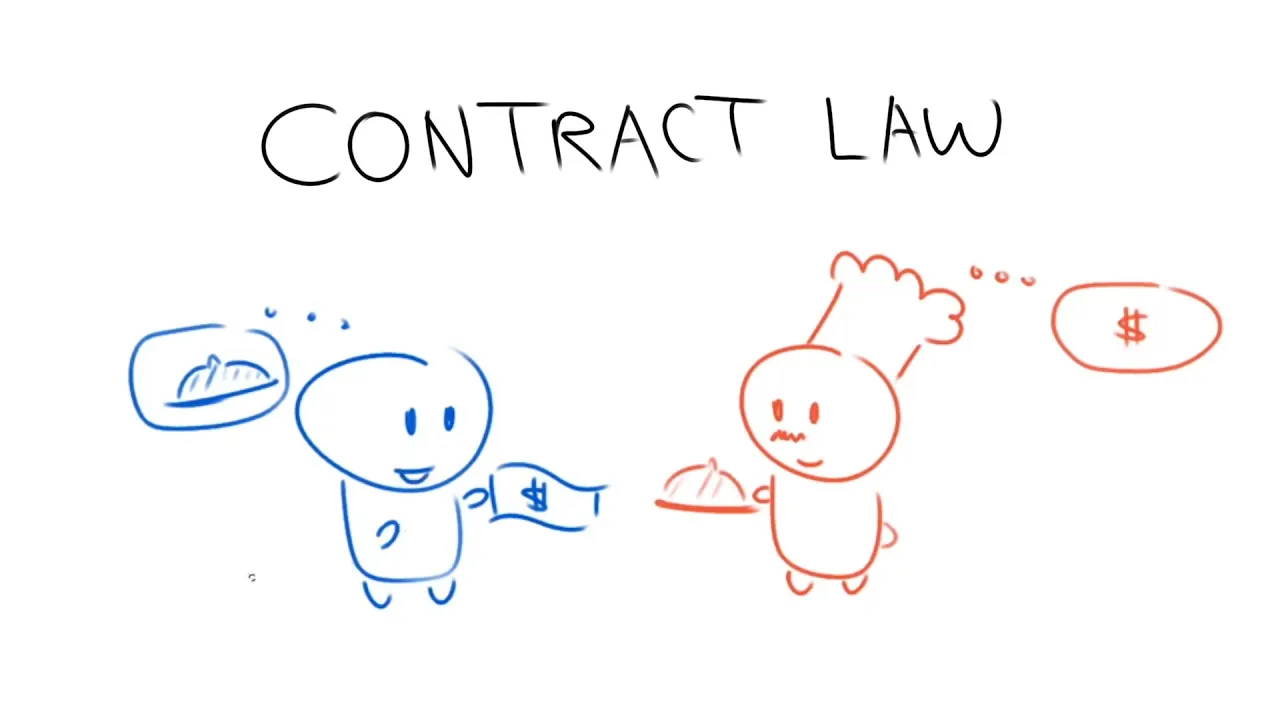
Contract Law in 2 Minutes
275.4K
A contract is a legally enforceable agreement where two parties exchange value, and the law enforces these promises through remedies like specific performance (requiring the breaching party to fulfill their obligation) or damages (compensating the injured party for losses), guided by the principle of sanctity of contract, though exceptions exist for situations like frustration of purpose, misrepresentation, or duress where contracts may be voidable.
Click to watch →
Deep Dive
The Nature of Arbitration Clauses: Understanding what arbitration is, how it differs from traditional court litigation, and why corporations use alternative dispute resolution (ADR) clauses.

2° Seminário Internacional de Negociação, Mediação e Arbitragem no Comércio Exterior
364
Arbitration clauses are considered personal to their original parties, meaning they cannot be automatically imposed on third parties who were not original signatories. This principle stems from the constitutional recognition of arbitration's personal nature and the requirement of party consent. The Brazilian Superior Court of Justice has consistently held that insurers cannot be bound by arbitration clauses in contracts they did not sign, even when those contracts relate to risks they insure.
Click to watch →

NANOCLASS: "Arbitragem", com Guilherme Barros
397
Arbitration clauses are categorized into four types: (1) Empty clause - simply states disputes will be arbitrated without specifying procedure, requiring court intervention to integrate; (2) Full clause - specifies the arbitral institution and procedure, providing clear initiation steps; (3) Escalated clause - provides multiple resolution methods in sequence (e.g., mediation first, then arbitration); (4) Pathological clause - contains defects like designating non-existent institutions or unavailable arbitrators. Empty and pathological clauses create practical problems, while full and escalated clauses provide procedural certainty and flexibility.
Click to watch →

L' arbitrato rituale e irrituale
4.5K
An arbitration clause is a contractual provision that becomes effective before any dispute arises, specifying that disputes arising from the contract will be referred to arbitrators. Unlike compromises, arbitration clauses are much more widespread in practice, commonly found in rental contracts, leases, and property purchases. Arbitration clauses follow a regime of unfair terms and cannot be set out in unilateral acts—they must be accepted in writing by both parties. For maximum effectiveness, arbitration clauses should be very specific, including: the arbitration chamber that will decide the matter, the arbitration rules to be adopted, and whether the arbitration will be formal (ritual) or informal. The specificity helps avoid disputes about the interpretation of the clause itself.
Click to watch →

الحلقة 04 | اتفاق التحكيم | أ.د. فارس عمران
319
An Arbitration Clause is a pre-dispute contractual provision embedded within a contract, stating that future disputes will be resolved through arbitration. It can be Absolute (specifying none of the three key elements: type of arbitration, subject matter, or time limit), Restricted (specifying at least one element), or Determined (specifying at least two elements). The clause may specify whether arbitration will be institutional or ad hoc, and whether it applies to all disputes or only certain types.
Click to watch →

المحكم الدولي الممارس/العميد د.فارس عمران في لقاء ضمن البرنامج التأهيلي للتحكيم بعنوان إتفاق التحكيم
165
An arbitration clause is a contractual provision that establishes parties' agreement to resolve disputes through arbitration before any dispute arises. It may be called an arbitration clause, arbitration agreement, or dispute resolution clause interchangeably. Arbitration clauses can be absolute (specifying nothing about venue, method, or time limits), limited (specifying at least one element), or restricted (specifying only one element). The clause may be brief or comprehensive, specifying the arbitration process, venue, and procedures. When parties have not included a clause but a dispute arises, they may still reach a post-dispute agreement to arbitrate, which courts will enforce.
Click to watch →
Deep Dive
Contracts of Adhesion: The concept of standard-form contracts drafted by one party (usually with stronger bargaining power) and signed by another on a 'take-it-or-leave-it' basis.

Aula 64 - Direito Civil - Classificação dos Contratos - Parte 2 - FN-DC
148.1K
Contracts of adhesion are those where one party adheres to a contract that has already been formulated and is applied uniformly to all parties engaging in that type of business transaction. In these contracts, the adhering party lacks genuine negotiation freedom and cannot modify specific clauses, burdens, or consequences. These contracts require special legal protection for the adhering party, as they cannot express their will in full accordance with the negotiation freedom they would have in a paritary contract.
Click to watch →

DIREITO COMO NUNCA CIVIL CONTRATOS
3.3K
Contracts of adhesion require interpretation favorable to the adherent. Clauses anticipating waiver of rights are null and void. Article 426 prohibits contracts on inheritance of living persons (pactum corvina), making such contracts completely null.
Click to watch →

TIPOS DE CONTRATOS
31.6K
Contracts of adhesion are pre-determined contracts where one party has no freedom to negotiate terms and must accept the contract as presented. These contracts are typically used in commercial settings like banking, telecommunications, and insurance, where the provider presents standardized terms that the customer must accept or reject entirely. The provider cannot modify clauses to accommodate individual customer requests. While not inherently illegal, these contracts are considered potentially abusive and require careful review of terms, as they are designed for mass use rather than individual negotiation.
Click to watch →
![المحاضرة الثانية في القانون المدني (مصادر الالتزام) للفرقة الثانية[ الدكتور خالد أحمد _ أهل القانون]](https://i.ytimg.com/vi/UrPNX-hRwzE/maxresdefault.jpg)
المحاضرة الثانية في القانون المدني (مصادر الالتزام) للفرقة الثانية[ الدكتور خالد أحمد _ أهل القانون]
348
Adhesion contracts (عقود الازعان) are contracts where one party (the weaker party) must accept all terms set by the stronger party without negotiation. According to the Cassation Court, for a contract to be classified as an adhesion contract, it must meet three conditions: (1) The goods or services must be essential necessities for consumers (like electricity, water, gas, internet, transportation); (2) The provider must have actual or legal monopoly over the goods/services; (3) The offer must be directed to the general public with identical terms and offered continuously.
Click to watch →

Rod Hayes - "It's A Wrap"
33.8K
Adhesion contracts are contracts where something is attached to something else. Driver's licenses are adhesion contracts. They use serpent rights - the right to traverse the land, which is covered under the Constitution but is being usurped.
Click to watch →
Prerequisite Knowledge
- Concept 01Fundamentals of Contract Law: The core principles of mutual assent, offer, acceptance, and consideration required to form a legally binding agreement.
- Concept 02The Nature of Arbitration Clauses: Understanding what arbitration is, how it differs from traditional court litigation, and why corporations use alternative dispute resolution (ADR) clauses.
- Concept 03Contracts of Adhesion: The concept of standard-form contracts drafted by one party (usually with stronger bargaining power) and signed by another on a 'take-it-or-leave-it' basis.
Subsequent Learning
- Step 01The Legal Taxonomy of Online Agreements: Analyzing the differences between click-wrap, browse-wrap, scroll-wrap, and sign-in-wrap mechanisms of consent.
- Step 02The Inquiry Notice and Conspicuousness Standard: Exploring how courts determine whether an online layout gives a 'reasonably prudent user' fair notice of contractual terms.
- Step 03Subsequent Landmark Jurisprudence: Studying later pivotal cases (such as Meyer v. Uber Technologies, Inc.) that built upon the Specht precedent to define modern online contract formation.
- Step 04Legal Tech and UX/UI Design Compliance: Investigating how digital product designers and lawyers collaborate to design user flows that ensure enforceable electronic agreements.
Legal Dispute
Court Ruling
Legal Dispute
0:00Playing Section
- 1
Case examines if clicking download binds users to arbitration clauses.
- 2
Specht vs Netscape focuses on assent to hidden software license terms.
- 3
Court evaluates user awareness and consent for smart download plugin.
Constructive Assent and Economic Efficiency in Electronic Contracting
While Specht v. Netscape established that conspicuous notice is required to bind users to online agreements, a competing perspective prioritizes economic efficiency and 'constructive assent.' Proponents of this view, supported by rulings like Register.com, Inc. v. Verio, Inc., argue that contract formation does not always require an explicit click. Instead, a user's conduct—such as repeated use of a website or downloading software with the knowledge that terms exist—can constitute legally binding implied consent. This 'law and economics' framework suggests that imposing rigid requirements for explicit 'clickwrap' agreements creates unnecessary digital friction and transaction costs that ultimately harm consumers. From this viewpoint, users should bear a 'duty to inquire' about terms of service when utilizing online platforms, as enforcing browsewrap agreements under certain conditions facilitates more efficient commercial transactions in the digital age.
Deep Dive
The Legal Taxonomy of Online Agreements: Analyzing the differences between click-wrap, browse-wrap, scroll-wrap, and sign-in-wrap mechanisms of consent.

Explaining the Logan Paul/CryptoZoo Class Action Lawsuit
80.3K
There are three main types of online agreements that consumers encounter: (1) Click-wrap agreements require users to actively click 'I accept' or 'I agree' after being presented with the terms; (2) Browser-wrap agreements do not require explicit acceptance—users are bound simply by using the website, often without even knowing the terms exist; (3) Sign-in agreements notify users of the terms and require affirmative acceptance when registering an account. The speaker identifies CryptoZoo's terms as a browser-wrap agreement because users did not need to visit the terms page or even know it existed to be bound by them.
Click to watch →

Unit 1 II Law Of Contract-1 II Sem 1 II Full Syllabus With Notes II Adv. Varun Dixit #lawofcontract
7.6K
Online contracts include: (1) Click-wrap agreements - where users click 'I agree' to terms (like software installation), (2) Browse-wrap agreements - where users can access products without explicit agreement, (3) Shrink-wrap agreements - where terms are inside packaging and must be accepted after purchase. These are governed by the Information Technology Act, 2000.
Click to watch →
E-commerce Law
18.1K
There are two main types of online contracts: click-wrap agreements require users to affirmatively click on a box acknowledging agreement to terms (often found in scrolling text boxes), while browser-wrap agreements use hyperlinks to terms of use on separate pages that users don't need to visit. Courts generally enforce click-wrap agreements but have declined to enforce browser-wrap agreements due to inadequate notice requirements.
Click to watch →

Online Cotract
2.7K
Online contracts are legally binding agreements created and signed electronically over the internet, with the same legal value as paper contracts. Three main types exist: clickwrap agreements (most common, requiring active button clicks to accept terms), browsewrap agreements (less common, where browsing implies acceptance), and electronic signature documents (most formal, requiring electronic signing). Essential elements include offer, acceptance, consideration, mutual consent, legal capacity, and legality of purpose. The E-Sign Act, confirmed by the Supreme Court of the United States in 2001, established that electronic signatures are legally valid as hand-written signatures. Common examples include software license agreements, website terms of service, employment agreements, and non-disclosure agreements.
Click to watch →
SGOU M.COM - LEGAL ASPECTS OF BUSINESS - Mega Live ഇത് മാത്രം പഠിച്ചാൽ മതി, പാസ്സാവാൻ!
150
This section covers online contracts and e-commerce legal frameworks. Online contracts (electronic agreements) require all essential elements of traditional contracts including offer, acceptance, consideration, and lawful object. Features include paperless execution, technology-driven creation through websites or email, and digital authentication. Classification includes clickwrap contracts (active acceptance), browsewrap contracts (passive acceptance), and EDI contracts (business-to-business electronic data exchange). The Information Technology Act 2000 provides legal recognition to electronic contracts while addressing data protection challenges including privacy, security, and liability for breaches.
Click to watch →
Deep Dive
The Inquiry Notice and Conspicuousness Standard: Exploring how courts determine whether an online layout gives a 'reasonably prudent user' fair notice of contractual terms.
Keetly Marc v. Jason Eck, D.O.
331
Statute of limitations serves public policy purposes: promoting stability, providing notice to defendants, preventing undue delay, avoiding stale claims, and ensuring evidence availability. The discovery rule imposes a due diligence standard on claimants. The inquiry notice standard charges claimants with all information that a completed investigation would have revealed, as soon as they gain possession or access to information that alerts them to the possibility of a claim. The inquiry notice standard applies an objective standard rather than a subjective one. When determining whether a person is on inquiry notice, courts consider whether a reasonable person in possession of or with access to that information would have been alerted to the need to investigate the injury. This objective standard applies regardless of the scope of representation or the specific context in which the information was received.
Click to watch →

Easily Obtain Discharge of Debts Through U.C.C. §§ 3-311 and 3-603
2K
A statement is conspicuous if it is so written that a reasonable person against whom it is to operate ought to have noticed it. This standard requires that the full satisfaction statement be clearly visible and not hidden in fine print or difficult-to-read text. The claimant has knowledge of the full satisfaction tender when they have actual knowledge of that fact, and the notice requirements are governed by Section 1-201 of the Uniform Commercial Code.
Click to watch →

UNIFORM COMMERCIAL CODE: The Guide & keys to all transactions, notes, debts, contract and more..
4.9K
For terms in standard form agreements, the determination of conspicuousness may reference typical likely parties, taking into account all aspects of the transaction, equipment and settings used, and their education, sophistication, disabilities, and other attributes. If not in standard form, the determination should reference a reasonable person in the position of the actual person against which it operates. Relevant factors include: size relative to surrounding text, use of capitalization, bold or italic type, contrasting colors, placement in a record, use of hyperlinks, and symbols or marks that call attention to the language. Terms need to be made conspicuous if introduced by a heading in uppercase lettering equal to or greater than the size of surrounding text. A misleading heading such as 'warranty' or a paragraph containing a disclaimer of warranties might cause a reasonable person to fail to notice the language, so the term would not be conspicuous.
Click to watch →

Court Rules Chicken Wings Don’t Need to Be Wings
40.6K
Courts interpret product descriptions by examining the entire menu context rather than individual items in isolation. The judge noted that 'boneless wings' appears alongside 'bone in wings' (actual wings) and 'chicken dippers,' suggesting 'boneless' describes preparation method rather than meat type. Additionally, whether disclosure language is 'conspicuous' is typically treated as a question of law for courts to decide, not a question of fact for juries. Courts determine conspicuousness based on legal standards, even when disclosures appear visually small or difficult to notice. This has led to situations where courts find language conspicuous even when it appears on pink paper with red text. The judge in this case determined that reasonable consumers would not be deceived by the term 'boneless wings' in the context of the menu.
Click to watch →

23-1794 Betz v Mathisen
210
A party's right to have their day in court carries the obligation to be bound by that court's ruling. Courts can take judicial notice of documents from related litigation when accuracy cannot reasonably be questioned. A party is placed on inquiry notice when they gain sufficient knowledge of facts indicating a problem exists, requiring them to investigate the cause of injury. This differs from actual notice, which requires the complaint in hand. In defamation cases, inquiry notice means knowing something is wrong and having a duty to investigate, not knowing specific details like the identity of defamers.
Click to watch →
Deep Dive
Subsequent Landmark Jurisprudence: Studying later pivotal cases (such as Meyer v. Uber Technologies, Inc.) that built upon the Specht precedent to define modern online contract formation.
Department of Health and Human Services v. Florida Pt. 1 (SCOTUS-Toons)
195
In Davis v. United States, the Supreme Court accepted a waiver by the Solicitor General of the Anti-Injunction Act's jurisdictional bar, which would be impossible if the Act were truly jurisdictional. However, subsequent decisions including Williams Packing Co. v. United States and Bob Jones University v. Simon & Schuster, Inc. effectively overruled the Davis approach by establishing that the Anti-Injunction Act should be interpreted as a jurisdictional statute. The Court has consistently held that the AIA is jurisdictional since the Williams Packing case, creating a 50-year period of consistent interpretation.
Click to watch →

Landmark Judgments | Aruna Shanbaug vs UOI (Right To Die) | Amit Sir | StudyIQ Judiciary
1.8K
Following the Aruna Shanbaug case, two other landmark judgments further developed euthanasia law in India: (1) Common Cause vs Union of India (2018) - The Supreme Court explicitly recognized the right to die with dignity under Article 21; (2) Common Cause vs Union of India (2023) - The court provided detailed guidelines on living wills, withdrawal of life-sustaining treatment, and passive euthanasia. These judgments built upon the principles established in Aruna Shanbaug.
Click to watch →

Day 1 of Supreme Court hearings on The Affordable Care Act
62.5K
Helvering v. Davis was decided during a period when the Court interpreted the Anti-Injunction Act as simply codifying pre-statutory equitable principles that usually prohibited courts from enjoining tax assessment or collection. However, this understanding was rejected by the Court in Williams Packing and subsequent cases including Bob Jones. The amicus argues that the Davis case has been effectively overruled by these later decisions, which established a more rigid interpretation of the Anti-Injunction Act as a jurisdictional statute.
Click to watch →
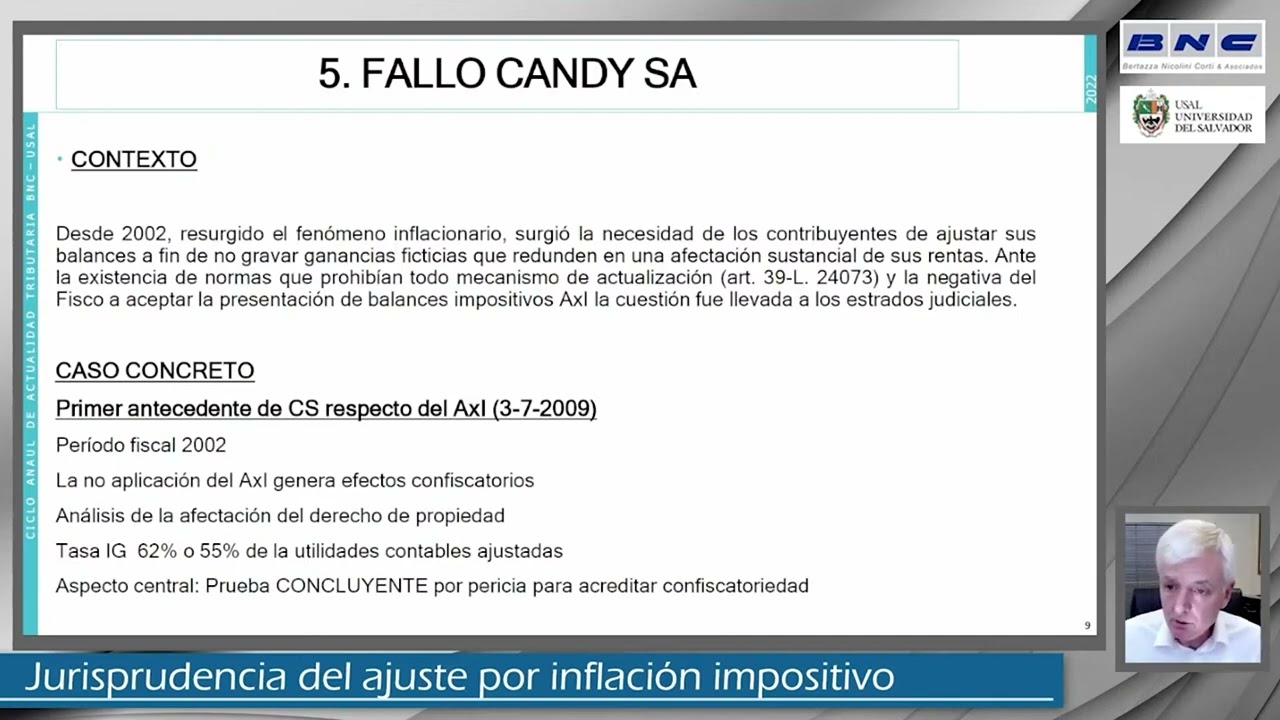
La jurisprudencia del ajuste por inflación impositivo - MARCELO SERRA - CAAT Mayo
656
This section examines subsequent Supreme Court cases expanding inflation adjustment jurisprudence. Cases like IBM (2015), Banco Bradesco (2012), and Consolidar Seguro (2013) all involved fiscal year 2002 and Title VI, consistently finding confiscatoriness at 60-67% effective rates. The Distribuidoras del Centro and Gas Cuyana cases expanded beyond Title VI to include amortizations of tangible assets, intangible assets, and cost computations under Articles 58, 61, 83, 84, and 89. The tax authority continues opposing integral adjustment, arguing Candi only addressed Title VI and that 2002 inflation conditions differ from current circumstances.
Click to watch →

💥 সরকারি কর্মচারী ও শিক্ষক-শিক্ষিকাদের ডিএ নিয়ে বিরাট বার্তা/ West Bengal DA Case news Today
42.8K
On July 26, 2019, the Tribunal passed a landmark judgment requiring DA payment within six months, with specific provisions for serving and retired employees. Despite this clear directive, the government failed to comply. Employees filed review petitions, and the same bench passed judgment 23/20 giving three months to settle. The government continued to delay, leading to contempt proceedings. The government then challenged the 2019 judgment in the High Court, resulting in judgment 205/2022 on May 20, 2022, which again directed DA payment within three months.
Click to watch →
Deep Dive
Legal Tech and UX/UI Design Compliance: Investigating how digital product designers and lawyers collaborate to design user flows that ensure enforceable electronic agreements.

Legal Informatics: LAW 729-0-01 | Week 3
392
Good legal tech design follows the principle of making things 'simple but not simpler.' If a flow seems too easy, users may undervalue the service. Companies must balance simplicity with providing enough information to demonstrate value. Legal tech products are developed by teams including designers for mobile and tablet experiences, UX designers for intuitive flows, front-end engineers for visual design, and back-end engineers for data capture. A typical product might involve about 10 people working together. Companies use data to determine what products to build next, analyzing user behavior to predict what services users will need in the future.
Click to watch →

Daily Matters - Episode #81 - Nicole Bradick, Founder and CEO, Theory and Principle
128
Legal tech design carries unique ethical obligations because the consequences of legal technology decisions can significantly impact people's lives. Unlike other industries, legal tech cannot simply provide partial solutions through MVPs because doing so could put users in worse situations than they started. This higher ethical standard requires designers to ensure that any solution provided is complete and safe. The legal system's language, processes, and structures are designed for lawyers, requiring significant translation work to make legal information accessible to general users. Measuring the real impact of legal tech products is challenging because it's difficult to track users through the entire legal system after they use a product. The key question is whether technology efforts are actually creating meaningful change in people's lives or just providing dubious claims of impact. The legal tech industry is experiencing increased competition and recognition that products must compete on ease of use, not just functionality. This has led to a renewed focus on UX improvements, with more requests for UX audits and redesigns from legal tech companies.
Click to watch →

CaseMark Launches Platform to Turn “Vibe Coding” Legal Apps into Production Software
2.2K
Legal technology applications must meet specific compliance requirements including SOC 2 certification, HIPAA compliance, and regional data protection requirements particularly in Europe and the UK. Thurgood incorporates these requirements directly into its infrastructure, reducing the burden on developers who would otherwise need to navigate these complexities. The platform was designed with input from legal professionals, including the CEO's wife who is an insurance defense attorney, ensuring the design philosophy centers on providing tools that enable attorneys to solve their own problems rather than prescribing how they should practice law. Users can access Thurgood by visiting thurgood.law and signing up to begin using the platform immediately.
Click to watch →

11 ways to start your inclusive, accessible design toolkit
4.6K
Accessibility should be understood by every UX designer, with QA teams verifying compliance through keyboard and screen reader testing. Tools like PowerMapper test screen reader reliability across browsers. Legal requirements include the European Accessibility Act (public sector WCAG Double A compliance) and U.S. Section 508. Following standards reduces future development costs by establishing consistent guidelines. Organizations face legal risks when failing to meet requirements, as demonstrated by lawsuits against Zoom and Domino's Pizza. From a business perspective, accessibility expands potential user base—approximately 50% of the global population has some form of impairment. Building accessible products creates better services for everyone while protecting organizations from legal liability.
Click to watch →

Legal Design Parte 1. Prof. Anthony Novaes
235
Legal technology and innovation involve applying new technologies to improve legal services through AI for research, document automation, mobile applications, online platforms, data analytics, and blockchain applications. Legal compliance and regulatory requirements involve ensuring organizations meet applicable legal standards through identifying relevant laws, understanding compliance requirements, implementing monitoring systems, training staff, responding to regulatory changes, and maintaining documentation. Legal document management and organization involve creating systems for storing and retrieving documents through consistent naming conventions, digital systems, proper filing, accurate records, document security, and regular reviews. Legal communication and stakeholder management involve understanding stakeholder needs, tailoring communication, building relationships, providing timely information, managing conflicts, and collaborating effectively.
Click to watch →
Legal Dispute
Court Ruling
Legal Dispute
0:00- 1
Case examines if clicking download binds users to arbitration clauses.
- 2
Specht vs Netscape focuses on assent to hidden software license terms.
- 3
Court evaluates user awareness and consent for smart download plugin.
Constructive Assent and Economic Efficiency in Electronic Contracting
While Specht v. Netscape established that conspicuous notice is required to bind users to online agreements, a competing perspective prioritizes economic efficiency and 'constructive assent.' Proponents of this view, supported by rulings like Register.com, Inc. v. Verio, Inc., argue that contract formation does not always require an explicit click. Instead, a user's conduct—such as repeated use of a website or downloading software with the knowledge that terms exist—can constitute legally binding implied consent. This 'law and economics' framework suggests that imposing rigid requirements for explicit 'clickwrap' agreements creates unnecessary digital friction and transaction costs that ultimately harm consumers. From this viewpoint, users should bear a 'duty to inquire' about terms of service when utilizing online platforms, as enforcing browsewrap agreements under certain conditions facilitates more efficient commercial transactions in the digital age.
Fundamentals of Contract Law: The core principles of mutual assent, offer, acceptance, and consideration required to form a legally binding agreement.
The Nature of Arbitration Clauses: Understanding what arbitration is, how it differs from traditional court litigation, and why corporations use alternative dispute resolution (ADR) clauses.
Contracts of Adhesion: The concept of standard-form contracts drafted by one party (usually with stronger bargaining power) and signed by another on a 'take-it-or-leave-it' basis.
The Legal Taxonomy of Online Agreements: Analyzing the differences between click-wrap, browse-wrap, scroll-wrap, and sign-in-wrap mechanisms of consent.
The Inquiry Notice and Conspicuousness Standard: Exploring how courts determine whether an online layout gives a 'reasonably prudent user' fair notice of contractual terms.
Subsequent Landmark Jurisprudence: Studying later pivotal cases (such as Meyer v. Uber Technologies, Inc.) that built upon the Specht precedent to define modern online contract formation.
Legal Tech and UX/UI Design Compliance: Investigating how digital product designers and lawyers collaborate to design user flows that ensure enforceable electronic agreements.
1.7K views11likes2:26@QuimbeeDotComOriginal Release: 2021-01-08
the turn of the millennium was an exciting time for internet technology with the click of a button a user could send an instant message download a song or install a faster web browser but can a single click to download software bind a user to an arbitration clause the united states court of appeals for the second circuit addressed this issue in the 2002 case of spect versus netscape communications corporation christopher specht and others used netscape communicator a free internet browser after initiating communicators installation on netscape's web page a license agreement appeared on screen the users needed to click the yes button to agree to the terms before completing the installation the agreement noted that any disputes regarding the agreement were subject to binding arbitration in california spec and the other users also installed smart download a separate software plugin to enhance communicators browsing functions communicators license agreement didn't mention smart download unlike communicator smart download didn't require a sent to the plugins license agreement the web page instead showed a download button the page also contained a request visible only by scrolling down that asked users to review and assent to the terms of the agreement smart downloads agreement also contained an arbitration clause the users assented to communicators agreement but not smart downloads unbeknownst to the users smart download transmitted to netscape the webpage of each of the user's downloaded files spect brought suit against netscape in federal district court alleging privacy violations and fraud netscape moved to compel arbitration and state court proceedings under the federal arbitration act netscape argued that all disputes related to the smart download license agreement were subject to the agreement's arbitration clause the federal district court denied netscape's motion the court found that netscape's web page didn't alert users to the terms of smart download's license agreement and didn't mandate the users to manifest ascent to the terms as a requirement to download the software netscape appealed to the united states court of appeals for the second circuit [Music] you
Up Next

27:38
Redbox Terms of Use Ruled Unenforceable in Court
@lawfulmasses
25.5K views•2020-04-04

4:27
US Secondary Sanctions Impact on EU Businesses and Blocking Legislation
@Bureauvandijk
1.6K views•2019-03-20
1:52
Employment Division v. Smith Case Brief | Free Exercise Clause
@QuimbeeDotCom
15.4K views•2021-01-08

24:42
Police Interrogation Tactics: False Confessions & Legal Reform
@LastWeekTonight
7M views•2022-04-18
Related Study Plans & Knowledge Roadmaps
Structured learning paths in Law
law
Self-Defense Law: Imminence & Castle Doctrine
01Foundations of Self-Defense Law
02Imminent Threat & Reasonable Belief
03The Principle of Proportionality
+ 3 more learning modules
12h6 modules
Explore Roadmap
law
Defamation Law: First Amendment & Actual Malice
01Introduction to civil torts and the First Amendment
02Elements of Defamation: Libel and Slander
03Public Figures vs. Private Individuals
+ 2 more learning modules
8h5 modules
Explore Roadmap
law
Hearsay Rule: Trial Evidence & Exceptions
01Introduction to Trial Evidence & Courtroom Basics
02Demystifying Hearsay: The Core Definition
03Non-Hearsay: Exclusions Under FRE 801(d)
+ 3 more learning modules
14h6 modules
Explore Roadmap
law
Medical Malpractice: Law, Liability & Care
01Foundations of Tort Law and Civil Liability
02The Four Elements of Medical Malpractice
03Defining and Proving the Standard of Care
+ 2 more learning modules
12h5 modules
Explore Roadmap