In Employment Division v. Smith (494 U.S. 872, 1990), the U.S. Supreme Court ruled that Oregon's failure to exempt sacramental peyote use from drug laws did not violate the Free Exercise Clause, establishing that generally applicable laws need not accommodate religious practices even when those practices are central to a faith; the Court held that unemployment compensation denial based on work-related misconduct does not constitute a substantial burden on religious exercise when the law applies equally to all citizens regardless of religion.
Employment Division v. Smith Case Brief | Free Exercise Clause
Added:Deep Dive
Understanding of the First Amendment, specifically the distinction between the Establishment Clause and the Free Exercise Clause.

Stephen Bohr-05 Le Congrès ne passera aucune loi
6.7K
The First Amendment states: 'Congress shall make no law respecting an establishment of religion, or prohibiting the free exercise thereof.' While 'separation of church and state' does not appear in the Constitution, the concept is embodied in this amendment. The Establishment Clause prohibits Congress from establishing any religion, while the Free Exercise Clause prohibits prohibiting the free exercise of religion. Biblical examples illustrate these clauses: Daniel 3 shows government establishing religious observance (golden image) resulting in persecution, while Daniel 6 shows government prohibiting free exercise (Daniel's prayer) also resulting in persecution. The amendment establishes clear distinction between religious and civil authority.
Click to watch →
Ben Shapiro Hits a NEW LOW!
13K
The Establishment Clause and Free Exercise Clause of the First Amendment must be read in tandem. The Establishment Clause prohibits government from establishing religion, while the Free Exercise Clause protects the free exercise of religion. The Supreme Court has interpreted these clauses to mean that government cannot establish or favor particular religions, but individuals have the right to freely exercise their own religious beliefs.
Click to watch →
05. Il Congresso non Farà Alcuna Legge - La Catena Profetica di Dio
1.2K
The First Amendment of the U.S. Constitution states: 'Congress shall make no law respecting an establishment of religion, or prohibiting the free exercise thereof.' This establishes the separation between Church and State. The amendment guarantees both religious freedom and civil rights, including freedom of speech, freedom of the press, the right to assemble peacefully, and the right to petition the government for redress of grievances. The Establishment Clause means Congress cannot establish any religious observance or practice. The Free Exercise Clause means Congress cannot prohibit people from freely practicing their religion. These clauses were based on biblical examples: Daniel 3 (establishing religious observance leads to persecution) and Daniel 6 (prohibiting free religious exercise leads to persecution).
Click to watch →

Range War Atheist Style
5.2K
The First Amendment contains two distinct clauses: the Establishment Clause (Congress shall make no law respecting an establishment of religion) and the Free Exercise Clause (or prohibit the free exercise thereof). These clauses work together to protect both government neutrality toward religion and individual religious freedom. A lawsuit challenging student religious activities at a public school must consider both clauses, as the Free Exercise Clause protects students' rights to practice their religion even in public schools.
Click to watch →
Ben Carson Respects the Antichrist - News and Prophecy · 09
166
The First Amendment contains two distinct clauses: the Establishment Clause (Congress shall make no law respecting an establishment of religion) and the Free Exercise Clause (or prohibiting the free exercise thereof). The Establishment Clause prevents government from setting up a national religion or financially supporting churches. The Free Exercise Clause prevents government from stopping people from practicing their faith or choosing not to practice any religion. These clauses work together to balance religious freedom.
Click to watch →
Deep Dive
The 'Sherbert Test' established in Sherbert v. Verner (1963), which previously required the government to show a 'compelling interest' to burden religious practices.
Church-State Separation: What Does the Constitution Really Say?
6.4K
Before Smith, Sherbert v. Verner (1963) required strict scrutiny for general laws burdening religious practice, needing compelling governmental interest. Justice Scalia argued this would require exemptions from civic obligations of almost every conceivable kind—from military service to tax payment, vaccination laws, environmental laws, and equality laws. Smith rejected this, arguing the First Amendment doesn't require such exemptions. The debate continues: should Smith be overruled? If so, what compelling interests justify interfering with religious freedom? Stopping discrimination on race or sexual orientation is compelling, as is ensuring women's access to contraceptives.
Click to watch →

I.3 Sherbert and Compelling Interests
101
The Supreme Court developed the compelling state interest least restrictive means test in Sherbert v. Verner (1963), requiring states to demonstrate a compelling interest and use the least restrictive means when burdening religious exercise; however, Justice Scalia's majority opinion in Employment Division v. Smith (1990) rejected this balancing approach, instead returning to the Gobitis standard that generally applicable laws do not violate the Free Exercise Clause, sparking a decades-long debate about the appropriate judicial role in religious freedom cases.
Click to watch →

ch4 online POS 2041
226
The First Amendment contains Establishment Clause (church-state separation) and Free Exercise Clause (guaranteeing free exercise), neither absolute. When religious practice interferes with public welfare, government can intervene. In Minersville School District v. Gobitis (1940), Jehovah's Witness children were expelled for refusing to salute the flag; the Court ruled against them, citing national unity. In Sherbert v. Verner (1963), a Seventh-day Adventist denied unemployment benefits for refusing Saturday work; the Court ruled in her favor, establishing the Sherbert Test with three prongs: government pressure, state interest justification, and no less restrictive alternatives. In Employment Division v. Smith (1990), the Court ruled that laws burdening all religions equally are not unconstitutional, limiting the Sherbert Test. This sparked RFRA in 1993, which reinstated the Sherbert Test. In Gonzales v. O Centro Espírita (2006), the Court ruled in favor of a Brazilian church when the government failed to prove a compelling interest under RFRA.
Click to watch →
Beyond Hobby Lobby: What Is at Stake with the HHS Contraceptive Mandate?
535
RFRA provides that if government places a substantial burden on religious exercise, it must demonstrate a compelling justification of the highest order. This standard was established in Sherbert v. Verner (1963) and Wisconsin v. Yoder (1972), but was effectively overturned by Employment Division v. Smith (1990). RFRA was Congress's response, passing unanimously in the House and 97-3 in the Senate, signed by President Clinton in 1993. RFRA applies to the federal government and requires the government to meet the compelling interest standard to override religious freedom claims. RFRA was drafted to avoid establishment clause problems while protecting free exercise, defining religion broadly to include any philosophical view that holds a place similar to religion in the life of people who are traditionally religious. The Hobby Lobby case raises the question of whether religious freedom protections extend to corporations. The government argues that corporations are not 'persons' entitled to religious liberty, while Hobby Lobby argues that the corporation is an extension of the family's religious beliefs.
Click to watch →
Law Perspectives Aug 16, 2024. Defending Sacred Sites
9.5K
The free exercise legal framework involves two steps: plaintiffs must show sincerely held religious belief (low bar) and that government action substantially burdens religious exercise. If satisfied, burden shifts to government to show compelling interest. Bowen v. Roy (1988) held Social Security number requirements are not substantial burdens because they are non-discriminatory and do not coerce. Sherbert v. Verner (1963) held unemployment benefit denial for religious Sabbath observance is a substantial burden because it coerces religious violation. Wisconsin v. Yoder (1972) held criminal penalties for Amish school attendance violations are substantial burdens. Employment Division v. Smith (1990) held generally applicable laws do not require compelling interest justification, causing Congress to pass RFRA in 1993, which reinstated the Sherbert/Yoder framework for federal actions.
Click to watch →
Deep Dive
Basic legal concepts of levels of judicial scrutiny, particularly the differences between strict scrutiny and rational basis review.

Yes, You Can Be Too Smart to Be a Cop
51.2K
When a law does not impinge on fundamental rights, courts apply rational basis analysis rather than strict scrutiny. Under strict scrutiny, the government must prove a compelling interest and that the law is narrowly tailored to achieve that interest. Under rational basis, the government only needs to show any reasonably conceivable state of facts that could provide a rational basis for the classification. This creates a much lower bar for governmental action when fundamental rights are not at stake.
Click to watch →

What are the strict scrutiny, intermediate scrutiny, and rational basis tests
120.4K
The strict scrutiny, intermediate scrutiny, and rational basis tests are three levels of judicial review used by U.S. courts to determine if a law is constitutional; they all evaluate two factors—the law's purpose and its methods—but differ in their standards: rational basis requires only a legitimate purpose and a rational relationship between methods and purpose, intermediate scrutiny demands an important purpose and a substantial relationship, while strict scrutiny requires a compelling government purpose and that the law is narrowly tailored as the least restrictive means to achieve that purpose.
Click to watch →

Week 2, Ep. 1: Standards of Review
927
Standards of review (levels of scrutiny) are critical to constitutional law, with 50% of bar exam questions testing this concept. In substantive due process, only two levels apply: strict scrutiny and rational basis review. The key distinction is whether a claimed right is fundamental (fundamental to life in a free society) or merely a low-level right. Under strict scrutiny, the government bears the burden of persuasion and must show a compelling interest and narrowly tailored means. Under rational basis review, the challenger bears the burden and must prove no legitimate interest exists. Courts apply strict scrutiny when suspicious of government interference with fundamental rights, and rational basis review when not suspicious.
Click to watch →

LEARN LEGALESE: 25 Words EVERYONE Should Know | Practical Law Ep. 1
42.9K
Courts apply different levels of scrutiny when evaluating whether government actions infringing on liberty or property are justified. Strict scrutiny applies to laws discriminating based on race, requiring an extremely compelling governmental interest. Intermediate scrutiny applies to gender-based discrimination. Rational basis review applies to most other regulations, requiring only that the law serves a legitimate governmental purpose. Laws failing these scrutiny tests are invalidated.
Click to watch →

'Why Did You Get It So Wrong?': Ted Cruz Presses Judicial Nominee On COVID-19 Restrictions
24.4K
There is a fundamental difference between rational basis review and strict scrutiny in constitutional law. Under rational basis review, courts only determine if a regulation has a rational relationship to a legitimate government interest. Under strict scrutiny, courts must determine if the regulation is narrowly tailored to achieve a compelling government interest. The Supreme Court applied strict scrutiny to the religious freedom case, which is a much higher standard than rational basis review.
Click to watch →
Deep Dive
The Incorporation Doctrine, which explains how the Fourteenth Amendment applies the Bill of Rights to state-level actions.
14th Amendment: Securing Our Rights Against Tyranny
58K
Incorporation is the legal doctrine by which the Bill of Rights applies to state governments through the 14th Amendment. The framers of the 14th Amendment did not view this as mechanically applying parts of the Constitution to states, but rather as requiring states to obey pre-existing rights that exist independently of the Constitution. The process has been slow and incomplete, with some rights still unincorporated. For example, the excessive fines clause was not incorporated until recently, meaning states could impose excessive fines without violating constitutional protections.
Click to watch →

AP Gov Review Video #49: The Incorporation Doctrine
20.9K
The Incorporation Doctrine is a constitutional principle that applies the protections of the Bill of Rights to state governments through the 14th Amendment's Due Process Clause, ensuring that fundamental rights such as protection from unreasonable searches (Mapp v. Ohio), right to counsel (Gideon v. Wainwright), right to remain silent (Miranda v. Arizona), and equal protection (Brown v. Board of Education) are guaranteed against both federal and state actions.
Click to watch →

Scholar Exchange: AP Landmark Supreme Court Cases
7K
The incorporation doctrine applies the Bill of Rights to state governments through the Fourteenth Amendment's Due Process Clause. Originally, the Bill of Rights only bound Congress, not states. After the Civil War, the Fourteenth Amendment was adopted to ensure states could not deny basic rights to citizens. The Court has applied most Bill of Rights protections against states through the Due Process Clause, which prohibits states from depriving any person of life, liberty, or property without due process of law.
Click to watch →
YOU ARE WRONG - Destiny Debates A Lawyer On Roe V Wade
235.7K
The incorporation doctrine is the legal principle that provisions of the Bill of Rights, which originally applied only to the federal government, have been applied to state governments through the 14th Amendment's Due Process Clause. This process, which began in the early 20th century, means that most constitutional protections now apply to all levels of government, not just the federal government.
Click to watch →

Video Criminal Law Week 1, Class 1
50.1K
The incorporation doctrine applies constitutional amendments to the states through the 14th Amendment's Due Process Clause. Originally, constitutional amendments only restricted the federal government. The 14th Amendment's Due Process Clause has been interpreted to make most Bill of Rights protections applicable to the states. For example, the First Amendment's free speech protections, Fourth Amendment's search and seizure rules, Fifth Amendment's Miranda rights, Sixth Amendment's right to counsel, and Seventh Amendment's right to confront witnesses have all been incorporated and apply to state governments. This means that when states try to infringe on these rights, they face constitutional limits similar to those imposed on the federal government.
Click to watch →
Prerequisite Knowledge
- Concept 01Understanding of the First Amendment, specifically the distinction between the Establishment Clause and the Free Exercise Clause.
- Concept 02The 'Sherbert Test' established in Sherbert v. Verner (1963), which previously required the government to show a 'compelling interest' to burden religious practices.
- Concept 03Basic legal concepts of levels of judicial scrutiny, particularly the differences between strict scrutiny and rational basis review.
- Concept 04The Incorporation Doctrine, which explains how the Fourteenth Amendment applies the Bill of Rights to state-level actions.
Subsequent Learning
- Step 01The passage and impact of the Religious Freedom Restoration Act (RFRA) of 1993, which was Congress's direct legislative response to the Smith ruling.
- Step 02The Supreme Court decision in City of Boerne v. Flores (1997), which addressed the constitutionality of RFRA as applied to state governments.
- Step 03Analysis of subsequent Free Exercise cases, such as Church of the Lukumi Babalu Aye v. City of Hialeah (1993) and Fulton v. Philadelphia (2021), to see how the Smith precedent is applied or challenged today.
- Step 04The distinction between federal and state protections for religious liberty, including state-level RFRAs and state constitutional provisions.
Peyote Case
Peyote Case
0:00Playing Section
- 1
Supreme Court reviews Oregon's denial of unemployment benefits.
- 2
Case involves Native American Church members fired for peyote use.
- 3
Court examines conflict between sacramental use and drug laws.
The Compelling Interest Standard and the Religious Freedom Restoration Act (RFRA)
The Supreme Court's ruling in Employment Division v. Smith (1990) faced widespread criticism for weakening the Free Exercise Clause. The primary counterpoint is the 'Compelling Interest Standard,' previously established in Sherbert v. Verner (1963). Critics, including Justice Sandra Day O'Connor and numerous legal scholars, argue that neutral, generally applicable laws can still severely burden religious practices, particularly those of minority faiths. They contend that the government should be required to justify any substantial burden on religion by demonstrating a 'compelling state interest' achieved through the 'least restrictive means.' This backlash led to the near-unanimous passage of the Religious Freedom Restoration Act (RFRA) in 1993, which sought to legislatively restore the protective standard that Smith dismantled. Opponents of the Smith doctrine argue that religious liberty is a fundamental right deserving of robust, active judicial protection, rather than being subjected to the whims of democratic majorities.
Deep Dive
The passage and impact of the Religious Freedom Restoration Act (RFRA) of 1993, which was Congress's direct legislative response to the Smith ruling.
2024 RFAR: The Religious Freedom Restoration Act at 30
158
The Religious Freedom Restoration Act (RFRA) of 1993 was Congress's legislative response to the Supreme Court's Employment Division v. Smith (1990) decision, which had removed strict scrutiny as the standard for religious free exercise claims. RFRA reestablished strict scrutiny as the constitutional standard, requiring the government to prove that any burden on religious exercise serves a compelling governmental interest and is the least restrictive means of achieving that interest. Over its 30-year history, RFRA has been applied across diverse contexts including controlled substances cases (Gonzalez v. O Centro Espírita), contraceptive mandate cases (Burwell v. Hobby Lobby), military contexts, and employment discrimination cases (Braidwood Management v. EEOC). While RFRA has proven effective in protecting religious minorities and has spawned related legislation like RLUIPA, it faces ongoing constitutional challenges including the legislative anti-entrenchment principle and questions about its application to private party litigation.
Click to watch →

President Clinton Signs the Religious Freedom Restoration Act (RFRA) (1993)
33.4K
The Religious Freedom Restoration Act (RFRA), signed by President Bill Clinton on November 16, 1993, was designed to restore and strengthen religious freedom protections by reversing the Supreme Court's 1990 decision in Employment Division v. Smith, which had limited the free exercise of religion; the Act establishes that the government must demonstrate a compelling interest and use the least restrictive means before interfering with religious practices, reflecting a broad coalition of 68 diverse groups including the National Association of Evangelicals, American Civil Liberties Union, and Traditional Values Coalition working together across ideological lines to protect religious liberty as a fundamental American right.
Click to watch →

Religious Freedom Restoration Act
541
The Religious Freedom Restoration Act of 1993 represents a pivotal moment in American religious liberty jurisprudence. Introduced by Howard McKeon and Dean Gallo on March 11, 1993, and signed by President Bill Clinton, RFRA emerged from bipartisan coalition efforts following Supreme Court decisions that narrowed religious freedom protections. The law reinstates strict scrutiny, requiring governments to demonstrate compelling interests and least restrictive means when burdening religious exercise. While RFRA applies to federal law, the Supreme Court struck down its state applicability in City of Boerne v. Flores (1997). Nevertheless, RFRA profoundly influenced subsequent cases, including Burwell v. Hobby Lobby (2014), which extended protections to closely held corporations. The law also prompted the 1994 Peyote Amendment protecting Native American religious practices. RFRA's legacy demonstrates ongoing tensions between religious liberty and governmental regulation, with continuing debates about the appropriate scope of religious exemptions in American society.
Click to watch →

What Does Religious Freedom Mean?: Crash Course Religions #23
116.9K
Congress passed the Religious Freedom Restoration Act in response to the Smith case, aiming to strengthen religious freedom claims by making the compelling interest standard a legal requirement rather than a judicial interpretation. RFRA sought to ensure that government actions burdening religious exercise would need to demonstrate a compelling governmental interest and be narrowly tailored to achieve that interest.
Click to watch →

Religious Freedom is Everyone's Business: Hobby Lobby at the Supreme Court
1.1K
The Religious Freedom Restoration Act of 1993 (RFRA) was passed in response to the Supreme Court's Employment Division v. Smith decision, which narrowed free exercise protections. RFRA prohibits the government from substantially burdening religious freedom unless it can show a compelling interest and uses the least restrictive means. This creates a very high bar for the government. The law passed with bipartisan support (97-3 in Senate, unanimous in House) and was sponsored by Chuck Schumer and Ted Kennedy in the Senate, and Orin Hatch. It received support from a diverse coalition of approximately 68 organizations, including the ACLU and National Association of Evangelicals, demonstrating that protecting religious freedom transcends political and ideological lines. RFRA provides a case-by-case balancing approach that has worked well for over 20 years.
Click to watch →
Deep Dive
The Supreme Court decision in City of Boerne v. Flores (1997), which addressed the constitutionality of RFRA as applied to state governments.
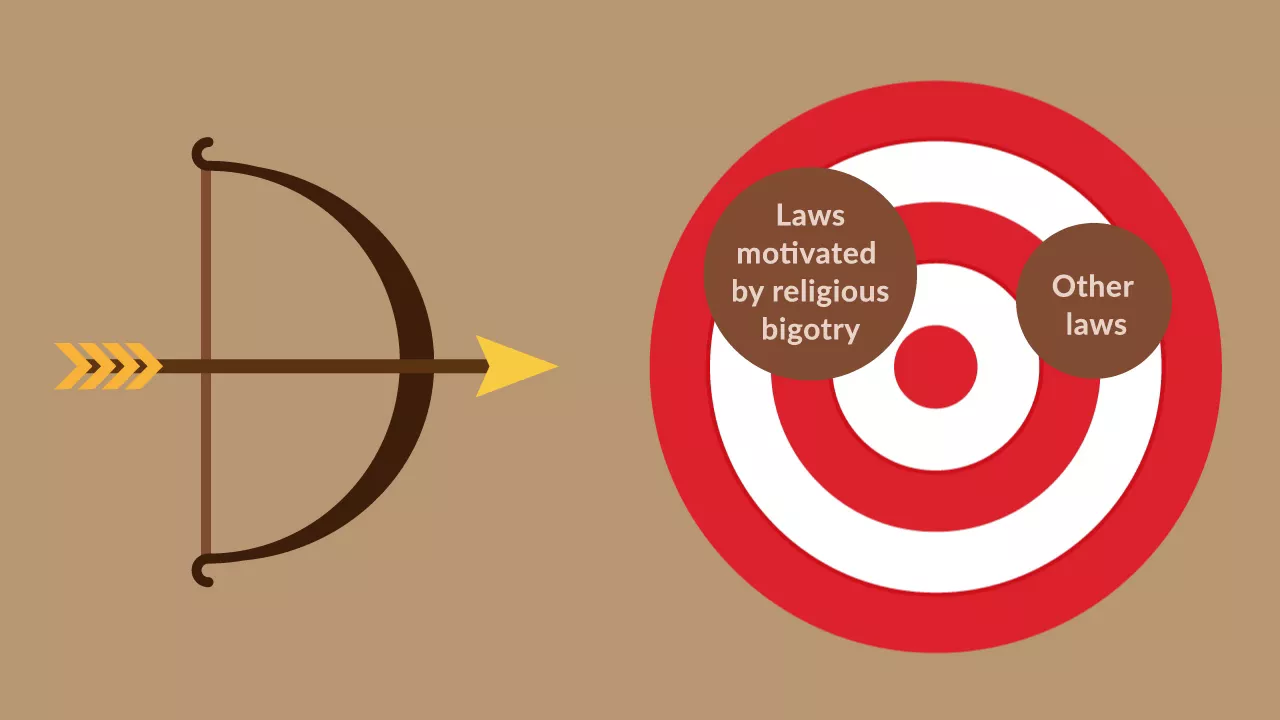
City of Boerne v. Flores Summary | quimbee.com
17.1K
In City of Boerne v. Flores (1997), the U.S. Supreme Court unanimously struck down the Religious Freedom Restoration Act (RFRA), holding that Congress exceeded its remedial enforcement powers under Section 5 of the Fourteenth Amendment by attempting to redefine the meaning of a constitutional right (the Free Exercise Clause) that the Court had previously interpreted in Employment Division v. Smith (1990); the Court emphasized that while Congress can prevent or remedy violations of constitutional rights, it cannot define the meaning of constitutional rights, which belongs exclusively to the judiciary, and that remedial legislation must demonstrate congruence between its means and ends rather than providing a blanket exemption from generally applicable laws.
Click to watch →
⚖️ Section 5 of the Fourteenth Amendment | An Introduction to Constitutional Law
401
In Kassenbach v. Morgan, the Court held Section 5 gives Congress power to remedy or prevent unconstitutional actions. In Sherbert v. Verner (1963), the Court established that laws substantially burdening free exercise of religion require a compelling interest. Employment Division v. Smith (1990) changed this, holding neutral laws need not show compelling interest. In response, Congress enacted RFRA in 1993, requiring states to show compelling interest for religious burdens. In City of Boerne v. Flores (1997), the Court held RFRA unconstitutional as applied to states because Congress lacked power to expand Section 1's scope beyond the Court's interpretation. Section 5 cannot decree the substance of constitutional restrictions.
Click to watch →
Religious Freedom Restoration Act
541
The Religious Freedom Restoration Act (RFRA) of 1993 is a U.S. federal law that reinstates the Sherbert Test, requiring strict scrutiny when determining whether a law substantially burdens religious exercise; under RFRA, the government must demonstrate both a compelling government interest and that the law is the least restrictive means to achieve that interest, though the Supreme Court later held RFRA unconstitutional as applied to states in City of Boerne v. Flores (1997), while it remains applicable to federal law.
Click to watch →
When Hobby Lobby Fought Obamacare | Burwell v. Hobby Lobby
80.9K
The Religious Freedom Restoration Act (RFRA) of 1993 was a federal law designed to strengthen religious freedom protections in the United States. It required that any government regulation imposing a substantial burden on religious exercise must demonstrate a compelling governmental interest and be narrowly tailored to achieve that interest. The Supreme Court had previously weakened RFRA's application in City of Boerne v. Flores (1997), which limited its scope to cases involving religious exercise rather than other aspects of religious freedom.
Click to watch →

ConLaw Class 27 - The First Amendment
713
The Religious Freedom Restoration Act (RFRA) of 1993 attempted to restore the Sherbert test by requiring narrowly tailored burdens on religious exercise. However, in Boerne v. Flores (1997), the Supreme Court struck down RFRA as applied to the states, holding that only the Court can define the First Amendment. About half the states subsequently adopted their own religious freedom restoration acts, creating a patchwork of protections.
Click to watch →
Deep Dive
Analysis of subsequent Free Exercise cases, such as Church of the Lukumi Babalu Aye v. City of Hialeah (1993) and Fulton v. Philadelphia (2021), to see how the Smith precedent is applied or challenged today.

Unwinding the Administrative State
100
In Fulton, Philadelphia controls foster care through 30+ private agencies. Catholic Social Services, acting on Catholic beliefs about sex and marriage, does not certify unmarried heterosexual or same-sex couples. After media exposure, the city cut off referrals. The Supreme Court was asked whether free exercise plaintiffs can only succeed by proving discrimination or whether courts must consider other evidence that a law is not neutral and generally applicable. The case raises questions about revisiting Employment Division v. Smith (1990).
Click to watch →

I Think Hawley & Kennedy ❤️ This Future Judge!
134.9K
The Free Exercise Clause warrants equal protection as fundamental rights. Smith v. Organized Church established that neutral general laws don't violate Free Exercise, but subsequent cases like Trinity Lutheran and City of Fulton have carved exceptions. Courts must apply analogical reasoning to determine which precedent best fits specific facts, as recent decisions have uniformly protected religious liberty while recognizing Smith's limitations in certain contexts.
Click to watch →

Religious Liberty’s Winning Streak: Do Recent Court Opinions Portend a Sea Change?
674
Recent Supreme Court decisions like Masterpiece Cakeshop (2018) and Fulton v. Philadelphia (2021) represent narrow victories for religious liberty rather than broad constitutional changes, as the Court has continued to apply the Smith v. Oregon (1990) framework that limits free exercise claims to neutral, generally applicable laws, though these cases have established important principles about government discrimination against religious entities and the need for strict scrutiny when laws create exceptions for secular conduct.
Click to watch →

From Employment Division v. Smith to Fulton v. City of Philadelphia: The Free Exercise Clause
8.7K
The Free Exercise Clause of the First Amendment has undergone significant doctrinal evolution since 1990, shifting from the strict scrutiny standard established in Employment Division v. Smith to a more nuanced approach that distinguishes between neutral, generally applicable laws and discriminatory ones, as demonstrated in recent Supreme Court cases including Trinity Lutheran v. Comer (2017), Espinoza v. Montana Department of Revenue (2019), and ongoing litigation in Fulton v. City of Philadelphia, which tests whether government can compel religious institutions to certify relationships contrary to their religious convictions.
Click to watch →
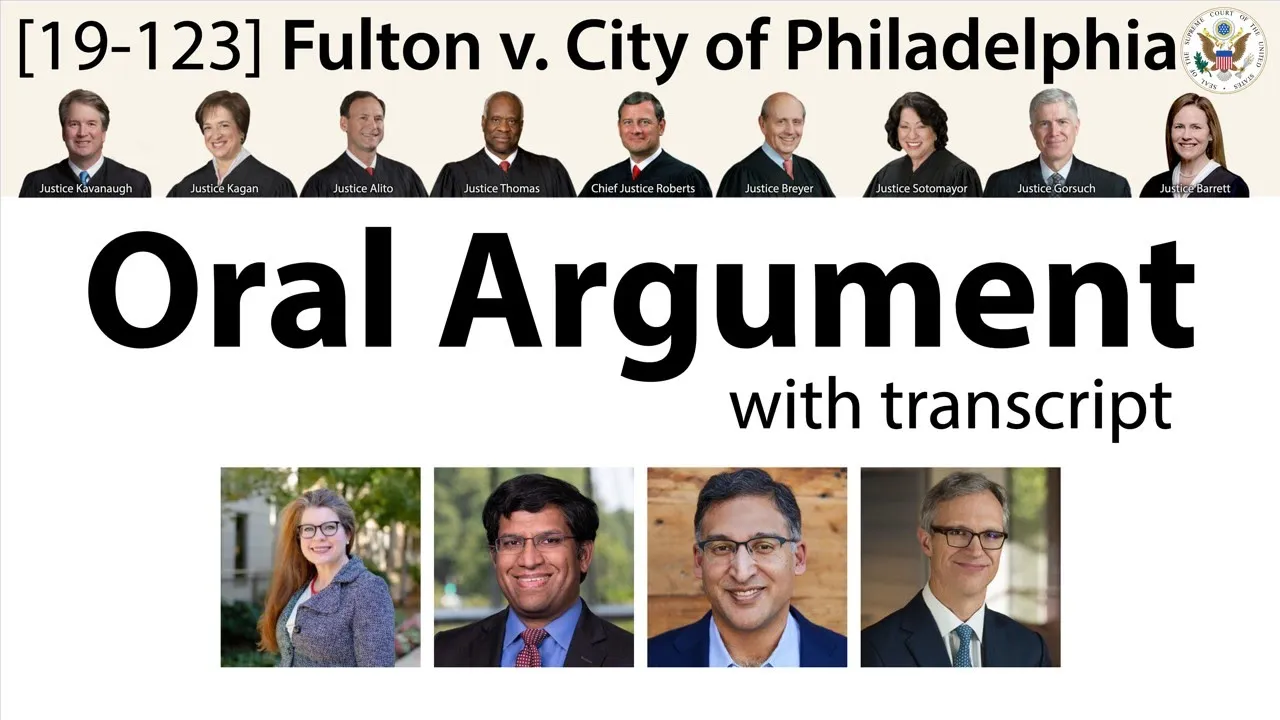
Oral Argument: Fulton v. City of Philadelphia
336
Employment Division v. Smith established that neutral, generally applicable laws may burden religious exercise without violating the Free Exercise Clause. However, this precedent has created significant problems in religious freedom cases. Smith does not apply when the government uses individualized exemptions or makes exceptions that undermine its rules. In Fulton v. City of Philadelphia, the petitioner argues that Philadelphia violated Smith by applying a non-discrimination requirement selectively while exempting other forms of discrimination, thereby undermining the law's neutrality. The discussion reveals that Smith's narrow view of the Free Exercise Clause has caused instability in religious freedom jurisprudence, as courts below applied Smith despite its inapplicability to this case. Some legal scholars argue Smith should be overruled to restore meaningful protection for religious exercise against government overreach. The core tension involves balancing government interests in preventing discrimination against prospective foster parents against religious organizations' rights to operate according to their convictions.
Click to watch →
Deep Dive
The distinction between federal and state protections for religious liberty, including state-level RFRAs and state constitutional provisions.
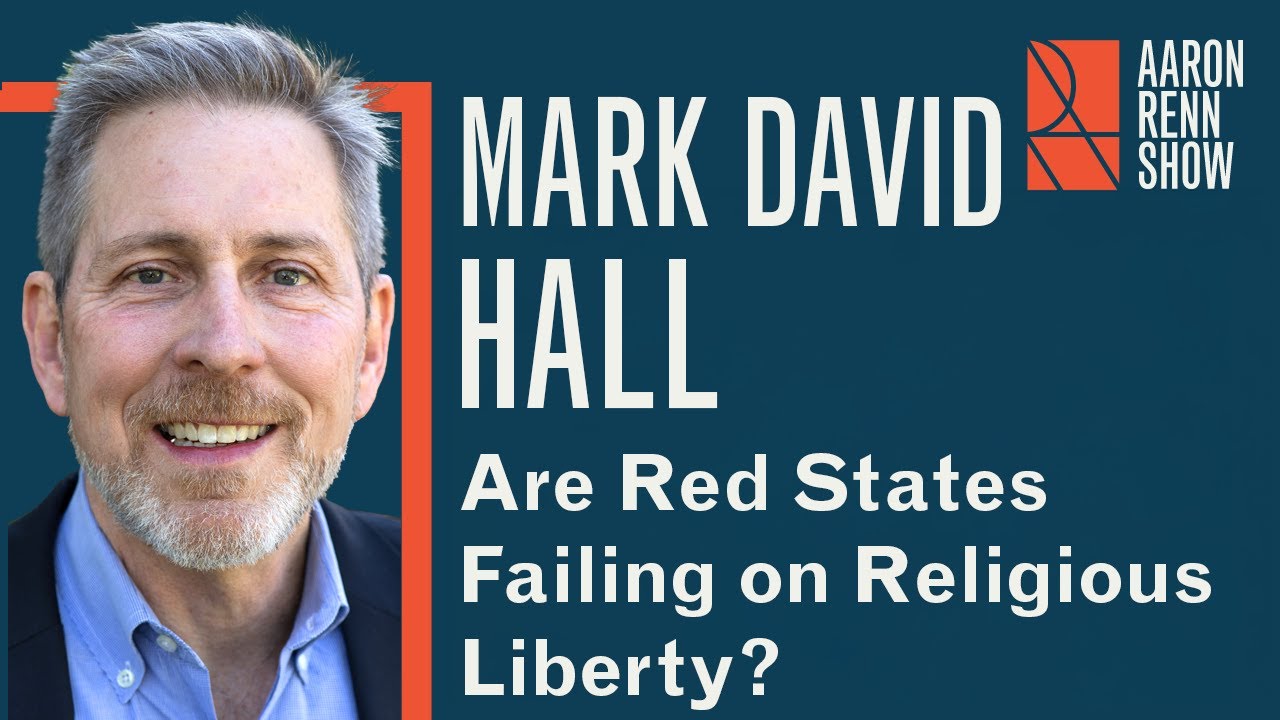
Are Red States Failing on Religious Liberty? | Mark David Hall
295
State-level religious liberty protections are crucial because federal protections like the Religious Freedom Restoration Act (RFRA) cannot apply to states, and the Supreme Court's 1990 Employment Division v. Smith decision significantly weakened First Amendment protections by ruling that neutral laws of general applicability do not violate religious liberty. The Religious Liberty in the States Index evaluates 47 distinct ways states can protect religious freedom, revealing significant variation: Florida ranks first with approximately 75% of protections, while West Virginia ranks last with only about 25%. Key protections include state RFRA legislation, medical conscience protections, religious holiday excused absences in schools, and parental rights regarding sex education. Interestingly, Illinois ranks third despite being a blue state, having passed most protections before 1994 when Democrats and Republicans could cooperate on religious liberty issues. Red states like Indiana and West Virginia rank poorly partly due to corporate lobbying influence and lower Catholic populations, though states like Montana and Florida have made significant progress. The research shows that RFRA protections actually benefit non-Christian religions more than Christians, as minority religions face greater risks of conflict with general laws.
Click to watch →

PT393 – Greg Lake, Esq. – Religious Freedom and the Church of Psilomethoxin
699
The Religious Freedom Restoration Act (RFRA) was passed in 1993 as bipartisan legislation to restore heightened constitutional scrutiny for laws affecting religious practices after the Smith decision. However, in Employment Division v. Smith (1990), the Supreme Court ruled that generally applicable laws like controlled substance laws are subject to lesser scrutiny. RFRA was Congress's response to restore the previous standard. In 1997, the Supreme Court ruled in City of Boerne v. Flores that RFRA does not apply to states, prompting approximately 30 states to pass their own RFRA-like legislation. Some state constitutions already provide equivalent or greater protection for religious practices.
Click to watch →

SLC General Counsel, Humboldt Co. Cannabis Religious Liberty Seminar
362
The US operates under dual sovereignty where states function as independent nations bound by federal government. The federal government has only enumerated powers in Article I, Section 8. States retain significant sovereignty and can pass stronger religious protections than federal law, with over 30 states enacting their own RFRA statutes. State constitutions may provide even stronger protections, with some courts holding state free exercise clauses require strict scrutiny for substantially burdening religious exercise. RLUIPA provides additional protections using Congress's Commerce Clause authority, requiring strict scrutiny for land use laws substantially burdening religious exercise. This federalist structure creates layered protections for religious exercise at federal, state, and local levels.
Click to watch →

First Amendment Class 9 - Free Exercise of Religion I
492
This segment examines the Religious Freedom Restoration Act (RFRA) of 1993 and its subsequent invalidation in City of Boerne v. Flores (1997). RFRA attempted to restore the Sherbert strict scrutiny standard for all government actions burdening religious exercise. However, the Supreme Court struck down RFRA as applied to states, ruling that Congress lacked authority under the Fourteenth Amendment to compel states to provide greater religious liberty protections than the Court had previously recognized. The Court held that the judiciary, not Congress, has primary responsibility for interpreting constitutional protections. Consequently, RFRA applies only to federal actions, while states retain more flexibility in regulating religious exercise under the Smith framework.
Click to watch →
A Talk on Federalism with Justice Jimmy Blacklock of the Texas Supreme Court
348
State constitutions contain similar but differently worded protections for fundamental rights compared to the Federal Constitution, including freedom of speech, freedom of religion, and due process rights. Rather than treating these as identical to federal protections, courts should recognize them as distinct rights flowing from two separate constitutions. When different words are chosen in state constitutions, there is typically a reason for the difference, and originalist interpretation should consider why state constitutional drafters chose different language than the federal Bill of Rights. This distinction matters because state courts can invalidate practices that comply with federal constitutional requirements.
Click to watch →
Peyote Case
Peyote Case
0:00- 1
Supreme Court reviews Oregon's denial of unemployment benefits.
- 2
Case involves Native American Church members fired for peyote use.
- 3
Court examines conflict between sacramental use and drug laws.
The Compelling Interest Standard and the Religious Freedom Restoration Act (RFRA)
The Supreme Court's ruling in Employment Division v. Smith (1990) faced widespread criticism for weakening the Free Exercise Clause. The primary counterpoint is the 'Compelling Interest Standard,' previously established in Sherbert v. Verner (1963). Critics, including Justice Sandra Day O'Connor and numerous legal scholars, argue that neutral, generally applicable laws can still severely burden religious practices, particularly those of minority faiths. They contend that the government should be required to justify any substantial burden on religion by demonstrating a 'compelling state interest' achieved through the 'least restrictive means.' This backlash led to the near-unanimous passage of the Religious Freedom Restoration Act (RFRA) in 1993, which sought to legislatively restore the protective standard that Smith dismantled. Opponents of the Smith doctrine argue that religious liberty is a fundamental right deserving of robust, active judicial protection, rather than being subjected to the whims of democratic majorities.
Understanding of the First Amendment, specifically the distinction between the Establishment Clause and the Free Exercise Clause.
The 'Sherbert Test' established in Sherbert v. Verner (1963), which previously required the government to show a 'compelling interest' to burden religious practices.
Basic legal concepts of levels of judicial scrutiny, particularly the differences between strict scrutiny and rational basis review.
The Incorporation Doctrine, which explains how the Fourteenth Amendment applies the Bill of Rights to state-level actions.
The passage and impact of the Religious Freedom Restoration Act (RFRA) of 1993, which was Congress's direct legislative response to the Smith ruling.
The Supreme Court decision in City of Boerne v. Flores (1997), which addressed the constitutionality of RFRA as applied to state governments.
Analysis of subsequent Free Exercise cases, such as Church of the Lukumi Babalu Aye v. City of Hialeah (1993) and Fulton v. Philadelphia (2021), to see how the Smith precedent is applied or challenged today.
The distinction between federal and state protections for religious liberty, including state-level RFRAs and state constitutional provisions.
15.4K views114likes1:52@QuimbeeDotComOriginal Release: 2021-01-08
the native american church combines traditional native american beliefs with christianity the use of peyote in worship is among the traditional native american beliefs the church follows the federal government and many states exempted sacramental peyote use from applicable drug laws oregon did not in employment division department of human resources of oregon versus smith the united states supreme court considered whether making sacramental peyote use illegal violated the free exercise clause alfred smith and galen black were fired from their jobs because as members of the native american church they had used peyote as part of a sacramental worship right the state employment division denied both men unemployment compensation because they were fired for work-related misconduct the oregon court of appeals reversed the agency decision as a violation of smith and black's free exercise rights the oregon supreme court affirmed and the state appealed to the united states supreme court in smith 1 the first time the united states supreme court considered the case it determined that if a state could criminalize certain religious conduct without violating the first amendment then a state could deny unemployment compensation for the same conduct because the oregon supreme court hadn't decided if sacramento peyote use was illegal under oregon law the united states supreme court remanded the case on remand the oregon supreme court determined that oregon's drug laws didn't exempt religious peyote use but then held that oregon's failure to make such an exemption violated the free exercise clause the united states supreme court granted cert to again consider the case
Up Next

115:43
Judicial Review vs Community Values | Federalist Society Symposium
@TheFederalistSociety
815 views•2011-04-19

4:27
US Secondary Sanctions Impact on EU Businesses and Blocking Legislation
@Bureauvandijk
1.6K views•2019-03-20

1:59
Lemon v. Kurtzman Case Brief: Establishment Clause | Quimbee
@QuimbeeDotCom
18.3K views•2020-11-13

24:42
Police Interrogation Tactics: False Confessions & Legal Reform
@LastWeekTonight
7M views•2022-04-18
Related Study Plans & Knowledge Roadmaps
Structured learning paths in Law
law
Self-Defense Law: Imminence & Castle Doctrine
01Foundations of Self-Defense Law
02Imminent Threat & Reasonable Belief
03The Principle of Proportionality
+ 3 more learning modules
12h6 modules
Explore Roadmap
law
Defamation Law: First Amendment & Actual Malice
01Introduction to civil torts and the First Amendment
02Elements of Defamation: Libel and Slander
03Public Figures vs. Private Individuals
+ 2 more learning modules
8h5 modules
Explore Roadmap
law
Hearsay Rule: Trial Evidence & Exceptions
01Introduction to Trial Evidence & Courtroom Basics
02Demystifying Hearsay: The Core Definition
03Non-Hearsay: Exclusions Under FRE 801(d)
+ 3 more learning modules
14h6 modules
Explore Roadmap
law
Medical Malpractice: Law, Liability & Care
01Foundations of Tort Law and Civil Liability
02The Four Elements of Medical Malpractice
03Defining and Proving the Standard of Care
+ 2 more learning modules
12h5 modules
Explore Roadmap