

















This panel discussion examines how federalism balances local community values against constitutional protections, arguing that while local communities should have autonomy, judges must sometimes intervene to protect fundamental rights like religious liberty and free speech from majority tyranny, using frameworks like the Westphalian theory of rights that nationalizes only those rights with broad national consensus rather than imposing judges' preferred theories on divided communities.
Judicial Review vs Community Values | Federalist Society Symposium
Added:The concept of Judicial Review, historically established by Marbury v. Madison, and how courts evaluate the constitutionality of legislative acts.
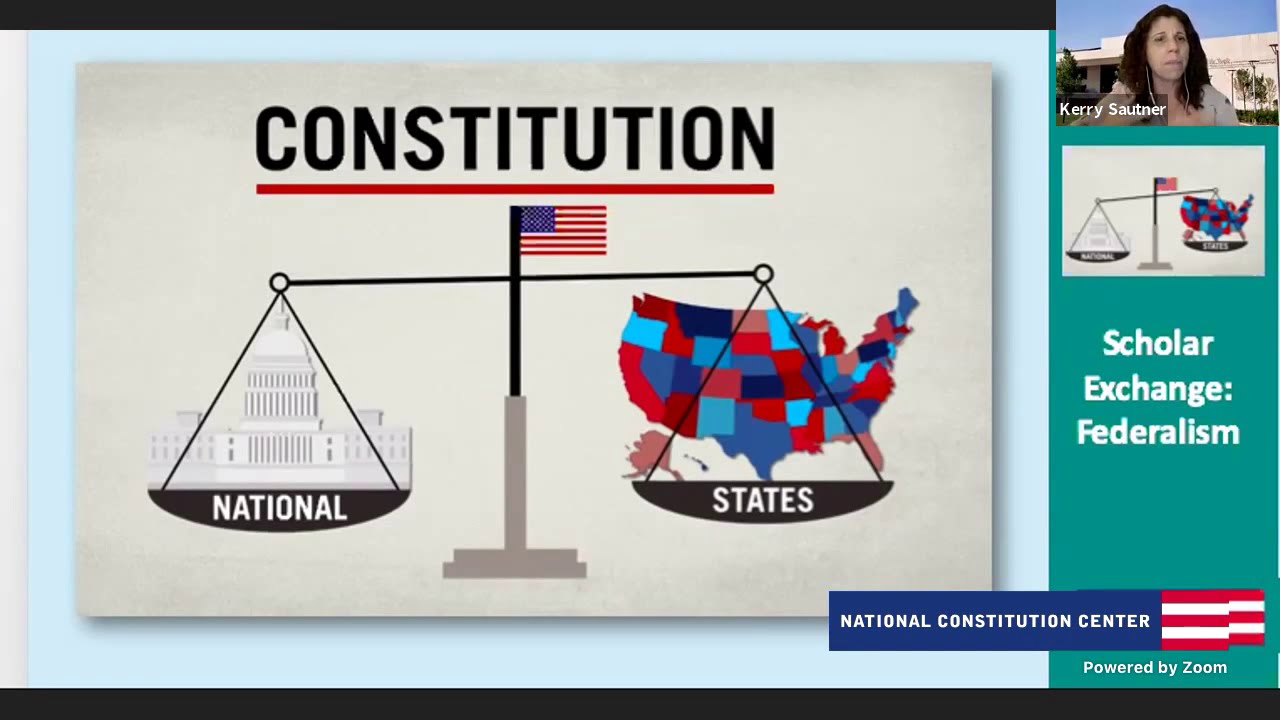
The principle of Federalism under the U.S. Constitution, specifically the division of power between the national government and state or local jurisdictions.
The 'Counter-Majoritarian Difficulty'—the inherent tension in a democracy when unelected judges overturn laws passed by popular majorities and elected representatives.
Basic tenets of conservative and libertarian legal thought, particularly the philosophies of Originalism, Textualism, and Judicial Restraint.
Analysis of recent landmark Supreme Court cases, such as Dobbs v. Jackson Women's Health Organization, to see how shifting judicial doctrines impact state-level policy and local community standards.
The study of 'Popular Constitutionalism,' which argues that the general public and elected branches should have a larger role in constitutional interpretation rather than yielding supreme authority to the judiciary.
Comparative constitutional analysis, examining how other democratic nations (like Canada, with its 'notwithstanding clause') balance judicial review with legislative and local supremacy.
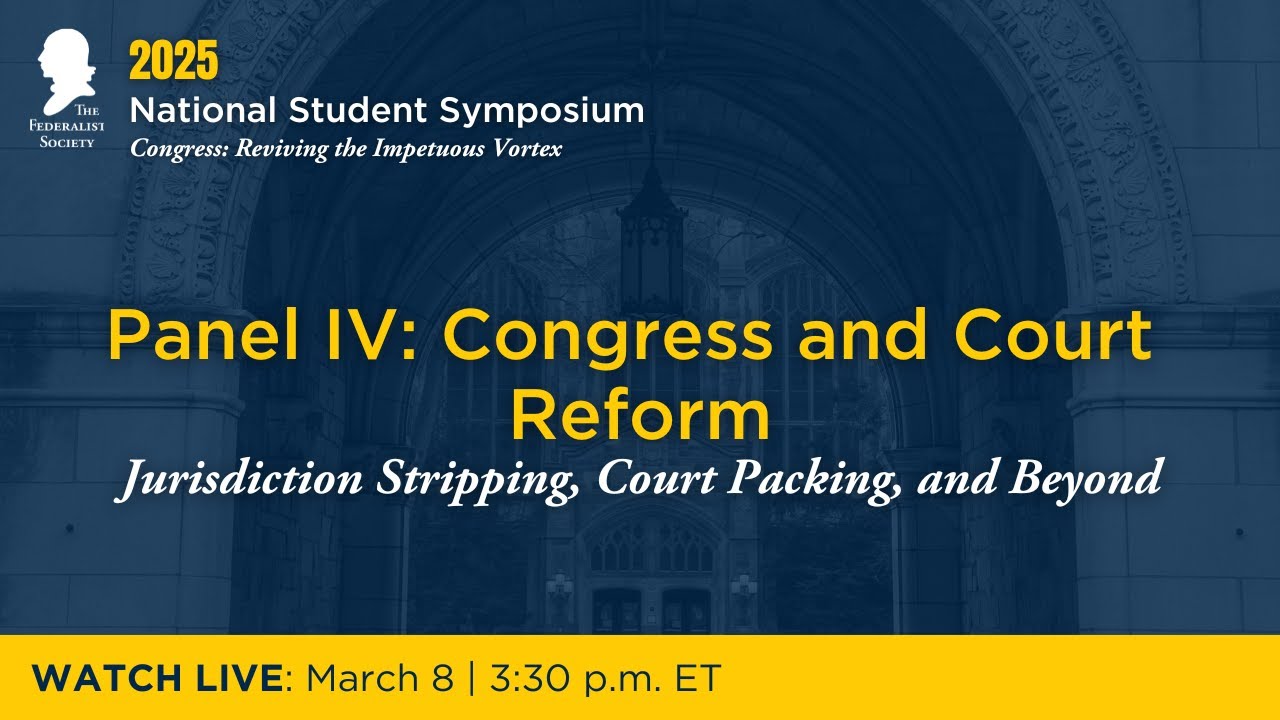
Proposed institutional reforms to the judiciary, such as jurisdiction stripping, court-packing, or term limits, aimed at addressing concerns of an activist or overreaching court.
815 views5likes1:55:43Original Release: 2011-04-19
welcome welcome friends Federalists to Ann Arbor and the University of Michigan law school thank you all for coming through despite the cold it's great to see so many suits here in Hutchin Hall uh it may be the greatest Confluence of formality Within These Walls since the 1950s but truly it's wonderful to see so many uh conservatives and Libertarians here and for those curious non- Federalists we hope you enjoyed the show I Craig choad the president of the University of Michigan chapter and I'm delighted to again to welcome you all here for the 27th annual Federalist Society student Symposium the people and the courts Mr Chief Justice John Marshall in his opinion in Marvy versus Madison wrote that it is emphatically The Province and duty of the judicial Department to say what the law is the Federalist Society has adopted part of this famous dictum in our statement of purpose and has added a corollary it is emphatically The Province and duty of the Judiciary to say what the law is not what it should be that warning was was added after some felt the judges typically and orderly and lawful group of individuals got caught up in the liberal Progressive idea of trying to make Heaven on Earth through the courts if not through the Congress it is an old and proud tradition of political conservatives to be anti- utopians they do this not because they hate Utopia but because they understand it to be a lie utopianism too is old before it was the Communists it was the Jacobin and before it was the Jacobin it was various apocalyptic preachers who promised Swift victory over evil in Paradise here on Earth seizing on this religious phraseology the late William F Buckley Jr with his genius for incomprehensible vocabulary helped popularize the slogan don't immanentize the escaton which was worn on buttons by the Young Americans for Freedom supporting Barry Goldwater for president in 1964 don't immanentize the escaton don't try to bring within the possible world the Perfection Possible only in the next just as Buckley helped form the conservative movement that nominated Goldwater in 1964 and elected Ronald Reagan in 1980 and 1984 out of nothing so too did the Federalist Society form out of nothing the conservative legal movement of today this movement though new could be viewed as part of the older conservative tradition rejecting utopianism in this guise it rejects the utopian view that law is the answer to every problem and that if our laws fall short of perfection it's the judge's job not the legislators to make them better our Symposium will try to address what a jud's job is by looking at his or her relation to the people that great mystery that periodically throws the Rascals out of office amends constitutions and generally as a headache to anyone occupied with a difficult and very important job of trying to make heaven on Earth today this Symposium would not have been possible without the support of many people we'll say the full round of thank yous for the banquet on Saturday but there is one thank you with which I would like to open the University of Michigan law school has been tremendously supportive of our effort to bring the Symposium here to Ann Arbor the staff and administration have been a great help and we've met repeatedly with our Dean Evan Kamer who has been positively enthusiastic to bring this strange Gathering here today before joining Michigan Dean CER worked in the office of legal council at the US Department of Justice taught law for nine years at the University of California Los Angeles and clerk for justice William Brennan on the Supreme Court of the United States Dean CER now teaches constitutional law here at the University of Michigan law school and assumed the deanship in 2003 because of his true commitment to diversity of thought and his encouragement of civil debate I would ask you to join me in thanking and welcoming the dean of our law school Evan CER thank you very much Craig and obviously I want to start by thanking Craig and all the other incredibly hardworking students here at Michigan law school who worked tirelessly to put together this this incredible weekend uh it's great to welcome all of you here uh first of all I'm I'm gratified to learn that it is not only Michigan law school students who refuse to sit in the front row um we love actually having uh conferences of this sort with people coming from around the entire nation because it gives us an opportunity to prove several important things an arbor is not within the Arctic Circle for example um when I when I lived elsewhere and first came to an arbor I always assumed it was one of those places that I used to see on the TV where people would be walking around in the snow using canes or sticks to try and find their cars under benath the snow uh this is a wonderful town and I hope you find a wonderful law school for those of you who have not had a chance to visit us before uh we certainly hope that you take the opportunity to to look around even outside this conference uh and enjoy yourself while you are here I almost couldn't say those remarks because when I woke up this morning and I saw that the weather report said we were going to get 10 inches or something like that of snow I realized I'd be a hypocrite uh but we pushed all that down to Ohio as I understand it so we're all uh we're all safe here um I myself as an academic have participated in a couple of these conferences and I just want to say I really enjoy uh the format of this kind of conference I think it's great to have a conference that on the one hand uh has and pushes a particular perspective and ideology to some degree and on the other hand the whole point of it is to be open-minded and to debate uh not to prze to test to push ideas back and forth um and and one way I can just capture that moment is uh you know Craig mentioned in his talk uh will Buckley and we all obviously know of his unfortunate recent passing um I do recall one moment I can't remember why it was but when I was clerking for justice BR and I had uh an occasion to be having lunch with him at ad Deli in Capitol Hill and William Buck Buckle walked by and he and the Justice actually knew each other not not surprisingly in those circles and they had a nice little conversation about which I think they disagreed about everything except maybe what they were going to order um but it was sort of it was repres representative of what is so great about the Federalist Society was here are two you know learned men uh going after each other in a very amicable way with a twinkle in each other's eyes uh neither one was really going to persuade the other I think we know um but they learned a slightly richer vocabulary for it and we're we're the better for the conversation so uh let me just conclude by saying it's wonderful having seen you all in action on various occasions elsewhere uh it's wonderful to have you here as part of our law school and we hope that this weekend is as outstanding as all the other conferences that I've participated in and indeed maybe the best ever we always aspire to such uh with that in mind um let me just start by kicking off the first panel for this evening and uh I don't know that there any formal introductions that I will do I think the first the leader of the first panel who is uh justice Mor organ will give more detailed introductions to the other members it is my job simply to say please welcome Justice Coran thank you Dean and thank you Craig and on behalf of my colleagues on the Michigan Supreme Court who will be joining you through this weekend I welcome all of you to Ann Arbor and to Michigan and thank the University of Michigan law school Federalist Society for sponsoring this uh student Federalist society meeting I would like to also note that this is the 25th anniversary year of the Federalist society and the 30th year of the Harvard Journal of Law and public policy and I think most interesting to the launching of that wonderful Journal is that without financing provided by people right here in mid Michigan Thanks to uh Senator Spencer Abraham when he was a student there wouldn't have been such a journal so we're proud to welcome you you to Mid Michigan I also um was thinking about William Buckley uh and all the wonderful articles I've read about him in the last couple of weeks um and and who should pervade the spirit of this weekend and um kicking off where Craig began and where the dean continued I would like to dedicate this panel and also I think this weekend to the memory and the spirit of William F Buckley I'd also like to dedicate it to my late husband Joe Grano who was The Faculty advisor and a frequent participant in many Federalist Society debates for many years you will recall that um Bill Buckley started a National Review by by saying that he was standing a thwart history yelling stop my husband would say first of all students you must learn history even in order to be able to yell stop and he would also famous famously say to me at least remember Mora that every day is a battle in the war of ideas but um Buckley did it well he did it with Spirit um and he taught us as Peggy Nunan wrote last week in her column that despair really is imortal sin there is nothing to despair about in this country my message to especially the students are who are here um I derive from the words of Gera who said and I quote what you have as Heritage take now as task for thus you will make it your own and this weekend we will be listening and learning from one another about history about what we think history has to say and we will be focusing in this particular panel on whether pervasive judicial review in our country threatens to destroy our local identity by forcing on us homogeneous National Norms all of the speakers who are on tonight's panel are going to be looking at this problem through various prisms and philosophical perspectives and I think the principal focus of this um particular panel May well be on the topic of religion on items like School prayer at football games on Public Funding of religious schools or um denial of Public Funding for religious vocations we will also I think have some discussion on social welfare programs um and values that are invoked there I have told each one of the speakers that they have 15 minutes to open and this is wonderful for me I am rigorously going to enforce these time limits um after they each make their opening remarks we'll open it up to their questions and comments to each other and then of course to your comments and questions our very first speaker on this panel is Professor Douglas Lok and a name well- loved by me certainly Douglas Lok is the Yale Kam cisar professor of law here at the University of Michigan law school he has published many articles on religious liberty and other issues involving constitutional law um and two books on the law of Remedies he is very actively involved in religious liberty issues in our courts and legislatures as well as in his law review writing he's an experienced appellate litigator he has argued in the Supreme Court of the United States in public and behind the scenes he has clients across the religious and political Spectrum he is a graduate of Michigan State University the University of Chicago and a member of the Council of the American law Institute he has previously taught at the University of Chicago and the University of Texas at Austin so to lead off our panel won't you join me in welcoming Professor Lok the organizers know that organizing a group of law professors can be like hurting Schrodinger's cats and they probably thought I was an example of it but my email said 645 that's my defense for wandering in when I did um because they worried about managing us you they they gave us a pricey of this panel but they didn't give it to you I think they didn't want to be embarrassed if we ignored it talked about something completely different um but it's a problem for me because I actually wanted to talk a little bit about what they told us to talk about so let me quote just a couple of sentences uh the pry that the speakers got said that it's a basic Assumption of federalism that individual communities can be different no disagreement so far it is a benefit of federalism that people can vote with their feet and migrate to communities that share their values and whose laws enable their Liberty uh but does pervasive judicial review threaten to destroy local identity by homogenizing uh Community Norms there's more in that vein and there are some mostes of examples and finally the provocative question whether the Constitution really requires the separation of God and football um which is a question I'll return to but I want to talk about this idea of voting with your feet which is pretty common in the federalism literature uh and it's a phrase uh that has always troubled me um there there are matters on which voting with your feet is an appropriate second best solution and it's a good thing we're always free to vote with our feet if we have to um but there are many things on which it seems to me voting with your feet is not a desirable solution at all it's a last resort and the task is to tell the difference uh and that resolves itself into a debate over which rights to constitutionalize and over the scope of each constitutional right or the appropriate scope and we have great debates about those questions and we take different views and some people want to interpret some rights narrowly and other rights broadly and some people have exactly the opposite preferences uh but we debate this um constitutional right by constitutional right um and unless your view is Leno groy is that there just shouldn't be constitutional rights the whole the whole concept of abil Rights is a bad idea uh unless you go to that stream I don't think this debate over the appropriate scope of Rights can be reduced or short circuited into any notion of voting with your feet voting with your feet is a sugarcoated way to describe driving descenders out of the community runaway slaves were voting with their feet darfurians fleeing to Chad are voting with their feet uh ethnic cleansing is a way of encouraging people to vote with their feet now the people who wrote Our panelist description didn't mean any of that uh but the difference between those examples and what they were thinking about has nothing to do with the concept of voting with your feet it has to do with the difference is uh the nature of the rights being violated the nature of the deprivations uh being imposed on those rights that led people to vote with their feet uh to tell the difference we have to talk about specific rights in the nature of the deprivation um Federalism is for sure prominent feature of our constitution federalism assumes there will be differences from state to state uh within States we rely heavily on local government and that assumes uh that there will be some differences from town to town or between rural and urban areas uh but there are also counterveiling ideas that are prominent in our constitution uh we are one nation indivisible the Pledge of Allegiance says and an American is free to go anywhere in this country as a visitor or as a new permanent resid president a person born in the United States is a citizen of the state wherein he resides when I moved from Texas to Michigan Michigan couldn't say no the law school could the university could no one had to hire me but the state had to accept me as a citizen uh and even before that even before I established residence when I was just looking around and exploring opportunities uh the Constitution said Michigan couldn't discriminate against me while I was visiting here uh Michigan owed me all the privileges and immunities of a citizen of Michigan which doesn't mean quite what it says and requires some interpretation but is a pretty sweeping guarantee of Interstate equality the notion that Michigan could choose to make my life intolerable and induce me to vote with my feet and go somewhere else is in sharp tension with those constitutional rights to travel and to establish a new residence anywhere in the country now it's equally obvious once I get here I can't insist that Michigan do everything just to my liking so that I won't feel pressured to vote with my feet uh I am not the Zar of Michigan I have no more rights than any other citizen of Michigan there obviously can't be 10 million Zars so on most issues we vote on some issues we create and enforce individual rights and the argument is about which issues should be the subs of individual rights and which issues should be left up to votes the individual rights we've created are important some of their applications are controversial but they are not especially numerous it is absurd to suggest the judicial review is pervasive as the panel description did every state has thousands of statutes every town has at least hundreds most of them have never been challenged uh most of them would be upheld without serious argument if they were challenged vast areas of social economic and Regulatory policy are left to the political process um individual rights are concentrated in a few areas a few areas that tend to be unusually important to to individuals speech religion Fair procedure equality of treatment core rights of property ownership most of those are also very important to the functioning of a democratic government and ownership of guns if the court reads the Second Amendment according to its text it's certainly one of those rights that is very important to many Americans however abhorent it may be to many other Americans by protecting individuals with respect of the things they are likely to feel very strongly about uh we reduce theocc on which they have to vote with their feet and that's a good thing voting with your feet is very expensive right it can separate families it can require you to leave jobs it is an obstacle to trade uh forcing people to choose their residence on grounds of political acceptability is bad for the economy if nothing else um the national floor under rights uh protects individuals from that kind of pressure uh it's essential to the right to travel and live throughout the country and it is therefore essential to National Unity right abolition is certainly Republicans probably could not safely travel in the south in the 1850s they could vote with their feet and stay out of the South and most of them did but that was not a good thing and the same is true of some rights today uh Alan Brownstein who is an observant Jew teaching in the law school at the University of California Davis uh says very eloquently when he describes this the School of prayer cases made it possible for families like his to leave the Jewish community in Brooklyn and move anywhere they wanted including relatively small and relatively rural communities like Davis where California chose to put its EG school and he's right about that uh the vote with your feet ideology encourages people to segregate themselves in ideological lines all the conservative Republicans go here all the really really conservative Republicans go over there and all the Democrats go uh somewhere else um and that is the more that happens that is very dangerous uh to National Unity our politics feels polarized today we talk about red States and blue States but it could be a lot worse and it has been a lot worse and the reddest of red States Utah John KY got 26% of the vote without campaigning and most of those 26% are happily living in with their neighbors in Utah in The Bluest of blue States in Massachusetts George Bush got 36% also without campaigning and in 34 of the 50 states the loser got more than 40% of the votes last time around that is very different from 1860 where Lincoln got no votes anywhere in the South um carried to its logical conclusion voting with your feet sorts people out into states with little in common and with the risk of Separation that that implies um it is a very good thing that Most states are not really red or blue but various shades of purple um finally let me say a little bit about it's less abstract say a little bit about specific examples what about separating prayer and football um I actually represented in the Supreme Court the parents who objected to prayer at high school football games in Texas it was a case about two religions in Texas um and I in other cases I've represented Evangelical students who were seeking freedom to speak about religion uh in Evangelical churches challenging government regulation that burden their exercise of religion and in the football prayer case in Santa Fe in a sense I did both one of the am objecting to prayer at football games was a Baptist family it was fed up with the school uh hassling them about religion and shoving religion down their throat at every opportunity um sometimes uh some towns have a value Community value uh of imposing religion on everyone at every opportunity at public events other towns have a value that religion is like pornography not to be seen or heard in public um and and I've advocated individual rights uh uh in both those kinds of towns the right to speak in your private capacity about religion in a public place including in public schools uh and the right to attend public events attend governmental functions without having to participate uh in someone else's prayer service at the beginning um I think we all agree that religious liberty one of the things that religious liberty means is no mandatory Church attendance right this State could not pass a law that says we don't care which attent which church or synagogue you go to but go to one once a week um on pain of criminal penalty um no one proposes that but in these towns where every governmental event begins with a short prayer service we get uh a modest equivalent of that the time is shorter the time commitment is shorter uh but people people are in effect forced to participate in someone else's religious observance as a price of participating in public business now we can argue about whether that whether they should just go with the fla whether they should view that as dominous whether there should be constitutional protection against that or uh whether the community interest outweighs the individual interest but the argument on the individual side is a serious argument um and and the sense of violation of individual conscience for some Believers of other faiths and for some non-believers uh is very strong and whatever we do with that particular example we need to think through that particular example we should not flippantly say the community can do what it's wants and if you don't like it uh vote with your feet um now in addition the strong desire to impose the majority's religion on everybody in town at every available opportunity is often associated with other kinds of intoler I'm going to tell you a little bit about Santa Fe Texas where the football prayer came from it's a little unfair Santa Fe is an extreme case um it's not entirely representative uh but the differences are matters of degree um towns that have produced this kind of litigation tend to produce other kinds of impositions on individual conscience uh as well in Santa Fe a number of teachers still had uh prayer were still conducting prayers in the classroom every day uh the litigation in Santa Fe actually began with an incident in which one of the school teachers passed out fires for a Baptist Revival meeting and one of his students asked if you could attend if you weren't Baptist and he said well what are you and she said I'm a Mormon and he spent the next 10 minutes denouncing Mormons as an evil cult um Santa Fe has had uh incidents Santa distributes Bibles every year and uh and and the children is Baptist Family reported that uh you when they didn't take a Bible on the ground that they already had plenty uh they got pushed and shoved and hassled over not taking Bibles we've had incidents with the clan and Vietnamese shrimp fishermen in Santa Fe and the only Jewish kid in town they did have to vote with their feet and leave town their son was being beaten up on the school bus and the school claimed to know nothing or to be unable to do anything about it um all those problems in one town is an extreme example but all all those problems are related to the kind of view that's says you know do it our way or leave uh vote with your feet at the other end there's a case going on in New York City right now the Bronx Household of Faith versus the New York City Board of Education that litigation is now in its 13th year the case was filed in 1994 it has been to the court of appeals four times about to be argued again later this month uh in the meantime there have been two Supreme Court decisions in point one of them unanimous both going against the school board um and the school board is still litigating claiming that it is that those cases are distinguishable and what is the issue well uh the school board rents its facilities to community groups over the weekend the Bronx Household of Faith is a church group that wants to rent one of these school facilities over the weekend and they say nope no religious speech anywhere in our school well that's a community value and the New York board of education is obviously very committed to that value uh but they're wrong they're discriminating on the basis of a core constitutional right they are suppressing freedom of speech they're making Viewpoint distinctions within speech um the Bronx Household of Faith and its members should not have to move to Alabama uh or Texas to find a a a place where they can exercise their Liberty I'm I'm I'm I'm I'm glad we have a constitutional right to free speech and sooner or later we'll be honored even in uh New York um you know the examples don't all come from religion the the the folks who uh think that uh uh the the uh that there ought to be more action on Community Values with respect to football prayer probably overlap quite a bit with the folks who think that Kyo was a terrible decision there ought to be more judicial review of how some communities choose to exercise their imminent domain power um you know the gun case is a case where uh Community Values differ very very sharply uh we've had a few towns try to force everyone to carry guns and that didn't go anywhere um and we got other towns that want to ban all guns and and it would be entirely appropriate if the court found some sort of individual right there um individual rights serve a purpose I know that no one in the federal Society really disagrees with that uh but the vote with your feet rhetoric um tends to imply disagreement with that the the question is not uh should communities always win and should people vote with their feet and leave for friendlier communities the question is what should be the scope of each of our constitutional rights we haven't always gotten the answers those questions right but I think on the whole over the long run of History we haven't done uh that bad for a set of Institutions run by human beings thank you uh Professor Lok for opening and let me ask those standing in the back you're welcome to come down and take seats here while I introduce our next speaker our next speaker is Professor rodri Hills who is a professor at New York University School of Law the William T Comfort professor at Law at NYU he spent 12 years here at U ofm as an associate and full professor before going to New York he's uh Yale undergrad and law school later served as a law clerk to judge Patrick Higginbotham of the fifth circuit and uh currently um he teaches and writes in a variety of public law areas constitutional law local government land use regulation jurisdiction conflicts of law education his interest in these topics Springs from their common focus on the problems of decentralization hence I think his um his relevant contribution to this panel uh Professor Hills also serves um in many cases as councel for the ACLU he's filed briefs and cases challenging the denial of domestic partnership benefits right here in Michigan the exclusion of prison inmates from the protections of State anti-discrimination denial of rights to challenge prison SCS visitation by family members for prison inmates and discrimination of recently arrived Indigent migrants in public assistance so uh we look forward to hearing from Professor Hills Professor Hills thank you thanks Justice corg and I thank you very much for that introduction um you know I spent 12 years in Michigan and then I voted with my feet and skid outled to Brooklyn just a couple years ago um but I come back and I wonder sometimes did I make the right decision it's a beautiful place and a wonderful community and um what I want to talk today about is something that Doug alluded to um which is the idea of national rights and the relationship of federalism to National rights um my main goal is to make sure I finish in 10 minutes I think I can do it because I don't have a lot to say um my essential question I want to ask Doug and the rest of the panel and you is um whether Federalism is a mechanism by which we choose rights let me explain um you can imagine choosing rights deductively or inductively you can imagine choosing rights through abstract text original understanding and history very abstract principles and deducing from these principles all the minor ingredients of the rights call that the French way or and it certainly is the geometric style of French rights reasoning even today or you could imagine trying to figure out what our rights ought to be from our practical experience of what the consequences of different rights are and also about what our values are through asking people um if you have the latter I want to call that inductive in other words you'd hold lots of polls to see where we have deep National consensus and where we find deep National consensus and also when we see that the consequences of different rights seem to be beneficial we might nationalize them now if you have that latter inductive view of Rights Federalism is not a qualification of Rights it's the way rights are created and I think that's the American way now the reason I say this is our Bill of Rights of course was not sprung out of the head of Jefferson or Adams it came from a bunch of state constitutions indeed the Bill of Rights was simply a bunch of state constitutions Bill of Rights stapled together and collated with all the outliers eliminated the idea is we want to choose those rights on which there's a national consensus and so in 1791 Madison presented a list of Rights but they were rights that first were tested field tested as it were in the states and they were rights on which there was deep National consensus precisely because many different regions like those rights now the court also observes this method of choosing rights how do we decide whether a right in the Bill of Rights is incorporated through the DU Process Clause of the 14th Amendment again we don't do some deep Rian calculus we count States Duncan V Louisiana says look at those rights that are deeply widespread like the right to jury trial and a peted criminal jury that right will nationalize what about civil jury no too many outliers we got some civil law states like Louisiana what about grand jury no too many states don't have that one we're not going to nationalize that one it's not fundamental in the inductive sense that is to say it has not been field tested and found successful in enough States likewise with substan of due process if you look at the Court's recent jurist Prudence on things like physician assisted suicide or um same-sex sexual intercourse justices like Kennedy count States and they say you know if there's a huge gravitational pull of states in One Direction we might nationalize that right but if it turns out that for instance a con right to physician assisted suicide has not been accepted in a lot of States we're not going to nationalize it likewise in Troxel a case that dealt with grandparent visitation the court counted literally counted the number of states that allowed or required grandparent visitation and then concluded by a plurality we are not going to constitutionalize a right against grandparent visitation too many states allow or require it we will constitutionalize a much weaker form of right a right for parents views about whether Grandpa and Grandma should visit um to be taken into account but we refuse to constitutionalize a broad right against mandatory grandparent visitation because we've counted the states and we've seen in the field tests that is not a right that should be nationalized because there's no deep National consensus in favor of it all of this of course can be summarized by Article 5 which is precisely simply a polling mechanism you hold lots and lots of State polls and the ones that survive the process the rights that survive the process they're promoted um the French don't have such a mechanism now I mention this because if you have this view of federalism as the premier mechanism to nationalized rights then you might want to endorse what I'm going to call the West philan theory of rights now I call it the West failan Theory after of course the 1648 piece of West philia in which a civil war a bitter religious Civil War that tore Germany apart for 30 years was settled of religious rights to domestic devotions which they nationalized then they said on other areas that are highly sensitive and controversial we're going to devolve those issues to the lender at that time not the lender but to the territorial Estates the duchies and the bishop Ricks that made up the Holy Roman Empire and the theory was these are issues on which we're bitterly divided if we were to nationalize either version of a right either the Catholic version or the Protestant version then we would end up causing a civil war so rather than trying to nationalize anything about which there's not a strong German consensus we're going to devolve those sensitive issues now if you applied the West failan theory in the United States I think you'd have a three-part test for nationalizing rights and for not nationalizing rights first you'd ask is there deep disagreement about the definition of Rights second you'd ask is there heterogeneous subnational populations that have greater consensus about those rights than the national population and third you'd say look is the disagreement at least moderate enough that different subcommunities can tolerate the idea of other subcommunities going the other way without feeling that the very idea of unified National citizenship is going to be eroded and if the answer to the first is there's deep disagreement and the second is there are heterogeneous subnational communities that disagree less and third if it won't erode our sense of national citizenship to allow the subcommunities to go different ways then I say don't nationalize the right and that really means that judges will have to conduct the following psychologic ically painful experiment akin to the Chevron test with administrative agencies they will have to forgo their ideal theory of Rights their deductive theory of rights when there's disagreement about the scope of a right in favor of a right for which there's consensus that is to say you might have an ideal theory of say religious free exercise it might make a lot of sense it's coherent it's parsimonious it meets all the law riew standards for being a good theory and you might think that outliers on that theory you know know are deeply mistaken but if there's deep disagreement about the theory in the nation and if the Rival theories are plausible reasonable within the bounds of what we' think is acceptable in terms of national citizenship then you can't nationalize your theory now that might seem uncontroversial but in a second I want to show you how difficult it is for both conservatives and liberal judges to observe this West failan Theory restraining themselves from nationalizing rights on which there's no consensus because essentially it requires you only to nationalize theories of rights which you often think are second best now I think the ranquist court succeeded in adhering to this West failan theory in a case that I think Doug passionately disagrees with and that's why I thought I'd talk about it a little bit because I think they got it exactly right the case is lo V Davy um the case involves Josh Davy a Washington state resident who wants to study Theology and business administration at an Evangelical Protestant School in Washington now Washington provides these State scholarships to people who who want to study if they have Josh's grades and his Josh's very moderate income his family doesn't have a lot of money but they only provide you with the money if you're not going to study religion now I mean I should say if you're not going to study religion for the end of worship um they in other words discriminate on the basis of what you want to study if you want to study religious instruction or religious worship or theology then they're not going to give you if you want to study anything else they will on one perfectly coherent deductive theory of Rights we should overrule what Washington did they're discriminating on the basis of religious Viewpoint they're singling out one group um in a way that the Supreme Court has suggested in other cases should not be allowed um because it's essentially a violation of the either the free exercise of religion or maybe Free Speech but here's the Dilemma for a huge part of this country's history a very large part of the community has believed in a rival mutually exclusive right a right not to have their tax dollars go to religious study now you might disagree with this Theory but it's a theory held in Passionate good faith call it the no Aid Theory we cannot give Aid to religion um it's often called the separationist theory I don't know if I agree with it but I think it's plausible it's often accompanied by special exemptions to religion from generally applicable laws that is to say we won't get give you any money but also exempt you from a lot of regulatory burdens that other people have to face and the idea is we want to sort of separate the state and the church in a way that will make sure that churches you know are denied some benefits that other people get but also get some special benefits of isolation they according to the theory are useful to prevent religious from religions from being established I do not want to defend this Theory I merely want to say that if you're a West failan about rights you cannot prohibit the theory that is to to say you cannot nationalize the anti-discrimination theory and wipe out the Noid Theory because the Noid theory has a lot of popular support and deep historical resonance it has not been defeated in the State field tests many state constitutions constitutionalize including Washington the no Aid Theory and that's exactly what lock V Davy holds ranquist writing for the majority and lo vavy does not have a coherent theory of religion he writes an opinion that essentially says look lots of lots of States adhere to the no Aid theory for many many years they've adhered to this Theory we cannot constitutionalize the theory of religious liberty that would outlaw a plausible theory of religious liberty because that would in itself violate a meta right a right for reasonable disagreement about what a right should be a right to give each theory of Rights equal respect and concern when they're plausible and they don't undermine a unified system of national citizenship in conclusion since I didn't make my 10-minute goal I want to suggest to conservatives out there that it's going to be very challenging for you to have the forbearance and tolerance to stick with the West failan Theory now many conservatives most famously Scalia in his descent in Casey suggested such a theory he said you know it would be a great idea if on abortion different states went their own way because this is a deeply divisive issue on which there's no National consensus but SC of course descent it in lock V Davy and he pushed the anti-discrimination theory saying we should Outlaw the no Aid the Theory likewise other Federalist lovers like justice o' Conor called for the enforcement of a broad public use theory in kilo in descent even when there's a rival theory of eminent domain powers in many regions of the country on and there's no consensus whatsoever on public use Thomas is an advocate of federalism but he calls for a colorblind Constitution even when there's a rival theory about racial equality allowing so-called benign racial classifications and no deep National consensus in the field test from the states on what our rule on Race should be so the willingness to curtail your own ideal and controversial theory of rights in the name of regional diversity will depend upon your tolerance for uncertainty about the law and legal materials if you have that kind of Tolerance I think you have an inductive Theory and you won't nationalize anything that hasn't won a significant amount of support in the states and if you have that theory I think you'll think that lock VI Davy for instance is rightly decided and that the three denters I've just met mentioned in kilo in grer and in Lo Davy we're mistaken thanks thank you Professor Hills for your provocative remarks and next we'll hear from Professor Garnett again I invite persons standing in the back to come and take seats there's plenty of seats down here we're going to hear from Professor Richard Garnett next he is an associate professor of law at Notre Dame law school where he teaches and writes about criminal law capital punishment religious freedom and freedom of speech he has a ba in philosophy Summa Kum lad from Duke University and his JD from Yale he was an editor of the Yale Journal of Law and Humanities uh Professor Garnett um before he came to Notre Dame served as a law clerk to Chief just ranquist Chief Justice ranquist in 1996 and previously to chief judge Richard Arnold of the US court of appeals for the a circuit he practiced law at the Washington DC law firm of Miller Cassidy laka and Leen special specializing in criminal defense religious liberty and education reform matters won't you welcome Professor Garnett thank you judge I have to start by just setting myself in firm opposition to the separation of God and football um we at Notre Dame have seen what happens when God shuts his eyes on football and uh we don't want to see that again unite them once again well okay it is um as Professor Lake pointed out uh our conference program says that it's a basic Assumption of federalism that individual communities can be different that they can have different values that they can have different laws and this is certainly true at the same time as Professor Lok pointed out it's a basic Assumption of our federalism that we the people are committed to some shared values and that our individual communities are bound by some shared laws there's a reason why these distinct communities are distinct local communities came together as they have to form a more perfect union the Union is not an accident we have a shared National project so the hard questions then it seems to me are not so much whether local variation and experiments are good because they are it is how we should identify the shared values that will sometimes Trump and how we should decide when they Trump now our program also asks uh does pervasive judicial review threaten local identity by homogenizing Community Norms again the short answer here is yes of course it does that is pervasive judicial review certainly does threaten to destroy local identity but to say this is not to criticize judicial review or to celebrate excessively local identity it's just a fact and this and threatening than our constitution allows or our commitments to self-government warrants now it's true again that an important feature of our Federalism is variation and variability among local communities and and it's also true that some values and some Norms have been homogenized not always by judicial review but by the ratification of the Constitution and its amendments the Constitution after all is the supreme law of the land anything in the Constitution or laws of any state to the contrary notwithstanding now of course just citing the supremacy clause doesn't answer all the hard and interesting questions that uh today's program raises still it does remind us that the text and the history and the structure and the theoretical premises of our constitution they Point toward sort of an A janisac type way the importance of both diverse local Laboratories of democracy and our larger National community and so vindicating the values and the aims of the national Community will sometimes but only sometimes require limiting the expression in law of local majority's values now for what it's worth I tend to think that our Constitution's Liberty protecting structural features including our federalism I tend to think of them in terms of enumerated powers rather than in terms of state's rights or community's rights that is it seems to me that our Constitution and other constitutions could do this differently but our constitution appreciates and reflects and protects localism in a particular way namely by stating clearly that the national government and its various branches have only the powers that are delegated to it by we the people through the Constitution and so federal courts do have the power to decide cases arising under the Constitution but they do not have the power at least I don't think the Constitution gives them this power to survey the national scene looking for local values and Community Norms that are in need of homogeneization they don't have the power to search the landscape for abstract rights and Liberties that are somehow in need of judicial vindication that said though a federal court sometimes in the context of a particular case will and should refuse to enforce a law that reflects the values of a particular Community such a refusal can be seen there's no getting around it as judicial interference with Community Values and sometimes such a refusal will result in homogenizing of norms so it seems to me that our constitution makes some such interference unavoidable the question for us then for we Federal Society members who takes seriously The Constitution's structure and its text is not so much whether federal courts May or should interfere with values of the community but when and how they may do so and in my view both the Constitution and sound political Theory uh councel difference and restraint on the part of Judges so to say that federal judges May and should refuse to give effect to local laws and values that conflict with constitutional guarantees sometimes is not to say that they should do so lightly or quickly or too often our constitution does commit us as a national Community to certain values at the same time an appreciation for the values associated with localism and an appropriate humility when it comes to second-guessing politics these will inspire wise judges to be cautious and differential and to hesitate before declaring that a particular expression of local values is trumped by those of the Union so how do we get it right how do we find the line or strike the balance uh in my view and admittedly I'm a bit biased here but the Judicial philosophy of my former boss the the late chief justice ranquist is a big help uh if you remember this idea of Judicial philosophy is tricky it's tiring work tracking it down in recent confirmation hearings we saw staffers scouring through John Roberts's um White House Council memos or Sam alto's undergraduate thesis or even Harriet Meyer's kind of painful thank you notes um as it happens though renquist provided a very reflective and revealing statement of his philosophy just a few years after the joint after joining the court in a famous essay called at least famous to me uh the notion of a living Constitution now renquist aim in critiquing this notion and in so doing appearing To Be A Champion sort of a necrophiliac champion of a dead Constitution uh his aim was to insist and to ensure that we the people the ultimate source of authority in the nation he called us acting through our politically accountable Representatives that we retain the right to serve as the agents or not of constitutional change so what animated this essay was not a fool hearty attachment to the status quo or sort of a misguided view that the founders had all the answers to every 21st or 20th century uh economic question right it was instead just a cleare eyed appreciation for this tension that can exist between the anti-majoritarian facets of judicial review and the political Theory that's basic to a Democratic Society now in the years after he wrote that essay he developed and I think defended aily uh this basic experments are good because they are it is how we should identify the shared values thatal philosophy and I think his big picture view of our constitution uh and of the government that it constitutes uh were captured really well in just two quotations taken from two of his better known opinions and so I'm going to read read these to you the first is from uh his opinion for the court in United States versus Lopez which I'm sure most of you have read and he wrote the Constitution creates a federal government of enumerated powers as James Madison wrote the powers delegated by the proposed Constitution to the federal government are few and defined those which are to remain in the state governments are numerous and indefinite this constitutionally mandated division of authority was adopted by the French fers to ensure protection of our fundamental Liberties the second passage is this from his descent in the flag burning case Texas versus Johnson the Court's role he said as the final Expositor of the Constitution is well established but its role as a platonic Guardian admonishing those responsible to public opinion as if they were truant school children has no similar place in our system of government these two passages it seems to me go a long way in presenting the vision That animated renquist work on the court and I think they're also useful guides to anyone seeking to find the balance mentioned earlier seeking to answer the questions this panel raises so ranis was a federalist in a madonian sense he he believed that we the people had authorized our courts our legislators our federal administrators to do many things but not everything the nation's Powers he thought they're vast where they exist but they're also divided few and defined and so Congress made may not pursue every good idea or smart policy or worthy end and nor should courts invalidate every foolish one or even every immoral one the point of this Arrangement this constitutional experiment in institutional design was not simply to hamstring good government as it sometimes said it really was to ensure protection of our fundamental Liberties including thinking of today's topic our Liberty to govern ourselves in our local communities that is this experiment in institutional design sought to protect Liberty by dividing enumerating and structuring power and the Constitution's structural features renquist thought they shouldn't be left entirely to the care of those branches of government that might not have an interest in their health the structure of government matters to the well-being and to the flourishing of persons and it matters to the identity and self-government of communities and so it's appropriate for courts to enforce the boundaries that are inherent or involved in the structural features so so far we see renquist philosophy perhaps pointing toward a more interventionist or quote unquote activist stance but then on the other side in Texas versus Johnson The Descent underscores an a companion Commitment if you want to modesty with respect to moral controversies and debatable policies and Community Values many regard renquist platonic Guardians line as little more than disingenuous cover for right-wing activism I think this charge is is misplaced uh I don't think it's arrogant or illegitimate for a judge to enforce the Constitution's structural features and I also don't think it's disingenuous for such a judge to believe that judicial review should only rarely be employed as an endr run around popular government so running through winquist opinions on on lots of questions right assisted suicide abortion Christmas displays and so on is not at least in my view is not conservative activism but a reasonably consistent Fidelity to this idea that our constitution leaves most of the important and difficult and divisive qu uh questions to the people so to be sure as I mentioned at the outset the Constitution has counter majoritarian features it effectively removes some questions from the political Arena but only a few at the same time it's a document that reflects strong commitments to popular sovereignty and relies at least as much on constitutional structure as on judicial review to constrain majority's resolutions of chenging moral questions well what about religion what about the fact that in some local communities as Professor leok explained certain religious beliefs are widely shared and inform those communities identities or their sense of themselves and inform the laws through which that identity is expressed again as I see it the question here is not whether federal courts should ever invalidate local communities efforts to acknowledge or act in accord with shared religious beliefs it's how and when they should do so as a national Community we're committed to the rule that governments can't establish religion or prohibit its free exercise and I think courts should enforce this rule even when doing so requires them to in a sense interfere with local communities values saying this is easy the hard part the very hard part is giving judicially enforceable content to this Rule now in my view the most important religion related question that's relevant to our topic is not whether the ten command ments can go up on a courthouse wall and not whether even whether a prayer should be said before a football game I don't mean to say those are trivial but it seems to me there are issues that are even more important the issue as I see it is not whether judges should interfere in the expression through law of community's religious values it's instead whether judges and governments generally should interfere with the independence and the autonomy of religious communities and institutions this is the religious freedom question the one that should matter to all of us who care about pluralism diversity and Liberty and I just note that if you want to learn a lot more about this topic there is no one better to read than Professor lok the development and the testing and the proclamation of diverse values in a liberal Society like ours it requires free and distinctive institutions especially religious communities so yes judges should be cautious but ready to second guess local decisions they should be particularly careful though about interfering in the internal affairs of those mediating institutions that generate our community's values and that stand ready at least at their best they stand ready to challenge the state thanks thank you Professor Garnett for sharing your insights with us this evening our last last speaker this evening will be Amy Laura wax the Robert mundheim professor of law at the University of Pennsylvania uh Professor wax graduated from Yale she also holds a medical uh degree from Harvard and a JD from Columbia she trained as a neurologist before uh becoming a law clerk to judge Abner Mikvah on the DC Circuit Court of Appeals and she has also served in the off Office of the solicitor general of the US Department of Justice from 1988 through 1994 she's argued 15 cases in the US Supreme Court uh Professor wax taught at the University of Virginia law school before coming to Penn she has written extensively in the areas of uh social welfare uh rethinking welfare rights uh she has also written extensively on the areas of same SE marriage she is currently um Midstream in writing a book called race wrongs and remedies group Justice in the 21st century uh won't you join me in welcoming Professor wax to the panel this evening oh thank you uh for inviting me um my As I understood it my mandate today was to talk about uh judicial interference with Community Values uh so my plan in this short time frame and I realize there's an arms race going on here as to who can uh promise to speak uh the shortest time and in fact exceed that time so I will try to uh you know best everyone here uh in both I guess uh my my charge here is to talk about uh the interplay between the Judiciary uh as it's engaged in judicial review of um law and Regal legal regulation in the area of social welfare rights and Community Values um and so here I'm going to focus on legal rules and policies that bear on economic redistribution and poor relief uh this is not an area I think uh that students currently know much about and that in itself is kind of interesting uh because it used to be quite a central concern uh of legal education now what's particularly striking in this area uh of policies bearing on economic redistribution is how uninvolved the courts are currently uh in this Arena uh and as far as I know there are no Grand plans a foot by advocates for the poor those concerned with economic and social inequality to reinlist the Jud IAL branches in any significant way uh in the effort to address these problems and if you visit the website of organizations that advocate for the poor uh those websites uh those sources bear this out um and no reason to believe that uh that courts will make much difference uh in these areas in the near future um now that certainly was not always the case not by a long shot so I want to talk a little bit about uh how this evolution in the Court's role occurred and its implications um now in the 1960s and70s which I guess is ancient history to many of the people here um welfare rights Advocates were very eager to use the courts to advance their agenda uh which was basically to establish economic rights and to invalidate uh restrictions on conditions for the the receipt of Public Assistance and indeed that's what old style law school Poverty Law courses were all about they were about teaching students how to litigate on behalf of the poor to expand access to public largess to defeat any and all restrictions uh on such access on the theory that those restrictions enshrined the race and class prejudices uh of the United majority so what were the specific goals of this agenda above all to eliminate distinctions between the so-called deserving and undeserving poor now as Martin gillin has documented in his book why people hate welfare public opinion polls have consistently revealed that voters overwhelmingly Embrace this very distinction the categories of deserving and undeserving poor roughly track the so-called luck egalitarian divide between those who suffer deprivation through bad luck uh or forces outside their control and those who are disadvantaged by their own imprudent choices it turns out that voters don't hate welfare as such they're more than willing to help people out as long as those they help uh are there in their position because of Misfortune and not because of misfeasance indeed I have argued the public can be said to embrace something like a conditional Reciprocity for public assistance there is a robust support for fundamental Norms of self-reliance the notion that able-bodied person should work to to support themselves to the extent they are able and that everyone should strive to minimize their economic dependency this distinction between bad luck and bad choices as translated into poor relief policies traditionally had two important aspects first it took account of beneficiaries personal conduct including their sexual conduct as that might contribute to economic need and dependency and second the distinction was attentive to the beneficiary's own role in remaining dependent by failing to engage in gainful employment that is by failing to work or by failing to prepare for work now the voting the voting majority's concern with deservingness and with personal conduct and this has been uniformly the case uh contrasted starkly with that of welfare rights Advocates as supported by Elite opinion including Elite academic opinion which was today which was then and continues to be today almost unrelentingly hostile to the deserving undeserving poor distinction and here I do draw attention to this divide in public opinion what the people think because we often see that as a monolith but in fact this is just one area and there are many in which majority opinion the people's opinion is at odds with what I would call uh Elite opinion shall we say um Elites buying into a wholesale attack on the very concept of dessert itself often take the position that individual conduct is not and should not be morally or legally relevant to deservingness in the economic sphere since the poor are trapped by their social and economic condition right uh and the notion that they could do to do more to support themselves is misguided uh and delusory so what was the role of the courts in mediating between these contrasting views on the proper scope of economic largess uh of public benefits over time the Court's role has been decidedly mixed in a few key opinions in the 1960s and70s the Supreme Court placed itself distinctly at odds with popular opinion on the proper limits of public support to the poor through various Federal programs food stamps afdc uh and also various aspects of Social Security Programs so just briefly what are some of the important episodes in Miss Saga first in King V Smith Lewis V Martin and other cases the court struck down something called man in the house rules that many states uh throughout the country had adopted in the in setting the terms of poor relief that is aid for families dependent children benefits States like Alabama and California had decided that children of single mothers who were cohabiting with a man would not receive poor relief regardless of whether the man was their father and legally responsible for them right rather that cohabiting male would be deemed apparent and assigned financial responsibility for the family's support to make a long story short the Supreme Court invalidated these regulations across the board the goal of afdc they said was to support needing children full stop enforcing public morality or satisfying the state sense of fairness to married fathers of intact families who were responsible for children children that they lived with could not be allowed to interfere with this goal in a second case which many of you probably read in con Law Department of Agriculture versus Moreno the court invalidated a legislative Amendment these were not just regulations here this was a congressional enactment to the food stamp act that forbade households containing unrelated individuals from reeding food Aid this was the so-called anti- hippie commune Amendment right no food stamps for MX cohabitation said the court a desire to exclude hippie communes was necessarily motivated by pure animists it had no valid public purpose especially in light of the food stamp program's avowed purpose which was to support Farm prices and feed the hungry uh purposes now there are other decisions like this but needless to say they decisively influenc the administration of benefits programs political actors at the state and federal level pretty much abandon their efforts to impose Community sexual morality as a condition of receiving relief or to use these programs to shore up or at least not undermine conventional morality now one could argue that the resentments generated by the abandonment of these goals right as well as simultaneous increases in welfare uh and dependency did have Pol itical effects they likely generated a backlash that worked to the advantage of the Republicans and conservatives and they probably set the stage for welfare reform right uh but then the question is what other effects did they have now the key decisions that I have described are really only part of the story in fact the courts didn't go nearly as far as they could have or as far as welfare rights advocates wanted them to just briefly first the court refused to recognize a fundamental right to economic support or public welfare in any case second in San Antonio school district versus Rodriguez the court turned back attempts to declare economic status of suspect class or to give such distinctions distinctions based in uh economic status heightened scrutiny third the court was in some respects more protective of marriage and conventional morality under the Social Security program than under aftc so for example in califano bols the court said that Mother's benefits could only go to the wife of a worker a deceased worker but not to a woman who had borne him an illegitimate child fourth although most attempts to enforce conventional morality uh through afdc were rejected there were a few cases that went the other way and here I'm talking about Dandridge V Williams which allowed states to place a cap on benefits to single parent families despite the birth of additional children and here the court actually uh in a rare gesture nodded to Conventional Community concerns with the perverse incentives of increasing payments for each child right which ordinary working people did not get and unfairness to Convention nuclear families right which also did not receive these uh raises uh and family cap uh type litigation has carried forward this reasoning um finally under the temporary assistance for needy families program as an act as part as welfare reform the court has upheld other limits on benefits based on past conduct criminality alienage non-citizenship uh and the like whoops uhoh I guess they're trying to send me a a message here so what can we say in uh about the uneasy relationship between the courts and Community mores on matters related to public welfare and economic uh distribution I think the way to summarize it is although initially Traditional Values did lose a few battles it hard to say that public sentiment has decisively lost the war right although there were some opinions that were at odds with Traditional Values there were others that shored up Traditional Values right were decisions like King V Smith instrumental in changing the course of Public Welfare in changing the course of individual conduct I think that probably in this case uh the influence of these decisions was minimal what we do know is that even though at the time those decisions were invited were decided uh a majority of the people surely Embrace fairly conservative values on sexuality family structure dependency and the like right still in the interim liberationist values have gone Main stream the 60s has triumphed after all and the sexual revolution has run its course a central tenant of that re Revolution is a reluctant to judge others conduct in areas related to sexuality and family structure and a reluctance to use public policy aggressively to hold people to traditional standards thus although the public has not abandoned the distinction between the deserving and undeserving poor far from it they have over the decades redefined what is deserving and undeserving they have redefined the expectations for behaviors that bear on dependency and the big issues here are sex roles and sexual behavior back in the good old days when poor relief and social insurance programs were forged in mid-century women and mothers were not expected to work however they were expected to control their sexuality in ways that would minimize their dependency their chance of becoming a single mother now the consensus has really shifted on both of those on the question of reproduction people are deeply ambivalent is having a child out of wedlock a choice for which people should be held responsible is it something that women don't really effectively control or alternatively and normatively is it a question that the government should in effect have no opinion about and should not interfere with especially in doing out public public financial assistance we can't really make up our mind right but what we do know is that we don't want private sexual morality or uh coercion with respect to sexual morality enshrined in law but public attitudes have decisively changed on the question of work in this Arena the public is more than willing in past decades to hold poor women responsible because after all mothers across the board work now right so why should poor women be different so what would have happened if the court had never decided King V Smith Lewis v Barton Department of Agriculture ver versus Moreno with the historical trajectory of Public Welfare programs be different would poor relief would Public Assistance would economic redistribution uh have taken a rather different turn were these judicial decisions causally important um my personal view is that some of these decisions were ill advised but I concede that the answer is most likely they didn't make much difference in the long run the cultural Juggernaut was rolling sexual pluralism was on the rise the family progressively weakening and the economic expectation of Independence for women growing stronger the courts have probably had if anything a minor role in these Trends they didn't F them they couldn't stop them their decisions were at worst a premature anticipation of things to come thank you to all the panelists uh in order to be heard you need to turn the microphones on members of the panel I would first of all invite any of you who would like to to make any uh comments ments in response to any of the presentations that you've heard well I suppose I have to say something about lby Davey I I am not passionately opposed to lby Davy I do think it was it was a mistake doctrinally and that it's implications are troubling but it was absolutely to be expected for precisely the reasons Rick says it was a premature lawsuit the people who filed it should have known better um and should not have filed it um and and if it and and and if it stays at the holding that uh states can have programs of funding private education without including religious education well it's discriminatory but it's it's not a big deal the because religious schools haven't been gting that funding All These Years anyway um the the implications of the opinion are that the state can choose uh who to fund and what to fund can lay conditions on those who take the funding and that there no constitutional constraints on those strings um so that the prospect of funding can be used to buy up a whole lot of religious liberty um and if the court continues down that path then I would be passionately opposed they've got to find a stopping point to to lock V Davy but the point that Rick made about uh intense public opinion absolutely influences the court and whether we think that's a good thing or a bad thing it's a thing that's that's not going to not going to change I also agree with Rick Garnett free exercise is much more important than disestablishment the relevance of disestablishment is in fact that it protects free exercise I think a lot of conservative Believers have lost sight of that but getting the government into running your religion is not a good way to protect your free exercise and conservatives don't want the government running anything else why on Earth do they want it running religious services at events all over the country I've never ever under understood that um and and you the the free exercise clause and The Establishment Clause were not a compromise between conflicting factions they were both the agenda of the evangelicals of the 1780s the Baptists and the Presbyterians um so I've tended to take them both seriously and and I wish more folks took them both seriously an awful lot of people uh love one and hate the other thank you Professor Garnett just really quick this is actually a question for Rick Hills I I I think this distinction between westfalian and and sort of jacoban models of of Rights generation is is really interesting um uh I wondered so how do you think it plays out in in these two examples first uh the Defense of Marriage Act Right so on the one hand it's it's a national law but it's one that doesn't impose an answer to a disputed question it's simply an effort to um sort of contain the spread of externalities from different communities choices right so I wonder how that plays out for you and then another example maybe would be a a hypothetical Amendment to the National Constitution and I realize this isn't the one that was proposed but a hypothetical same-sex marriage Amendment which would say um that the national Constitution will not be understood to require states to to move toward the recognition of of same-sex marriages um but not prohibiting States from doing so or legislators from doing so do you have any sense of how your distinction plays out in those two uh examples yeah Dom is an easy case um for facilitating a West failan settlement and protecting States from each other um and from Norm externalization obviously is important article for um goal um you know and a national Constitution that would restrain the federal Judiciary in this sense a constitutional amendment that would say you're not going to constitutionalize a right to samesex marriage is that that yeah would apply to state courts as well when they interpret the national Constitution well you know I mean I I think that's sort of um you know shipping coals to Newcastle um the the notion that any federal court was ever going to violate the normal West failan Norm of here is is preposterous right no federal judge was ever going to not not going to get past the circuit level um and so I I yeah sure if you want to amend the Constitution fine but you know we got this Senate that clears out judges who are outliers on Norms and the I I just think that it it would be gratuitous um I I don't see any d that um the any any Court would constitutionalize and Kennedy made that perfectly clear in Lawrence the marriage issue by the way Bill es esage My Pal um strongly believes it shouldn't be constitutionalized and and so do I um I happen to be a passionate believer in gay equality I've litigated some gay equality cases the very first case I worked on was Romer V Evans um but I've told my friends um who support gay equality that the best thing that ever happened to Gay and Lesbian rights was a popular initiative um it makes the issue prominent and every time you make the issue prominent um you change opinion and so I think that the little city initiatives the no special rights initiatives the fight over domestic partnership has been all to the good um it keeps the issue on the front line it forces people to confront the issue um it's a major source of activism um and I tend to think that um people on the left tend to um underestimate the value of popular democracy for rights now I got to ask Rick um Garnett a question which is I you speak in Praise of associational Liberty and I imagine that a case like Dale would be a case that might be attractive to you um I've always been deeply troubled by Dale because I wonder if it makes sense to nationalize an issue as complicated as associational Liberty um I think I probably disagree with the New Jersey Supreme Court's definition of public accommodations but do you think it's wise to nationalize an issue about how to immunize a nonprofit organization from regulation um well we would agree I think um that the Dale opinion is opaque in many respects and um not easily reconcilable with all the relevant precedents um but yeah you know as as Doug said at the outset and as as I tried to say as well um some Norms are nationalized and seems to me that the uh the given the norm generating role and the um really the political Theory importance of mediating institutions that um their ability to choose their own message and select their own leaders is one that's important enough that it ought to be nationalized recognizing that it's going to make for some some messy litigation because as you say um different states are going to sort of come at associations in a wide variety of ways and it's not going to be Cris or clean but I'm willing to put that in the nationalizing column may I ask a question Professor Hills on your West Filan Theory how would that apply to a case like Dread Scott yeah well I mean you know this is the um this is that third condition I mentioned it's obvious that there's going to have to be some um minimum level of national rights that define national citizenship these are the easiest to Define in cases where you're dealing with um personhood right you know um and so sure um no no Nation can survive without some kind of minimum level the great difficulty is going to be for judges to show a level of um sensitivity and restraint and distinguishing between those things about which reasonable disagreement is possible without undermining a shared sense of citizenship and those things were reasonable disagreement is not and if I had an algorithm for that I would publish it you know and and make major tracks um but it seems to me that um waving the banner of Dread Scott in the CATE of categories of cases that I've mentioned affirmative action um whether or not you give vouchers to parochial schools whether or not you withhold vouches from parochial schools these are not issues even close to magnitude of that nature they're clearly and I would also think the case about how we regulate a nonprofit organization um it seems to me in this case it would be very good for judges to um follow alliver wend homes's wonderful dictum I won't constitutionalize it unless it makes me puke um and I you know and maybe the puke test is the closest I can come um to an accurate Norm um but um you know waving dread Scot on these areas um I don't think um is profitable Justice Holmes had a strong stomach yeah I I I think on that note I'm going to invite any members of the audience who would care to ask a question or make a comment to our speakers to come forward would you like to just go back to the microphones there's there's microphones and then yeah and and would you state your name and and your Law School uh or your yes go go ahead sir stess hcis in there couldn't two related questions yeah had Lawrence view uh had Lawrence um been decided in an atmosphere where there weren't five states depending on how you count 14 or five states that were being trumped but say 20 I wonder if it would have come out the same way you'll notice that Kennedy cited no dworin articles but he did spend a lot of time citing what states actually do both enforcement practices and Counting States and I think you know um the Kennedy's Instinct not only in Lawrence but in penry and Atkins and all the eth amendment cases is to look to um State consensus as a substitute for the Article 5 process and um you might say it's a Prudential virtue I say it's sort of basically saying you know um due process um might evolve but we're going to we're going to try to hold a little Article 5 quote um count on the states and if there's enough states that roughly seem like they've strongly solidified a position in One Direction maybe we'll Force the other ones to get in line precisely because that means we're moving to an area where this is becoming much more of a dread Scot likee situation now I I think with um samex um criminalization of samesex behavior it is obvious to anyone who had any sensitivity at all to this issue that by the late 90s criminalizing samesex relationships was becoming very close to a dread Scot likee position in this sense we have major national leaders who are gay um what sense does it make to say we're criminalizing the basic identity of the chair the current chair of um you know the Banking and Financial Services committee Barney Frank um it becomes a point where there's such a level of acceptance of at least a bare right to exist that not not ultimately constitutionalizing a central Thruster consensus becomes very destructive of national Unity um and so you know I tend to think that um Lawrence made a lot of sense but I think it makes sense precisely because Kennedy put his finger in the air and started counting States I tend to think that rights are majoritarian Article 5 is a majoritarian process and the way that the court um constitutionalized rights is essentially following the election returns and a good thing too the French have a different view but you know I don't live in France sir over here I'm Eric Carter from the University of San Diego actually um I also have a question Professor Hills that goes right along to what you're saying which is that if essentially if you're you want to be more of a majoritarian wait for their consensus to to nationalize a right well what's wrong essentially with the Constitutional amendment process doesn't it do that more objectively um more democratically there has to be a national consensus sense to pass it because the difficulty um of getting a constitutional amendment rather than leaving it to judges um and the subjectivity of deciding at what point the consensus is reached so why not the Constitutional amendment process instead of a more judicial activist approach yeah yeah I've always have the best argument for originalism I'm not an originalist I'm a Harland I'm a Harland kind of guy um but I think the best argument for originalism is it might make the Constitutional amendment process more vibrant I often think that the equal um rights amendment was destroyed by the courts late 70s and early 80s decisions providing heighten scrutiny to gender it simply destroyed all the incentive to um that to follow that process and that process was enormously useful so I would like to see the Article 5 process reinvigorated um and you know one argument for um courts withholding their helping hand is um precisely that it might reinvigorate the Article 5 process that said the Article 5 process is clearly among state constitutions um world constitutions dysfunctional there's only one Constitution that was harder to amend than the US Constitution and that's Yugoslavian Constitution um Donald Lutz did a wonderful survey um and look what happened to them you know it's clear that we have an anemic amendment process because we have a foolish um Article 5 the first thing I would amend is Article 5 and I would go to much more to a um uh a gr gazette's method of amendment with simple super majorities in Congress um but I I think Article 5 has been destroyed by itself uh Jean Meyer um uh I had a question uh cons I'm not sure exactly which one of you this should go to but the uh whole quote rights revolution in terms in terms of welfare in terms of overturning various kinds of anti-loitering laws the battle kind of between the ACLU on the one side and and a whole set of of of Community Values on the other uh had a you know for quite a number of years has has been fought out with a number of major decisions uh on that goldber fre Kelly and of other ones I wondering I'm interested in reactions to that um uh particularly uh uh I I guess I guess from from from most of you because it seems to me it it plays in in an interesting way certainly with your uh with Professor Hills West failing Theory uh and also in general with this whole topic of how you balance these type types of interests anyone s like for you Wayne well I mean know I think that um my view of it is and this is sort of at a fairly high level of generality um is that these these concepts of what rights are fundamental uh which rights are sort of uh of lesser importance uh should be left to the states as opposed to nationalized um I I think that these concepts are uh very highly manipulable uh and uh can be used to advance various political agendas uh either of the right or the left now what's interesting is of course that and I I mentioned in my uh my little talk uh that so-called Community Values uh is really a cover for communities uh uh the the people um are divided into classes and uh sort of socioeconomic categories and communities of interest and ideology and the like uh I think there is kind of a sociology of opinion leaders that's quite critical here which is that law professors uh tend to have a particular agenda um on the left so you know they will tend to see uh the rights that are fundamental and ought to be nationalized uh in accordance with with their agenda so I mean this is kind of a uh a general comment on how these discussions tend to go uh and I think we need to uh be aware of the dangers of uh the degeneracy shall we say uh of some of these categories uh and when I use the word degeneracy I mean it in the technical sense uh not in the judgmental sense yes um this is for Professor Lok say your name my name is Jordan Smith I go to Notre Dame law um I felt like uh maybe you were a little too hard on the concept of voting with your feet and I feel that um it's not just about the sticks it's about the carrots too and sometimes you go to a place because you really like where you're going to not you not just uh that you dislike where you're coming from and um it seems to me that uh a lot of people come to the United States not just because they're miserable from um where they are but because they would rather rather have a life here and I would like to see that same kind of thing happen within the United States and um you know I would like to be able to go to a state where I'll feel most comfortable and it seemed to me like you were just focusing on um trying to get away from a state where you don't agree with the policies um and I think that would benefit both uh individuals and States especially um the way that states would compete with one another for Citizens and votes and uh tax bases and all those kinds of things you know I'm not sure we disagree that much there are many reasons why people move uh but when voting with your feet is offered as a reason not to enforce uh constitutional rights because judicial review interferes with uh Community Values it puts all the focus on one reason right it says you know we don't have to worry so much about protecting rights because if people feel like a right that's really important to them is really being violated they can just leave and and that's the idea that I was attacking in part because it for that to work it has to override all the other reasons for choosing a place of residence that you talked about people move in this country uh to you know for Education uh for jobs uh for climate when they retire or sometimes before they retire uh because their spouse got a new job uh for family reasons uh and and and and people should not be deprived of that whole range of choices because uh in in in some towns um you know their their religion or their political views or their race or their speech uh or their lack of citizenship or their sexual orientation is going to subject them to all sorts of hostile regulation or or or discrimination you know one of the things that National rights do is take those basic questions of of fair treatment out of the decision about where to move so so that people can act on all these other things now another reason people vote with their feets not so relevant tonight but it it's important it's often what people talk about you know PE people vote with their feet for economic and Regulatory reasons and you know that has reverse redistributive consequences right big you know larger businesses are much more able to move than small businesses affluent folks are uh you know if you're being regulated and you want to leave it's a lot easier to to to do that sometimes if if if you're if if you're bigger so so that becomes a a sort of steady pressure against regulation and against taxes and that's a good idea or a bad idea depending on which side of the which side of the spectrum you're on that's another thing that that that goes on but another way in which people vote with their feet but all of that you the idea that rights are less important because people vote with their feet presupposes overriding all of that and saying the one reason or the dominant reason you should choose to reside is because you want a place where the rights you care about will be respected and that's the idea I was attacking thank you yes sir josea hornman from Liberty University uh this question is for professors leok and Hill both of your some of your statements U seem to suggest that uh with regard to The Establishment in religion Clauses there's no inherent tension establishment and freedom of religion Clauses there's no inherent tension within those U but they were both suggested uh as something that was agreed upon by evangelicals from the existing States at that time how um how then do you reconcile or can it be reconciled Uh current interpretations of those amendments as U as Professor Lok you seem to suggest uh with the historical fact that those states that were in existence then and for decades after the Bill of Rights continued to maintain State churches at the state level uh for for decades and and decades after that uh if they were so opposed to any type of establishment of religion at least as your view seems to suggest or or would would classify that as an establishment of religion at at their own state level and that was in fact that collation of that anti-establishment value how do you reconcile that with the historical fact that that those types of practices continued for for decades after ratification well there's a there's a literal historical question there and then I take it an implicit interpretive question about about constitutional interpretation the historical explanation is pretty easy the states that kept their established churches um and and and and by that I mean formally established tax supported in Connecticut 186 in uh Massachusetts 1833 in in New Hampshire and Vermont until sometime in the early 19th century um were states where evangelicals R in the minority it's where they lost um and the the battle over disestablishment um continued over a period of 60 years or so uh it was it was conducted at the state level it was not conducted at the federal level the Federal Establishment Clause uh was meant to say don't worry about another establishment the United States the federal government cannot create one disestablishment in the states was a state-by-state process and everywhere it was the Defenders of the old established church which meant the anglicans from uh Maryland to Georgia and it meant the congregationalist in New England um those established churches which were you know the high Church rationalist uh version of Christianity against uh the new and rapidly growing Evangelical denominations principally Baptists and Presbyterians a little bit later Methodist um and and some of the smaller groups uh and the the New England establishments were in trouble they were crumbling they were highly controversial they were a subject of political protest and litigation but they were still alive in 1791 uh and they continued into the 19th century by the time of the 14th Amendment um they were all gone uh Na a national consensus in favor of disestablishment was pretty well established not in the way we understand it today but in certainly in favor of getting rid of these formally established churches the other critically important thing that happened it doesn't get nearly enough attention in the cases so much of our argument uh of of a particular historic argument focuses only on 1785 in Virginia and 1789 in the in the first Congress uh but the origins of contemporary controversies over government sponsored religious observances and especially School prayer and over funding for religious institutions and especially religious schools lies in not in the 1780s but in the 19th century Protestant Catholic conflict uh when Protestant religious observances in the public school became incredibly divisive in the face of Catholic immigration um there were riots there were churches burned to the ground there were people dead in the streets there were election campaigns fought over this issue um and there were Constitutional Amendments proposed over this issue and um and and and the lesson of that 19th century experience was that you know some of these practices like you know government sponsored religious observances were much more controversial in a more pluralistic society than they had been in 1789 and I I think that's relevant to interpretation if you're an absolutely strict originalist it doesn't count because it happened after 1791 but I don't think that's a very sensible way to approach the approach the Constitution so in 1789 they did not intend to keep government from uh saying prayers at public events I've I've never claimed that um uh I I do I I do think the evidence is overwhelming it was the evangelicals who wanted government out of anything that was controversial about religion uh because under the established churches they were losing uh and they were becoming the new majority and I and I do think the lesson of the 19th century Protestant Catholic Bible conflict is that these government sponsored religious observances turned out to be very controversial in a way they hadn't been at the at the very beginning um yeah I want to add to what Doug said because I have a couple of pet peeves number one The Establishment Clause was a federalism measure it was passed to protect the established churches of New England by the senator of Massachusetts over Madison's objection notice it says there shall be no law respecting an establishment of religion it doesn't say the United States shall shall not establish a church it says the United States shall not disestablish or establish a church and it was clearly a New England effort to protect the established churches of New England from attacks by people like Isaac bakas the Baptist who in the Continental Congress made war on John Adams lobbing to try to get the Continental Congress to suppress the established churches of New England the Baptists in particular were the largest opponents of um the established churches of New England now the second pet peeve I have is the notion that anything to do with the scope of the due process clause of the 14th Amendment which is what actually governs the states should be controlled by the original understanding of the 1791 first amendment that strikes me as deeply Preposterous I do not want to ever hear Jefferson's letter to the Danbury Baptist quoted as an interpretation of a document that was drafted in 1868 right it might very well be that that document drafted in 1868 known as the due process clause of the 14th amendment in orates whatever the heck that means the text of the 1791 First Amendment which only applies to the federal government and as I said was a federalism measure um however it certainly doesn't incorporate the legislative history of that text and so the notion that we should be debating what Jefferson or Madison thought about Assessments in Virginia and trying to construe the 1868 document is something that the sooner it's purged from our constitutional discourse the better and I think we'd be much better off focusing on the actual understandings between roughly 1850 to 1871 of um people sense of religious um State relations and if we focused more on that we'd learn a lot more um that would be useful to us in understanding our religious Traditions I've I've got to say Rick unless you found the secret notes of the conference committee there's no evidence to support the view it was a federalism provision to protect New England and Massachusetts and Connecticut didn't ratify it until 1939 wait but the the The Establishment Clause Madison made an effort to try to prohibit um States from interfering with free exercise of religion who vetoed it the senator from Massachusetts um it seems to me utterly uncontroversial to say that the New England group was the one who was behind redrafting Madison's First Amendment which is of course the real Second Amendment it was a First Amendment which was later ratified in the late 20th century um but Madison's Second Amendment our first amendment was violently opposed by new englanders and it was replaced by a text that was completely different from Madison's text and made him quite upset and what does that text do it says there shall be no law respecting an establishment of religion um it seems to me that you don't need to see the secret notes it's written on the face of the measure it's not remotely written on the face of the measure nobody nobody said Congress has power to destroy the Massachusetts establishment nobody thought Congress was going to do that nobody in New England that I found was worried about it and if it's a special favor for Massachusetts and Connecticut why in the world didn't they ratify it wasn't for them Senator Huntington actually did say he thought that the federal government would have power over there I quote you know this is a famous quote he gives a long speech over he he says uh the federal government could have obscure powers that could be used to um to root out or burden established churches and therefore I want to limit the power of the federal government um over religion I predict some further law review uh articles on this topic between these two professors can we take the next question good evening my name is David Santoro um from American University and this question is for Professor Hills you stated earlier that you thought that our process for amending the Constitution was dysfunctional and you stated that the only Constitution more difficult to amend was that of Yugoslavia so implicit in your comment was that our our process for amendment is dysfunctional simply because it is difficult my question is why do you make that assumption after all if the proponents of nationalization of a right believe so firmly in their position what's the problem with getting off their rear ends and convincing some of their fellow citizens and the you know validity of their views um and also secondly what would you propose as an alternative process for amending the Constitution or if we were going to amend the amendment process what would it be um that's easy two-thirds in each house I'd go the German Way um in Germany two-thirds in each house does the trick as to why it's dysfunctional look proof of the um put pudding is in the tasting we don't use Article 5 anymore and there's a reason for it it's just too darn difficult too cumbersome to use and so in effect Article 5 has written itself out of political relevance um it's got too many blocking points um political scientists can quantify those blocking points and therefore it's simply not used um I would like to see it used much more often and therefore I would have a German style amendment process but I like a nice I I like a um a populist amendment process you know so that's I would propose that um I guess I have to get it ratified through Article 5 darn the luck okay good evening uh my name is Jared Haney I go to a Maria uh School of Law right here in an arbor um my question uh given the topic today the topic uh judicial interference with Community Values uh it by the way the question is for anyone that feels inclined I don't have particularly any uh uh notion of who should answer it um about a decade ago I spent a couple of years in Brazil and the first thing I noticed when I got off the plane was all of the pornography it's placed it on billboards and everywhere else you couldn't avoid it um and it seems to me that uh if there's anything about keeping community of where someone might want to live uh some of these other questions we've debated uh maybe are On The Fringe but uh one of the things I was most grateful for to get back to the United States was uh being able to avoid it if I wanted to um I would like to know uh what some of your thoughts were particularly uh given uh the the standard in Miller in the 73 case the court heard and decided uh is based expressly on community standards uh on on the notion of being able to uh States having the uh legitimate authority to restrict obscenity based on community standards essentially um that and uh uh particularly also uh in light of uh Brennan's idea who dissented in that case saying that there was no good line therefore uh we should not be able to restrict it whatsoever I'll let you fight about who wants to answer um I'll take a shot at that I actually have a few thoughts on it you the the Miller decision is 1973 looks like a blueprint for shutting down the porn industry and just at that point it exploded um it's the same year as um deep throat which was you know the first High budget widely marketed feature film and it's a great illustration of the point that Amy wax made that law doesn't stand in the way of social movements very effectively and as the as the country um as a sexual Revolution proceeded and and more and more the country became more accepting of of pornography became very difficult to get convictions uh prosecutors didn't invest effort in it we do invest effort in child porn um but hardly anything hardly anything else on the other hand um the court has never held that there is a right to display pornography on billboards and in public places uh like like you describe in Brazil um and it's probably more public now than some people are comfortable with but you know for the most part uh it's something that you have to seek out and and I think the Free Speech Clause can uh that can fit rather neatly into Free Speech theory in general uh in political speech where the goal is to persuade people you have a right to seek other people out and try to confront them with your message and if they want to avoid it they have to tell you to stop um I don't think that's the rule with respect to pornography it hadn't been litigated but you know I I I I don't have much doubt that uh that laws saying you know U laws requiring the sort of practices of the industry uh that you know have these warnings about nudity inside on the door and so forth those laws would be upheld because it's entertainment and there's no need to no First Amendment value in pushing on people who are not seeking it out by the way a City attorney who can't under city of renon zone out adult uses should be fired the doctrine is spectacularly um easy to clear a city of porn just look at an arbor um Bruce lad law in the late 1970s drafted an Arbor's adult use ordinance um making sure that no adult uses are located in ant Arbor because they can't be located within a th ft of Ting different uses it turns out there's not a single area except for something that's under a 99-year lease that can be used for adult uses so you got to go to Ipsy um so you know not that I tried but um but the the notion that um our first amendment Doctrine prevents you from zoning out obscenity I think is um fanciful thank you ma'am you will be the last question U my name is Christina pan I also attend a Maria this question is for Professor Hills sorry my question was for you okay um I've always thought of uh our rights especially our national rights as being uh something that's stable and you uh you suggest that we look to a consensus I was wondering um if and when that consensus might be lost uh would the right also be lost lost in your opinion yes okay um one of the most important rights that was lost is the rights of slaveholders to bring their um slaves into western territories that was lost with the 14th Amendment um another right that was implicitly lost was the right to pay people less than a minimum wage um a national right that was guaranteed um between roughly say all guy and West Coast Hotel um and that's because consensus changed um and so I think that yes of course those rights will be lost and they should be one of the things we should need to realize that rights are endangered by rights slave owners rights endanger our rights um the right to um uh make certain kinds of contracts end dangers our rights um because of course against every right is a CO is an opposite right and so I don't think that there's any sense in which um we should worry that because rights are unstable rights will be lost I'd like to see lots of Rights lost um because many rights are rights to oppression may I follow up yeah sure okay um is there a check to that and if so what would that check be yeah well you know um if you have a good consensus system um you'll and a good system of star decises you'll find that things move pretty darn slow um and that's that's not a bad check you know Lon Haden famously said that when the spirit of Liberty dies and the people courts can't protect it and that's another way of making Rick Hill's point Thank You Professor Lok on that note I would ask the audience to thank our panelists for this very spirited and interesting we will have a 15minute break I will ask you to come back so that we can promptly start the next panel on judicial elections at 8:45 thank youed
Up Next

7:30
Trinity Lutheran Church v. Missouri: Supreme Court Church-State Case
@TheAtheistVoice
20K views•2017-05-16

4:27
US Secondary Sanctions Impact on EU Businesses and Blocking Legislation
@Bureauvandijk
1.6K views•2019-03-20
2:54
Lemon Test Explained: The Establishment Clause Standard
@TheFederalistSociety
192.7K views•2019-11-11

24:42
Police Interrogation Tactics: False Confessions & Legal Reform
@LastWeekTonight
7M views•2022-04-18
Related Study Plans & Knowledge Roadmaps
Structured learning paths in Law
law
Self-Defense Law: Imminence & Castle Doctrine
01Foundations of Self-Defense Law
02Imminent Threat & Reasonable Belief
03The Principle of Proportionality
+ 3 more learning modules
12h6 modules
Explore Roadmap
law
Defamation Law: First Amendment & Actual Malice
01Introduction to civil torts and the First Amendment
02Elements of Defamation: Libel and Slander
03Public Figures vs. Private Individuals
+ 2 more learning modules
8h5 modules
Explore Roadmap
law
Hearsay Rule: Trial Evidence & Exceptions
01Introduction to Trial Evidence & Courtroom Basics
02Demystifying Hearsay: The Core Definition
03Non-Hearsay: Exclusions Under FRE 801(d)
+ 3 more learning modules
14h6 modules
Explore Roadmap
law
Medical Malpractice: Law, Liability & Care
01Foundations of Tort Law and Civil Liability
02The Four Elements of Medical Malpractice
03Defining and Proving the Standard of Care
+ 2 more learning modules
12h5 modules
Explore Roadmap