

















The Supreme Court case involving Trinity Lutheran Church of Columbia, Missouri, raises fundamental questions about whether secular aspects of religious institutions can receive public funding, as the court must determine if funding a church playground constitutes indirect support for religion or if churches should be required to pay taxes to access government programs.
Trinity Lutheran Church v. Missouri: Supreme Court Church-State Case
Added:Understanding of the First Amendment's religion clauses, specifically the tension between the Establishment Clause (preventing state-sponsored religion) and the Free Exercise Clause (protecting religious practice).
The historical concept of the 'wall of separation' between church and state in United States history and jurisprudence.
An overview of state-level 'Blaine Amendments,' which historically prohibited public funds from being directed to sectarian or religious organizations.
The basic legal standard of 'strict scrutiny' and how the Supreme Court determines whether a government action unconstitutionally infringes upon a fundamental right.
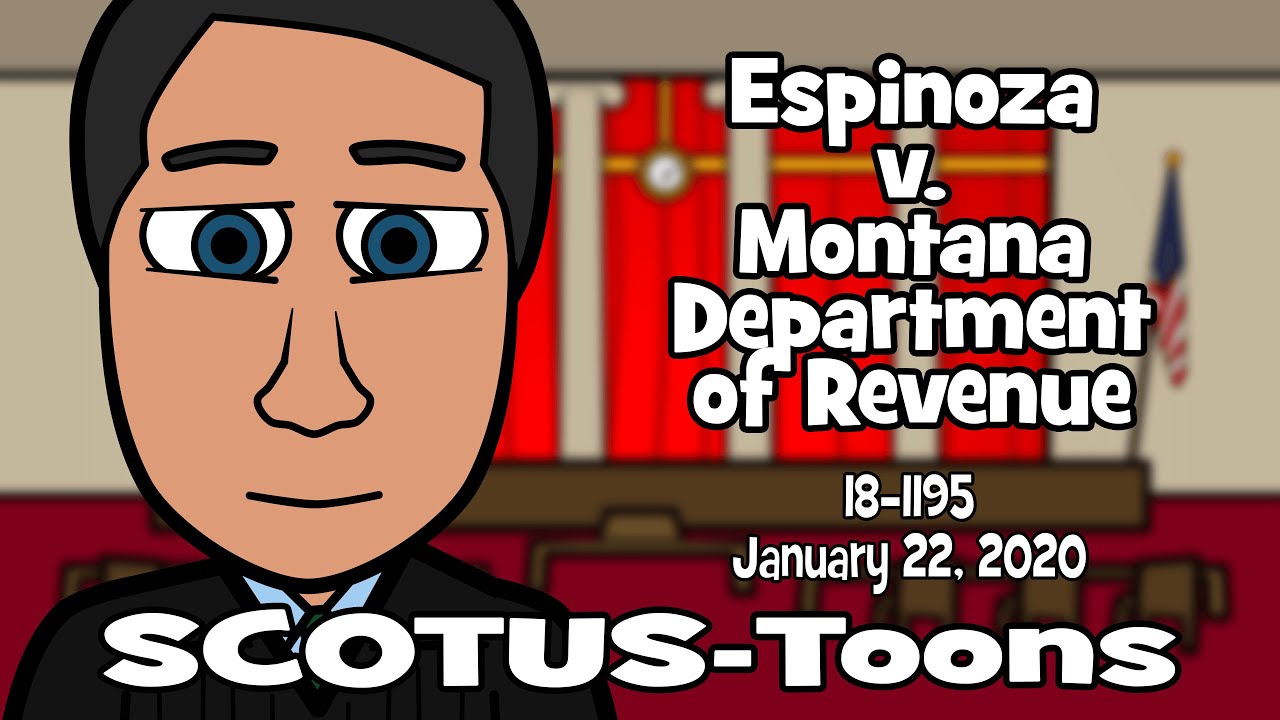
Analysis of subsequent landmark Supreme Court cases, such as Espinoza v. Montana Department of Revenue (2020) and Carson v. Makin (2022), which expanded on the precedent set by Trinity Lutheran regarding educational funding.
Exploration of the 'play in the joints' doctrine, which defines the constitutional space where states may, but are not required to, accommodate religious practices.
Investigation into the practical impacts of the decision on government grant administration, public safety funding, and public-private partnerships involving faith-based organizations.
Critical evaluation of the legal distinction between religious status (who an institution is) and religious use/conduct (what an institution does with public funds) in constitutional law.
20K views1.4Klikes7:30Original Release: 2017-05-16
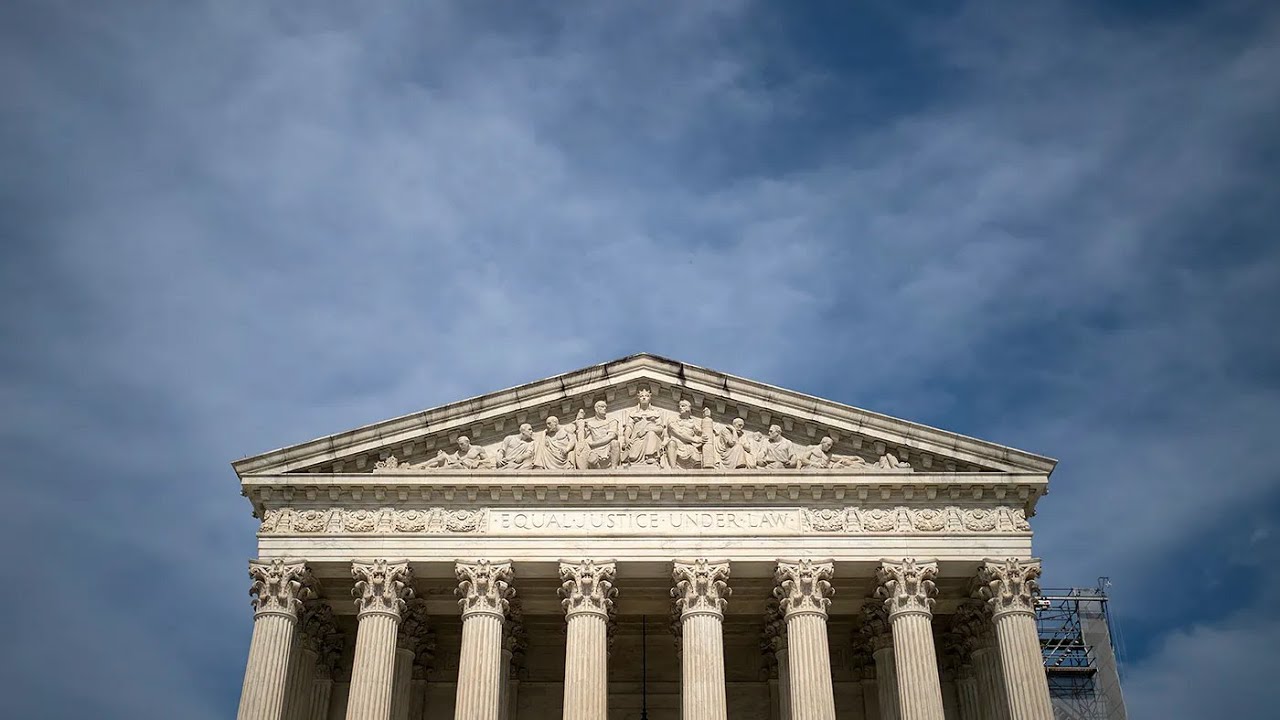
The Supreme Court now has a new justice not named Merrick Garland, and the appointment of Neil Gorsuch may have huge implications for church/state separation.
One of the first cases heard by the full Bench recently involved that issue, and it's worth talking about that case so you understand what's at stake.
It involves the Trinity Lutheran Church of Columbia in Missouri.
The church runs a Christian preschool and they wanted to renovate the playground.
Instead of gravel on the ground, where kids always scraped their knees and elbows, they wanted to replace it with rubber made from recycled tires.
It's safer, you know, it makes a lot of sense.
And as it turned out, the Missouri Department of Natural Resources had a special program offering money for just that reason.
Literally. I mean, they were giving away money to renovate playgrounds with safer rubber surfaces.
So the church applied for a grant in 2012.
There were 44 applicants that year, but the state only had cash to fund 14 of them and the church didnt make the cut.
But reports later came out that the church actually ranked 5th out of the 44 applicants.
I mean, on merit, they should've gotten the money.
So, why didn't they?
Well, the Program Director, Sara Parker Pauley, told church officials that the reason they were denied the grant was because the state wasn't allowed to give money to churches.
She cited Article I, Section 7 of the Missouri Constitution, which says: "No money shall ever be taken from the public treasury, directly or indirectly, in aid of any church, section or denomination of religion."
To no ones surprise, the church felt this was an injustice and they filed a lawsuit against the state.
They said it was wrong for the state to deny its application just because they were religious.
This is a playground, after all, not like a pastor training program.
I mean, they literally said: "Seeking to protect children from harm while they play tag and go down the slide is about as far from an essentially religious endeavor" -- to quote the legal term -- as one can get."
I mean, there were some other technical problems with their case, but the end result was that their lawsuit failed.
So the church filed an appeal and that, too, was decided in favor of the state. And this was in May of 2015.
The judges basically said, in a 2-1 vote, that of course the state didn't have to fund a church playground, just as the state wasn't on the hook to fund the training of pastors.
It all went back to how the state should not be supporting a church.
So, the church filed another appeal, asking the entire Eighth Circuit to consider the case, and they did.
But the entire bench, all the judges, were split 5-5.
So, the earlier decision stood.
The point is: The church lost. Many times.
But they had one last option: asking the Supreme Court.
The church leaders and their lawyers argued that there was no compelling reason for the state to exclude churches from applying for an otherwise neutral program.
"It's just a playground," they argued.
And that's true... but think about this: Let's say the state gave them -- I don't know -- $10,000 for the playground Let's say the state gave them - I don't know -- $10,000 for the playground instead of asking the church to use its own money.
Now the church has an extra $10,000 in its bank account.
What are they going to do with that money?
Probably use it to promote Jesus. So, funding a church playground is, in an important indirect way, funding a church playground is, in an important indirect way, like promoting religion.
And there are conservative Christians who don't like that line of logic. They'll say it's unfair.
But it's the exact same argument they make against taxpayer money funding anything Planned Parenthood does, even if it's not abortions.
They say funding mammograms or cholesterol screenings frees up money for abortions. Therefore, no taxpayer money should be given to the organization!
Gotta love that religious hypocrisy.
In any case, the church asked the Supreme Court to review their case and-- And that's always a long shot since the Court hears less than 1% of the requests it gets, but it worked.
At least four justices including, presumably, Justice Antonin Scalia right before he died, said: "Yeah, we want to hear this case."
Enforce all you need!
And while church/state separation groups may have felt some relief with an 8-person Scalia-less court, Neil Gorsuch's confirmation means we're right back to where we started.
But we have a Supreme Court that may rule in favor of the church, and that ruling could essentially say that secular aspects of religious institutions can be funded with public money.
So if say, Liberty University -- the religious school-- wanted to build a new gym on campus -- which, on paper, would be open to the public -- taxpayers could theoretically pay for it.
It would also open the door to a flood of other questions: If a church playground is deemed secular, then what about renovating the church's gym?
Or their auditorium?
What about the lakes on their property, you know, that are used for baptisms?
What is the line between church space that's used for religion and space that's ostensibly secular and therefore eligible for government-sponsored upgrades?
Why should the government give money to help renovate a church, making it easier for the church to draw in new members? I mean, thats an endorsement of religion, even if taxpayers aren't directly funding religious programs.
If churches want access to taxpayer money, then churches should pay taxes.
It's that simple.
They shouldn't be allowed to have it both ways.
And by the way, what's really concerning is that when the Supreme Court heard this case, even the liberal justices seemed to sympathize with the church's argument.
It's entirely possible this won't be just a 5-4 vote.
It could be a 7-2 vote.
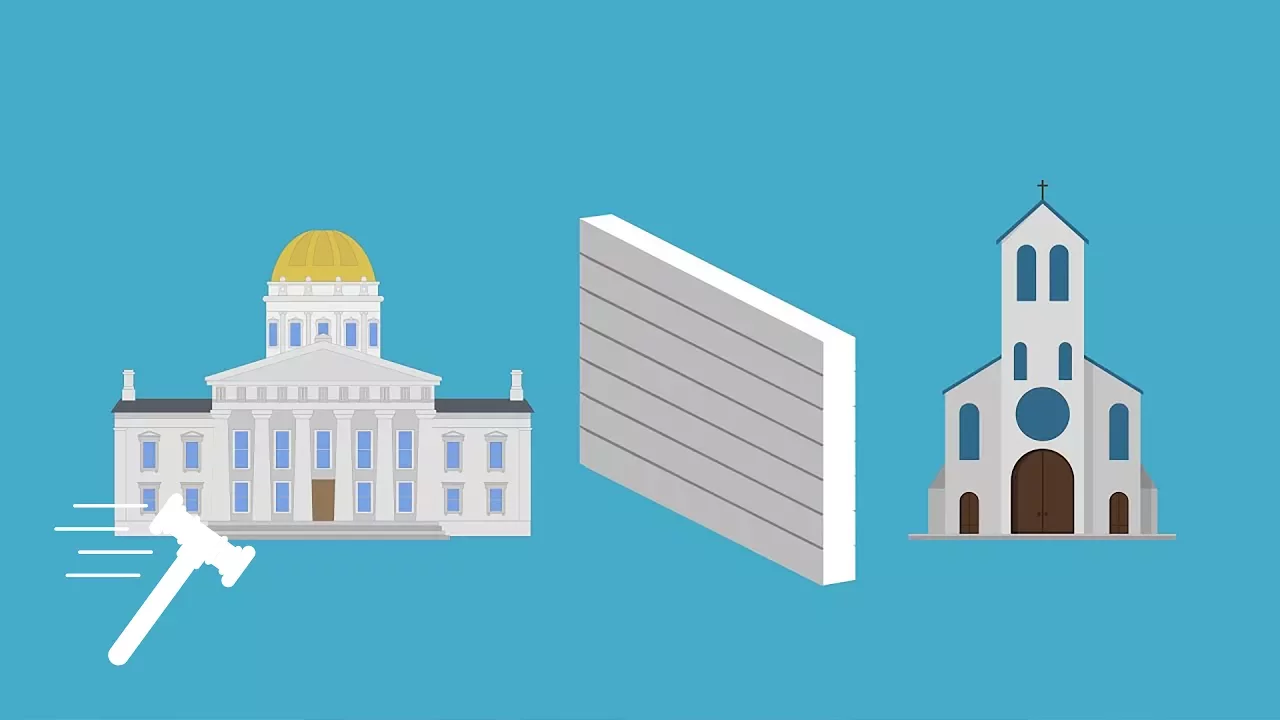
This case could really tear a giant hole in the wall of separation between church and state, just like religious conservatives want.
Depending on the kind of ruling, it's possible this case could open the door to the government paying for voucher programs, letting kids attend religious schools on the taxpayers' dime.
It's also possible and... this may be the best-case scenario right now, that the justices rule in favor of the church, but only in a limited way.
Maybe the church gets money for the playground in this situation, but not everywhere.
Maybe the saddest thing about this is that the Supreme Court agreed to hear this case at all, as if there was some legitimate debate over the merits.
When they said yes to that, all bets were off.
The ruling is expected some time in June.
Stay tuned.
My name is Hemant Mehta and I write at FriendlyhAtheist.com What do you want to see a video about?
Let us know in the comments below and we'll be sure to check it out.
And don't forget to subscribe.
Up Next

45:35
Espinoza v. Montana: Elite 8 Moot Court Match
@JoshBlackman
110 views•2020-04-16
4:27
US Secondary Sanctions Impact on EU Businesses and Blocking Legislation
@Bureauvandijk
1.6K views•2019-03-20
5:27
Forensic Phonetics: Speaker Identification in Legal Cases
@nptel-nociitm9240
539 views•2025-03-19

24:42
Police Interrogation Tactics: False Confessions & Legal Reform
@LastWeekTonight
7M views•2022-04-18
Related Study Plans & Knowledge Roadmaps
Structured learning paths in Law
law
Self-Defense Law: Imminence & Castle Doctrine
01Foundations of Self-Defense Law
02Imminent Threat & Reasonable Belief
03The Principle of Proportionality
+ 3 more learning modules
12h6 modules
Explore Roadmap
law
Defamation Law: First Amendment & Actual Malice
01Introduction to civil torts and the First Amendment
02Elements of Defamation: Libel and Slander
03Public Figures vs. Private Individuals
+ 2 more learning modules
8h5 modules
Explore Roadmap
law
Hearsay Rule: Trial Evidence & Exceptions
01Introduction to Trial Evidence & Courtroom Basics
02Demystifying Hearsay: The Core Definition
03Non-Hearsay: Exclusions Under FRE 801(d)
+ 3 more learning modules
14h6 modules
Explore Roadmap
law
Medical Malpractice: Law, Liability & Care
01Foundations of Tort Law and Civil Liability
02The Four Elements of Medical Malpractice
03Defining and Proving the Standard of Care
+ 2 more learning modules
12h5 modules
Explore Roadmap