















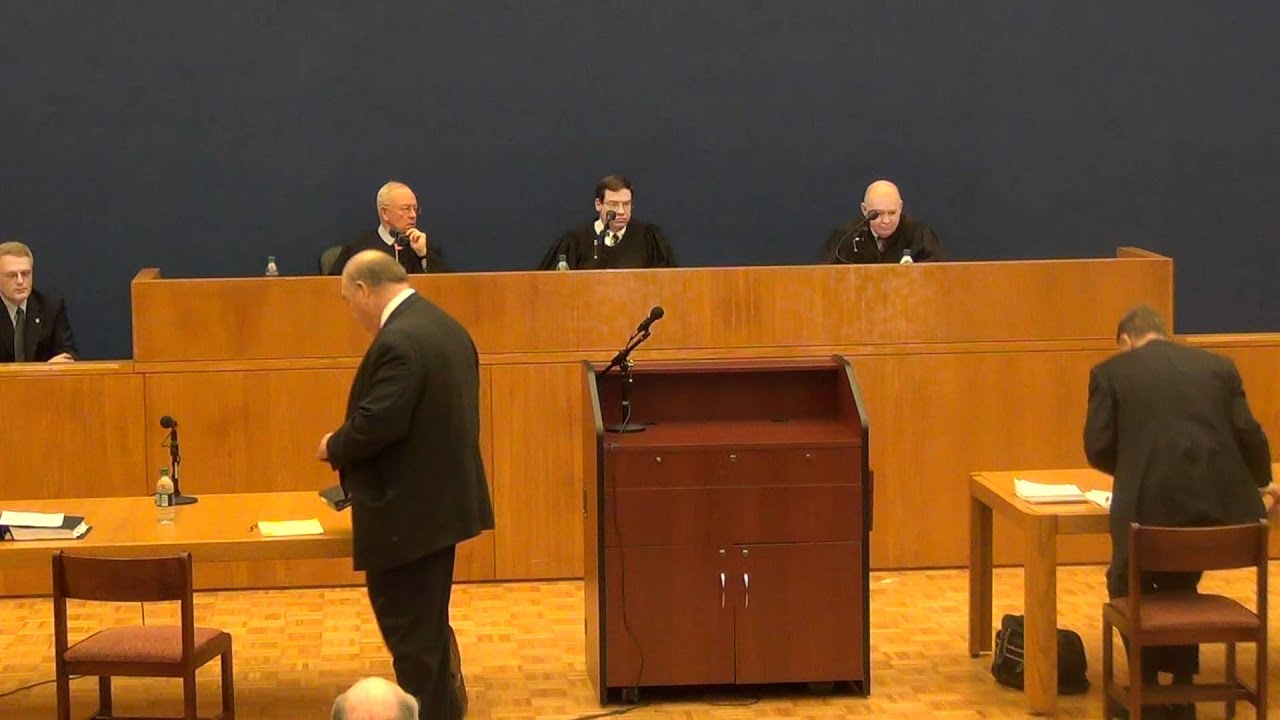

This video presents the Elite 8 round of the Harlan Institute's ConSource Virtual Supreme Court Competition 2019, focusing on Espinoza v. Montana Department of Revenue. The case examines whether Montana's tax credit program, which provides tax credits for donations to scholarship organizations but prohibits funding for religious schools, violates the Free Exercise Clause of the U.S. Constitution. The petitioners argue that the Montana Constitution's Article 10, Section 6, which prohibits state aid to religious institutions, is unconstitutional on its face. The respondents argue that states have a vested interest in maintaining separation of church and state and are not required to fund religious education under the Free Exercise Clause. The debate explores the tension between state constitutional provisions and federal constitutional protections, highlighting how states can level down their funding of religious education without violating constitutional requirements.
Espinoza v. Montana: Elite 8 Moot Court Match
Added:hi this is Josh Blackman I am the president of the Harlan Institute and it's my honor to present you to the Elite Eight of the Harlan Institute con source virtual Supreme Court Competition 2019 this year our touring touring focuses on the case of Espinoza versus Montana Department of Revenue we are honored to have teams from across the country participate representing petitioners from Creek View High School in Texas we have Elizabeth Adelia and Yoshika in a bar and representing the respondents from Lake Oswego and Oregon we have Eliot Lloyd and Lance Pancoast and petitioners we begin whenever you're ready you have 15 minutes yeah whenever you ready made by the US competition Your Honor the fact of the matter is that it cannot people address a few points the third thing that active or one the Patrick you know using recomment set by attending Lutheran summer and Bill knew people in Paris we will argue that after all once the tax credit program does emit independently of a second point mudra have Montana's no eight five five background in 2015 the Montana State Legislature created a tax credit program for taxpayers but donated to scholarship organizing Montana Department of Revenue that the program was not in compliance with the Montana State Constitution mothers of students affected by this rule contended that this issue was unconstitutional and this action violated the Free Exercise Clause initially in the Montana traditional district court the court ruled in the murder of the petitioners exercise clause to invalidate a generally neutral tax credit program on the basis of religion however the Montana Supreme Court reversed the lower court's judgment through this decision a group of constitutional if I can ask a question so let me ask the question the outset what is the basis for article 3 standing in this case what is the basis for article 3 standing well no I I'm talking about what is the injury that Espinosa suffered here what exactly is the injury now if I could interrupt they could attend they just wouldn't get these scholarships all right well counselor explain to me how exactly does this tax credit system work walk me through the process okay so is Miss Espinosa taxpayer was she one of the people who gave it the money to this program but but let's be precise doesn't money will the tax credit go to Espinosa is it going to the school why why she isn't the school the one challenging this program it seems there would be the school and not a parent who should be upset at this [Music] actually parents that want to go to the school and be a part of the scholarship okay you may proceed would be allowed to use it they argued about a neutral policy towards religion which even obligations let me ask you let me ask you a question because let me ask you a question back Emma do you think that the Montana Constitution Article 10 section 6 is it unconstitutional as apply or a constitution on its face do you think that the no a provision in the Montana Constitution is unconstitutional as applied or a constitutional on its face but but when would the Montana Constitution be valid the article 10 section 6 right when under what circumstance would it be valid under your theory it's always unconstitutional all right let me ask a follow-up them what's the strongest case in your mind for why the the noh8 provision is unconstitutional it's your strongest case well but Lutheran forbid right in treating Lutheran do entire scraps right and she wasn't holding did you say Jefferson was a framer I'm sorry Jefferson was not a framework he wasn't he was not the convention he was in France but let me ask the question that I was gonna ask wasn't Madison's concern in the memorial was about state funding of religion right the state was giving money to churches they were taking taxpayer money giving to churches isn't that exactly what's going on in Montana to worry about taxpayer money going to religious house of worship is doesn't that doesn't Madison hurt you in that regard it's holding them back and penalizing them for doing so so it kind of connects to this case because by not allowing state funds to go to schools it's kind of holding them back from being able to achieve well counselor I can't why can't Montana go above and beyond we agree that there would not be an Establishment Clause violation why can't Montana take extra efforts to ensure the separation of church and state why can't my Tanna do that okay you can proceed counsel you have three minutes left [Music] [Music] the original was not only racist let me ask you a question let's just let's just agree for the moment that James Blaine was a racist and I'll agree with you there what year was the current Montana Constitution provision ratified all right well the answer is 1972 right so just we'll accept that how do we consider you know racism from the 1800s for a provision that was enacted in 1972 [Music] I think we should still okay yeah I've had a minute left counselor I'm sorry and if you can't just and if you can to just make me be Paul during during the break your your kept partner to bring her back Campion may go ahead we outweigh any service products and make but not reversing the decision of the Montana Supreme Court and Davis precedent it allows States to not only disregard the US Constitution but also giving them a clear path to legalize you unconstitutional discrimination there was a pool and the owner didn't want any minorities in it so instead of he just close the facility would that not be constitutional no it would it wouldn't so why should it be on the matter of religion it is for these reasons previously stated that we pray to square reverses the decision of the Montana Supreme Court and takes note of the unconscious and Elizabeth your partner just finish her a final minute and you're out of time so I'm glad you're back we will now move on to the respondents and you have 15 minutes Elliot and Lance you can be going after you ready thank you your honor may it please the court that I Elliot Lloyd and my partner advanced Pancoast represent the respondent Montana Department of Revenue in the case Espinoza versus the Montana Department of Revenue the question presented before the court today does it violate the Free Exercise Clause to invalidate a generally available and religiously neutral student aid scholarships simply because the program affords students the choice of attending religious schools your honor sure the backstitches the 1970 I think we're from looking back to the case you can write the argument yes your honor today we are doing two main points first that mafi data shows that there is room for claim within the joints between what is permitted under the Establishment Clause it's who is in protecting the rights under the Free Exercise Clause second we will look at the original intent of no eight amendments to show that no eight amendments are constitutional first I'd like to discuss flaafy Devi like Montana Washington kind of no egg clause the prohibits the states from funding of religious instruction and baffi Devi shows us that states are not required to fund religious instruction under under the Free Exercise Clause yes if they're interested they may offer scholarships under the Establishment Clause but they are not required to do so like Washington but that is exactly what Montana is do you hear they're excluding a certain category mixture and an instruction from state funding and that is acceptable under lochley Devi and does not invalidate the rights of the petitioners under the Free Exercise Clause loffley data shows that states can act differently towards religious education and that they have a vested state interest in ensuring the wall of separation as referred to earlier by her by her opponents Thomas Jefferson's letter to the Danbury Baptists shows that since the founding of our Constitution there's been a vested government interest in separating this church and the state and that there is a there is a valid religiously neutral reason for it yes your honor the count sir can I ask you a question please let's start with Trinity Lutheran it seems that that's not a good case view that tree Lutheran and your friends made this point well the can't discriminate how do you let's talk forbid I footnote 3 from Trinity Lutheran how do you have heavy squarey how do you square the position with with quit node 3 all right are you were just concurring opinion or Elliott you know footnote 3 this case is specific about the playground tires right that this holding might necessarily apply to other cases such as this nature and I think that this place we can also see that in Espinoza versus Montana we're not arguing about whether or not um rule one or the program with rule one was unconstitutional or arguing is the invalidation of the programs in constitutional I think here we see that and then espinosa abuse of V Montana the solution to this problem even if it was even if we conceded that rule 1 was unconstitutional the solution is completely improved appropriate because it invalidates the entire code well let's go back to train with him for a bit I think you got footnote 3 correctly just as corsetry concurrence are you familiar that Gorsuch concurrence okay well justice Gorsuch made this argument he said there's a difference I'm sorry says there's not much of a difference between religious status and religious use right any religious organization will advance religion what it does right treating Lutheran has a playground there as it means to advance its religious mission outreach when will you ever have religious status that's not also religious use right how can you disentangle those two every religious school advances religion matched by the religious schools I think we can both agree that there is an extremely distinct difference between the rubber tyred straps which will just reinforce a playground that is affecting everybody versus a scholarship which directly affects the followers of religion I think to uh to not make the distinguishment between I generally available playground versus secular versus non secular education to make the comparison between the two would over it would be overlooking the that education has on the religion - Lenin a little bit because in lemon we see the opinion that they say that they're the reason lemon tesla's traded it's because the students primary school students are particularly impressionable minds and I think there's a big difference like plants Hussein between the benefits of the playground that anyone in the area could use not just the school and actual religious education that to these impressionable minds of primary school students are associated with the grants provided by the tax the separation between isn't it more relevant case Zellman versus teaming Terrace how come the vouchers and Zelman miserable but the vouchers in this case or not I believe my dear king please advance of the scholarships Harris the voucher program was available for public and private schools not just private schools not just religious schools Zellman Harris was this true of private product truck sorry excuse me Arthur this is true program of private choice and so we see there it's only Harris the five content that they've mentioned this was entirely neutral to religion the Zelman campus Harris program was entirely neutral to religion in a way that Montana is not again the question here is not whether that sort of program is allowed but whether or not invalidating that program is allowed and la fille de shows us that they're allowed to level down in this way and that the invalidation is permitted and in fact in the dissenting opinion anafi Devi justice course mentioned that one of the potential ways to deal with the issues you say justice Gorsuch you turn a tree Lutheran lock no no it wouldn't of course it was on the bench a lock be damned in 2004 very much okay well he fill this please see okay good Christie proceed [Music] [Music] going back to the counter in this case if I can interrupt for a second in this case don't we have the people of religion the school wants this right you keep saying religious groups don't want it here they want it why should we tell the religious groups that they shouldn't be allowed to accept this funding if they think it helps their faith Your Honor this is because this is because the funding comes from so first of all I'd like to preface this with saying that there was no provision within the there was no provision within the time within the tax credit program but said that the funding the scholarship money could not be put towards on religious purpose and so with money coming from the government into the schools or the government I think Elliot Elliot is raising campaign worries I just also I just like to address your question a little bit because I think it's obvious that when you have any group you're going to have some people of some group who believe will be your side and some people of something who believe the other side and I think the point is that yes maybe in this case these specific religious groups do want this scholarship but if you look back to the 1972 renewal we'll see that when they were discussing adding this new knowing clause back into their constitution many religious leaders agreed with um with approving the NuWave clause because they wanted to prevent from that kind of undue integrant I think that yes just because this group might want the funding but there's many other religious groups in Montana who also might let that funding you the government does have this vest and state interest in ensuring that little separation that has no religious hostility behind okay your person you've had a minute and 45 seconds left you proceed thank you thank you your honor our last point you'd just like to say is because of all of these these of his lofty data shows us that Montana is not required to have this this tax program is led hereit's shows us that even though that because only here this is a vastly different this case just because the differences in between the public and private choice and there active advancing or inhibiting religion and for all these reasons we urge support keeps the Montana Supreme Court's ruling and says that no it does not violate the Free Exercise Clause to invalidate this generally available program because the is not required [Music] [Music] [Music] okay all right [Music] [Music] [Music] counselor doesn't doesn't I'm sorry let me interrupt doesn't the fact that you have these intermediaries make this policy better in other words the state isn't choosing where the money is being sent the state is laying private system chooses so the state doesn't and how do you respond how do you respond counts with the Archaea Church looming and religious animus how do you respond to the case of Church the looming I think she froze she could can you maybe try though on shirts a little cumin in that case okay Elizabeth sorry I think you're back are you coming to church little Kumiko about a minute and a half Chief Justice Rehnquist [Music] okay thank you so much and that brings this round to a close thank you to petitioners thank you to respondents you did a oh I'm sorry i I'm sorry I apologize I'm sorry okay go on no wait amendment is unconstitutional on its face I just like to talk about why the no Eighth Amendment is not unconstitutional no independence of the present since the founding era in fact thirteen states had no Edith yeah sir nine states had no any provisions well thirteen also had a free exercise awesome it's clear that their original intent is that no eight causes and free exercise four clauses to exist simultaneously and that the no eight amendments were not originally violations of the Constitution I just also argue about their saying that absent rule of that rule one is unconstitutional the Montana State Constitution says that the legislature counties cities towns to not grant any aid to church school either indirect or direct appropriation and it's clear in this case the tax credit program is an indirect appropriation of thoughts the one to one dollar tax credit program is a clear indirect appropriation of funds and for this tax but the concert perhaps let me let me interrupt you for a minute the state is not choosing where the money goes the state simply says whoever private citizen sent it that's it this day is no involvement doesn't that separation take you out of lot in these other cases no your honor because I don't the separation the tax credit program in this case is into a one to one tax credit so they give a hundred fifty dollars they get a hundred fifty dollars back and that'll be it's essentially like the government is just giving the money to these scholarship organizations to these schools directly funding this religious organization and it isn't the same sort of it really is directly going to these religious schools and that's why I lost me Davey it does apply in this case because it's the same sort of scholarship it's the same sort of the same sort of effect on religion okay you hear pretty counselor I also just like to address some of the points that are the petitioners have been making about host this was racer this was in a military this would be entirely sorry I know we are getting into equal protection who's in the limits of this competition but I just do want to say that there is historical precedent for the reasons why religion is treated differently than other issues such as base such as this was in the military I just like to point out that just because of those things might be ounces of constitutional it comes to race if it comes to their other examples um really there is no religious hostility and there's no religious discrimination in this act in this in the Montana Supreme Court's invalidation of the program they have to buck go from here okay by the two minutes left yes our bonus have also been saying that this has an equal this has been equally affecting both religious and non-religious students however and the facts of the case that suit that 94% of the scholarships that you're discussing actually went towards religious schools so here we can see actually a disproportionate impact effecting toward positively towards religious schools another point another point made was that this is a discriminate but this is a discrimination against religion hugger there's actually a pseudonym lochley DV the what the Establishment Clause sets a baseline for what the government can do and the Free Exercise Clause mandates what the government must do in order to protect you but in between those there's room to play with in the joints and so their states have states have you could say their own their own agency in choosing to what extent do they want to fund religion and so in this way the state's actions are permitted you had a minute left counselor I just like to point out but because of the Montana state knowing power program this tax program to not exist without rule-bot and the mountainous into the Montana Supreme Court is discriminatory the only option for the entire okay thank you so much elliott employed a little ants um thank you so much now I can give you praise that you so richly deserve that was fantastic my questions are hard deliberately I am trying to push you and I'll even ask for things that I don't think you know the answer to because I want to see how you respond and it will happen one day that you're in court or maybe in law school class and someone asks you a question you have no idea and you can say Your Honor I don't know there's nothing wrong with saying that it's worse pretend you know because you get slammed in two seconds right you say Your Honor I'm not sure at that point the judge will tell you well here's I'm thinking then you have to reach think on your feet oh that's what you're talking about then give an answer and I think you all did that quite well aspect Rini Luther and ask you about article 3 standing I asked you about the Gorsuch concurrence I think you did very well you're well prepared I'm very very proud of all of you I truly I mean I mean I mean that sincerely I I could not have done this when I was in high school out down not even close I opened it screamed when it maybe past the first round Sebastian is there anything you'd like to yeah I'll second that about not having able to do this in high school you all are obviously put through the wringer a lot of these questions that Josh stands up but you all very good Oh yep give any questions for me or Sebastian would be happy to answer them about anything really [Music] oh what a good question well what what you're you you got all of you what you're you'll in school freshman sophomore junior senior okay well okay okay well the seniors you guys are off to college soon so you'll be taking classes but I encourage you to debate team mock trial right the We the People competition is very good play in our competition again next year it's fun but also read a Supreme Court decision right every year they release big ones try to read one straight through that really appeals you in fact with Espinoza right when this case comes out try to read the entire thing see you guys fair it's me 100 pages long but see if you can read it but I think you guys are capable i Full Faith and Credit that you'll be able to do it what other questions you guys have thank you other questions well I know at least two viewer in Texas if you ever in Houston you're welcome to come visit my class doors always open you all come to come by I mean that truly just email me very Oregon's a little bit further away I'm sorry but you're welcome to come anywhere if you're in Houston but that's that's yeah hey you have to run the airports are not very open right now that's all I have you guys did great we'll put these on YouTube a little bit later today and hopefully we'll e-mail your you your teachers tomorrow and but anybody proud of you all I wish you the best of luck so thank you all have a great day
Up Next
2022 US Supreme Court Term Review: Key Cases and Impacts
@ColoradoLaw
929 views•2022-08-09

US Secondary Sanctions Impact on EU Businesses and Blocking Legislation
@Bureauvandijk
1.6K views•2019-03-20
Forensic Phonetics: Speaker Identification in Legal Cases
@nptel-nociitm9240
539 views•2025-03-19

Police Interrogation Tactics: False Confessions & Legal Reform
@LastWeekTonight
7M views•2022-04-18
Related Study Plans & Knowledge Roadmaps
Structured learning paths in Law