





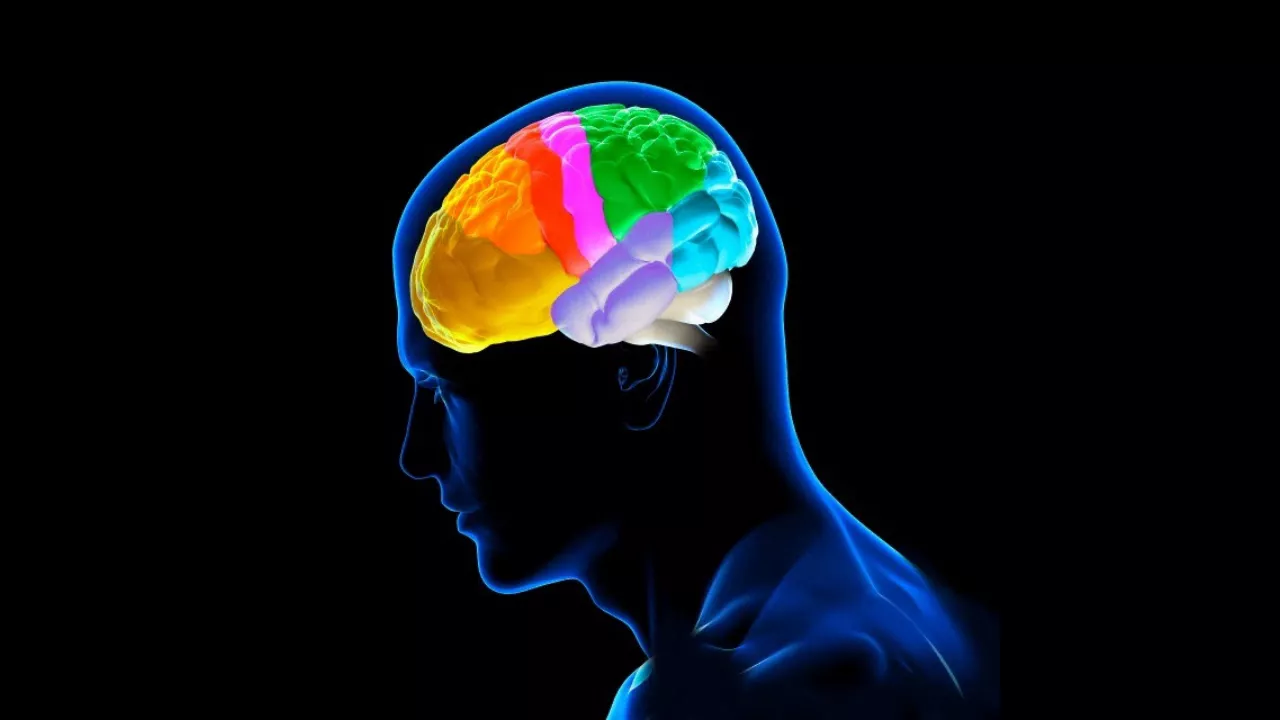





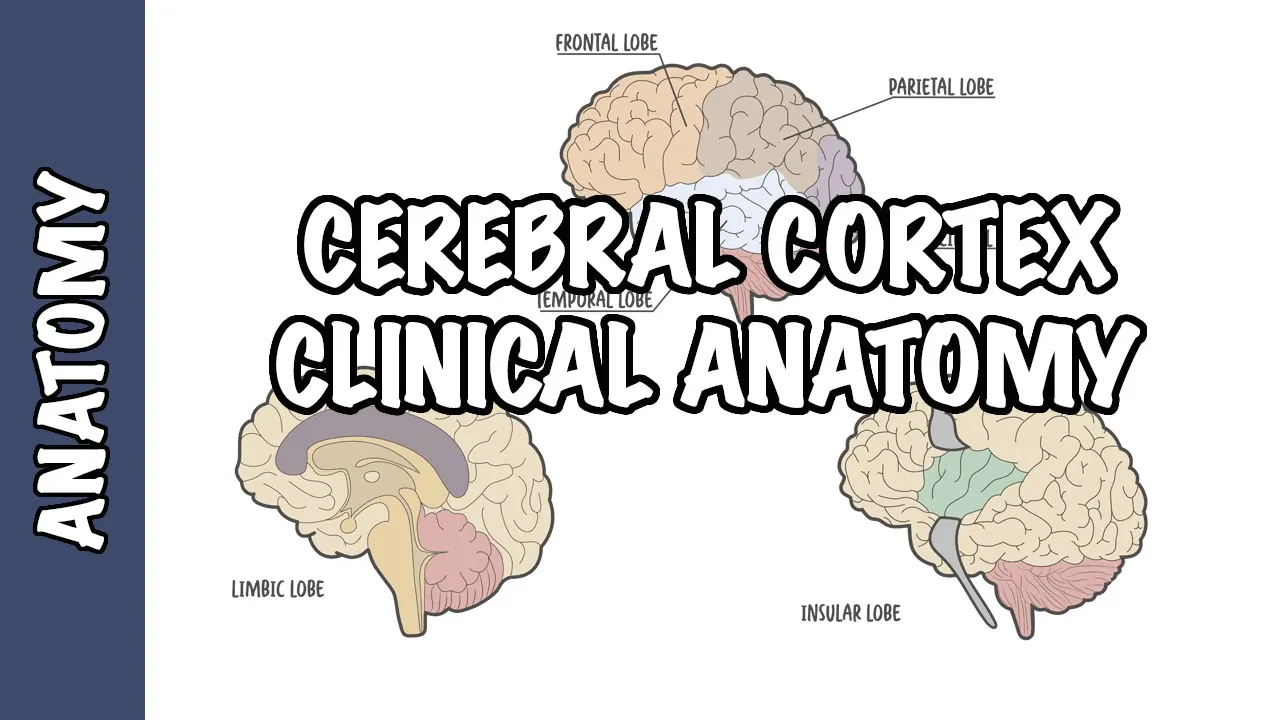











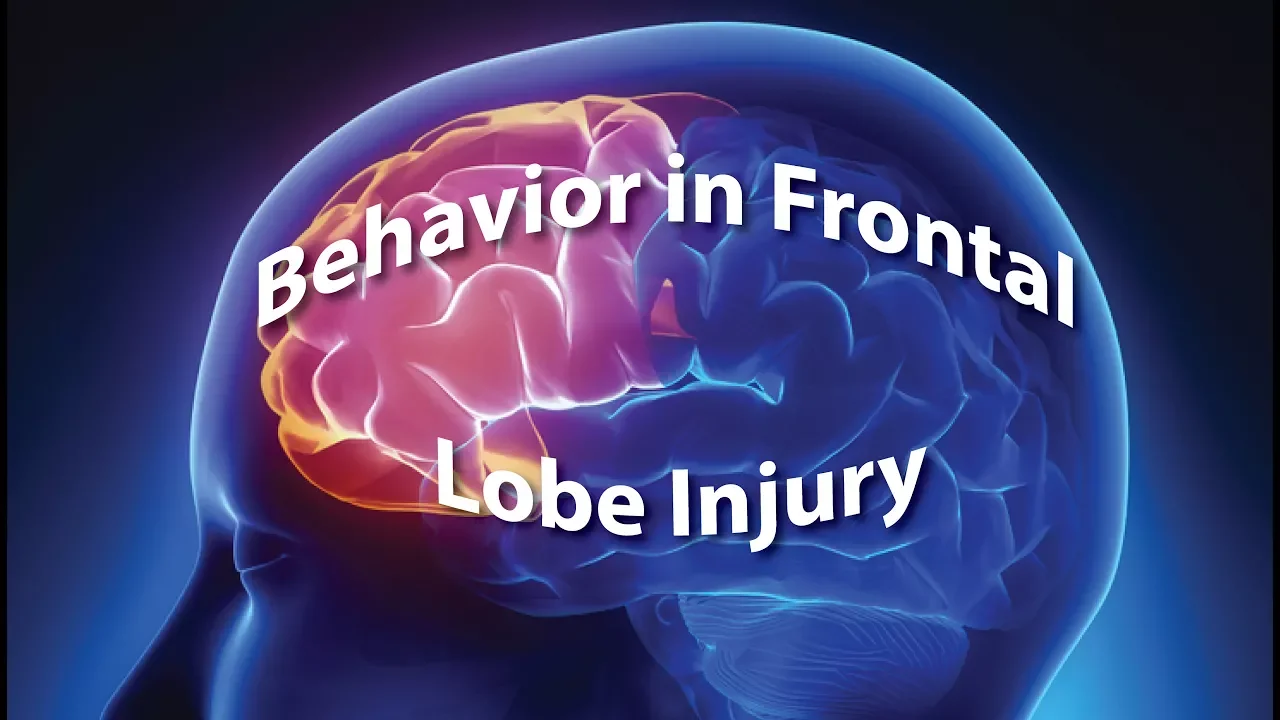

The frontal lobe contains several specialized cortical areas: the primary motor cortex (precentral gyrus) controls voluntary movement via the motor homunculus, with contralateral motor neuron pathways causing paralysis or paresis when damaged; the premotor cortex programs motor events and lesions cause apraxia; Broca's area produces speech and lesions cause expressive aphasia; the supplementary motor cortex plans complex movements; the frontal visual field cortex coordinates conjugate gaze; and the prefrontal cortex matures late and governs executive functions including problem-solving, decision-making, and emotional regulation.
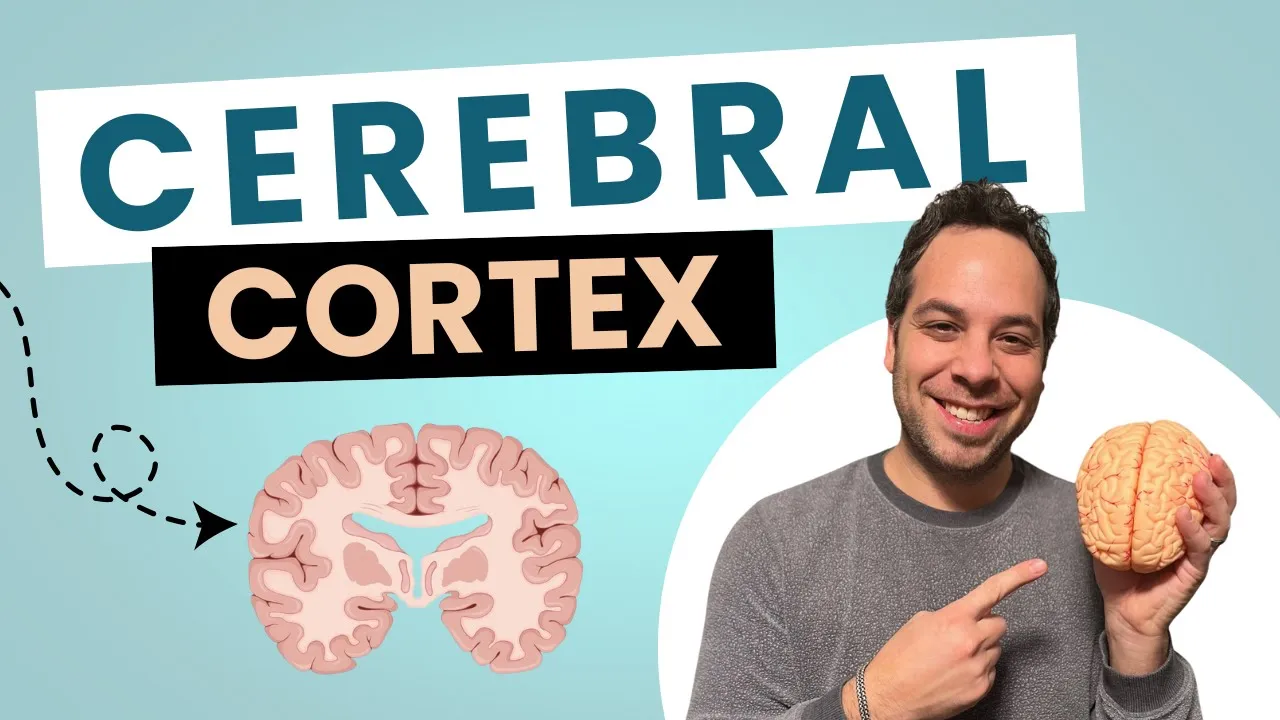
Frontal Lobe Anatomy and Functions | Cerebral Cortex
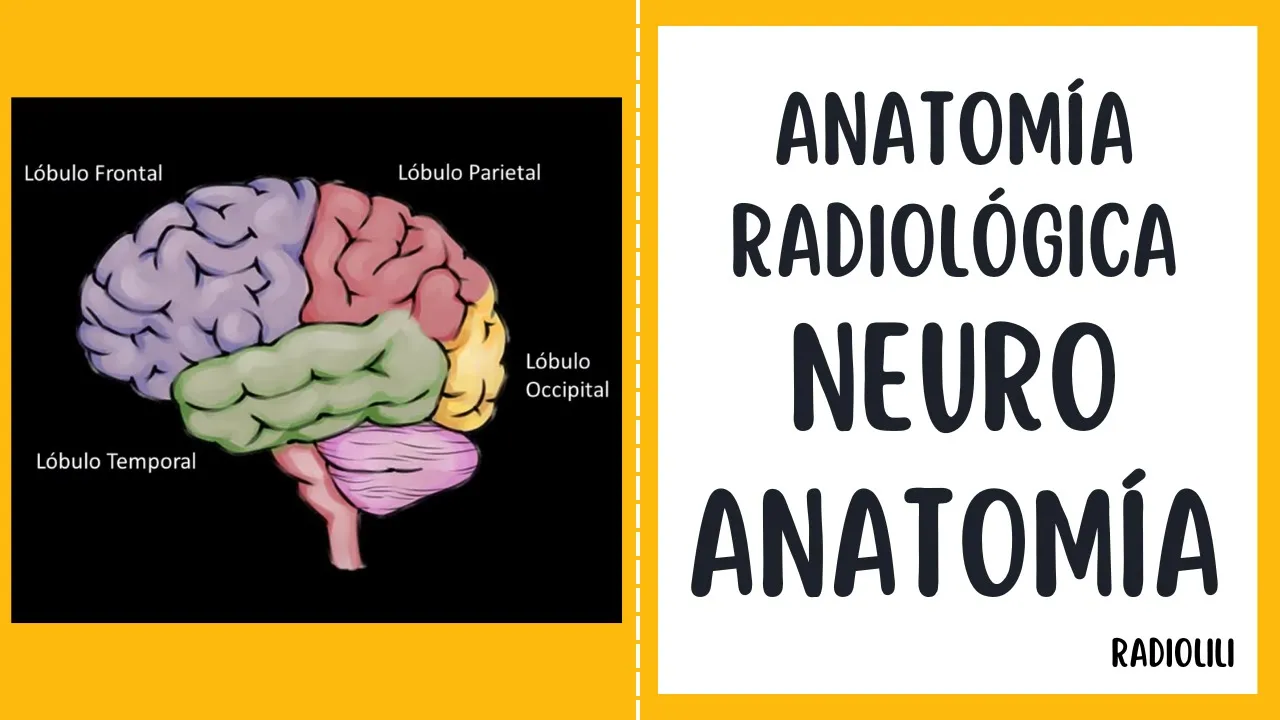
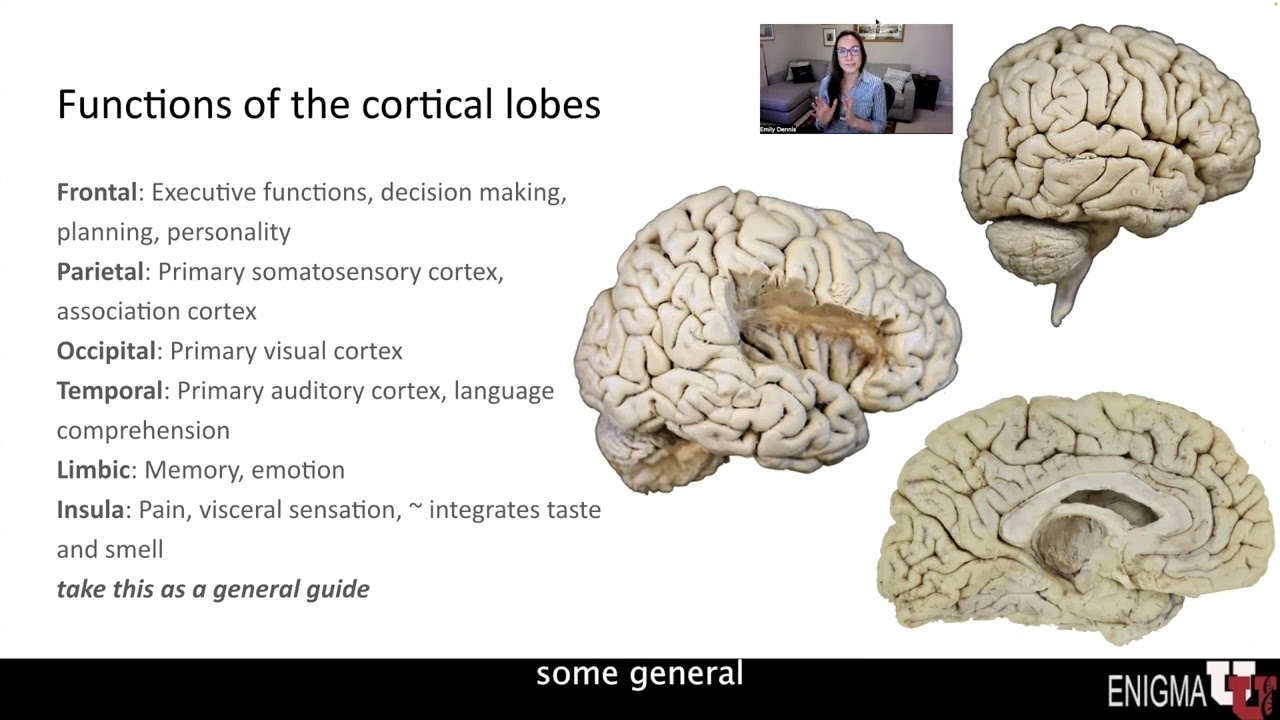
Added:Basic division of the brain, including the four major lobes of the cerebral cortex and their general locations.
Fundamental neuroanatomical terminology, such as sulci, gyri, grey matter, white matter, and directional terms (anterior, posterior, medial, lateral).
The basic structure of a neuron and how electrical impulses translate into motor commands and signal transmission.
A general understanding of the central nervous system's role in controlling voluntary versus involuntary body functions.
The clinical presentation of specific frontal lobe syndromes, such as Broca's aphasia, executive dysfunction, and behavioral changes (e.g., Phineas Gage case study).
Advanced study of the prefrontal cortex subregions, specifically the dorsolateral, orbitofrontal, and ventromedial areas, and their roles in complex decision-making and personality.
Anatomy and connectivity of adjacent cortical regions, such as the somatosensory cortex in the parietal lobe, to understand sensorimotor integration.
The neurochemical pathways dominant in the frontal lobe, particularly the mesocortical dopamine pathway, and its relevance to ADHD, schizophrenia, and addiction.
Neurological rehabilitation and neuroplasticity concepts applied to recovering motor or cognitive function after frontal lobe strokes or traumatic brain injuries.
64.9K views664likes8:02Original Release: 2018-04-16
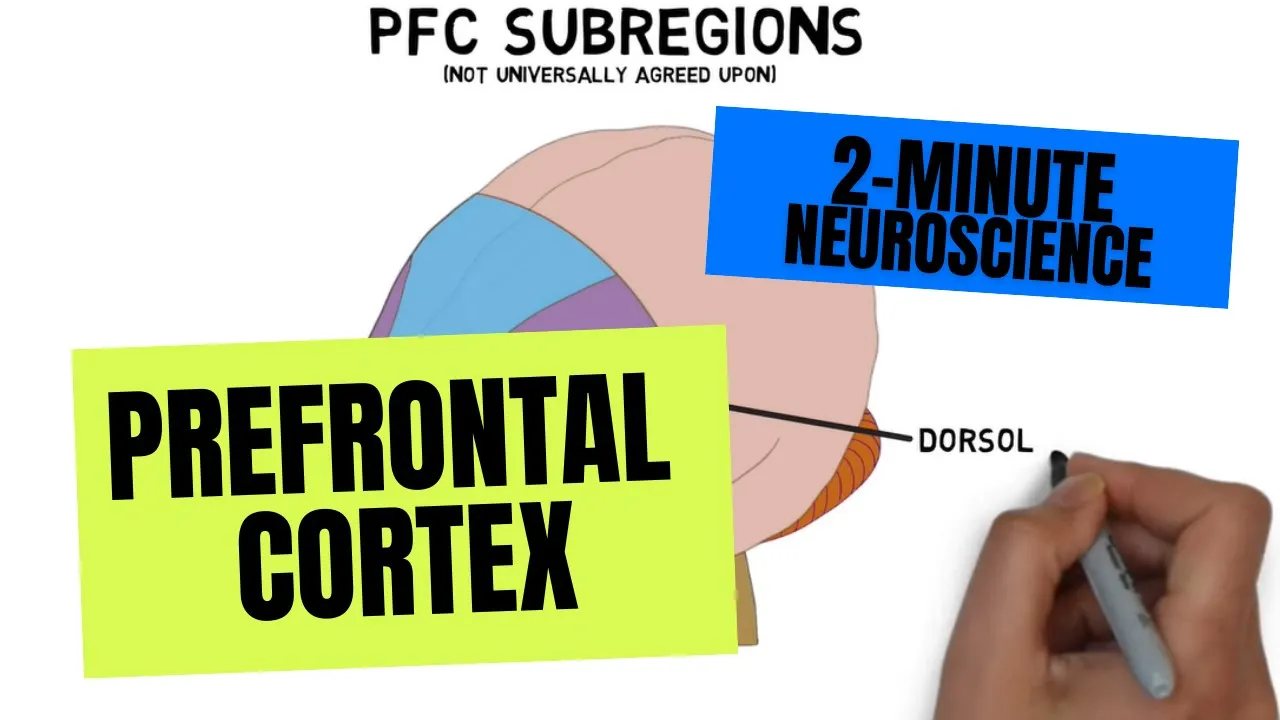
[Music] now let's take a look at each of these lobes to appreciate more fully the functions that are associated with them as well as the various of subdivisions of each lobe and we can also explore as we move through each lobe what might happen if there's a lesion within a specific area of a lope so here we're looking at the primary motor cortex this is shown right in through here in green the primary motor cortex is associated with the gyrus that's immediately anterior to the central sulcus and this is the precentral gyrus we have the famous homunculus associated with the primary motor cortex and the little man the homunculus demonstrates the density of upper motor neurons that are going to control the musculature of various regions of the body so we see a large area here mapped out for the face because a large number of motor neurons upper motor neurons are gonna control the muscles of the face we also have a large area here mapped out for the hand and again a large number of motor neurons are gonna control the fine delicate movements that are associated with this part of our anatomy this homunculus does extend over the top of the cerebral cortex over the top of s precentral gyrus and continues on the medial aspect will see that continuation on the next slide an important aspect about motor control is that of the motor neurons on one side here we're looking at the left precentral gyrus they're going to control the contralateral muscles those that lie then on the right in this case what might happen if there's a lesion within the precentral gyrus that will cause contralateral paralysis or paresis and because you are damaging and destroying the upper motor neurons you may very well see a Babinski response depending on the location of the lesion so if the lesion is in this area specifically you would have contralateral paralysis or paresis of the other hand for example if we continue our view here on the medial aspect of the precentral gyrus and again that's shown in green we can see the buttocks lie here on the superior aspect the precentral gyrus medially and then you can start to see the lower extremities continue distally so that the feet are approaching the cingulate gyrus that's along here and so if the stroke is in this area and you have a lesion in this area and you're unable to have upper motor neuron control of the distal extremity of the lower extremity then that's when you can see a Babinski response as well as the contralateral paralysis or Police's of that associated anatomy another area of interest that I want you to understand is that in the premotor cortex the premotor cortex lies anterior to the primary motor cortex and we see it's a small area here but it's essential in the programming of motor events and so this programming will then cause these neurons that reside in this territory to activate prior to the primary motor neurons that are within the precentral gyrus a lesion of the premotor cortex is associated with apraxia apraxia is a motor speech disorder this can be associate with other lesions in the frontal lobe our next area the frontal lobe is that of the Supplemental motor cortex we see it identified again anterior to the precentral gyrus and it's involved in the planning of complex up motor movements a lesion of this cortical area can cause a prac SIA as well another area within the frontal lobe is the frontal visual field cortex this area right in through here it's even a bit more anterior to the other areas that we were describing that I was describing for you it's involved in the coordination of voluntary movements a lesion of this small area can result or real result in paralysis of conjugate gaze to the opposite side and this is discussed in another presentation what conjugate gaze is and how that circuitry works another important area within the frontal lobe is this area in blue this is Broca's area shown right in through here this is the area of the frontal lobe that's involved in word production or motor speech a lesion here results in expressive aphasia or nonfluent aphasia lastly within the frontal lobe I want you to understand the prefrontal cortex and we see that area here this is the area of the cerebrum that takes some degree of maturation to become fully functional this is involved in executive functioning and one of the the functions under this heading would be that or problem solving it's also involved in making day-to-day multiple judgments many times we make very very good judgments or decisions and these judgments as we mature tend to make us make the right choice or the right decision and another aspect of executive functioning is that this is the area that allows us to plan it also drives behavior and emotions it's not the only area but behavior and emotions are modulated by the prefrontal cortex and then an area the prefrontal cortex is involved in olfaction the olfactory pathway [Music]
Up Next

113:56
Neuro 2024 Sup Exam Part 2: Cochlear Duct & Vestibular System
@ASSIDUOUSACADEMY-MEDICINE-2024
146 views•2024-11-18

48:47
Graphic Medicine: Comics for Collaborative Healthcare Communication
@nationalpatientadvocate
189 views•2023-12-04
7:35
Toxidromes Crash Course: Symptoms, Mnemonics, and Acute Care Essentials
@lecturiomedical
4.1K views•2025-04-06
3:05
Stages of Labor and Vaginal Birth | Childbirth Animation
@nucleusmedicalmedia
52.1M views•2017-08-18
Related Study Plans & Knowledge Roadmaps
Structured learning paths in Medicine
medicine
Abnormal LFTs: Diagnostic Workup & Pathology
01Liver Anatomy and Basic Physiology
02Introduction to Liver Function Tests (LFTs)
03Hepatocellular vs. Cholestatic Patterns
+ 3 more learning modules
12h6 modules
Explore Roadmap
medicine
Analyzing Blood Smears: RBC, WBC & Platelets
01Introduction to Blood Components & Smear Preparation
02Normal Morphology of Blood Cells
03Erythrocyte Pathologies & Morphological Variants
+ 2 more learning modules
12h5 modules
Explore Roadmap
medicine
Mechanical Ventilation: Waveforms & Alarms
01Anatomy and Physiology of Breathing
02Introduction to Mechanical Ventilation & Core Modes
03Ventilator Settings and Waveform Interpretation
+ 2 more learning modules
12h5 modules
Explore Roadmap
medicine
Neuro Exam: Localization & Stroke Syndromes
01Foundations of Neuroanatomy and Vascular Supply
02The Neurological Examination: Step-by-Step
03Principles of Neurological Localization
+ 3 more learning modules
18h6 modules
Explore Roadmap