


![양면시장|2022년11월고1모고|[재영국어]](https://i.ytimg.com/vi/UF3i2PXH_-s/maxresdefault.jpg)


![[컴퍼니 백브리핑] 유니티, 반지의 제왕으로 유명한 ‘웨타 디지털’ 인수 f. 더 밀크 박원익 기자](https://i.ytimg.com/vi/NlvK7KTM_04/maxresdefault.jpg)
![[KUOCW] 강장묵 교육정보서비스특론(150311_1)](https://i.ytimg.com/vi/UFu7nh8lD_w/sddefault.jpg)


















Enshittification is the systematic degradation of digital products and services over time, where major tech companies intentionally make their offerings worse to extract more value from users. This occurs because companies face diminishing returns on growth and seek to maximize profits through tactics like stock buybacks, anti-circumvention laws that prevent consumer modifications, and exploiting regulatory capture. The process follows a three-stage pattern: first locking users in through network effects, then degrading the product while making it harder for competitors to enter, and finally extracting maximum value from remaining users. This phenomenon affects virtually every sector, from social media and e-commerce to healthcare devices, as companies leverage their dominant positions to shift value away from users and toward shareholders.
Enshittification: Why the Internet Is Getting Worse | Doctorow & Bastani
Added:Don't fetch about Elon Musk's Nazi salute. He lives for the attention. Make it legal for mechanics to jailbreak Teslas and unlock all the software subscriptions and upgrades without giving a penny to Elon Musk. Tip that guy right in the dongle. [applause] Right? That's how you win a trade war.
And so one country breaks, we all win.
People are like, "How can you be so excited? The door is only open a crack."
I'm like, "Yeah, but it was locked for 25 years. It's open a crack. This is amazing. and we got to push really hard on the door. So, I am very excited about the potential for a post-american internet. I think it it is on the horizon and I think it's ours to seize.
It's not just you. Digital platforms are indeed getting worse. Why do I have an AI pop up when I use WhatsApp? Why is search on Amazon so bad? Why is my Instagram feed not just filled with slop? Kind of always was, but increasingly with AI generated slop. A crocodile with the face of Donald Trump playing poker with Vladimir Putin on an elephant's body. And why is there so much pornography on X given Elon Musk said he was buying X to get rid of all the pornography? It's only gotten worse.
Uh we often think about the world kings of Silicon Valley as digital utopians.
Well, here's the utopia they're really working on. I want all of you to relax.
I hope you're relaxed already. Really, maybe close your eyes and imagine this glorious future. Imagine a world where every digital product, every online platform resembles a printer.
Yes, a printer. Those bizarre Tamagotchis that don't really work.
Overpriced, dysfunctional, frustrating.
They also don't seem to adhere to basic market economics. HP printers have ink which retails if you were to buy a gallon of it at $10,000.
The ink in your printer is more expensive than champagne.
But capitalism makes things cheap, right? How does that work?
So imagine a world where digital goods are like printers and the price that you pay for ink is the norm. But don't stop there because of course with smartphones, 5G, mobile internet, internet of things, everything is becoming a digital product of some kind.
So it's not just Amazon, Facebook, Adobe that will become increasingly expensive and unusable.
It's also going to be things like cars and household appliances. Anything that can basically have a computer chip fitted on it. That, my friends, is the dream of Mark Zuckerberg, Jeff Bezos, and Elon Musk. That is the utopia on offer. Your car will be as unusable as a printer.
My guest tonight has a word for this process. It's already underway. It's called inshitification.
Little badge here. Uh you might be able to see it. Little poo emoji. It's very angry, just like Cory about this process of initification.
Uh he's even written a book about it which you're very welcome to buy of course after we finished. Christmas is around the corner after all.
Why everything suddenly got worse and what to do about it. And I should say it's about 340 pages. The first half of it is just blockbuster anecdotes about how bad these people are. There's a lot of policy as well though. So it's a it's a good range of uh conversations for different kind of people. You don't need to be a policy wonk to enjoy it, but it helps.
Cory is a blogger, journalist, activist, and writer. Worked with the Electronic Frontiers Foundation for over 20 years.
He's written over 30 books, uh, including the excellent Down and Out in the Magic Kingdom, one of my favorite sci-fi novels. Brilliant, brilliant book. Down and Out in the Magic Kingdom.
If you take nothing else from this conversation tonight down and out from the magic kingdom in the magic kingdom and buy it preferably not on Amazon, he's going to explain why in a moment. Uh besides that prodigious work rate, he's also been awarded the Sir Arthur C. Clark Award for imagination in service to society. What an award. I'd rather that than an Oscar.
Uh ladies and gentlemen, uh please give it up for Cory Doctor.
>> [applause] [cheering] >> Let's start from the top. Cory, is the internet getting worse?
>> Uh, I think uh there can't be any question of it and there are some empirical ways of talking about it. you know, worse and better sound like qualitative things that are quite fuzzy.
But, you know, one of the things that I talk about in the book uh is some reporting Ed Zetron did on the Google Antitrust case in 2019 uh or rather last year about events in 2019 where Google uh had this problem that they had uh hit maximum growth because they had 90% of the search market. Um they they'd achieved that by cheating. They were doing things like paying Apple $20 billion a year not to make their own search engine and not growing anymore was a real problem for the firm. And so they all put their heads down to try and figure out what's going on. And the Department of Justice who sued them over this published all the memos related to this. And what you see is there's one faction at Google who's got a way of growing it. It's they're not going to breed a billion humans to maturity and make them Google search users. That's a different product called uh Google Classroom. Um, what they're going to do is make Google search worse so that you have to search more than once to get the answer you're looking for. And every time you search, that's another bite at the apple. They get to show you more ads. So, this guy who's in charge of it, he's this ex Mckenzie guy, Prevagar Ragavan. And um he uh is is is being uh disputed by this other guy, Ben Gomes, who's like a an old school Googler. He's this guy who was there with the company when, you know, it was like one server under a desk. he built out their network of data centers and he's in charge of search tech and he's palpably horrified in these memos about making Google search worse and uh in the end you can just see well his only argument for not doing this is I didn't devote my whole life to making a search engine that we made worse and Pravagar Ragavan's answer is we're going to make more money if we make the search engine worse and nothing bad will happen to us so why don't we do that and as it turns out money talks in [ __ ] walks and they made Google search worse I mean, you you're very um you paint a really evocative picture when you talk about this in the book. You say these are people that have, you know, not seen their kids play baseball.
>> Yeah. Miss their mother's funeral.
>> Funerals. They're not, you know, the school nativity play at Christmas and now you're saying the product that we, you know, walked through walls for is now something we have to destroy.
>> Yeah. You know, one of the things that used to make tech companies not get worse was their own workers. uh tech workers had a lot of power. Uh the National Bureau of Economic Research, one of the American uh federal government's agencies, found that the median tech uh Silicon Valley engineer was adding a a million dollars a year to their employer's bottom line. Right?
This is why like tech workers got free kombucha and free massages and like a surgeon who'd freeze their eggs so they could work through their fertile years, right? It wasn't because their bosses liked workers. I mean, you know, if you um deliver packages for Amazon, you have to wee in a bottle. But if you're a programmer at Amazon, you get to have a pink mohawk and facial piercings and wear one of those black t-shirts with an obscure slogan that your boss doesn't understand, but still makes them uncomfortable. And it's it's because, you know, if you walk out the door, a million dollars walks out with you. So, these bosses, they had a problem because there weren't enough tech workers to go around. Um they had to figure out how to get these tech workers to put in more of those insanely productive and profitable hours. And and the tactic is something that the librarian theorist Fobazi Etar calls vocational awe, which is when you take someone who wants to do something good for the people who rely on their work and you exploit it. You say, "Well, you wouldn't quit your work here at the crash or at the pensioner's home or at the at the hospital or at the library or in the school. Uh because if you did, all the people who rely on you would suffer and so we can squeeze you, we can treat you worse." Tech workers are kind of unique and they were the only workforce that experienced vocational law that were high waged. But even with those high wages, you know, telling them that they were like warrior monks on a holy quest to bring in a better future, especially when so many of them had experiences where you're lonely and you're in a millia that doesn't make any sense to you and you get on the internet and the world opens to you and you learn the words to describe who you are and you find the community that's the community you want to be a part of and you find ideas that make you realize that the world doesn't have to be this way and they want to share that with everyone else. They're, you know, they're tronilled. They want to fight for the user. And so, you know, these workers, they were able to to drive them to 60 80 hour work weeks. But, you know, if you work a 60 80 hour work week to make something that you care about and your boss orders you to inshitify it, you will experience profound moral injury. And because your boss can't afford to lose you, you can make sure that they feel it too. The problem is that if you never consolidate the power that comes from scarcity by organizing, if you think that you're a temporarily embarrassed founder and not a worker, then as soon as supply catches up with demand, you're screwed. Which is how you get Google doing 12,000 layoffs the same year they did an $80 billion stock buyback that would have paid those workers wages for 27 years.
We'll get into this book know because people people this is one of those phrases that you hear all of the time stock buybacks right something Grace Blakeley says on an Instagram explainer >> and people don't really necess I didn't know what it was until a few years ago you don't really know what it is so quickly explain what is a stock buyback because this is a favored tactic not just by Google but you know Apple >> all kinds of tech companies they love it so it was illegal until pretty recently it's a way of manipulating your stock so if you if you believe in markets if If you've read Adam Smith, which I think no one at the Adam Smith Institute would have, they would they would call him a raving Marxist looney if they if they read him. But if you read if you've read Adam Smith, the thing that markets are supposed to do is is um uh allow uh information to diffuse and be responded to by investors. And so share prices are supposed to reflect investor confidence that the firm is doing better. And it's supposed to send a signal to other investors. It's how you know what in what people in the economy think about a firm and its future and its performance.
But there's a way to change the stock uh price, which is to um just go and buy up all the outstanding shares. So you're a company, right? You've got some money because you've made a profit. You've alienated someone's labor and you've you've made a profit by selling things for more than it cost you to make it and and um instead of returning that to your shareholders as like a dividend, you just go out and you buy all the available shares on the market. And what happens when the number of shares goes down? the price per share goes up. Um, but you haven't made the company any better, right? All you've done is it's kind of like a they sometimes call them a related party transactions or if if you were unfortunate enough to know people who got into cryptocurrency, it's called wash trading, right? So, I I go out and I say, um, well, I'm I'm selling these beautiful NFTts. Uh, I think they're the they're the coming thing and and everyone should be buying them. And then you have a mate come and buy a bunch of them from you without telling anyone. Or you just have two different crypto wallets and you buy them from yourself. And all of a sudden people are like, "Well, the value of this has gone up." Well, that's what a stock buyback is. It's a way to buy your own stock from yourself to make your own share price go up without doing anything that makes the company more productive or more profitable. And in fact, what you've done is you've left the company more vulnerable because you've taken the cash reserves that they would use to weather, say, a change in market conditions or um increased uh demand from their workforce for a higher wage or changes in the price of inputs because a mad king has decided everyone needs to pay tariffs and and and and that cash reserves, that's the buffer that allows your firm to weather those changing market conditions. Uh you've now made the company more exposed to those market conditions. So, it's a worse company with a higher share price.
It's a really fascinating thing because of course for any Marxists out there and I'm sure some of you at least at Navaro event, you know, >> I understand there's someone who was on stage earlier who's literally a communist.
>> Yeah, that's ash. Yeah, >> we even sold t-shirts with that on it.
>> I bought one for my dad who's literally a communist. So um you have money, commodity money, which is to say you start with uh capital, you get factors of production, labor, land, raw materials, you sell them, you alienate some labor from some poor workers and you make some more money.
Now, of course, if Google has 80 billion to just spend or Apple has hundred billion to just spend, using the rationale of a capitalist, if you believe David Ricardo or Adam Smith or even KL Marx, that of course would be reinvested into productive efforts to make even more money. But they're not doing that. And just to be clear, this isn't just Google, it's Apple, Meta, etc. that are doing this. So why are they doing these share buybacks? And and when does that start particularly among that cohort of companies? I big tech.
>> Well, let's take a step back and talk about why firms just do things that are bad for their products, their workers, their suppliers, society, and and and maybe more importantly, let's ask why they don't, right? Because the kind of ideal of a firm, right, is is a firm that can pay uh nothing for its inputs, charge infinity for its outputs, right?
and and we understand why you can't run a business like that unless you're an academic publisher. Uh [laughter] because [applause] if you charge infinity, no one will buy it and if you pay infinity, no one will supply it, right? So there are sources of discipline that act on firms that stop them from being bad. We talked about one, tech workers. Another one, it's a pretty common one, one that we've talked about in in the theory of economics for a very long time, it's competition. All other things being equal, if you are worried about your customers or your workers going somewhere else, you'll tend to treat them better. And if you don't, well, then you'll get the message pretty quick because they'll go somewhere else. Um, and the reason we don't have market competition anymore is not because of the great forces of history. It's not because of the iron laws of economics.
It's because neoliberal economists from the Chicago school said that monopolies were efficient and demanded that governments stop enforcing anti- monopoly law. And we just they said if you encounter a monopoly in the wild, if Google has a 90% search market share, that must be because they made the best search engine. And wouldn't it be perverse to use public resources to shut down a company that has been so great that we all chosen to use their products? And so 40 years ago, they demanded a halt to the enforcement of competition law. And over 40 years, there's been a continuous draw down of it. And now we have monopolies in every sector. It's not just tech, although the internet is five giant websites full with screenshots of text from the other four. But it's also sterile bags full of sailing. It's um uh uh semiconductors. It's uh intermodal and seaf freight. It's professional wrestling. Uh it's cheerleading. Uh it's glass bottles and vitamin C. Wherever you look, there's there's five or fewer companies that are running it. And again, it's not a mystery where this came from. And the only way that you can make it a mystery is if you have the specific kind of brain injury that you can only get by doing an an economics degree. Uh and [applause] and so you have these economists who said we should stop enforcing monopoly law and who would then see these monopolies all around us and who are like, well, how do you know it's our fault, right? And and it's like we used to not have a rat problem. We were putting down rat poison and then these guys convinced us not to put down rat poison. And now rats are eating our faces off and and when we complain about it, they say, "Well, why why are you looking at us? Maybe this is just the time of the rat. Maybe sunspots have made rats fund in a way never seen in human history. And yes, it is true the rats did buy the rat poison factories and shut them down. But mate, we are not putting down rat poison anymore. That is economically rational.
This is a Prito optimal choice. So we get rid of competition. And then what happens is you have cartels, right? And and you know if there's a hundred companies in a sector, they're a rabble.
they can't agree on anything and there's five companies in a sector and they're so inbred they've got corporate Habsburg jaws they find it very easy to suborn their regulators so you know what does that look like well in America like all the best Canadians I'm American uh in America they haven't updated uh uh privacy law since 1988 the last new American consumer privacy law is a law called the Video Privacy Protection Act which prohibits clerks at video stores from disclosing your VHS rentals Everything else is fair game, right? And so this is how you get these ghastly situations. So nurses in America preferentially hired as contractors, not as staff that lets them do union avoidance. And it used to be that used to be from a a local agency or one of several local agencies. Now it's just four apps. They all market themselves as Uber for nurses. And because there's no privacy regulation, before a nurse is offered to shift, the um app can uh go to a data broker and find out how much credit card debt the nurse is carrying.
And the more credit card debt they're carrying, the lower the wage, right?
It's a it's a desperation premium, right? So you when firms are able to capture their regulators, and if you're feeling smug about America, remember this. In September, the head of the competition and markets authority, which in the last 5 years has done more work than they have in the last 50, they are located in Canary Warf, but they have been firmly enemies of everyone else at Canary Warf. That guy Marcus Boer Inc.
was fired by Kier Starmer and replaced with the um former head of Amazon UK.
So, uh this is a equal opportunity uh pathogen. So, so you got regulatory capture. You don't have to worry about regulators anymore. You don't have to worry about your workers anymore. But there's one other form of uh discipline that tech companies uniquely had to face which is the fact that all computers are the same. Right? That guy on your 5B note Alan Touring is responsible for something called the touring complete universal vonoyman machine. It's what we call a computer formally in computer science. And what we mean by that is it is a calculating engine that can calculate every valid program. Which means that every time a tech boss puts a 10-ft pile of [ __ ] in your software, a programmer can give you an 11ft ladder to go straight over it. Right? If the ads are too obnoxious, install an ad blocker. 51% of us have installed ad blockers. It's the largest consumer boycott in human history. And the great thing about that is once you install the ad blocker, you're never going to uninstall it. And so anyone who's thinking about making the ads more invasive has to contemplate the possibility that they'll [ __ ] you off so hard that they'll never see another penny from you, right? And so this is a powerful force of discipline. But IP law has expanded over the last 20 years and in particular something called anti-ircumvention law that is a blanket prohibition on changing technology if the manufacturer would rather you wouldn't. Article six of the copyright directive was transposed into our statute books in 2001. It makes it a crime here as it is in most of the world to change things. And you mentioned printer ink. $10,000 a gallon, the most expensive fluid you can buy as a civilian. Uh, it would be cheaper to print your grocery list with a seaman of a Kentucky Derby winning stallion.
>> That's good.
>> And and the way we got here was because it's illegal to remove the code that checks whether or not you've put uh HP ink or generic ink in. And if it wasn't, you would. So why do these companies abuse us right now? This the same reason your dog licks its balls. Because they can. Because we don't stop them.
>> [applause] [applause] >> Thank you.
Everything Cory is saying, that's the first half of the book. Honest to God, it's like a it's like a gatling gun of just like jaw-dropping moments from big tech with the kinds of oligopoly or markups that you've just sort of talked about there. Um, in terms of initification, we start with a good product, we end up with initification.
Talk and walk me through the steps in between. Let's use Facebook for this.
So, in stage one of initification, a platform is good to its end users, but it locks them in. So, Facebook's a good example of this. In 2006, they wanted to expand beyond American College students who had one of those.edu addresses that you needed to sign up for Facebook in the first place. But they had a problem, which is that everyone who wanted social media already had an account on a rival service called MySpace. And so they needed to pitch those users. And they said, "Well, look, um, I don't know if you know this, but MySpace is owned by an evil, scinesscent, crackpulent Australian immortal vampire billionaire named Rupert Murdoch who spies on you with every hour that God sends. The last thing you want is social media that spies on you or is owned by a billionaire. Come use Facebook." Uh, and so we piled into Facebook and we locked ourselves in. And and and if you're living out hard about about technology, you probably thought like, "Oh, people should just stop using it. Why are you still using it? You're you're like you're just not exercising enough self-control, and that's why uh the services are bad." You know, the neoliberal version of this is something called revealed preferences, right? Even if you say you hate something, if you keep using, you must secretly like it.
So if you sell your kidney to make rent, it's because you have a revealed preference for having one kidney. Um, but you know, we locked ourselves into Facebook through something called the collective action problem. Aka your friends are lovely, but you they're a pain in the ass and you can't agree on what board game you're going to play this weekend, much less when you're going to leave Facebook. And so you all get stuck into Facebook because you're there cuz your rare disease sport support group is there and I'm there because I immigrated and that's where the people in the country I left are or that's where your customers are or your audience or just like where you hang out with parents of your kids football team.
So you can figure out the carpool. And so it's really hard to leave. And so once it's hard to leave, we go to stage two. Make things worse for end users, make things better for businesses. And in this case, it's two groups of businesses. One is advertisers. And they go to the advertiser. They say, "Do you remember we told these numpties we weren't going to spy on them, obviously a lie. We spend on them with every spy on them with every hour that God sends.
Give us a remarkably small amount of money. We will target ads to them with absolute fidelity. And because we're skilled crafts people who care about our trade, we're paying for a whole building full of engineers to fight ad fraud. So when you give us a pound to show an ad to a user, that user is going to get that pound sh that ad shoved right in their face. Right? And then they go to publishers and they say, "Do you remember we told these rubes we were only going to show them things they asked to see, also a lie? We'll cram anything you want to exerpt on our website non-conensually into the eyeballs of people who never asked to see it." And um and they'll click your links and you can get a free traffic funnel. And so the um businesses get locked into the platform. Businesses are really sensitive to powerful buyers.
Everyone knows about a monopoly because we all played that board game with our family until we wanted to kill them and ourselves. But a monopsiny less commonly understood. It's when you have a powerful buyer. Uh and so if you've got a coffee shop and the building next door is like 20% of your receipts and that business goes under, you probably go under too. With 20% overnight drop in receipts, you're not going to be able to pay off your loans. you're not going to be able to make payroll and you better hope your landlord is going to give you uh rent relief or that's it. So businesses become very very dependent on powerful customers even at the 20% level. So Facebook captures publishers and advertisers. We go to stage three which is making things worse for them to make things better for the shareholders and the executives. Ad fraud goes through the roof. Proctor and Gamble went from spending $200 million a year on surveillance ads to zero and saw a 0% drop in sales because $200 million was disappearing down the fraud hole. Prices went up. Uh targeting fidelity went down. Publishers had to put longer excerpts on Facebook just to be shown to their subscribers, let let alone be recommended. Soon they're like fully commodity back-end suppliers to Facebook with no way to monetize that except the crooked ad market. And so now you're in this brittle equilibrium where they've withdrawn all the value except for like a kind of homeopathic residue that's enough to keep us locked to each other and the platforms or the businesses locked to us. But like the difference between I hate this place but I can't seem to stop coming back to it and I hate this place and I'm never coming back to it is very thin. One live stream mass shooting or a big privacy scandal.
We bolt for the exits. The shareholders panic. There's a mass selloff. The tech bros panic. Being tech bros they have a technical term. They call it pivoting.
And then one day, Mark Zuckerberg arises from his sarcophagus and says, "Hearken to me, brothers and sisters, for I've had a vision. I know I told you that your future consisted entirely of arguing with your most racist uncle using the primitive text interface I invented in my dorm room to non-conensually rate the fuckability of Harvard undergraduates. However, it turns out that the true future is that I'm going to convert you and everyone you love into a legless, sexless, low polygon, heavily surveiled cartoon character so I can imprison you in a virtual world I stole from a 25-year-old dystopian cyberpunk novel called the metaverse. And that's the final stage of initification. It's the giant pile of [ __ ] [applause] >> Let's stick with meta for a moment.
Sure. What's Jedi Blue?
>> Yeah. So, Jedi Blue is an illegal collusive arrangement between Facebook and Google to rig the ad market to pay publishers less and charge advertisers more. So, historically, the take for ad uh advertising intermediaries, like everyone who's not like either the advertiser or the publisher, Don Draper and everyone he knows, that was 15% of the ad market. Today, it's 51% of the ad market. It's just disappearing into Facebook and Meta's pockets. And again, it's like not a mystery how this happens. So the way adtech works is you have a sellside platform, a buyside platform, and a market. So something that publishers use to say, you know, someone's just landed on my website.
It's a 18 to 34 year old manchild from Dalston with an Xbox who's been looking up information about gorrhea, right? And then and then you have the platform they the advertisers use, which is like we're looking for someone like that and we'll give you ADP to show you show them this ad. And then there's the marketplace where those two agents meet. And Facebook, Google, uh, each own that full stack and they kind of corral you into using the whole stack, but they also both buy and sell advertising. So, they're competing directly with the people using the stack. So, imagine you and your partner went for a divorce and you got to the courtroom and it turned out the same lawyer was representing both of you who then put on a wig and became the judge. And then you got called up for a, you know, a meeting at the bench and they were trying to match with both of you on Tinder. And then they gave down the hammer and said, "I figured out who gets the house. It's me." Right?
Like again, you need a very specific kind of deliberately inflicted brain injury. You have to put a drill up your nose to not understand what's going on here.
>> [applause] >> And again, the first half of this book, which by the way is available to buy after this talk.
>> And I have a daughter who's just started university in America, >> although she's at University California, which is a bit cheaper, right? Cuz >> it is much cheaper at Santa Cruz. Go banana slugs.
>> But buy the book anyway. Um, [snorts] it's very good. And like I say, the first half of the book is just this kind of stuff. And it covers Uber, Google, Meta, but Amazon is the one that really interests me.
>> Yeah.
>> Because Amazon as an environment, as a platform for sellers.
>> Yeah.
>> And of course, you know, capitalism is about selling products for a profit and those are generally the people in favor of capitalism.
>> Yeah.
>> For sellers, it's become an incredibly harsh terrain to actually make a profit.
So, how has Amazon changed from the perspective of people trying to sell products? So, Amazon used to give you a wonderful deal if you're a merchant. And and you know, if you know people who make things that used to sell them at, you know, the Saturday market, often times they found on Amazon that they could reach a global audience and it could be quite life-changing. They could quit a shitty job and become their own boss and and make things that people loved and and find some customers.
Amazon's found a lot of ways to squeeze those people. They spy on their sales and they clone their best products and then don't show the the original manufacturers products in searches and only show the Amazon knockoff. That's pretty bad. But mostly what they do is they lard on junk fees. Fees for using Prime. And if you don't use Prime, you're relegated to page 11 million of the search results. Um fees for uh what they call advertising, but it's not advertising. It's it's buying search placement. So when I wrote the book, I I did my final edits in June because they let me rewrite the Trump chapter one last time. like literally like the day before it had to go to the press. Um that market was like a $ 38 billion market, the the advertising market where they charge for search results. It's now a $ 58 billion market. It's twice as large as the aggregate advertising revenue of every newspaper in the world.
And that money comes from somewhere because if you're paying that much money to make sure that you're the first click. So the first click on average that top link is 29% more expensive than the best match for your search. The top row is 25% more expensive. And the best matches on page two somewhere around number 17. So the the way that they pay for that is they charge more. Right now you may have seen that the prices on Amazon don't seem appreciably higher than they are anywhere else. And that's because Amazon operates a policy called most favored nation, which is my least favorite policy. Because what it means is that you um cannot charge less anywhere than you charge on Amazon.
Amazon has to have your best price. So if you raise your prices to cover a a junk fee, now when I wrote the book, the junk fee was running 45 to 51%, latest researchers, it's now 50 to 60%. So if you raise your prices to meet that junk fee, you have to raise your prices at Tesco and at the high street and at the factory store. So they're imposing an economywide tax on every merchant. You are paying more at Tesco because of Amazon's policies. And so, you know, it's not um uh it's not an an accident that they became so powerful. Uh, and they didn't become powerful by being the best shop either. So, one of the stories I tell in this book is about a firm called diapers.com. No, um, points for guessing what they sold. Uh, and Amazon has this reputation for having been the world's greatest merchandiser and retailer and having figured out how to sell everything to everyone. They did that with books and and I'm a recovering book seller. They figured out all kinds of cool ways to sell books that I think a lot of book sellers took on board and it made books selling better in the long run. But um they uh most cases just bought other companies that had successful vertical retail markets until they got to diapers.com. Diapers.com said no. They said they wouldn't sell out. And then Amazon tapped the capital markets for $200 million, which they set on fire in the next couple of months, selling diapers significantly below cost until Diapers.com went bankrupt. They bought them for pennies on the dollar.
And actually, Diapers.com's holding company had a better offer from Walmart, but they also had different kinds of retailers, and they thought, if we sell diapers.com to Walmart, Amazon will do this to one of our other companies. So, they sold it at a discount to Amazon after all that. And Amazon for $200 million got an incredible bargain because anyone else who Amazon tried to buy immediately sold. And you know, this this is an illegal tactic. It's called predatory pricing. It is unlawful in the US. It's unlawful in the UK and Europe.
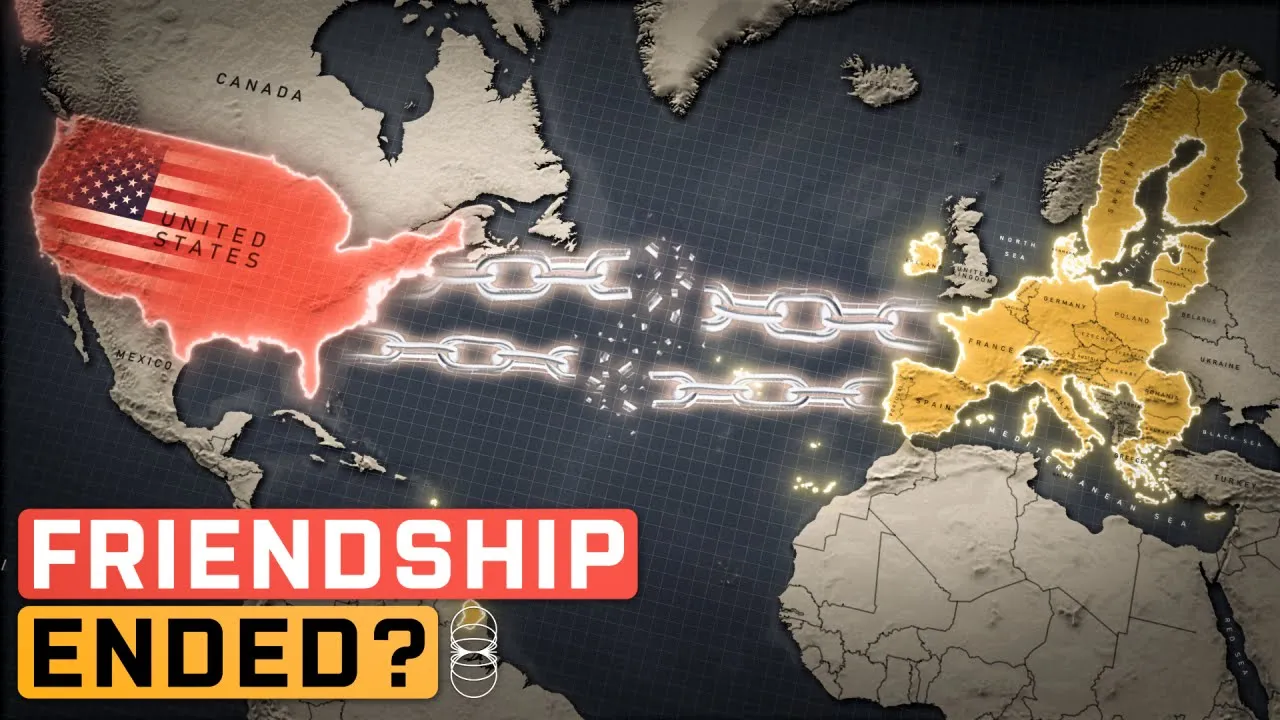
Funny thing, uh the Marshall plan where the US helped countries uh after the war rebuild their legal systems as well as their infrastructure involved the transposition of American antitrust law onto the statute books of Europe, the UK, South Korea, and Japan. They have basically all the same antitrust laws because one of the things that the technocrats of the Marshall Plan saw was that monopolies were instrumental to creating fascism in Germany and Italy and Japan. and they thought that uh keeping monopolies at bay would be critical to preventing the rise of fascism.
>> What you're talking about with regards to you know effectively rigging the ranking when you're getting your search results for a product that you want and of course you can change it to bestselling and you you can still find a way but the revenue that brings in like you're saying peranom is about $58 billion a year. $58 billion a year and the market cap of the largest company in this country I don't know right now it's about $200 billion.
>> Yeah. Uh so the idea that we can't or we shouldn't do anything about this >> is just utterly extraordinary. I mean >> are people talking about how much inflation this is contributing to the wider economy and that's just one thing one means of raising money with one company.
>> Yeah. I mean we could be talking about huge amounts of inflation being created by big tech.
>> Absolutely. I mean it's not just that.
So 51 cents out of every ad dollar is going to big tech. 50 to 60 cents out of every e-commerce dollar on Amazon's going to them. But Apple and Google charge 30 cents on every pound or 30p on every pound that you spend in an app. So when you support a performer on Patreon, when you buy something from Crafter on Etsy, when you um buy a piece of software, a game uh from a a British creator, 30p in the pound is going to Certino. Now the cost of a payment uh in this country is zero, right? If I backs you£10 to pay for the pint at at after dinner, uh I pay nothing. So the difference between a 0% markup on a payment and a 30% markup. The number of times you have to multiply zero to get 30 is infinity. It is an infinity markup and it's worth hundred billion a year globally. And so lots of people have pointed out that one of the best reasons to have a monopoly is to have pricing power and to be able to charge vastly over the odds after cornering a market.
And um this is a thing that all of these firms have done. Uh and we did see a pretty muscular approach to antitrust uh in the US under Biden. It actually started under Trump won. The cases against Facebook and Google started under Trump 1. We had as I said the competition markets authority doing yman service for about five years until they fired the guy and replaced him with the Amazon guy. You had the European Commission with the digital markets act and the digital services act which are really big ambitious swings at antitrust. But also in Canada, you know, our competition uh bureau was the weakest competition bureau in the world.
It had challenged three mergers in its entire history and had never successfully challenged a merger. Canada is three monopolies in a trench coat.
And um in 2024, Trudeau, our our our then PM, who was hardly known as an enemy of concentrated corporate power, whipped his caucus to pass the most sweeping new competition law in Canadian history that gave our competition bureau the biggest powers of any competition regulator in the world. And it's not just there. South Korea, Japan, Australia, uh Germany, uh France, Spain, um and and China, where they've got really big new antitrust laws aimed at their tech companies. In part because of inflation, and in part because of raw power, the belief that when a firm becomes too big to fail, it becomes too big to jail and too big to care. And it users the the role of the state. And so everywhere you have this this anger.
Now, we've seen a huge backlash. The billionaires aren't happy about it. Um they've just about killed antitrust in America. And what antitrust means in America is because every company is guilty of violating antitrust law. If you make Trump angry, he'll just have his antitrust enforcers come after you and then they'll stop the minute you stop making him angry. Um but the the public sentiment that created this enormous uh uh tailwind for antitrust has not evaporated. And I would argue that it is part of the same phenomenon that is expressing rage at concentrated corporate power in the election of Zoron Mandani uh in the surge that we've seen uh Zach Palansky experiencing. Uh and that it is part of a wider movement that has said enough is enough. Uh concentrated corporate power means that um we don't have a king. We have, as John Sherman said when he wrote the first antitrust act, we have a we have an autocrat of trade and that our markets are being planned but not by the notional Soviet planner that the Adam Smith Institute says we should be worried about, but by like seven ketamine adult Zucker Muskian failures who somehow have become in charge of everything we do.
>> And somebody at the OBR who gets all their projections wrong, but that's just the UK.
>> Yeah. Um, quickly on Uber.
>> Yeah.
>> What does this company have to do with giant fluffy teddy bears that you see at provincial fun fairs?
>> Yeah. So, uh, in Toronto every summer when you'd go down to the, uh, uh, Canadian National Exhibition, our big fun fair, by about 10:00 a.m. on the midway, you would see a man lugging around a galactic scale teddy bear that you nominally got by throwing five balls in a peach basket, but which no one had ever managed to land five balls in, ever. And the way that that guy got his giant teddy bear is some carney gestured him over and said, "Fella, I like your face. Tell you what, you get two balls in the basket. I'll give you this keychain. You get two keychains, you can trade up to the giant teddy bear. And what that guy did for the carney all day without realizing it is trick people into thinking you could win a teddy bear. And so by the end of the day, that carney would have made a hell of a lot of money and had given away at most a few keychains and that poor sod had to walk around with a giant teddy bear in the Toronto summer. And um the platforms can change the payout for different users in different ways. Um, Tik Tok has a thing they call the heating tool where uh if they think they want you or someone like you to be on the platform making content for it, they can just turn a sort of metaphorical dial and you get millions of of views. So, you know, you're they want sports bros on the platform. They pick a sports bro, they make him king for the day. He makes a bazillion dollars and he declares himself to be like the Louis Pastor of sports content on Tik Tok and he goes around like a Judith goat and he convinces everyone else to do this.
Well, this is what Uber does. Uber picks out drivers and and gives them a payout that other drivers don't get. If you have two Uber drivers sitting next to each other with their phones out, if you watch the Ride Care Share Guys YouTube channel, they do this. It's one of their best party tricks. You will see the same job come in at a radically different wage. And it's partly because they are picking out Uber drivers to make them kind of uh influencers for a dream that can never be realized to fill the message boards and the telegram channels with talk about how much money you can make at Uber. And that gets everyone else to pile into the platform and sell their labor at a very low cost. The anthropologist Vina Dubel, who's also a legal scholar, did the most important work on this algorithmic wage discrimination. She describes these heartbreaking scenes where you have people who are um driving their car for like 16 hours a day, sleeping in it, trying so hard to support their family, reading the message boards full of people who are talking about how much money they're making driving Uber, and who can't figure out why they can't do it. They think they're doing something wrong. They think they're bad at Uber, but they're very good at Uber. This is exactly what an Uber driver should be doing as far as Uber is concerned. And remember, if two of you have the same job and you're paid half as much, they're telling you your labor is worth half as much. Just like if two of you are buying the same product and one of you pays half as much, they are reaching into your wallet and cutting the pounds in half. They're saying the pound in your wallet is worth half as much as the next person's pound. Let's talk technofudalism.
>> Yeah, >> we did an event with Janis Farafakis here a few years ago now. And Janis Farfax is one of these fascinating people because you know, you'll mention technofudalism in the book. I'm a big fan. And then you'll have somebody like Steve Bannon also say, you know, there's there's something to this, which I think actually is also applicable to this book. You know, I can imagine a >> Bannon's using initification on his podcast. I get a lot of uh DMs from people who torment themselves by listening to his podcast every time he uses it.
>> I can see a very wide range of people being interested in this like technofudalism. But on that um on that term, a few things and I hadn't put this in my notes, but the way you're talking about big tech and how it's effectively sending every single week, let's say hundreds of millions of dollars from Britain to the United States, a lot of it to California.
People in the past would have said that's imperialism. All right? That's a there's a there's an economic relationship there which I I genuinely don't think we had in the 60s, the '7s, the ' 80s. I think something has fundamentally changed.
>> So when Janice talks about technofudalism, he's talking about a different iteration of capitalism or maybe even something which is post capitalist. But also it's about a geopolitical realignment.
Where do you sit on in shitification technofudalism and this kind of new bipolarity, this new tech cold war of the US world and the Chinese world and and where does Britain and Europe sit in that?
>> That's a lot to cover. Holy >> sorry. Um well look I I I Giannis's book is very good and he draws this distinction between rents and profits which I think as leftists we tend to be a little dismissive of. It's like, well, if you're alienating someone's labor, what do I care if you're getting the money because you own a factor of production or because you've made something. I think it it does matter. If nothing else, it's a class division among the ruling class that uh there are people who own things and people who need the things they own to make money.
And the people who own things and the people who need the things they own are enemies because the more money you can charge for rent, whether that's on a patent or a physical plant or something that's being leased, some factor production, the less money there is in profit. And and you know, one way to think about the birth of capitalism and the industrial revolution is the triumph of profits over rents where you had literal feudal landlords no longer collecting a monthly rent from their their the peons on their land who are bound to the land. Those peons are turned off the land protarianized and and um you no longer get the rent.
You have to be exposed to competition and profit by grazing sheep and then trying to find someone to sell it. So really like this is a this is a huge and sweeping transition. Rontes and entrepreneurs are hate each other.
Except of course, every entrepreneur secretly wants to be a rontier. No one actually wants to compete. Capitalists hate capitalism more than anyone in this room. Uh because all they want is to collect rent. They they don't want to be exposed to competition. That's why they use non-competes so that their workers can't leave. And it's why they get patents and other exclusive arrangements. That's why everyone wants the franchise to sell water on the other side of the security cordon at the airport because you can charge n a bottle and no one can compete with you, right? capitalists hate capitalism. So that's part one, right? What technofudalism is, it's the triumph of rents over profits. Um, but in terms of um, uh, the geopolitics, I think they're really interesting at this moment. Uh, my friend Joey Davilla says, "When life gives you SARS, you make SARS Barilla."
Uh, I have for like two and a half decades been fighting over tech policy.
And I was the European director of the Electronic Frontier Foundation. I worked in more than 30 countries. And everywhere I went, I would talk about a variety of policies. And the answer to every one of them was, "This sounds very good, but the US trade representative has made it abundantly clear that if we were, for example, to make it legal to jailbreak a printer and install third party ink or jailbreak a phone and install a third party app store or jailbreak an app and install a privacy blocker, I remember 51% of web users have installed a privacy blocker. 0% of app users have installed a privacy blocker because you have to reverse engineer the app first and that's illegal under anti-ircumvention law which is why everyone wants you to use their app and not their website. An app's just a website skinned in the right kind of IP to make it a felony to defend your privacy while you use it.
And so uh you know this has been this giant barrier and the reason that the USR the US trade rep was able to convince countries to adopt this policy which is otherwise a really just a stupid obviously bad policy is they said if you don't do it we will put tariffs on your goods right so happy liberation day right if if someone says do as I tell you I'm going to burn your house down and you do it and they burn your house down you don't have to keep doing it you can do something different And so you there's this coalition I think forming and on the one side you have people who are like I'll have some of that hundred million hundred billion dollars a year on payment processing I'll have some of that 30 cents out of every out of every dollar um 51 cents out of every ad dollar I will reverse engineer these things make the interoperable products the complimentary goods um and there are policy makers who quite like the sound of it because you know while everyone might benefit from there being a company that buys every printer and keeps it up to date and always has is a jailbreak ready. So that every person who's got like a folding table at the back of a dry cleaner or a a news agents who jailbreaks your printer and sells you generic ink for it, if they pay 20 a month, can make sure that the tool works all the time.
So a lot of policy makers are like, "Oh, we'd like to export that. We'd like that to be our our country." But I don't know if that's enough to change things. But then there's this other thing which is Donald Trump making it clear that America no longer has allies. It no longer has uh uh trading partners. It has rivals and adversaries and it's going to pursue that rivalry by um uh booby trapping their technology. If the International Criminal Court swears out a genocide warrant against Baby and Yahoo, fine. Microsoft will cut off his Outlook access and he'll lose all of his email archives, access to every document of the International Criminal Court, his address book, and his uh his his diary.
Right. Well, every government ministry, every firm in your country can be attacked this way. This is what they told us Huawei would do if we let them supply us with telecommunication switches. And you know, it's not just telecoms and it's not just office productivity suites. Do you remember when those um Russian soldiers looted these Ukrainian tractors and took them to Cheschna and the John Deere company sent a kill signal to them and shut them down forever? A lot of us laugh, but of course this does mean that the John Deere company can shut down any tractor in the world when it wants. And Donald Trump once again has made it very clear that the companies uh that are doiciled in America are his instruments for global domination. So there is quite a a coalition kind of brewing between national security hawks, some of whom are worried about America, some of whom are worried about China and they're worried about booby traps and solar inverters and batteries, which is like not an unrealistic thing to be worried about. Anything that can be updated over the air can be updated with an update that bricks it. As anyone who ever bought a Sonos speaker knows, that wasn't an attack. That was just them being terrible. Uh but um you know, the solution to it is to jailbreak everything and replace it with open source software that's under your control and talks to the cloud servers of your choosing. And between the Thank you. [applause] But between the the national security hawks, the US hawks, the China hawks, and the entrepreneurs and technologists who want to make things, many of whom have just been chased out of America and used to work for the companies that made this stuff.
You combine that with the people who've been fighting this stuff for 25 years, privacy advocates, labor advocates, consumer rights advocates, and maybe you've got a a winning coalition, especially since only one country has to break. And then we can buy those tools from them. They'll get the uh industrial policy. They'll get to be the country that has the relationship to the stuff that Finland had to mobile phones for 10 years. But we'll get the consumer surplus, right? We'll get discounts on all the things that we that we currently get screwed by the Americans on. And you know, if it's not Europe, if they don't have the courage for it, maybe it'll be Canada. Canada's response to the Trump tariffs was retaliatory tariffs, right?
Let's pay more for American goods. This is like punching yourself in the face as hard as you can, hoping the downstairs neighbor says, "Ouch." Right? Where like if you really want to get back at the nine guys who were on the dis behind Trump at the inauguration who each paid a million dollars to stand there, attack their most profitable lines of business, right? Don't fetch about Elon Musk's Nazi salute. He lives for the attention.
Make it legal for mechanics to jailbreak Teslas and unlock all the software subscriptions and upgrades without giving a penny to Elon Musk. kit that guy right in the dongle, right? That's how you win a trade war. And so, one country breaks, we all win. I I I am weirdly very excited about this. Uh people are like, "How can you be so excited? The door is only open a crack."
I'm like, "Yeah, but it was locked for 25 years. It's open a crack. This is amazing. We got to push really hard on the door." So, I am very excited about the potential for a post-american internet. I think it it it is on the horizon and I think it's ours to seize.
[applause] >> I love that phrase, a post American internet.
>> I am uh currently pitching a book with that title.
>> Yeah, it will do very well, I'm sure. Uh there's a great book by a gentleman called Angus Hansen, Vassel State.
>> Uhhuh. and he just details the extent to which the UK is now dependent upon US infrastructure from payment systems Google Pay, Apple Pay, Visa, uh to software, Adobe. For instance, tonight we've used a platform, I presume Dice is American. The payment systems to buy the tickets American. Uh I got here using my I'm sorry, my iPhone, >> using Apple Pay on the >> personal consumption choices are not moral.
>> Of course. Of course.
>> You know that you don't change the world by shopping hard. No, it's true. Uh, and then of course this will go out on YouTube. We'll edit the clips using various uh Adobe products, Adobe Premiere Pro and whatnot. The pro, uh, the podcast also Adobe. Um, the computers which it's, you know, uh, being produced on will be designed in America, certainly not made in America.
But the technological dependence that Europe in particular has on the United States, it does feel like when you use that phrase, a post American internet, it does feel like the part of the world with the biggest potential upside in that landscape is Europe. So we should be quite excited about it on this side of the Atlantic in particular. I I think so. You know, a lot of Europeans, I think, are very down on this. I I I I was in Europe last week and talking to a bunch of people who are like, "Oh, they're all cowards. They're gutless.
They're spineless." blah blah blah blah blah. Well, you know, Europe was like 10 years behind schedule on its solar transition until using Russian gas ceased to be an option. And then all of the reasons that you couldn't do that transition just like evaporated, right?
The fact that like you had German nimbies who didn't like the idea of seeing ugly solar panels on their neighbors balconies just ceased to matter when they were shivering in the dark and now they are 15 years ahead of their solar transition. Right? So, you know, crises precipitate change. So, even though the UK is very uh um imshed with American systems, they don't have to be. And, you know, this is not the only way in which American hijgemony is receding. You know, for for a couple of presidencies now, starting well before Trump, there have been weaponizations of the dollar clearing system in the Federal Reserve system where, you know, if you're Argentina and your sovereign debt is in a bank in New York, it turns out that vulture capitalists can sue you there and take all of your reserves, right? Or if you're Russia and you invade Ukraine, it turns out that your Swift access can be shut down. Now, I I'm not going to shed any tears for Russian oligarchs, but there's a lot of people around the world who are trying to figure out what they're going to do if they can't dollar clear anymore.
Ethiopia's just re revalued its debt in Ren Minbi. Um, I don't know if that's going to be the answer for most people, but uh this is a big problem and there's no easy answer to it. Just like when Snowden came out of the cold and we discovered the hard way why we shouldn't have every transatlantic cable and trans-Pacific cable make landfall in America and people have been stringing cable as fast as they can everywhere.
But this is different, right? This is not one of these intractable problems where you have the, you know, every nation has to roll their own. If the Euro stack, which is Europe's answer to these um American platforms, open source alternatives to American platforms, if they fund that and they deploy it, there is no reason it couldn't also be the Canadian stack. It could sit on Canadian metal in a Canadian data center in Canada connected to Canadian fiber serving Canadians. There's nothing national about the open source software.
It just becomes software that everyone can work on. So, this stops being really like a technology. it starts being more like a physics or a science, right?
There isn't like a a a radio theory that is American and a radio theory that's British. Or during the war, there wasn't a Nazi kind of radio and then an Allied kind of radio. It's just radio, right?
And in the same way, this could be a kind of new like kind of given, right, that we have this software that everyone's working on and improving and and uh tinkering with and fi adding features to and patching security bugs in and maintaining and ensuring it's backwards compatible. That could just be a thing, right? That's just out there in the world. The way that standards for safely wiring up a socket on your wall are out there in the world. And um and so that international nationalism which I think is like a new thing that computers gives us is is a new way of uh resolving this kind of geopolitical crisis that I'm quite excited about what we might be able to do with right like there I'm not a tech exceptionalist broadly but there are things about computers that are new on this planet right privacy we think that being spied on in the internet is natural absolutely not encryption right working modern encryption is the thing where if you take the distraction rectangle out of your pocket and aim it at someone and press the shutter button in the instant that it plays the shutter noise, that file is scrambled so thoroughly that if every hydrogen atom in the universe were a computer and it did nothing until the end of the universe but try and guess which key you needed to use to unscramble that image, you would run out of universe before you ran out of keys.
That's a new thing, right? We have never had a thing like that before. So there are some ways in which technology is exceptional. There are some exceptional things about it.
>> You've got a great quote from William Gibson.
>> Yeah.
>> Uh and the quote is cyberspace is averting.
>> Yeah. Not inverting.
>> Yeah.
>> Explain that and what does it mean for initification beyond the kinds of businesses and products we've talked about because I think people intuitively understand Meta, Google.
>> Yeah.
>> But it's bigger than that.
>> So Gibson is talking about how the internet is turning inside out. So, it's swallowing the real world. And we have all of these internet connected systems everywhere we look. Um, the so-called internet of things, all these smart devices. And every one of them can be in shitified because they all have this digital property where you can change how they work from moment to moment and user to user in order to shift value away from business customers and end users and towards shareholders. So, you know, if you go into the shop and it started raining, they can't repric all the umbrellas, right? They need an army of teenagers on rollerblades with a pricing gun to do that. But when you have electronic shelf tags, the minute it starts raining, the umbrellas can double in price. Um, in uh Norwegian grocery stores, which is like the leading edge of the adoption of electronic shelf tags, they're changing prices 3,000 times a day. And they say, well, they're doing it to make the old milk cheaper, so you buy it. But anyone who thinks that that is all firms are going to do with the power to repric things 3,000 times a day has not been paying attention or has been paid an awful lot of money to believe that. Um, and it's not just there. It's cars. You know, I mentioned Teslas with their software upgrades. Uh, they really pioneered the auto inshitification where, you know, your Tesla battery in some models will not deliver the full charge. You can only use half your battery unless you pay a monthly subscription to use your whole battery.
And again, it's this anti-ircumvention law that prevents you from tinkering with it to use your whole battery. And Parliament has never passed a law that says if you own a battery, you can only use half the charge in it. But because it's against the law to jailbreak the battery, it becomes illegal to use your whole battery. Um, Mercedes has followed suit. The accelerator on modern Mercedes uh will only uh push your engine to a certain number of revs unless you pay for a monthly subscription. BMW has an auto dimming highbeam that dims when there's oncoming traffic. That's a monthly subscription. You see this everywhere you look, right? It's it's inkjet printers as well. And you know, terrifyingly, it's medical implants, um, whose trajectory is mostly just being bricked when the manufacturer loses interest in supporting it. And that's bad enough when you're talking about an implanted defibrillator or a cocklear implant, but it's really bad if you're one of the people who had a bionic eye wired into your optic nerve because you were fully blind and then the manufacturer lost interest in supporting it and did not dain to let someone else support it. And so now you just got an inert piece of electronics permanently stuck in your face.
>> That's the future on offer. Just >> Yeah, it's um well, you know, Gibson, another great quote of his is the future is here. It's just not evenly distributed. And you know, I talk about this thing in my work called the shitty technology adoption curve. Right? If you want to do something terrible to people with a computer, you can't start with me. I am a mouthy white guy who speaks English as a first language and has a big platform and a short fuse and I will be a pain in your ass. So what you do is you go find someone who has no agency.
You find an immigrant, you find a refugee, you find a mental patient, you find a prisoner, and you sand the rough edges of the technology down on their bodies. And then you work your way up the privilege gradient. You gig workers, blue collar workers, white collar workers. Eventually, you get to everyone, right? The future is here.
It's just not evenly distributed. But eventually, it becomes distributed. And so, you start with like, if you've got a CCTV watching you while you're eating dinner 20 years ago, it's cuz you're in Bellar now. That's because you were unwise enough to buy a home camera system from Apple or Google or God help us all Facebook, right? Uh and that is the shitty technology adoption curve in action. That's the future. If you want to know what the future looks like, just go look at how people who have no agency are being forced to interact with technology. That's what they're hoping to do to you.
Yeah, >> that's why we have to [applause] I mean that's why I I I have this sort of jokey thing I say but it's haha only serious. We have to seize the means of computation, right? We have to we have to decide how the computers we use work or someone else is going to decide how we work using those computers.
>> We're going to go to questions in one moment but quickly >> what's the solution Cory?
>> Yeah. So the four things that used to uh stop companies from inshitifying competition, regulation, uh worker power and um and and interoperability, new digital products that fix old digital products. We need to bring those back. We got pretty close with competition for a few years, and I still think there's some some gas in the tank.
There's a lot of energy for competition regulation everywhere. And we do have this odd benefit, which is that the companies do the same crimes in every country. Right? When John D. Rockefeller was running Standard Oil and the Germans were suing him and the Americans were suing him for antitrust violations. The Germans sued him for monopolizing ports and the Americans sued him for monopolizing refineries. They couldn't really share uh enforcement strategies even if they could like fire them across the ocean and zeppelins fast enough.
They they couldn't really help each other. But, you know, tech companies do the same thing everywhere. And so when the competition market authorities uh digital markets unit did its report on Apple and Google's payment processing ripoff uh the compet the uh uh European Union used it to bring two enforcement cases and as the basis for the DMU the digital mark uh the digital mark markets act and the digital services act and after they won those cases in Europe the South Koreans and the Japanese just translated those cases and brought them in South Korea and Japan and won huge settlements out of these companies. So restoring competition is quite exciting and the fact that you can have like an actual coalition of the willing that does something good where countries all over the world can collaborate in this way and that countries in the global south can do this as well. It's a very exciting thing. Restoring regulation means um passing laws that you have a colorable hope of enforcing. Uh, I go into some detail in the book, and I know we're getting short on time, so I'm not going to go into a lot of detail, but we have rules like, um, anti-hate speech rules, which I think are well-intentioned, and I don't want to minimize the problems of hate speech on platforms, but they're hard to enforce.
You have to agree a definition of hate speech. You have to agree on whether something meets the definition. You have to investigate whether the firm took reasonable steps to stop it. It's like a seven-year investigation for something that happens a hundred times a second.
Meanwhile, what we could ask is why are people from disfavored minorities who get the brunt of the abuse, who face endless harassment on these platforms, why are they still there? Well, because the only thing worse than being a member of a disfavored minority is constantly showered in abuse is being isolated and being a member of a disfavored minority and being showered in abuse. So, one of the most important things we can do for platforms is make it really easy to leave them. Right? We have number portability for our phones. If if you don't like the way your carrier treats you, you do 5 seconds of admin and you're on another carrier and no one cares. No one cares which phone carrier you use. No one's ever rung someone up and said, "Dude, you wouldn't believe whose SIM is in my phone today." Right?
So, we could make it so that when you leave Twitter and go to wherever, blue sky, Mastadon, something that doesn't exist yet because who would build something if people can't leave the existing platforms? U when you go there, you still see the things that people posted on the old platform that are intended for you. and when you post, they can see it. We could mandate that or we could hack it in. You know, when Mark Zuckerberg was trying to get people off Facebook and onto off MySpace and onto Facebook, he didn't just say, "Oh, we have a better privacy policy." Cuz no one's going to abandon their friends and then just smuggly sit there reading the privacy policy until their stupid friends join them, right? He gave them a bot and you gave that bot your login and your password and it would go to MySpace several times a day, pretend to be you, grab everything waiting for you on MySpace and put it in your Facebook uh feed and you could reply to it and push it back out to MySpace. Do that to Facebook today and they will nuke you till you glow. So in addition to mandates, we can also withdraw the power of the state that we currently extend to Facebook that allows them to sue uh and destroy the lives of anyone who tries to do unto them as they did unto Rupert Murdoch. you know, these guys are always disruption for thee, never for me.
Moving fast and breaking things is fine, provided those things belong to kings.
Move fast and break kings. You know, break Mark Zuckerberg's things, that's fine. And so, we could restore that as well. Um, and the thing about that is it means that while you're waiting for a competition enforcer or a hate speech enforcer or someone else to do something about the moderation failures on a platform, you don't have to just sit there and endure the abuse. You can take yourself somewhere else without losing your community. So, there's several chapters of these uh in there and and they all have this emphasis on administrability, on the ability to do things where you can tell whether someone's cheating and you can do something about it when you catch them.
[applause] So, we're going to questions. We'll go to questions. I just want to say, Corey, I speak to lots of smart people. It's kind of my job. You are really smart.
>> A push on.
>> You are really smart.
>> Push.
>> The book is fabulous. And like I say, Christmas is around the corner. Uh everybody a warm round of applause FOR [applause] >> we'll do uh we'll do some questions and answers. I don't know how many, but there should be some mics.
>> Yeah.
>> Lady there with a hat on.
>> Hi. Uh thank you. I've read a lot of your work. Um >> thank you. the have you thought much on alternative economic and governance models on a societal and firm scale uh to reward innovation without the siloing of innovation that current IP law creates. So what are the next theoretical steps after um end to end and uh right to repair to organize society in a way that we make uh opensource the standard uh beyond just software? Hm. Um well, I'm a little confused by the question because you talk about governance, but you're also talking about about other steps. I mean, I I I think that um there is something about the fight that we've had for 20 years about software licensing that has been lost a little.
So, I use the term open source tonight.
Um some of you it's put your teeth on edge if you're a certain kind of person because you like the term free software.
And you're not wrong to like the term free software. Before we had open source, we had free software. Uh they they meant the same thing at one point, but the difference was that free software was uh put the emphasis on freedom. Uh and it was about licensing software in order to make people more free. That's where those licenses came from. Open source just emphasized the instrumental benefits of making software higher quality through transparency. And and what happened over the decades when we stopped emphasizing the moral proposition and only the instrumental proposition is that at every juncture where we had to decide whether some practice was in or out of what we called open source or software freedom, there were a lot of things that wouldn't have ever passed muster with software freedom that absolutely satisfied open source.
And we've ended up with this world now where like the big platforms have free software. You know, if you're Google, you have total control over how you configure and use your software. We have open source, right? We we can see which software Google is using. It's there on GitHub. We can contribute our labor to it for free. We can we can send them pull requests. But because all of our apps loop through their cloud or someone's cloud and we can't configure that cloud for ourselves, they get to decide what our technology can do even though we have this transparency. So if there is a if there is a failing that we've had in open source, it was falling back from stressing the ethical proposition of technology making people more free and retreating to this instrumental position of software being of higher quality if you can see the bugs which is not wrong and software should be of high quality but um there is a quality within software that is freedom and making software that's of higher quality for example to track migrants for deportation in America is it maybe code that's better but it is not software that enhances freedom and so this is this is I think a thing we should recover [applause] this person here with the white top >> hi so I'm I'm wondering when you see things like there being less chocolate in penguin bars and you have like sheen is reducing the quality of clothes. Is enshication like a tech thing or is it like a capitalist thing?
>> So, let me start by giving you a benediction which is that if you want to use initification to refer generically to things getting worse, that is 100% fine with me. Um I I my first two languages were English and Yiddish.
They've had two consecutive anti-ionist Jews sitting where I'm sitting now. Um, and and the thing I love about both of those languages is that they're glorious mongrel languages. They just steal words. They make up words. Words can mean their opposite. Begging the question means two opposite things. Uh, cleave means both to cut something and put it together. It's great. I love it.
And so, if you want to use inchidification to mean whatever you want it to mean, that's fine. Is initification just capitalism? Well, inshitification describes two things that I think are distinct to technology.
First is the mechanism by which value is moved around. So that is this per user per interaction changes in the business logic of the systems we interact with.
Search results are different, recommendations are different, the payout to suppliers is different, the costs are different. That's just not a thing you can readily do with a chocolate bar, right? You can't calculate uh when someone walks into the shop how little cocoa they're willing to tolerate and refactor the chocolate bar based on their um uh proclivities. But you can make a guess about how many ads you can shove in their eyeballs, right?
And so you can increase the ad load for people who are desperate. The there was an Uber executive who once mooded and then later took back, but I don't believe the retraction that they could charge more for taxis when your battery was low. Right? So, so these are things you just can't do with hard goods. So, so there is a distinctive mechanism and like I said it is being uh vaporiz or or expanded to all of the uh goods because every good is becoming a digital good because the back end is becoming digital. But there's also sources of discipline that act on tech firms historically that did not act on hard goods firms. The first one was that uniquely constituted labor force. Right?
You know, people who work in chocolate factories deserve dignity, need a union, and are very important to making chocolate, but they're not worth a million dollars each to their employer, and there isn't a giant shortage of them. And so, historically, tech was better because tech workers had power.
And when tech workers lost their power, tech got precipitously worse. And so, you know, chocolate is worse, but it's not because workers have lost their power. Those workers have had very little power for a long time. They weren't able to hold the line. And so, that's different. and interoperability, the ability to make two things work together is just not the case for hard goods the way it is with digital goods.
And so on the one hand, we had this factor that was holding things at bay.
And on the other hand, um we have a remedy that might make things better that's not really available to us when we're talking about chocolate or or or other hard goods that these are distinct digital remedies uh that are in the toolkit of an enforcer, a regulator.
>> Uh with the glasses just there. Hi. Um, in the book you suggest that uh the platform should be forced to federate via something like app proto or activity pub as a way of allowing users to leave.
Um, I love this idea. Um, what I'm worried about having worked with foundational internet technologies is that these tend to be governed by these massive bureaucratic nonprofits and then they explode in complexity to the point where a very small number of players are able to effectively support them.
Browser engines are like the chief example of this. um are you what's your impression of the governance models of these uh standards such that they'd be able to resist that?
>> So let me rephrase that in a maybe slightly less technical way. So if we're going to have universal standards for say social media, how do we stop those standards from becoming parochial and captured by a small number of firms that dominate their sector and that effectively exclude everyone else from the from the world of of governance and they just decide how things work for themselves. So there's two different things that I think act as a hedge on this. So, you know, this this description you had of how um you start with standards that then explode in complexity and barriers to entry when large firms take them over assumes that large firms will always be a feature of them and that we're not going to do antitrust. We're not going to have all these other things to make firms smaller. I mean, the reason the web is dominated by a few companies, it's again, it's like not because of returns to scale or the iron laws of economics, it's because we let them buy their competitors, right? Google is not Willy Wonka's idea factory. Willy Wonka is rich uncle pennybags who bought everyone else's toys, right? They like Google's had one successful consumer product launch basically and it was a millennium ago when they made a search engine. And in this millennium, every consumer uh product they've launched almost with that exception has flopped. All of their successes are someone else's company which they bought and operationalized.
their um mobile stack, their their ad stack, their um document collaboration, maps, everything comes from someone else, someone else's company. They never should have been allowed to make those acquisitions. Apple buys 90 companies a year. Tim Cook is bringing home a new company for his shareholders more often than you bring home a bag of groceries, right? So, so these companies consolidation didn't come out of nowhere. And when they do consolidate, you're right, they capture their governance structure, right? There's just no way around it. And so we have to prevent the we have to I you know you can think of this as the difference between predistribution and redistribution right making the companies behave better after they've got a monopoly is redistributive right but preventing them from acquiring the monopoly is predistributive and it's much more powerful. Uh it's hard to do right once they've got the monopoly.
There's a joke from down east in Canada whose punch line is, "If you wanted to get there, I wouldn't start from here."
And here we are, right? It this it sucks, right? We have a very hard path ahead of us. But we also have a coalition that's much larger because the people who labor and are abused by monopolies aren't limited to people who use or work in technology. The monopolies are abusing us in every realm of our life. And once we realize that what we're angry about is not the monopoly over the thing that you're consuming or the the place where you work where you have to sell your labor, but monopolies more broadly, that there's a common factor across all of them. The way that the word ecology took people who cared about owls and people who cared about the ozone layer, who didn't know they cared about the same thing, and made them part of a single coalition. This anti- monopoly movement is a way to bring together people from a lot of disperate interests and that's how you make the governance work and when it doesn't work it sucks. I mean look the open document format that ISO the international standards organization did that uh was like a capitulation by Microsoft after Apple started knocking off their products with with pages and numbers and keynote. Um Microsoft still gamed that standardization process at the ISO meetings. Microsoft did not want the people who made what was then called open office is now called Libre Office to be participating. They literally removed chairs from the table so there would be nowhere for the open office people to sit right. So you yeah they capture they they capture everything when they become concentrated. So we have to make them weaker but you know that's no reason not to try.
>> Uh thank you very much uh Corey and Aaron that was really really fascinating. Um, so you touched on a couple times there the kind of well you touched a lot on the social blocks that and economic blocks that are causing intensitification. Uh, and you touched a couple times there on um, creating these disperate coalitions for like workerled resist forms of resistance. So I thought you could just elaborate a little bit more on this kind of digital subolton and how can we articulate some movement between lithium miners and gig economy Uber drivers and 100k a year pink mohawk coders. How do you articulate them into a uh form of resistance essentially?
>> Well, I I mean one way to talk to programmers about why they need to be thinking about um finding solidarity with the with the majority of tech workers who don't who aren't programmers. their Uber drivers and warehouse workers, that's the majority of people employed by tech companies, is to remind them that um their bosses have shown them how they treat workers they're not afraid of. Right? If you work in an Amazon warehouse, you're injured at three times the rate of uh the national sector. If you drive an Amazon van, you pee in a bottle. If you assemble iPhones, you've got suicide nets around your factory in iPhone City.
and this is how they will treat you if they can. You know, they they're they're not sentimental about you. And thankfully, the tech bosses are helping us make that point. Uh they are so infinitely horny for replacing programmers with chat bots. You can almost see them slavering when they talk about it. They they you know, the fact that you wear a hoodie and they wear a hoodie doesn't mean your peers. Uh Mark Zuckerberg and Sergey Brin have both in the last couple of months stopped attending the all hands engineering town halls which they used to attend as a kind of gesture of collegiality to these programmers. Um and and my favorite quote about why they're not doing it came from Mark Zuckerberg which is quote it's not a good use of my time. Right?
Sergey Brin told his uh programmers that the optimal week they should be shooting for is 60 hours a week. So programmers definitely have a reason to be in solidarity with these other workers. Um why should other workers be in solidarity with them? Well, in my experience, um people who are uh in low-wage sectors uh find it much easier to understand why they need to be in solidarity with large groups of people than people in high wage sectors.
There's there's no way to survive on the wages that you get paid as a lithium miner or an iPhone assembler or or you know an Amazon driver if you are an atomized person who has no community that you rely on and whom you also allow to rely on you. You you simply can't get by. you have to be on one of those incredible wages to conceive of yourself as an island uh because you are substituting money for the social uh um bonds that otherwise make people uh able to survive. So I'm I'm less worried about how you convince workers who are both figuratively and literally at the coldface why they should be in solidarity with programmers. But I think we've got a pretty good shot at making programmers understand why they need to be in solidarity with those workers. And you know demand for unions right now. I don't know what it's like in the UK because I haven't paid a lot of attention but in the US there has not been more demand for workers to be in unions than uh since the Carter administration since the 70s. unions also have their highest level of public approval since the that they've had since the 70s and the cash reserves of the major unions in in the United States are larger than they have ever been in recorded history. Um, unfortunately those union bosses are not great and they don't think that organizing is important. They think they represent their members and by definition organizing is trying to find someone else and make life better for them. Uh this is a dramatic failure to understand what unions are for and we need to get rid of those bosses and occupy our unions and take them back. Uh but um you know that's part of our marching orders too. [applause] Before we finish, I've been instructed to tell you there is a newsletter that accompanies Downstream. It will be in the description for this interview which should be up I think on Sunday. It's at navar media/stream newsletter. Cory, it's been so fun to talk to you. had a really wonderful even [applause]
Up Next

Economic Growth vs Development | IB Microeconomics Review
@BradCartwrightEconomics
164K views•2015-12-28
Impact of Yuan in Indo-Russian Trade Amid Sanctions
@WION
261.9K views•2022-07-01
Behavioral Economics Explained: Rationality, Nudges, and Risk
@crashcourse
1.1M views•2016-03-12

The Age of Easy Money: Fed & Inflation | Full Documentary
@frontline
21.2M views•2023-03-15
Related Study Plans & Knowledge Roadmaps
Structured learning paths in Economics