





















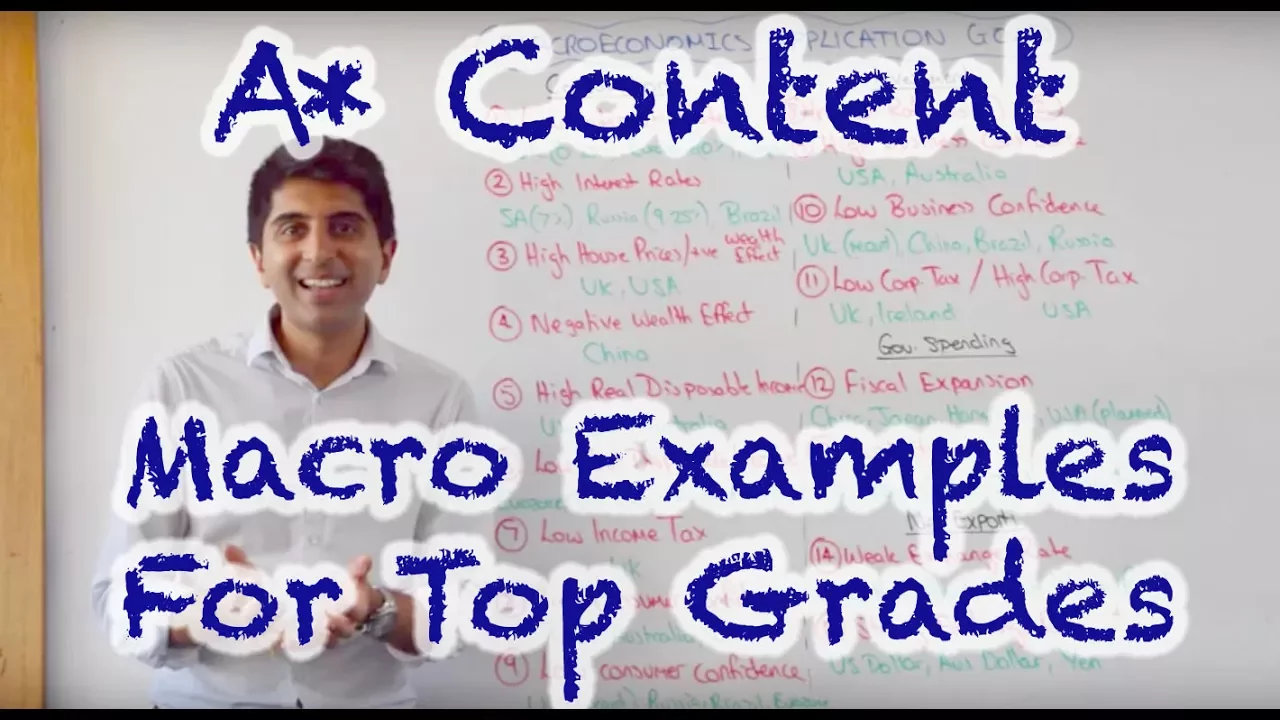


Economic growth measures the change in a country's national output or income (GDP/GNI), indicating monetary expansion, while economic development measures overall welfare and well-being through indicators like education, health, and social factors, often assessed via the Human Development Index (HDI); growth alone does not guarantee improved living standards or reduced inequality within a country.
Economic Growth vs Development | IB Microeconomics Review
Added:Understanding of Gross Domestic Product (GDP) and Gross National Income (GNI) as measures of national output.
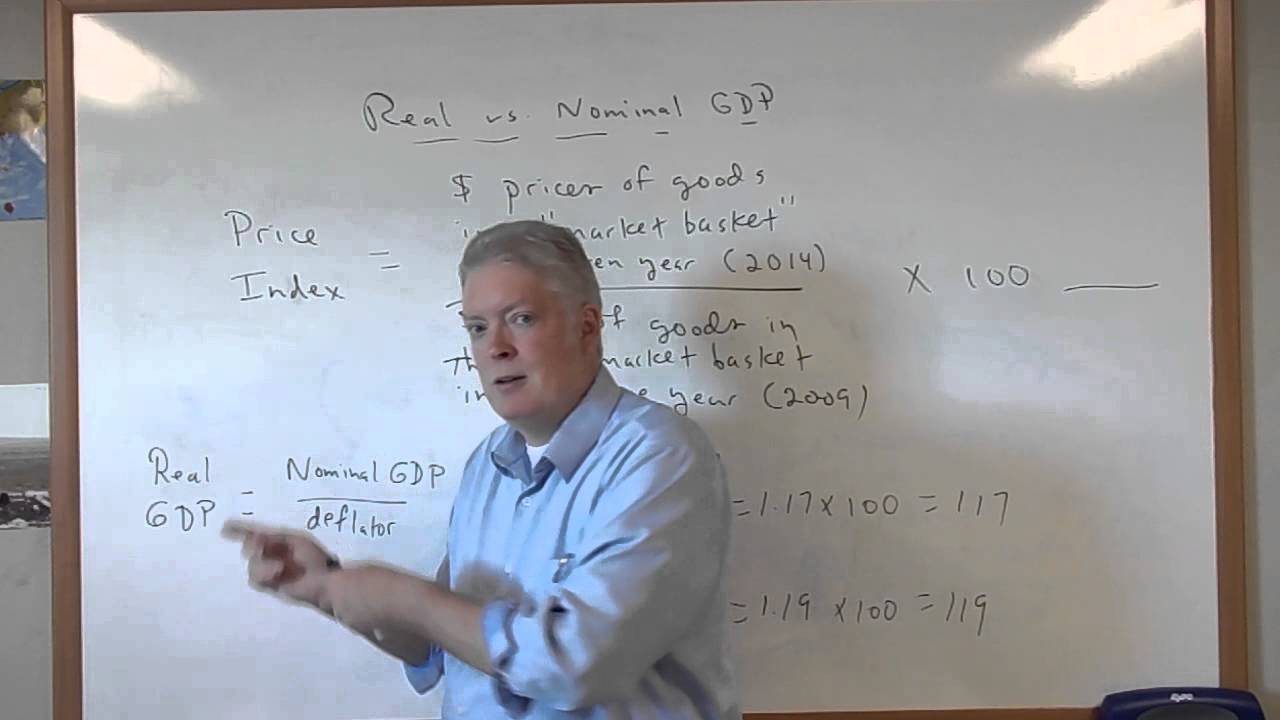
Distinction between real and nominal economic values.
Basic knowledge of the core macroeconomic objectives, specifically sustainable economic growth.
Familiarity with the general concept of living standards and how they differ from national income.
In-depth analysis of composite development measures, such as the Human Development Index (HDI) and its components.
Evaluation of domestic barriers to development, including poverty traps, institutional weaknesses, and lack of infrastructure.
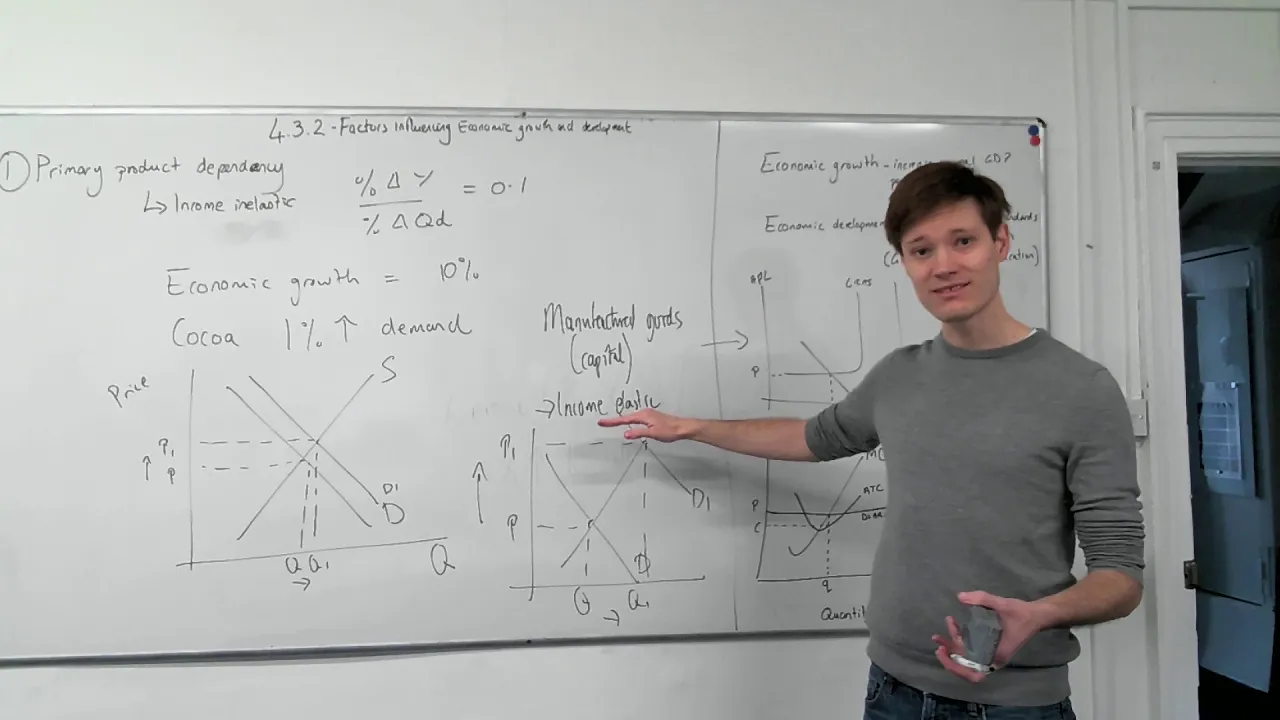
Study of international barriers to development, such as trade barriers, primary product dependency, and capital flight.
Assessment of market-oriented versus interventionist strategies used to promote economic growth and development.
164K views2.1Klikes6:23Original Release: 2015-12-28
hey hey everybody today we're going to take a look at economic growth and economic development this is a part of the series on the foundations of IB economics which is building a knowledge base that you need in order to begin this journey all the way through micro macro International Development economics so today let's take a look at growth and development they're two very distinct things and I like to make things as simple as possible so I'm going to use an analogy of like the health of a family and what's going on within the family because economic growth and economic development really are macroeconomic ideas and they're they're both important but they tell us very different things about the country first let's take a look at economic growth um economic growth simply a measurement of the change in the country's National output or gross domestic product which is also known as GDP or it could be referred to as gross national income and in many ways it's easier to think about this as a growth and income right a national income is the value of all goods and services produced in an economy in a given period of time which is normally a year so if you take economic growth in a macroeconomic sense for the country of Chile which is where I live you would say that wow you know if every if the total in if you add up all the money in Chile that everybody makes and you end up with a higher number this year than last year as adjusted for for inflation you'd say oh well Chile is better off and in many ways you could say that's true because there's more money beinged earned in Chile just like you could say a family of four if that were a think about a family as a macroeconomic unit just like a country it's a little household the countries are really just big households and if a if a particular two workers inside a family and they make more money this year than they did last year you could say oh well they're ntion their income has improved but that doesn't necessarily say or talk about the actual welfare of the family maybe they've earned more money but they have more expenses maybe they've earned more money but there's some sort of crisis going on in the house so just because uh maybe there's a child who's sick or or somebody has lost the ability to go to to have a a good education so the welfare of the family really isn't accounted for just the increase in income in the family well the same is true for a country so economic growth is is good it it is helpful right if there's an increase in the level of real national income between one year and another then we can say the economy is grown but you really need more information because a purely monetary measurement is not necessarily telling you about the health overall health of the country and if we're C curious about development and countries becoming more and more developed and also uh we need to and also people becoming more educated and healthier living longer um lower infant mortality rates you need more information to really gauge whether or not uh a country is progressing and that's where Economic Development comes in so unlike economic growth economic development is a measure of welfare right a measure of the well-being of a country so what does that mean well as opposed to just looking at individual incomes this is going to say hey let's look beyond the monetary terms beyond the income such as GDP or gni but also let's take a look in terms of the other indicators such as education health indicators and social indicators so are more people being educated beyond the secondary school secondary level is infant mortality rate going down are people living longer are people generally speaking happy are they more secure um those things lead to development you can have the richest country in the world but have it be fairly undeveloped in terms of the human aspect of the country so the way that this is usually calculated something called the human development index or the HDI which is one of the most commonly used indicators and really what it is is it's a it's a an indicator of many different factors education indicators health indicators social indicators that that that is thrown together into an index and the HDI is calculated for a country and then gives the country an HDI value between zero and one and you can look at your book and look more into this um on your own because to go into the HDI right now is not necessarily what we need what we need to know is what is development versus growth and if you take the Family household analogy that I'm making for for a macroeconomy you know if a if if a a if a household is healthier if a household is more Highly Educated if um then that tells you more about the household than just the fact that they earn more income well the same is true for um for economic grow grow for a country between economic growth and economic development okay but but for us as students the meaning and measurement of Economic Development and economic growth are important right the measurement of economic growth which is simply a change in the national income is not in any way a sufficient measurement of Economic Development since economic development is a much broader concept right so even within wealthier High income countries we must not assume that all citizens enjoy the same benefits from the high levels of income some citizens may experience low levels of economic development high levels of economic growth do not ensure that increased Equity is achieved within a country and we'll come back to this when we get into macroeconomics or you will come back to this in macroeconomics when we look at an entire unit on growth and an entire unit on development so take those two concepts and hold them in your mind together it lays out a a very nice um differentiator I guess between looking in the news when you see things in the news and you say oh you know um GDP is up which means there's a higher production of things or gross national incomes are up look at the disparity there's always more to the story and and economic development often times can be a more informed opinion about the overall health of the people within a country okay I hope you found that useful we'll talk to you in a bit
Up Next

96:20
Why Nations Fail: Economics of Poverty & Prosperity
@universityofscranton
177.6K views•2011-11-11

21:53
Tiebout Model & Club Theory: Local Public Goods | Public Finance
@Vidyamitra
12.6K views•2016-04-14
10:33
Behavioral Economics Explained: Rationality, Nudges, and Risk
@crashcourse
1.1M views•2016-03-12

113:18
The Age of Easy Money: Fed & Inflation | Full Documentary
@frontline
21.2M views•2023-03-15
Related Study Plans & Knowledge Roadmaps
Structured learning paths in Economics
economics
Intellectual Property: Innovation vs Monopoly
01Foundations of Market Power: Monopolies & Deadweight Loss
02The Economic Trade-Off of Intellectual Property
03Patents: R&D Incentives vs. Market Monopolization
+ 3 more learning modules
12h6 modules
Explore Roadmap
economics
Sovereign Debt: Defaults, IMF & Restructuring
01Introduction to Sovereign Debt & Government Bonds
02Debt Sustainability & Credit Ratings
03Anatomy and History of Debt Crises
+ 2 more learning modules
12h5 modules
Explore Roadmap
economics
Market Design: Matching Theory & Gale-Shapley
01Introduction to Market Design and Price-Free Markets
02Two-Sided Matching & The Gale-Shapley Algorithm
03School Choice Systems and Mechanism Design
+ 2 more learning modules
10h5 modules
Explore Roadmap
economics
Impossible Trinity: Forex, Capital & Policy
01Introduction to Monetary Policy and Central Banking
02Exchange Rates and International Capital Flows
03The Mundell-Fleming Model
+ 2 more learning modules
8h5 modules
Explore Roadmap