



















Murray Bookchin's Social Ecology theory argues that ecological crises stem not from human nature itself, but from systems of domination and hierarchy that humans have created; he distinguishes between First Nature (biological evolution), Second Nature (human society as an intentional, institutionalized community), and Third Nature (free nature where society harmonizes with nature); Bookchin contends that human cooperation, empathy, and solidarity are inherent traits that were suppressed by hierarchical social structures, and that solving ecological problems requires transforming these social relations rather than blaming human nature or technology.
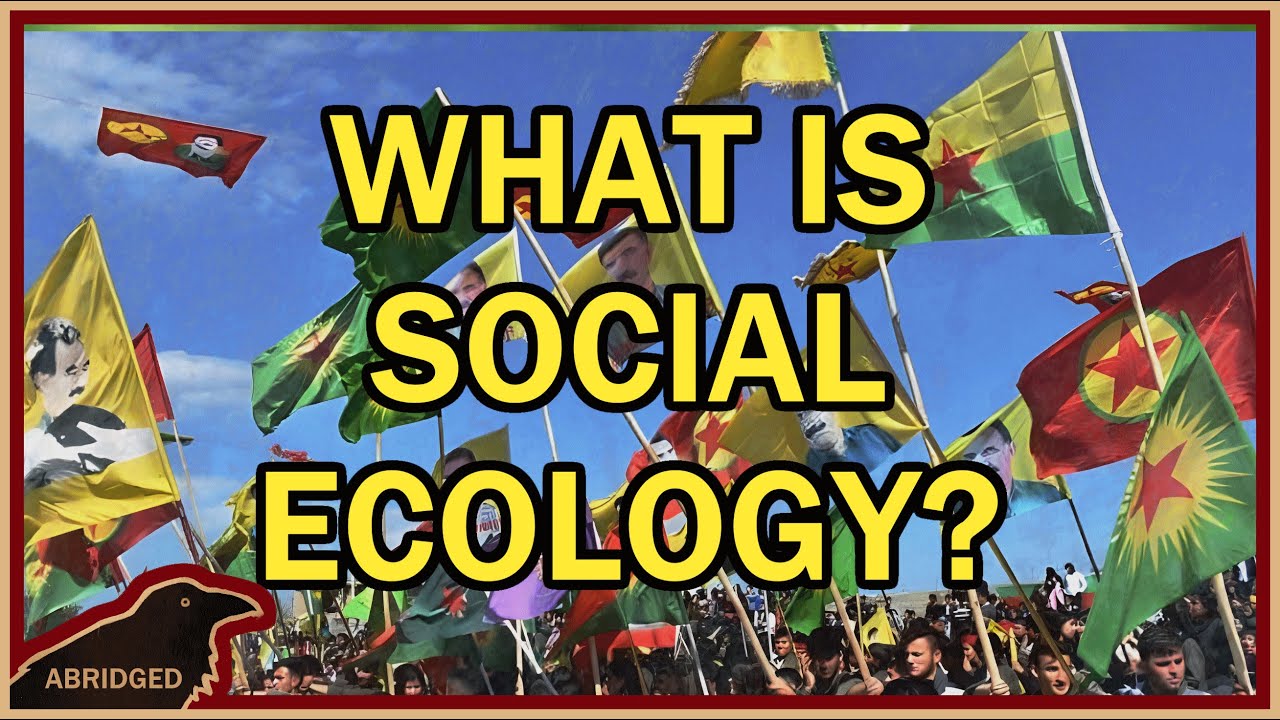
Social Ecology and Human Nature Explained by Murray Bookchin
Added:Basic principles of environmentalism and the root causes of global ecological crises.
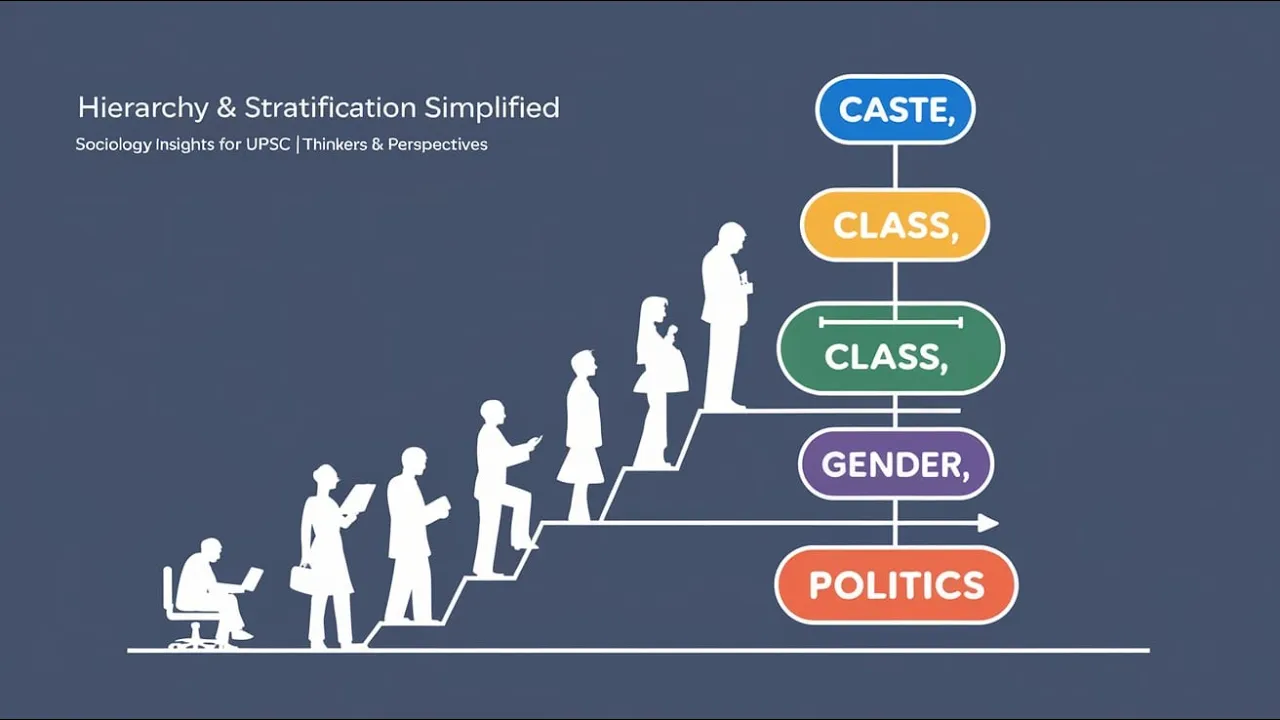
The sociological concepts of hierarchy, social stratification, and systemic domination.
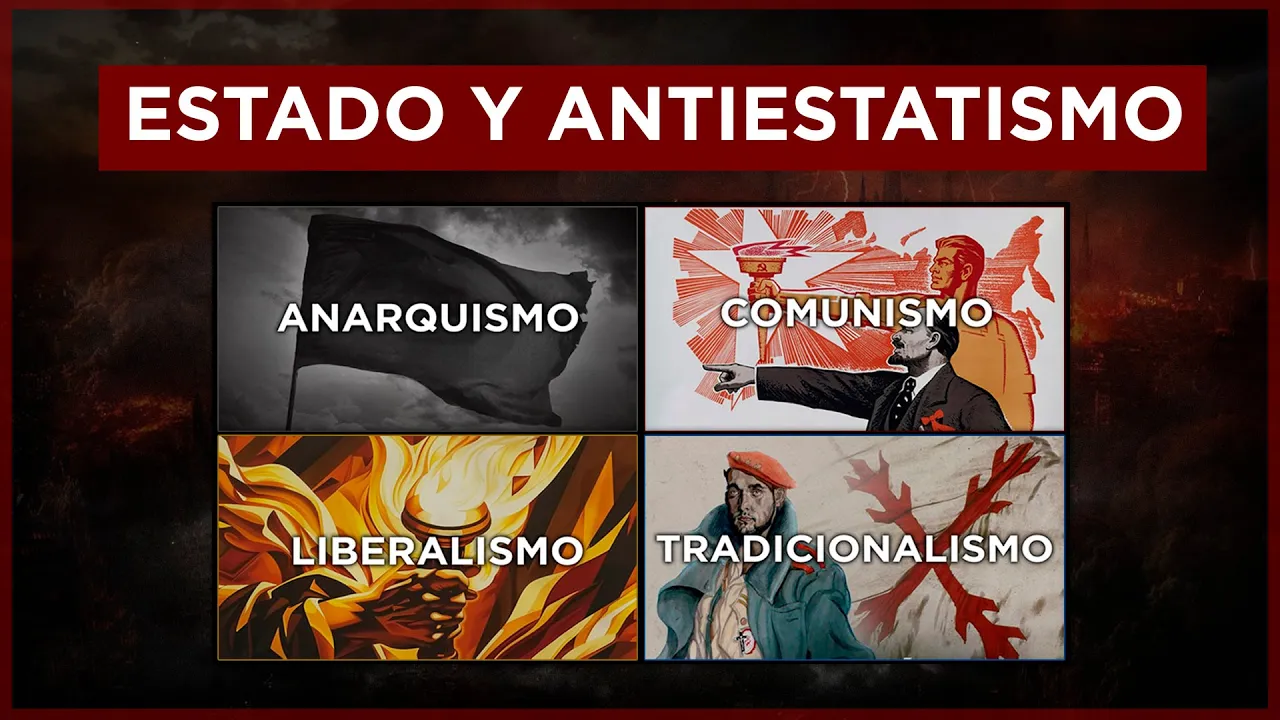
An introductory understanding of anarchist philosophy and libertarian socialist critiques of the state.
The philosophical debate surrounding 'First Nature' (the biophysical world) versus 'Second Nature' (human culture and society).
Libertarian Municipalism: Bookchin's political strategy of decentralized, assembly-based direct democracy.
Democratic Confederalism in Rojava: Analyzing the real-world application of social ecology in North and East Syria.
The ideological debates between Social Ecology and Deep Ecology regarding anthropocentrism and biocentrism.
The modern Degrowth and Eco-Socialist movements as contemporary frameworks for ecological and economic restructuring.
49.1K views2.9Klikes12:16Original Release: 2018-08-25
we are currently facing a potentially global ecological crisis that becomes more dire with each passing day greenhouse gas emissions continue to rise the pace at which our planet's Biological Diversity is dwindling is staggering the soil our oceans forests and fisheries are all being ravaged and our natural resources depleted this is the world we as humans have created instead of one United world sharing resources in looking out for one another we cling to a nationalist pride racism and xenophobia leaving us cold and indifferent towards the suffering of millions this indifference along with a systemic drive for prosperity over all else has us replacing rainforests with commercial agriculture soil with concrete and complex ecosystems with simplified ways to understand this link between human and difference and ecological devastation I want to take a look at the theory of social ecology which essentially understands all ecological problems as social problems according to social theorist and political philosopher Murray Bookchin the domination of nature by humans stems ultimately from the domination of humans by humans and all of our social ills and by extension our ecological ills stem from domination and hierarchy this is really what social ecology is all about it takes a look at our place in nature from an evolutionary perspective and seeks to analyze problems that have arisen ecologically as a result of human intervention on the natural world books in thought that if ecological crisis stems from social relations then in order to prevent further environmental devastation we must create a rational ethical and Liberatore society with decentralized and directly and democratic communities social ecology is interesting because it not only contains within it a comprehensive negative program meaning that it seeks to abolish establish modes of hierarchy and domination including capitalism racism sexism basically all the isms but it also establishes a reconstructive positive program centering libertarian municipal ISM and communalism which I'll be discussing more in my next for this video though I want to dig deeper into how social ecology views human nature domination and hierarchy human nature so so many people have this idea in fact it seems to be the dominant narrative that competition systems of domination and hierarchy are just part of human nature and that capitalism provides the optimal set up for a bunch of naturally self-interested individuals but this really isn't the case one way we can understand this is to examine nature and the creation of society from a dialectical perspective specifically through a dialectical naturalism dialectical naturalism seeks to explain how society developed out of nature and how the social and natural constantly interact with and depend on one another while each still maintains their separate identities and integrity it also provides us with a framework for understanding the unfolding of human history and how systems of domination and hierarchy were essentially developed first nature second nature and free nature so books in breaks nature up into a first nature second nature and free nature first nature is the natural biological and non social world which is always evolving and always developing out of this evolutionary process came human beings and based on the development of their large brains their upright mobility and Lokomotiv functioning they were placed in a unique situation which enabled them to create a social world all their own we call this second nature so second nature is Society or what booked in called institutionalized community which evolved out of biological first nature but maintains its own unique characteristics and identity he makes sure to differentiate human communities or society from non-human communities the way ants form communities for example is natural and instinctual the way humans form communities is institutional meaning intentionally organized developmentally structured and therefore distinctly human the same goes for hierarchical relationships hierarchy requires an instant to tional set up that is top-down and authoritarian there are set rules intentionality and this arrangement is designed to provide a framework for future generations the relationships found in the animal kingdom the predator-prey relationships for example is not hierarchical but instinctual are natural there is no forethought or intentional organization at least not in the same way as humans it is important to make these distinctions because people will often look to the natural world to justify their claims that human beings are naturally inclined to create systems of domination and hierarchy because look that's how it is in nature the points of the pecking order among birds or the dominance hierarchies established in wolf pack's and say see that's the natural way of things in fact this has been a tactic of the ruling elite throughout history as they sought to equate their socially constructed hierarchical institutions with a fixed and natural community life as if these human-made systems of domination were unalterable and even biologically ingrained in the human species this was simply used to prop up and maintain the power of the ruling class but human nature is not some fixed immutable thing humans are highly adaptive and if we were to go back and look at the anthropological evidence of early primitive societies if anything we would conclude that human nature very much values empathy cooperation mutual aid and solidarity furthermore our views of nature seem to be a direct reflection of our views on society and the social relations between people not the other way around and this can also be seen throughout history as social relations change so do our views on nature looking again at primitive cultures for example they believed that every living being had a soul equality and community were integral to their outlook on life elders were respected and so they viewed the natural world in much the same way private land and ownership was unheard of land and resources were communally shared and respected they saw themselves as Mother Earth's children and so sought to live in harmony with the earth the dualism of Greek society was reflected in nature as well for example the slave master polish countryside dichotomy was projected onto nature and thus they sought nature as the separation or the divide of the cultivated and the wild the orderly and the chaotic to use book shins description much of the medieval world saw nature as hierarchical much like their society was hierarchical they viewed the animal kingdom in terms of rank according to status labeling the lion as the king of the beasts because they lived among kings and described the lowly ants at the bottom as depicted by the lowly serfs at the bottom well the same thing can be seen with the introduction of the market economy the clans tribes even the extended family tides broke down and everyone became atomized individualized each person out for themselves supposedly free to buy and sell as they please in the free free market and only the strong survive an image of nature then emerged a system of individual beings fighting for survival a Darwinian predator versus prey world where natural selection and survival of the fittest dominate which perfectly aligns with the dog-eat-dog capitalist versus workers society of the 18th 19th 20th and 21st century and now we reside in an era of corporate neoliberal capitalism an era of super quantification concerned with accumulation laws of supply and demand and prices I mean we've created a new quantifiable nature nature itself has become a type of corporation a type of computer even so the point is that there really is no way to objectively observe and study the natural world without bringing our own human interpretations into the mix to quote book gen whenever we deal with nature we are dealing with it not from our experience of the world not even from the laboratory experience of the natural world but from our experience in our interaction with each other and if we live in a society of domination then our attitude towards nature is going to be a domineering attitude and outlook and premise on the supposition that nature itself is a mere object of manipulation once a culture of domination and hierarchy was established among humans the culture of dominating nature was not far behind without the forming of these higher Arkel relations in society humans would not have had the thoughts in their mind to dominate nature there would have been no reason to enclose land create private property and hoard natural resources if not for these relationships of power that had already been developed and now today we're headed into absolute ecological devastation based on these systems of domination and this brings us to third nature or free nature which is second nature essentially harmonizing with first nature in order to become free nature or in functions words nature rendered self conscious in a rational and ecological society this would mean human beings pretty much you know using their intelligence and technological capabilities for good instead of bad for example instead of continuing the incredibly harmful practice of mono cropping which leads to soil degradation and loss of biodiversity we could use our seed saving capabilities to reintroduce diverse systems of agriculture instead of feeding nearly 40% of the world's grain to livestock that's then consumed second hand by humans we could instead feed 800 million additional people directly without killing those animals in the process the problem isn't humans it's not human nature and it's not technology but social ecology shows is that the problem is the setup of our current society social relations that place competition and self-interest and eternal growth above all else a system that employs technology and machines in a way which not only destroys the environment but seeks to inevitably render workers redundant useless in Karl Marx's grundrisse ax a section titled fragment on machines talks about a transition to a post-capitalist society that harnesses automation and other technological advances in a way which shortens the working day it allows people the freedom to pursue their creative interests spend quality leisure time with their loved ones and as book Shen later argued more time to participate in the political realm which he thought was super important instead of using advances in machinery to squeeze more work out of people in an ever decreasing search for more profit instead of inequality running rampant and billionaires living side by side with the poverty-stricken machines could be used to liberate us from work and to live in harmony with nature essentially creating a post-scarcity society book Shen and Marx both saw this potentiality they differed however in what they saw is the fundamental problem holding us back from our potential instead of blaming capitalism like marks book Shan argued that the cause of our current societal and ecological ills stems ultimately not from capitalism but from systems of domination and hierarchy that began long before the implementation of markets and capitalism but also necessarily includes capitalism in my next video I'm gonna talk about book shion's Reconstructive solution to these issues mainly his political ideology of communalism libertarian municipal ism and the influence that has had in rojava so yeah if you liked this video give it a thumbs up as always i'd love to hear your comments in the comments section below subscribe and share so thanks so much for watching guys
Up Next

55:18
Transracial Adoption and Racial Identity: A Critical Conversation
@TheDailyShow
84.2K views•2022-11-01
54:57
Contemporary Sociological Theory: Micro, Macro, Integrative
@NaSESYNC
45.7K views•2016-02-17
19:23
How to Analyze Conversations Scientifically | Elizabeth Stokoe | TEDx
@TEDx
1M views•2014-12-04
9:41
What is Sociology? The Sociological Perspective Explained
@crashcourse
4.6M views•2017-03-13
Related Study Plans & Knowledge Roadmaps
Structured learning paths in Sociology
sociology
Celebrity Culture: From Hollywood to TikTok
01Foundations of Celebrity Sociology
02The Rise of Micro-Celebrity & Digital Platforms
03Parasocial Relationships & Algorithmic Intimacy
+ 2 more learning modules
12h5 modules
Explore Roadmap
sociology
Hostile Architecture: Space, Power & Control
01Introduction to the Sociology of Space
02Social Control and Surveillance in the City
03Hostile Architecture and Defensive Design
+ 2 more learning modules
12h5 modules
Explore Roadmap
sociology
Loneliness Epidemic: Third Places & Isolation
01Foundations of Social Capital and Community Cohesion
02The Death of Third Places and Urban Space Erosion
03The Privatization of Leisure and Atomization
+ 2 more learning modules
12h5 modules
Explore Roadmap
sociology
Sociology of Tourism: Gaze, Power & Heritage
01Foundations of the Sociology of Travel and Leisure
02John Urry and the 'Tourist Gaze'
03Staged Authenticity and Cultural Commodification
+ 2 more learning modules
14h5 modules
Explore Roadmap