









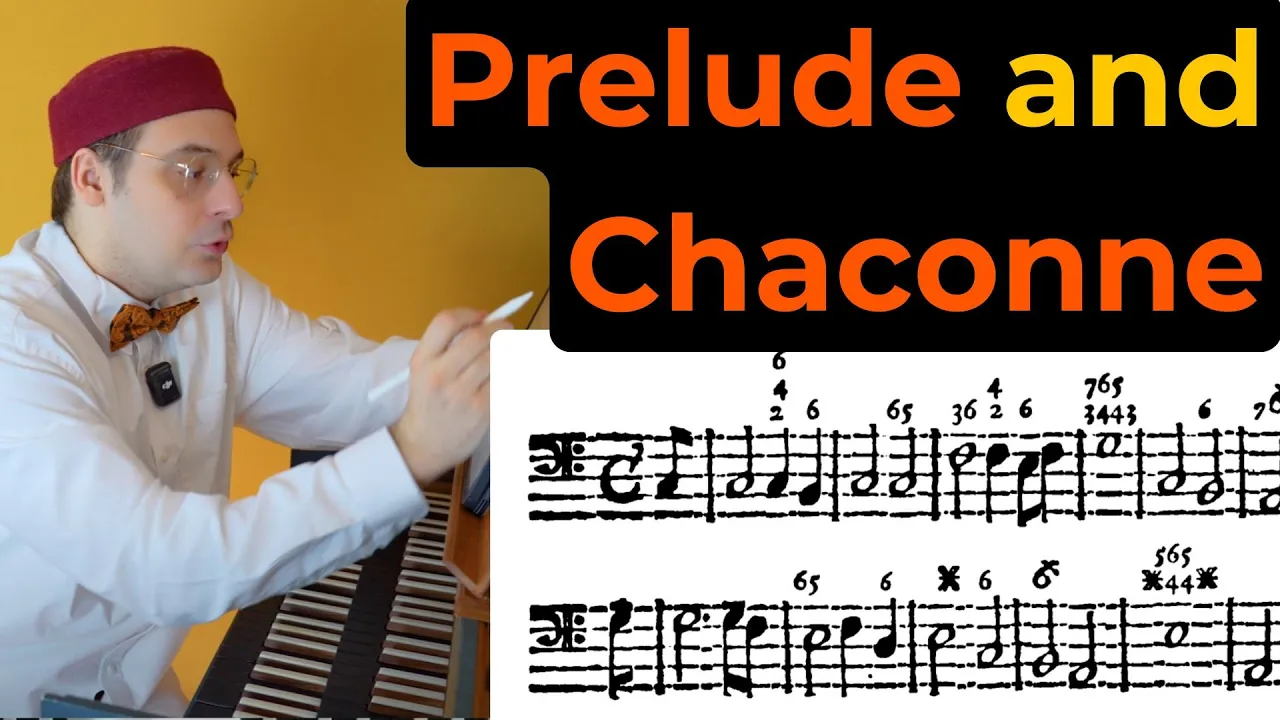




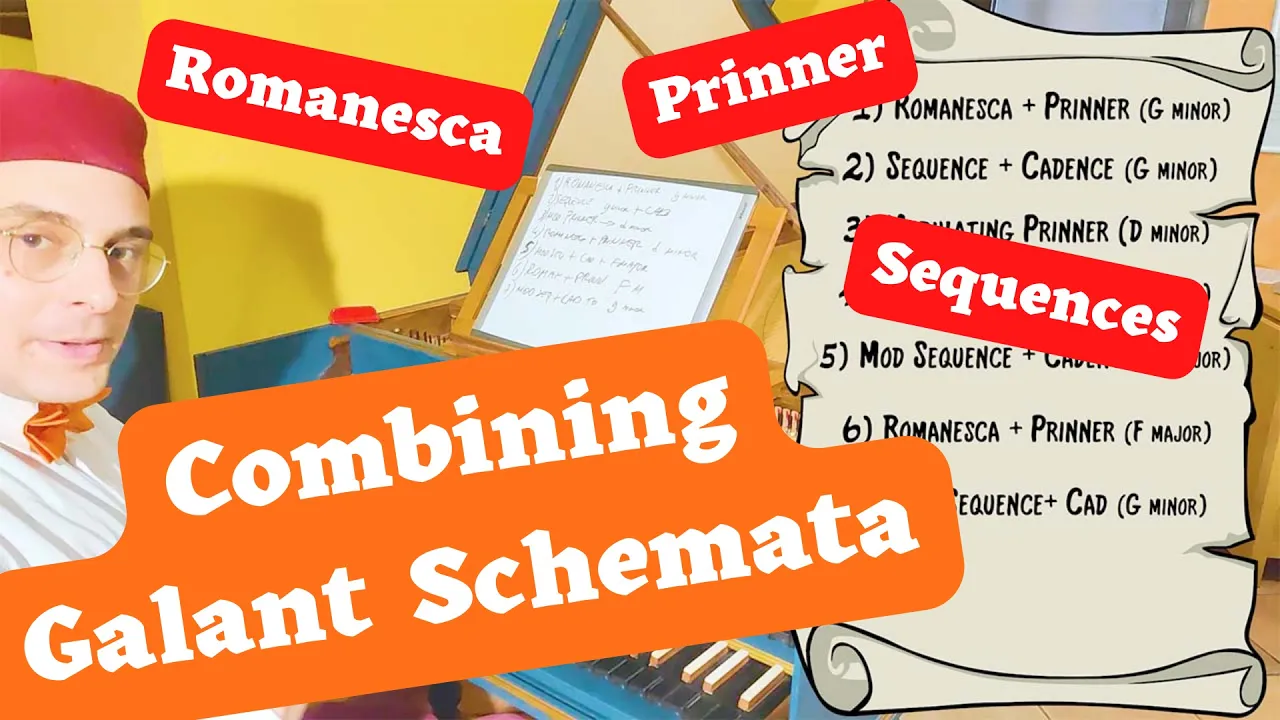

To improvise an Allemande on a Romanesca bass, musicians must first understand the Romanesca's harmonic structure, then apply the Allemande style by creating figurations that respect the meter and harmony, focusing on thirds and sixths as essential sweet elements while using the third of the next chord as a target for voice movement.
Improvising an Allemande over a Romanesca Bass: Baroque Practice
Added:Understanding of the Romanesca bass schema, including its typical harmonic progressions and historical significance in the Renaissance and Baroque eras.
Familiarity with the Allemande as a Baroque dance form, specifically its characteristic quadruple meter, binary structure, and use of an upbeat (anacrusis).
Basic proficiency in figured bass (basso continuo) realization and standard voice-leading rules of the common practice period.
Elementary instrumental improvisation techniques, such as applying basic diminutions (passing tones, neighbor tones) to a simple chordal framework.
Exploring other historical ground bass schemas and variations, such as the Folia, Passamezzo, Chaconne, and Passacaglia.
Applying improvisation and figuration techniques to other movements of the Baroque suite, including the Courante, Sarabande, and Gigue.
Advanced study of the Italian Partimento method to develop spontaneous contrapuntal playing and complex voice-leading over unfigured basses.
Synthesizing these skills to improvise or compose a multi-movement Baroque-style suite using historically informed performance practices.
2.6K views96likes11:39Original Release: 2022-11-09
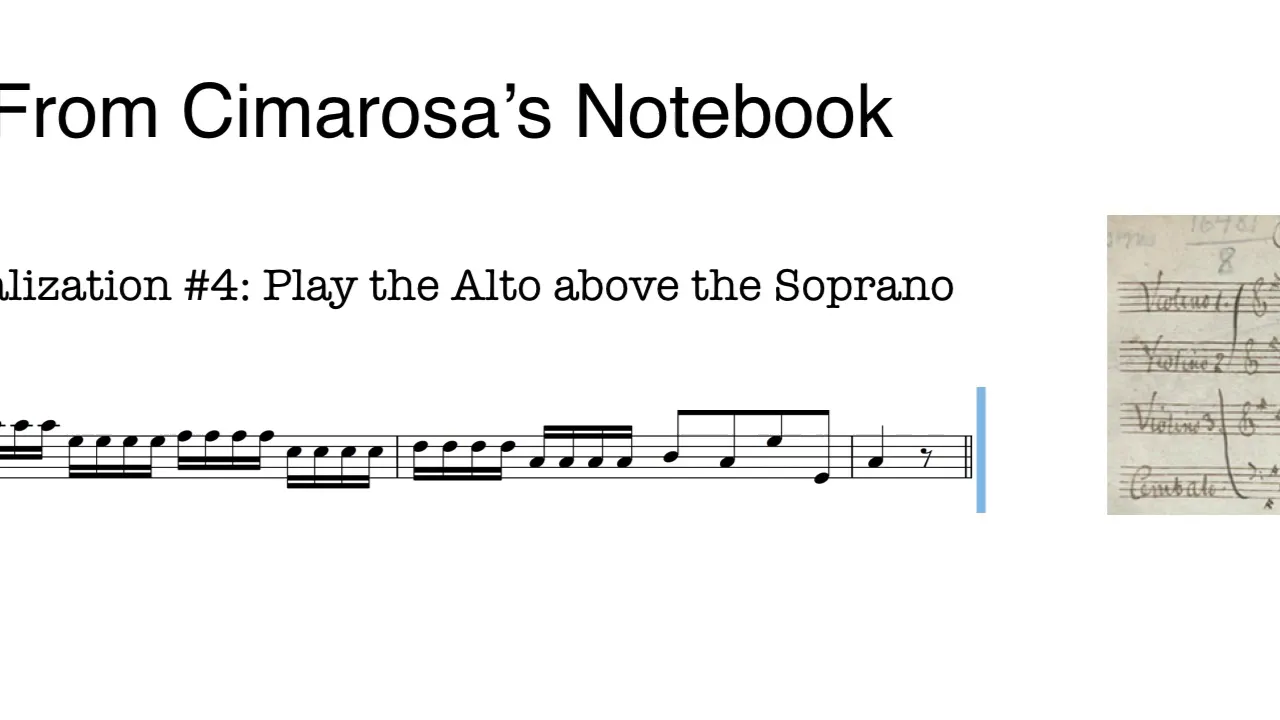
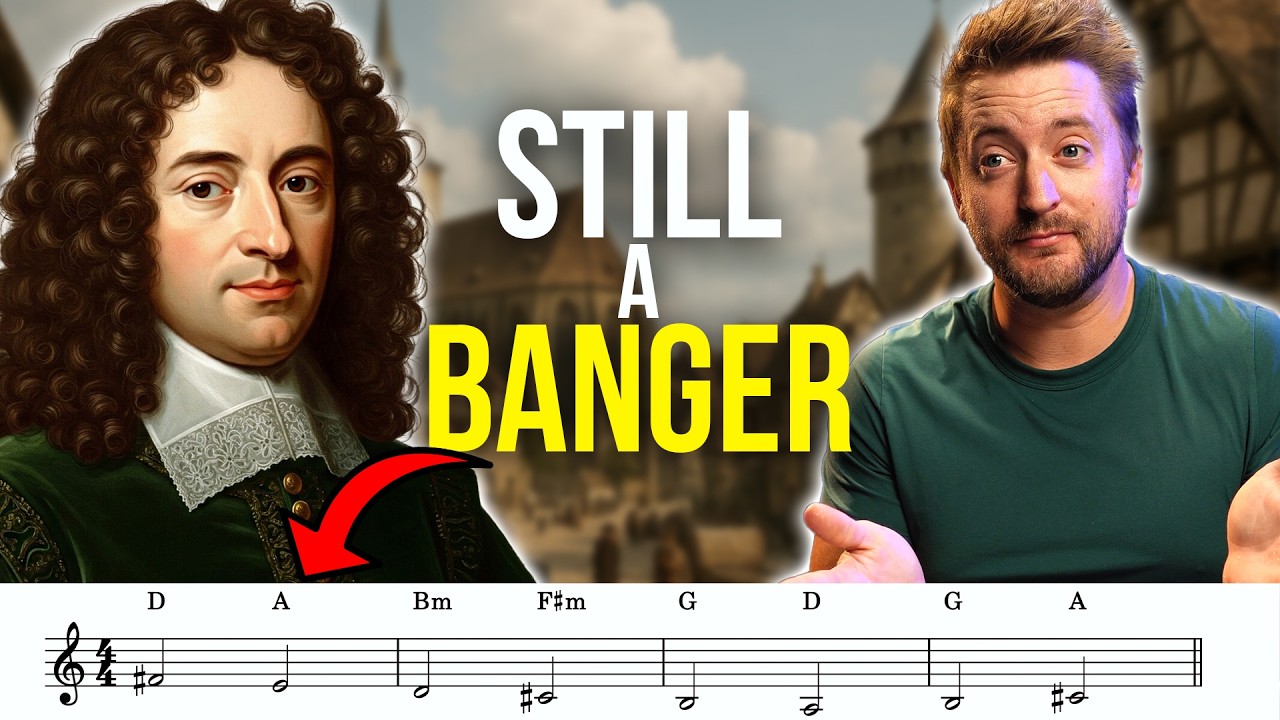
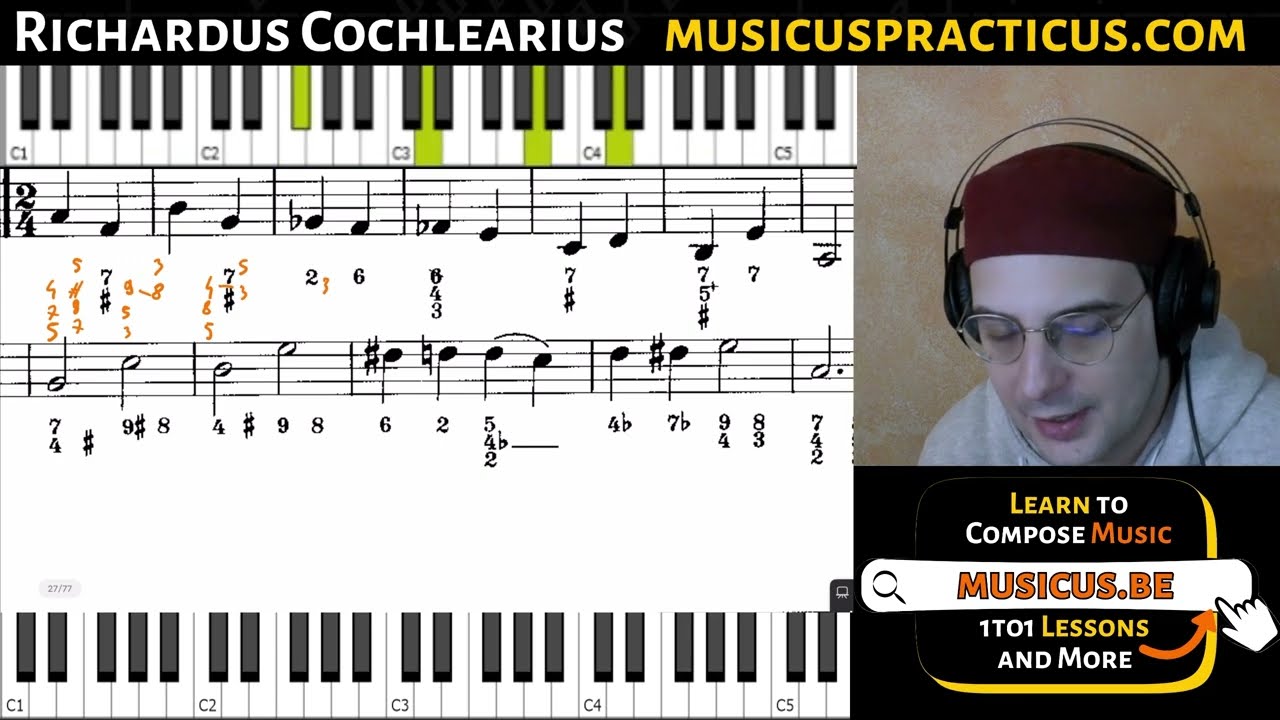
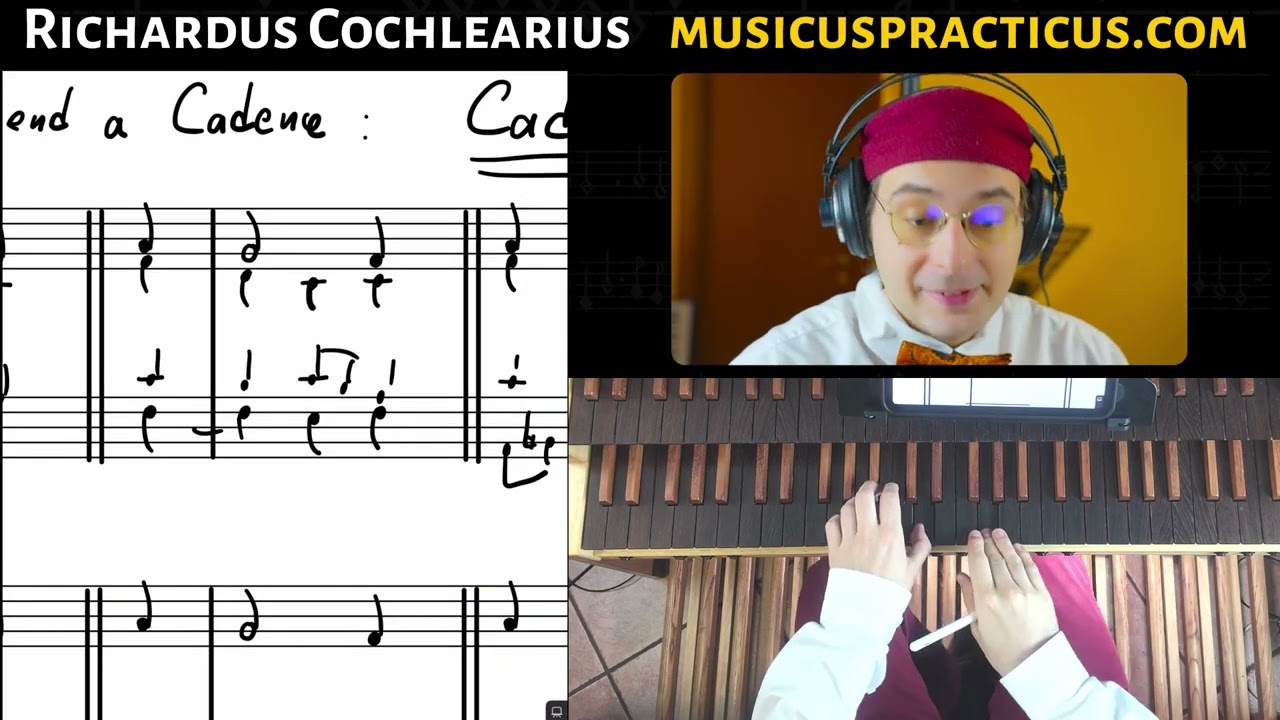
hi I'm El cardos and welcome to improvisation elements welcome to this new video about improvisation elements today we practice with the romanesca and as applying on the romanesca the Aleman style so let's work out a little area romanesca today we do practice with the leaping romanesca so we have the base that lips in this way there is a video about romanesca or watch this video before before practicing with this video if you don't know what is romanesca so the Romantic has its own uh harmonization that is the following so what can we do now it's applying the figuration of an Alamanda or a style of element to this base for example this is one of the possibility so the base can be with a figuration so I have to choose a time and respect this time [Music] for example two times for each note in this way [Music] and then a little candles exactly has the cannon of butter in this way so what I have to do is creating a federation for the base starting from the romanesca [Music] and then with the Cannons that we can flourish as we want for example and now let's apply a figuration that is typical from form element for example the wreath is an thank you okay you have to have clear in your mind all the this degree for example sing think and sing also the bass the main base the fundamental base has used to say Remo so for example I play Slowly I use uh Italian or French name so [Music] for me yes in this case I used other harmonies other chord in the place of the G but I also can do for example foreign for example so the main aspect is that you have cleared the time the meter the meter and the harm the harmonic meter the harmony the harmonic Rhythm and then to apply figuration that stays in the honey and that brings you to the next highlight so let's do it slowly and let it sink together okay an acrylic I'm on the third so when I'm playing this chord this part now I'm thinking where I want to go [Music] so I have to have clear in mind this passage [Music] and now where is my base going to so [Music] so look I'm going to a so it is better to have a third remember that in any case the third is the basic sweet element of Turner music so some advice that I can give you is you always need a third or a six because they are sweet you can't have a fifth alone internal music so for example the next note of our Vanessa is Ace so the third is C and then we have the same pattern so the next chord of uh of the next note of the base of our romanesca is f so the third is a now I have a 6 for example [Music] if I don't have the octave or the 50 long it is better then as you can see with this this movement what I'm doing I'm going to reach the third of the next chord and then have to play a canvas for example now let's go to the to the Third and that's the double the double cannon there is a video about cadences that I've uploaded some months ago so you can watch it and learning a lot about cadences so once you move the base or if we went to have the same note on the base this is another possibility so this little passage this little lamentation this from romanesca with diminution is like a real element let's play it another time thank you yes we don't have the boundary and the form with the return L but at this time it is not important for us this time we want to learn how to move the voices for that I'm creating videos about technical exercises of improvisation if you want to move if you want to reach a third how can you do it if you play these exercises that you can find on my patreon like improvisation elements scales diminution right hand left hand you can develop an ability of moving for example in in these passages now the exercises are in devices but when I will finish all the exercises in devices I'll pass to three voices also with the organ with the pedal so they are very useful exercises now we can trust us this element this romanesca with Dimension two other keys for example let's play this in G major first only the romanesca and now let's try to apply this figuration of element so I have the Third that is the anacrific time as before and then let's see the base like fundamental base of romanesca so I will leave me [Music] if I think and I sing in practicing not for example if I play the an element on the organ in the church I can't say it's not good but if I see when I'm practicing I have to stay I have to force my mind to think behind me so this was in G major but let's try it in F major for example f m [Music] oh foreign for example and now I can trust this to others okay so all the keys I want for example B flat major [Music] and you can transpose it in all the case you want so for this video is all now I'll transcribe this passage this representation is possible uh furation for element and see you in another video where we will try to make an element that taking a Melody from another element by Young Sebastian Bach
Up Next
18:59
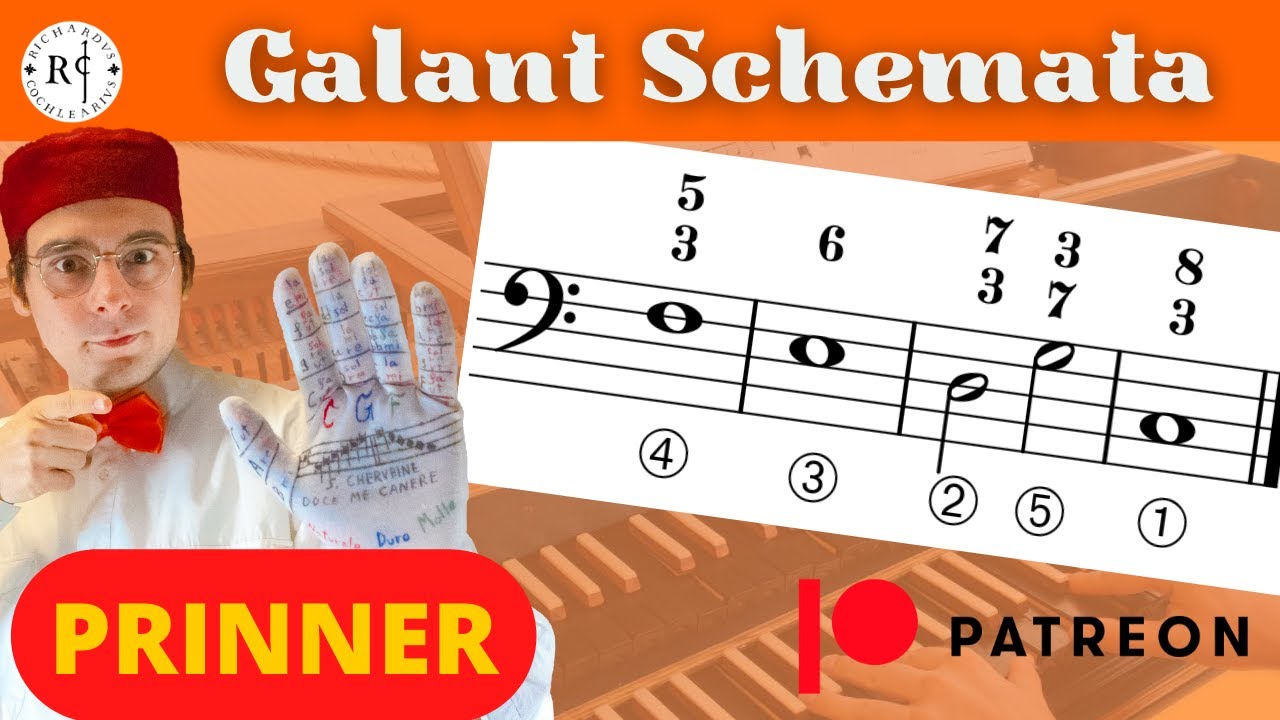
The Prinner Schema: A Galant Music Analysis
@RichardusCochlearius
4.1K views•2022-12-08

10:20
Mozart's Musical Dice Game Explained: History, Rules, & Fun
@webpianoacademy
5K views•2023-03-13

15:47
Partimento Realization: Mastering Durante's Diminutions at the Keyboard
@RichardusCochlearius
2.5K views•2022-10-05
10:49
Understanding John Coltrane's Giant Steps: A Music Theory Analysis
@Vox
10.4M views•2018-11-12
Related Study Plans & Knowledge Roadmaps
Structured learning paths in Music Theory
music-theory
Composing Galant Music: Partimento & Schemata
01Foundations of Figured Bass and Keyboard Harmony
02The Rule of the Octave (Regola dell'Ottava)
03Galant Schemata: The Building Blocks of Form
+ 2 more learning modules
30h5 modules
Explore Roadmap
music-theory
Decoding Overtone Series: Tuning & Drone Music
01Acoustic Foundations: The Physics of the Overtone Series
02Tuning Systems: Equal Temperament vs. Just Intonation
03Microtonality and Spectralism: Beyond Standard Pitches
+ 2 more learning modules
24h5 modules
Explore Roadmap
music-theory
Impressionist Harmony: Scales, Planing & RPGs
01Foundational Music Theory: Keys, Intervals, and Seventh Chords
02Impressionist Color: Chord Planing and Parallel Harmony
03Whimsical Textures: Pentatonic Cascades and Whole-Tone Scales
+ 1 more learning modules
14h4 modules
Explore Roadmap
music-theory
Negative Harmony: Axis Reflection in Indie Pop
01Music Theory Foundations: Scales, Intervals, and Triads
02Functional Harmony and the Circle of Fifths
03Demystifying the Negative Harmony Axis Reflection
+ 2 more learning modules
16h5 modules
Explore Roadmap