







![[음악 서정팀] 2027학년도 대비 화성대위 기본반 OT](https://i.ytimg.com/vi/SZrYxVKTRsA/maxresdefault.jpg)






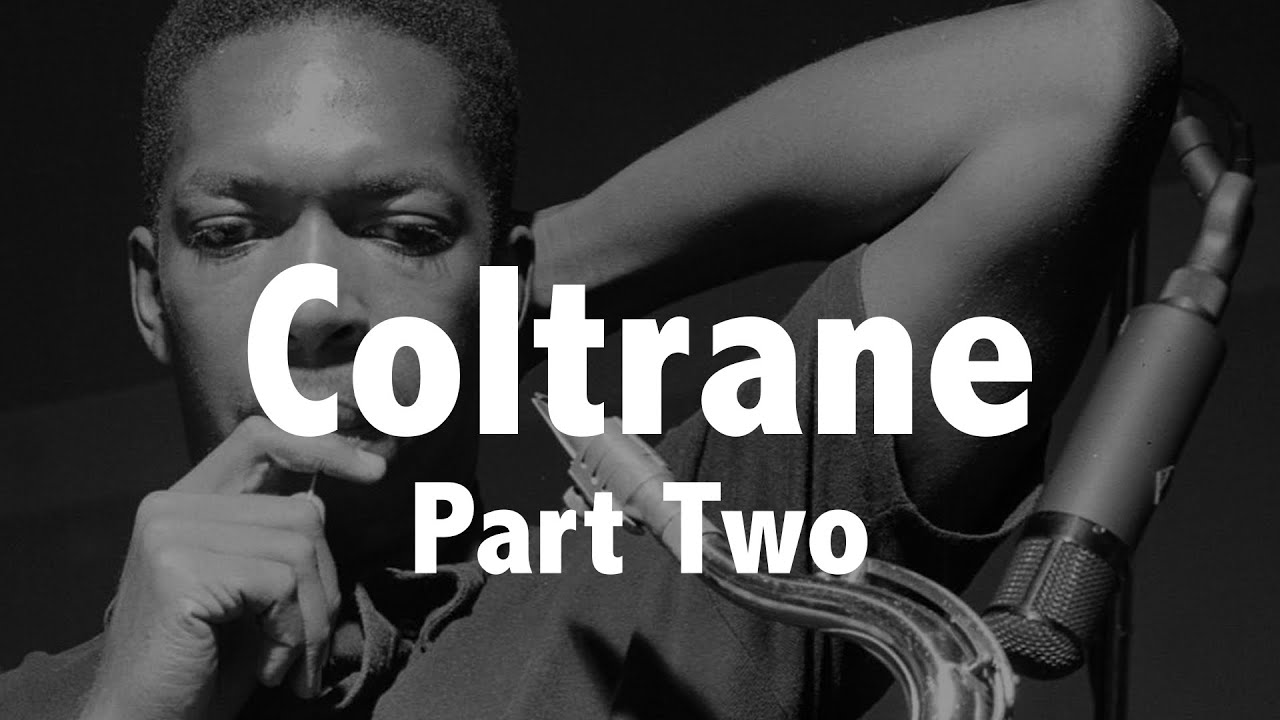

John Coltrane's 1959 album 'Giant Steps' introduced revolutionary chord progressions known as the Coltrane Changes, which challenge jazz musicians by rapidly cycling through three unrelated keys (separated by major thirds on the circle of fifths) while maintaining harmonic coherence through repeated 2-5-1 resolutions; this technique requires improvisers to be fluent in all twelve keys and represents a pivotal moment in jazz history where Coltrane pushed harmonic boundaries to create what became a rite of passage for jazz musicians worldwide.
Understanding John Coltrane's Giant Steps: A Music Theory Analysis
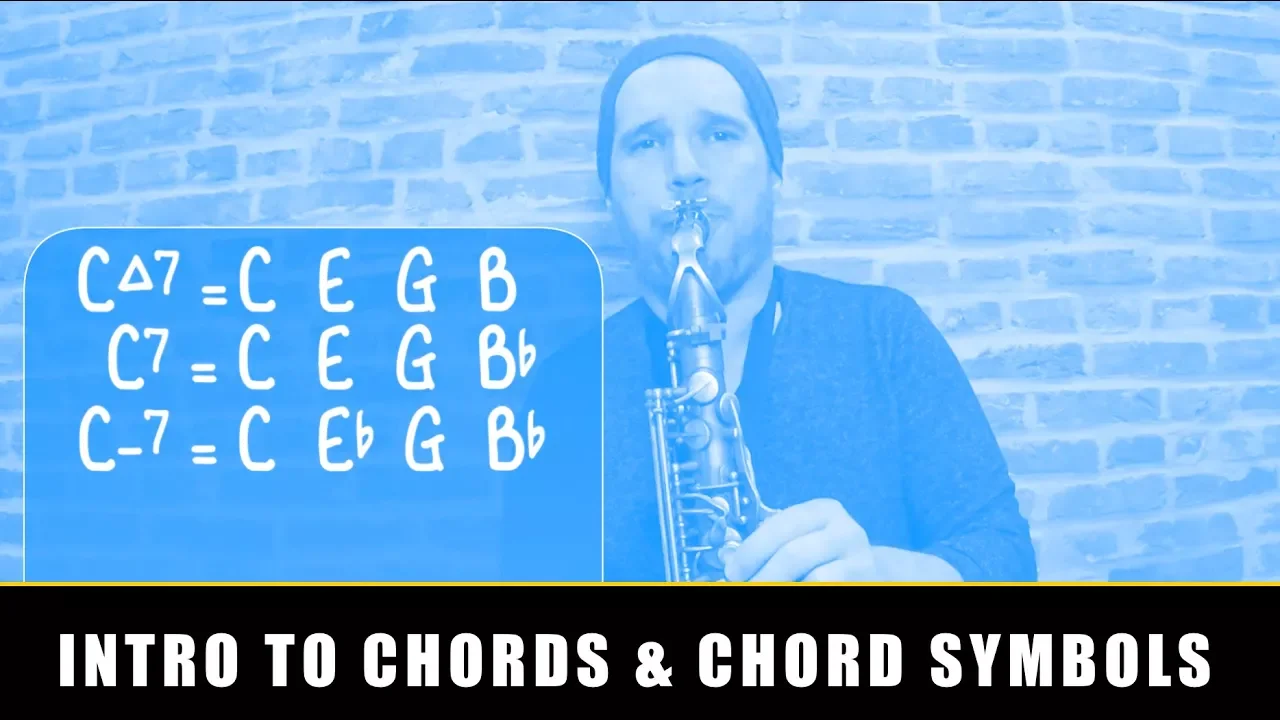
Added:Understanding of basic jazz harmony and seventh chord construction, specifically Major 7th, Minor 7th, and Dominant 7th chords.
Familiarity with the Circle of Fifths, key signatures, and the fundamental concept of musical modulation.
Knowledge of the standard ii-V-I chord progression, which serves as the foundational cadence in traditional jazz.
Basic Roman numeral analysis to identify chord functions within a given key.
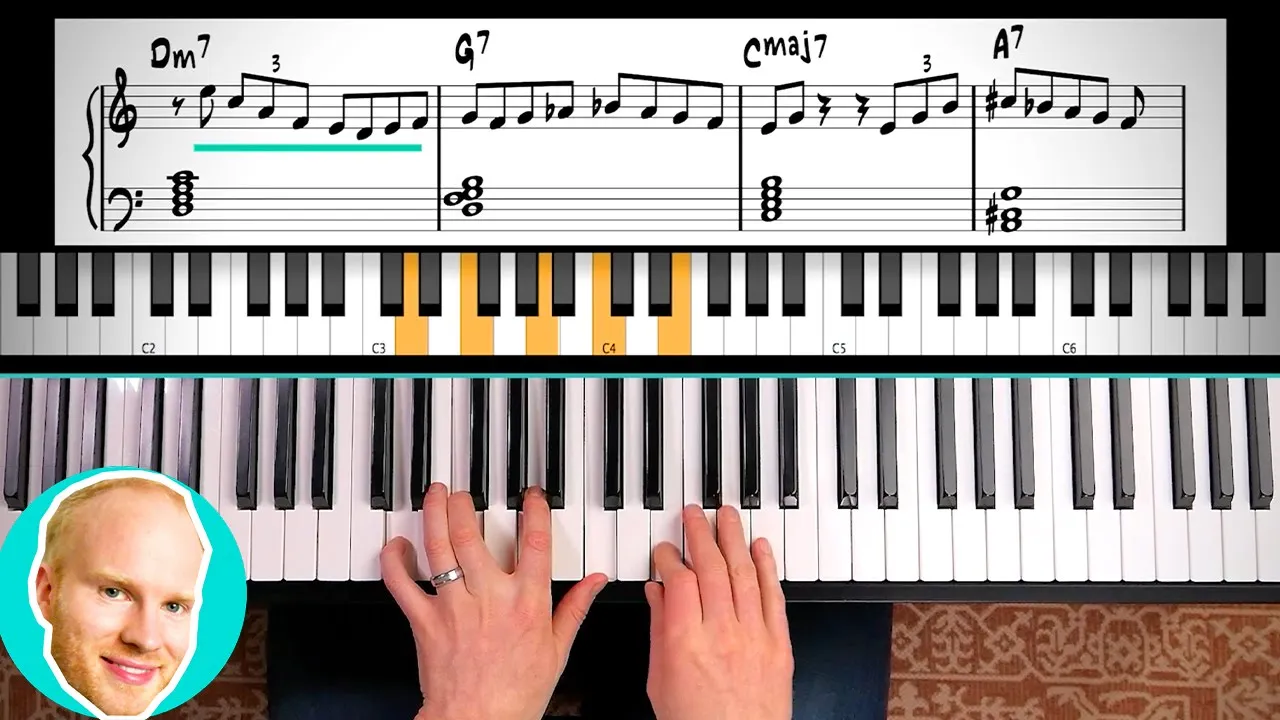
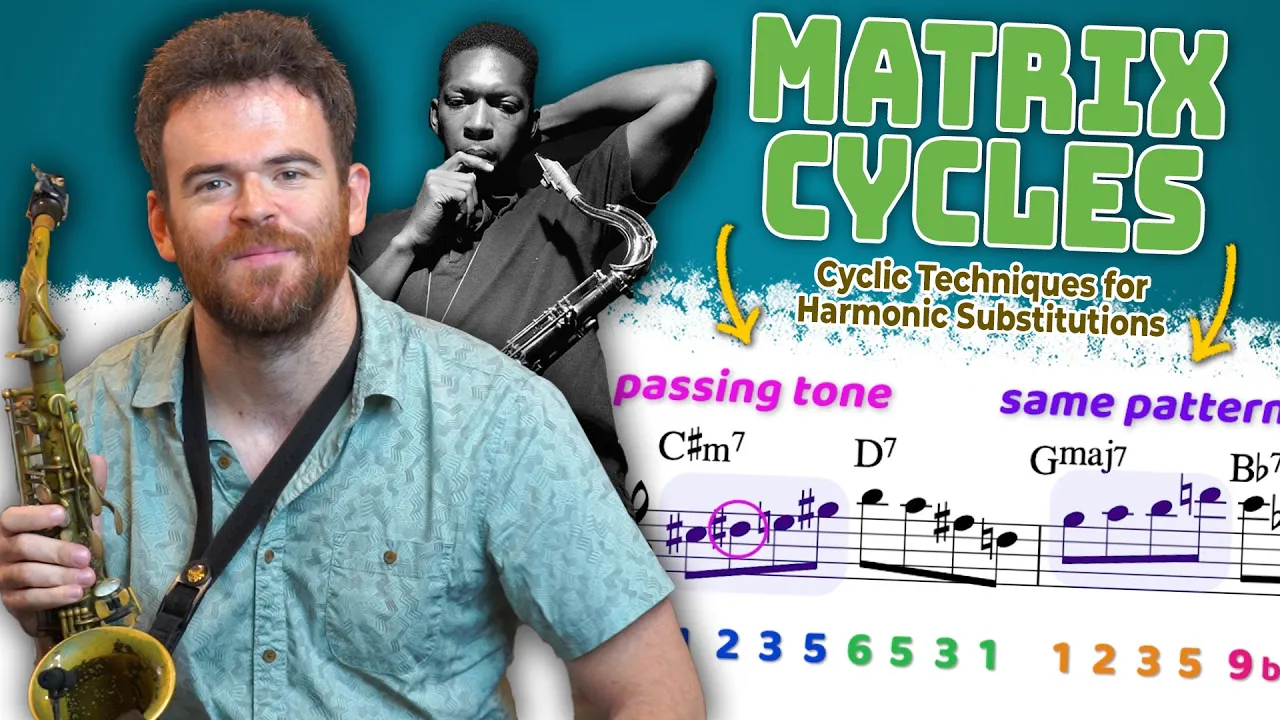
Mastery of 'Coltrane Changes' (multi-tonic systems) and how to apply these harmonic substitutions to standard jazz tunes like 'Tune Up' (creating 'Countdown').
Improvisational strategies for navigating rapid, non-diatonic chord changes, including the use of pentatonic scales and digital patterns (e.g., 1-2-3-5 formulas).
Advanced music theory concepts regarding symmetrical harmony and the equal division of the octave into major thirds.
The historical transition from complex chord-scale bebop systems to the Modal Jazz movement exemplified by Coltrane's later works like 'A Love Supreme'.
10.4M views382.4Klikes10:49Original Release: 2018-11-12
This is John Coltrane’s Giant Steps. It’s considered one of the most important jazz albums of all time, it cemented John Coltrane as a legend among jazz saxophonists and composers, and it’s home to one of the most one of the most revered and feared compositions in jazz history.
The reason why the album's title track is so iconic can be heard in its first few seconds.
Coltrane wrote these unique chord changes for Giant Steps, and later went on to use them over traditional jazz standards.
These chords came to be known as the Coltrane Changes -- and improvising over them is considered a rite of passage for jazz musicians.
But, if you don’t understand a lick of music theory like me, it’s really hard to see how this is so legendary.
Lucky for me, I know two people that can explain why… Braxton Cook Braxton: Okay you caught me off guard there!
And Adam Neely Adam: Should I get into the, like, technical jargony stuff?
Let’s cut to the logo first.
So there’s a moment in the Giant Steps recording that really illustrates just how demanding this song is.
It happens when Tommy Flanagan, the pianist on the record, starts his solo.
Braxton: The story goes that John Coltrane brought in the music, he shows up ready to go and then calls he this really fast tempo.
Adam: If you hear on the recording, Tommy Flanagan just cannot handle the chord progressions as they're going by. His improvisation is very halted.
Braxton: And Tommy Flannagan's just holding on for dear life.
It really becomes apparent how much he struggled, when you hear Coltrane take off at lightning speed the second Flanagan stops.
Braxton: And then it goes down as like one of the most legendary recordings of all time. That’s messed up. I’d want another shot. I’d be like bro, don’t put that recording out.
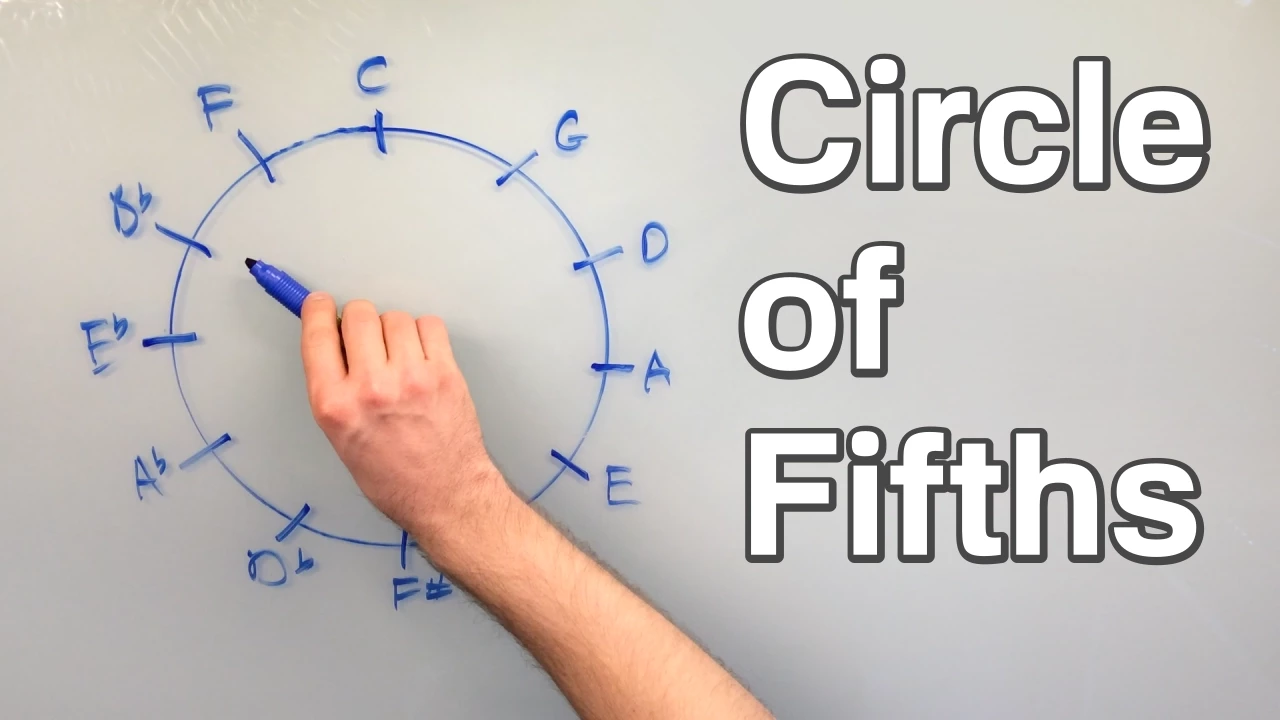
To understand why this was so difficult for even a highly trained pianist, we need to know three basic concepts and it all starts with this: the circle of fifths - it’s kind of like a color wheel for music.
Braxton: Okay, awesome, you glued this stuff and everything. This is fire.
All twelve notes of the western musical scale are on it, but you might notice they’re a little mixed up That’s because they’re organized by a very special number in music... a fifth.
What’s a fifth?
Braxton: It's like if you're in the C-major scale, you go C, D, E, F, G - right? 1,2,3,4,5.
From C to G is five notes, from G to D is five notes and… well you get the idea.
If you play through the circle you’ll traverse the entire keyboard starting on the lowest C and ending up on the highest C.
It sounds much more harmonious than just playing all the notes in order.
That’s because... Adam: The fifth is a sound that our ears just like.
Uh... please explain.
Adam: Whenever we're hearing anything, whenever we're hearing people sing... Adam: Whenever we're hearing people play music, we're hearing these other notes, these overtones alongside the pitches that they're playing.
When I play this C, the first two loudest tones that are pushed through the air are both C, one is just an octave higher.
But other tones travel to our ears as well.
The third loudest is a G, which happens to be a fifth above C.
In 1973, Leonard Bernstein demonstrated this phenomenon live on a grand piano at Harvard.
Listen closely after he hits that note.
Bernstein: What do we hear now? That G, right? A new tone.
Again, clear as a bell. You want to hear it again?
Adam: These overtones are kind of like subliminal tones that you're hearing alongside a regular note.
Adam: And you're hearing these overtones everywhere.
A lot of western music is based on the power of the fifth, especially how it relates so strongly back to its home chord.
Adam: In the case of the key of C major we have the G chord resolving to C.
Adam: And if you’re thinking about what the G chord represents, it represents kind of tension. You want this to resolve.
When it finally does resolve, Adam: it creates this feeling of finality, it creates a feeling of home.
That five to one relationship is present in a lot of chord progressions, including the most common one found in jazz.
The 2-5-1 Braxton:] The 2-5-1 essentially is like the backbone of most jazz music.
Even in its most basic form it sounds super jazzy.
So it comes as no surprise the Coltrane Changes are just chock full of them.
Which might raise the question: Why was Tommy Flanagan caught off guard when he had to improvise over them?
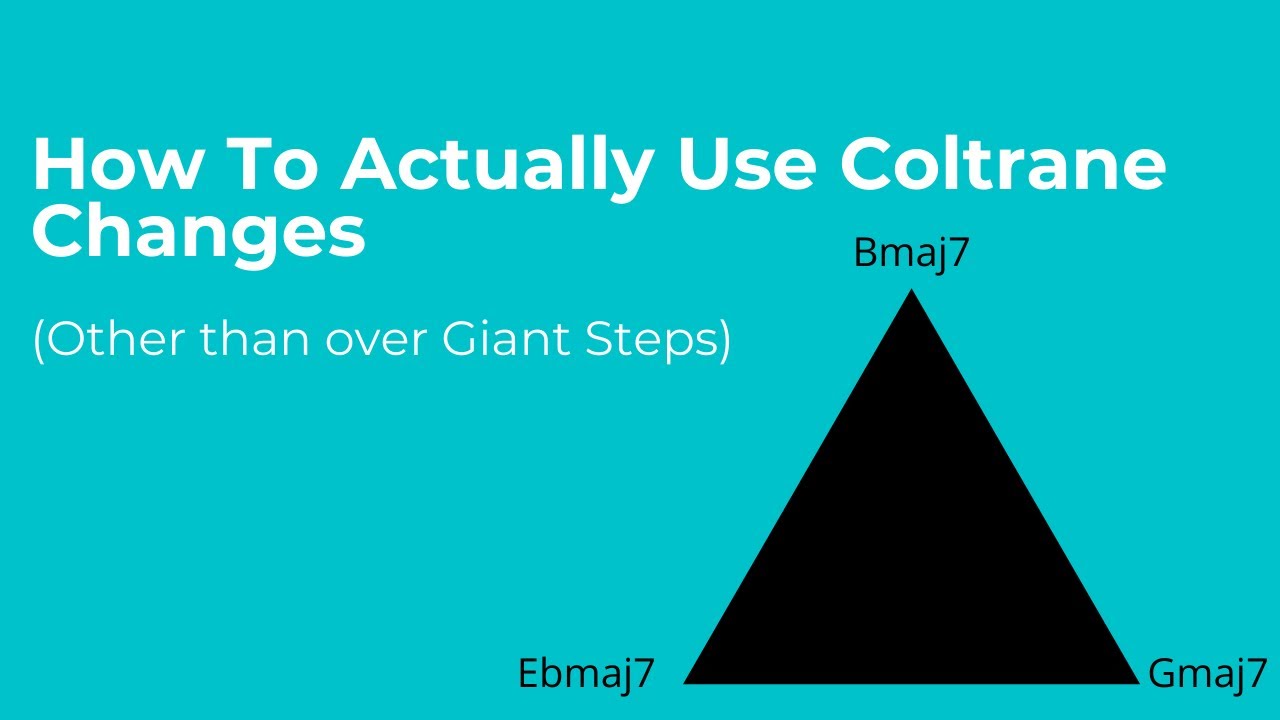
Well, the Coltrane Changes aren’t in one key, they’re in three keys.
They’re basically a musical MC Escher painting.
So each one of these rungs on the circle of fifths represents every possible key center.
The closer a key is to another, the more notes they have in common.
Like the C major and G major scale - they’re only different by one note, an F#.
Okay, we need an analogy to describe this.
Adam: So the way that I like to think about keys is kind of like languages that you have to learn as a jazz improviser.
You have to be able to be fluent in a key.
Like maybe C is Spanish and G is Portuguese.
Those are very similar languages.
Adam: If that's the case, like okay maybe C is Spanish and you have a distantly related language like maybe Japanese.
Let’s say Japanese is B. There’s not much in common with those two languages. And it’s the same with keys. If you play those scales over each other... It sounds a lot more discordant.
Adam: For the most part, most pop music is based around one of these key centers.
For instance, Carly Rae Jepsen's “Cut to the Feeling” is in A major.
But some songs modulate to another key for dramatic effect.
Like Beyonce’s “Love on Top.” Adam: Part of the reason why it's really exciting is because you're going to a place that's really distant on the circle of fifths.
And you’re creating a new sense of home. Which is exactly what “Love on Top” does.
But, it doesn’t just happen once, it happens every time she repeats the chorus towards the end of the song.
Adam: And when you chart that sort of thing along the circle of fifths, patterns emerge.
These types of patterns are what fascinated John Coltrane in the late 1950s and '60s as he was trying to push jazz harmony to its limits.
This is his study of the circle of fifths.
Braxton: I think what makes Giant Steps really special is that it really just, it just documented an artist doing something super unique, super stylistic, and virtuosic at the same time.
Here’s the first 16 bars of Giant Steps again, with just the key changes highlighted.
If you chart those changes on the circle of fifths it comes out as a pretty dramatic pattern.
That’s because these keys are separated by major thirds, which divide an octave into 3 equal parts.
On the circle of fifths these three keys are as far apart as possible from each other.
Adam: Giant Steps is kind of like you're shifting from Spanish to Arabic to Japanese very quickly.
By quickly, he means like every two beats in a song that’s nearly 300 bpm.
Adam: It's not only just like you're saying one word per language, you're having to construct a sentence out of the language.
And how does Coltrane make those disparate languages connect? With one of the most ubiquitous phrases in jazz, the five one.
Adam: What he's doing is taking some of the conventional ideas of tonal harmony, the conventional relationships between the five chord and the one chord and applying it to this very chaotic circling, sort of chord progression that is the Coltrane Changes.
Adam: So if we were all in the same key, it would sound like this.
Adam: But because we're going from key center to key center, it sounds very different.
This is why the Coltrane Changes are like this picture here.
Even though you’re seeing things from a completely new perspective you still feel like you’ve made it home somehow.
When Tommy Flanagan saw the charts for Giant Steps he knew he wasn’t going to just have to play this chord progression - he was going to have to improvise over it.
very quickly.
Braxton: That was probably so funny, he was probably like, "What?!"
Adam: It is a bit of a rite of passage to say that you not only can improvise on Giant Steps, but you can also improvise in all 12 keys.
Adam: Now, generations of jazz musicians are approaching Giant Steps as the sort of pinnacle of improvisation.
Wait. I think I’ve got an analogy for this. It’s like you’re a cab driver and instead of only knowing one way to get somewhere, you have to know every back alley and side street just in case.
Braxton: It's essentially like that. You still get to the same location, but it’s really interesting and you might see some really cool stuff in the neighborhood.
Braxton: But ultimately I still think the music boils down to 5 1. People want to come back home.
Thanks so much for watching the first of three videos I'm going to release in the next couple of weeks on Jazz.
I want to give a special thanks to Braxton Cook and Adam Neely.
Between the time that I interviewed Braxton and now, he's released a full album.
Please check it out below and of course special, special thanks to Adam Neely.
You can check out his YouTube channel below.
Until next time!
Up Next

9:46
How to Reharmonize with Coltrane Changes | Jazz Piano Tutorial
@WalkThatBass
71K views•2016-05-07

10:20
Mozart's Musical Dice Game Explained: History, Rules, & Fun
@webpianoacademy
5K views•2023-03-13

47:36
Understanding Diatonic 7th Chords in Major Keys | Music Theory Tutorial
@GracieTerzian
54.7K views•2022-03-02
15:17
Circle of Fifths: How to Apply It in Music Theory
@MichaelNew
6.3M views•2015-03-13
Related Study Plans & Knowledge Roadmaps
Structured learning paths in Music Theory
music-theory
Composing Galant Music: Partimento & Schemata
01Foundations of Figured Bass and Keyboard Harmony
02The Rule of the Octave (Regola dell'Ottava)
03Galant Schemata: The Building Blocks of Form
+ 2 more learning modules
30h5 modules
Explore Roadmap
music-theory
Decoding Overtone Series: Tuning & Drone Music
01Acoustic Foundations: The Physics of the Overtone Series
02Tuning Systems: Equal Temperament vs. Just Intonation
03Microtonality and Spectralism: Beyond Standard Pitches
+ 2 more learning modules
24h5 modules
Explore Roadmap
music-theory
Impressionist Harmony: Scales, Planing & RPGs
01Foundational Music Theory: Keys, Intervals, and Seventh Chords
02Impressionist Color: Chord Planing and Parallel Harmony
03Whimsical Textures: Pentatonic Cascades and Whole-Tone Scales
+ 1 more learning modules
14h4 modules
Explore Roadmap
music-theory
Negative Harmony: Axis Reflection in Indie Pop
01Music Theory Foundations: Scales, Intervals, and Triads
02Functional Harmony and the Circle of Fifths
03Demystifying the Negative Harmony Axis Reflection
+ 2 more learning modules
16h5 modules
Explore Roadmap