

















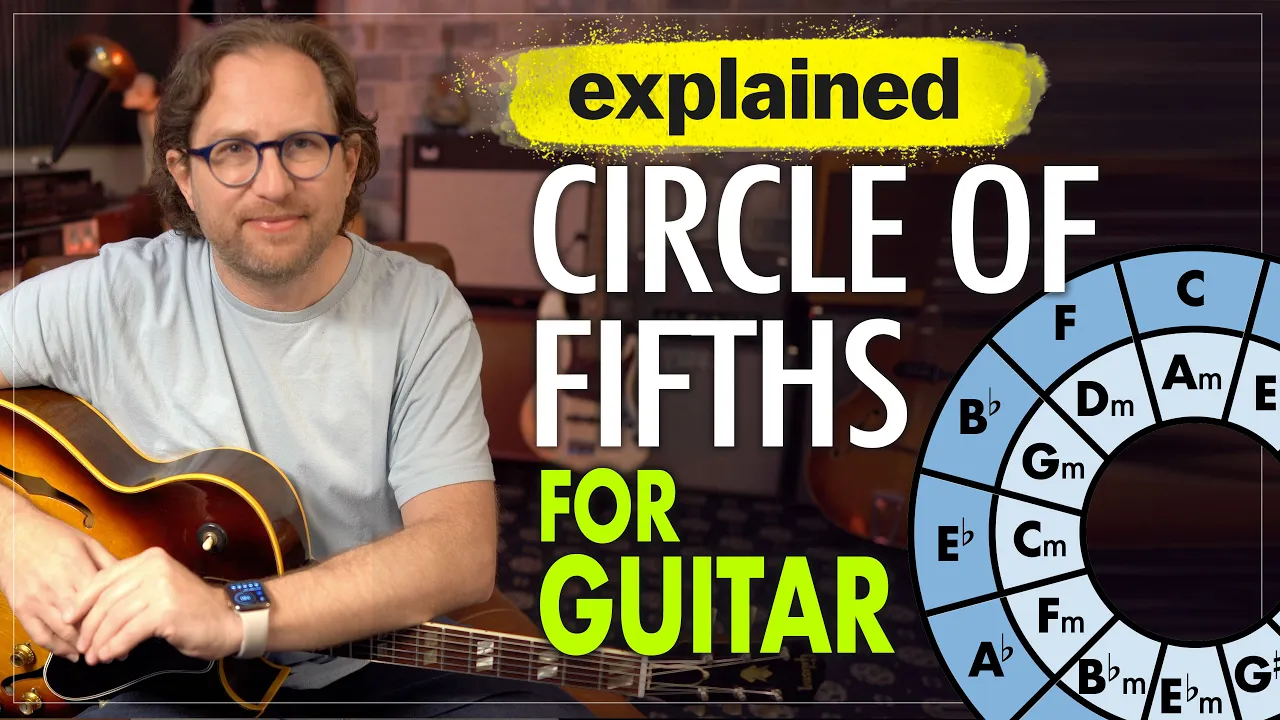







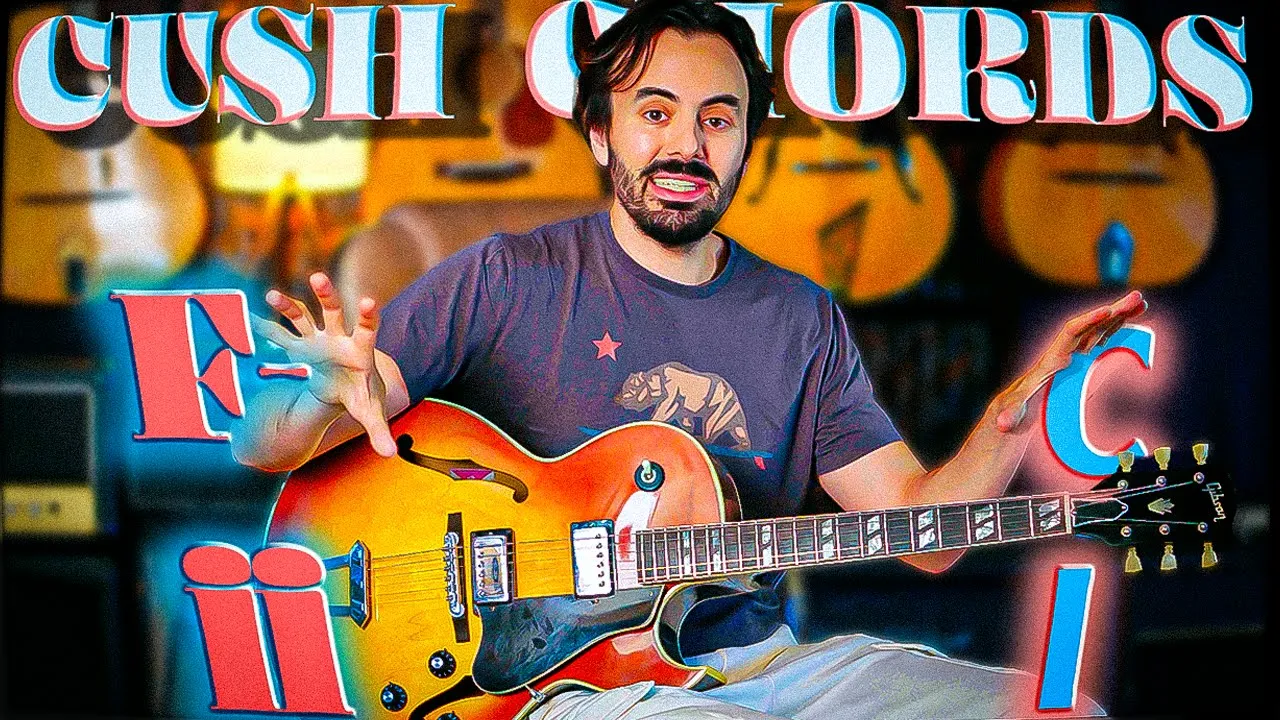



The circle of fifths is a powerful musical tool that arranges all 12 notes around a circle, separated by intervals of a fifth (7 half steps), and can be used in three key ways: (1) as a note arrangement to quickly build chords by finding fifths and thirds, (2) as a chord map to identify dominant chords (V chords) that provide harmonic tension, and (3) as a key map to determine how many sharps or flats a key has and which keys are similar for smooth transitions.
Circle of Fifths: How to Apply It in Music Theory
Added:Understanding of basic intervals, specifically the interval of a perfect fifth (7 semitones).
Familiarity with major and minor scale structures and their whole-step/half-step patterns.
Basic knowledge of key signatures, including how sharps and flats are used to alter pitches.
Foundational concept of basic triad construction (root, third, and fifth).
Analyzing complex chord progressions using Roman Numeral Analysis and the circle of fifths as a roadmap.
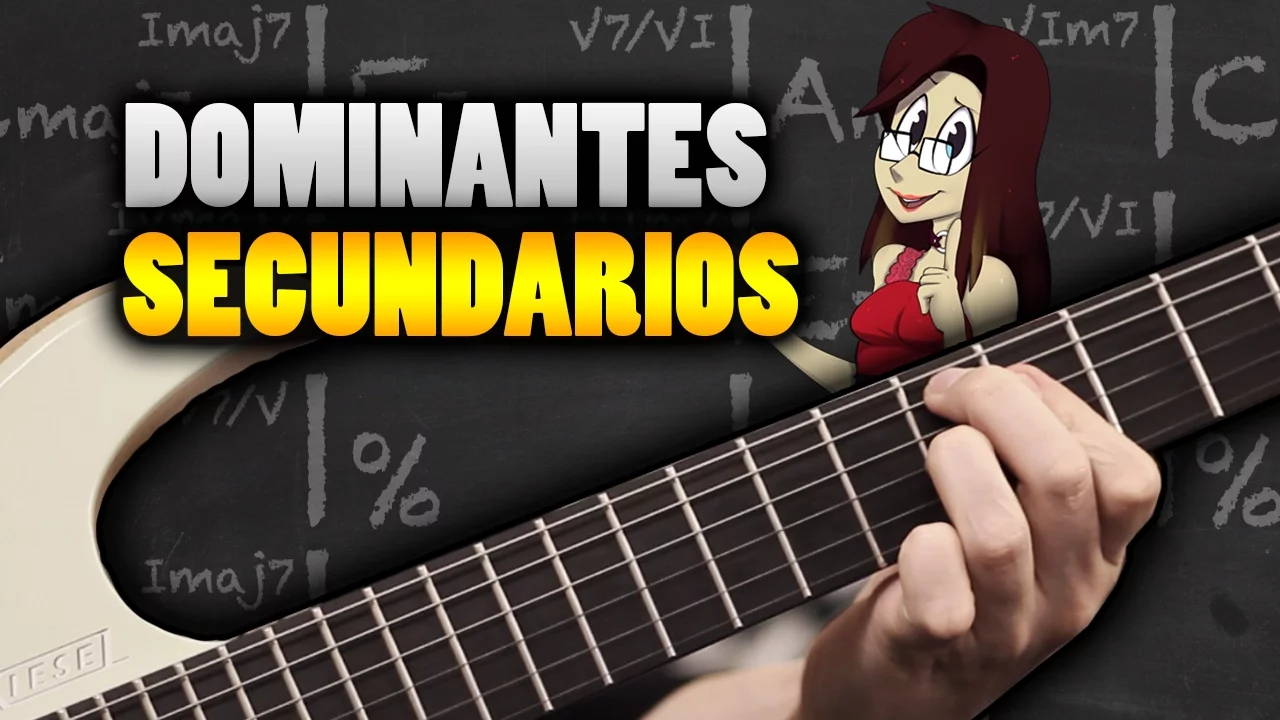
Exploring secondary dominants and tonicization to add harmonic tension and color to progressions.
Mastering advanced modulation techniques, such as pivot chord modulation, to change keys seamlessly in a composition.
Applying modal interchange and borrowing chords from parallel keys to enrich your musical arrangements.
6.3M views116Klikes15:17Original Release: 2015-03-13
hey guys how's it going uh i wanted to give you a lesson today on the circle of fifths circle of fifths is this amazingly powerful musical tool but unfortunately a lot of people don't really understand how to use it it can be pretty confusing so i'm gonna show you two things first what it is uh some really quick ways to remember it within a minute or two you should know it forever and then uh and then i'm going to show you what to actually do with it and why it's so useful musically so start with um i'm going to build a circle of fifths and uh what we're going to do is we're going to arrange all 12 notes around this circle but rather than do them in order we're going to separate them by the interval of a fifth i'll show you that in a second so i'm going to start with c up at the top a lot of musical things kind of center around the note c should be getting pretty used to that by now um and then after c we're gonna we're gonna find a note that is uh separated by fifth so i'll show you on the little keyboard here hopefully you remember what a fifth is it's just uh seven half steps um so start on c you go up one two three four five six seven and that number right there g is a fifth away from c so that would be the next note on the wheel and then from g we're gonna go over another fifth so from g one two three four five six seven uh there's there's much better ways of finding a fifth and counting uh each and every half step i did a video a long time ago called how basic chords work and i kind of cover all that if you wanted to review but anyway next note is d so that would be the next note on the wheel and then from d we'd go to a and i'll just kind of fill in the rest here b goes to f sharp you got to be careful with this one um start on b and you count up a fifth you wind up right here on f sharp anyway that's uh one half of the circle right there and then to get the other half we actually could just keep going around but it's generally much easier to just go back to the top and start counting in the other direction uh so we'll do that if you go back to c and then you go uh down by a fifth you wind up on f so f is the next note and then from f you get b flat same kind of thing you got to be got to be careful there f to b flat and then if you keep going you would get e flat a flat and d flat and there you go there's a circle offense uh now if you are trying to remember the circle of fits of course one way is to do what i just did um you start at the top at c and you uh you go around by fifth um the technique is kind of in the name everything's separated by a fifth but it's probably not the easiest way to remember it i recommend using mnemonics just a couple little sayings and you can remember it um what i always teach these are kind of stupid but um carolyn gets drunk and eats butterflies is how you remember the right half and then for the left half carolyn fondle's beads like i said they're kind of weird and if i'm teaching a little kid i kind of church it up a little bit but anyway if you kind of just ponder that for a moment it's it's hard to ever forget it and there you go so there's a circle offense now like i said the uh the important part is what you actually do with it and this is where a lot of people do get stuck so this right here is the critical point and if you forget everything else i say in this video this is what you have to remember what i just wrote down c g d all these these can represent different things these could represent notes they could represent chords or they could represent keys and the circle of fifths gets used in all three ways so we'll start by uh using this as an arrangement of notes and i'll show you a couple things you can do with that so we'll start by thinking of these as notes and when you think of these as notes let's let's start on c for a second right let's suppose that we wanted to create a c major chord now you probably already know how to do this but just kind of bear with me here so we say say we want to make a c major chord but we don't really know what's in it now the first note of course is obvious it's going to be c but it's a three note chord and we have to figure out the other two notes now if you remember the formula for a major chord the the middle note is a major third which is two whole steps so just to show you on the keys again um starting on c you'd go up two whole steps you'd wind up on e so that's your middle note but figuring out this next note can be tough because this is pretty far away from c so you're having to do a lot of counting to kind of get there but this note is a fifth and if you know your circle of fits then you immediately know that if you go up a fifth you get to g it's written out right there so that that means that this next note is a d and there's your c major chord now let's do a slightly more complicated example so let's say you're trying to figure out an a flat major 7 chord now most likely you don't know this chord right off the bat so this is a four note chord so there's three mystery notes here now to find the this second note same technique as the the c major chord you're going to go up two whole steps so from a flat uh one whole step up would be b flat and then the next one would be c i'll show you on the keys just to make it easier a flat b flat and then c so there's your major third no real shortcut for that note but it's not hard to figure out uh middle note though or this uh third note that's a fifth uh same as the c chord so if you know your circle of fifths you go over by one tick remember we're going up by a fifth you know not down by a fifth um so that puts us on e flat and that's the next note in the chord and that's the hardest one to figure out uh or would be if you didn't know your circle of fifths now for the last note this one's real simple when you have a major seventh chord this last note is just one uh one note underneath your octave so if we're going up to an a flat we go down one you get g natural so you have g and there's your a flat major seven chord much much easier to do if you know your circle fits otherwise you have to do a lot more counting around so that's one one big use of the circle of fifths uh when you're thinking of it in terms of notes you can also use it for harmonizing notes saying you're writing a melody and you're trying to write you have a melodic line and you're going to write another melodic line that's say a fifth higher that's a really common harmony to do you're in vocal music all the time uh knowing your circle of fifths makes that you know much much easier to do but there's lots of different kind of useful ways to to use it as far as notes now the the second way to use it and like i said this is kind of fundamentally different you're not you're not thinking of these as notes anymore now you're thinking of them as chords okay so i'll show you why it'd be useful to think of this as chords so let's suppose that this c now represents a c major the g represents a g major d major a major and so on so let's also suppose that uh let's say we're in the key of b-flat right and uh our root chord in this key is b-flat major now there are two chords that are probably the most important chords in any key that is your root chord so in this case this b flat major and then there's your dominant chord your five chord that v chord is the chord that provides the tension that sort of really tense part of the key and it's it's kind of like the polar opposite of your root chord so if you're having to count around and think okay what's my five b flat c d e it's difficult to find that chord quickly but if you know your circle of fifths you immediately know that your v chord is f so that's our dominant chord the one that provides all that tension and of course you could do the same thing for for any other key if you're in the key of d you know your v chord is an a major chord if you're in the key of d flat your v chord is an a flat chord so that's a really useful way to use the circle of fits in terms of chords the third final and i think most valuable way is to use it as a map of keys so this would be c major f major b flat major all the way around so when you're thinking of this as keys there's a couple really cool things that it will do for you first and i think most important especially if you're uh if you're writing music is it shows you what keys are similar to each other what i mean by that if you look at say the key of c we'll look at it on the my little keyboard again um the key of c all major keys have seven notes in them the key of c has c d e f g a and b so these these the key of g if you look at the notes in the key of g you have g a b c d e and then f sharp um so it's it's actually very similar it has all the same notes except the f is an f sharp now so let's say you're writing a piece of music that you're in the key of c and you want to change keys if you know that the key of g is very similar to the key of c then you know that it won't be all that hard to get your music to transition from c to g the the tricky part of a key change is getting the new notes in the key to to sort of be accepted by your listener if you throw a whole bunch of new sounds at them all of a sudden it can sound really jarring and and like it just doesn't fit but if you only have one note different that's a much easier transition to make so c and g is a very easy key change to do but let's look at the key of f sharp for a second this is on the opposite end of the circle that fits here and what that means is that there's hardly any notes that are similar between c and f sharp so the the notes in f sharp major would be f sharp g sharp a sharp b c sharp d sharp and this you would actually call e sharp i won't get into the details of why you would be calling this e sharp and not f today i'll save that for a later lesson but the point is almost all the notes are different so that means that if you wanted to do a key change from c to f sharp you have a lot of new notes that you have to kind of shove in there and try to get the listener to sort of accept all at once and it's very hard to do that without sounding really abrupt so most likely if you were trying to change keys between c and f sharp you would actually probably go through a bunch of sort of transitional keys you might go from c to g which is an easy key change maybe g to a those aren't too far apart and you kind of work your way around the wheel kind of introducing one new note at a time and trying to get that to be comfortable before you make it all the way around to f sharp and that goes for any key chains if you wanted to go from d to the key of a flat those are very far apart very hard to get between but say you want to go from d to the key of g that's not hard to do at all so it's a really powerful compositional tool you can think of it in terms of this sort of key map now the other thing that it's really used for when you're thinking of this in terms of keys is it can show you almost right away how many sharps or flats are in a key and they can even show you what those sharps or flats are so we'll do a couple examples if you start out in the key of c of course c has no sharps and no flats so not much to think about there but say you're in the key of g key of g has one sharp in it because it's just kind of one tick over on the on the wheel key of d would have two sharps in it key of a would have three and so on um and you can actually uh know what they are almost right away let's say we're in the key of g move that out of the way in the key of g you're going to have one sharp it's going to be an f you kind of start two ticks back and that's where the sharps start if you go to the key of d it's also going to have an f sharp but it's going to add a c sharp in a key of a you'll have an f sharp a c sharp and a g sharp as you kind of move around the wheel you start introducing sharps one at a time starting at f so you can kind of just start from here and count around um and you stop with you know one one note in between the the key that you're looking at so a would be f sharp c sharp g sharp simple enough now if you if you kind of go around the wheel and reverse you go to the left you actually look at the flat keys so again c no sharps no flats but if you go to the key of f f has one flat on it key of b flat has two flats in it e flat has three flats and so on um now if you look at the key of f remember it has one flat in it the the flats actually start right here on b-flat so the key of f would have a b-flat if you went to the key of b-flat it's kind of confusing okay say we're in the key of b-flat you would have a b flat obviously and then you would have an e flat the flats kind of keep progressing around the circle counterclockwise and they they basically stay one tick in front of the key you're looking at so if you're looking at the key of e flat you would have a b flat an e flat and an a flat and that's basically how you would use a circle of fifths in terms of keys now there's plenty of other ways to use this the the point that i'm kind of trying to get at here is that it's a visual tool it's a way of arranging notes in this sort of pattern of fifths and this pattern becomes useful for all different things whether you're thinking of notes individually like you're trying to build chords or scales didn't we talk about that but it's the same idea you could be looking at these letters as if they're chords looking at how chords relate to each other especially that dominant chord root chord relationship and then you can also be looking at these as keys so that's basically it i know this lesson is a little more advanced than some of the other ones i've done you kind of have to know a few things to be at this point but even if you don't you can still learn the circle of fifths in just a minute or two it's really simple and it'll just become more and more useful to you as you're learning music and kind of putting things together in your head so thanks for watching if you have any comments or questions i'll do my best to get back to you and yeah thanks again
Up Next
2:38
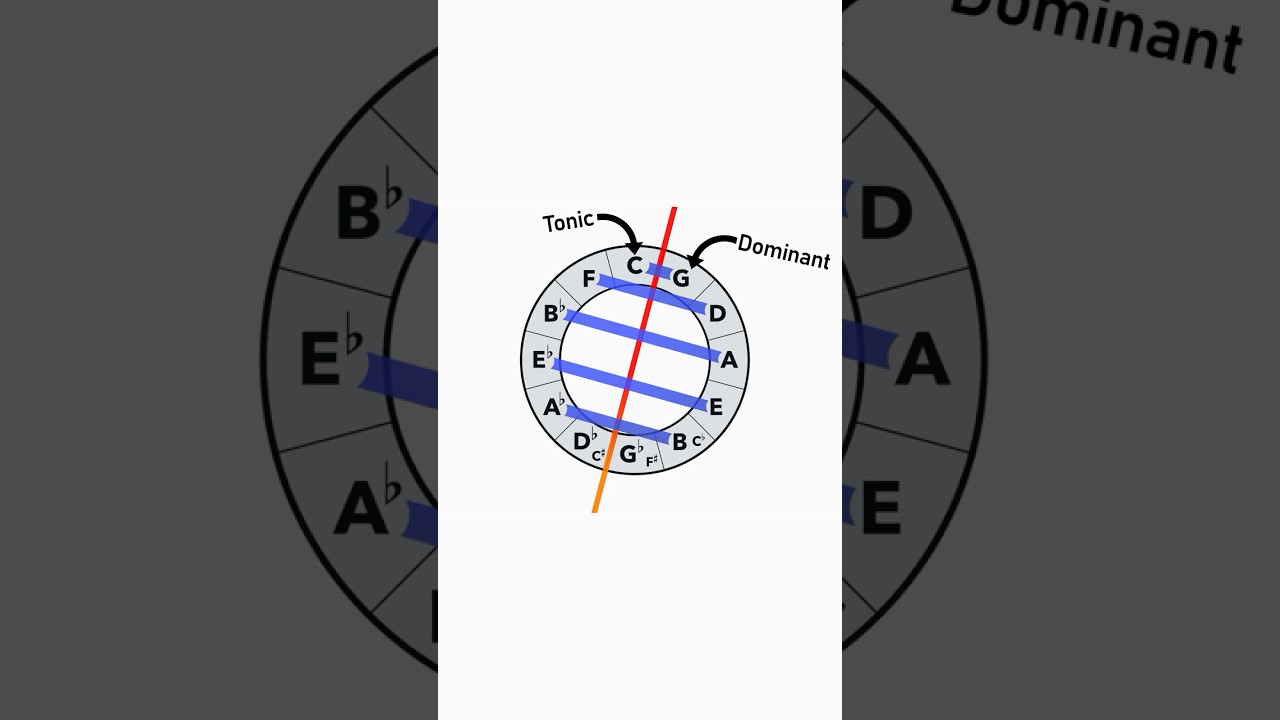
Negative Harmony Explained: Music Theory in 3 Minutes | Axis System
@DavidBennettPiano
53K views•2025-12-07

10:20
Mozart's Musical Dice Game Explained: History, Rules, & Fun
@webpianoacademy
5K views•2023-03-13

11:19
How to Build Chords That Fit a Key: Music Theory Explained
@MichaelNew
422.8K views•2012-06-09
10:49
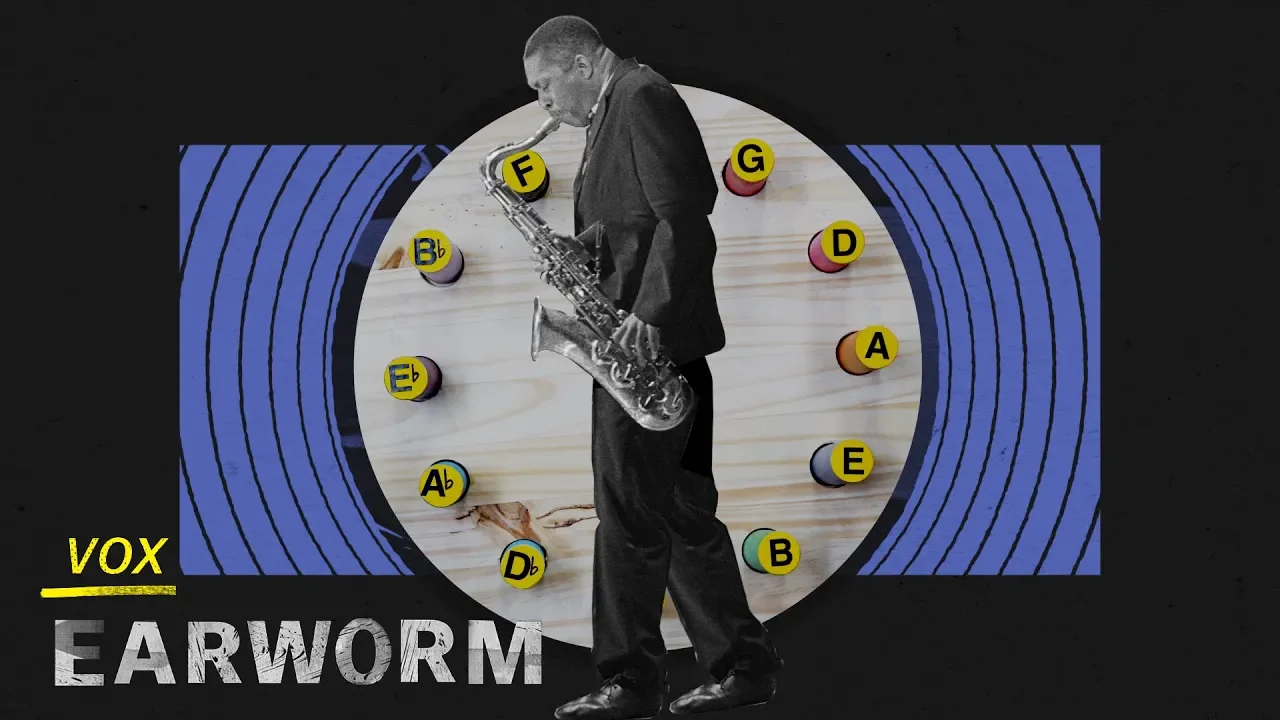
Understanding John Coltrane's Giant Steps: A Music Theory Analysis
@Vox
10.4M views•2018-11-12
Related Study Plans & Knowledge Roadmaps
Structured learning paths in Music Theory
music-theory
Composing Galant Music: Partimento & Schemata
01Foundations of Figured Bass and Keyboard Harmony
02The Rule of the Octave (Regola dell'Ottava)
03Galant Schemata: The Building Blocks of Form
+ 2 more learning modules
30h5 modules
Explore Roadmap
music-theory
Decoding Overtone Series: Tuning & Drone Music
01Acoustic Foundations: The Physics of the Overtone Series
02Tuning Systems: Equal Temperament vs. Just Intonation
03Microtonality and Spectralism: Beyond Standard Pitches
+ 2 more learning modules
24h5 modules
Explore Roadmap
music-theory
Impressionist Harmony: Scales, Planing & RPGs
01Foundational Music Theory: Keys, Intervals, and Seventh Chords
02Impressionist Color: Chord Planing and Parallel Harmony
03Whimsical Textures: Pentatonic Cascades and Whole-Tone Scales
+ 1 more learning modules
14h4 modules
Explore Roadmap
music-theory
Negative Harmony: Axis Reflection in Indie Pop
01Music Theory Foundations: Scales, Intervals, and Triads
02Functional Harmony and the Circle of Fifths
03Demystifying the Negative Harmony Axis Reflection
+ 2 more learning modules
16h5 modules
Explore Roadmap