Negative harmony is a music theory technique where notes and chords are reflected over an axis cut between the tonic and dominant notes on the circle of fifths; this reflection transforms major chords to minor and vice versa, while reversing melodic direction (ascending becomes descending), as demonstrated by reflecting G major to F minor and E minor to A flat major in the key of C.
Negative Harmony Explained: Music Theory in 3 Minutes | Axis System
Added:Deep Dive
Familiarity with the Circle of Fifths, including how keys and chromatic steps are spatially organized.

Master the Circle of Fifths and All Keys in One Lesson
355.7K
The circle of fifths organizes keys in a circular pattern where moving clockwise adds one sharp (or removes one flat), while moving counterclockwise adds one flat (or removes one sharp). Major keys are displayed on the outer ring, while minor keys are shown on the inner circle. The arrangement starts at C major (with zero sharps/flats) and progresses through G, D, A, E, B, F#, and so on. Each position indicates the number of sharps or flats in that key's signature.
Click to watch →
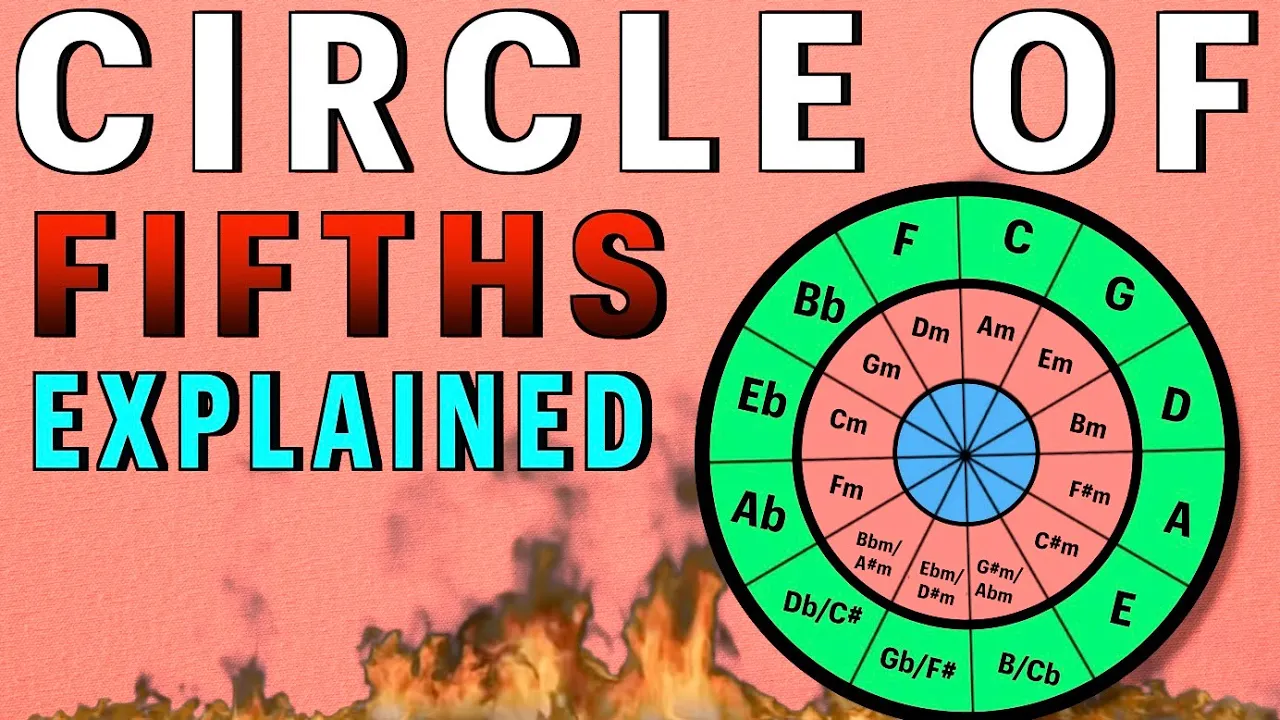
The Circle of Fifths EXPLAINED
13.7K
The circle of fifths organizes all 15 major keys into 12 positions, with enharmonic pairs (like B major and C-flat major) at the bottom. Keys ascend in sharps clockwise and flats counterclockwise. The name derives from the perfect fifth interval (7 half steps) between consecutive keys. The order of sharps starts at F (11:00) and counts clockwise spaces equal to sharps in a key. The order of flats starts at B (5:00) and counts counterclockwise spaces equal to flats. Each successive key adds one more sharp or flat to the previous key's pattern.
Click to watch →
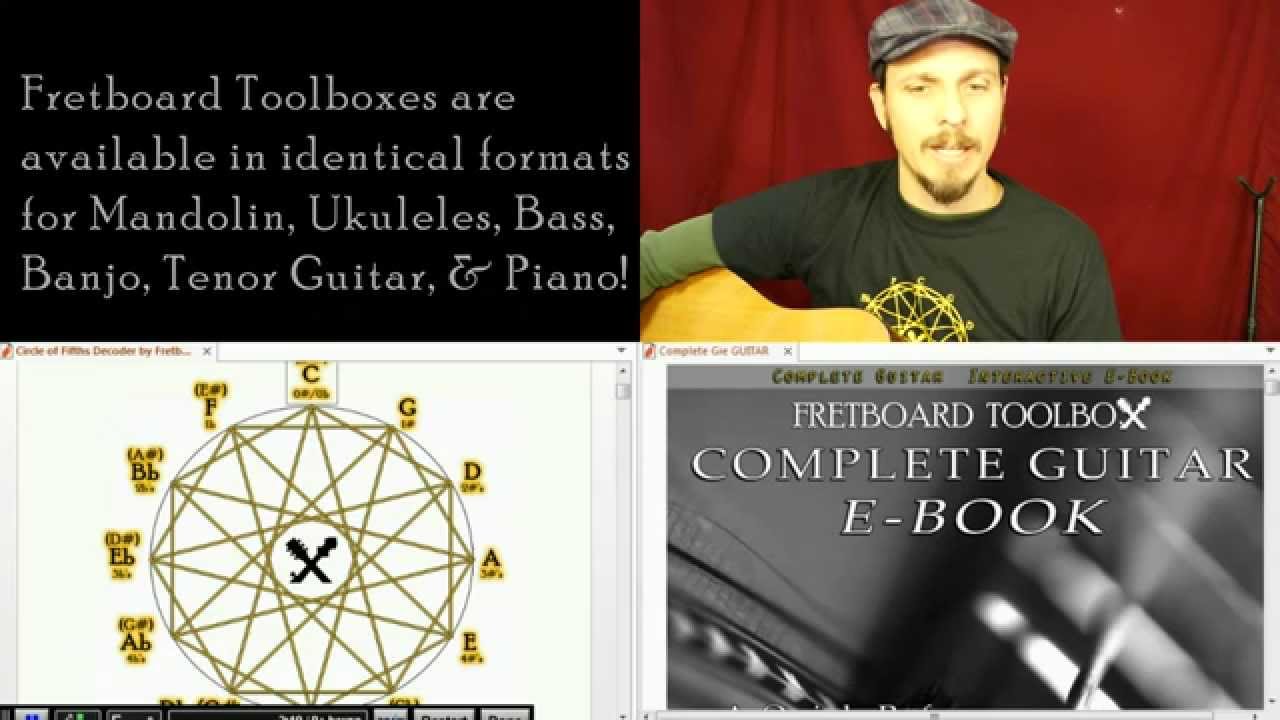
Circle of Fifths Decoded Part 1
8.1K
The circle of fifths organizes all major keys by accidentals: C (0), G (1#), D (2#), A (3#), E (4#), B (5#), F# (6#); and C (0b), F (1b), Bb (2b), Eb (3b), Ab (4b), Db (5b), Gb (6b). Major scales follow whole-whole-half-whole-whole-whole-half intervals. Pentatonic notes cluster together on the circle. The three major chords (I, IV, V) and three minor chords (ii, iii, vi) group spatially, revealing harmonic relationships. Moving clockwise yields fifths; counterclockwise yields fourths.
Click to watch →

#9 Circle of fifths tutorial; How to draw a circle of fifths (circle of keys)
503.3K
The circle of fifths is a visual chart showing all major and minor keys arranged in a circle. Starting from C major at the top (which has no sharps or flats), sharps increase as you move clockwise (becoming more 'positively charged'), while flats increase as you move counterclockwise (becoming more 'negatively charged'). The circle shows how keys relate to each other through perfect fifths intervals, with each adjacent key sharing most notes but differing by one accidental.
Click to watch →

The Circle of Fifths Made Easy
49.9K
The circle of fifths is a visual tool that organizes musical keys in a circular pattern based on the interval of a perfect fifth (7 semitones), with C major at the top having no sharps or flats, major keys with sharps arranged clockwise (G, D, A, E, B, F#, C#) and major keys with flats arranged counterclockwise (F, Bb, Eb, Ab, Db, Gb, Cb), while relative minor keys are found by counting down 3 semitones from each major key.
Click to watch →
Deep Dive
Understanding basic chord construction, specifically the intervallic differences between major and minor triads.
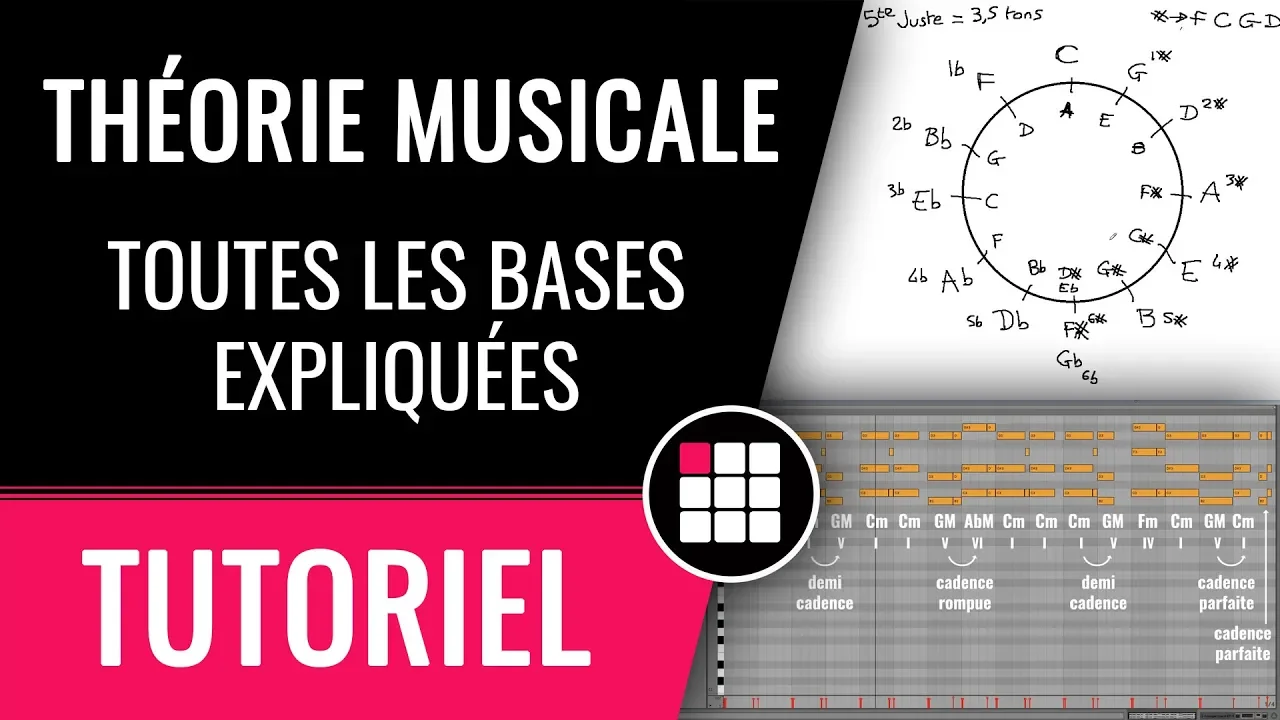
Résumé de théorie musicale #1 : gammes, accords, cycle des quintes et cadences
267.3K
A major triad consists of a root, major third (two whole tones above root), and perfect fifth (three and a half tones above root). A minor triad consists of a root, minor third (one and a half tones above root), and perfect fifth. The difference between major and minor triads lies entirely in the third interval - the fifth remains the same in both cases. This distinction determines whether the chord sounds bright (major) or dark/diminished (minor).
Click to watch →

Taking Your Bass Arpeggios from (Beginner to PRO)
190.9K
The major triad is built from the root, major third, and fifth (1-3-5). The minor triad is built from the root, flat third, and fifth (1-b3-5). The only difference between major and minor chords is the third: major chords have a major third, while minor chords have a flat third, which gives them a darker tone.
Click to watch →
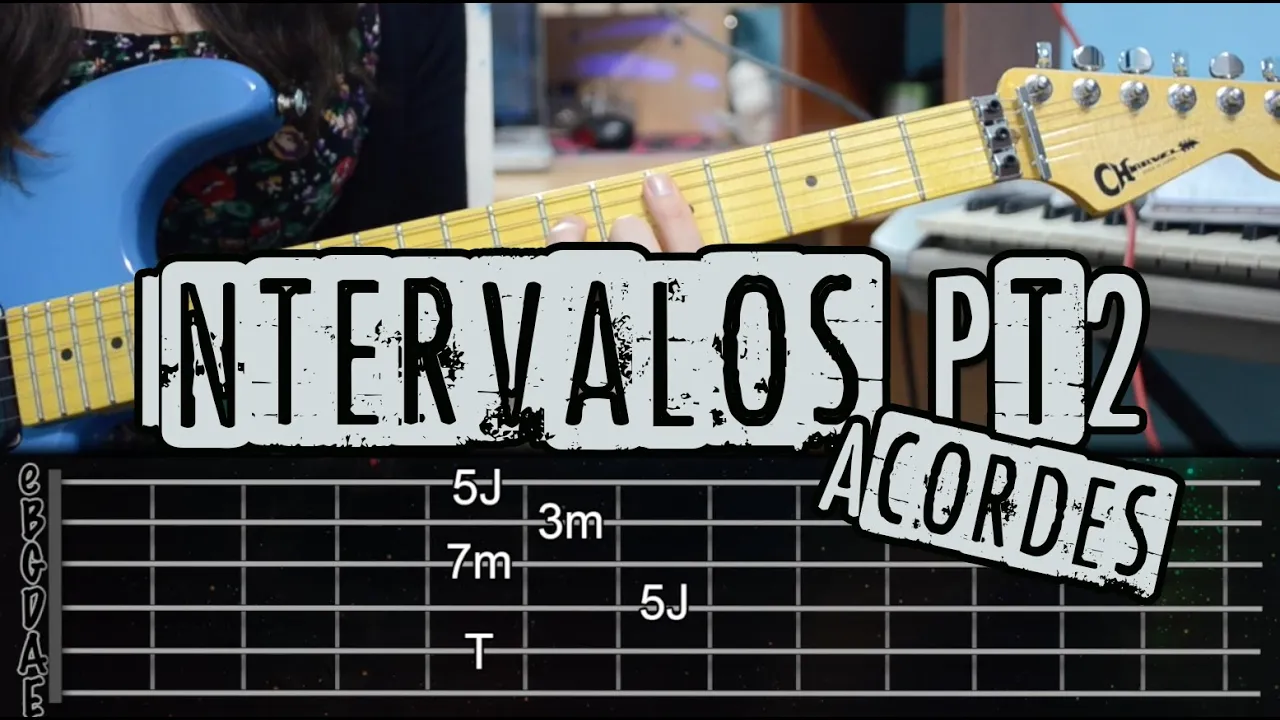
INTERVALOS EN ACORDES | construcción y análisis!
254.3K
Basic chords consist of three notes: root, third, and fifth. A major chord contains a root, major third, and perfect fifth. A minor chord contains a root, minor third, and perfect fifth. The only difference between major and minor chords is the third interval.
Click to watch →
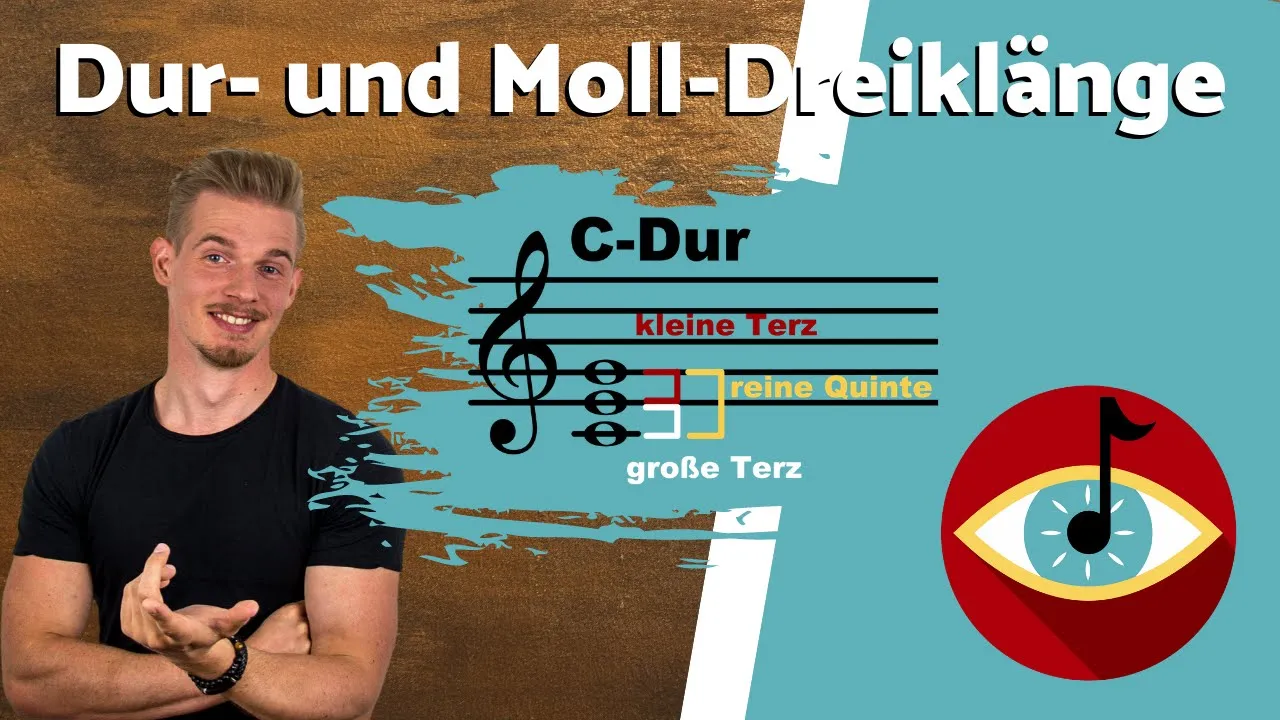
DUR- und MOLL-Akkorde - Dreiklänge als Grundlage zur Liedbegleitung
362.8K
Major and minor triads differ in only one interval—the third. In a major triad, the interval between root and third is a major third; in a minor triad, it is a minor third. All other intervals remain the same (perfect fifth from root to fifth). This single-note difference creates the distinct sound characteristic of each chord quality.
Click to watch →

Basic Chord Construction | Major, Minor & Sus Chords
233
Triads are three-note chords built from stacked intervals. A major triad contains a root note, major third, and perfect fifth (e.g., C-E-G for C major). A minor triad is identical but with the major third replaced by a minor third (e.g., C-E♭-G for C minor). The third interval controls whether a chord sounds major or minor.
Click to watch →
Deep Dive
Knowledge of diatonic harmony and Roman numeral analysis to identify standard chord progressions.
A Non-Musician Guide To Music Theory
140.7K
This section explains how to analyze chord progressions using Roman numerals, a universal system for describing harmonic relationships. In any major key, seven diatonic chords exist: I, IV, V are major; ii, iii, vi are minor; vii° is diminished. For example, in C major: C (I), F (IV), G (V) are major; Dm (ii), Em (iii), Am (vi) are minor; Bdim (vii°) is diminished. This system allows musicians to describe progressions like 'I-VI-IV-V' universally across all keys. The video demonstrates this with Tom Petty's 'Learning to Fly,' showing how F-C-Am-G progression translates to IV-I-vi-V in C major. Understanding this framework enables meaningful musical discussions and deeper appreciation of song structures.
Click to watch →

Music Theory for Guitarists: Understanding Chord Progressions
40.6K
Each diatonic chord receives a Roman numeral designation based on scale position: I (tonic), ii (supertonic), iii (mediant), IV (subdominant), V (dominant), vi (submediant), vii° (leading tone/diminished). In C major: C=I, Dm=ii, Em=iii, F=IV, G=V, Am=vi, B°=vii°. A fundamental rule of diatonic harmony states that all seven diatonic chords sound good together regardless of order. Progressions like Dm-C-F-G or Am-F-G-C work beautifully. The diminished vii° chord typically sounds dissonant and should be avoided in standard contexts.
Click to watch →

APRENDA A ACHAR O TOM DAS MÚSICAS
105
The diatonic chord progression (campo harmônico) in any major key follows: I (major), ii (minor), iii (minor), IV (major), V (major), vi (minor), vii° (diminished). For C major: C, Dm, Em, F, G, Am, Bdim. Roman numerals mark chord degrees: I, ii, iii, IV, V, vi, vii°. This system allows musicians to analyze chord progressions in any key by identifying which degree each chord represents. Understanding this relationship between scales and chords is essential for music theory and improvisation.
Click to watch →
DAW로 배우는 재즈화성학 06-코드 II 다이아토닉 코드(Triad)
3.4K
Roman numeral analysis (I-V-vi-IV) allows understanding chord functions regardless of key. To transpose songs: analyze original chords with Roman numerals, then apply to new key. The most common progression is I-V-vi-IV (C-G-Am-F in C key), used in countless pop songs. Another common progression is I-V-vi-iii. These progressions are so common they are instantly recognizable. Starting note variation (e.g., F-C-Dm-Bb instead of C-G-Am-F) creates different harmonic feels while maintaining the same pattern.
Click to watch →

how to analyze chord progressions (video essay)
17.7K
Diatonic means within the key. The tonic is the central tone, typically the name of the key. For example, C is the tonic of C major. A diatonic chord progression contains only notes from the primary key. A great example is 'Stand by Me' by Ben E. King, which is in A major with the progression A, F# minor, D, and E. In Roman numerals, this is the one chord to the minor 6 to the four to the five. Every chord contains only notes from the key of A, making the entire progression diatonic. The bass line highlights the exact same key center, reinforcing the diatonic nature of the harmony.
Click to watch →
Deep Dive
An introductory grasp of voice leading, as negative harmony preserves voice-leading intervals in reverse.
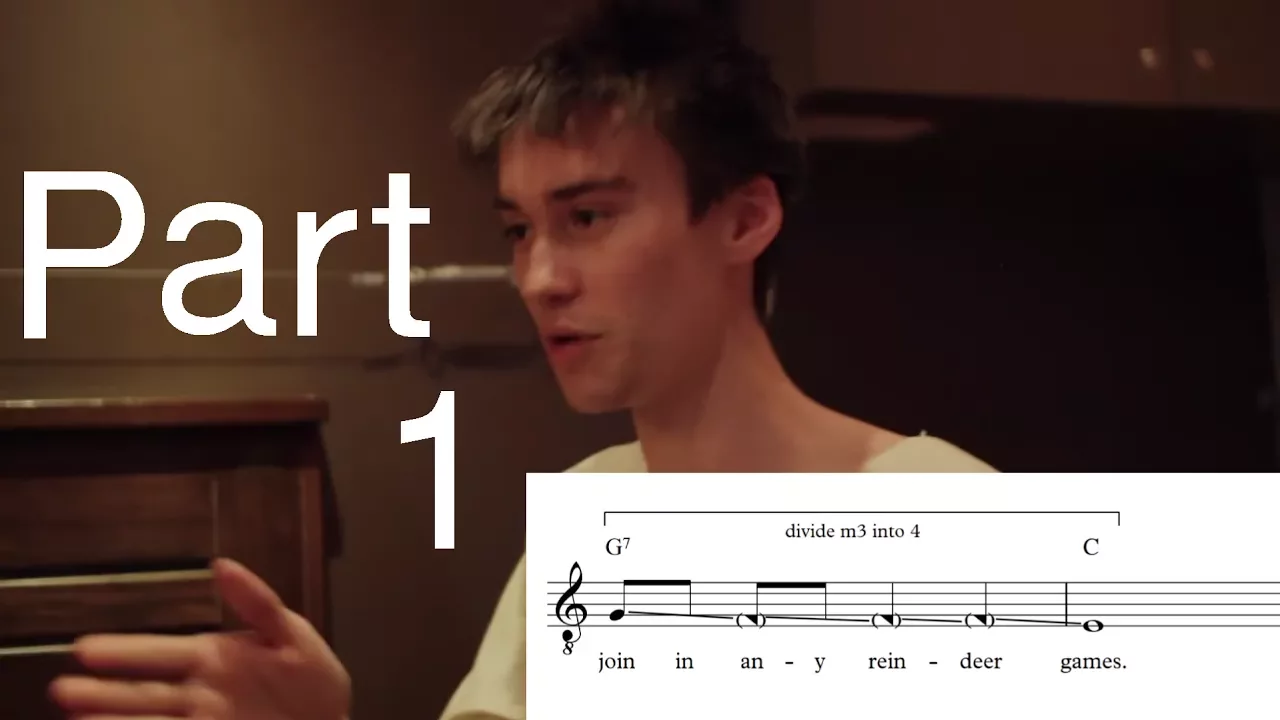
Interview: Jacob Collier (Part 1)
2M
In negative harmony, the reflected chords have equivalent voice-leading gravity to their originals. For instance, the Ab in Fm6 wants to sink to G in the same way that B in G7 wants to rise. This creates a sense of polarity where the 'gravity' of the harmonic motion is preserved but inverted. The theory demonstrates that A7, D7, G7, C becomes Ebm6, Bbm6, Fm6, C—a transformation that sounds warm and wonderful but unfamiliar, as it comes from the other side of the circle of fifths.
Click to watch →
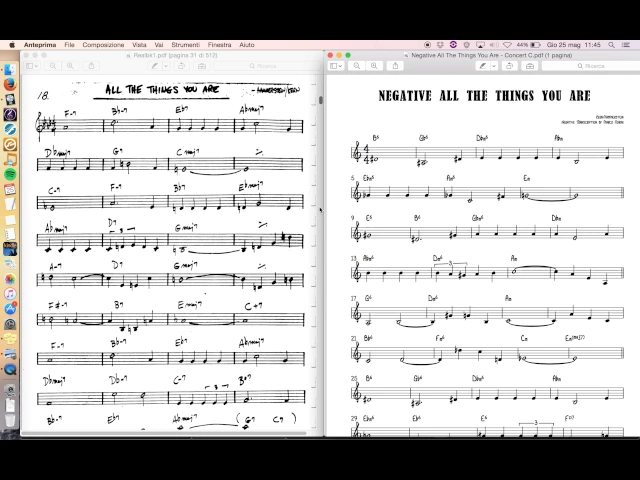
Negative Harmony - Lesson #2 (Voice Leading and All The Things You Are)
43.9K
Negative harmony is a jazz theory concept where chords are constructed by inverting intervals from a major scale, creating mirror-image progressions. The key principle is that the root movement must be inverted (e.g., a descending fifth becomes an ascending fourth), and the root is always a fifth below the generator. When analyzing negative harmony, musicians must identify the correct root by considering the generator (the fifth above), not just the chord quality. For example, what appears to be a B♭m7 chord in negative harmony is actually a C minor chord with a different root perspective. This understanding prevents common mistakes where analysts incorrectly identify roots and create non-functional progressions. The voice leading follows the same chromatic patterns as positive harmony but in inverted directions, maintaining the same melodic feel while creating harmonic tension from a different perspective.
Click to watch →

What is Negative Harmony?
96.2K
To apply negative harmony, draw an axis between the tonic and dominant on the circle of fifths (C-G in key of C). Reflect each note across this axis: C→G, F→D, Bb→A, Eb→E, Ab→B, Db→Gb. For chords, reflect each note individually—G major (G,B,D) becomes F minor (C,Ab,F). This flips chord qualities and reverses melodic direction. Shortcut rules exist: major tonic becomes minor tonic, major 5 becomes minor 4, sevenths become sixths. This systematic approach transforms any musical material while preserving its intervallic relationships.
Click to watch →
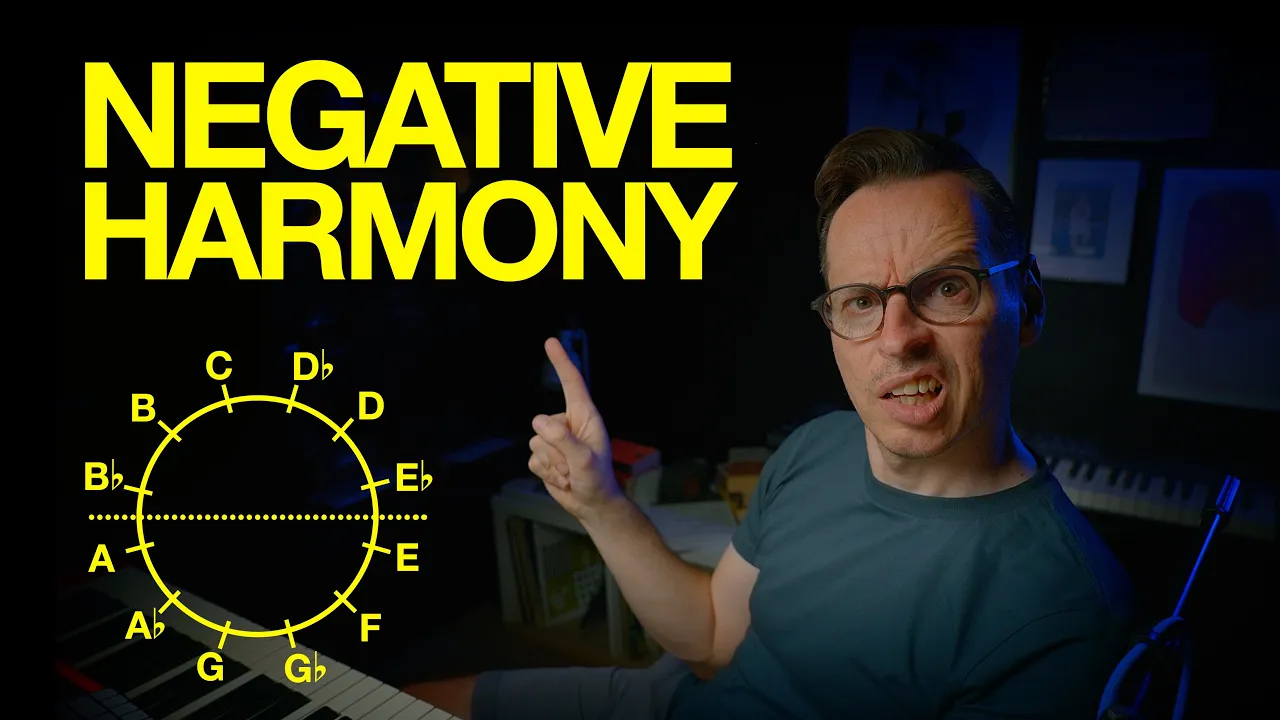
Negative Harmony Explained: A Simple Guide to Inversion Theory
57.3K
Negative Harmony is a musical technique that involves inverting melodies and chords over a specific axis located exactly halfway between the root (tonic) and dominant (fifth) of a key, which transforms major scale elements into their parallel natural minor counterparts while preserving harmonic tension and resolution properties; this technique can be applied to both melodies and chord progressions by flipping each interval or chord note across this axis, and it offers practical applications such as creating contrasting sections in compositions, facilitating modal interchange between parallel keys, and enabling harmonic movement in fourths (clockwise around the circle of fifths) that still resolves effectively to the tonic.
Click to watch →

Reverse Harmony
2.7K
Negative harmony is a musical concept where regular harmony is flipped on its head around a central axis. The pivot point lies exactly halfway between a perfect fifth interval—in C major, between E and E flat. When intervals are reversed around this axis, a whole step upward becomes a whole step downward, and a half step upward becomes a half step downward. This systematic inversion transforms a major scale into a minor scale, with the original tonic becoming the new dominant. The G dominant seventh chord (G-B-D-F) inverts to become a C minor chord with a natural sixth (C-E♭-F), demonstrating how each note maintains its intervallic relationship to the central axis but moves in the opposite direction.
Click to watch →
Prerequisite Knowledge
- Concept 01Familiarity with the Circle of Fifths, including how keys and chromatic steps are spatially organized.
- Concept 02Understanding basic chord construction, specifically the intervallic differences between major and minor triads.
- Concept 03Knowledge of diatonic harmony and Roman numeral analysis to identify standard chord progressions.
- Concept 04An introductory grasp of voice leading, as negative harmony preserves voice-leading intervals in reverse.
Subsequent Learning
- Step 01Practical application of negative harmony in jazz reharmonization, such as converting a standard ii-V-I progression into its negative counterpart.
- Step 02Study of Harmonic Dualism and the music theory of Ernst Levy, who laid the groundwork for modern negative harmony concepts.
- Step 03Exploration of the Undertone Series (or Phonic Series) as the acoustic justification for inverted harmonic structures.
- Step 04Advanced composition techniques using axis-based melodic inversion to write symmetrical counterpoint.
Mirror Axis
Results
Mirror Axis
0:00Playing Section
- 1
Reflect notes over circle of fifths axis between tonic and dominant.
- 2
Derive negative scale notes and chords via symmetric mirroring.
Harmonic Dualism and the Critique of the Undertone Series
While negative harmony (derived from Ernst Levy's work) offers an intriguing way to flip chord progressions, critics and traditional theorists point out significant acoustic and practical limitations. First, negative harmony relies on 'harmonic dualism'—the idea that minor chords are a perfect downward mirror of major chords, generated by an 'undertone series.' Acoustically, however, the undertone series does not physically exist in nature the way the overtone series does; it is a purely mathematical abstraction, meaning the physical symmetry of the theory lacks acoustic reality. Second, music theorists argue that negative harmony overcomplicates concepts already explained by simpler frameworks. The unique chord substitutions and voice-leading paths generated by negative harmony can be more intuitively understood through standard modal mixture, chromatic alteration, or Neo-Riemannian theory (specifically PLR transformations). From this perspective, negative harmony is viewed as an overly complex, metaphorical rebranding of established voice-leading principles rather than a revolutionary system of harmony.
Deep Dive
Practical application of negative harmony in jazz reharmonization, such as converting a standard ii-V-I progression into its negative counterpart.
Negative Harmony Explained: A Simple Guide to Inversion Theory
57.3K
Negative Harmony is a musical technique that involves inverting melodies and chords over a specific axis located exactly halfway between the root (tonic) and dominant (fifth) of a key, which transforms major scale elements into their parallel natural minor counterparts while preserving harmonic tension and resolution properties; this technique can be applied to both melodies and chord progressions by flipping each interval or chord note across this axis, and it offers practical applications such as creating contrasting sections in compositions, facilitating modal interchange between parallel keys, and enabling harmonic movement in fourths (clockwise around the circle of fifths) that still resolves effectively to the tonic.
Click to watch →
What is Negative Harmony?
96.2K
To apply negative harmony, draw an axis between the tonic and dominant on the circle of fifths (C-G in key of C). Reflect each note across this axis: C→G, F→D, Bb→A, Eb→E, Ab→B, Db→Gb. For chords, reflect each note individually—G major (G,B,D) becomes F minor (C,Ab,F). This flips chord qualities and reverses melodic direction. Shortcut rules exist: major tonic becomes minor tonic, major 5 becomes minor 4, sevenths become sixths. This systematic approach transforms any musical material while preserving its intervallic relationships.
Click to watch →

Jacob Collier Full Masterclass — Sydney, June 2025
507.5K
Negative harmony is the idea that you can flip any point of departure and arrival about the axis of the circle of fifths and convert anything perfect into plagal. For example, in the key of C, you can rotate chords around an axis. A chord like G7, if you flip all those notes, becomes a plagalized minor version. Everything that's perfect becomes plagal, and everything that's major becomes minor.
Click to watch →

Armonia Pianoforte: "L'armonia negativa", Tino Carugati - Lezione di Pianoforte n.377
17.1K
Negative harmony is a revolutionary concept formally introduced in 1985 by composer Steve Reich in 'A Theory of Harmony.' Unlike traditional tonal harmony that gravitates around a tonic with major and minor chords, negative harmony creates a mirror-image system where major chords become minor, minor chords become major, and diminished chords remain diminished but change name. The system uses mirror scales where each major modal scale has a corresponding minor scale that is its exact mirror image. To construct negative harmony, start from the dominant note and apply the same interval sequence as the major scale but in reverse. Major chords are formed by a major third followed by a minor third, while minor chords are the opposite. The classic ii-V-I progression transforms: re minor becomes si♭ minor (with sixth), sol7 becomes fa minor (with sixth), and do major becomes do minor. Seventh chords in positive harmony become sixth chords in negative harmony, and major seventh chords cannot be directly mirrored. Tritone substitution creates chromatic bass movement rather than the usual fourth-fifth movement.
Click to watch →
Here's That Rainy Day, jazz standard, piano tutorial, Negative Harmony
20.9K
In jazz improvisation, carefully chosen melodic notes can change the harmony without explicitly changing the chord voicings, a technique called negative harmony where the melody suggests harmonic movement by using notes that imply different chord functions, such as using altered scales or diminished structures to create harmonic tension and resolution while maintaining the underlying chord progression.
Click to watch →
Deep Dive
Study of Harmonic Dualism and the music theory of Ernst Levy, who laid the groundwork for modern negative harmony concepts.
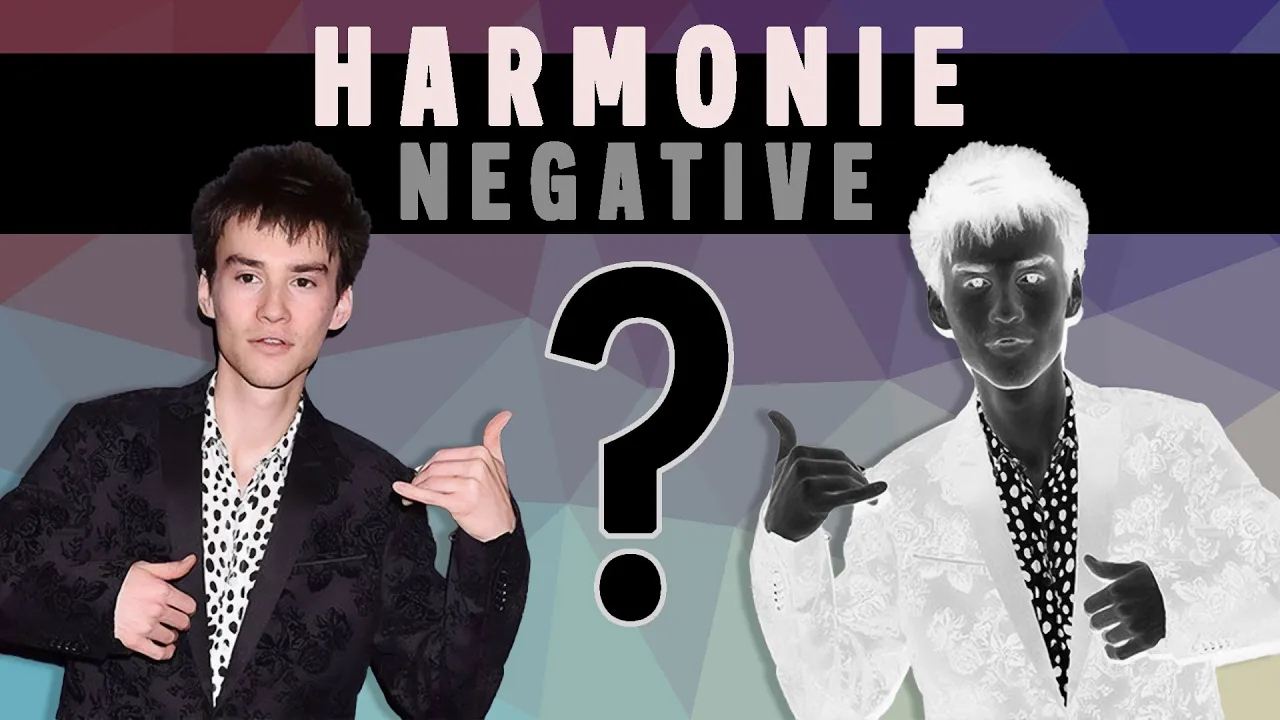
Jacob COLLIER, Ernst LEVY, et l'HARMONIE NEGATIVE ! Explications
7.3K
Negative harmony is a musical concept where chords are inverted using an axis of symmetry between the root and fifth of a scale, transforming major triads into minor triads and vice versa. This concept, developed by musicologist Ernst Levy and popularized by Jacob Collier, is based on the dualistic theory that major and minor triads are equivalent but deploy intervals in opposite directions—major triads 'grow upward' like trees while minor triads 'grow downward' like roots. The practical application involves taking any chord and inverting its notes according to the symmetry axis, creating a mirror image that can be used for reharmonization within a tonality.
Click to watch →

Jacob Collier EXPLAINS His Wacky Musical Choices
60.3K
Negative harmony is a theory proposed by Ernst Levy that every chord in any key has a polar opposite chord within that key center. This is achieved by rotating every single note of a chord around the axis of the key center. For example, in the key of C, the axis is between C and G. A G7 chord (G-B-D-F) reflects to become a D half diminished chord (D-F-Ab-C), which is equivalent to F minor 6. This creates a 'gravity' equivalent to the original chord but with inverted voice leading, converting perfect cadences to plagal cadences.
Click to watch →
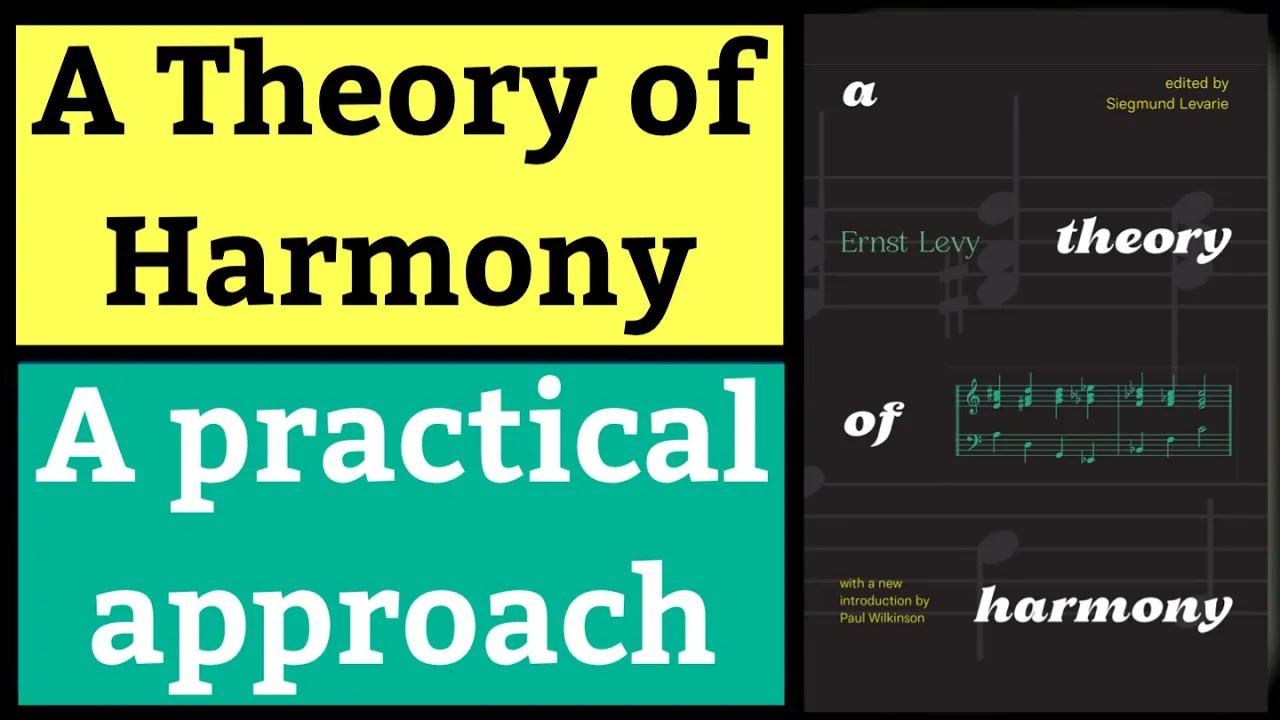
A Theory of Harmony - Ernst Levy - Practical Approach
3.3K
Ernst Levy's theory of harmony proposes that every major chord has a reciprocal or 'negative' chord created by flipping the same intervals around a centrifugal point; for example, the C major chord (built from a major third and minor third) has an F minor chord as its reciprocal, and this concept can be extended around the circle of fifths to create beautiful harmonic progressions by alternating between major and minor chords.
Click to watch →
The Positive Impact Of Negative Harmony
94.6K
Negative harmony is a modern application of harmonic dualism that uses reflection across a key's axis (the midpoint between the tonic and dominant) to transform chords while preserving their harmonic function; this system reveals that the 12 notes in standard tuning can be organized into six functional pairs—stable notes (root and fifth), modal notes (major and minor thirds), hollow notes (major sixth and minor seventh), unstable notes (major second and perfect fourth), leading notes (major seventh and minor sixth), and uncanny notes (minor second and augmented fourth)—which explains why certain chords feel naturally related and how chord inversions maintain their functional roles.
Click to watch →
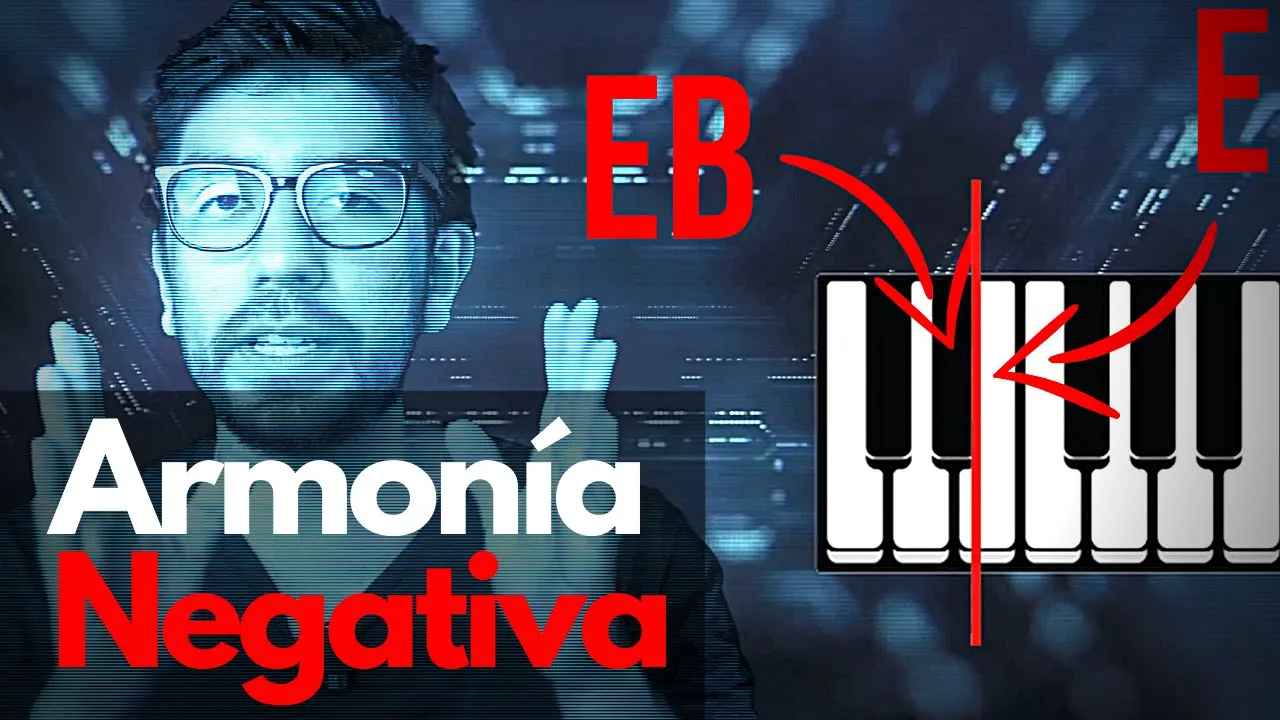
Reciprocidad, Polaridad y Armonía Negativa.
6.5K
Negative harmony, developed by Ernst Levy, reveals that musical intervals are reciprocal with notes outside the major scale. The natural harmonic series (fundamental, octave, fifth) forms a major triad by physics. Conversely, the subharmonic series (multiplying string length) creates a minor triad. This proves major and minor chords have equal weight but in opposite directions. The neutral point between major and minor (midpoint between root and fifth) serves as an axis of symmetry, where notes are reflected to create negative equivalents. This mathematical symmetry explains why both chord types have equal harmonic weight.
Click to watch →
Deep Dive
Exploration of the Undertone Series (or Phonic Series) as the acoustic justification for inverted harmonic structures.

Musical Palindromes & Negative Harmony (what?)
183.8K
The overtone series forms the foundation of tonal music, producing harmonics in decreasing amplitude above any fundamental note. This consistent interval pattern has guided Western music for 300 years. The undertone series serves as its theoretical mirror image, moving downward instead of upward. These harmonic structures explain why certain chord combinations sound consonant or dissonant—when multiple notes are played, their overtone series collide, creating beating effects that determine perceived harmony.
Click to watch →
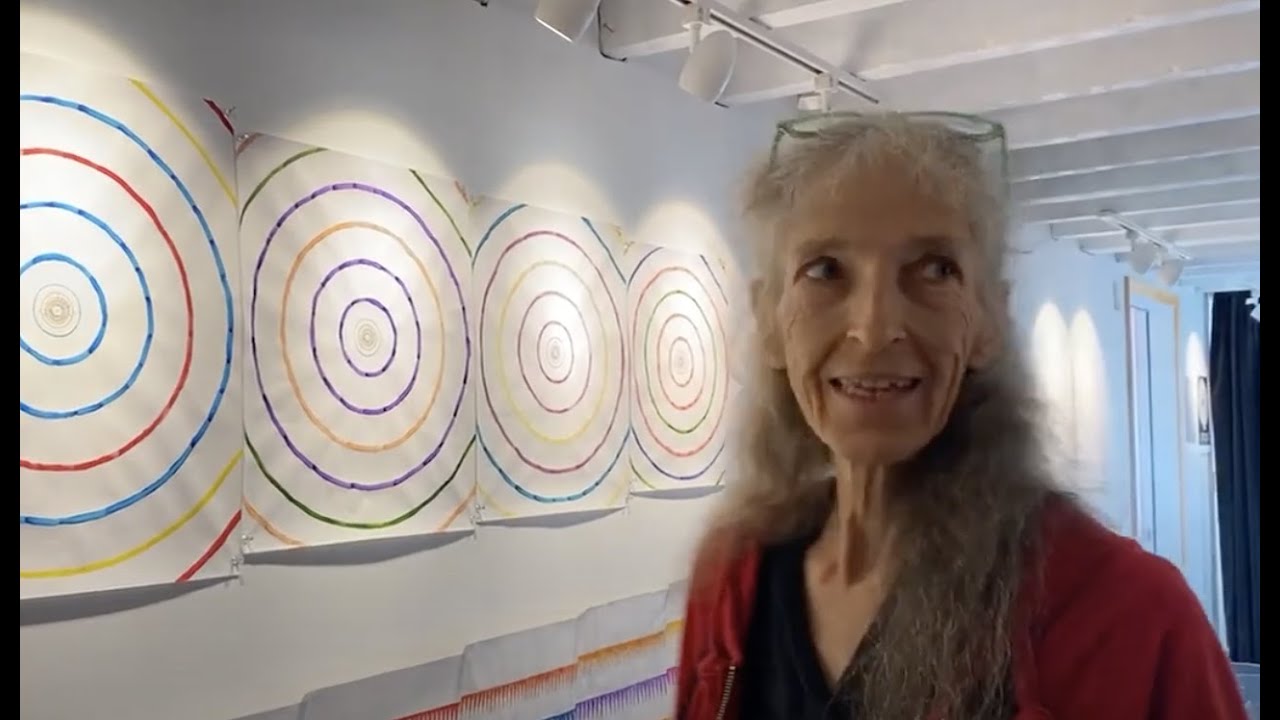
Sylvie Degiez Part 1
295
The undertone series creates a completely different pattern compared to the overtone series. The undertone series forms a grid underneath everything, which is a remarkable discovery. The undertone series creates regular patterns that exist beneath the overtone structure. This grid-like formation of undertones represents a fundamental harmonic structure that underlies all musical relationships, with each undertone creating specific harmonic intervals like fifths down, thirds down, and major sixths.
Click to watch →
The Positive Impact Of Negative Harmony
94.6K
The overtone series is created by multiplying a note's frequency by whole numbers (e.g., doubling A gives another A, tripling gives E, etc.), forming what Ernst Levy called the Senarius—a group of six notes that naturally form an A major triad. The undertone series is the mathematical inverse, created by dividing a note's frequency by whole numbers, producing an inverted Senarius that forms a D minor triad. While the overtone series exists in nature, the undertone series is purely mathematical.
Click to watch →
![What is the Tonality Diamond? (Harry Partch's Theories, Explained) [Harry Partch, Pt. 2/2]](https://i.ytimg.com/vi/N57Wt0mpSu4/maxresdefault.jpg)
What is the Tonality Diamond? (Harry Partch's Theories, Explained) [Harry Partch, Pt. 2/2]
12.1K
Partch flipped the overtone series upside down to create the undertone series, which is not an acoustical phenomenon but a mathematical one. He called the overtone series otonality and the undertone series utonality. Using these, you can get a major chord from 5-limit otonality but a minor chord from 5-limit utonality. These concepts describe chords entirely generated from one or the other series.
Click to watch →

Graham H Jackson monochord exploration of the overtone and undertone series
2.8K
The undertone series, created by multiplying string lengths rather than dividing them, generates the minor triad and forms the basis of ancient Greek music theory, contrasting with the overtone series which produces major intervals; this ancient tuning system, studied by scholars like Kathen Schinger who researched Greek instruments at the British Museum, explains why Greek modes differ from modern equal temperament and why the minor triad was historically challenging to explain using only overtone principles.
Click to watch →
Deep Dive
Advanced composition techniques using axis-based melodic inversion to write symmetrical counterpoint.

Qué es la Armonía NEGATIVA??? un truco buenísimo para cambiar los acordes de una canción
970.4K
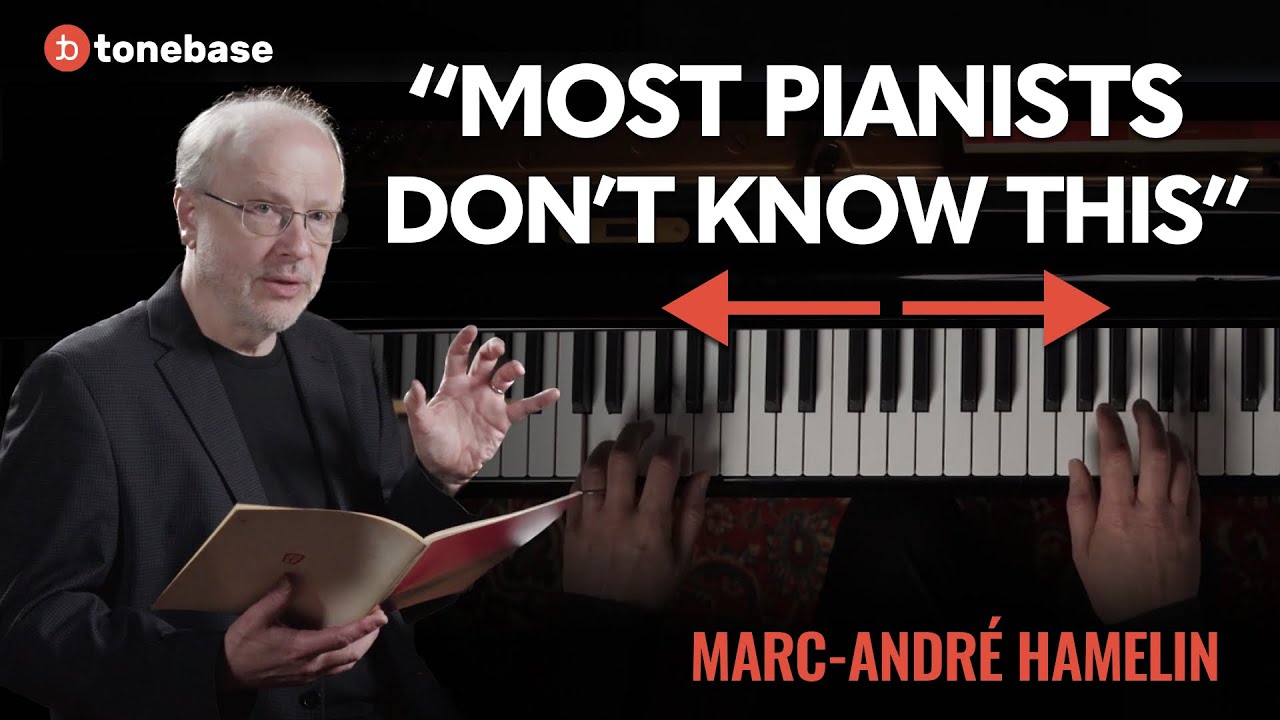
Symmetrical inversion is an advanced technique where a melody is reflected across an axis of symmetry. For example, if a melody descends a fourth, the inverted version would ascend a fourth, then descend a major second, then a minor second. When applied to the entire melody, when one version goes up, the other goes up, and when one goes down, the other goes down, maintaining the same distances. This creates a mirror-image effect.
Click to watch →
Marc-André Hamelin teaches SYMMETRICAL INVERSION at the Piano
254.3K
Symmetrical inversion is a piano practice technique that leverages the keyboard's mirror symmetry around two central points (D and A-flat), allowing pianists to practice difficult passages with either hand so that both hands develop equally, overcoming the common asymmetry where the right hand typically carries more melodic and technical burden while the left hand serves as simple accompaniment.
Click to watch →

How to Write Counterpoint - Music Composition
187.7K
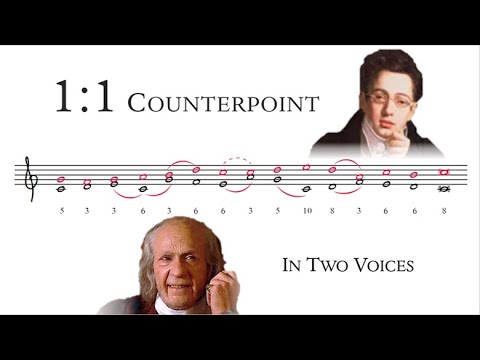
Counterpoint is a music composition technique that involves creating interweaving melodic lines that operate horizontally rather than vertically; the basic approach involves starting with a melodic idea (called a 'point'), then imitating it in another voice either at the same pitch, transposed to a different pitch, or with rhythmic consistency but melodic variation, while simultaneously thinking about harmony to ensure both melodic and harmonic sense are maintained throughout the composition.
Click to watch →
How to Compose 1:1 Counterpoint || Tonal Voice Leading 1
1.1M
Effective counterpoint composition uses a systematic approach: work backwards from the fixed ending (scale degree 1 with perfect interval approached by contrary motion), choose starting notes (scale degrees 1, 3, or 5) leaving space for the given melody's high point, compose in medium-sized chunks rather than one note at a time, and plan high point placement to avoid coinciding with the given melody's high point. Three skill development exercises: compose counterpoints against given Cantus firmi (major and minor modes), develop auditory imagination by memorizing melodies and imagining internal performance before mentally combining with counterpoint, and prepare analytic diagrams showing repeated tones (dashed slurs), consonant leaps (solid slurs), and labeled harmonic intervals with circled perfect consonances. In minor mode, the leading tone is raised by half step at cadences. Invertible counterpoint creates melodies that work equally well above or below a given melody.
Click to watch →

How to Compose Invertible Counterpoint || Tonal Voice Leading 7
24.2K
Invertible counterpoint (or double counterpoint) is a counterpoint technique where a single melody can function equally well as a counterpoint above or below a given Cantus firmus. This is achieved by treating certain intervals differently depending on the inversion interval: at the octave, perfect 5ths must be treated as dissonances (as they invert to 4ths); at the 10th, imperfect consonances must be treated as perfect consonances; and at the 12th, 6ths must be treated as dissonances. The composer must also adjust the starting and ending scale degrees accordingly—beginning on scale degree 1 for octave inversion, scale degree 3 for 10th inversion, and scale degree 5 for 12th inversion—to ensure the inverted melody functions properly as a bass line.
Click to watch →
Mirror Axis
Results
Mirror Axis
0:00- 1
Reflect notes over circle of fifths axis between tonic and dominant.
- 2
Derive negative scale notes and chords via symmetric mirroring.
Harmonic Dualism and the Critique of the Undertone Series
While negative harmony (derived from Ernst Levy's work) offers an intriguing way to flip chord progressions, critics and traditional theorists point out significant acoustic and practical limitations. First, negative harmony relies on 'harmonic dualism'—the idea that minor chords are a perfect downward mirror of major chords, generated by an 'undertone series.' Acoustically, however, the undertone series does not physically exist in nature the way the overtone series does; it is a purely mathematical abstraction, meaning the physical symmetry of the theory lacks acoustic reality. Second, music theorists argue that negative harmony overcomplicates concepts already explained by simpler frameworks. The unique chord substitutions and voice-leading paths generated by negative harmony can be more intuitively understood through standard modal mixture, chromatic alteration, or Neo-Riemannian theory (specifically PLR transformations). From this perspective, negative harmony is viewed as an overly complex, metaphorical rebranding of established voice-leading principles rather than a revolutionary system of harmony.
Familiarity with the Circle of Fifths, including how keys and chromatic steps are spatially organized.
Understanding basic chord construction, specifically the intervallic differences between major and minor triads.
Knowledge of diatonic harmony and Roman numeral analysis to identify standard chord progressions.
An introductory grasp of voice leading, as negative harmony preserves voice-leading intervals in reverse.
Practical application of negative harmony in jazz reharmonization, such as converting a standard ii-V-I progression into its negative counterpart.
Study of Harmonic Dualism and the music theory of Ernst Levy, who laid the groundwork for modern negative harmony concepts.
Exploration of the Undertone Series (or Phonic Series) as the acoustic justification for inverted harmonic structures.
Advanced composition techniques using axis-based melodic inversion to write symmetrical counterpoint.
53K views2.5Klikes2:38@DavidBennettPianoOriginal Release: 2025-12-07
The main idea with negative harmony is that you're reflecting the notes of the scale and therefore the chords of the scale over an axis. You get this sort of reflection of them. And that axis is cut down the middle of the circle of fifths.
Basically, you take the circle of fifths and you cut a line down between the tonic note and the dominant note. So, if we're in the key of C, the tonic note is C. The dominant note, the fifth note of the key is G. So we cut a line through the circle of fifths between those two notes. And now that is our mirror. So the notes on either side of this circle of fifths are going to be the negative versions of each note. C reflects to G.
F reflects to D. B flat reflects to A. E flat reflects to E. A flat reflects to B. And D flat reflects to G flat. That's how we get the mirror version of the notes. The final step to make this negative harmony, you know, harmony as in chords, is to then take the notes of whatever chord we want to reflect and one by one reflect them over this axis.
So the reflection of the chord G major is F minor. And we can see that by taking the three notes of G, which are G, B, and D, and reflecting them over to get C, A flat, and F, the notes of an F minor chord. Right? That's how you get the negative version of any chord you like. So, for example, if we wanted to get the negative version of E minor, we reflect the E over to get E flat. We reflect the G over to get C. And we reflect the B over to get A flat. And we have an A flat major chord. So, the negative version of E minor in the key of C is A flat. And what you'll find when you reflect chords into their negative versions is that everything that was major becomes minor and vice versa. and everything that was ascending becomes descending and vice versa. So for example, if I took the chord progression in C major of C, D minor, E minor, and [music] F just climbing up the major scale.
Well, the negative version of that would be this.
[music] We're now climbing down the minor scale.
So, we were climbing up the major. We're now climbing down the minor. And all of the chord qualities have flipped. So, before we [music] had major, minor, minor, [singing] major. And now we have the opposite. We have minor, major, [music] major, minor.
Up Next
12:42
Jacob Collier Interview: Advanced Music Theory & Harmony Explained
@JuneLee
2M views•2017-04-14

10:20
Mozart's Musical Dice Game Explained: History, Rules, & Fun
@webpianoacademy
5K views•2023-03-13
23:43
Negative Harmony Explained: Music Theory Guide
@DavidBennettPiano
96.2K views•2025-09-25
10:49
Understanding John Coltrane's Giant Steps: A Music Theory Analysis
@Vox
10.4M views•2018-11-12
Related Study Plans & Knowledge Roadmaps
Structured learning paths in Music Theory
music-theory
Composing Galant Music: Partimento & Schemata
01Foundations of Figured Bass and Keyboard Harmony
02The Rule of the Octave (Regola dell'Ottava)
03Galant Schemata: The Building Blocks of Form
+ 2 more learning modules
30h5 modules
Explore Roadmap
music-theory
Decoding Overtone Series: Tuning & Drone Music
01Acoustic Foundations: The Physics of the Overtone Series
02Tuning Systems: Equal Temperament vs. Just Intonation
03Microtonality and Spectralism: Beyond Standard Pitches
+ 2 more learning modules
24h5 modules
Explore Roadmap
music-theory
Impressionist Harmony: Scales, Planing & RPGs
01Foundational Music Theory: Keys, Intervals, and Seventh Chords
02Impressionist Color: Chord Planing and Parallel Harmony
03Whimsical Textures: Pentatonic Cascades and Whole-Tone Scales
+ 1 more learning modules
14h4 modules
Explore Roadmap
music-theory
Negative Harmony: Axis Reflection in Indie Pop
01Music Theory Foundations: Scales, Intervals, and Triads
02Functional Harmony and the Circle of Fifths
03Demystifying the Negative Harmony Axis Reflection
+ 2 more learning modules
16h5 modules
Explore Roadmap